Key takeaways
- AI brand perception tracking and classic brand tracking measure two different things. One measures what models say about you. The other measures what people think about you.
- Today's AI visibility tools are strong on mentions, citations, share of voice, position and competitor comparison. They are weaker on explaining why a model says what it says.
- Answers are volatile and depend on the engine. ChatGPT cites about 5 sources per web-search answer, Google AI Overviews and Perplexity about 10, and Copilot swings widely. Judge trends, not single snapshots.
- Perception goes stale at different speeds. News-driven perception decays in weeks, while landing pages and docs stay cited for months.
- The practical setup in 2026 is hybrid: a thin survey-based tracker for audit-grade trendlines, plus a continuous AI visibility layer that also tells you what to fix.
Two meanings of brand perception
The phrase "brand perception tracking" now covers two different jobs, and a lot of confusion comes from mixing them up.
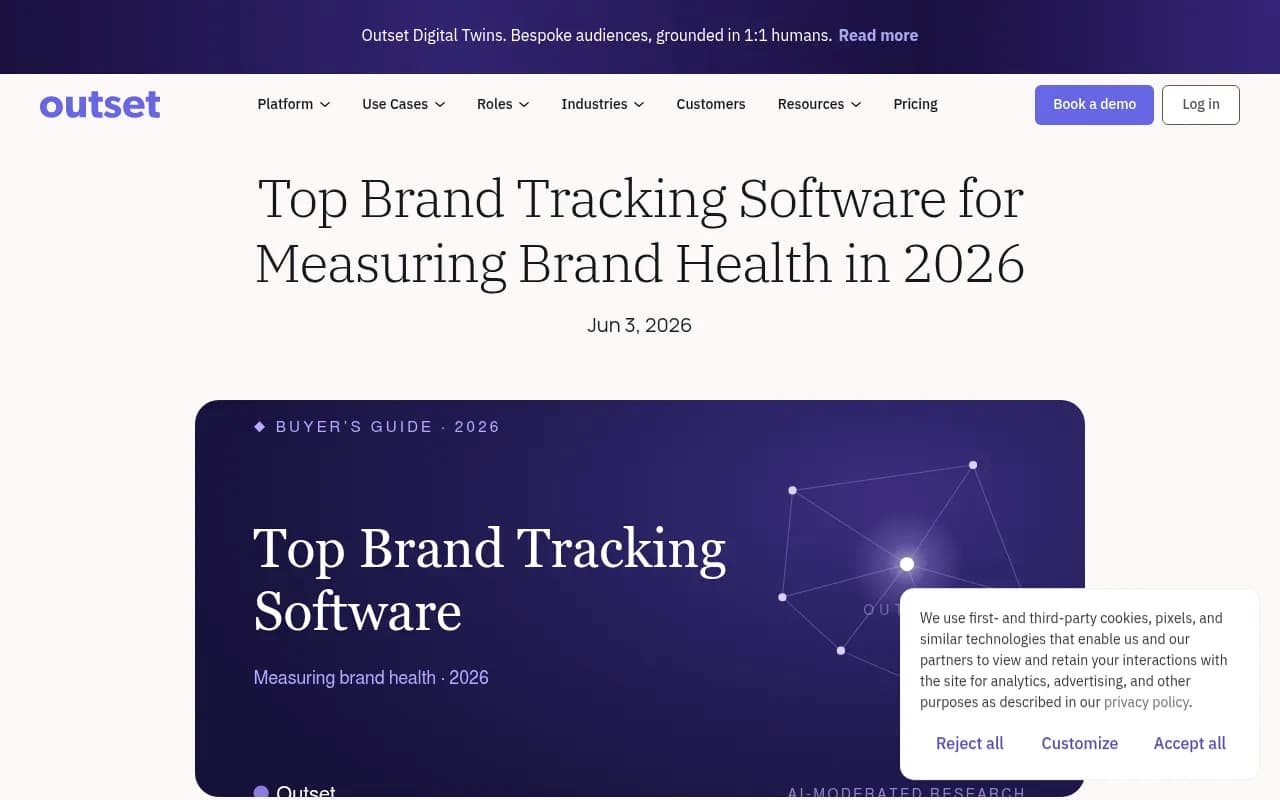
The first is the traditional job. You survey consumers and measure awareness, consideration, favorability and trust over time. YouGov BrandIndex, Kantar, Ipsos, Qualtrics and Tracksuit live here. Outset's 2026 overview describes the key distinction well: social listening monitors what people say publicly, while brand tracking measures what people actually think and feel through direct research.
The second is new. Buyers ask ChatGPT, Gemini, Perplexity or Google AI Overviews which product to pick, and the answer shapes the shortlist. So brands now want to know how the models describe them: whether they appear, in what position, with what tone, and with which claims attached. That is AI brand perception, and the tools that measure it are a different species from survey trackers.
I think the honest framing is that neither replaces the other. A model can describe your brand glowingly while real customers are drifting away. The reverse also happens: customers love you, but the model has never heard of you, or repeats a three-year-old pricing complaint.
What the traditional trackers still do best
Survey-based trackers measure humans, and that is not something an AI visibility dashboard can fake. The YouGov-published comparison of ten trackers shows the spread. YouGov BrandIndex runs daily surveys across 55 markets with a proprietary panel of 30M+ members. Others, like Tracksuit, lean on third-party panels with simpler dashboards. Qualtrics layers brand metrics onto wider experience data.
Two caveats are worth keeping in mind. That comparison was published by YouGov, one of the vendors in it, so read the rankings with that in mind. And the panel-versus-conversation debate is live: Perspective AI argues that continuous AI-moderated interviews are replacing 60-75% of legacy tracker spend, while conceding that panels still win on calibrated, weighted representativeness. Treat that as a vendor claim, but the hybrid conclusion is sensible.
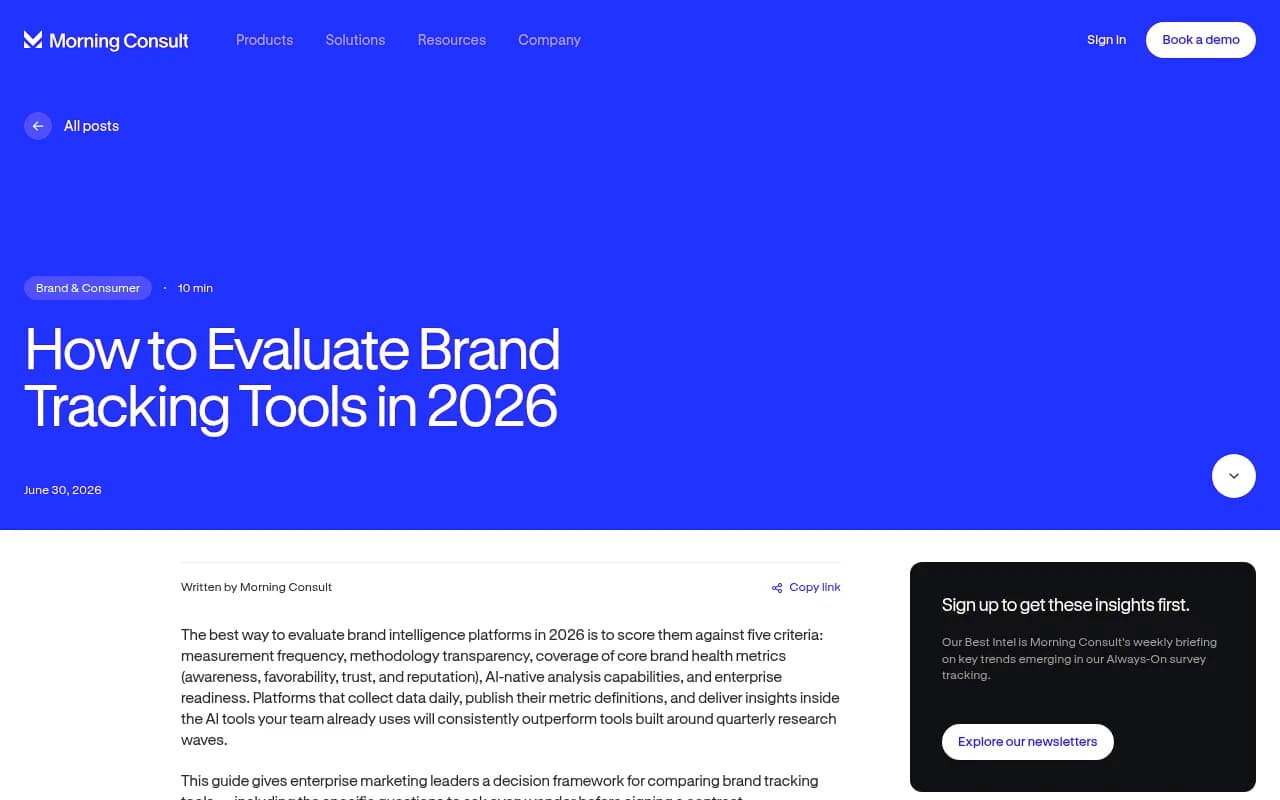
Morning Consult's evaluation framework is a useful checklist whichever side you buy from. It scores tools on measurement frequency, methodology transparency, coverage of core metrics, AI-native analysis and enterprise readiness. Its point about frequency applies doubly to AI answers: perception that moves daily cannot be captured by quarterly waves.
What AI perception tools measure well
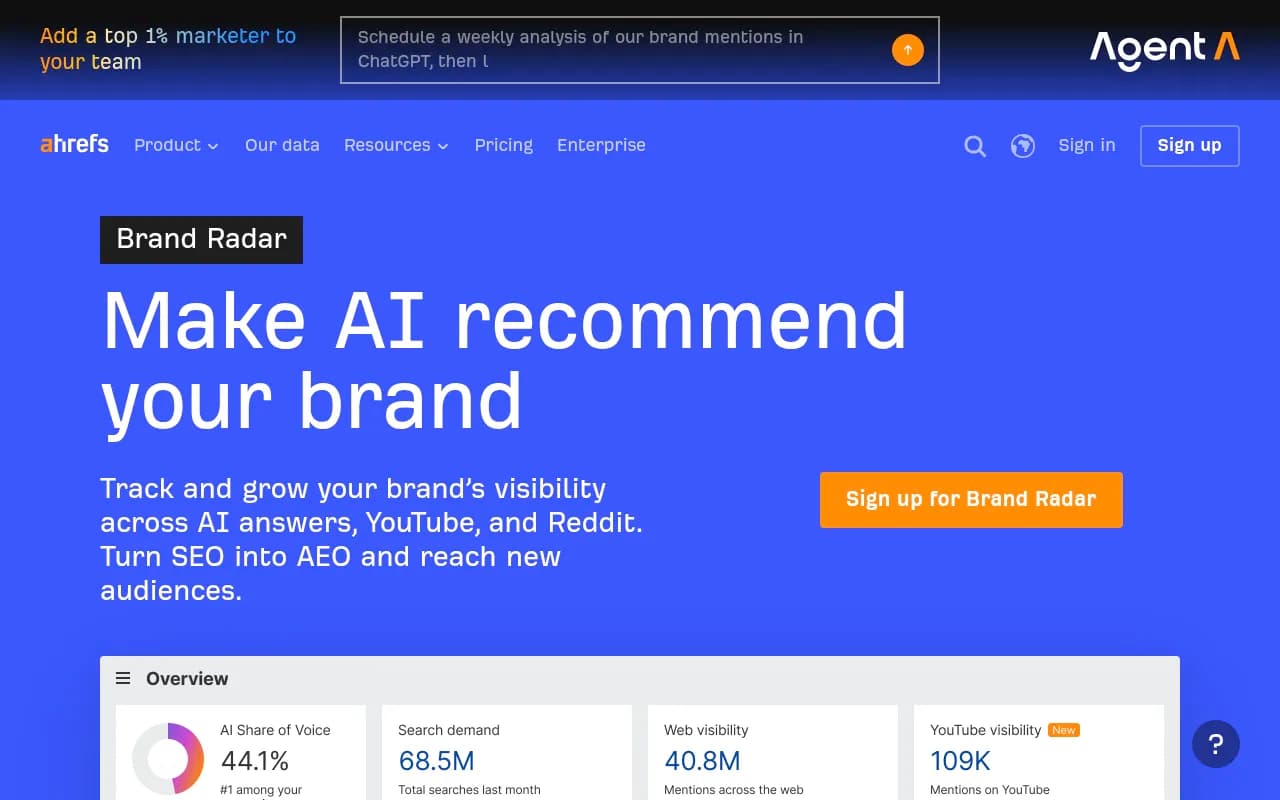
The AI visibility category has grown fast. Quora threads and Reddit roundups are full of the same names: Profound, Peec AI, Otterly.AI, AthenaHQ, Scrunch, Semrush and Ahrefs Brand Radar. As one SEO practitioner put it in the research, most do roughly the same core job. That core job is real, and these are the things it measures well.
Presence and prominence
Whether you are mentioned at all, and where. Good tools score each response on placement and depth, not just a yes or no. Share of voice, meaning your slice of all brand mentions in a prompt set, and average position are the two numbers I would look at first.
Citations and sources
Which of your pages, and which third-party pages, the models cite. This matters because perception is built from sources. Retrieval-based engines browse live results before answering, so the pages they pull from effectively write your description.
Competitor comparison
Seeing who gets recommended instead of you, by prompt, topic and model. This is where AI tools beat surveys, since you can run hundreds of buyer-style prompts in an afternoon.
Sentiment on the response level
Most platforms attach a tone score to each response. It is useful for trends, with a caveat I will come back to below.
What they miss
Here is where I get skeptical. The research was clear that this category is young, and a few gaps show up repeatedly.
They do not measure people
An AI visibility score tells you nothing about awareness, trust or purchase intent among actual consumers. No amount of prompt tracking replaces an unaided recall question. If a vendor implies otherwise, push back.
Volatility makes single snapshots misleading
Ask the same question twice and you can get two different answers. Citation behavior also differs by engine. Promptwatch's Average Sources Per Response report shows ChatGPT citing about 5 sources per web-search answer, Google AI Overviews about 10, and Perplexity almost exactly 10 every day. Copilot's average swung from under 2 to nearly 17 within a few weeks. Since your mention rate depends on how many citation slots an engine offers, a Copilot dip may be a retrieval change on Microsoft's side, not something you did. The report suggests judging Copilot on monthly trends rather than weekly snapshots, which is good advice for every engine.
Perception decays at different speeds
Promptwatch's half-life of content in ChatGPT report tracked pages cited on July 6, 2026 for 90 days. After 30 days ChatGPT still cited 78% of landing pages and 76% of docs. News was the outlier: half of news pages were gone after 36 days. If your AI reputation rests on news coverage, a snapshot goes stale fast. If it rests on landing pages, docs and comparisons, it lasts longer. Either way, one-off audits are the wrong habit.
Sentiment scores are shallow
A positive or negative label on a response is thin. What matters is the specific claim: "affordable for small teams" versus "support is slow." Tools that extract and group claims, then check them against your own pages, are more useful than a single tone number. I could not verify how well individual tools do this, so test it in a trial rather than trusting a feature list.
Dashboards stop before the fix
One practitioner in the research said it bluntly: none of these tools matter if you do not act on the results, and most people run one report and never look again. A score without a to-do list is decoration.
Coverage varies
Some tools query APIs, others capture the real user interfaces. Answers and citations can differ between the two, so check which a vendor uses.
How the two approaches compare
| Question | Survey-based trackers | AI visibility tools |
|---|---|---|
| Who is measured | Real consumers on a panel | AI models and their cited sources |
| Core metrics | Awareness, consideration, trust, favorability | Mentions, position, share of voice, citations, sentiment |
| Cadence | Daily to quarterly | Daily or faster |
| Explains the why | Via open-ended and re-contact questions | Via cited sources and claims |
| Weakness | Slow, costly, blind to model answers | Volatile, no human opinion data |
| Examples | YouGov BrandIndex, Kantar, Qualtrics, Tracksuit | Promptwatch, Profound, Peec AI, Otterly.AI |
Choosing an AI perception tool
When I evaluate this category I use the Morning Consult style of checklist, adapted for AI answers.
- Does it collect from the real interfaces of the engines your buyers use, in your countries and languages?
- Does it show claims and sources, not just a score?
- Does it let you repeat measurement on a schedule so you see trends?
- Does it connect to what happens on your site, such as AI crawler visits and AI-referred traffic?
- Does it help you fix gaps, or only report them?
Here is a quick view of how some catalog options position themselves.
| Tool | Positioning | Where it fits |
|---|---|---|
| Promptwatch | End-to-end visibility, fix and measure loop | Teams that want action, not just reporting |
| Profound | Enterprise AI search analytics | Large brands with monitoring budgets |
| Peec AI | Visibility tracking with suggestions | Lean teams starting out |
| Otterly.AI | Affordable monitoring | Basic mention tracking |
| Waikay | AI brand perception tracker | Perception-focused checks |
| Semrush AI Visibility Toolkit | AI tracking inside an SEO suite | Teams already on Semrush |
Promptwatch is the one I would put first for perception work specifically. Its Brand Narrative feature pulls the individual claims AI makes about you and competitors out of every tracked response, groups repeated ones, and scores themes like pricing, features, support and reputation. Fact Check, on Business and higher plans, lets you mark a claim as inaccurate and then finds the pages on your site that state it, so you know where the model is learning the wrong thing. It collects from real UIs rather than only APIs, and its crawler logs and visitor analytics show whether fixes change behavior. Pricing starts at $95/mo for Essential; confirm current plans at promptwatch.com/pricing.

Other options worth a look:




If you want to browse more, the GEO software directory at bestgeosoftware.com lists a much wider field.
A workable measurement setup
This is the stack I would run, scaled to budget.
Layer one: human perception
Keep a survey-based tracker for awareness, consideration and trust. It can be thin. Its job is audit-grade trendlines you can show a CFO. If budget is tight, a lighter tool or a recurring in-house survey beats nothing.
Layer two: AI answers
Build a prompt set from real buyer questions, split by persona, topic and country. Track it continuously. Read the metrics together: low share of voice points to a coverage problem, late position to a prominence problem, mentions without citations to a content or crawlability problem, and weak sentiment to a reputation problem. Promptwatch's Visibility Score and citations vs mentions guides explain those definitions.
Layer three: your own site
Check whether AI crawlers can actually read your pages and whether AI sends visitors. Many brands discover that perception problems are access problems. Promptwatch's AI crawler logs cover this, and the free Agentic Readiness Check is a quick first test.
Layer four: close the loop
When the tracker shows a wrong claim or a gap, publish or refresh content, then re-measure. Without this step you are paying for a report.
Questions to ask any vendor
- Are responses collected from real interfaces or only APIs?
- How is sentiment calculated, and can I see the individual claims behind it?
- How often do prompts run, and can I follow a launch more closely?
- How do you handle volatility between runs?
- Can I export raw responses and citations?
- What is the evidence it changes outcomes, not just reports them?
A free starting point is Promptwatch's free AI visibility report, a no-login scan of how ChatGPT, Gemini and Perplexity talk about your brand.
Bottom line
AI perception tools are good at telling you what models say and which sources they lean on. They are bad at telling you what customers feel, and they wobble from day to day. Use them for the first job, keep a survey tracker for the second, and pick a platform that helps you fix what it finds. If you want help setting that up end to end, the team at 1001 SEO Media runs AI visibility programs for brands using exactly this kind of loop.