Key takeaways
- YouTube is the single most cited source in Google AI Overviews, holding 4.16% of all citations in June 2026, and Google cites its own properties (YouTube plus google.com) for roughly 6.5% of all AI Overview sources.
- Product pages overtook listicles as the most cited content format in late July 2026, capping a shift that saw product page citations nearly double from ~9% in January to ~18% by July.
- Only about 17% of AI Overview citations come from pages ranking in the organic top 10, and that figure has stayed flat for over a year, according to BrightEdge.
- AI Overviews cite roughly 10 sources per answer, about double ChatGPT's average, which makes it the more forgiving engine for newer or mid-authority domains to break into.
- AI Mode and AI Overviews reach similar conclusions but cite the same URLs only 13.7% of the time, so each surface needs its own optimization effort.
Why citation sources matter more than rankings
For a decade, the goal of SEO was simple: rank in the top 10. In 2026, the goal is getting cited inside an AI-generated answer, because that's where the clicks are going. A Seer study found that brands cited in AI Overviews earn 35% more organic clicks than brands on the same results page that don't get cited. Google itself says AI Overviews now reach more than 2 billion monthly users across 200+ countries.
The problem is that the list of sources Google picks for these answers looks almost nothing like a page-one ranking. BrightEdge's tracking shows only about 17% of AI Overview citation sources also rank in the organic top 10, and that number has been remarkably flat, sitting between 16.1% and 16.9% for months. Roughly five out of six AI Overview citations pull from content that is not on page one of organic results.
One caveat before we go further. You may have seen the claim floating around that top-10 overlap collapsed from 76% in mid-2024 to 17% in early 2026. I'd treat that with suspicion. BrightEdge's own published data only covers a consistent ~16-17% range, and the 76% figure appears to come from a different methodology entirely (Ahrefs measured mid-2025 with different parameters, and at least one vendor reports overlap as high as 93%). Overlap statistics are extremely methodology-dependent. The safest reading: overlap is low, has been low for a long time, and the exact number depends on who's counting.
So if rankings don't determine citations, what does? Let's look at who Google actually trusts, category by category.
The headline numbers: who gets cited most
Promptwatch's citation share data for June 2026 gives us the clearest picture of the AI Overview citation hierarchy. The top three domains were:
| Domain | Share of all AI Overview citations (June 2026) | Trend vs May |
|---|---|---|
| YouTube | 4.16% | Up 0.42pp, a YTD high |
| 2.72% | Up from 2.52% | |
| google.com | 2.30% | Doubled from 1.15%, up 6x since January |
Those three alone hold more than 9% of all AI Overview citations, roughly double their combined share in January. And here's the part that should make any publisher uncomfortable: between YouTube and google.com, Google is citing its own properties for about 6.5% of all AI Overview sources. There is no equivalent self-preference in ChatGPT's citation mix.
Ahrefs' Brand Radar data from September 2026 tells the same story in a different accent: YouTube at 22.9% mention share, Reddit at 18.5%, Facebook at 10.1%, google.com at 8.8%, Instagram at 5.6%. Ahrefs measures share among top sources rather than share of all citations, so the percentages run much higher than Promptwatch's, but the ranking order matches. When two independent datasets agree on the hierarchy, you can trust the pattern.
The long tail matters too. In February 2026, Promptwatch's data showed LinkedIn at 0.70%, Facebook at 0.69%, G2 at 0.18%, Gartner at 0.15%, and Wikipedia at just 0.09%. This is a long-tail distribution, not the winner-take-all pattern you see in ChatGPT, where a handful of domains dominate. That's good news if you're not a mega-domain.
Category by category: who Google trusts
Video: YouTube is the biggest single source, and it's not close
YouTube is the most cited domain in AI Overviews, full stop. In February 2026 it beat Reddit as the top social source with 2.25% of citations to Reddit's 1.65%, and by June it had climbed to 4.16%. Compare that to ChatGPT, which cited YouTube just 0.05% of the time in the same February window, roughly 60 times less than its Reddit citation rate. If you're optimizing for one engine, the platform mix matters as much as the content.
What's interesting is which videos get cited. Promptwatch's YouTube citation research from February 2026 found that the 10K-100K view bucket is the largest at 36% of cited videos, about 80% of citations go to videos under 100K views, and only ~7% went to videos with over 1M views. Engagement barely filters anything: 43% of cited videos had fewer than 100 likes. Small and mid-sized channels dominate, with 10K-100K subscriber channels being the largest bucket at 34%.
The practical read: you don't need a viral channel to get cited in AI Overviews. You need clear, well-titled, well-structured videos that answer specific questions.
Community: Reddit, in slow decline
Reddit is the second most cited source in AI Overviews at 2.72% (June 2026), but the trend is worth watching. Promptwatch's Reddit tracking shows Reddit's share of AI Overview citations declined gradually from an average of 2.37% in early July 2026 to 2.10% by mid-August, an 11.3% relative drop. That's a gentle slope, not a cliff. ChatGPT's Reddit citations, by contrast, collapsed overnight on August 14, 2026, from roughly 4% to 0.5% of citation share. AI Mode fell somewhere in between, dropping 30.5% from 2.22% to 1.54%.
If you're investing in Reddit presence for AI visibility, the data on which posts get cited is humbling. Promptwatch's January 2026 Reddit research found that ~71% of ChatGPT-cited Reddit posts had fewer than 10 upvotes, posts with 500+ upvotes were just 0.6% of citations, and about 60% of cited posts were six months old or older. Only ~11% were under a month old.
In other words, AI engines are not citing Reddit's greatest hits. They're citing specific, on-topic discussions regardless of engagement, and they're heavily favoring older threads. A single well-answered post in the right subreddit can keep earning citations for years.
Google's own properties
google.com went from 0.37% of AI Overview citations in January 2026 to 2.30% in June, a sixfold increase in five months. Some of this is Google citing its own documentation, support pages, and shopping surfaces. You can't outrank Google on google.com, but you can influence the layer underneath: product feeds, Google Business Profiles, and structured data that feed Google's own pages.
LinkedIn: articles over everything
LinkedIn holds a modest ~0.7% of AI Overview citations, but the page-type breakdown from Promptwatch's LinkedIn research (May 17 to June 16, 2026 window) is surprisingly specific. For AI Overviews: Pulse articles take 42.25%, regular posts 27.72%, company pages 12.86%. AI Overviews cited the LinkedIn homepage exactly 0% of the time.
If you're publishing on LinkedIn hoping for AI citations, long-form Pulse articles are roughly 1.5 times more citable than ordinary posts. That's a rare case of a clear, actionable preference inside the data.
B2B review platforms: G2 wins on Google
In the B2B software review category, G2 leads AI Overview citations at roughly 0.2%, which is three to four times the share of Capterra and Trustpilot. GetApp, Software Advice, and Clutch are all near zero. Notably, this hierarchy differs from ChatGPT, where Trustpilot rivals or beats G2. Google's AI leans harder on structured B2B review data, which makes sense given how much structured review data Google already ingests for shopping and local search.
For SaaS companies, the implication is straightforward: a complete, review-rich G2 profile is a citation asset in AI Overviews in a way it isn't quite as much in ChatGPT.
Reference sites: Wikipedia is smaller than you think
Wikipedia holds just 0.15% of AI Overview citations as of June 2026, though it did climb 50% month-over-month. Quora sits at 0.24%. These are useful but not dominant sources. The old assumption that AI answers are built on Wikipedia doesn't hold for Google's AI Overviews, even though Wikipedia remains ChatGPT's single most cited domain at 7.8% of its citations.
What content formats get cited
Domain-level data tells you where to be. Format-level data tells you what to publish. Promptwatch classifies every AI Overview citation into content types, and the 2026 trend line tells a clear story.
| Content format | Q1 2026 average | July 2026 average |
|---|---|---|
| Listicle | 26.1% | 18.0% |
| News article | 15.3% | 13.5% |
| How-to | 12.1% | 15.1% |
| Product page | 9.7% | 16.3% |
| Landing page | 6.2% | 4.7% |
| Social post | 4.1% | 5.1% |
| Video | 3.4% | 5.9% |
| Comparison | 2.7% | 3.6% |
Two shifts stand out. Product pages nearly doubled from ~9% in January to ~18% by July, and on July 28, 2026, product pages overtook listicles as the most cited format for the first time, ending the month at 17.9% versus listicles' 16.2%. Video citations roughly doubled across Q1 and kept climbing. Listicles, the workhorse of SEO content for a decade, are losing share.
Promptwatch describes this as AI search as a whole warming to brand-owned commercial pages, and the same editorial-to-commercial shift shows up in ChatGPT's citation mix. If your content strategy is still built around listicles, you're optimizing for a format that peaked.
Does organic ranking matter at all?
Yes, but less than you'd hope, and it varies wildly by industry. BrightEdge's year-over-year data on the share of AI Overview citations that also rank in the organic top 10:
| Industry | Top-10 overlap |
|---|---|
| Healthcare | 24.0% |
| Education | 23.1% |
| B2B Tech | 22.6% |
| Insurance | 22.4% |
| Entertainment | 18.5% |
| Travel | 17.7% |
| eCommerce | 13.4% |
| Finance | 11.3% |
| Restaurants | 9.3% |
Healthcare and B2B tech are consistently the highest-overlap verticals, which makes sense: they're YMYL-heavy, authority-driven categories where Google's organic rankings and its AI trust signals converge on the same sources. Back in June 2024, NIH.gov alone held 60% of healthcare-query citation share, nearly double the concentration of the top domain across all industries. Finance and restaurants sit at the bottom, with AI Overviews pulling from sources that organic search barely surfaces.
The other industry story is coverage. AI Overviews now appear on roughly 48% of tracked queries, up from ~30% a year earlier, but the distribution is lopsided: healthcare queries show AI Overviews 88% of the time, education 83%, B2B tech 82%, restaurants 78%, while e-commerce coverage reportedly fell to around 4%. Google appears to be protecting ad revenue on transactional queries.
AI Overviews vs AI Mode: two different citation machines
If you're treating AI Overviews and AI Mode as one channel, stop. Ahrefs studied 540,000 query pairs and found the two surfaces reach similar conclusions 86% of the time but cite the same URLs only 13.7% of the time. Domain-level overlap is higher (~88% per ZipTie/Semrush data), but URL-level divergence means the specific page that wins an AI Overview citation often loses the AI Mode citation for the same query.
The mechanics differ too. AI Mode uses query fan-out, issuing multiple related sub-searches before synthesizing an answer, while AI Overviews take a more direct single-lookup approach. AI Mode sessions also run much longer, averaging ~49 seconds per query versus ~21 for AI Overviews. And in AI Mode, only ~14% of cited URLs rank in Google's top 10 organically.
One genuinely encouraging number for anyone trying to break in: AI Overviews cite roughly 10 sources per answer, about double ChatGPT's ~5, and that count has stayed notably steady over time. Ten slots per answer, with only ~17% going to organic top-10 pages, makes AI Overviews the most accessible AI surface for mid-authority domains.

Worth noting: an analysis of 680 million citations across ChatGPT, AI Overviews, and Perplexity found only 11% of domains are cited by both ChatGPT and Perplexity. Each platform runs on different citation logic, and Google's is the most distinct of the three.
What to actually do with this
Pulling the category data together, a few moves follow directly from the numbers:
- Publish product and how-to pages, not just listicles. Product pages are now the most cited format in AI Overviews. If your product pages are thin, that's the cheapest citation win available.
- Get specific on YouTube. Mid-sized channels with clear, question-answering videos are getting cited over viral content. Titles and structure matter more than subscriber counts.
- Write long-form on LinkedIn if B2B. Pulse articles out-cite regular posts by roughly 1.5x in AI Overviews.
- Fill out G2. It's the dominant B2B review platform in Google's citation mix, three to four times its nearest competitor.
- Don't abandon Reddit, but recalibrate. The decline is gradual in AI Overviews, and cited posts skew old and low-engagement. One good answer in the right thread has a long shelf life.
- Optimize for AI Mode separately. Same conclusions, different URLs, 13.7% overlap. Check both surfaces before assuming your work is done.
How to track who Google cites for your queries
All of this category data is useful context, but at some point you need to know who Google cites for your prompts, and whether you're in the answer. That's where AI visibility platforms come in.
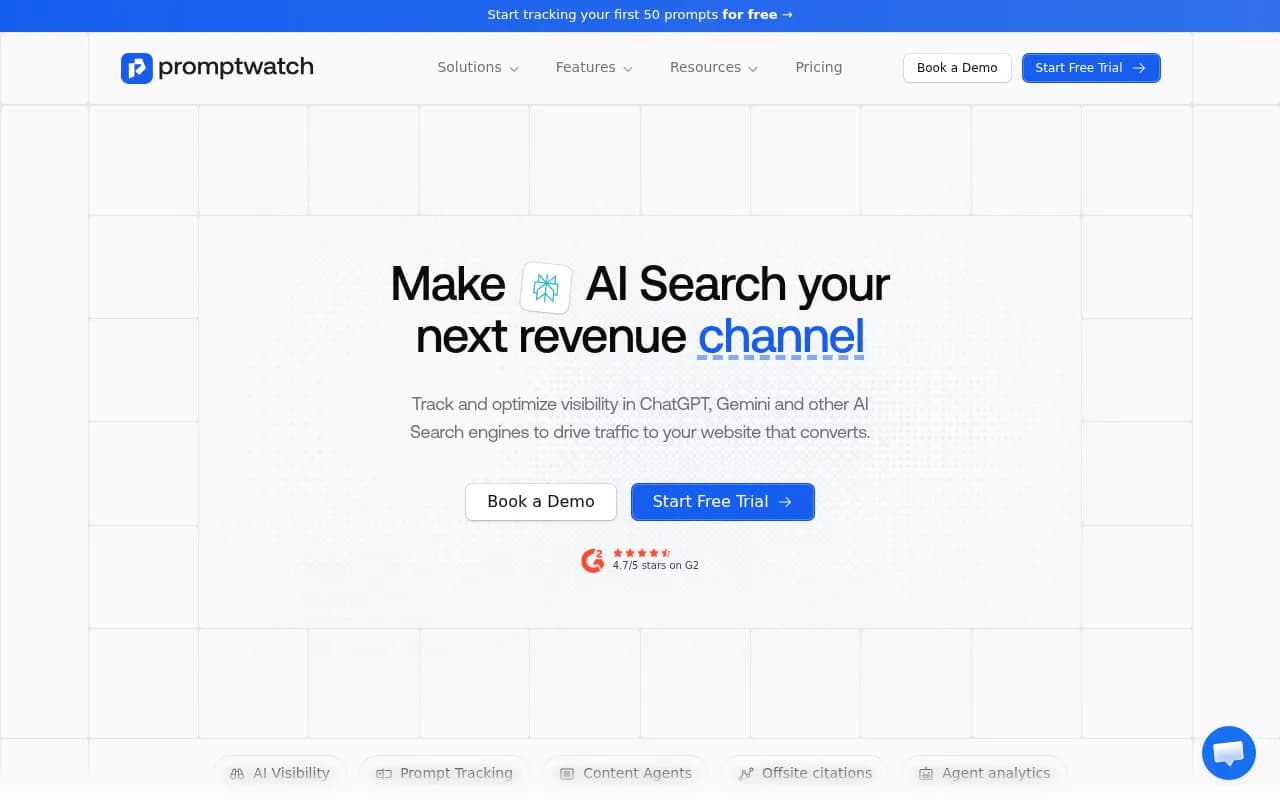
Promptwatch tracks AI Overview and AI Mode citations across your prompt set, with citation trends classified by content type and source type, plus crawler logs showing when Google's AI agents visit your pages and what they read. Its data set of more than 4.5 billion analyzed citations is the same data behind the category breakdowns above, and it's the platform we'd point to first for this specific job.
A few alternatives worth knowing depending on your needs:
| Tool | What it does | Best for |
|---|---|---|
| Promptwatch | End-to-end AI visibility with citation trends, crawler logs, and content optimization | Teams that want monitoring plus execution |
| Knowatoa | AI Overviews and brand monitoring | Focused AI Overviews tracking on a budget |
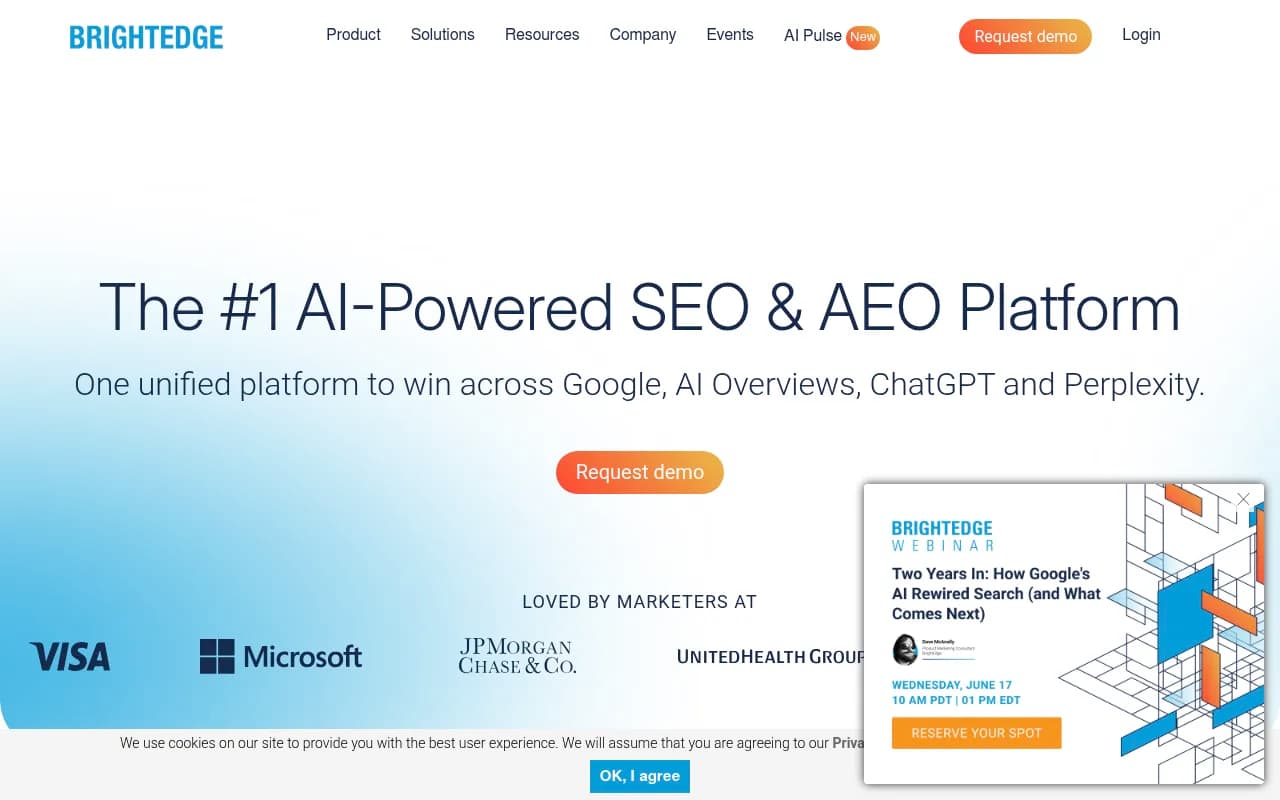
| BrightEdge | Enterprise SEO with AI search intelligence | Large orgs already on BrightEdge |
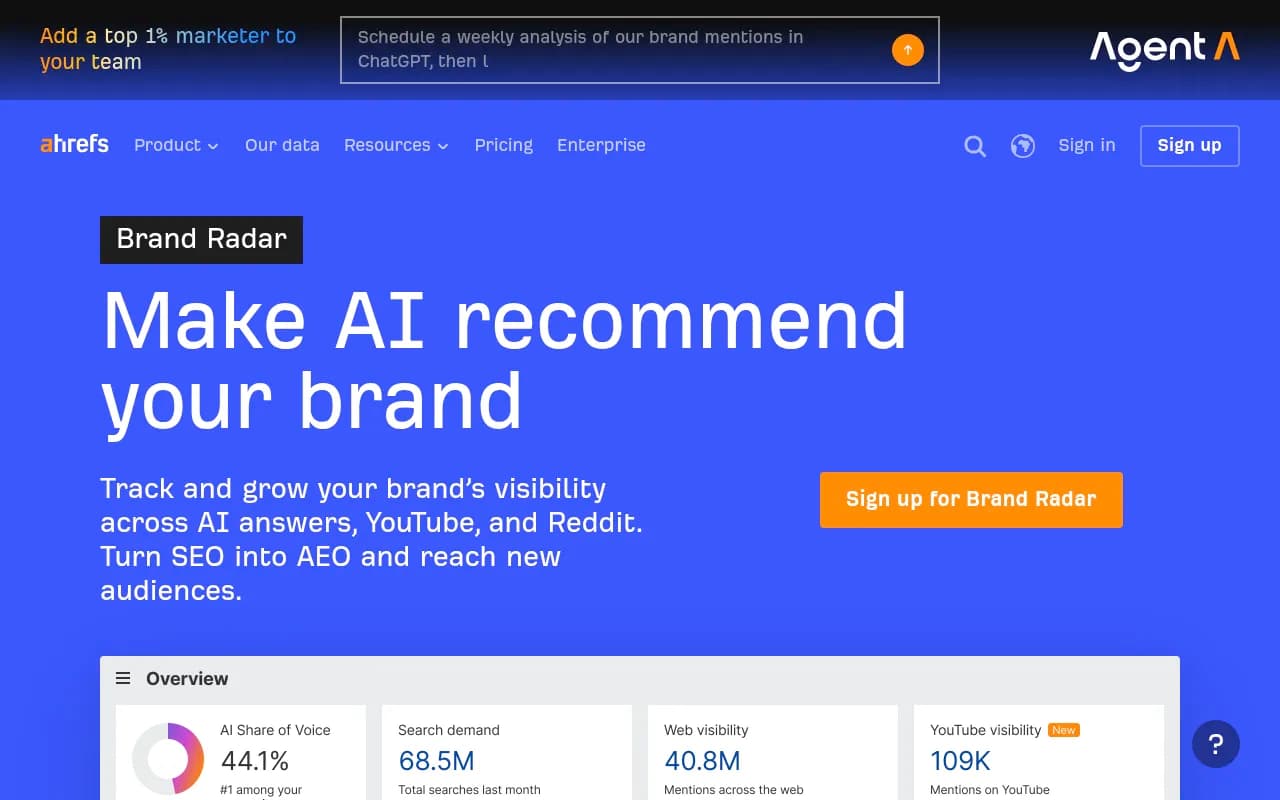
| Ahrefs Brand Radar | Brand tracking across AI search engines | Teams already in the Ahrefs ecosystem |
| MentionBird | Shows which sources AI engines cite | Quick source-level citation research |

MentionBird
If you want to browse the full category, the AI rank tracking tools directory at ai-rank-tools.com covers the landscape in more depth.
The bottom line
Google's AI Overviews trust a strange mix of sources in 2026: its own video platform above everything, aging Reddit threads with single-digit upvotes, mid-sized YouTube channels, G2 profiles, and, increasingly, plain product pages. What they don't particularly trust is the organic top 10, at least not more than about one citation in six. If your AI visibility strategy is still "rank first, get cited eventually," the data says that plan stopped working a while ago.