Key takeaways
- Competitor sentiment in AI responses goes beyond mention counts -- it includes tone, positioning, and whether a brand is recommended, neutral, or subtly dismissed
- Most AI visibility tools track citations and share of voice but only a handful surface sentiment signals at the prompt level
- The tools that matter most for sentiment tracking are those that show you the actual AI-generated text, not just a score
- Platforms like Promptwatch go further by connecting sentiment gaps to content you can actually create and publish
- Monitoring sentiment without acting on it is a waste -- pick a tool that supports the full loop from discovery to optimization
Why competitor sentiment in AI responses actually matters
Traditional rank tracking tells you position. AI visibility tracking tells you presence. But neither tells you how an AI model describes your competitor when a buyer asks "which CRM should I use?" or "what's the best project management tool for remote teams?"
That framing matters more than you might think. AI models don't just list brands -- they characterize them. Perplexity might describe one tool as "the industry standard for enterprise teams" while describing yours as "a solid option for smaller budgets." Both are mentions. One is a recommendation. The other is a soft dismissal.
Sentiment tracking in AI responses is the practice of monitoring not just whether your brand (or a competitor's) appears in AI-generated answers, but how it's described -- the tone, the context, the qualifiers, and the relative positioning against other brands in the same response.
In 2026, with ChatGPT at roughly 900 million weekly active users and Google AI Overviews reaching over 2 billion people monthly, the language AI models use about your category has real commercial weight. A competitor consistently described as "trusted by enterprises" or "the go-to choice for X" is building brand equity in AI search that won't show up in any keyword ranking report.
What to look for in a competitor sentiment tracking tool
Before diving into specific platforms, it's worth being clear about what separates a genuine sentiment tracking tool from a basic AI visibility monitor.
The core capabilities you need:
- Raw response access: You need to see the actual text AI models generate, not just a sentiment score. Scores without context are nearly meaningless -- "positive" could mean anything.
- Prompt-level granularity: Sentiment varies wildly by prompt. A brand might be praised in responses to "best tool for X" but ignored entirely in "top alternatives to Y." You need prompt-level data.
- Competitor comparison in the same response: The most useful signal is how your brand is positioned relative to competitors within a single AI answer. This requires tools that capture full response text, not just brand mentions.
- Multi-model coverage: ChatGPT, Perplexity, Gemini, Claude, and Google AI Mode can describe the same brand very differently. Cross-model sentiment comparison reveals which models favor which competitors.
- Historical tracking: Sentiment shifts over time, especially after a competitor publishes new content, earns press coverage, or gets cited in a major publication. Trend data shows you when something changed.
- Action path: Knowing a competitor is described more favorably than you is only useful if you can do something about it. The best tools connect the gap to a content or optimization action.
The tools worth considering in 2026
Promptwatch
Promptwatch is the most complete option for teams that want to understand competitor sentiment and then actually close the gap. It monitors 10 AI models -- ChatGPT, Perplexity, Google AI Overviews, Google AI Mode, Claude, Gemini, Meta/Llama, DeepSeek, Grok, and Copilot -- and captures the full response text, which is where sentiment lives.
The Answer Gap Analysis feature is particularly relevant here. It shows you which prompts competitors are visible for that you're not, and you can read the actual AI responses to understand why a competitor is being recommended. Is it because they have a dedicated comparison page? A well-cited case study? A Reddit thread that keeps getting pulled in? That context is what turns sentiment monitoring into a strategy.
The Content Agents then let you generate content specifically engineered to address those gaps -- articles, comparisons, and briefs grounded in real prompt data and competitor citation analysis. It's the difference between knowing a competitor is described as "the enterprise standard" and publishing the content that changes that narrative.

Profound
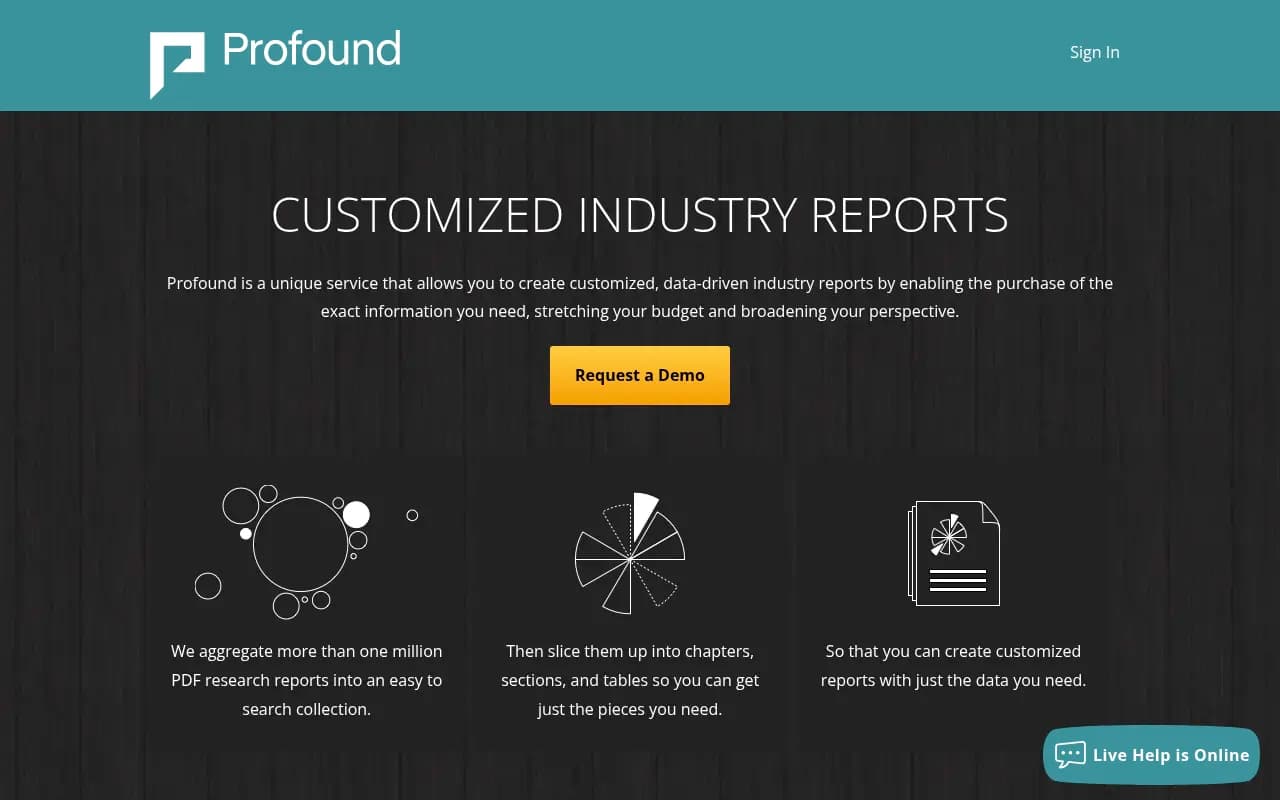
Profound is the strongest dedicated monitoring platform for enterprise teams that need deep reporting and stakeholder-ready dashboards. It captures AI responses across major models and surfaces competitor positioning data with enough granularity to track sentiment shifts over time.
Where it falls short for sentiment work specifically: it's primarily a monitoring tool. You get the data, but the path from "competitor X is described more favorably in Perplexity responses" to "here's the content we need to publish" isn't built into the workflow. For large teams with dedicated content resources, that's fine. For smaller teams, it means the insight often sits in a dashboard without turning into action.
Otterly.AI
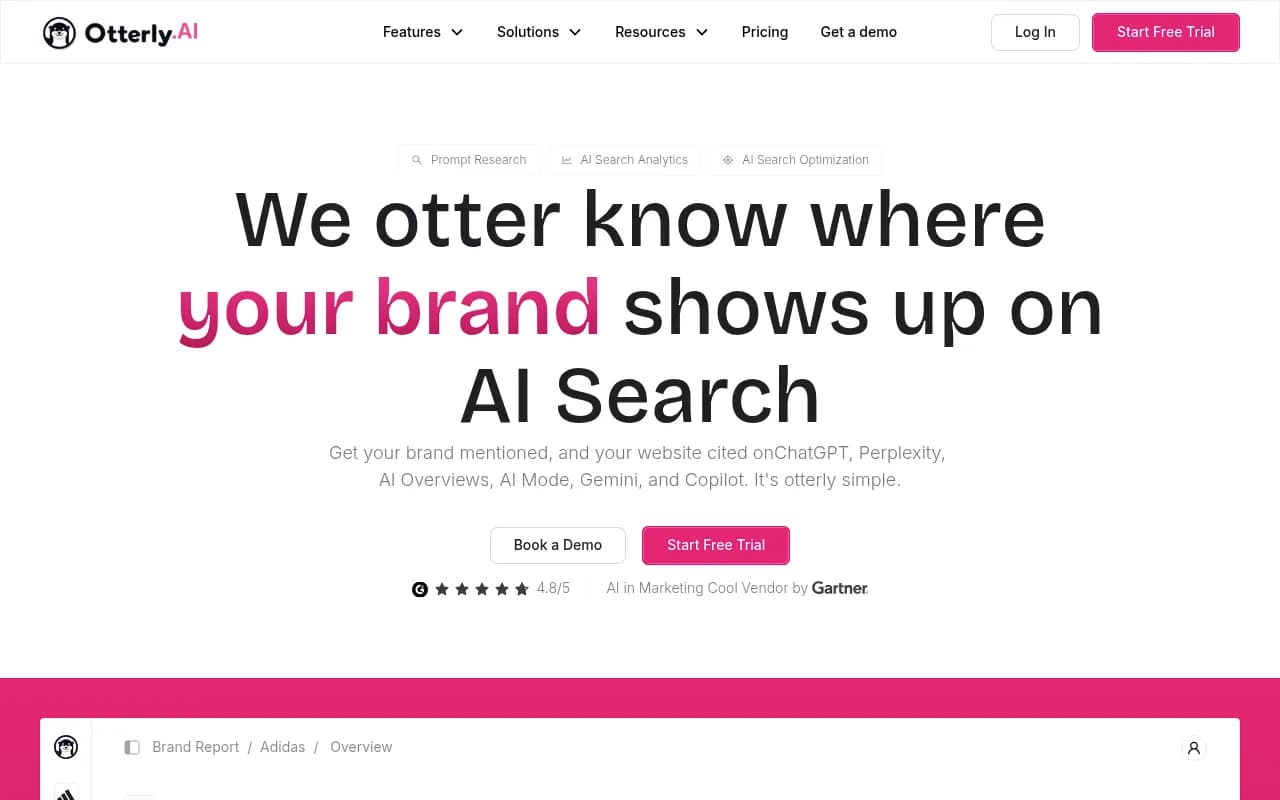
Otterly.AI is a solid entry-level option for teams that want to start tracking AI visibility without a large budget. It covers the major AI models and shows brand mentions and competitor comparisons at the prompt level.
The limitation for sentiment tracking is that it's primarily a monitoring dashboard. You can see that a competitor appears more often than you, but the tool doesn't surface the actual response text in a way that makes sentiment analysis straightforward. It's better suited for share-of-voice tracking than for understanding the qualitative language AI models use.
Semrush AI Visibility Toolkit
Semrush added AI visibility tracking to its existing platform, which makes it a natural choice for teams already standardized on Semrush. The AI Visibility Toolkit shows brand mentions across AI search surfaces and includes competitor benchmarking.
The sentiment angle is limited compared to dedicated GEO platforms. Semrush uses fixed prompts rather than custom prompt sets, which means you're tracking a predefined list of queries rather than the specific questions your buyers are actually asking. For broad competitive benchmarking it works. For nuanced sentiment analysis at the prompt level, it's less precise.
Peec AI
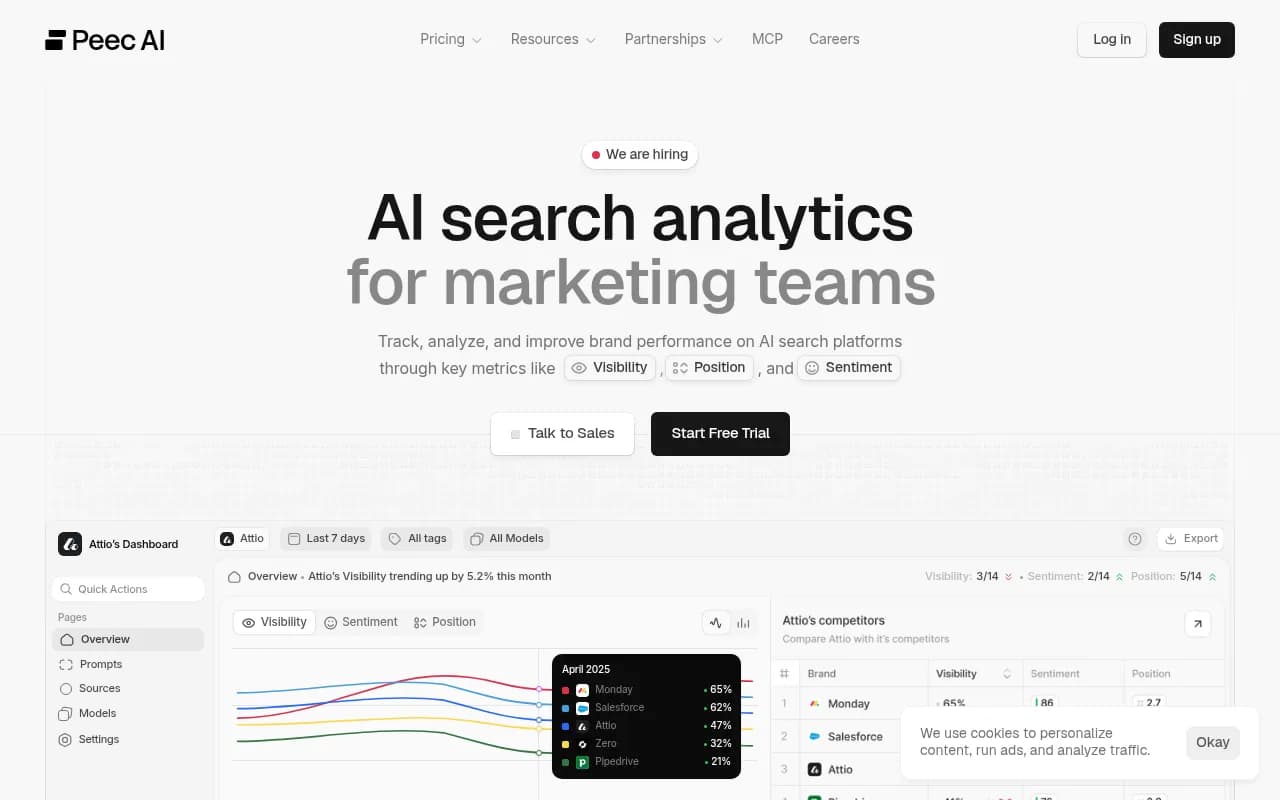
Peec AI is a budget-friendly European option (around €75/month) focused on basic visibility tracking and competitor benchmarking. It covers the main AI models and gives you a clear picture of share of voice.
For sentiment tracking specifically, it's limited. The platform shows you that competitors are mentioned more, not how they're described. If you're just starting out and want to understand the competitive landscape before investing in a more capable platform, it's a reasonable starting point.
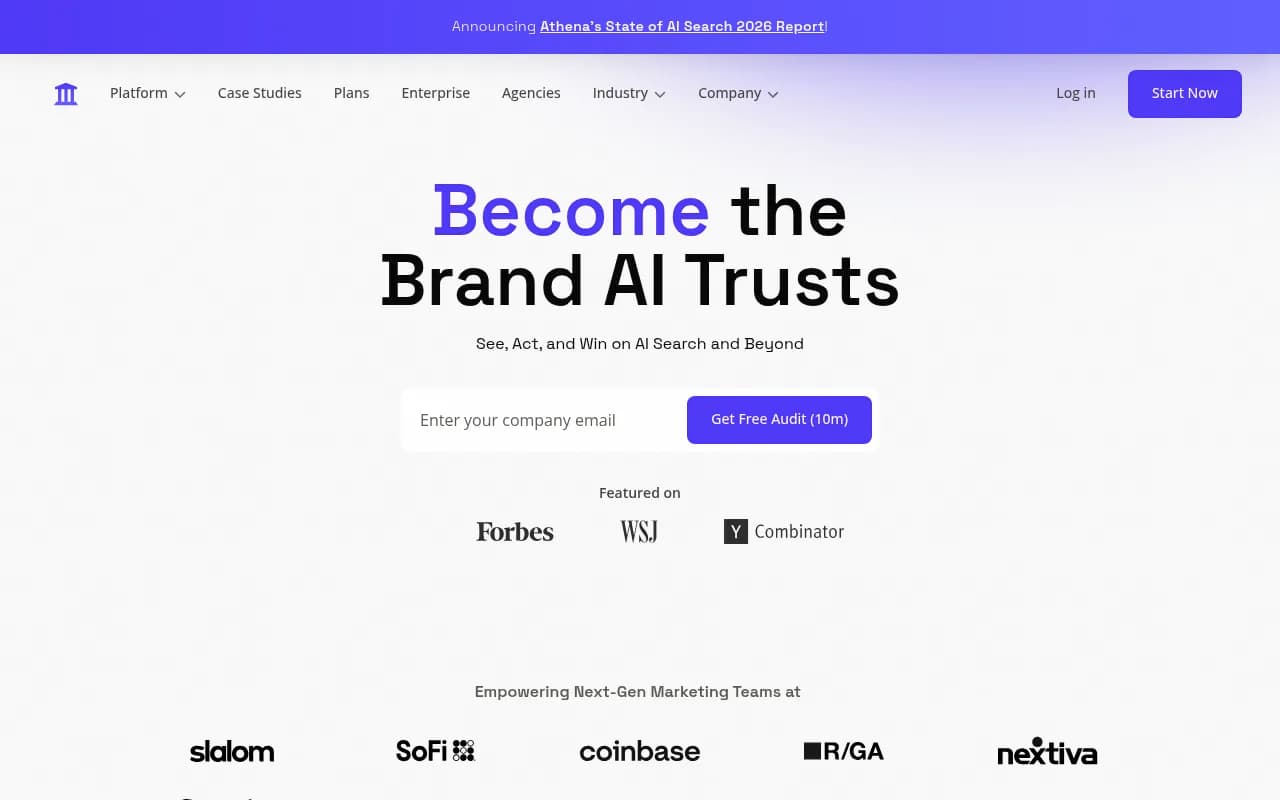
AthenaHQ
AthenaHQ is a monitoring-focused platform with solid coverage of AI search engines and clean competitor comparison views. It's well-suited for teams that want to track visibility trends and share of voice across models.
Like several others on this list, it's primarily a tracker. The sentiment data you'd need to understand why a competitor is positioned favorably -- the actual response text, the citation sources, the content gaps -- requires more manual investigation outside the platform.
Scrunch AI
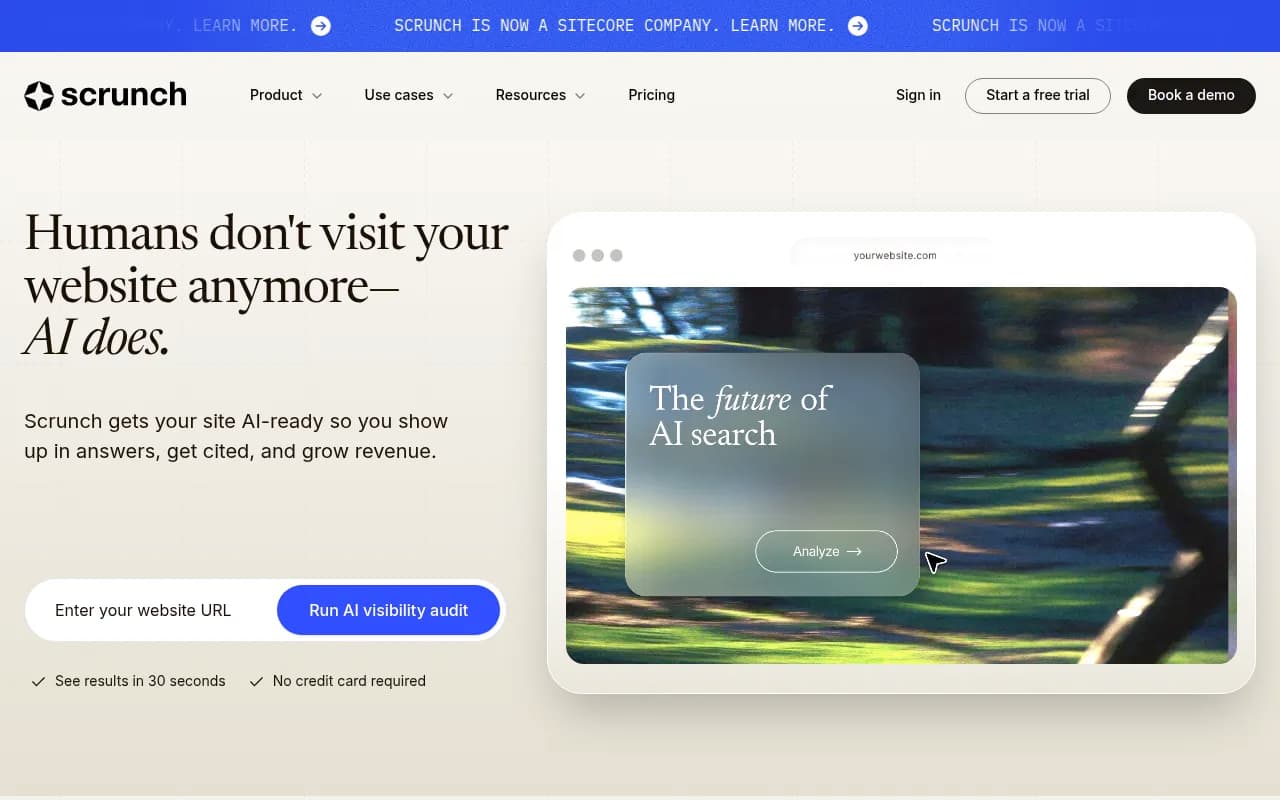
Scrunch AI is built for brands and agencies that need to monitor AI search visibility across multiple clients or product lines. It covers the major models and includes competitor tracking with response-level data.
It's one of the better options for actually reading AI-generated responses rather than just counting mentions, which makes it more useful for qualitative sentiment work than pure monitoring tools. The content optimization side is less developed than Promptwatch, but for monitoring-heavy workflows it's a strong choice.
SE Ranking Visible
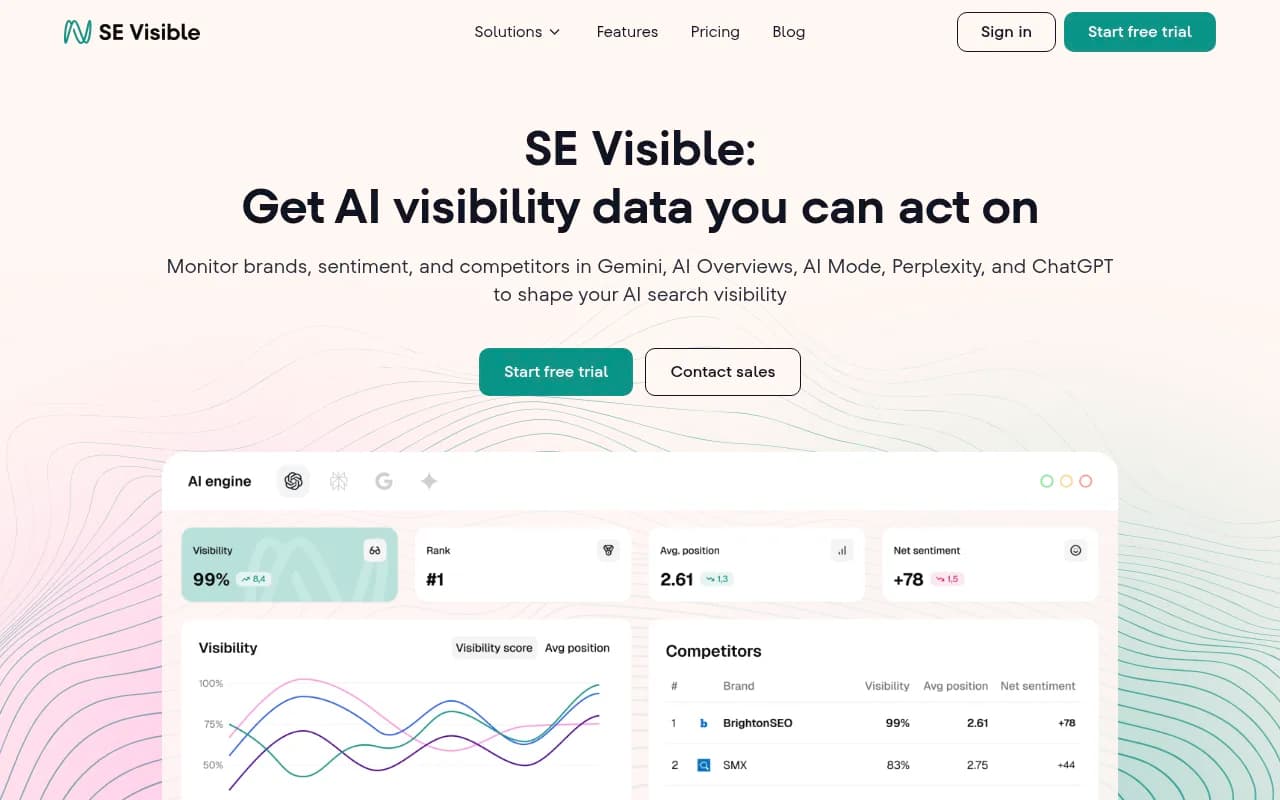
SE Ranking's AI visibility product (Visible) brings AI search monitoring into the broader SE Ranking ecosystem. It tracks brand mentions and competitor positioning across AI models and integrates with SE Ranking's existing SEO data.
For teams already using SE Ranking for traditional SEO, it's a convenient way to add AI visibility monitoring without switching platforms. Sentiment tracking at the prompt level is possible but requires manual review of response data rather than automated sentiment scoring.
How these tools compare on the features that matter for sentiment tracking
| Tool | Actual response text | Prompt-level sentiment | Competitor comparison | Multi-model coverage | Content generation | Pricing (starting) |
|---|---|---|---|---|---|---|
| Promptwatch | Yes | Yes | Yes | 10 models | Yes (Content Agents) | $99/mo |
| Profound | Yes | Yes | Yes | Multiple | No | Higher tier |
| Scrunch AI | Yes | Partial | Yes | Multiple | No | Custom |
| AthenaHQ | Partial | Partial | Yes | Multiple | No | Custom |
| Semrush AI Toolkit | Partial | Limited | Yes | Multiple | No | Add-on |
| Otterly.AI | Limited | No | Yes | Multiple | No | Lower tier |
| Peec AI | Limited | No | Yes | Multiple | No | ~€75/mo |
| SE Ranking Visible | Partial | Partial | Yes | Multiple | No | Bundled |
The pattern is consistent: most tools show you that a competitor is more visible. Fewer show you how they're described. Only a handful connect that insight to content you can actually create.
A practical approach to tracking competitor sentiment
Having the right tool is only part of it. Here's how to actually use these platforms to track and respond to competitor sentiment in AI responses.
Step 1: Build a prompt set that reflects real buyer questions
Don't just track your brand name. Track the prompts your buyers are actually asking -- "best [category] tool for [use case]", "alternatives to [competitor]", "[competitor] vs [your brand]", "which [category] tool is best for [industry]". These are the prompts where sentiment matters most because they're the ones driving purchase decisions.
Tools like Promptwatch let you build custom prompt sets and track how AI responses evolve over time. Semrush uses fixed prompts, which is a real limitation for this kind of work.
Step 2: Read the actual responses, not just the scores
This is where most teams go wrong. They look at a share-of-voice chart and conclude "competitor X is winning." But the chart doesn't tell you that competitor X is being described as "the enterprise option" while you're being described as "a good choice for startups." That framing is the competitive intelligence.
Set aside time each week to read actual AI-generated responses for your most important prompts. Look for patterns in how competitors are described -- the adjectives, the qualifiers, the use cases they're associated with.
Step 3: Identify the content driving favorable sentiment
AI models don't invent characterizations from nothing. When Perplexity describes a competitor as "trusted by enterprise teams," it's usually pulling that framing from a specific page, case study, press release, or third-party review. Tools with citation tracking (Promptwatch's offsite citation analysis, for example) show you exactly which sources are feeding that narrative.
Once you know the source, you know what to create. A competitor's enterprise positioning is often driven by a handful of well-placed case studies and a strong G2 or Capterra presence. That's replicable.
Step 4: Create content that shifts the narrative
This is where monitoring-only tools hit a wall. Knowing a competitor is described more favorably is useful. Knowing which content to create to change that is actionable.
Content Agents in Promptwatch generate articles and comparisons grounded in the specific prompt data and citation gaps you've identified. The output isn't generic -- it's calibrated to the exact questions where your competitor is winning the narrative.
Step 5: Track the shift
Publish the content, then watch the AI responses. How long does it take for a new page to get crawled by AI agents? Which models pick it up first? Does the sentiment in responses change? AI crawler logs (available in Promptwatch's Professional and Business tiers) show you exactly when AI crawlers visit your new pages and when those pages start appearing in citations.
This is the full loop: find the gap, create the content, track the result.
The sentiment signals most teams miss
A few things worth watching that don't show up in standard visibility reports:
Comparative framing: When AI models compare two brands in the same response, the order and language matter. "Brand A is the industry leader, while Brand B is a more affordable alternative" is very different from "both Brand A and Brand B are strong options." The first frames you as the budget choice. The second is neutral.
Use-case association: AI models often associate brands with specific use cases based on the content they've indexed. If your competitor is consistently associated with "enterprise" or "high-growth teams" and you're associated with "small businesses," that's a sentiment gap even if your product serves both markets equally well.
Absence as a signal: Not being mentioned in a response where competitors are mentioned is itself a form of negative sentiment. It signals that AI models don't have enough information about you to include you in the answer. Citation gap analysis makes this visible.
Reddit and YouTube influence: AI models frequently pull framing and characterizations from Reddit threads and YouTube reviews, not just official brand pages. A Reddit thread where users describe a competitor as "the gold standard" can influence AI responses for months. Tools that track Reddit and YouTube citations (Promptwatch does this; most competitors don't) surface this before it becomes a bigger problem.
Which tool is right for your situation
If you need to track competitor sentiment and act on it in the same workflow, Promptwatch is the strongest option. The combination of full response text, prompt-level tracking, citation analysis, and Content Agents covers the full loop from discovery to optimization.
If you're an enterprise team with dedicated content resources and need deep reporting for stakeholders, Profound is worth evaluating alongside Promptwatch.
If you're budget-constrained and just starting out, Otterly.AI or Peec AI give you enough to understand the competitive landscape before committing to a more capable platform.
If you're already on Semrush and want to add AI visibility without switching tools, the AI Visibility Toolkit is a reasonable starting point -- just be aware of the fixed-prompt limitation for nuanced sentiment work.
The one thing to avoid: picking a monitoring-only tool and expecting it to tell you what to do. The data is only useful if it connects to an action. Most tools in this space stop at the alert. The ones worth paying for don't.