Key takeaways
- Free tiers and free trials are enough to run a real GEO pilot, but they differ a lot: some cap prompts, some cap engines, some are just a time-limited trial.
- Pick a free plan by what you need to learn: do we show up, which sources get cited, and does AI send us traffic.
- Promptwatch has a free Explore plan (1 project, 10 prompts, ChatGPT only) and a 7-day trial on paid plans. Others such as AthenaHQ, OpenLens and Surfaced are reported to have free plans, so confirm each on the vendor's pricing page.
- Measure each AI engine separately. Citation behavior differs too much for one engine to predict another.
- Decide your upgrade trigger before you start, or the pilot never ends.
What a free plan can and cannot tell you
I'll be blunt: most free plans are built to get you hooked, not to run your whole program. That is fine. A pilot does not need 500 prompts. It needs enough data to answer three questions: is the brand mentioned at all, who gets mentioned instead, and which pages and third-party sources the AI engines cite.
What you usually give up on a free tier:
- Prompt volume (often 10 to 50 tracked prompts)
- Engine coverage (some free plans track one engine only)
- History, exports and team seats
- Anything that acts on the data, like content generation or crawler logs
What you can still learn is a lot. A baseline visibility score, a first list of competitors that keep appearing, and the domains the engines trust in your category. That is the material for a GEO business case.
Why engine coverage matters even on a free plan
Promptwatch Data on average sources per response shows how different the engines are. ChatGPT cites about 5 sources per web-search answer, Google AI Overviews about 10, and Perplexity almost exactly 10 every day. Copilot swung from under 2 to nearly 17 within a few weeks before settling low. The report even suggests Perplexity as a stable test bench, because a change in your citations there reflects your content rather than engine noise.
The practical takeaway: a free plan that tracks only ChatGPT gives you one slice. Useful, but treat it as a slice.
Also keep in mind that the prompts you track are not the searches the engine runs. Promptwatch's ChatGPT query fanout data showed average fanouts per response of 2.15 in early December falling to about 1.84 by early March, with average query length dropping from roughly 117 characters to the high 80s and later about 53. Those are short, keyword-like searches. So write headings that read like search queries, and pick tracked prompts that map to them.
Free and free-trial options compared
Pricing changes quickly and several of the figures below come from vendor-published roundups, so treat them as starting points and confirm on each pricing page before you commit.
| Tool | Free option | What to check | Best for |
|---|---|---|---|
| Promptwatch | Free Explore plan (1 project, 10 prompts, ChatGPT only); 7-day trial on monthly paid plans | Paid plans unlock all models and the action layer | Teams that expect to move from measuring to fixing |
| AthenaHQ | Free Essential plan reported at 300 credits (one credit is one AI response); 5 models on free | Starter reported at $295/month | Teams wanting multi-model checks without paying |
| OpenLens | Forever-free plan reported: 2 seats, 3 projects, 1,000 pooled credits a month, MCP and API calls included | Verify current limits | Small teams that want seats and API access for free |
| Surfaced | Free plan reported; Starter around 39 EUR/month billed annually | Verify limits | Tight-budget starts |
| KIME | 7-day full-feature trial on self-serve plans, from 99 EUR/month | Trial only, not a free tier | European and Nordic teams |
| Otterly.AI | No free tier reported; from $29/month | Cheapest paid entry | Solo founders testing the channel |
| HubSpot AEO Grader | Free grader | One-off score, not ongoing tracking | Getting a number before any buying decision |
Treat the claims about AthenaHQ, OpenLens, Surfaced and KIME as reported by third-party roundups, some of them written by competing vendors. I have not verified them against the vendors' own pages.
The tools, in more detail
Promptwatch
Promptwatch is the one I would point a team to if they suspect the pilot will turn into a real program. The free Explore plan is small on purpose: one project, 10 prompts, ChatGPT only. That is enough to see whether the brand appears and what gets cited. The paid plans start at $95/month (Essential) and unlock every tracked model, including Google AI Overviews, AI Mode, Gemini, Perplexity and Copilot, tracked from the real interfaces rather than only APIs. Confirm current limits at promptwatch.com/pricing.
What separates it from pure trackers is what happens after you find a gap. It has IP-verified AI crawler logs, visitor analytics for AI-referred traffic, a content gap analysis, and a Content Agent that writes and publishes to WordPress, Webflow or Framer. Crisp reported 2x higher conversion rates from AI traffic than from traditional channels using it. Most free-plan tools stop at "here is your score".

Promptwatch also has free no-login utilities worth using alongside any tracker: the Free AI Visibility Report, the Agentic Readiness Check and an AI crawler URL inspector.
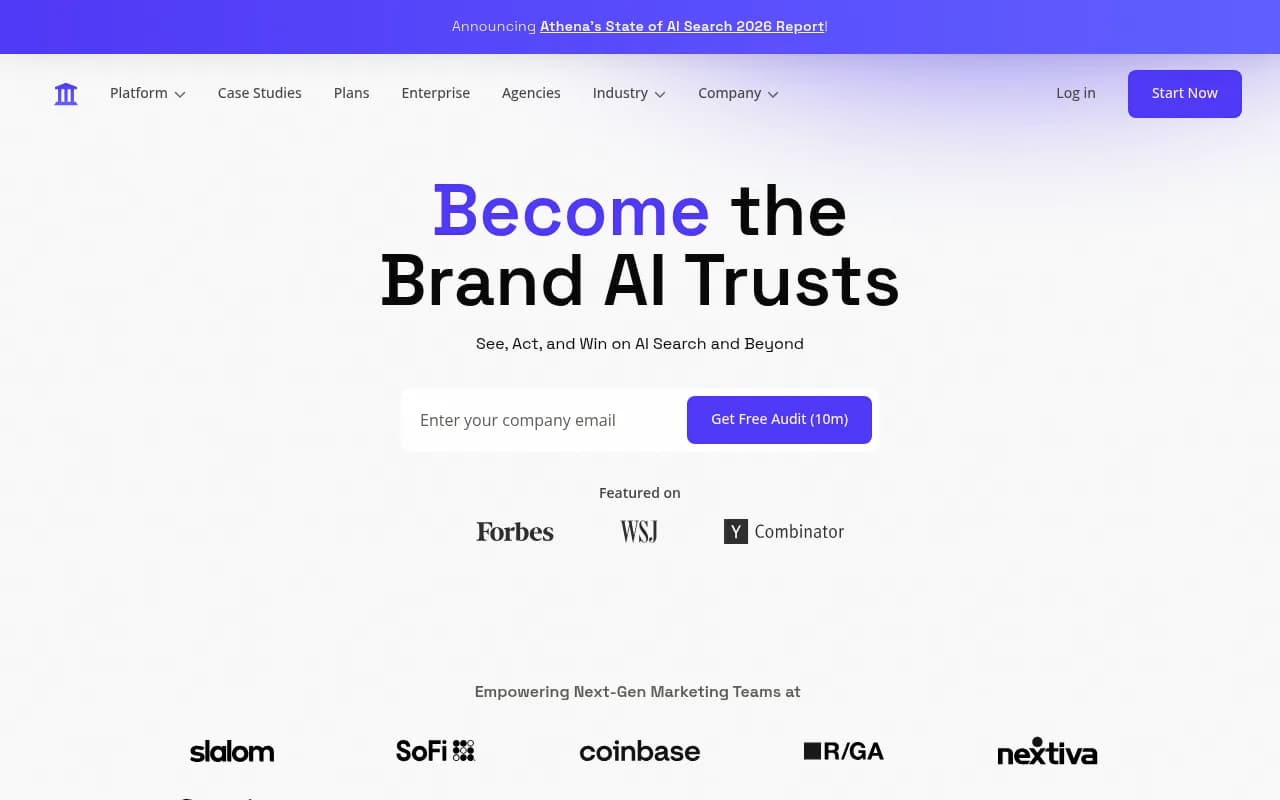
AthenaHQ
Reported to offer a free Essential plan with 300 credits, where one credit equals one AI response. That is a rough budget: 300 responses is about 30 prompts run ten times, or 100 prompts run three times. Good for a first read across several models.
OpenLens
OpenLens is described by Position Digital as one of the best free AI visibility trackers, with 2 seats, 3 projects, pooled monthly credits, weekly and monthly tracking and some MCP and API calls. If your team needs more than one seat on a free plan, that is unusual. It is not in my tool catalog, so check its site directly.
Surfaced and Otterly.AI
Surfaced was listed in IndustryLens with a free plan and a low-cost annual starter. Otterly.AI is the usual answer for the cheapest paid start, from $29/month, and includes GEO URL audits according to one roundup.

KIME
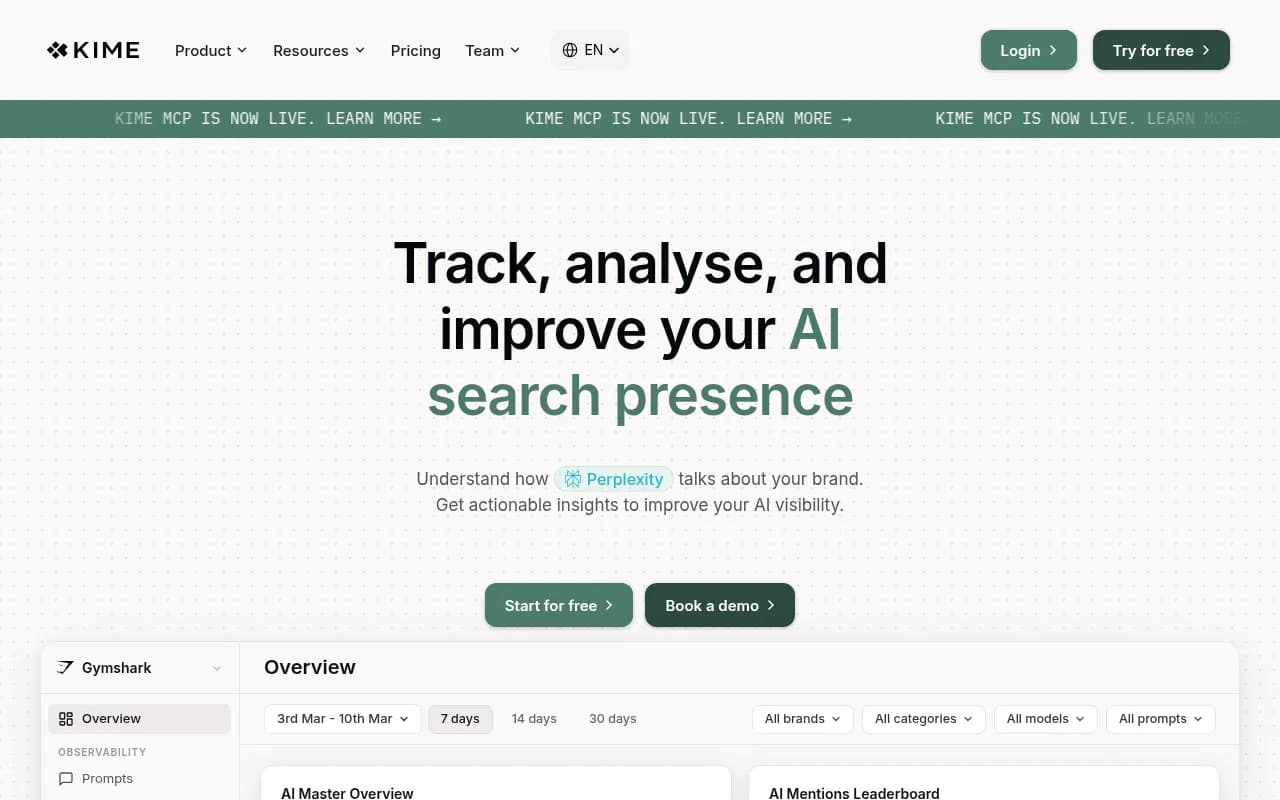
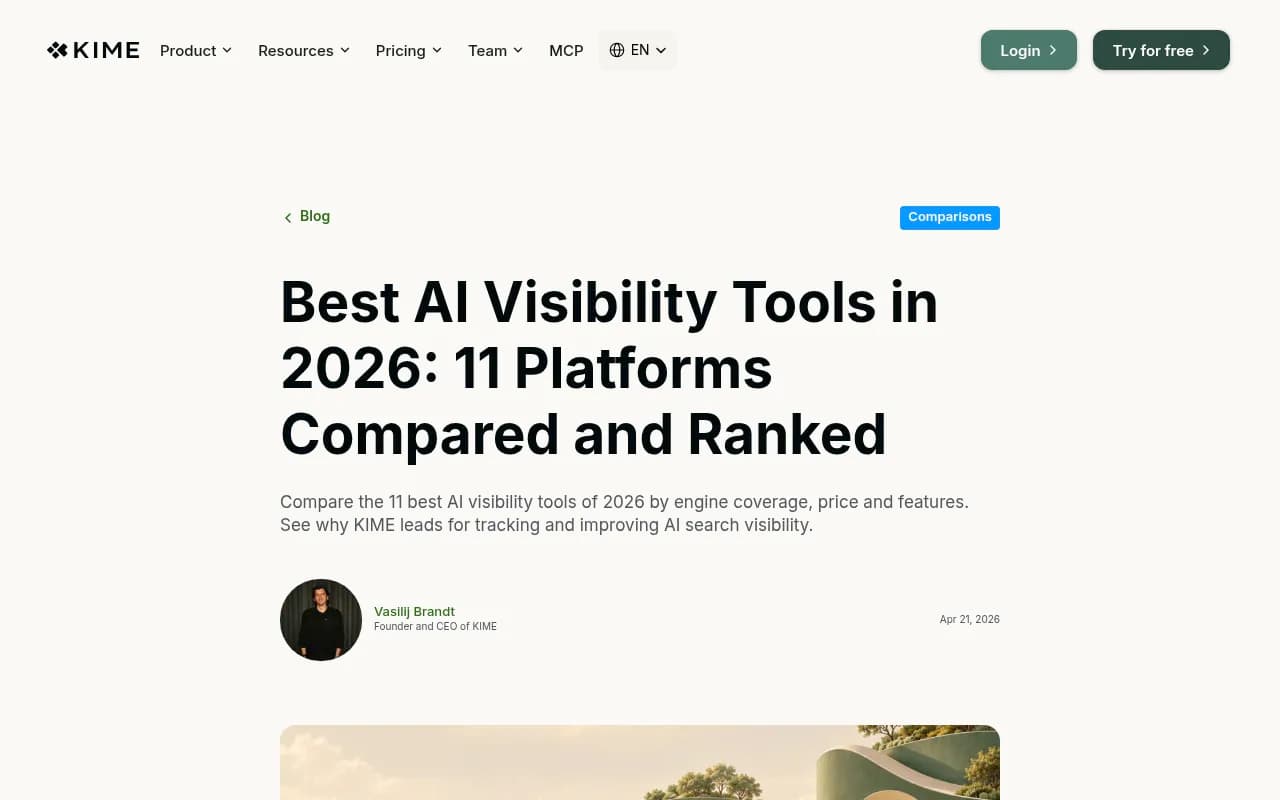
KIME is not a free plan but a 7-day trial with full features. It tracks nine engines, according to its own comparison article, which also ranks KIME first. Read that ranking with the obvious caution.
Other trackers worth a look
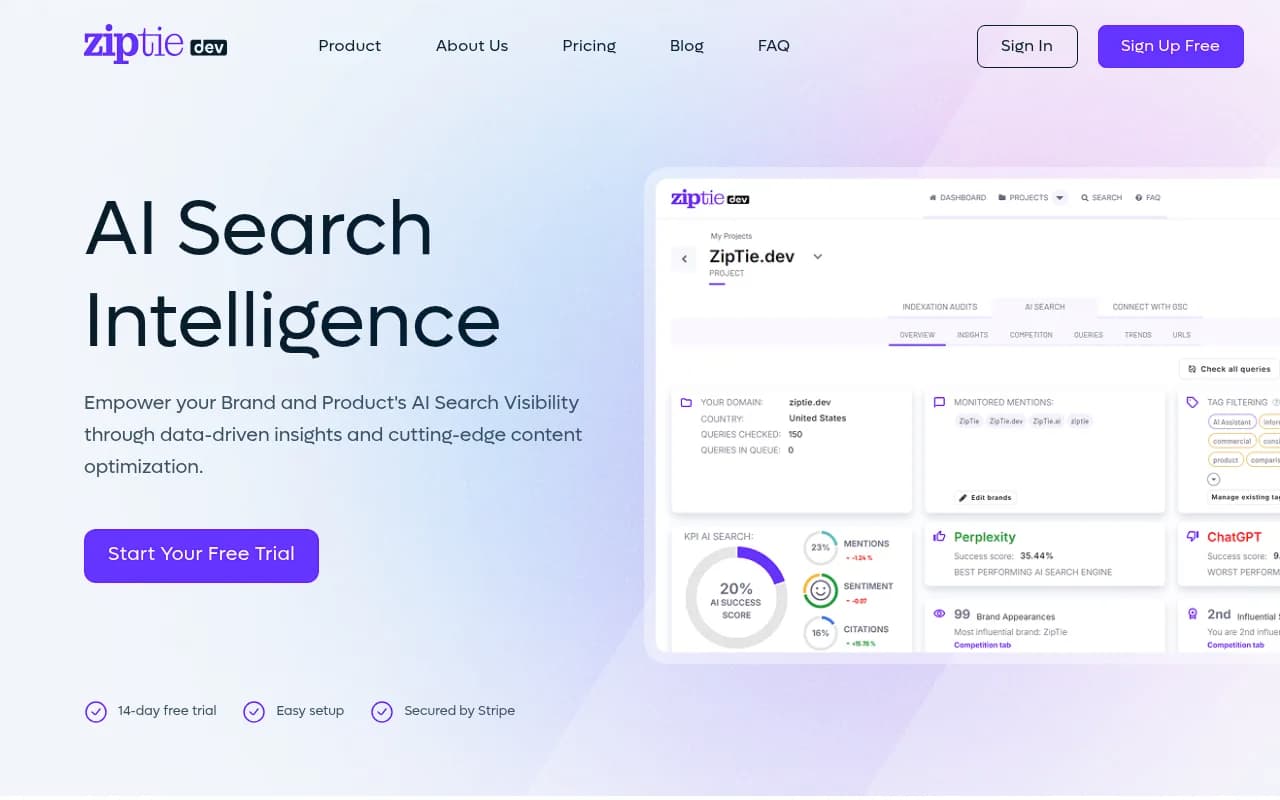
Peec AI is well regarded for smart suggestions, and ZipTie for deeper analysis and reporting, both per Zapier's roundup. Similarweb has no public pricing.

Similarweb AI Brand Visibility
For a wider view of the category, Zapier's list is a decent independent starting point:
If you want to browse beyond these, the GEO software directory at bestgeosoftware.com covers many more.
How to run a two-week GEO pilot on a free plan
Week 0: set the questions
Write down what the pilot must answer. For example: are we named for our top 10 commercial prompts, which competitors show up, and which domains does the engine cite?
Pick prompts like a buyer would
Use a mix of three types: category prompts ("best X for Y"), comparison prompts ("A vs B"), and brand prompts. With 10 prompts, skip brand-only ones at first. You already know you exist; you want to know if strangers find you.
Run, then repeat
AI answers vary run to run. One snapshot misleads. If the plan counts responses, spend credits on repeating the same few prompts rather than adding many new ones.
Read the citations, not just the mentions
For each prompt, note which domains get cited. If review sites, marketplaces or documentation dominate your category, that tells you where to earn presence. Promptwatch's software citation data, for instance, shows GitHub, Microsoft's docs and G2 leading ChatGPT citations in the week of Sep 28 to Oct 4, 2026. Your category will have its own pattern.
Check whether the AI can read you
A free tracker tells you the outcome. It rarely tells you why. Run a crawler check (Promptwatch's Agentic Readiness Check is free) and review robots.txt for AI bots. If crawlers are blocked, no content fix will help.
Choosing based on what you need
| If you need | Start with |
|---|---|
| A single score to anchor a meeting | HubSpot AEO Grader or Promptwatch's free report |
| A multi-seat free plan | OpenLens (verify limits) |
| Several models for free | AthenaHQ free plan (verify limits) |
| Path from tracking to publishing | Promptwatch |
| Cheapest paid tracker | Otterly.AI |
| Already pay for an SEO suite | Semrush AI Visibility Toolkit or Ahrefs Brand Radar |

Setting your upgrade trigger
Free plans fail teams in one way: nobody decides when the pilot ends. Pick a rule up front. Mine would be: upgrade if the pilot finds at least five commercial prompts where competitors are named and we are not, and we have content or fixes ready to ship. Stay free if the data shows we already appear consistently.
Also check three limits before paying: which engines are on the plan you would buy, whether the prompt count supports your real topic list, and whether the tool can show traffic or crawler activity, not just mentions.
Mistakes to avoid
- Judging all AI search from ChatGPT alone
- Reading one day of data as a trend
- Trusting vendor rankings where the vendor ranks itself first
- Tracking only brand prompts
- Collecting a baseline and never changing a page
One last thing. Pricing and free-plan limits in this space shift almost monthly, and several figures above come from secondary sources. Open each vendor's pricing page before you sign up, then start the clock on a two-week pilot. The best free plan is the one you actually finish testing on.