Key takeaways
- Local GEO takes two toolsets: a local presence layer (listings, reviews, Google Business Profile) and an AI visibility layer (tracking prompts, citations and crawlers). Most agencies need both.
- For agencies, multi-client pricing, location-level tracking and reporting matter more than raw prompt counts.
- Promptwatch's data (Sep 28 to Oct 4, 2026) shows product and landing pages earn 39% of ChatGPT citations, so a local client's service pages do most of the work.
- Tracking alone does not win clients. Pick at least one tool that helps you fix gaps, not just report them.
- Treat "best GEO agency" and "best GEO tool" listicles with suspicion. Many are written by the vendors they rank.
Why local clients need a different GEO stack
A national SaaS brand worries about category prompts like "best CRM for startups." A plumber in Leeds or a dentist in Austin worries about something narrower: "emergency plumber near me" or "who is the best family dentist in my neighborhood." The answer depends on where the person is standing.
That changes what you need from a tool. Generic share-of-voice dashboards built for national brands are a poor fit. You want location-aware tracking, a way to monitor dozens or hundreds of small clients without a per-client price shock, and some connection to the things local search has always run on: listings, reviews, and a clean Google Business Profile.
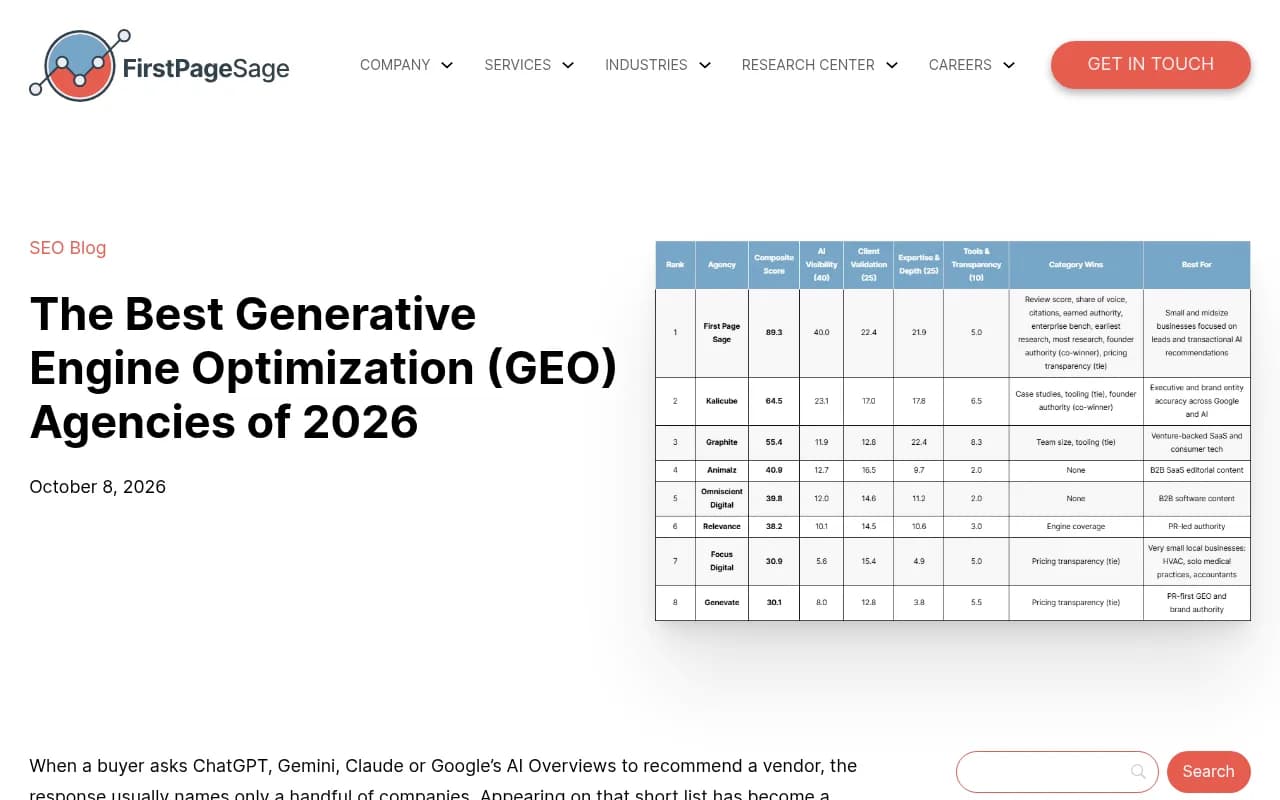
One research note worth keeping in mind. First Page Sage's October 2026 agency study says very small local businesses (HVAC firms, solo medical practices, accounting firms) are the ones most AI-search specialists ignore. Their pick for that niche, Focus Digital, has the lowest share of voice in the study at 4%, which is unsurprising when clients compete in local markets instead of national category searches. That study is vendor-run research, so take the ranking lightly. The underlying point holds: local is a gap in the market, and agencies that fill it need tools that were not designed only for enterprise.
What local businesses actually need from GEO
Before picking software, be clear about what you are selling. In practice a local GEO engagement has five parts:
- Baseline measurement: do ChatGPT, Gemini, Perplexity and Google AI Overviews mention the business for its core local prompts?
- Source analysis: which pages and directories do the AI engines cite when they answer?
- Local presence hygiene: consistent listings, reviews, and a complete Google Business Profile.
- Content: service pages, FAQs and location pages that answer what buyers ask.
- Reporting: something a plumber or dentist can read in two minutes.
Big Eye Agency's local guide suggests splitting effort roughly 50/50 between traditional local SEO and GEO. I would not treat that as a law, but it is a reasonable starting point for a first quarter. Neglect the first half and the second half has less to work with.
What the citation data says about content
Promptwatch's ChatGPT content type citation report (Sep 28 to Oct 4, 2026) is the best evidence I have seen for where to spend a local client's content budget:
- Product pages earn 22.4% of ChatGPT citations and landing pages 16.8%. For a local business, read those as service pages and location pages.
- For commercial prompts like "best X for small businesses," product pages (26.0%), landing pages (20.6%), listicles (15.0%) and comparisons (7.9%) make up almost 70% of citations.
- For branded prompts, reviews hold 5.6% of citations, more than three times their share across all prompts.
- Listicles earn 13.6% overall, which is why getting included in local "best of" roundups matters.
The practical read: build thorough service and location pages, collect reviews on sites AI trusts, and get listed in local roundups. Skip news-style content for evergreen goals. Promptwatch's content half-life report found news pages lose half their citations in about five weeks, while landing pages and docs keep most of theirs for months.
What the social data says
The October 2026 social citations report matters for local clients because many small businesses live on Facebook and Instagram. From Sep 28 to Oct 4, 2026:
- ChatGPT drew just 0.46% of its citations from social platforms, with LinkedIn its top social source at about 0.3%. Reddit's share collapsed after August (details here).
- Google AI Overviews drew 12.2% of citations from social platforms, with YouTube at 4.28%, Facebook at 2.38%, Reddit at 2.15% and Instagram at 1.61%.
So for clients whose customers search on Google, a complete Facebook page, an active Instagram profile and a few useful YouTube videos are worth the effort. Do not promise a ChatGPT win through Reddit threads.
The two layers of tools
Layer 1: local presence platforms
These handle listings, reviews and local rankings. They were built before GEO and several are now adding AI visibility features.
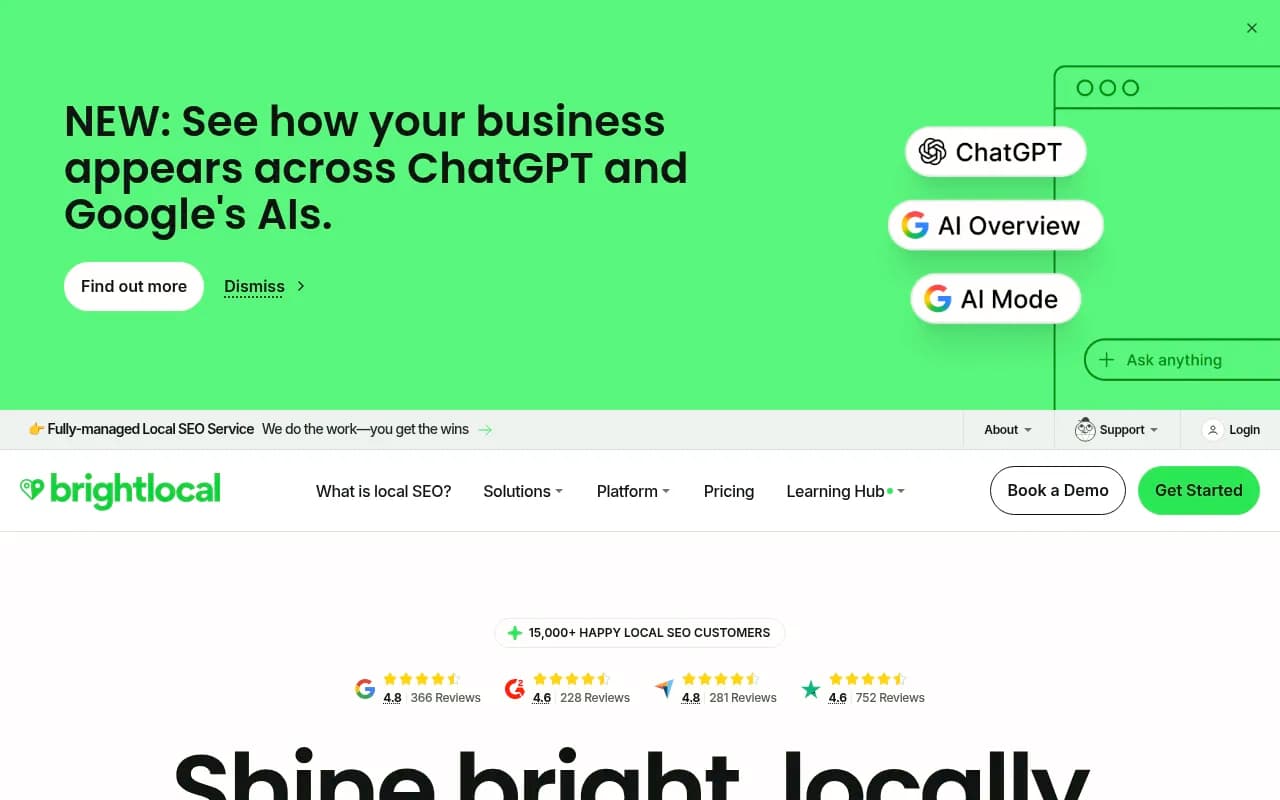
BrightLocal is a long-standing local SEO platform for rankings, listings and reviews, now adding AI visibility. It is a natural fit for agencies already doing local SEO at volume.
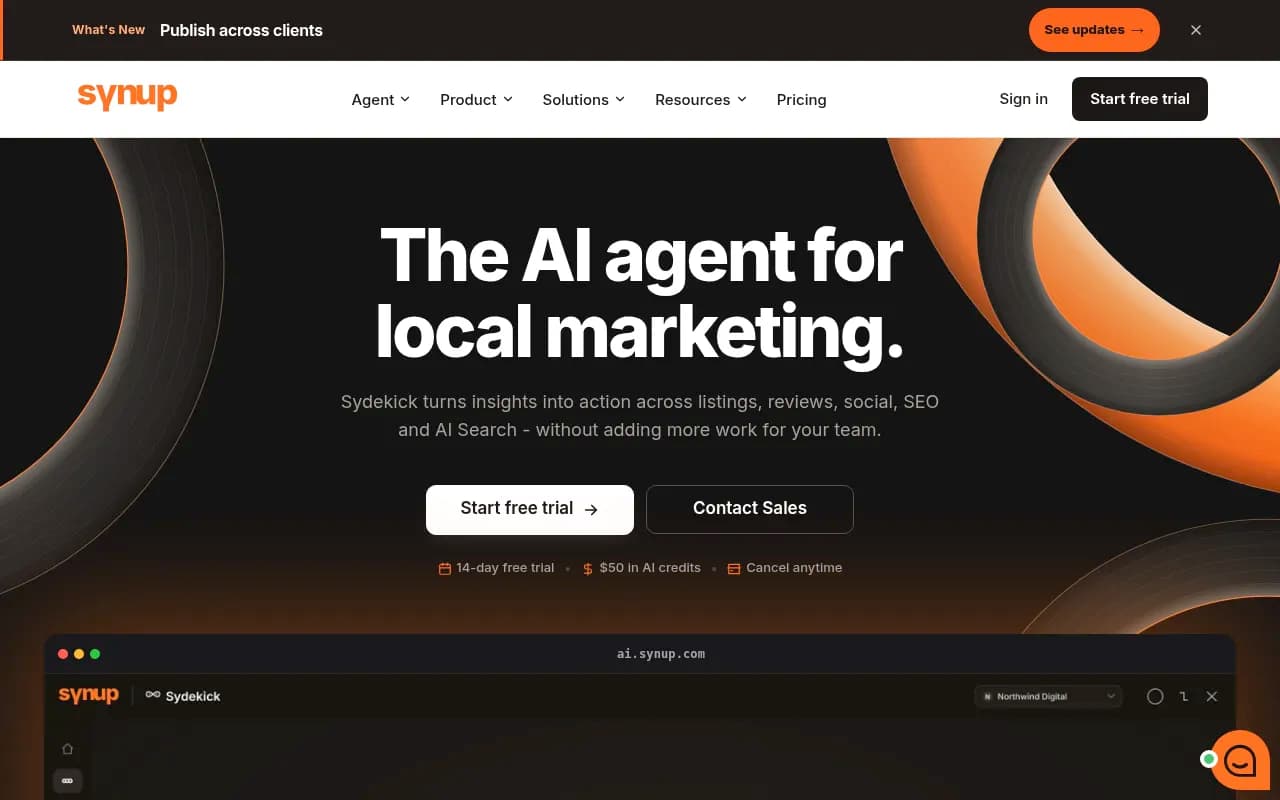
Synup positions itself as a local marketing agent that fixes listings and replies to reviews. Useful when you want listing cleanup to run mostly on its own.
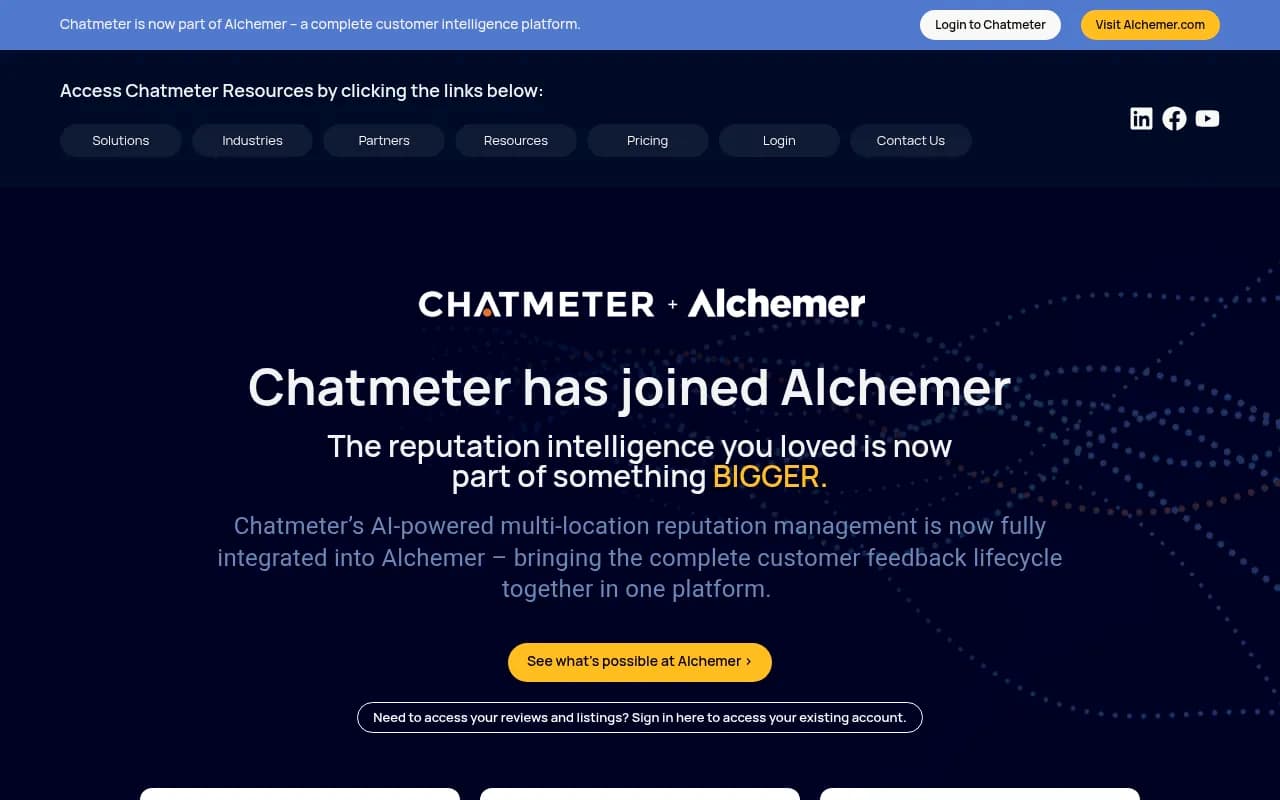
Chatmeter covers reviews, listings and local pages in one place for multi-location brands. Better suited to clients with many branches than a single-shop owner.
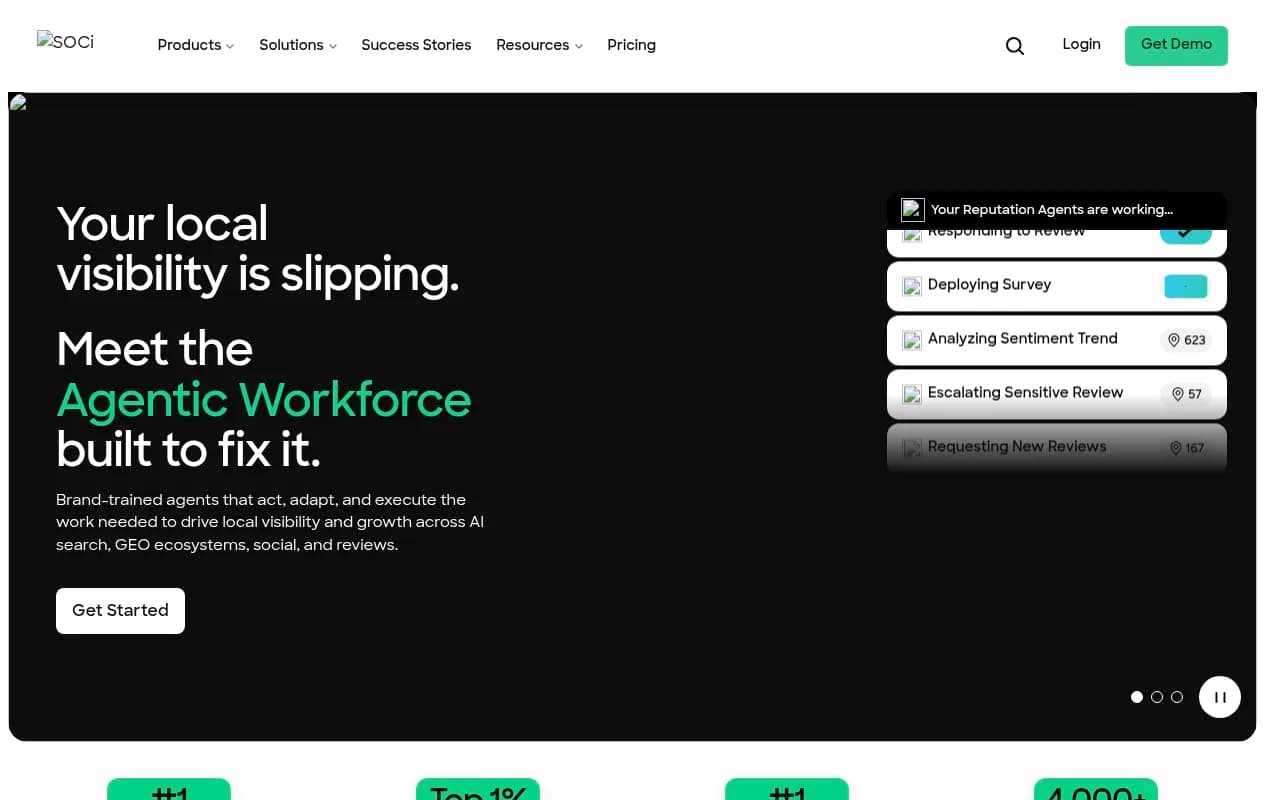
SOCi runs local search, reviews and social for every location using AI agents. It leans toward franchises and multi-location brands.
Reputation.com handles reviews, listings and surveys. The reviews angle matters, since review pages carry extra weight on branded prompts.
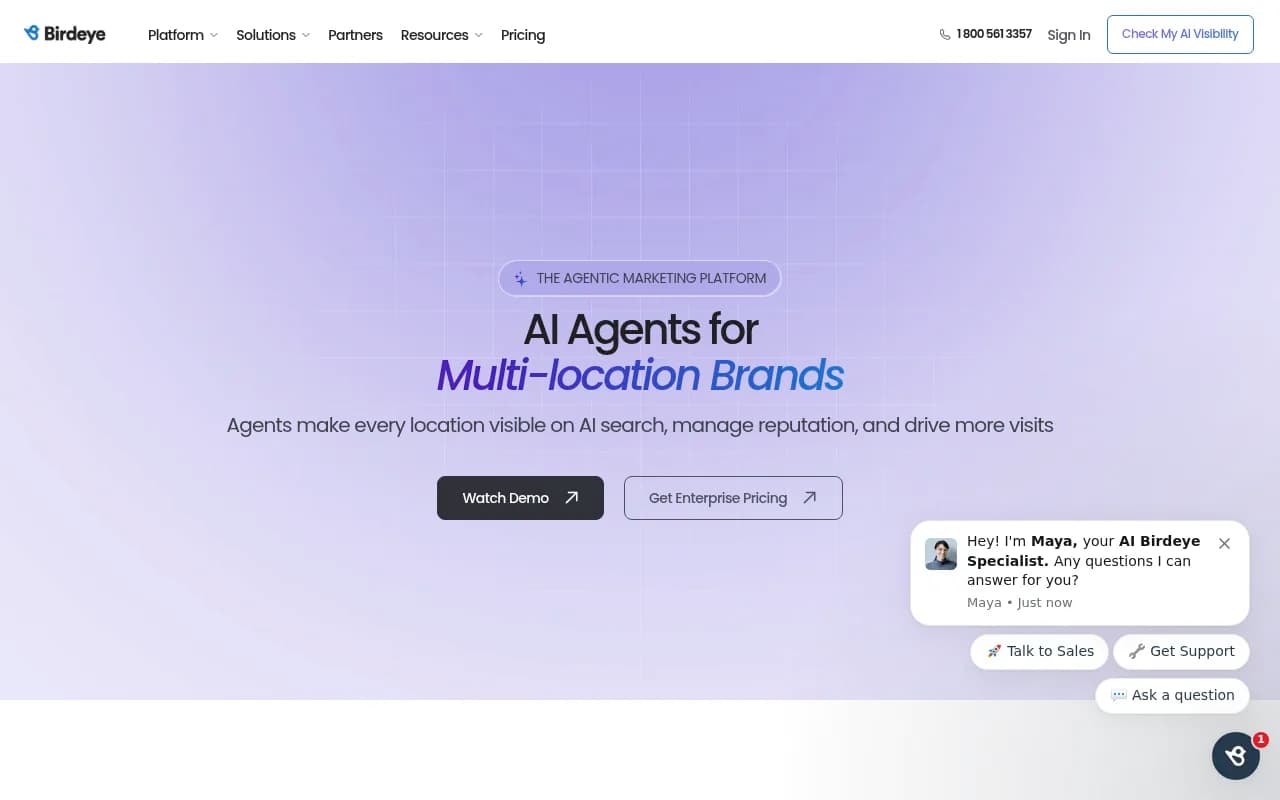
Birdeye Search AI is built around local AI visibility with location-level tracking, which is the part of the problem generic trackers handle poorly.
Yext is a heavier option focused on verified brand data across search and AI channels. Probably overkill for solo practitioners, sensible for franchise clients.
I did not research detailed pricing or white-label terms for these local platforms, so confirm those on each vendor's site before you build them into a proposal.
Layer 2: AI visibility and GEO platforms
This layer answers "are we showing up in AI answers, and why not?" It is where most of the new tool launches are happening, so be picky.
Promptwatch is the one I would put first for agencies that want to do more than report. It tracks ChatGPT, Gemini, Perplexity, Claude, Google AI Overviews, Google AI Mode, Copilot and others from the real interfaces, in any country and language. For local work, the useful pieces are local GEO/SEO targeting at exact coordinates (accuracy radius 20 m to 5 km, on Business, Agency Scale and Enterprise) and state and city tracking. Then it goes past monitoring: content gap analysis, a Content Agent that writes and publishes to WordPress, Webflow or Framer, and IP-verified AI crawler logs showing whether bots can read a client's site.

Agency pricing, as listed at promptwatch.com/pricing (confirm before quoting): Kick-off at $199/mo, Growth at $399/mo, and Scale at $799/mo, each with unlimited projects, prompts and team seats. Scale adds local GEO/SEO targeting, Fact Check and faster tracking. Agency plans do not include the Content Agent or AEO articles; agencies needing content generation or a white-label client portal go to Enterprise. More on the setup is at the agencies page.
Other platforms worth a look:

Peec AI came up in Nick Lafferty's 2026 roundup as a tracker for agencies and SMBs wanting more than monitoring without enterprise pricing, starting under $99/mo. Verify current plans before you commit.
Search Party is an agency-focused AI search visibility platform. Worth a demo if your workflow is built around many small clients.

Otterly.AI is an affordable monitoring tool. It tracks, which is useful as a cheap baseline, but you will need other tools to act on what it finds.

ReachLLM calls itself AI-native GEO software with tracking and execution, and a small-business GEO roundup on its own blog ranks it first. That is self-published, so test it yourself.
Semrush's AI Visibility Toolkit makes sense if the agency already lives in Semrush and wants everything under one login.

Scrunch AI offers monitoring for brands and agencies. Fine for reporting; check how much it helps with execution.
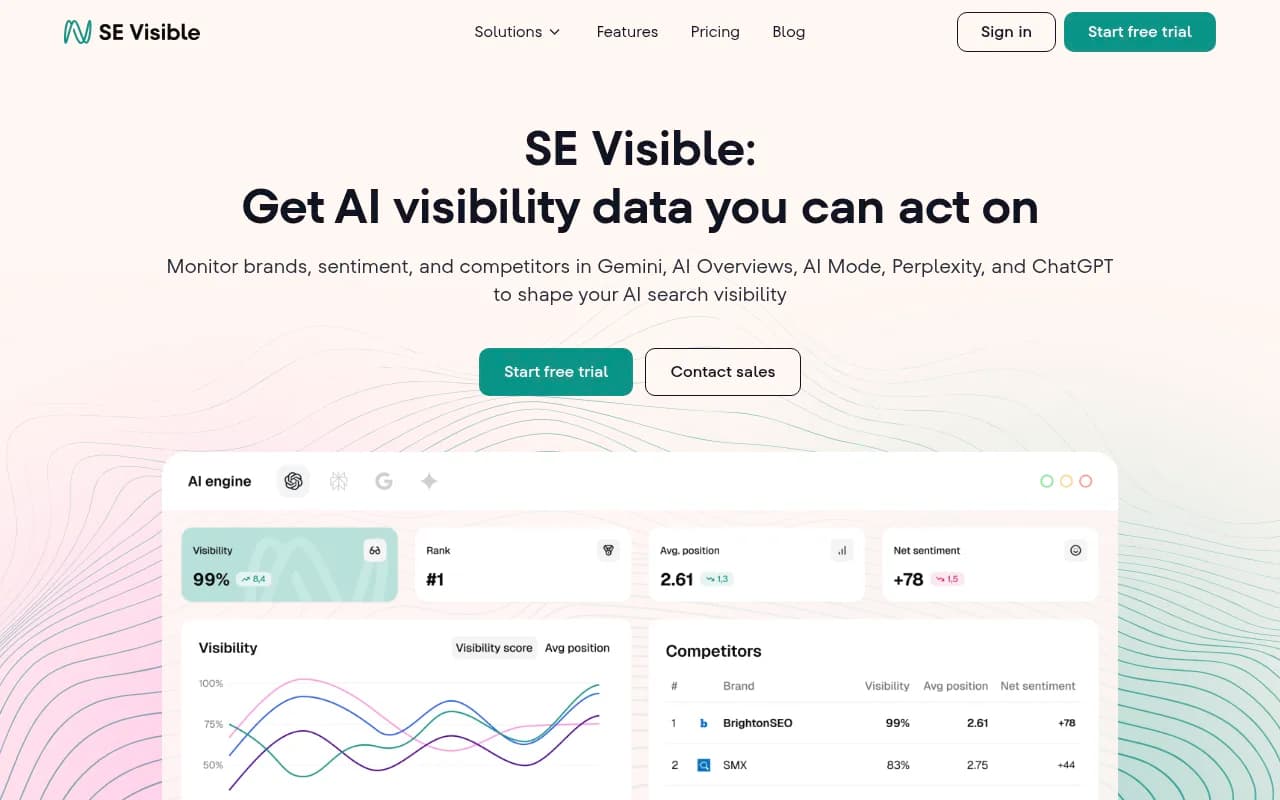
SE Ranking Visible is a lighter, cheaper entry point if you already use SE Ranking for rank tracking.
For a wider view of the category, the GEO software directory lists most of the options.
Comparison table
| Tool | Layer | Best for | Local angle | Acts on gaps? |
|---|---|---|---|---|
| Promptwatch | AI visibility and GEO | Agencies wanting tracking plus fixes | Coordinate-level targeting, state/city tracking | Yes: content gaps, Action Board, crawler logs |
| BrightLocal | Local presence | Local SEO agencies | Rankings, listings, reviews | Listings and reviews work |
| Synup | Local presence | Listing and review upkeep | Listings, review replies | Partly, via agent |
| Chatmeter | Local presence | Multi-location clients | Reviews, listings, local pages | Partly |
| SOCi | Local presence | Franchises | Local search, reviews, social | Partly |
| Birdeye Search AI | Local AI visibility | Location-level tracking | Location-level tracking | Verify |
| Peec AI | AI tracker | Agencies and SMBs on a budget | Multi-engine | Mostly monitoring |
| Search Party | AI visibility | Agency workflows | Verify | Verify |
| Otterly.AI | AI tracker | Cheap baseline | Limited | No |
| Semrush AI Visibility | SEO suite add-on | Existing Semrush shops | Limited | Limited |
"Verify" means I did not confirm the capability in my research. Ask for a trial.
Picking a stack by agency size
Solo consultant or small shop, 5 to 20 local clients
Start with something cheap for the AI layer. A budget tracker or one agency-tier plan is plenty. Pair it with BrightLocal or Synup for listings and reviews. Run Promptwatch's free AI visibility report as a prospecting hook: it is a no-login scan showing how ChatGPT, Gemini and Perplexity describe a business, which makes a good first-meeting leave-behind.
Mid-size agency, 20 to 100 clients
You need unlimited projects, team seats and scheduled reporting. This is where agency plans make sense financially. Promptwatch's Growth ($399/mo) or Scale ($799/mo) plans have unlimited projects, and Scale includes local targeting and tracking every 12, 6 or 1 hours. Pair with a local presence platform, and give your account managers the PDF and Looker Studio reporting so clients get something readable each month.
Agency with franchise or multi-location clients
These clients need location-level data and consistent listings across dozens of sites. Chatmeter, SOCi or Yext handle the presence side. On the AI side, run city-level or coordinate-level monitors so "near me" answers are measured as the customer would see them.
A repeatable local GEO workflow
Tools are only half of it. Here is the workflow I would run for a new local client.
- Pick 20 to 40 prompts the way a customer would type them: service plus city, "best X near me," comparison and trust questions. Include the neighborhood where it matters.
- Track them in the real interfaces, pinned to the client's location. API results can differ from what users see.
- Check which pages get cited. If directories and roundups dominate, your job is listings and inclusion. If competitor service pages dominate, your job is content.
- Check crawler access. A site that blocks AI bots cannot be cited, however good the copy is. Promptwatch's free Agentic Readiness Check and crawler logs are useful here.
- Fix the basics: service pages, FAQ pages, location pages, Google Business Profile completeness, and review collection.
- Re-measure after four to six weeks. Local prompts move more slowly than people expect, and a single measurement means nothing.
Red flags when evaluating tools and rankings
- Self-ranked lists. The Optimist article admits it openly ("Guilty"), and the other agency lists in this space often rank their authors too. Use them for ideas, not verdicts.
- Dashboards with no location control. If you cannot pin a prompt to a city, local results are guesses.
- "Visibility score" without revenue context. Optimist's own piece makes a fair point: a score that rose 400% matters less than being named when a buyer asks.
- Pricing per client when you have many small clients. Check the maths at 30 clients, not 3.
- No white-label or export path. You will need reports clients can read without a login.
Where an agency partner fits
Some agencies do not want to build this stack in-house. If you would rather hand off the strategy and the AI search work, a specialist partner like 1001 SEO Media covers technical SEO, content, local SEO and GEO under one roof, and uses Promptwatch as its AI visibility platform. Most agencies, though, will do better running the tools themselves and keeping the client relationship.
Bottom line
For local clients, buy two things: a local presence tool that keeps listings and reviews clean, and an AI visibility platform that measures by location and helps you act. Promptwatch is the strongest option I would test first for the second job, because it tracks, finds the gaps and helps publish the fix. If budget is tight, pair a cheaper tracker with manual content work. Whatever you choose, run a trial on a real client, pin it to their city, and judge the tool by whether it tells you what to do next. You can start with Promptwatch's 7-day free trial and compare it against one other platform for a month.