ReachLLM Review 2026
ReachLLM combines self-serve AI visibility software with execution workflows, auditing domains across ChatGPT, Gemini, Perplexity, Grok, Claude, and DeepSeek and helping teams close citation gaps.

Key takeaways
- ReachLLM pairs AI visibility software with optional done-for-you GEO execution, which is rare in a market full of monitoring-only dashboards.
- Pricing runs steep: $399/mo for one project with 100 prompts, and Claude, Google AI Mode, and Microsoft Copilot cost extra on every tier. Comparable coverage costs meaningfully less elsewhere.
- Only four AI models are included by default. There are no AI crawler logs, no AI traffic attribution, and no Reddit or YouTube citation tracking, all things Promptwatch includes.
- The January 2026 "agentic" rebuild, which auto-generates FAQs, schema, and llms.txt and commits them to your GitHub repo, is the most interesting thing here.
- The review base is thin (two Product Hunt reviews) and the company is early-stage, so expect an MVP feel on the software side.
What ReachLLM actually is
ReachLLM is a hybrid: part self-serve AI visibility platform, part managed GEO agency. The pitch is blunt, bordering on confrontational ("If AI can't find you, you don't exist"), but the underlying product idea is sound. Most AI visibility tools tell you that you're invisible and leave the fixing to you. ReachLLM tries to close that loop, either through software agents or through a human team executing a weekly roadmap.
The company launched three times on Product Hunt between June 2025 and January 2026, hitting #5 Product of the Day in August 2025. It was founded by Sohazur Islam and Shanzila Ahmed, went through Abu Dhabi's Hub71 ecosystem, and is still clearly an early-stage operation. Keep that in mind when you read the claims below.
What the software does
The platform tracks how AI engines describe your brand across prompt clusters, measures mention rate and citation coverage, and audits what it calls "citation pathways": the publications, forums, and directories AI engines rely on when they build answers. The GEO audit runs across your pages and reports on entity clarity, source coverage, and authority signals, which is a genuinely useful diagnostic framing. Brand perception tracking, meaning how positively or negatively AI models talk about you, is also in there.
The January 2026 relaunch made the product "agentic." The agent decides what to prioritize, generates assets like llms.txt files, FAQ sections, schema blocks, and content, and then measures whether visibility moved. The GitHub integration is the standout feature: the agent reads your repo, writes Markdown or MDX, commits assets, and opens pull requests. If you run a developer-heavy content stack, this is a workflow few competitors have matched.
Integrations cover Google Search Console, Google Analytics 4, and Bing Webmaster Tools on all plans. The managed Growth tier adds Gmail, Outlook, Reddit, LinkedIn, WordPress, Webflow, and Shopify for outreach and publishing.
Pricing, and where it gets awkward
Pro is $399/mo for one project, 100 tracked prompts, 100 GEO audit pages, and four models: ChatGPT, Google AI Overviews, Perplexity, and Gemini. Scale is $999/mo for up to 10 projects with pooled limits and white-label reports. There's a $1,599/mo Enterprise Agencies tier not shown on the homepage. Annual billing gives two months free, and both software tiers have a 14-day trial.
Here's the part I'd push back on. Claude costs $200/mo extra on Pro, $1,000/mo extra on Scale. Google AI Mode and Microsoft Copilot are $50/mo add-ons on Pro. In 2026, Claude is not a niche engine, and Google AI Mode is where Google is steering search. Charging four figures per month for base multi-model coverage feels like pricing built for a market that has since gotten much more competitive. Execution credits (used for agent chat, site generation, and manual refreshes) are metered separately, with top-ups starting at $79 for 4,000 credits.
The managed Growth tier starts at $3,500/mo with a three-month minimum, a dedicated GEO expert, PR outreach, and social posting support. It includes a KPI-based guarantee: hit agreed visibility targets in three months or your money back. They claim 100% of engagements have met KPIs so far, which sounds great but reflects a small client base, not a proven track record at scale.
Strengths
- The execution angle is real. Homepage rewrites, schema fixes, llms.txt deployment, and content work happen weekly on Growth, and the software's agent now does a lighter version of this on self-serve plans.
- The GitHub-based publishing pipeline is well designed for teams that already live in code review workflows.
- The citation-pathway audit (mapping which external sources AI relies on in your category) is more actionable than a raw visibility score.
- Free AI visibility report for anyone curious enough to enter a domain, which is a decent way to test the data quality before paying.
Limitations, compared honestly
Measured against what a full AI visibility platform should do in 2026, ReachLLM has real gaps:
- No AI crawler logs. You can't see when ChatGPTBot or ClaudeBot actually visits your pages, what they read, or what errors they hit. Promptwatch tracks 400+ crawlers with a crawl-to-citation path per page, and this data is often the single best explanation for why visibility stalls.
- No AI traffic attribution. ReachLLM tracks mentions and citations but not the actual visitors and conversions coming from AI platforms to your site.
- No Reddit or YouTube citation tracking, despite both being significant citation sources in AI search. Promptwatch publishes dedicated citation reports for these channels and its own data shows how much AI answers lean on social platforms.
- Four models included, with three more behind paid add-ons. Promptwatch monitors 10+ models including Grok, DeepSeek, Mistral, and Meta Llama on standard plans.
- No ChatGPT Shopping or AI ads tracking.
- Third-party review analysis (Zoftware, updated November 2025) flags the software as MVP-stage, with no traditional SEO features, a learning curve that assumes GEO familiarity, and a narrow focus that won't replace your existing SEO tooling. The two Product Hunt reviews are positive but statistically meaningless, and one reviewer explicitly said the pricing didn't fit their stage.
Who it's for
The best fit is a small-to-mid-size brand that wants done-for-you GEO and would rather pay one vendor $3,500/mo than hire an in-house specialist. Service businesses, local brands, and e-commerce shops that already have solid traditional SEO but no AI presence fit the Growth tier's profile. Scale's white-label reports and pooled limits also make it viable for small agencies adding GEO as a service line.
Who should skip it: data-driven teams who want deep diagnostic data (crawler logs, traffic attribution, prompt volumes) rather than a managed service, and anyone sensitive about per-model add-on pricing.
Bottom line
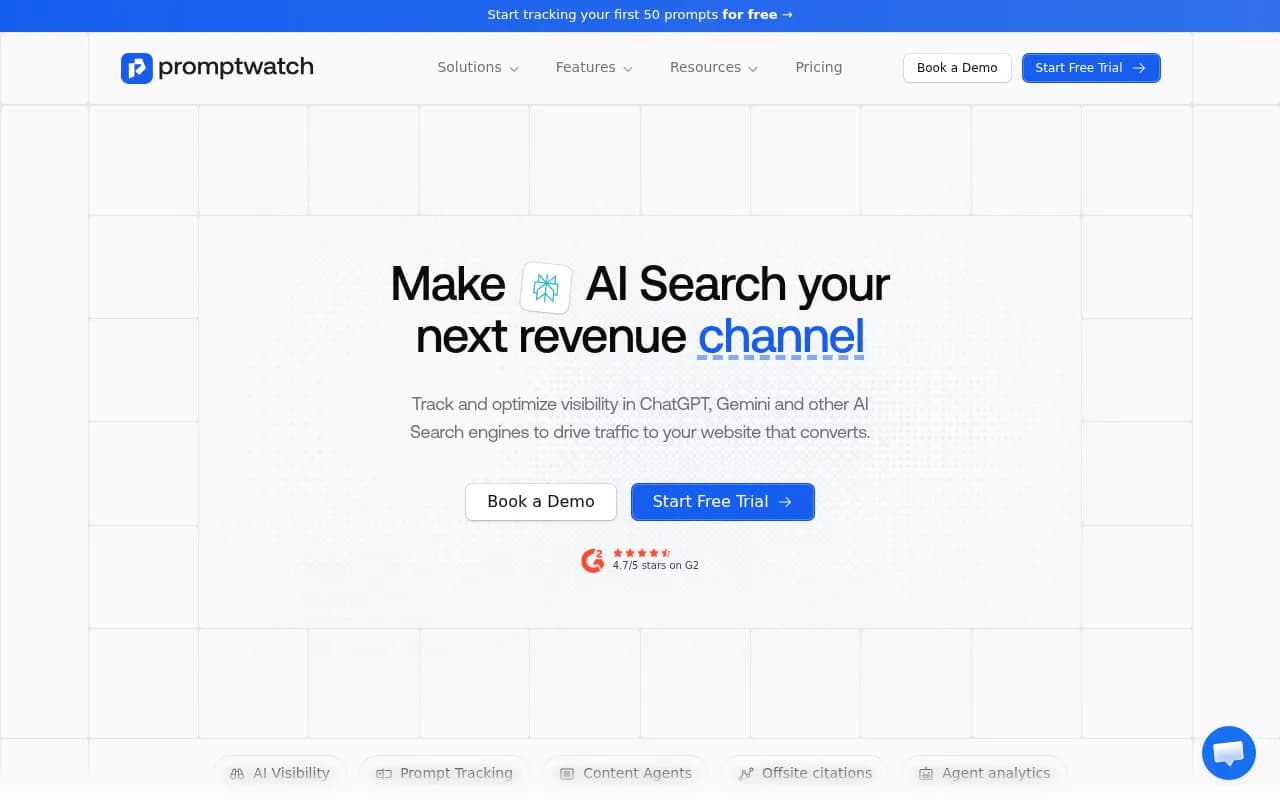
ReachLLM's core bet, that brands want execution rather than another dashboard, is the right one, and the agentic rebuild plus GitHub publishing shows genuine product thinking. But the software side is still early, model coverage is gated behind add-ons, and it's missing the diagnostic layer (crawler logs, visitor analytics, Reddit and YouTube citations) that turns visibility data into understanding. If you want a managed GEO service with hand-holding, ReachLLM is worth a call. If you want a complete platform that shows why you're invisible, measures real traffic, and automates the fixes at a lower cost per response, Promptwatch is the stronger choice.
Worth comparing more broadly? The GEO software directory at bestgeosoftware.com covers the full field of options.
Tags:
Frequently asked questions
How much does ReachLLM cost?
Which AI platforms does ReachLLM track?
Does ReachLLM include done-for-you GEO execution?
How is ReachLLM different from monitoring-only AI visibility tools?
Is there a free trial or free tool?
Similar and alternative tools to ReachLLM