Key takeaways
- Self-hosted AI visibility tracking works today. Elmo is the most mature option: MIT-licensed, Docker Compose setup, and coverage of ChatGPT, Gemini, Perplexity, Copilot, AI Overviews and more.
- Smaller projects like OneGlanse, Canonry, Ansvisor and AI Monitor are worth a look, but they are younger and less proven.
- The strongest reason to self-host is owning your raw prompt runs and answers. The strongest reason not to is the work of keeping it running, plus missing pieces like crawler analytics and prompt volumes.
- Open-source trackers tell you whether you were mentioned. Fixing the problem, and proving it drove traffic, usually needs a managed platform alongside.
Why people self-host an AI visibility tracker
Underneath the dashboard, an AI visibility tracker does a mechanical job. It runs a list of prompts on a schedule, parses each answer for your brand, competitors and cited sources, then stores the results. Nothing about that strictly requires a per-seat subscription, and that is exactly the argument open-source projects make.
There are three real reasons to run one yourself:
- Data ownership. Every prompt run and raw answer sits in your database, not a vendor's.
- Cost control. You pay for servers and model API calls instead of seats and prompt tiers.
- Auditability. In Elmo's case, the repo says every metric is auditable in code, so you can see exactly how a Visibility score or Share of Voice number is calculated.
And there are honest reasons not to. Someone has to maintain it. API answers can differ from what real users see in the actual ChatGPT interface, so the tracking method matters. And the open-source side is young. A South Asia Digital review published October 16, 2026 puts it plainly: the core tracking job is there, but several things mature paid tools handle are not, and the project's own documentation admits it.
What a self-hosted tracker needs from you
Before picking a project, price out the setup. Typically you need:
- A server or VM that can run Docker Compose
- API keys for whichever model providers you want to query (or OpenRouter as a single gateway)
- Someone responsible for updates, backups and fixing a broken scraper when an AI interface changes
- A prompt list you have thought through, because the tracker only measures what you ask it
I could not find verified numbers for hosting cost or per-prompt API cost, so run a small pilot with 20 to 30 prompts and look at the actual bill before committing. Treat any cost claim, including mine, as something to test.
The open-source options compared
The OpenAlternative collection for self-hosted AI visibility tracking lists four MIT-licensed projects, all positioned as alternatives to Profound. Star counts and commit dates below come from that listing and from the GitHub repo for Elmo, and they move fast, so check before you decide.
| Project | Licence | Engines covered | Method | Activity |
|---|---|---|---|---|
| Elmo | MIT | ChatGPT, Claude, Gemini, Perplexity, AI Overviews, AI Mode, Copilot, Grok, DeepSeek, Mistral, Qwen, OpenRouter LLMs | UI scraping plus API and OpenRouter | Version 0.7.4, last commit Oct 23, 2026 |
| OneGlanse | MIT | ChatGPT, Perplexity, Gemini, Claude, Google AI Overview | Browser automation, then a model you configure analyzes responses | Last commit about 20 days before the listing |
| Canonry | MIT | ChatGPT, Claude, Perplexity | Runs locally with your own API keys | Active, last commit within a day of the listing |
| Ansvisor | MIT | ChatGPT, Perplexity, AI Overviews | Monitoring plus prioritized content actions | Active, last commit within a day of the listing |
A caveat on Ansvisor: its own blog publishes an open-source AEO tools list and puts Ansvisor first. That is a vendor ranking, so weigh it accordingly. The same goes for Elmo's tool directory and its "AEO Graveyard" of retired tools. Useful reading, but authored by a competitor of everything in it.
Elmo
Elmo is the one I would start with. The repo (elmohq/elmo) shows 1,169 commits and 39 tags, with the latest commit bumping the version to 0.7.4 on October 23, 2026. The site says it is used by 200+ brands, and it has a hosted cloud and a live demo if you want to look before you install anything.

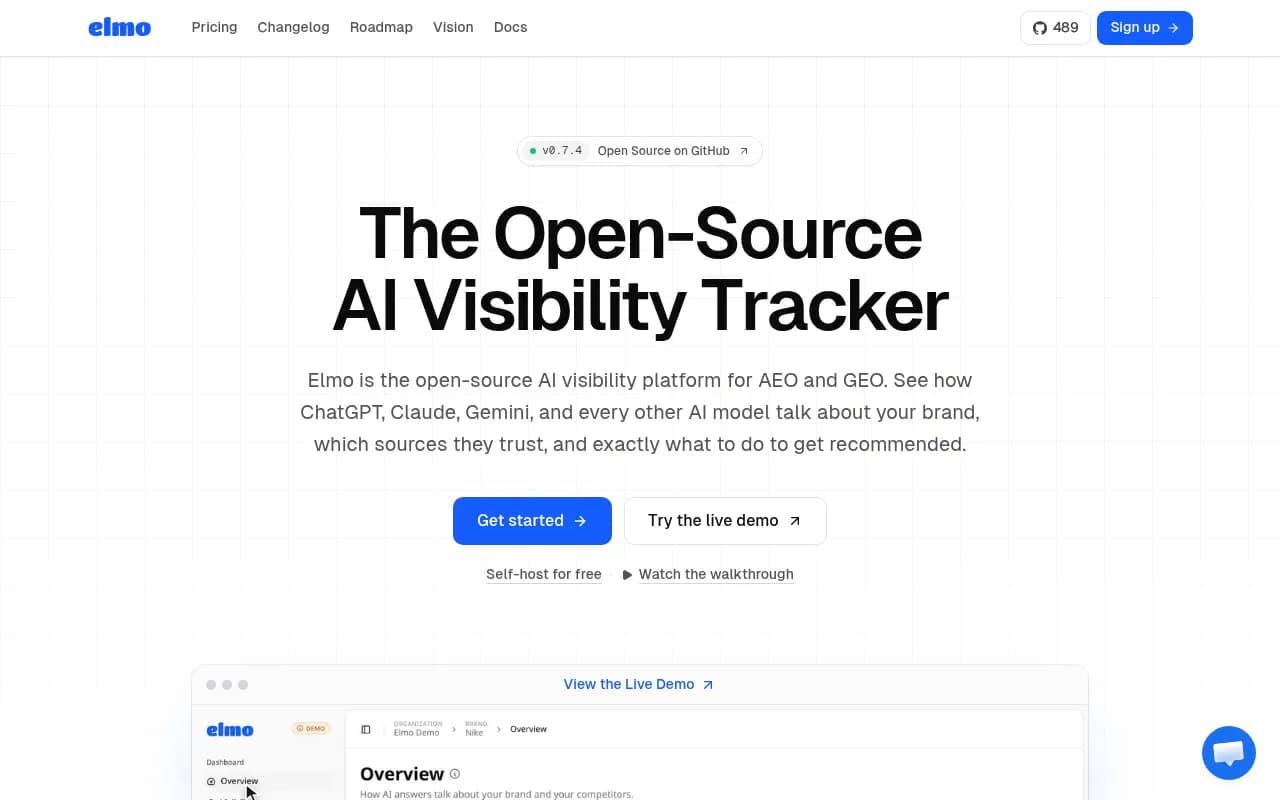
The dashboard is split into Overview, Visibility, Share of Voice, Sentiment, Responses, Query Fan-Out, Citations and Opportunities. Two design choices stand out. First, Elmo scrapes what real users see in the major AI search tools and uses direct API calls and OpenRouter for the rest, which matters because user-facing answers and API outputs can differ. Second, it has a Query Fan-Out view, which is more useful than it sounds. Promptwatch Data on ChatGPT query fanouts shows the average number of fanouts per response moved from 2.15 in early December 2025 to about 1.84 by early March 2026, and query length fell from roughly 117 characters to the high 80s, so fan-out behavior shifts and you want to watch it.
Recent repo activity includes a Cursor Marketplace plugin for its cloud MCP server (September 24, 2026) and per-engine fan-out availability (October 19, 2026). Development is clearly alive.
Where it falls short, per the South Asia Digital review of its documentation: no AI-crawler-specific analytics, no on-page content audits, no prompt volume estimates and no built-in SEO dataset integration. Those are the things you notice after the first month, when the question shifts from "are we mentioned?" to "what do we do about it?"
OneGlanse
OneGlanse drives the real AI interfaces through browser automation, then uses a model endpoint you configure to analyze the captured answers and citations. The approach is sound for the same reason Elmo's scraping is. The tradeoff is fragility: browser automation breaks when interfaces change, and a project whose last commit was about 20 days old in the listing may be slower to patch. It had 231 stars in the listing, so there is interest. I have not run it, so treat this as a design summary rather than a verdict.
Canonry
Canonry runs locally with your own API keys, so the data stays yours, which is how Wellows describes it. It tracks mentions and citations in ChatGPT, Claude and Perplexity and adds some AEO strategy and content work. Narrower engine coverage than Elmo, but a local-first setup suits a solo consultant who does not want to stand up a server.
Ansvisor
Ansvisor monitors ChatGPT, Perplexity and AI Overviews and turns the data into prioritized content actions. That action layer is the interesting bit, since most open-source trackers stop at the dashboard. It is also the youngest-looking project here at 161 stars, so expect rougher edges.
AI Monitor and other small projects
AI Monitor is another open-source brand mention tracker for AI answers that sits in our catalog.
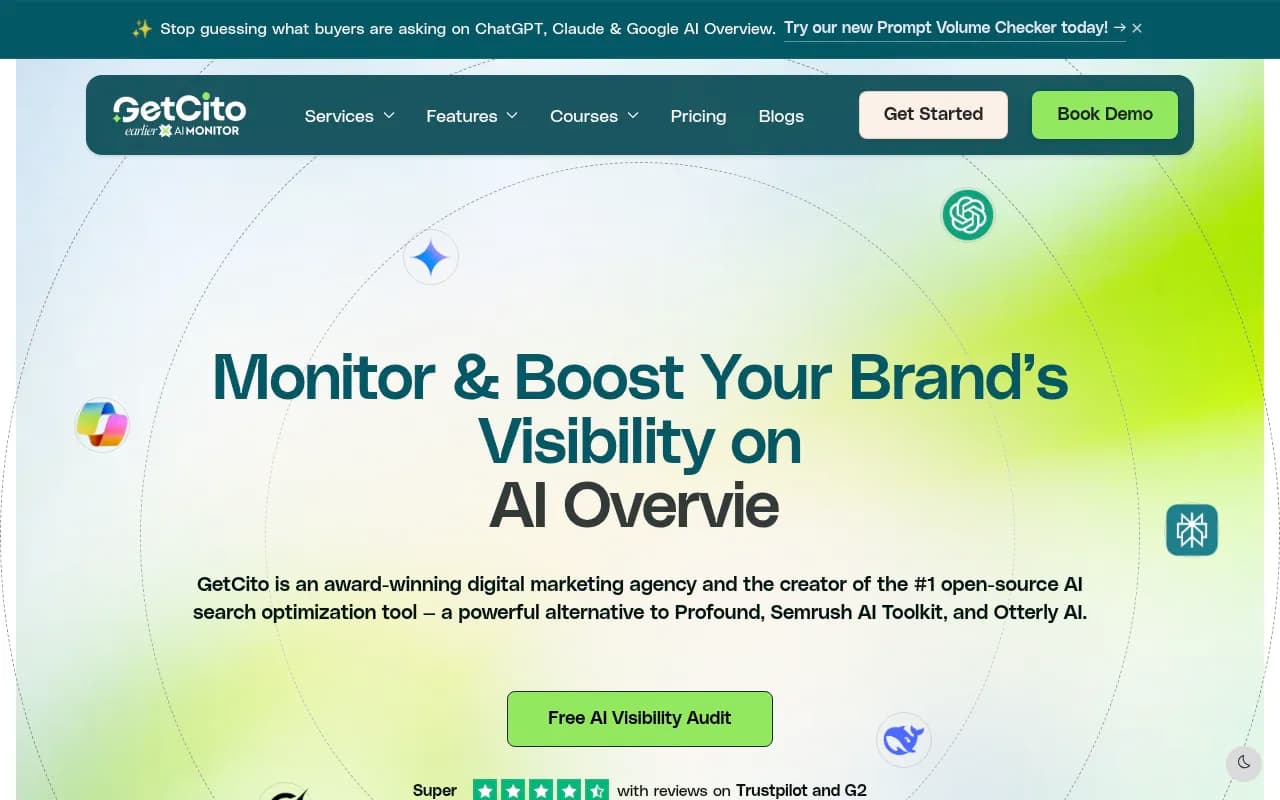
There is also a Reddit post from a builder announcing Genwolf AI, which runs prompts daily and analyzes responses. I did not verify it, so I would not build a workflow on it yet. Elmo's own directory mentions GetCito, GeoLook and NiubiGEO but dropped them from its lists, in NiubiGEO's case because GitHub stars were not a sign of real adoption. A useful reminder that stars are not the same as users.
Scraping the UI or calling the API
This is the technical choice that matters most and the one buyers skip. API calls are cheap, stable and easy to run. But the answer from a model API is not always the answer a person sees in the ChatGPT or AI Overviews interface, which adds search, citations and sometimes shopping results. Elmo and OneGlanse go to the UI for that reason. This is my inference from their designs, not a verified accuracy study, so test it yourself: run ten prompts both ways and compare.
If you want to build your own scraping layer rather than adopt a project, general-purpose tools like Apify, Bright Data or Browserbase are the infrastructure people reach for.
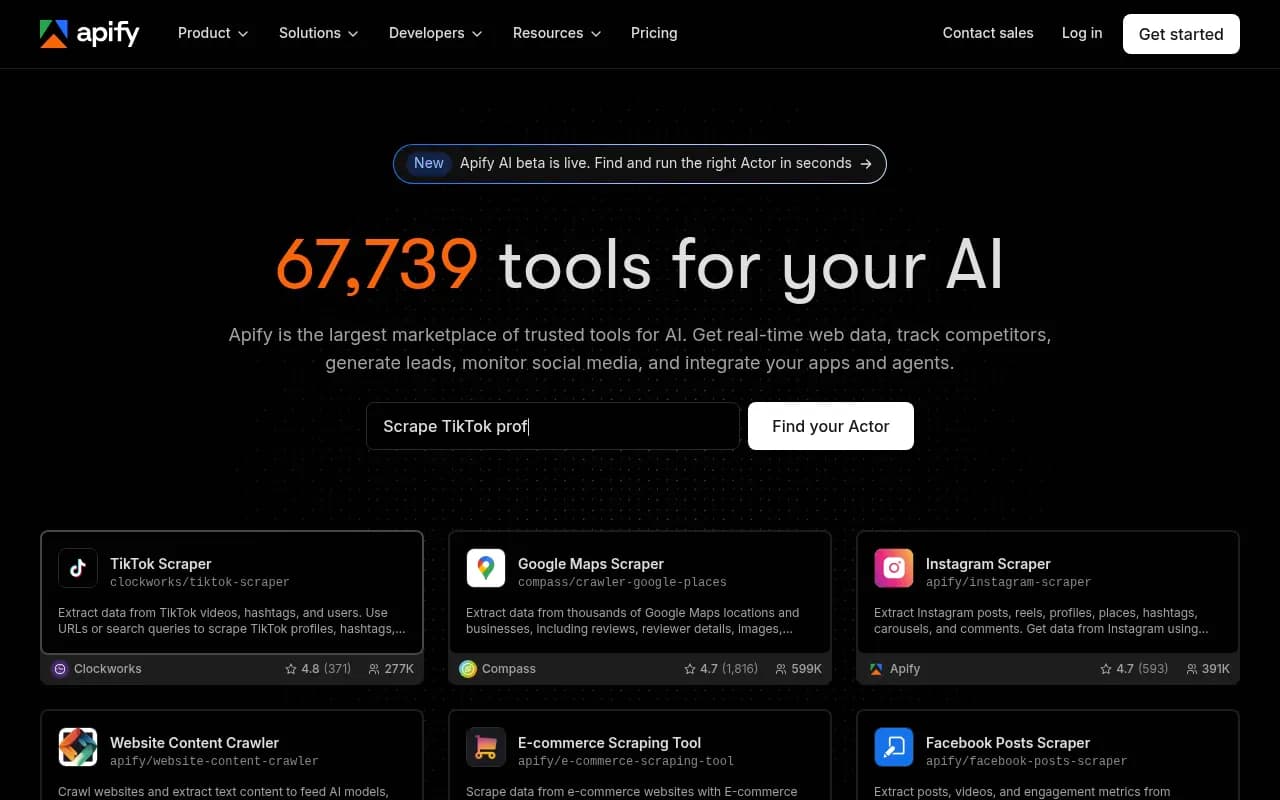

Be realistic though. Maintaining scrapers against interfaces that change monthly is the hidden cost of DIY.
Reading the numbers without fooling yourself
Whatever you run, a few habits keep the data honest:
- Judge monthly trends, not weekly snapshots. Promptwatch Data on average sources per response shows ChatGPT citing about 5 sources per web-search answer, Google AI Overviews about 10 and Perplexity almost exactly 10, while Copilot swung from under 2 to nearly 17 within a few weeks. A jump in a Copilot citation count is probably Microsoft changing retrieval, not your brand changing. See Promptwatch's average sources per response data.
- Use the engine with the steadiest citation count, Perplexity, as a sanity check for your setup.
- Re-audit your prompt list every quarter. Fan-out behavior and what AI answers cite both move, as the ChatGPT query fanout data shows.
- Run each prompt several times. AI answers vary between runs, and a single sample is noise.
Where open source stops
An open-source tracker answers "was my brand mentioned?" That is genuinely useful. It does not tell you why an AI crawler never reached your pricing page, which Reddit thread or LinkedIn post a model is leaning on, or whether any of this sends visitors who convert. Those need crawler logs, visitor analytics and page-level data joined together, which is the stuff the Elmo docs list as missing.
If you reach that point, a managed platform is the logical next step. Promptwatch covers the gap: IP-verified AI crawler logs, visitor analytics, Search Console and Bing data next to AI citations, plus a Content Agent and Action Board that turn gaps into published pages. It starts at $95 a month on Essential, with a free Explore tier, and you should confirm current pricing at promptwatch.com/pricing.

Many teams reasonably run both: an open-source tracker for raw data ownership and a managed platform for the optimization loop. Other commercial trackers in the same space include Profound, Peec AI and Otterly.AI, and the directory at bestgeosoftware.com lets you compare more of them.



Which should you choose
| Your situation | Best fit |
|---|---|
| Technical team, wants the broadest engine coverage and auditable metrics | Elmo, self-hosted |
| Solo consultant, wants local and simple | Canonry |
| Want tracking plus suggested content actions | Ansvisor |
| Comfortable with browser automation and want UI-level answers | OneGlanse |
| No one to maintain servers, or need crawler logs and traffic attribution | A managed platform like Promptwatch |
A sensible way to start
- Spin up Elmo's live demo first to see whether the dashboards answer your questions.
- Pick 25 prompts that mirror how real buyers ask, across informational and commercial intent.
- Self-host with Docker Compose and run it for four weeks. Watch your API bill.
- Compare a few answers against what you see by hand in ChatGPT and AI Overviews.
- Decide after a month whether the missing pieces (crawler analytics, prompt volumes, content audits) are costing you more than a subscription would.
If you want a hand deciding how AI visibility fits into a wider SEO program, 1001 SEO Media, the agency that publishes this site, works on exactly that. For a quick view of the open-source side, though, the answer in October 2026 is simple: start with Elmo, keep expectations realistic, and budget for the maintenance.