Key takeaways
- No single tool cleanly maps a journalist or influencer mention to an AI citation. You need two layers: PR and media monitoring for who is writing about you, and AI visibility tracking for which of those pages AI engines actually cite.
- Social posts matter far more to Google AI Overviews than to ChatGPT. In Promptwatch Data (Oct 11 to Nov 9, 2026), social platforms were 13.16% of AI Overviews citations but only 0.64% of ChatGPT's.
- For ChatGPT, earned editorial coverage and "best of" roundups matter more than influencer social posts. News pages also decay fast, so coverage needs refreshing.
- A workable stack is: a media intelligence tool (Meltwater, Brandwatch, Medialyst), an AI visibility platform with citation and offsite mention tracking, and a simple spreadsheet joining the two.
Why journalist and influencer mentions matter to AI answers
When someone asks ChatGPT, Perplexity or Google AI Overviews for the best tool in your category, the answer is built from pages the model retrieves and cites. A large share of those pages are not yours. They are reviews, roundups, news articles, YouTube videos, Reddit threads and LinkedIn posts written by other people.
That is why PR teams and SEO teams are suddenly in the same meeting. A journalist who names your product in a listicle may do more for your AI visibility than a month of blog posts. An influencer video can feed Google's AI Overviews while doing almost nothing for ChatGPT.
The awkward part is measurement. Traditional PR tools count mentions, reach and sentiment. AI visibility tools count citations and brand placement in answers. Almost nobody joins the two. In my research for this guide I did not find a tool that explicitly maps a journalist's byline to the AI answers that cite it. So the practical approach is to build the bridge yourself with a small stack.
What the data says about which mentions count
Before picking tools, it helps to know which kinds of mentions AI engines actually use. Promptwatch Data has the numbers.
Social and influencer content varies hugely by engine
According to Promptwatch Data's November 2026 social media citation report (Oct 11 to Nov 9, 2026):
| Engine | Social share of citations | Biggest platforms |
|---|---|---|
| Google AI Overviews | 13.16% | YouTube 6.71%, Facebook 2.34%, Reddit 2.1% |
| Perplexity | 1.94% | Reddit 0.82%, LinkedIn 0.66% |
| ChatGPT | 0.64% | Reddit 0.40%, LinkedIn 0.20% |
AI Overviews cites social media about 20 times as often as ChatGPT. X is at 0.02% across the three engines on average, so I would keep it out of an AI search plan. One caveat: the October report covered 7 days and the November one covers 30, so the month-to-month comparison is not like-for-like.
The takeaway for influencer tracking: an influencer program aimed at ChatGPT visibility is mostly wasted effort unless it produces something editorial or on-site. An influencer program aimed at AI Overviews should lean on YouTube first.
Editorial formats carry ChatGPT
Promptwatch's ChatGPT citation share by content type report (Sep 28 to Oct 4, 2026) shows product pages at 22.4% and landing pages at 16.8% of classified citations. Editorial formats add up to about 43%: listicles at 13.6%, how-tos 8.7%, general articles 6.1%, comparisons 5.9% and news 5.7%.
For commercial prompts, listicles reach 15.0% and comparisons 7.9%. So the journalist mentions that matter most are the ones inside "best of" roundups and comparison articles. Branded prompts shift the mix: reviews rise to 5.6%, more than three times their overall share.
Journalist coverage decays
In Promptwatch's content half-life report, pages ChatGPT cited on July 6, 2026 were tracked for 90 days. News pages lost half their citations within 36 days, while landing pages and docs lasted for months. A news hit is a short-lived asset. Roundups and evergreen reviews are worth chasing and refreshing.
The two-layer stack
Here is the model I would use.
- Layer one answers: who is writing about us, and which journalists and creators should we be talking to?
- Layer two answers: which of those pages do AI engines cite, for which prompts, and did our brand appear?
- The join: match cited URLs from layer two against the coverage list from layer one.
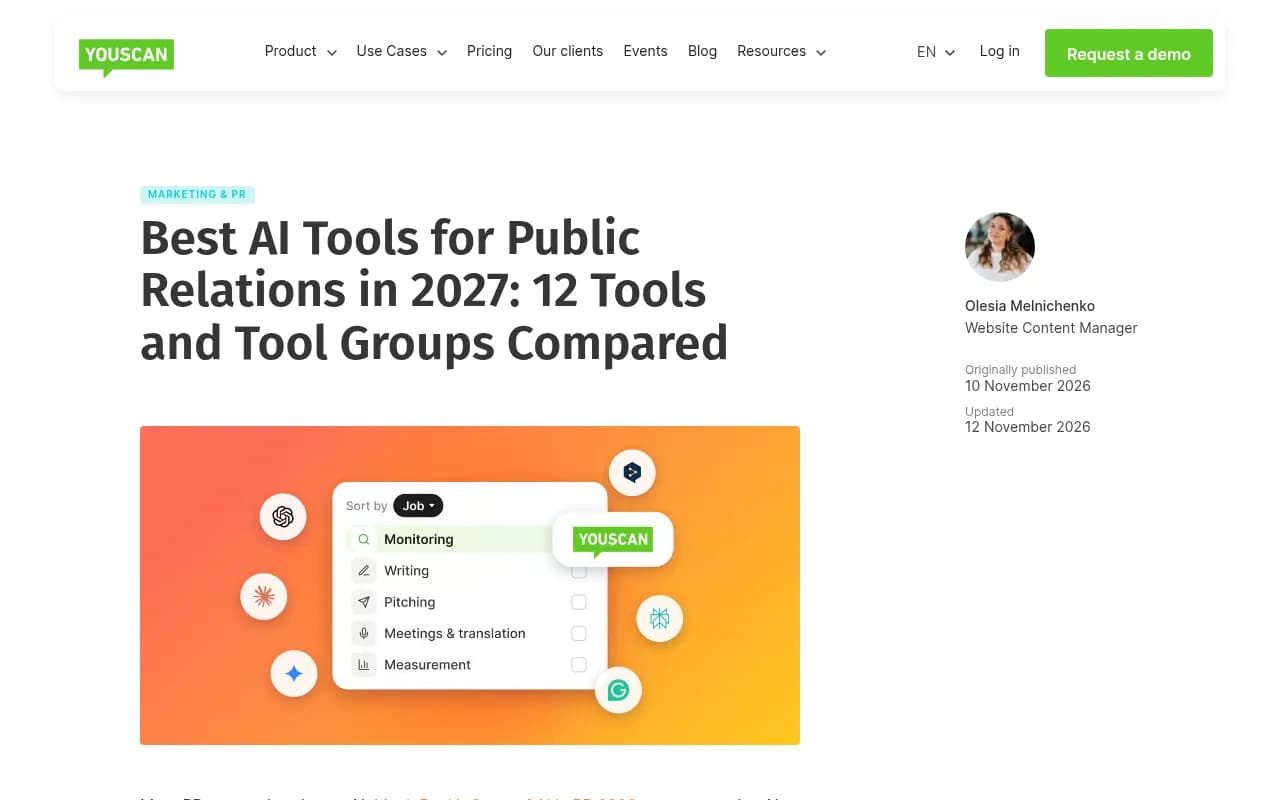
YouScan's 2026 PR tools guide makes a point I agree with: most lists throw chatbots, media databases and monitoring platforms into one pile, as if a grammar checker and a journalist database were rivals. They are not. Sort by job first.
Layer one: tracking journalists and influencers
These tools tell you who is mentioning you and who you should pitch. I have not verified current pricing for them, so check each vendor directly.
Meltwater and Brandwatch
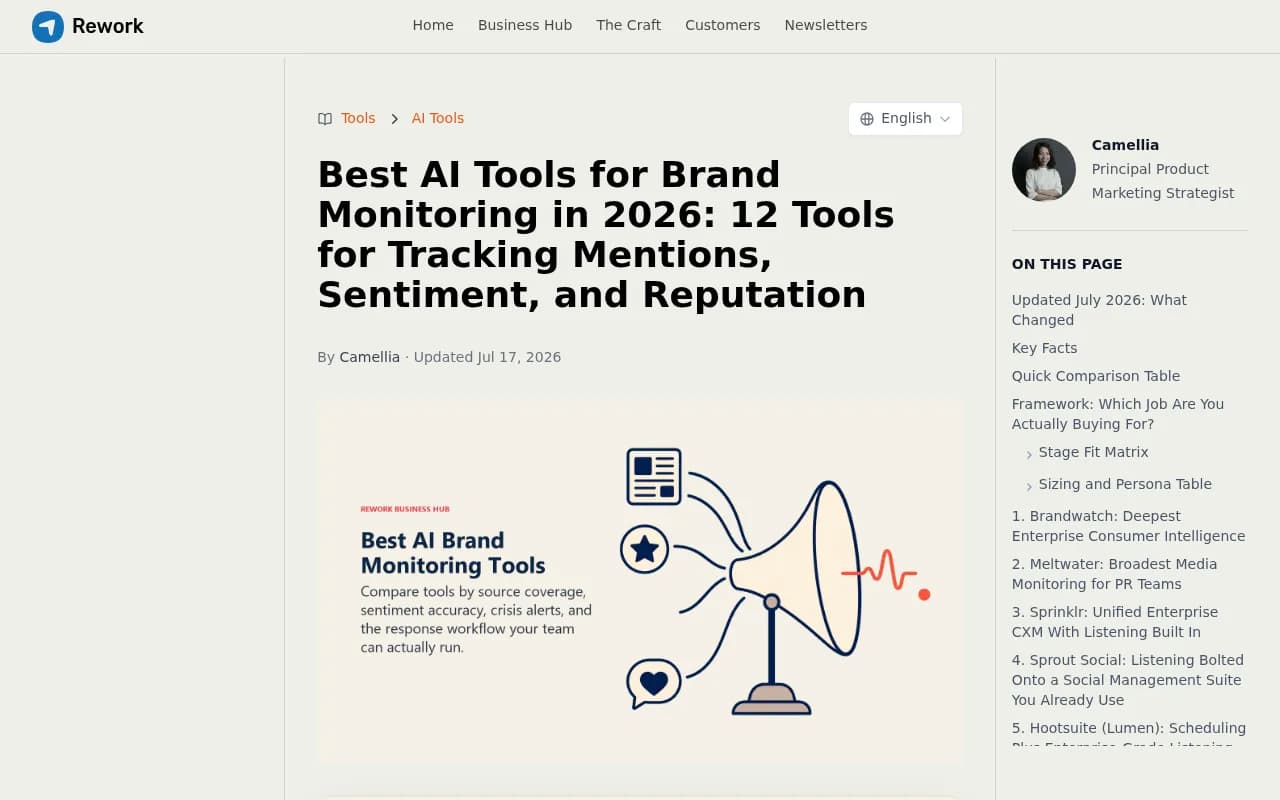
Brandwatch and Meltwater lead for enterprise teams that need every social platform, news site, forum and review in one Boolean query, per Rework's 2026 brand monitoring comparison. Meltwater also includes a database of journalists and key influencers, per YouScan. These are the safe choices for large comms teams that need broad coverage and reporting. They are less specific about AI answers.
Medialyst
Notably PR, which is itself a practitioner agency and a vendor-affiliated source, ranks Medialyst as its top AI-native PR tool. It scores journalists from 0 to 100 on relevance to a specific story and explains the score with their recent articles. Its Radar feature monitors news and scores opportunities on magnitude, velocity, novelty, window and heat. Treat those claims as the vendor-aligned view, but the approach is useful: finding journalists by story fit rather than by beat.
Muck Rack and Cision
Both are standard in PR departments for journalist databases and coverage tracking. Muck Rack's State of AI in PR 2026 puts generative AI use at 76% among PR professionals, while Cision's Inside PR 2026 says 91%. Those are different surveys, so do not average them. I did not find current pricing for either.
Respona and Otter PR for outreach
Once you know which roundups AI cites, you need to get listed in them. Respona is a link building and outreach tool that now positions itself around AI visibility.
Otter PR is a results-driven PR agency with guaranteed placements, though it comes with caveats you should read before signing.

Layer two: tracking what AI actually cites
This is where the mentions turn into something you can measure against AI answers. The useful capabilities are citation tracking by URL, source type classification, and offsite mention detection (your brand named on a third-party page, with or without a link).
Promptwatch
Promptwatch is the platform I would start with for this specific problem, because it covers the trace step and the act step in one product. It tracks how ChatGPT, Gemini, Claude, Perplexity, Google AI Overviews, Google AI Mode, Copilot and others mention and cite your brand, using the real interfaces of those engines rather than only APIs.

For journalist and influencer tracking, a few pieces matter:
- Offsite Mentions finds third-party pages that name your brand or competitors without linking, ranked as opportunities. That is where uncredited journalist coverage shows up.
- Citation Trends classifies every citation into 22 content types and 20 source types, with first cited date, peak and decay half-life per page. You can see whether a news hit or a listicle is doing the work.
- Dedicated Reddit, YouTube, LinkedIn and Instagram citation reports show which creators and channels AI cites, with a "My channels" filter for your own accounts.
- Page Tracker lets you watch any URL, yours or a competitor's, and see which prompts and responses cite it. Paste in a journalist's roundup and you can see whether it actually gets cited.
- Brand Narrative pulls the individual claims AI makes about you and groups them by theme, which shows whether press coverage is shaping the story you want.
Pricing starts at $95 per month for Essential, $245 for Professional and $579 for Business, with a 7-day free trial on monthly billing. Confirm on the pricing page. There is also a free AI visibility report if you want a quick baseline first. For the Reddit angle specifically, see Promptwatch's Reddit features.
Profound, Peec AI and Otterly.AI
Profound is an enterprise-focused AI visibility platform with strong monitoring.

Peec AI and Otterly.AI are lighter prompt trackers. They answer "was my brand mentioned" well, but they are less suited to tracing which journalist pages feed the answer and then acting on it.


Ahrefs Brand Radar and Semrush
If your team already lives in an SEO suite, Brand Radar and the Semrush AI toolkit give you a lower-friction start. The tradeoff is shallower AI-specific data compared with dedicated platforms.

Other citation-focused options
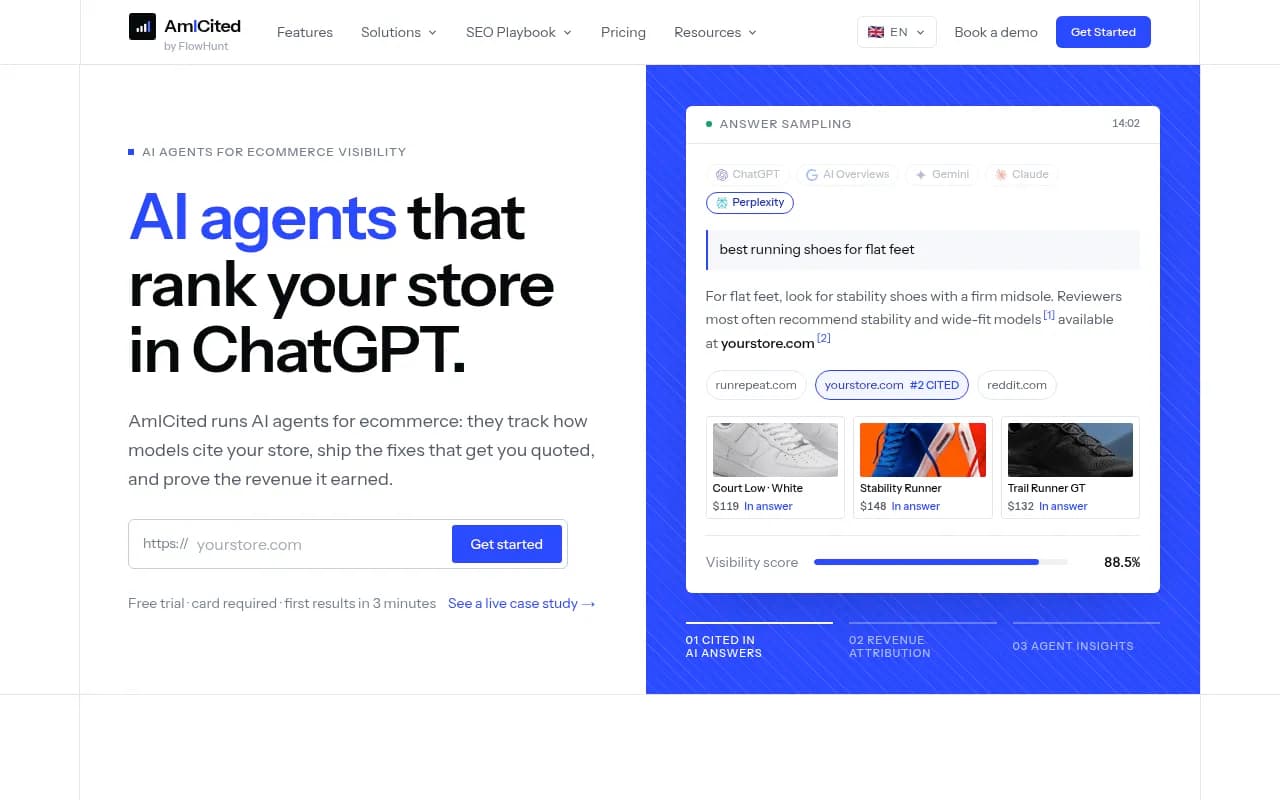
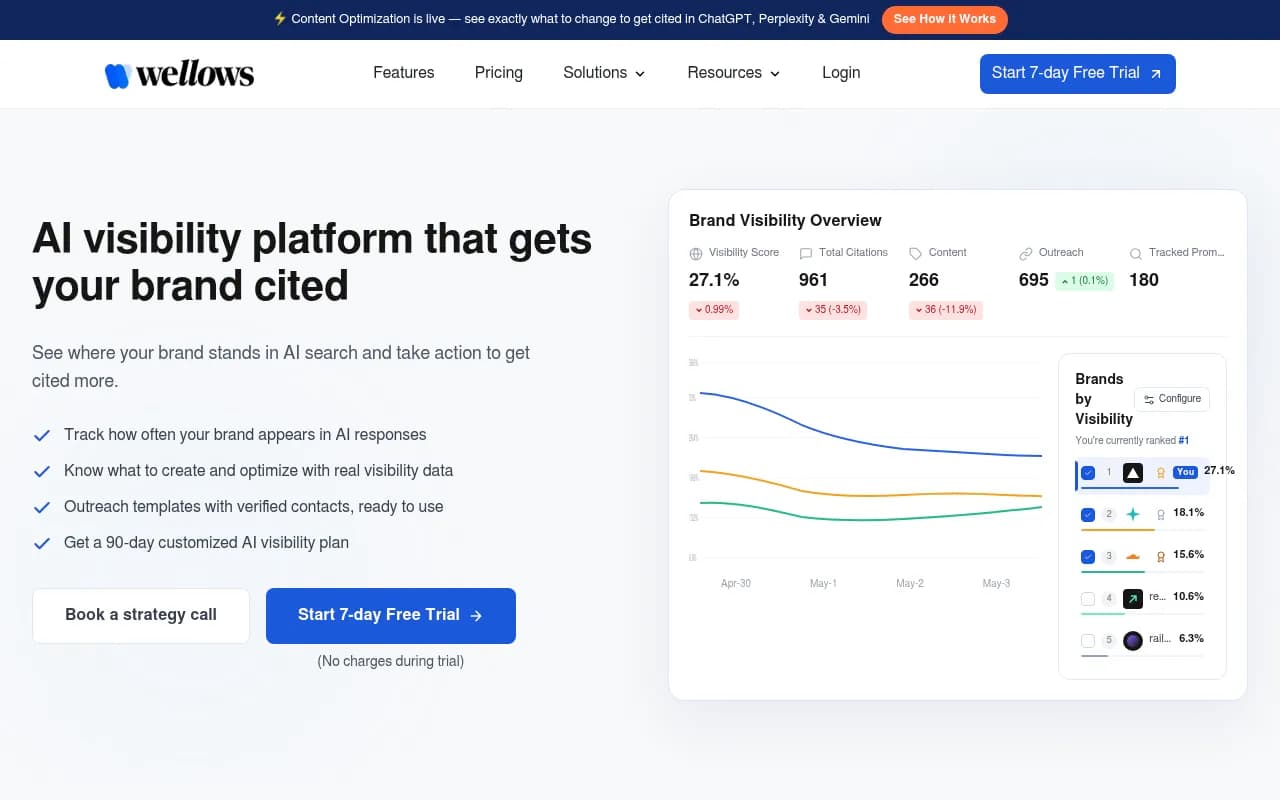
A few catalog tools are built around source and citation tracking and are worth a look if you want something narrower: MentionBird (which sources AI engines cite), AmICited, Wellows (citation tracking with outreach tools) and CrowdReply (getting cited on pages AI already trusts).
MentionBird
For a broader view of the category, the GEO software directory at bestgeosoftware.com lists many more.
Comparison table
| Tool | Layer | Best for | Tracks AI citations? |
|---|---|---|---|
| Meltwater | Media monitoring | Large comms teams, journalist database | No |
| Brandwatch | Social and media listening | Enterprise listening across channels | No |
| Medialyst | Journalist discovery | Story-fit journalist lists and news radar | No |
| Muck Rack / Cision | PR database | Journalist relations and coverage reporting | No |
| Respona | Outreach | Getting into roundups AI cites | Limited |
| Promptwatch | AI visibility and action | Citation tracing, offsite mentions, content fixes | Yes |
| Profound | AI visibility | Enterprise monitoring | Yes |
| Peec AI / Otterly.AI | AI visibility | Basic prompt tracking | Yes |
| Ahrefs Brand Radar | SEO suite add-on | Existing Ahrefs users | Yes |
How to build the bridge in practice
Step 1: Export your coverage list
Pull the last 90 days of journalist and creator coverage from Meltwater, Muck Rack or whichever tool you use. You need URL, publication, author, format (news, roundup, review, video) and date.
Step 2: Export your AI citations
From your AI visibility tool, export the cited URLs for your tracked prompts, by engine. Promptwatch supports CSV and Excel exports of citations, offsite mentions, Reddit, YouTube and LinkedIn citations.
Step 3: Match URLs
A simple lookup in a spreadsheet will do. You are looking for three groups:
- Coverage that AI cites. Protect these relationships and keep the pages fresh.
- Coverage that AI ignores. Often news. Do not count these as AI wins.
- Cited pages that mention competitors but not you. These are your outreach list.
Step 4: Segment by engine
Given the data above, treat engines separately. Prioritize editorial listicles and comparisons for ChatGPT, YouTube for AI Overviews, and Reddit and LinkedIn for Perplexity. A creator with 500K followers on X is close to irrelevant for all three.
Step 5: Check the claims
Coverage can teach AI the wrong thing. If a roundup describes your pricing incorrectly, the error propagates. Promptwatch's Brand Narrative and Fact Check (Business and above) let you mark a claim inaccurate and find the pages stating it, so you know whether to fix your own site or ask a publisher for a correction.
Step 6: Close the loop on traffic
Track whether the citations send visitors. Note that ChatGPT stopped sending a referrer on October 8, 2026, so tag links with utm_source=chatgpt.com where you can, and use a setting that counts those visits as ChatGPT traffic. The Promptwatch Academy has a guide on attributing AI traffic.
Mistakes I see teams make
The first is counting reach. A feature in a major outlet with a huge audience can still be invisible to AI if it is a news item that decays in five weeks. The second is chasing influencer follower counts for ChatGPT, where social is under 1% of citations. The third is treating a sentiment score from a PR tool as a proxy for AI sentiment. They are measured differently, and AI engines may repeat a claim that human readers barely noticed.
A fourth: buying four tools at once. YouScan describes the pattern well. A team signs up for several tools in a burst of enthusiasm, uses one, and pays for all of them. Decide which job each tool does before buying.
Who should use what
- Small team on a budget: a free trial of an AI visibility platform plus manual coverage tracking in a spreadsheet.
- In-house PR plus SEO team: Muck Rack or Meltwater for coverage, Promptwatch for citations and offsite mentions.
- Enterprise comms: Brandwatch or Meltwater plus Promptwatch Business or Enterprise for faster tracking, Fact Check and audit logs.
- Agencies: Promptwatch's agency plans start at $199 per month and include unlimited projects. See the agency solutions page.
If you would rather hand the whole program to specialists, an agency like 1001 SEO Media combines digital PR with generative engine optimization, and uses Promptwatch for AI visibility work.
Bottom line
PR tools tell you who wrote about you. AI visibility tools tell you which of those pages the models read. Pair one of each, join the URLs yourself, and weight your effort by engine: editorial roundups for ChatGPT, YouTube for AI Overviews. Start with a baseline from the free AI visibility report, then pick the media monitoring tool that fits your team size.
For the underlying research, browse the Promptwatch Data hub, and for a wider list of options check AI rank tools.