Key takeaways
- Hall AI, a brand monitoring tool for AI search, shut down in 2026 -- one of several GEO platforms that couldn't survive on monitoring alone
- The core problem: tools that only show you where you're invisible don't help you become visible. That gap is why brands are churning off monitoring-only platforms
- NIST published a report in March 2026 confirming that AI monitoring is still a fragmented, immature space with no trusted standards -- which partly explains why so many monitoring tools are struggling
- The GEO tools that are surviving (and growing) in 2026 are the ones that close the loop: find gaps, create content, track results
- If you were using Hall AI, there are several alternatives worth considering, ranging from lightweight trackers to full optimization platforms
What happened to Hall AI
Hall AI (usehall.com) was a brand visibility monitoring tool built for the AI search era. It tracked how brands appeared across AI engines like ChatGPT, Perplexity, and Google AI Overviews, giving marketing teams a dashboard view of their citation presence.
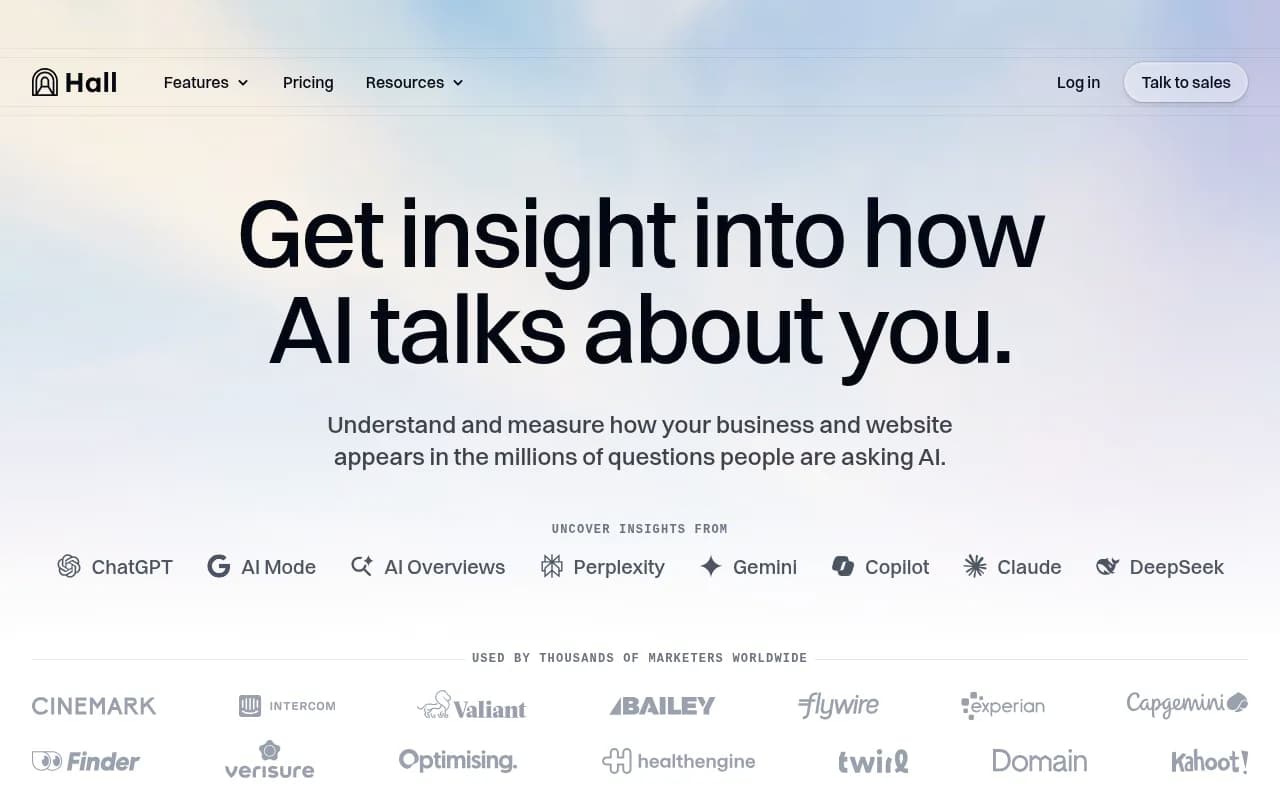
Then it shut down.
The closure didn't come with a dramatic announcement or a viral post-mortem. It just... stopped. And that's actually the most telling part. Hall wasn't a poorly-executed product. The problem was structural: monitoring AI visibility is a real need, but it's not a complete solution. And in 2026, brands are figuring that out fast.
Hall isn't alone. Across the GEO space, monitoring-only tools are struggling to retain customers. The ones that survive are the ones that help brands act on what they find.
Why monitoring alone isn't enough
Here's the core tension. A brand signs up for an AI visibility tracker. They get a dashboard showing that competitors are being cited in ChatGPT responses and they're not. They see the gap. Then what?
Most monitoring tools answer that question with more data. More charts. More breakdowns by model, by prompt, by region. But the underlying problem -- the content gap that's causing the invisibility -- stays exactly where it was.
This is the fundamental failure mode of monitoring-only GEO tools. They're great at diagnosing the symptom. They don't treat the disease.
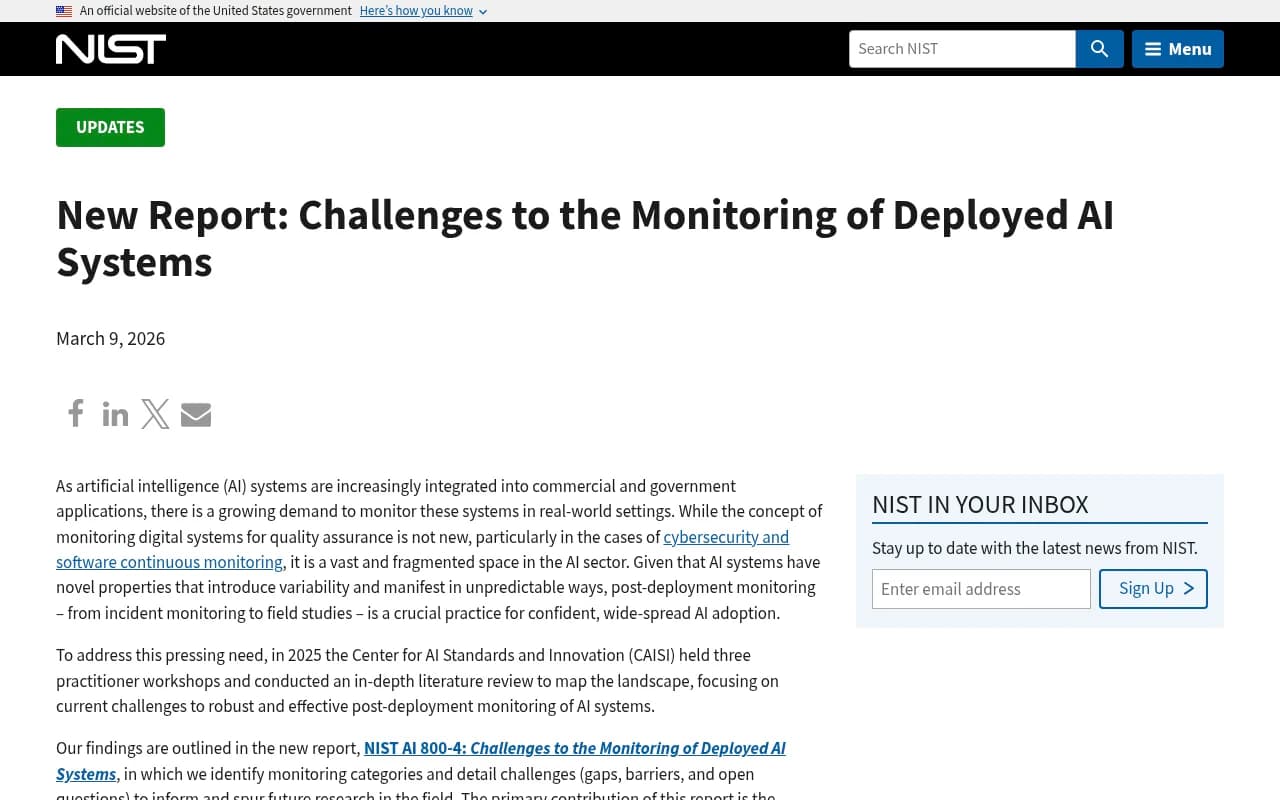
NIST's March 2026 report on challenges to monitoring deployed AI systems made a similar observation about the broader AI monitoring space: the field lacks trusted guidelines, standards, and a mature information-sharing ecosystem. The report identified significant gaps between what monitoring tools can show and what organizations can actually do with that information.
That gap -- between insight and action -- is exactly what's killing monitoring-only GEO platforms.
The broader pattern: AI tool consolidation in 2026
Hall's shutdown fits a larger pattern. The AI tool market in 2026 looks nothing like it did in 2023 or 2024. Back then, you could raise money and build a user base on a single narrow capability. Tracking brand mentions in LLM outputs was novel enough to be interesting.
That novelty is gone. Brands now expect GEO tools to do more than report. They want tools that help them rank, not just measure whether they're ranking.
The AI startup mortality rate has been brutal. Srinivas Rao's widely-read Medium piece from 2025 predicted that 99% of AI startups would be dead by 2026, pointing to the same structural problem: thin wrappers around a single capability don't survive when the underlying need evolves. Monitoring was a thin wrapper. Optimization is the actual need.
What's left standing are platforms that built around the full workflow: find gaps, create content, track results. That's not a coincidence.
What Hall AI users actually needed (and didn't get)
To be fair to Hall, it was doing something genuinely useful. Knowing where you're invisible in AI search is the first step. The problem is that it was only the first step.
Here's what a complete GEO workflow actually looks like:
- You identify which prompts your competitors are visible for and you're not
- You understand why -- what content they have that you're missing
- You create content specifically designed to fill those gaps
- You track whether AI engines start citing your new content
- You connect that citation activity to actual traffic and revenue
Hall could help with step one, partially. Steps two through five required other tools, manual work, or just guessing.
That's a hard product to retain customers on. Especially when other platforms started offering the full loop.
The tools that are actually working in 2026
The GEO platforms that are growing right now share a common trait: they don't stop at the dashboard.
Full-loop optimization platforms
Promptwatch is the clearest example of what the market is moving toward. It tracks visibility across 10 AI models (ChatGPT, Perplexity, Claude, Gemini, Grok, DeepSeek, Copilot, Meta AI, Google AI Overviews, and Mistral), but the tracking is almost secondary to what it does with that data.
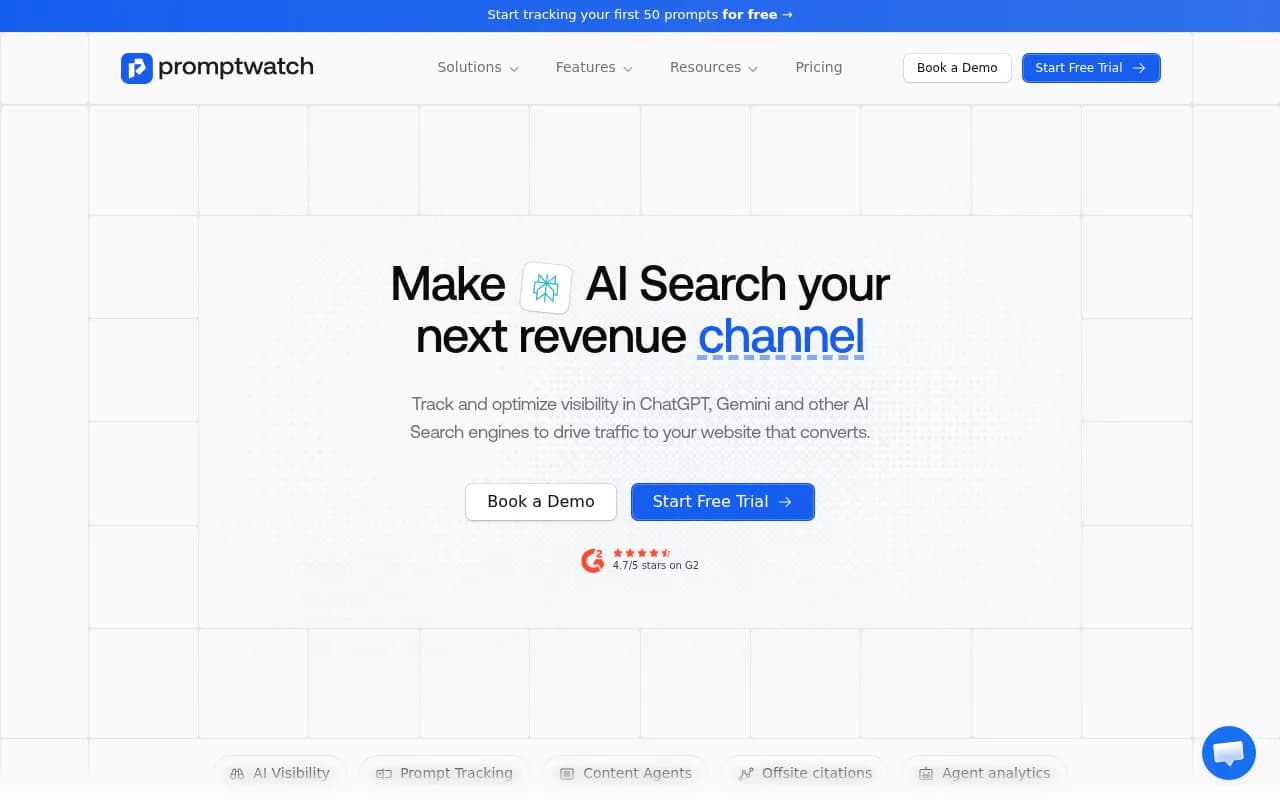
The Answer Gap Analysis shows exactly which prompts competitors are winning that you're not -- not as a vague observation but as a specific, actionable list of content you're missing. Then Content Agents generate articles, comparisons, and briefs built around that gap data, grounded in real prompt volumes and citation patterns. Then page-level tracking shows whether the new content is actually getting cited.
That's the loop Hall couldn't close.
Monitoring tools with stronger feature sets
Some monitoring-focused tools have survived by going deeper on specific capabilities rather than trying to build the full loop.
Profound has a strong enterprise feature set and solid analytics, though it comes at a higher price point and doesn't include Reddit tracking or ChatGPT Shopping visibility.
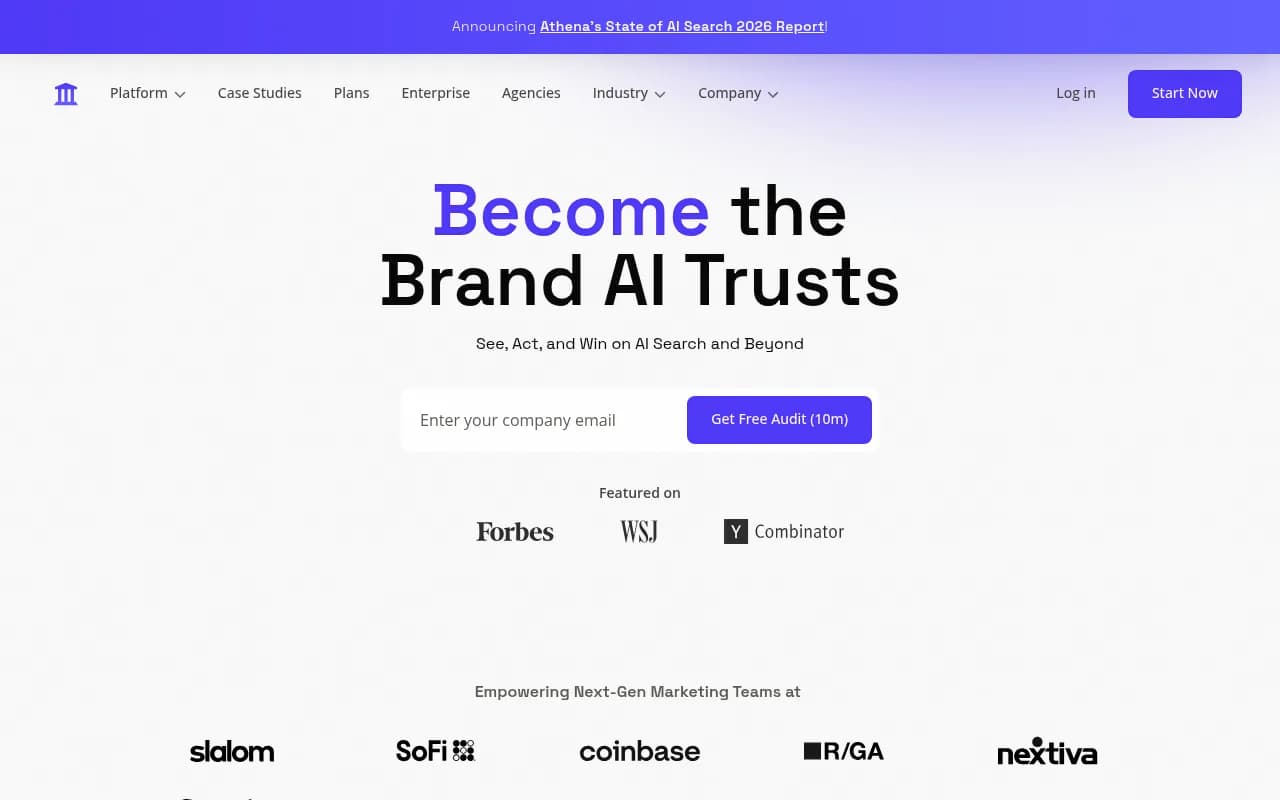
AthenaHQ is monitoring-focused and has built a clean interface for tracking AI visibility, but it lacks content optimization and generation capabilities -- which puts it in a similar structural position to where Hall was.
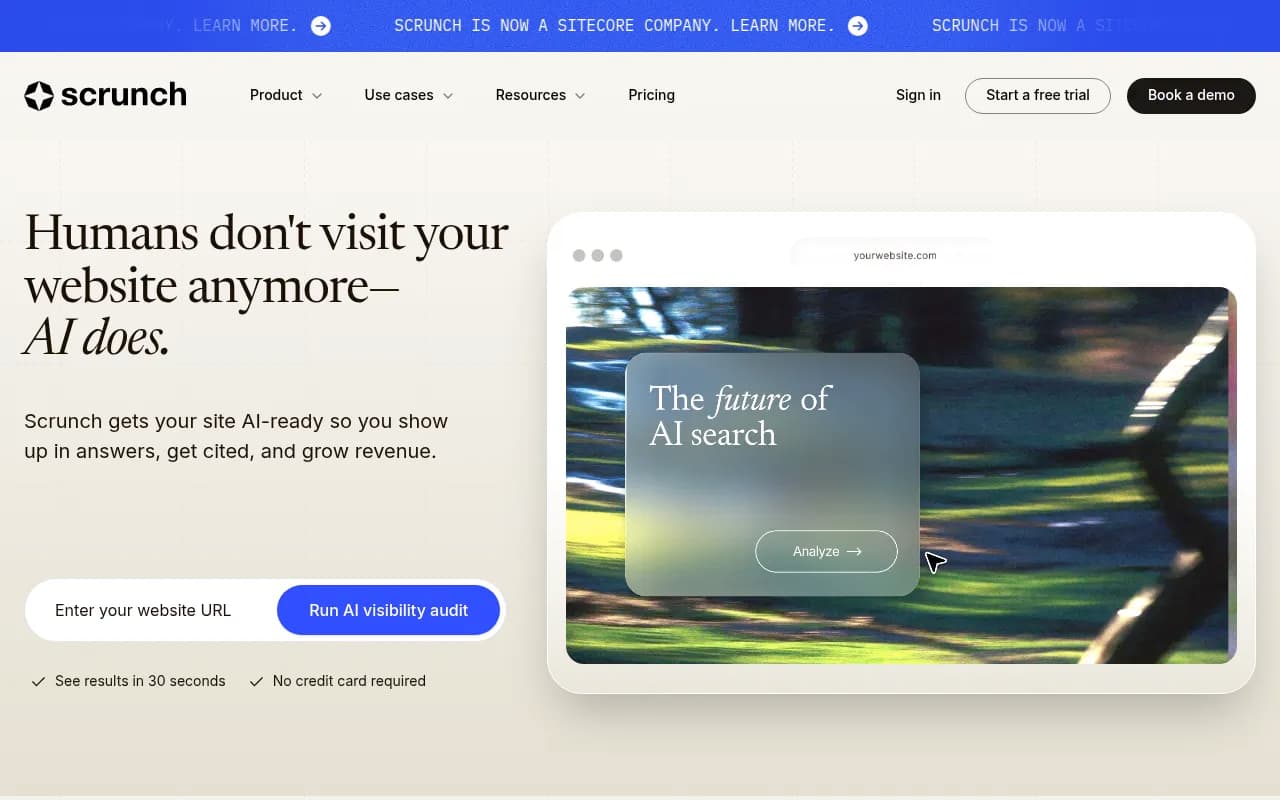
Scrunch AI covers brand and agency monitoring with decent depth, though it also sits on the monitoring side of the line rather than the optimization side.
Lightweight alternatives for smaller teams
If you were using Hall because you wanted simple, affordable AI visibility tracking without the complexity of a full platform, there are a few options worth looking at.
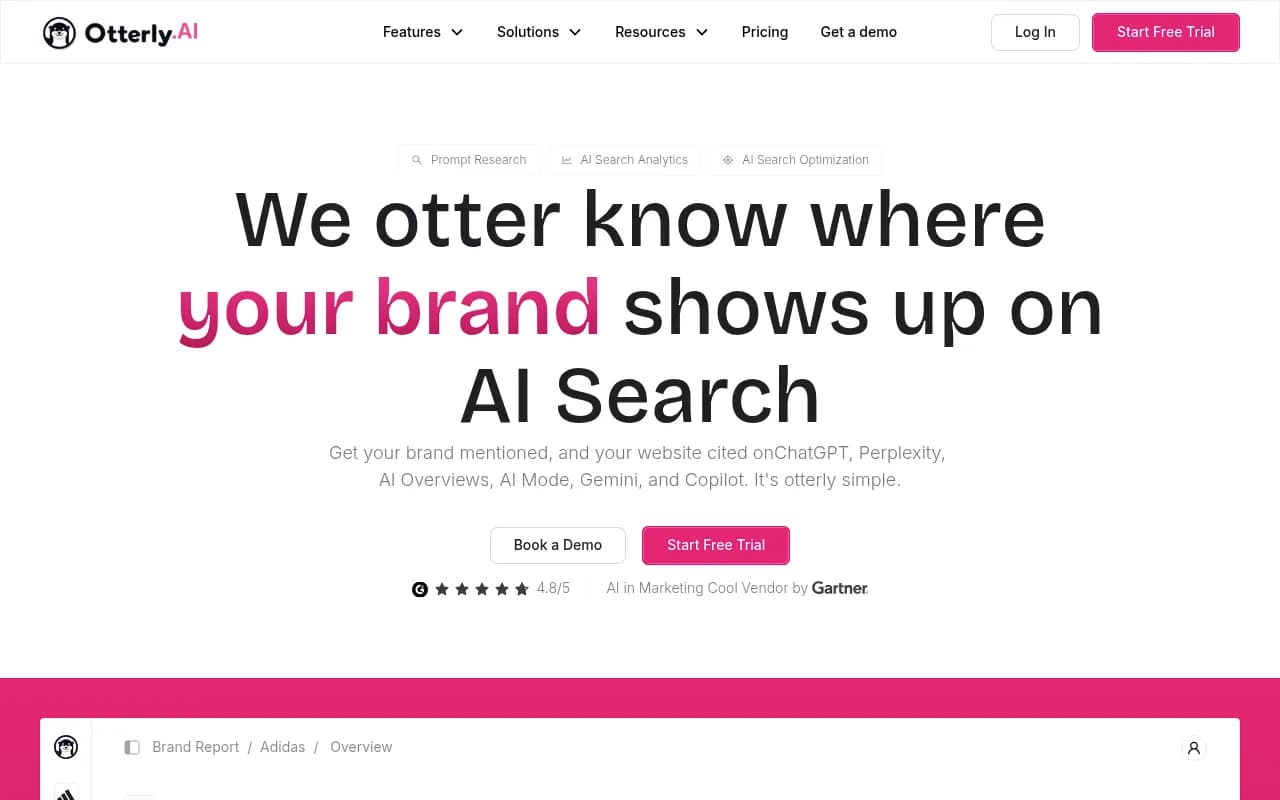
Otterly.AI is one of the more affordable entry points for AI brand monitoring. It's genuinely lightweight -- no crawler logs, no content generation -- but if you just need to know whether you're being cited, it works.
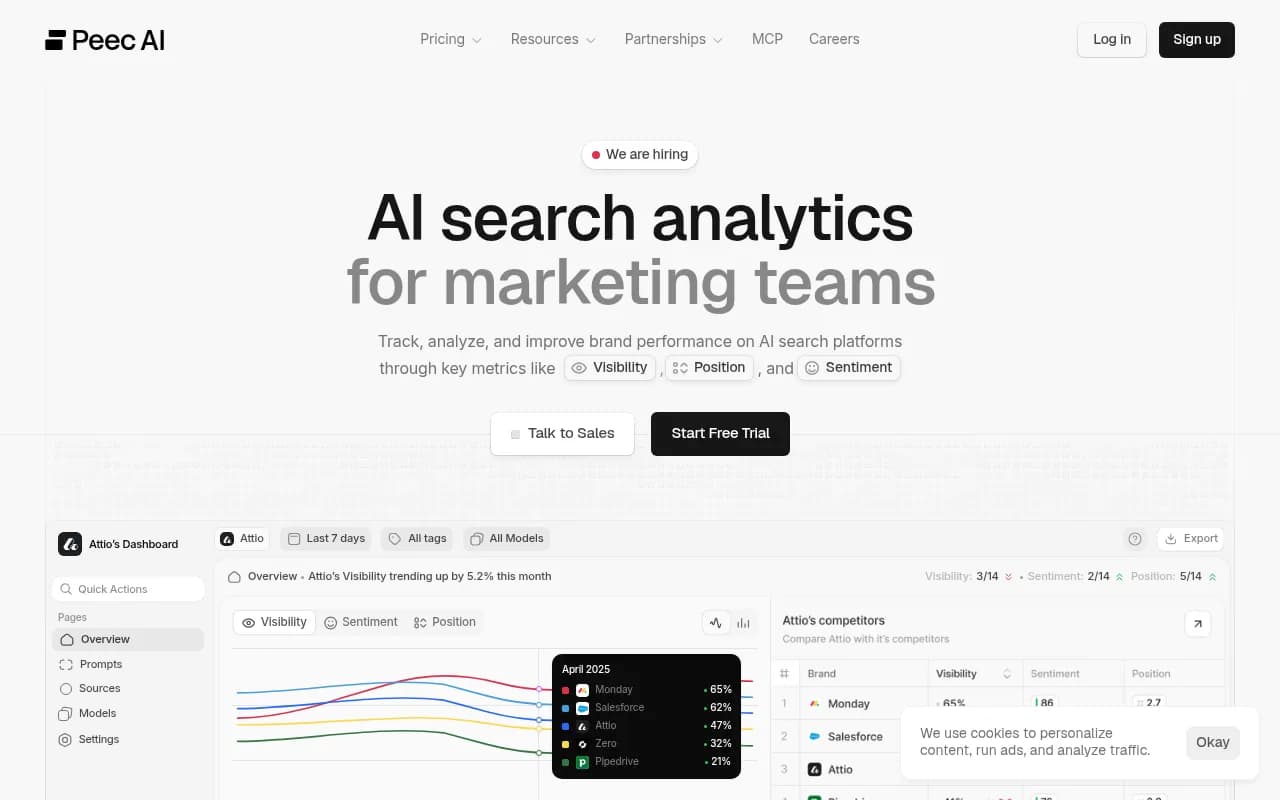
Peec AI is similar in scope, with some smart suggestions layered on top of the monitoring data.
Rankscale tracks AI search rankings with a clean interface and is worth a look if you're primarily focused on rank movement rather than content optimization.
Comparison: Hall AI alternatives in 2026
| Tool | Monitoring | Content generation | Crawler logs | ChatGPT Shopping | Reddit tracking | Price range |
|---|---|---|---|---|---|---|
| Promptwatch | Yes (10 models) | Yes (Content Agents) | Yes | Yes | Yes | $99-$579/mo |
| Profound | Yes | No | No | No | No | Higher tier |
| AthenaHQ | Yes | No | No | No | No | Mid-range |
| Scrunch AI | Yes | No | No | No | No | Mid-range |
| Otterly.AI | Yes (basic) | No | No | No | No | Low |
| Peec AI | Yes (basic) | No | No | No | No | Low |
| Rankscale | Yes | No | No | No | No | Low-mid |
| Search Party | Yes | No | No | No | No | Agency pricing |
The pattern in that table is hard to miss. Most alternatives to Hall are still monitoring-only. The ones that aren't are the ones that are growing.
What "monitoring-only" actually costs you
There's a real cost to using a tool that only monitors. It's not just the subscription fee -- it's the opportunity cost of knowing you have a problem and not having a clear path to fix it.
Think about what happens in practice. Your GEO dashboard shows that a competitor is being cited in 40% of ChatGPT responses for your target category and you're in 8%. That's a useful data point. But now you have to:
- Figure out what content they have that you don't
- Brief a writer or content team
- Create the content
- Wait to see if it gets indexed by AI crawlers
- Check back in your monitoring tool to see if anything changed
That's a lot of manual work between insight and outcome. And for most marketing teams, it means the insight sits in a dashboard and nothing changes.
The tools that are winning in 2026 are the ones that compress that workflow. Find the gap, generate the content, track the result -- without switching between five different tools and a spreadsheet.
If you're migrating off Hall AI
A few practical notes for anyone who was using Hall and needs to move quickly.
First, export whatever data you can before the platform goes fully dark. Historical citation data and prompt tracking history can be useful as a baseline when you set up a new tool.
Second, think about what you actually used Hall for. If it was primarily brand mention monitoring -- knowing when your brand name appeared in AI responses -- then a lightweight tool like Otterly.AI or Peec AI will cover that need at low cost.
If you were using Hall as part of a broader GEO strategy and you want to actually improve your visibility (not just track it), then you need a platform that closes the loop. Promptwatch's Essential plan starts at $99/month and covers one site with 50 prompts and content generation -- which is a reasonable starting point for most teams.
Search Party is worth a look if you're an agency managing multiple clients, though its prompt metrics are more limited than some alternatives.
The deeper lesson from Hall's shutdown
Hall's failure isn't really about Hall. It's about what the market is telling us about what GEO tools need to be.
In 2023, tracking AI citations was novel enough to build a product around. By 2025, it was table stakes. By 2026, it's not enough to survive on. The brands that are winning in AI search aren't just monitoring their visibility -- they're actively engineering it. They're publishing content designed to fill specific gaps that AI models have already exposed. They're tracking which pages get crawled, which get cited, and which drive actual traffic.
That's a fundamentally different activity than checking a dashboard. And it requires fundamentally different tools.
The monitoring-only GEO platforms that are still operating in 2026 are in a difficult position. They're useful, but they're not sufficient. And "useful but not sufficient" is a hard value proposition to sustain when the market keeps raising its expectations.
Hall's shutdown is a signal, not an anomaly. The GEO tools that survive the next 18 months will be the ones that help brands do something, not just see something.
Bottom line
If you were a Hall AI customer, you're not alone in needing to find an alternative. The good news is that the category has matured enough that there are real options -- from lightweight monitoring tools to full optimization platforms.
The more important question is what you want your GEO tool to actually do. If the answer is "show me data," there are cheap options that will do that. If the answer is "help me rank in AI search," you need something that goes further.
The market has already voted on which approach has a future. Hall's shutdown is the result.