Key takeaways
- Hall (usehall.com) has shut down, leaving users searching for AI search monitoring alternatives
- Several platforms offer genuine free trials or free tiers -- not just "book a demo" paywalls
- The best alternatives depend on whether you need monitoring only, or monitoring plus content optimization
- Most monitoring-only tools are fine for basic brand tracking, but won't help you actually improve your AI visibility
- If you want to go beyond tracking and fix the gaps, look for platforms with content generation and answer gap analysis built in
When a tool you depend on disappears, the instinct is to find the closest replacement as fast as possible. That's understandable. But it's also a good moment to ask whether the replacement should just be a like-for-like swap, or whether you should use the disruption to upgrade.
Hall was a solid AI search monitoring tool. It tracked brand mentions across LLMs, gave you visibility scores, and helped teams understand how they were appearing in AI-generated answers. Useful stuff. But it was, at its core, a monitoring dashboard -- it showed you the problem without doing much to help you solve it.
So as you evaluate alternatives, it's worth keeping that distinction in mind: some tools just watch, and some tools help you act. Both have their place, but they're not the same thing.
This guide focuses specifically on platforms that let you test before you commit -- free trials, free tiers, or genuinely accessible entry plans. No "contact sales for pricing" dead ends.
What Hall actually did (and what to look for in a replacement)
Hall monitored how your brand appeared in AI search engines -- ChatGPT, Perplexity, Gemini, and others. You'd set up prompts, it would run them, and you'd see whether your brand was cited, mentioned, or ignored.
For a replacement to be worth your time, it should cover at least:
- Prompt-based brand monitoring across multiple LLMs
- Citation tracking (which pages are being cited, not just whether you're mentioned)
- Some kind of visibility score or trend over time
- Enough prompt volume to actually be useful on the free or trial tier
Nice-to-haves that separate good tools from great ones:
- Answer gap analysis (what prompts are competitors winning that you're not?)
- Content recommendations or generation
- Crawler log access (which AI bots are hitting your site, and when?)
- Reddit and YouTube tracking (these influence AI answers more than most people realize)
With that framework in mind, here are the platforms worth testing.
The best Hall alternatives with free trials in 2026
Otterly.AI
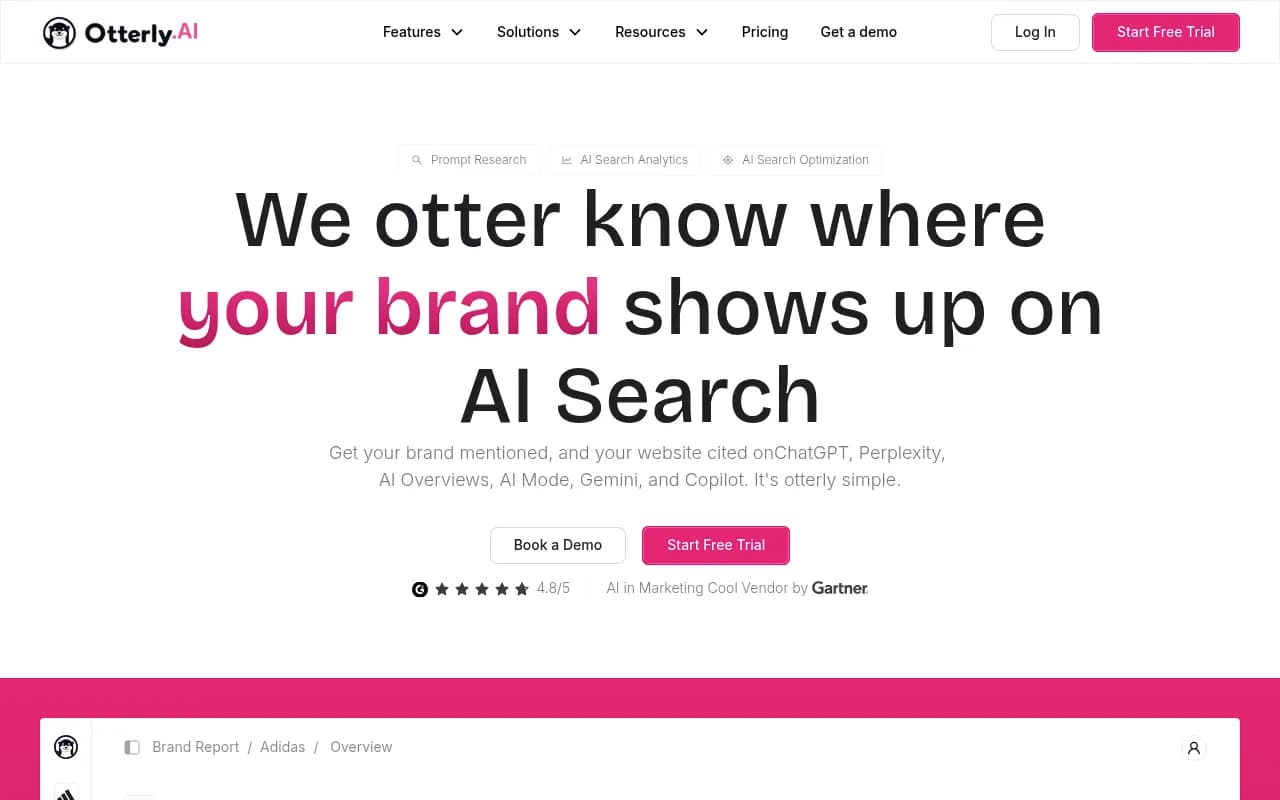
Otterly is one of the more accessible entry points in the AI visibility space. It has a free tier that's genuinely usable -- not a 7-day trial that expires before you've figured out the interface. You can monitor brand mentions across ChatGPT, Perplexity, and Gemini, set up custom prompts, and track visibility trends over time.
It's a monitoring-first tool, which means it's a clean Hall replacement if monitoring is all you need. The interface is straightforward, and the free tier gives you enough prompts to validate whether the tool works for your use case before upgrading.
What it doesn't do: content generation, answer gap analysis, or crawler logs. If you need those, you'll need to look elsewhere.
Peec AI
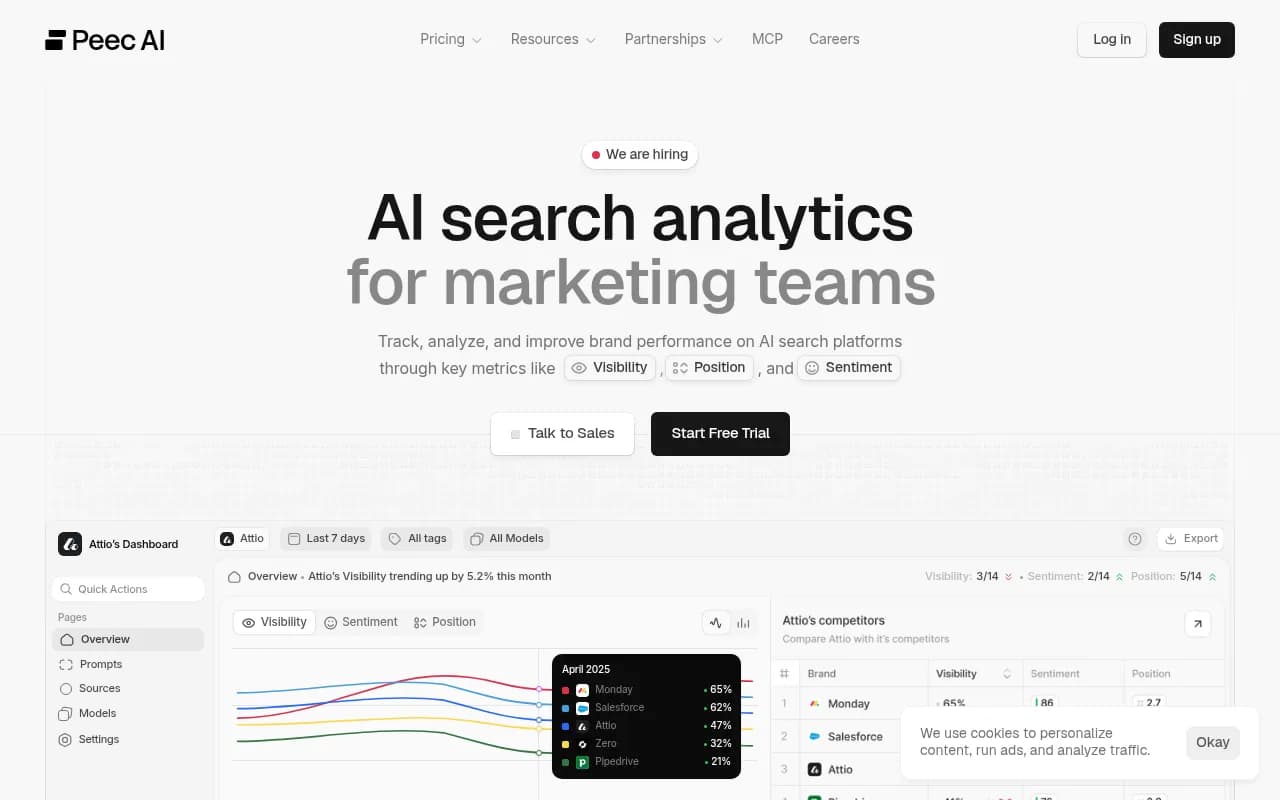
Peec is another monitoring-focused platform with a free trial available. It tracks AI citations and brand mentions, gives you visibility scores, and surfaces some suggestions for improvement. The "smart suggestions" angle is a step beyond pure monitoring -- it at least points you toward what to fix, even if it doesn't help you fix it.
The free trial is time-limited rather than a permanent free tier, so you'll want to go in with a clear testing plan. Set up your core prompts on day one, let it run for a few days, and evaluate the data quality before the trial window closes.
Rankscale
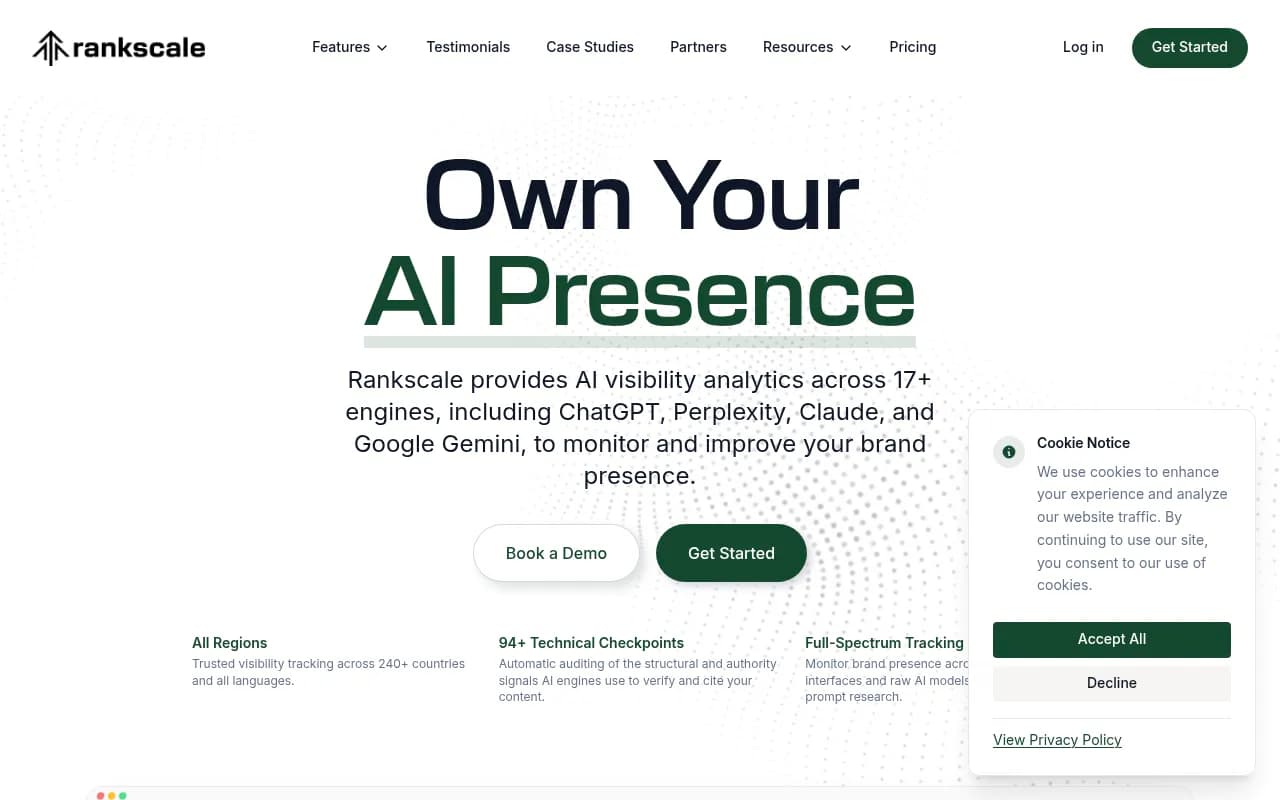
Rankscale focuses on AI search rank tracking and monitoring. It's worth testing if you want a clean, focused tool that doesn't try to do everything. The interface is built around tracking how your brand ranks across AI responses over time, which is the core use case Hall covered.
Free trial available. Worth a look if you want something lightweight.
SE Ranking (AI visibility features)
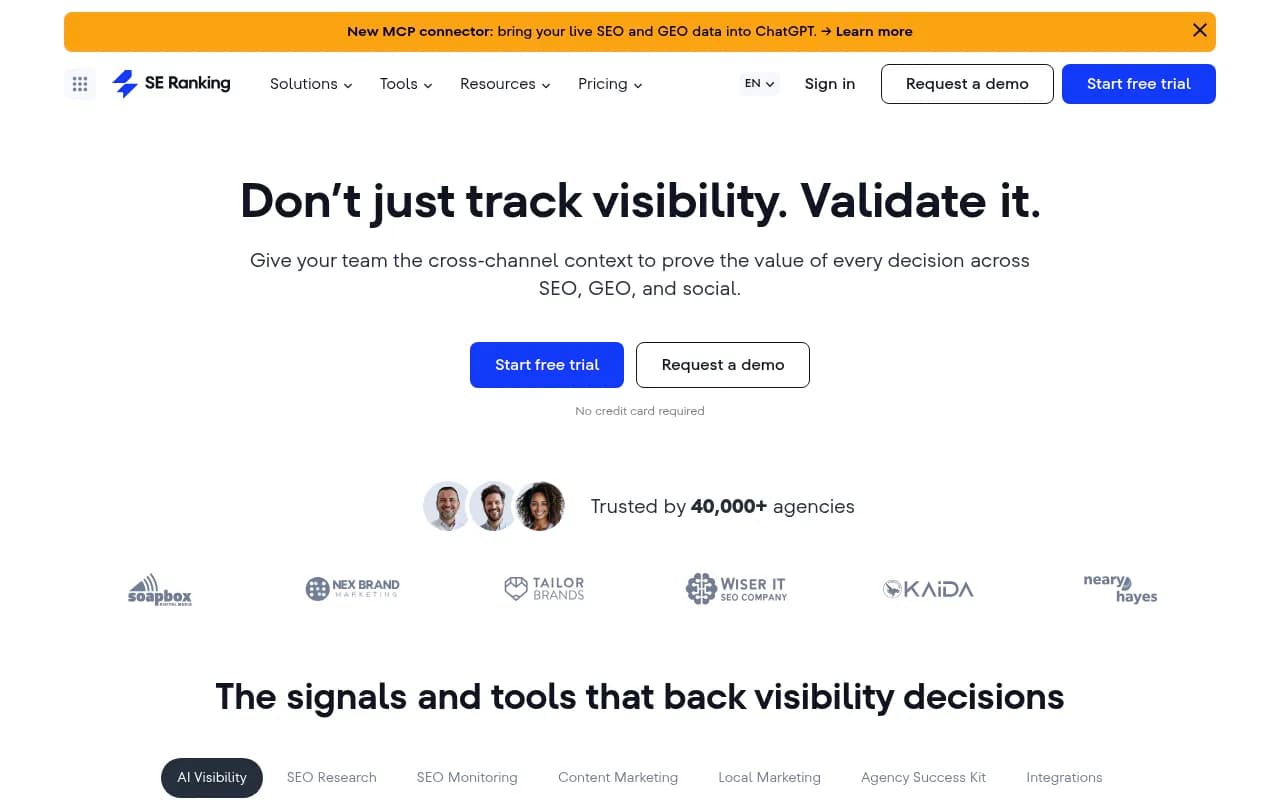
SE Ranking is primarily an SEO platform, but it has expanded into AI visibility tracking in a meaningful way. If you're already using SE Ranking for traditional SEO, the AI visibility features are worth exploring -- they're included in existing plans rather than being a separate product.
For Hall users who also care about traditional search, this is a practical consolidation option. One platform, one bill, covering both channels.
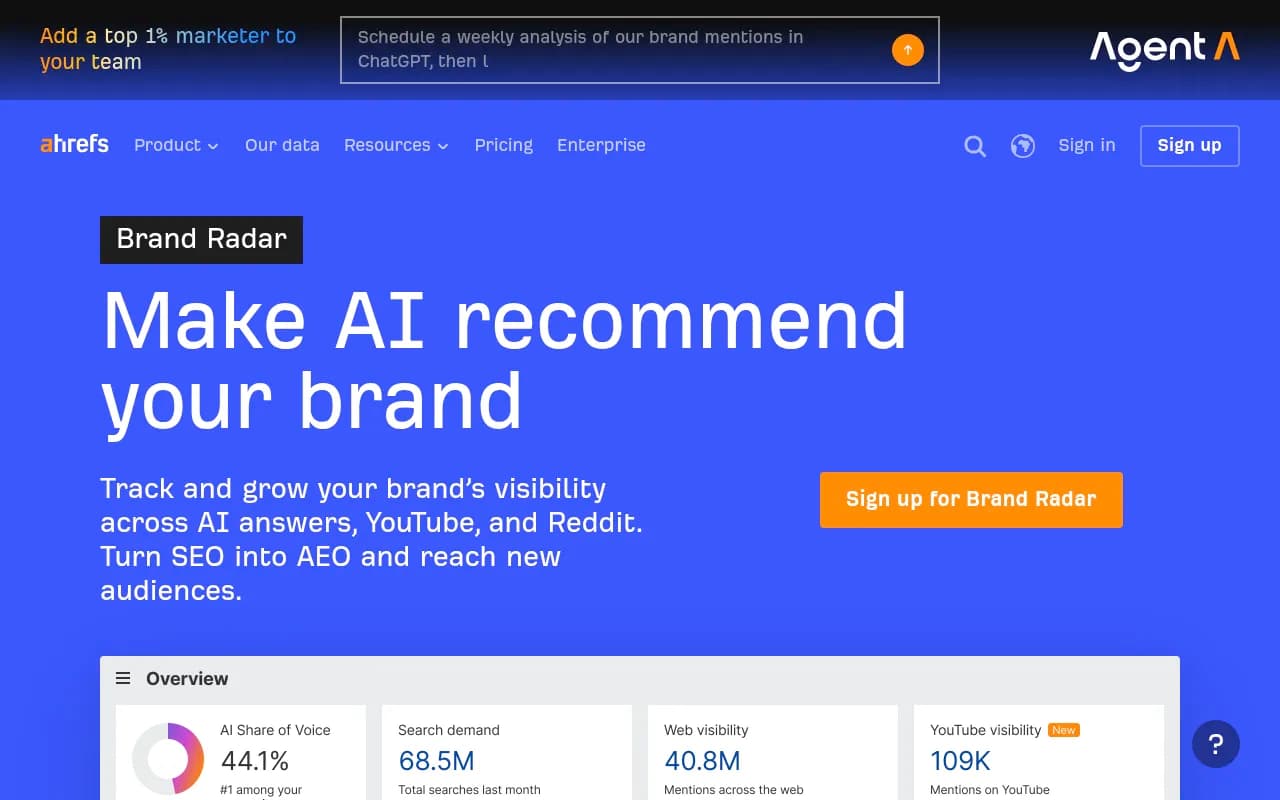
Ahrefs Brand Radar
Ahrefs added Brand Radar as part of its broader platform. If you have an existing Ahrefs subscription, Brand Radar is worth turning on -- it tracks your brand across AI search engines without requiring a separate tool or budget.
The limitation is that it uses fixed prompts rather than custom ones, which means you can't tailor it to your specific competitive landscape. For a Hall replacement, that's a real gap. But if you're already paying for Ahrefs and just need basic AI brand monitoring, it's a reasonable stopgap.
Semrush AI Visibility Toolkit
Similar story to Ahrefs -- Semrush has built AI visibility features into its existing platform. The AI Visibility Toolkit tracks brand mentions in AI responses and gives you visibility scores. Fixed prompts are the same limitation here.
If you're a Semrush user, test it. If you're not, it's probably not worth subscribing to Semrush just for the AI visibility features when dedicated tools exist.
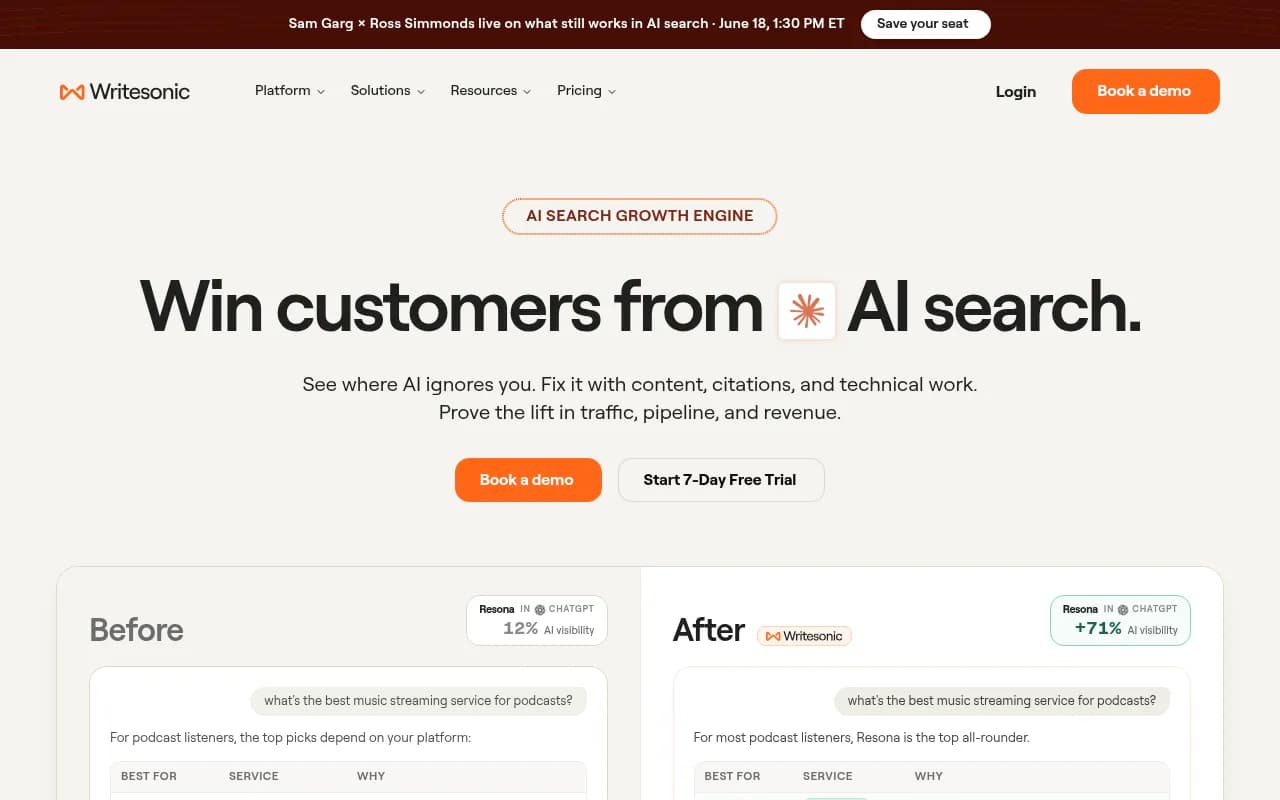
Writesonic GEO
Writesonic has moved into GEO (Generative Engine Optimization) territory with its monitoring and content generation features. The GEO module tracks AI visibility and also helps you generate content optimized for AI responses -- which puts it in a different category from pure monitoring tools.
Free trial available. If you want a tool that bridges monitoring and content creation, this is worth testing.
Promptwatch
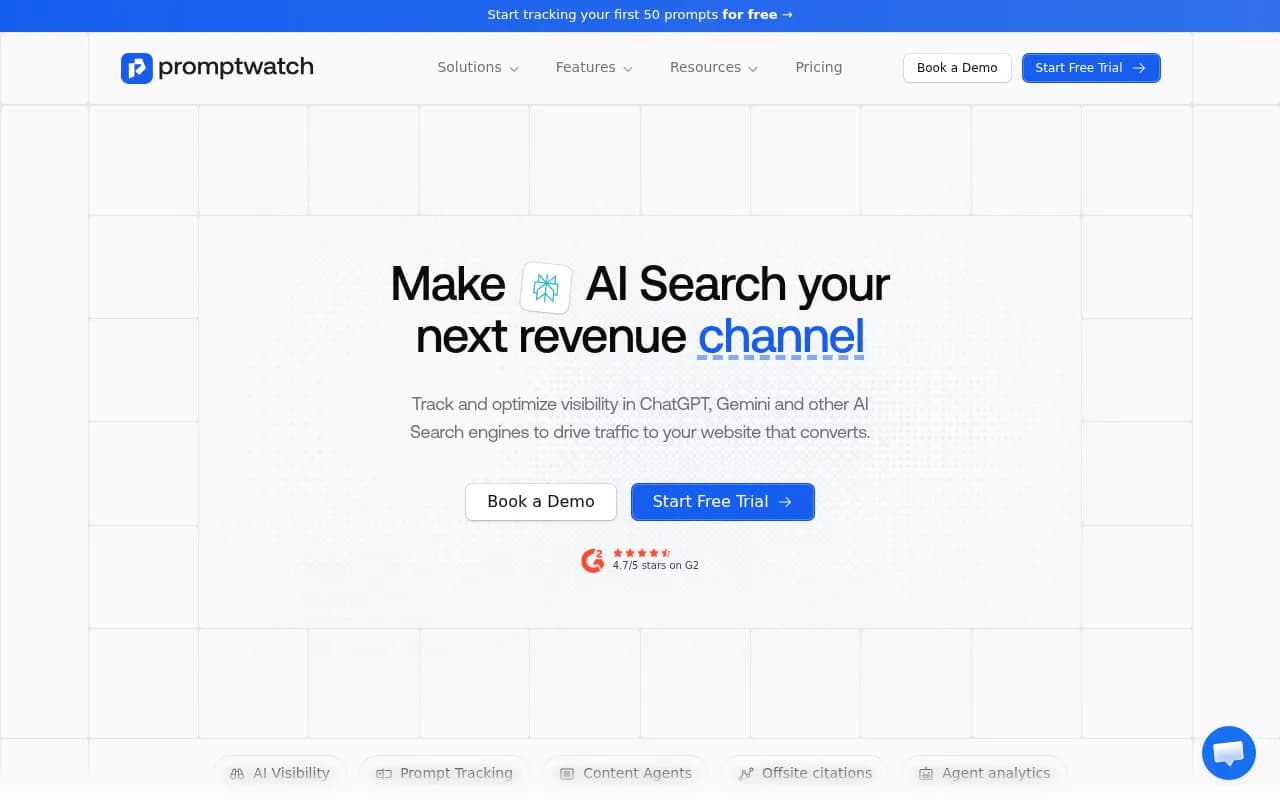
Promptwatch is the most complete option on this list, and it's worth understanding why before you decide whether it's right for you.
Most of the tools above are monitoring dashboards. They show you where you're visible and where you're not. Promptwatch does that too, but it's built around what happens after you see the data. The Answer Gap Analysis shows you exactly which prompts competitors are winning that you're not -- the specific topics and questions AI models are answering from competitor content but not yours. Then Content Agents help you create the content that fills those gaps, grounded in real prompt data and citation analysis. Then you track whether the new content actually gets cited.
That cycle -- find the gap, create the content, track the result -- is what makes it an optimization platform rather than a tracker. It also covers things most competitors don't: real AI crawler logs (which AI bots hit your site, which pages they read, when they return), Reddit and YouTube tracking, ChatGPT Shopping monitoring, and prompt volume and difficulty scoring so you can prioritize the gaps worth fixing.
The Professional plan at $249/month includes crawler logs and a free trial is available. For teams that want to actually move the needle on AI visibility rather than just measure it, this is the most actionable option.
Comparison table: Hall alternatives at a glance
| Tool | Free trial / tier | Custom prompts | Content generation | Crawler logs | Best for |
|---|---|---|---|---|---|
| Otterly.AI | Free tier (permanent) | Yes | No | No | Basic monitoring on a budget |
| Peec AI | Time-limited trial | Yes | No | No | Monitoring with some suggestions |
| Rankscale | Free trial | Yes | No | No | Lightweight rank tracking |
| SE Ranking | Free trial | Yes | No | No | Combined SEO + AI monitoring |
| Ahrefs Brand Radar | Included in Ahrefs | Fixed only | No | No | Existing Ahrefs users |
| Semrush AI Toolkit | Included in Semrush | Fixed only | No | No | Existing Semrush users |
| Writesonic GEO | Free trial | Yes | Yes | No | Monitoring + content creation |
| Promptwatch | Free trial | Yes | Yes (AI agents) | Yes | Full optimization, not just tracking |
How to actually evaluate these tools during a free trial
A free trial is only useful if you go in with a plan. Here's how to get real signal in a short window.
Set up the same prompts across multiple tools
Pick 10-15 prompts that matter to your business -- the questions your customers actually ask AI tools when looking for what you sell. Run the same prompts in every tool you're trialing. This lets you compare data quality directly rather than evaluating each tool in isolation.
Check citation-level data, not just mention counts
A tool that tells you "you were mentioned 47 times" is less useful than one that tells you "you were cited on these specific pages, in these specific AI responses, for these specific prompts." Citation-level data is what lets you act on the information.
Test the content or recommendation features if they exist
If a tool claims to help you improve visibility (not just measure it), test that claim during the trial. Ask it to identify a gap, follow its recommendation, and see whether the output is actually useful or just generic.
Look at how many LLMs are covered
Hall covered multiple AI models. Make sure your replacement does too. ChatGPT and Perplexity are the obvious ones, but Google AI Overviews, Gemini, Claude, and Grok all matter depending on your audience. A tool that only monitors one or two models is giving you a partial picture.
Check the prompt limits on the trial tier
Some tools give you a generous prompt allowance on the free tier; others give you so few that you can't meaningfully test the product. Know the limits before you invest time in setup.
Monitoring-only vs. optimization: which do you actually need?
This is the real question, and it's worth being honest with yourself about the answer.
If your goal is to understand where you stand -- to report AI visibility metrics to a client or stakeholder, to monitor for brand mentions, to track trends over time -- a monitoring-only tool is probably fine. Otterly.AI, Peec, or Rankscale will do the job without overcomplicating things.
If your goal is to actually improve your AI visibility -- to show up in more AI responses, to get cited more often, to take market share from competitors in AI search -- you need a tool that helps you act, not just observe. Monitoring tells you the score. Optimization changes it.
The market is moving fast enough that brands who treat AI search as a passive monitoring exercise are going to fall further behind brands that are actively creating content for it. The gap between "we track our AI visibility" and "we systematically improve our AI visibility" is going to matter a lot over the next 12-18 months.
A note on free trials vs. free tiers
There's a meaningful difference between a time-limited free trial and a permanent free tier, and it's worth knowing which you're getting before you sign up.
A free trial gives you full (or near-full) access for a limited period -- usually 7-14 days. Good for evaluation, but you're on a clock. A permanent free tier gives you limited access indefinitely -- fewer prompts, fewer features, but no expiry. Better for ongoing lightweight use.
For Hall users who need a replacement now, a free trial is probably the right starting point -- you can evaluate properly and make a decision. For teams that need something to run in the background without committing budget, a permanent free tier is more practical.
Most tools on this list offer one or the other. A few offer both (a free tier with the option to trial premium features). Check the pricing page carefully before assuming.
Bottom line
Hall shutting down is an inconvenience, but it's also a chance to land on something better. The monitoring-only tools on this list are solid replacements if that's all you need. But if you were already frustrated that Hall showed you the problem without helping you fix it, this is the moment to upgrade to a platform that actually helps you act on the data.
Test a few options during their free trials. Use the same prompts across all of them. Pay attention to citation-level data quality and what the tool actually helps you do with the information it surfaces.
The best AI visibility tool isn't the one with the most impressive dashboard -- it's the one that helps you show up more often in the AI responses your customers are reading.