Key takeaways
- AI search engines can cite new content within days of crawling it -- much faster than traditional Google rankings, which typically take 3-6 months.
- The path from "published" to "cited in AI answers" has three distinct stages: crawl, index, citation. Each has its own timeline and failure points.
- Content quality, internal linking, and site authority all influence how quickly AI models pick up your pages -- same levers as SEO, but weighted differently.
- You can actively accelerate AI visibility by submitting sitemaps, improving page structure, and targeting specific prompt gaps rather than broad keywords.
- Tracking your AI citation timeline requires different tools than traditional rank trackers -- you need to know when AI crawlers visit, which pages they read, and when citations actually appear.
Why AI search timelines feel confusing
Most people asking this question are coming from a traditional SEO background, where the answer is pretty well established: expect 3-6 months for initial movement, 6-12 months for meaningful rankings on competitive terms. Ahrefs data shows that only 1.74% of newly published pages ever reach Google's top 10 within a year -- down from 5.7% in 2017. It's slow, and it's getting slower.
AI search works differently. When ChatGPT, Perplexity, Claude, or Google AI Overviews answer a question, they're not running a real-time web crawl -- they're drawing on a mix of training data, retrieval-augmented generation (RAG), and live web search depending on the model. That means the question "how long to rank?" actually splits into two separate questions:
- How long until AI crawlers discover and read my content?
- How long until that content starts appearing in AI-generated answers?
The gap between those two things can be surprisingly short -- or frustratingly long -- depending on factors most people don't think about.
Stage 1: Getting crawled by AI engines
Before any AI model can cite your content, its crawler needs to find and read it. This is the same first step as traditional SEO, but the crawlers are different.
ChatGPT uses OAI-SearchBot and GPTBot. Perplexity has its own crawler (PerplexityBot). Google's AI Overviews and AI Mode use Googlebot, which you're probably already familiar with. Claude uses ClaudeBot for Anthropic's web-connected features.
For a well-established site with decent authority, AI crawlers typically visit new pages within a few days to a couple of weeks of publication. For newer sites or pages with weak internal linking, it can take longer -- sometimes a month or more.
Things that slow down AI crawling:
- No sitemap, or a sitemap that isn't updated when new content is published
- Weak internal linking (new pages that nobody links to from existing content)
- Slow server response times or intermittent downtime
- Pages blocked in robots.txt (some sites accidentally block AI crawlers this way)
- JavaScript-heavy pages that crawlers struggle to render
The fastest way to get crawled is the same as it's always been: submit your sitemap, link to new content from existing high-traffic pages, and make sure your robots.txt isn't blocking the bots you want.
Stage 2: From crawl to citation -- the real timeline
This is where AI search diverges sharply from traditional SEO. In Google's world, getting indexed is just the beginning of a long ranking process. In AI search, a single crawl can be enough for a model to start citing your content -- sometimes within days.
Here's a rough breakdown by model type:
| AI engine | Crawl-to-citation speed | Notes |
|---|---|---|
| Perplexity | 1-7 days | Uses live web search heavily; fastest to cite new content |
| Google AI Overviews / AI Mode | 1-4 weeks | Relies on Googlebot; benefits from existing Google ranking |
| ChatGPT (web search mode) | 3-14 days | OAI-SearchBot is active; citation speed varies by query |
| Claude (web-connected) | 1-2 weeks | ClaudeBot is relatively active on established sites |
| Gemini | 1-4 weeks | Tied to Google's index; similar timeline to AI Overviews |
| DeepSeek, Grok, Mistral | 2-8 weeks | Less frequent crawling; newer retrieval pipelines |
These are rough estimates, not guarantees. A page that directly answers a high-volume prompt with clear, well-structured content can get cited faster than one that's vaguely relevant to a broad topic. The specificity of your content matters a lot.
Ahrefs' research on ranking timelines in traditional Google search -- AI search can move significantly faster for citation, but the underlying content quality factors are similar.
What actually determines how fast you get cited
Speed matters, but it's secondary to whether you get cited at all. These are the factors that genuinely move the needle:
Prompt specificity and answer gap
AI models cite content because it answers a specific question that a user asked. If your content targets a broad topic ("content marketing tips"), it's competing with thousands of other pages. If it targets a specific prompt ("how to write a product comparison page for AI search"), you're much more likely to get cited -- and faster.
The most reliable way to find these specific prompts is to look at what questions AI engines are already answering, and which ones your competitors are getting cited for that you're not. That's the core of what's called Answer Gap Analysis.
Content structure and clarity
AI models are essentially trying to extract a clear, quotable answer from your page. Content that buries its main point in three paragraphs of preamble is harder to cite than content that leads with a direct answer. Structured content -- clear headings, short paragraphs, numbered steps where appropriate -- gets cited more reliably.
This isn't about keyword density. It's about whether a language model can confidently extract your answer and attribute it to your URL.
Site authority and trust signals
AI models, especially those using retrieval-augmented generation, tend to weight established, authoritative sources more heavily. A page on a domain with strong backlinks and a history of being cited will get picked up faster than the same page on a brand-new domain.
This is one area where traditional SEO work pays direct dividends for AI visibility. Building your site's authority through quality backlinks and consistent publishing still matters.
Freshness signals
Several AI engines, particularly Perplexity and Google AI Mode, actively prefer recent content for time-sensitive queries. A page published last week can outperform a page published two years ago if the query has any recency component. This is actually an advantage for new content -- you don't always need years of authority to compete.
The failure modes nobody talks about
Most guides focus on what to do. Here's what actually prevents content from getting cited, even after it's been crawled:
Crawl without citation: AI crawlers visit your page but never cite it. This usually means the content didn't clearly answer a specific prompt, or the page had structural issues that made it hard to extract a clean answer.
Citation without traffic: Your content gets cited in AI answers, but nobody clicks through. This happens when the AI answer is so complete that users don't need to visit your site. It's worth knowing about even if you can't always fix it.
Inconsistent citation: Your page gets cited for a few weeks, then drops out. This can happen when competitors publish better content targeting the same prompt, or when the AI model's retrieval index refreshes.
Wrong model coverage: You're getting cited on Perplexity but not ChatGPT, or vice versa. Different models have different retrieval pipelines and different crawl frequencies. Optimizing for one doesn't automatically transfer to others.
How to actively speed up AI ranking
Passive publishing and hoping for the best is a slow strategy. Here's what actually accelerates the timeline:
Target specific prompts, not just topics
Before you publish, identify the exact prompts that AI engines are already answering in your space. Look at what questions users are asking ChatGPT, Perplexity, and Google AI Mode about your product category or industry. Then write content that directly answers those prompts -- not content that broadly covers the topic.
Structure your content for extraction
Lead with your answer. Use clear H2 and H3 headings that mirror how someone would phrase a question. Include a concise summary near the top. Avoid long introductions that delay the main point.
Build internal links immediately
When you publish new content, link to it from at least 2-3 existing pages on your site. This signals to crawlers that the new page is part of your site's structure, not an orphan page, and it accelerates crawl time.
Submit your sitemap and use URL inspection
If you're on Google Search Console, use the URL Inspection tool to request indexing immediately after publishing. This speeds up Googlebot's visit, which in turn helps Google AI Overviews and AI Mode.
Monitor crawler activity
You can't optimize what you can't see. Knowing when AI crawlers actually visit your pages -- and which pages they skip -- is the difference between guessing and knowing. Tools that log AI crawler activity let you see exactly when OAI-SearchBot, PerplexityBot, and others hit your site, which pages they read, and when those visits translate into citations.
Promptwatch has AI Crawler Logs that show this in real time -- you can see which AI bots visited, what they read, any errors they hit, and when a page moves from "crawled" to "cited." Most rank trackers don't have anything like this.

Realistic timeline expectations by scenario
Here's a practical breakdown depending on where you're starting from:
Established site, high authority, targeting a specific prompt gap
- Crawl: 1-3 days
- First citation (Perplexity/ChatGPT web search): 3-14 days
- Consistent citation across multiple models: 2-6 weeks
Established site, moderate authority, competitive topic
- Crawl: 3-10 days
- First citation: 2-4 weeks
- Consistent multi-model citation: 1-3 months
New site (under 6 months old), any topic
- Crawl: 1-4 weeks
- First citation: 1-3 months (if it happens at all early on)
- Consistent citation: 3-6+ months, depending on how quickly you build authority
Any site, targeting a very specific niche prompt with little competition
- Crawl: depends on site authority (see above)
- First citation: can happen within days of crawl if the content is clearly the best answer
- This is the fastest path to AI visibility regardless of site age
Traditional SEO timelines from M16 Marketing -- AI search can compress these significantly for citation, though building consistent, multi-model visibility still takes time.
Tools that help you track and improve AI ranking speed
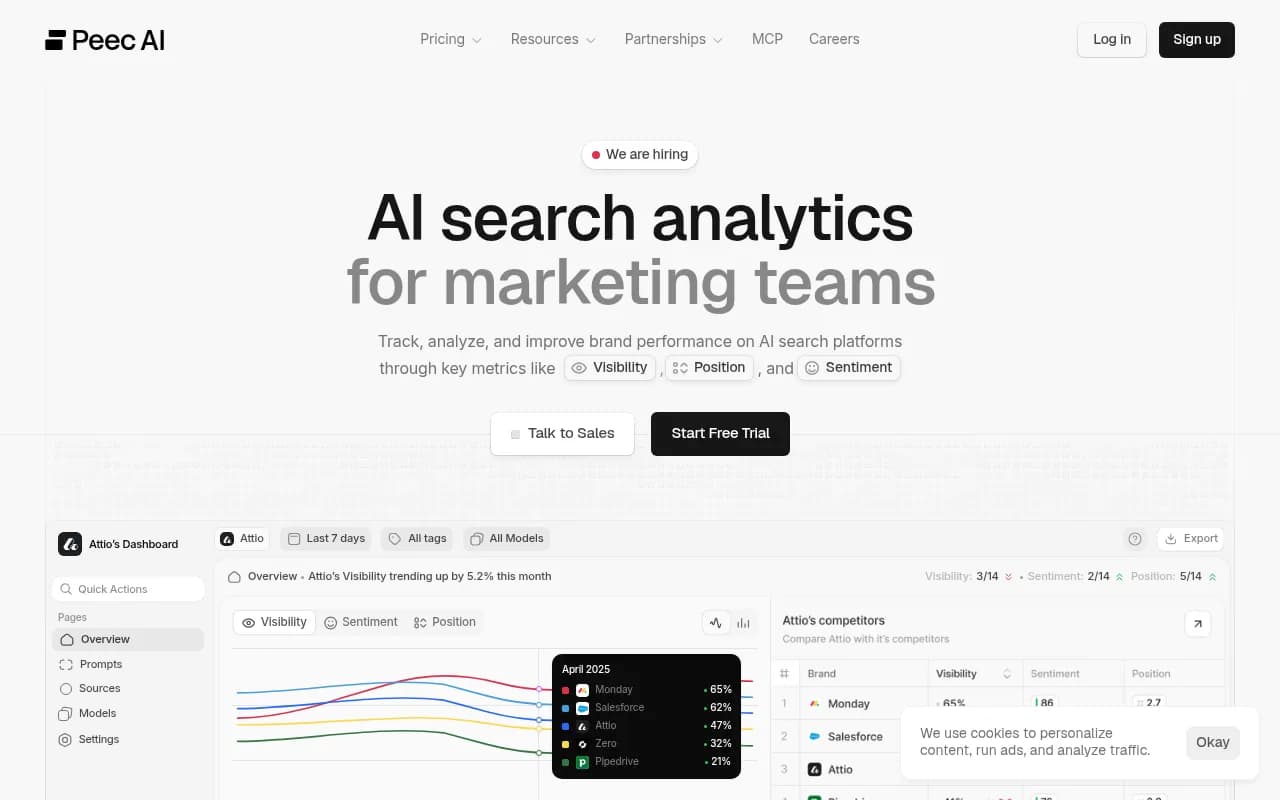
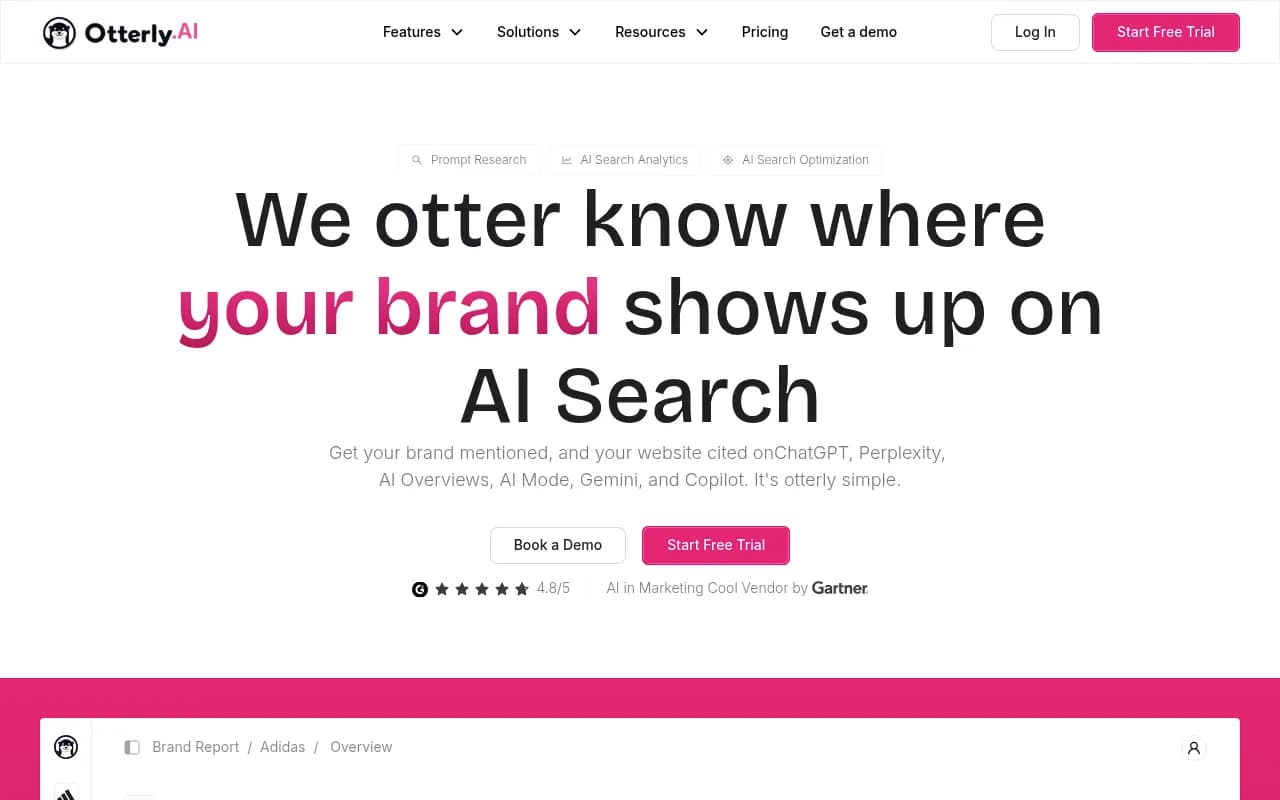
Tracking AI citations requires different tools than traditional rank tracking. Here are the main options worth knowing about:
For content optimization -- making sure your pages are structured to get cited -- tools like Clearscope and Surfer SEO help with the on-page side, though they're primarily built for traditional SEO.
For the full loop of finding prompt gaps, generating content to fill them, and tracking whether that content gets cited, Promptwatch is the only platform that connects all three stages. The Answer Gap Analysis shows you which prompts competitors are being cited for that you're not. The Content Agents generate articles targeting those specific gaps. And the citation tracking shows you when new pages start appearing in AI answers -- with crawler log data showing the exact timeline from publish to crawl to citation.
The honest answer
There's no single number. A well-structured page on an established site targeting a specific, low-competition prompt can start appearing in Perplexity answers within a week of publishing. A broad article on a new domain competing with established players might take months -- or never get cited consistently.
What's different from traditional SEO is that the ceiling is lower but the floor is higher. You don't need years of authority to get cited in AI search. But you do need to be genuinely the best answer to a specific question, and you need to make it easy for AI crawlers to find and extract that answer.
The brands that are winning in AI search right now aren't necessarily the ones with the most backlinks or the oldest domains. They're the ones who figured out exactly which prompts matter for their audience, published direct answers to those prompts, and tracked the results closely enough to iterate quickly.
That's the whole game.