Key takeaways
- A single user prompt triggers 8-15 parallel sub-queries inside AI models before any answer is returned -- this is query fan-out, and it's invisible to the user but decisive for which brands get cited.
- Informational fan-outs chase definitions, mechanisms, comparisons, and expert consensus. Commercial fan-outs chase reviews, pricing, alternatives, complaints, and recency signals.
- Treating both intent types with the same content template is one of the fastest ways to get filtered out of AI responses.
- The sub-queries generated in fan-outs have near-zero traditional search volume -- 95% show 0 monthly searches in keyword tools -- so standard keyword research misses most of them.
- Platforms like Promptwatch surface actual fan-out sub-queries per prompt, so you can see exactly what AI models are checking before they cite anyone.
What query fan-out actually is (and why it matters more than you think)
When someone types a question into ChatGPT, Perplexity, or Google AI Overviews, they see a clean, confident answer. What they don't see is the machinery behind it. Before generating a single word of that response, the AI model silently decomposes the original prompt into a cluster of smaller, more specific sub-queries -- sometimes 8, sometimes 15, occasionally more -- and runs all of them in parallel against the web.
This is query fan-out. And it's not a quirk or a side effect. It's deliberate architecture. The model is doing due diligence: cross-checking facts, anchoring recency, surfacing reviews, and looking for consensus before it commits to an answer. If your content doesn't show up in those parallel checks, it doesn't matter how well you rank for the original prompt. You're filtered out before the answer is even assembled.
Research published by AirOps analyzing 72,000+ AI-generated queries across 8,700+ prompts found that a single question to ChatGPT or Gemini routinely triggers 8-10 concurrent sub-queries. Crucially, 95% of those sub-queries show zero monthly search volume in traditional keyword tools. They're not in your keyword research. They're not in your content calendar. But they're deciding your AI visibility right now.
The reason this matters for content strategy is that fan-out behavior isn't uniform. The sub-queries triggered by an informational prompt look completely different from those triggered by a commercial one. And if you're writing content that treats both the same way, you're probably losing citations you should be winning.
The anatomy of an informational fan-out
An informational prompt is something like "how does query fan-out work" or "what causes insulin resistance" or "explain zero-trust security architecture." The user wants to understand something. They're not ready to buy. They're building a mental model.
When an AI model fans out an informational prompt, the sub-queries it generates tend to cluster around a few predictable patterns:
Definition and mechanism queries. The model wants a clean, authoritative explanation of the core concept. It's looking for content that defines terms precisely, explains the underlying process, and doesn't bury the answer in preamble.
Comparison and contrast queries. "X vs Y", "difference between X and Z", "how X relates to Y." The model is building a conceptual map, and it needs sources that situate the topic relative to adjacent ideas.
Expert and consensus queries. It checks forums, academic sources, professional communities, and established publications. Reddit threads, LinkedIn posts from practitioners, and documentation from recognized organizations all get pulled in here.
Recency queries. Even for informational topics, the model wants to know if the information is current. Timestamps matter. Content that was accurate in 2022 but hasn't been updated since can get deprioritized in favor of fresher sources.
"Why" and "how" sub-queries. The model fans out into the mechanisms and causes behind the concept, not just the surface definition.
What this means practically: informational content needs to be genuinely explanatory. It needs clear definitions, logical structure, and enough depth that the model can extract a confident, citable answer. Thin overview content that gestures at a topic without actually explaining it will get passed over. The model is looking for sources it can trust to be accurate, and it cross-checks that trust by running multiple sub-queries and seeing which sources consistently show up.
The anatomy of a commercial fan-out
Now take a commercial prompt: "best project management software for remote teams" or "which CRM should a 10-person sales team use" or "top alternatives to HubSpot in 2026." The user is evaluating options. They're closer to a decision. The stakes are different.
The fan-out pattern here is almost unrecognizable compared to informational prompts. The sub-queries shift toward:
Review and rating queries. "X reviews", "X user reviews 2025 2026", "is X worth it." The model is looking for social proof and third-party validation. Your own website saying your product is great doesn't satisfy this sub-query. External review sites, G2, Capterra, Reddit discussions, and independent comparisons do.
Pricing and cost queries. "X pricing", "how much does X cost", "X free tier", "X vs Y price." The AirOps dataset found "free", "pricing", and "cost" appearing consistently in the top n-grams across commercial fan-outs. If your pricing page is thin, gated, or hard to parse, you're losing ground here.
Alternatives and comparison queries. "X alternatives", "X vs Y", "X vs Z", "competitors to X." The model isn't just evaluating your product -- it's building a comparison set. If you're not present in the alternatives conversation, you might not make the final answer even if you're the best option.
Complaints and limitations queries. "X problems", "X cons", "X complaints", "X limitations 2026." This one surprises a lot of marketers. The model is risk-balancing. It wants to surface downsides so the final answer feels balanced and trustworthy. If the only content discussing your product's limitations is on competitor sites or negative review threads, that's what gets cited.
Use-case-specific queries. "X for small business", "X for agencies", "X for e-commerce." Commercial fan-outs get very specific about fit. Generic "who is this for" content doesn't satisfy these sub-queries as well as content that addresses specific use cases directly.
The implication is significant. For commercial visibility, your own website is only one part of the picture. The model is checking external sources, review platforms, and community discussions. A brand with a polished website but thin third-party presence will consistently lose to a brand with mediocre design but strong review coverage and active community mentions.
Why the same content template fails both
Most content teams default to a single template: long-form article, H2 sections, some FAQs at the bottom, internal links. It works reasonably well for traditional SEO. For AI fan-out, it's a blunt instrument applied to two very different problems.
Here's a direct comparison of what each intent type needs:
| Dimension | Informational fan-out | Commercial fan-out |
|---|---|---|
| Primary content goal | Explain, define, educate | Compare, evaluate, validate |
| Key sub-query types | Definition, mechanism, "why", recency | Reviews, pricing, alternatives, complaints |
| Trusted source types | Docs, expert posts, academic, forums | G2/Capterra, Reddit, independent comparisons |
| Depth requirement | High -- model needs extractable explanations | Moderate -- model needs clear, scannable verdicts |
| Recency sensitivity | Medium | High -- "2025 2026" appears in 6% of all fan-outs |
| Offsite signals matter? | Less critical | Very critical -- reviews and mentions are sub-queries |
| Tone that gets cited | Authoritative, precise | Direct, honest, balanced (including downsides) |
| FAQ format value | High -- "what is", "how does", "why does" | High -- "is X worth it", "who is X best for" |
If you write a commercial comparison page with the depth and tone of an educational explainer, the model's review-seeking sub-queries won't find what they need. If you write an informational guide with the brevity and verdict-forward structure of a product comparison, the model's mechanism-seeking sub-queries come up empty.
The fix isn't complicated, but it does require deliberate intent classification before you write anything.
How fan-out frequency varies by industry
Not every prompt triggers the same volume of sub-queries. The 85SIXTY analysis of the AirOps dataset found that fan-out intensity varies significantly by vertical. Finance, health, and legal prompts tend to trigger more sub-queries because the stakes of a wrong answer are higher -- the model is more cautious and cross-checks more aggressively. SaaS and e-commerce prompts trigger fewer but more commercially-focused sub-queries.
This matters for prioritization. If you're in a high-stakes vertical, your informational content needs to be exceptionally thorough because the model is running more checks. If you're in a commercial-heavy vertical like SaaS, your offsite review presence and comparison page coverage may matter more than any single piece of on-site content.
What to actually do about it
For informational content
Write to answer the mechanism, not just the concept. If someone asks "how does query fan-out work," don't just define it -- explain why models do it, what happens during the process, and what the implications are. The model's sub-queries will be looking for each of those angles separately.
Update timestamps and refresh content regularly. The model's recency sub-queries are checking for freshness. A 2023 article on a fast-moving topic is a liability.
Structure for extraction. Use clear H2s and H3s that match the sub-query patterns: "What is X", "How does X work", "Why do AI models use X", "X vs Y". The model needs to be able to pull a clean answer from a specific section, not hunt through prose.
Earn citations in forums and communities. Informational fan-outs check Reddit, LinkedIn, and professional forums. If practitioners in your space are discussing your content or your brand's perspective, that feeds the consensus sub-queries.
For commercial content
Build honest comparison and alternatives content. "Best alternatives to [your competitor]" and "[your brand] vs [competitor]" pages directly satisfy the alternatives sub-queries the model is running. Don't avoid this because it feels uncomfortable -- if you don't own that conversation, someone else will.
Address limitations directly. A page that honestly discusses where your product isn't the right fit is more citable than one that pretends there are no downsides. The model is running "complaints" and "limitations" sub-queries regardless. Better to control the narrative.
Make pricing scannable. Thin or hidden pricing pages hurt commercial visibility. The model's cost sub-queries need a clear answer. If it can't find one on your site, it'll find it on a competitor comparison page instead.
Invest in third-party review presence. G2, Capterra, Trustpilot, and relevant subreddits are being queried directly. This isn't optional for commercial visibility -- it's where the model looks for social proof.
Use case-specific landing pages. "X for agencies", "X for e-commerce teams", "X for enterprise" pages satisfy the use-case sub-queries that commercial fan-outs generate. Generic "who is this for" copy on a homepage doesn't.
Seeing your actual fan-outs (not guessing at them)
The challenge with all of this is that you can't see fan-out sub-queries in Google Search Console or any traditional analytics tool. They don't show up as traffic. They don't appear in keyword research because 95% have zero search volume. You're essentially optimizing blind unless you have a way to surface what the model is actually checking.
This is where purpose-built GEO platforms become genuinely useful. Promptwatch surfaces the actual fan-out sub-queries generated from each prompt you're tracking, so you can see exactly what the model is checking before it cites anyone -- and identify which sub-queries you're not showing up for.

The answer gap analysis feature maps your current content against what AI models are actually looking for, showing you the specific topics and angles you're missing. For commercial prompts, that often means discovering that the model is checking review sites you haven't claimed, comparison pages you haven't built, or pricing sub-queries your site doesn't answer clearly.
Other tools worth knowing about in this space:
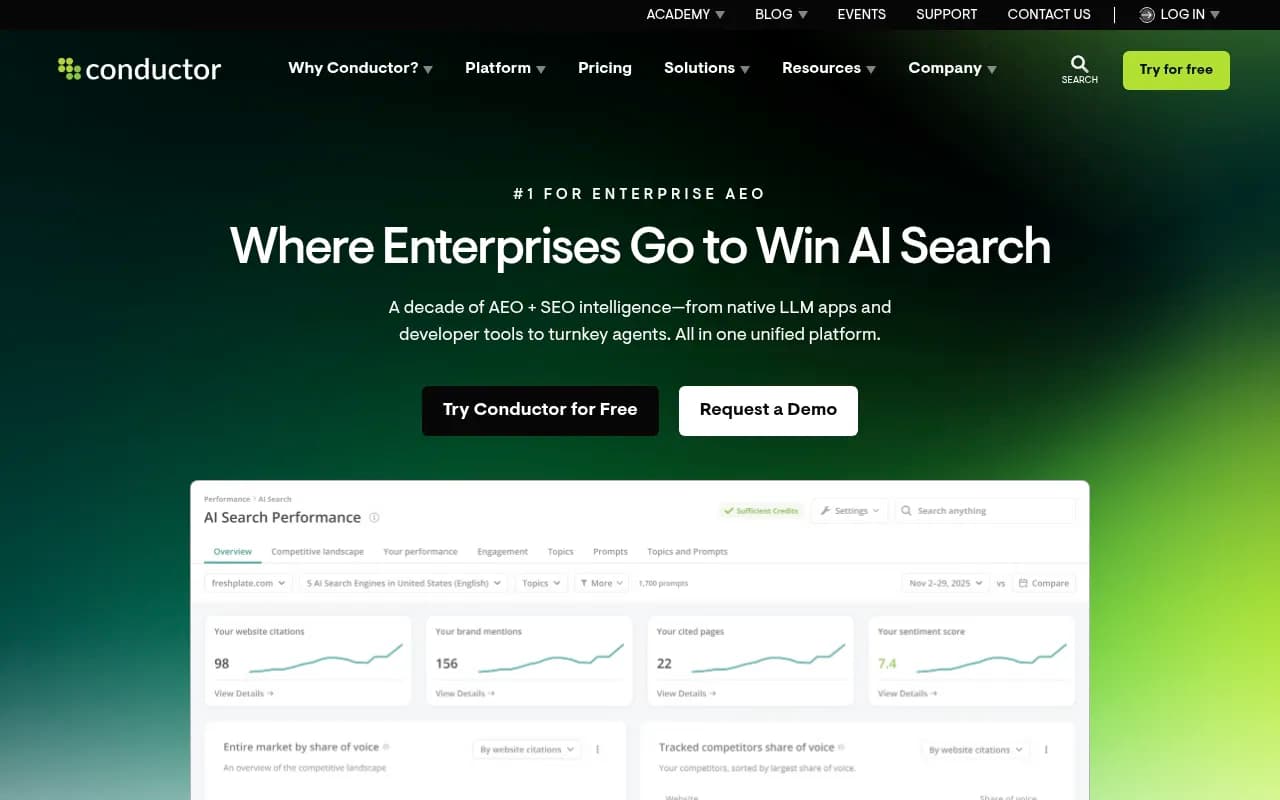
Conductor has built query fan-out analysis into its AI search intelligence layer, which is useful if you're already running enterprise SEO through that platform.
AthenaHQ tracks AI visibility at the prompt level and can surface some of the sub-query patterns, though it's more monitoring-focused than action-oriented.
Profound is strong for enterprise teams that need deep analytics on how AI models are treating their brand across different prompt types.
For teams that want to see how fan-out patterns differ across specific AI models (ChatGPT vs Perplexity vs Gemini behave differently), model-level tracking matters. Different models have different fan-out tendencies -- Perplexity tends to run more explicit web searches, while ChatGPT's fan-out is more inference-driven. What gets cited in one model's answer may not get cited in another's, even for the same original prompt.
The practical content audit
Before you start creating new content, it's worth auditing what you already have through the lens of fan-out intent.
Go through your existing pages and classify each one: is this primarily serving informational fan-out patterns or commercial ones? Then ask:
For informational pages: Does this page have a clear mechanism explanation? Is it recently updated? Does it have structured sections that match "what", "how", and "why" sub-query patterns? Is it being discussed or cited anywhere outside your own site?
For commercial pages: Does this page address pricing directly? Does it compare your product to alternatives honestly? Does it discuss limitations? Are there external review sources backing up the claims on this page? Do you have use-case-specific content for your main buyer segments?
Most teams find that their informational content is reasonably well-structured but stale, and their commercial content is polished but avoids the honest comparisons and limitation discussions that AI models are specifically looking for.
One more thing worth saying
Query fan-out isn't going away, and it's not going to get simpler. As AI models get better at reasoning and more aggressive about cross-checking, the number of sub-queries per prompt will likely increase, not decrease. The brands that build content strategies around fan-out patterns now -- treating informational and commercial prompts as genuinely different problems -- will compound their AI visibility advantage over the next 12-18 months.
The brands that keep writing generic long-form content and hoping for the best will keep wondering why their AI citations are flat despite publishing more content than ever.
The sub-queries are running right now. The question is whether your content is showing up in them.