Key takeaways
- Top-10 Google rankings accounted for 76% of AI Overview citations in mid-2025 but only ~38% by early 2026 -- ranking well no longer guarantees AI visibility
- Google's May 2026 I/O update made Gemini 3.5 Flash the default model for AI Mode globally, accelerating the shift toward synthesis-based search
- AI Mode favors content structured for clean passage extraction, not long-form articles optimized for traditional keyword density
- Consistency across independent sources (your site, Reddit, YouTube, third-party reviews) matters more than backlink count for AI citations
- You need to play three games simultaneously: ranking, citation, and source trust -- most teams only optimize for one
What changed with Google AI Mode in 2026
Here's the uncomfortable truth that SEOs are slowly accepting: Google isn't primarily returning a ranked list of pages anymore. For a growing share of queries, it's synthesizing an answer. Your page either gets cited in that answer, or it doesn't exist.
Google's May 2026 I/O announcements confirmed AI Mode is no longer an experiment. Gemini 3.5 Flash became the default model globally for both the Gemini app and AI Mode in Search. Google added multimodal capabilities, integrated autonomous agent workflows, and -- this one stings for publishers -- placed ads directly inside AI Overview responses.
The practical effect for anyone trying to get traffic from Google: the primary search surface now synthesizes answers rather than returning a list. Buyers researching software, services, or products increasingly get a synthesized answer before they ever see a blue link.
The citation data makes this concrete. According to research from Discovered Labs analyzing 2 million citations, top-10 rankers accounted for 76% of AI Overview citations in mid-2025. By early 2026, that number had dropped to roughly 38%. In other words, half the citation share shifted away from traditional top-rankers in less than a year. Strong rankings still help -- they're not irrelevant -- but they no longer predict AI visibility the way they once did.
The three games you have to play at once
Most SEO teams optimize for one thing: organic rankings. That made sense when rankings and clicks were tightly correlated. Now there are three distinct games, and winning only one isn't enough.
Game 1: Traditional ranking
You still need to rank. Pages that rank in the top 10 are still more likely to be cited than pages on page 3. The difference is that ranking is now necessary but not sufficient. Think of it as the entry ticket -- you need it to be in the pool of candidates, but it doesn't guarantee selection.
Game 2: Citation optimization
This is where most teams have a gap. AI Mode doesn't just pull the top result -- it retrieves specific passages that directly answer the query. Gemini 3.5 Flash was built for speed without sacrificing quality, which means content structured for clean passage extraction competes more effectively than long-form articles with the answer buried in paragraph 12.
Passage retrieval is the mechanism. If your page has a clear, self-contained answer to a specific question, that passage can get cited even if your overall page ranking is middling. Conversely, a page that ranks #2 but buries its answers in dense prose may get skipped entirely.
Game 3: Source trust
This one is the least intuitive. AI models don't just look at your website -- they look at what independent sources say about you. Reddit threads, YouTube reviews, third-party comparison sites, industry publications: these all feed into how much an AI model trusts your brand as a source.
Consistency across these independent signals matters more than backlink count. If your website says one thing and the Reddit discussion about your product says something contradictory, that inconsistency hurts your citation probability. If multiple independent sources describe your product the same way, that consistency builds what you might call entity authority.
What actually drives AI citations
Based on the research data available and what's been observed across thousands of AI search responses, a few factors stand out.
Structured, extractable content
AI Mode retrieves passages, not pages. This means your content architecture matters in a new way. Headers that match question formats, concise definitions at the start of sections, and clear topic segmentation all make it easier for Gemini to extract a relevant passage.
Avoid writing that assumes the reader will read the whole page. Write each section as if it might be the only section someone (or an AI) reads. That means:
- State the main point in the first sentence of each section
- Use headers that match how people actually phrase questions
- Keep answers to specific questions self-contained within a section
Tools like Clearscope and Surfer SEO can help you audit whether your content covers the right topics with the right depth.
Topical authority, not just keyword targeting
Query clusters matter more than single keywords now. AI Mode understands semantic relationships between topics, so a site that covers a subject comprehensively -- with multiple interconnected pages addressing different angles -- signals topical authority more effectively than a single well-optimized page.
This isn't new advice, but the stakes are higher. A site with deep topical coverage on, say, B2B SaaS pricing models will get cited across a range of related queries, not just the one query it explicitly targets.
MarketMuse is useful here for mapping topical gaps and planning content clusters.
Entity consistency across the web
Your brand is an entity in Google's knowledge graph. The more consistently that entity is described across independent sources, the more trustworthy it appears to AI models. This means:
- Your website's description of what you do should match how third-party sites describe you
- Your product's features should be described consistently across review sites, Reddit, and your own documentation
- Named entities (your founders, your methodology, your product names) should appear consistently
This is where traditional SEO thinking breaks down. You can't control Reddit. You can't control what reviewers write. But you can monitor these signals and respond to inconsistencies -- and you can actively participate in communities where your brand is discussed.
Long-tail and specific queries
Generic queries ("best CRM software") are increasingly dominated by AI synthesized answers that don't need to cite anyone specifically. Specific, long-tail queries ("best CRM for freelance consultants under $50/month") are where individual pages still get cited because the answer is specific enough that AI needs a source.
This is a real opportunity. Targeting highly specific queries with highly specific answers is more likely to earn citations than competing for broad head terms.
Practical steps to optimize for AI Mode right now
Audit your content structure
Go through your highest-traffic pages and ask: if someone extracted just one paragraph from this page, would it answer a specific question clearly? If the answer is no, restructure. Add a clear definition or direct answer near the top of each major section.
Map your query clusters
List the 20-30 questions your target audience is most likely to ask AI search engines. Then check which of those questions your site actually answers well. The gaps are your content priorities.
Check your off-site consistency
Search for your brand name on Reddit, G2, Capterra, and relevant industry forums. Read what people say. If there are persistent misconceptions or outdated descriptions, that's worth addressing -- both by updating your own content and by participating in those conversations where appropriate.
Track AI citations, not just rankings
This is the big behavioral shift. If you're only tracking keyword rankings, you're flying blind in AI search. You need to know which of your pages are actually being cited in AI responses, for which queries, and how that's changing over time.
Promptwatch tracks this across Google AI Mode, AI Overviews, ChatGPT, Perplexity, and other AI search engines -- showing you which pages get cited, how often, and what content gaps are costing you citations.
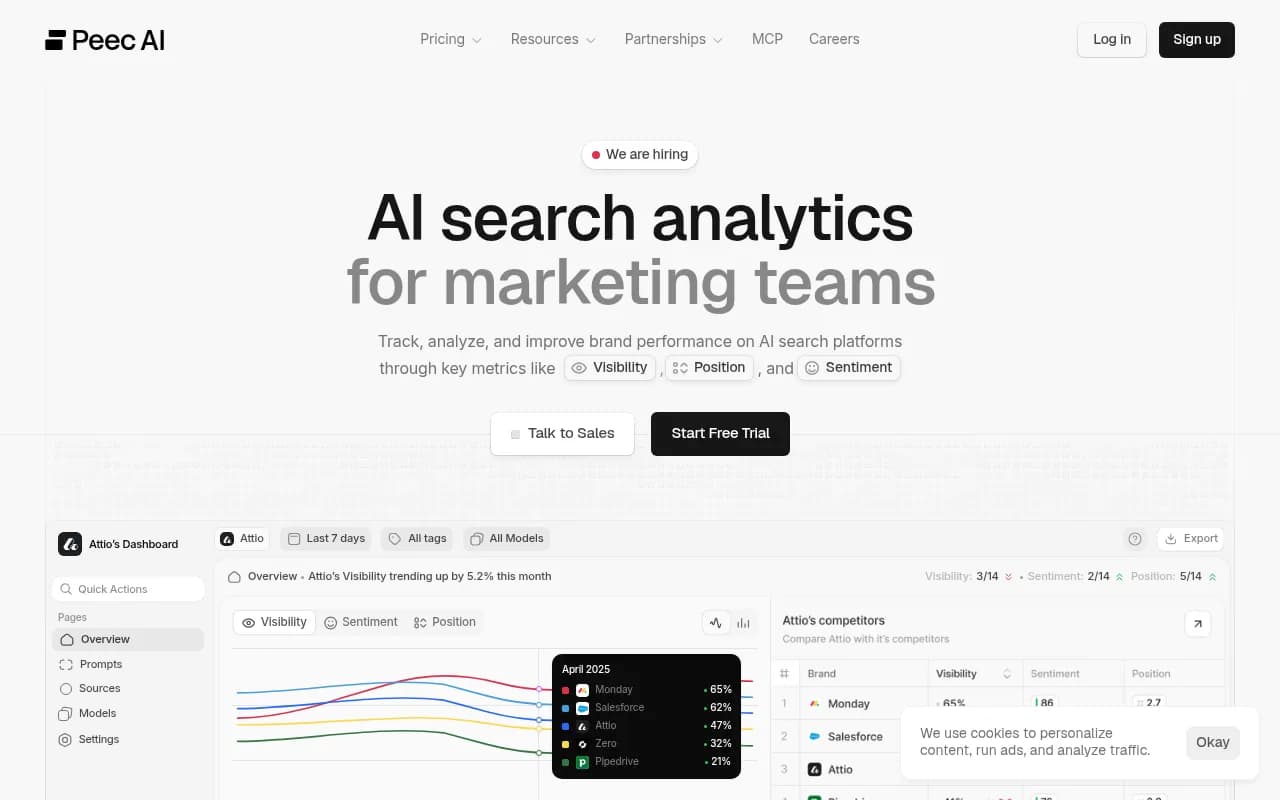
For teams that want to track AI citations without the full GEO platform overhead, tools like Otterly.AI and Peec AI offer lighter-weight monitoring.
The content format question
There's been a lot of debate about whether long-form content still works. The honest answer is: it depends on the query type.
For informational queries where someone wants a comprehensive explanation, longer content with clear structure still performs well -- both in traditional rankings and AI citations. For specific factual queries, a concise, direct answer on a well-structured page will outperform a 3,000-word article that mentions the answer somewhere in the middle.
The practical implication: stop writing long-form content for the sake of length. Write the right length for the question. A 400-word page that directly answers a specific question can earn more AI citations than a 2,500-word page that covers the topic broadly.
Structured data still matters
Schema markup helps AI models understand what your content is about and how to categorize it. FAQ schema, HowTo schema, and Article schema all remain relevant. They're not magic -- they won't compensate for thin content -- but they help with passage extraction and entity recognition.
What to stop doing
A few things that worked in 2023 and 2024 are actively counterproductive now:
- Writing content that's padded to hit a word count target. AI models are good at recognizing filler, and passages with high information density get cited more.
- Optimizing for a single keyword per page. Query clusters and semantic coverage matter more.
- Ignoring off-site signals. Your AI visibility is partly determined by what other sites say about you, not just what your site says.
- Treating AI Overviews and AI Mode as the same thing. AI Mode is a more complex, multi-turn experience that synthesizes across more sources and handles more nuanced queries. The optimization logic overlaps but isn't identical.
Comparison: traditional SEO vs. AI Mode optimization
| Factor | Traditional SEO | AI Mode optimization |
|---|---|---|
| Primary signal | Backlinks + on-page keywords | Passage relevance + entity authority |
| Content format | Long-form, keyword-dense | Structured, extractable, direct |
| Citation source | Rankings predict clicks | Citations ≠ rankings |
| Off-site signals | Backlink profile | Brand consistency across sources |
| Query targeting | Head terms + long-tail | Query clusters + specific questions |
| Measurement | Rank position, organic traffic | AI citation rate, passage appearances |
| Tools needed | Rank trackers, keyword tools | AI visibility trackers, citation monitors |
Tracking your progress
The measurement layer is where most teams are still catching up. Traditional rank tracking tells you where you appear in the blue links. It tells you nothing about whether you're being cited in AI Mode responses.
You need to track:
- Which pages are cited in AI responses, and for which queries
- How your citation rate changes as you publish new content
- Which competitors are being cited instead of you, and why
- Whether AI crawlers are actually visiting and indexing your pages
For enterprise teams, BrightEdge and Semrush have added AI visibility features to their existing platforms. For teams that want purpose-built AI search tracking, Profound and Promptwatch are the more focused options.
The key metric to watch isn't just "am I cited" -- it's the trend. Are your citations increasing after you publish new structured content? Are specific pages driving citations for specific query clusters? That feedback loop is how you know if your optimization is actually working.
The honest summary
Google AI Mode has genuinely changed what it means to rank. The old model -- build links, hit keyword density, rank in the top 10, get clicks -- still partially works, but it's no longer the whole game.
The teams winning in AI search right now are doing three things: they're maintaining traditional ranking signals, they're restructuring content for passage extraction, and they're monitoring and managing their brand's presence across independent sources. Most teams are doing one of these. Few are doing all three.
The good news is that the content fundamentals haven't changed as much as the measurement and structure have. Clear, specific, well-organized answers to real questions is still the core of what works. The difference is that now you need to verify it's working by tracking AI citations directly -- not by assuming that ranking position translates to visibility.