Key takeaways
- Perplexity is an answer engine, not a chatbot -- it retrieves live web pages and cites them, so getting cited means getting traffic
- 60% of Perplexity's citations overlap with Google's top 10 results, so traditional authority signals still matter
- Content structure (headers, tables, direct answers) dramatically affects whether Perplexity can extract and cite your content
- Third-party mentions on Reddit, YouTube, and authoritative blogs carry real weight in Perplexity's source selection
- Freshness matters more here than in traditional SEO -- Perplexity pulls real-time data and favors recently updated pages
- Tracking your Perplexity citations requires dedicated tooling, since Google Search Console won't show you this traffic
Why Perplexity deserves its own strategy
Most marketers lump Perplexity in with ChatGPT and Gemini as "AI tools." That's a mistake. Perplexity is fundamentally different from those systems -- it's an answer engine that retrieves live web pages in real time, summarizes them, and shows clickable citations at the top of every response.
ChatGPT mostly draws from training data. Claude doesn't cite live sources by default. Perplexity does both: it searches the web right now, picks the sources it trusts, and sends users directly to those pages.
That last part is what makes it interesting from a traffic perspective. When Perplexity cites you, people click through. The goal isn't to "rank" in the traditional sense -- it's to be one of the three to five sources shown in the answer.
The scale is real. Perplexity processed 780 million monthly queries as of May 2025, up from 230 million just nine months earlier. That's still only about 2% of total AI search volume, but it's a fast-growing slice that sends actual referral traffic -- unlike some AI tools that summarize without linking anywhere.
How Perplexity actually decides what to cite
Understanding the mechanism helps you optimize for it. Perplexity runs a two-stage process:
- It retrieves a set of candidate pages from the web using its own crawler (PerplexityBot) and real-time search
- It runs an LLM over those pages to generate a synthesized answer, selecting which sources to cite based on relevance and quality
A few things follow from this. First, your pages need to be crawlable -- check your robots.txt and make sure you're not accidentally blocking PerplexityBot. Second, the LLM has to be able to extract a clear, direct answer from your page. If your content buries the answer in three paragraphs of preamble, it's less likely to be cited even if it's technically the best source.
There's also a strong correlation with traditional SEO authority. About 60% of Perplexity citations overlap with Google's top 10 results for the same query. That's not a coincidence -- Perplexity trusts the same signals Google does: domain authority, backlinks, E-E-A-T markers, and content depth. You don't need a completely separate strategy; you need to extend your existing one.
The shift from keywords to conversational prompts
On Google, someone searches: "best tools to track AI search visibility."
On Perplexity, they ask: "I'm just getting started with GEO and need an affordable tool to understand my brand's visibility in LLMs."
That difference changes what content gets surfaced. Perplexity users phrase things as questions or scenarios, not keyword strings. Your content needs to answer those questions directly -- in natural language, with a clear answer near the top of the page.
This means thinking about the actual questions your audience asks, not just the keywords they type. FAQ sections, "how does X work" explainers, and comparison content ("X vs Y") all tend to perform well because they match conversational query patterns.
What actually works: six tactics that move the needle
1. Build real topical authority
Perplexity favors sources that cover a topic in depth, not just a single article. If you have one post about AI search visibility but your site is primarily about recipe blogging, you're unlikely to get cited on AI search topics even if that one post is excellent.
The play is to build a cluster of content around your core topics: a pillar page, supporting articles, comparison pieces, FAQ content, and case studies. This signals to both Perplexity and Google that your site is a genuine authority on the subject.
Domain-level trust signals matter too. A strong backlink profile, consistent author bylines, cited sources within your content, and clear "About" and author pages all contribute to the authority signals Perplexity uses.
2. Structure your content for extraction
Perplexity's LLM needs to extract a specific answer from your page. Content that's structured for extraction gets cited more often than content that buries answers in prose.
Practical formatting moves:
- Put a direct answer in the first paragraph, before any background context
- Use H2 and H3 headings that match the questions people actually ask ("How does Perplexity rank sources?" not "Our methodology")
- Use numbered lists and bullet points for steps, comparisons, and feature breakdowns
- Add comparison tables -- Perplexity pulls these frequently because they're dense with structured information
- Keep paragraphs short; walls of text are harder to extract from
Schema markup (FAQ schema, HowTo schema, Article schema) also helps Perplexity understand what type of content it's looking at, though it's not a guarantee of citation.
3. Keep content fresh
Perplexity retrieves real-time data. A post from 2022 that hasn't been updated competes poorly against a post from last month on the same topic, even if the older post has more backlinks.
Build a content refresh cadence. For fast-moving topics (AI tools, software comparisons, market data), aim to update key pages every three to six months. Add a "last updated" date that's visible on the page -- Perplexity can read it and it signals recency.
When you update a page, make meaningful changes: add new data, update statistics, revise recommendations based on what's changed. Changing a few words to bump the date doesn't fool the model.
4. Get cited on third-party sites
This is the tactic most people underestimate. Perplexity doesn't just look at your own website -- it looks at the broader web's opinion of you. If your brand or content is mentioned on Reddit threads, YouTube videos, industry blogs, and authoritative review sites, those mentions feed into how Perplexity perceives your credibility.
Practically, this means:
- Getting listed in roundup articles and "best of" lists in your niche
- Earning mentions in Reddit discussions (organically, not spam)
- Building YouTube presence -- Perplexity explicitly surfaces video content in its answers
- Contributing to industry publications as a guest author or quoted expert
- Getting cited in other people's content (which also builds backlinks)
The "parasite SEO" angle some people push -- publishing on high-authority platforms like Medium or LinkedIn to piggyback their domain authority -- can work short-term, but building authority on your own domain is the durable play.
5. Check your robots.txt and indexing
This sounds basic, but it's worth auditing. PerplexityBot needs to be able to crawl your pages. If your robots.txt blocks all bots or has an overly aggressive crawl policy, you're invisible to Perplexity regardless of how good your content is.
Check:
robots.txtdoesn't block PerplexityBot (or all user agents)- Key pages are indexed and not accidentally noindexed
- Pages load fast enough that the crawler doesn't time out
- No JavaScript rendering issues that would prevent content from being read
6. Answer the exact question, not a related one
Perplexity matches sources to specific prompts. If someone asks "what's the best free tool for tracking Perplexity citations," a page that answers "how to improve AI search visibility" generally is less likely to be cited than a page that directly answers the free-tool question.
Map your content to specific questions your audience asks. Tools that show you which prompts are driving AI citations can help here -- you can see the exact phrasing people use and write content that answers those specific questions.
The query type breakdown
Different types of queries favor different content formats. Here's a rough guide:
| Query type | Example | Best content format |
|---|---|---|
| Factual / definition | "What is GEO?" | Short, direct explainer with clear definition up top |
| Comparison | "Perplexity vs Google AI Overviews" | Comparison table, pros/cons, clear verdict |
| How-to | "How to track Perplexity citations" | Numbered steps, specific tools, screenshots |
| Best-of / recommendation | "Best tools for AI search visibility" | Listicle with structured entries, updated regularly |
| Opinion / analysis | "Is Perplexity worth optimizing for?" | Data-backed argument, cited sources, author expertise visible |
| Local / specific | "AI search tools for small agencies" | Niche-specific content, real use cases |
The comparison and best-of formats tend to get cited most frequently because they're dense with specific, extractable information.
Tracking whether any of this is working
Here's the frustrating part: Google Search Console doesn't show Perplexity traffic. Referral traffic from Perplexity shows up in GA4 as direct or referral, but it's hard to attribute accurately without dedicated tooling.
To actually know if you're being cited, you need to either manually run queries in Perplexity and check the sources, or use a platform built for this. Promptwatch tracks citations across Perplexity and nine other AI models, shows you which pages are being cited and how often, and includes crawler logs so you can see when PerplexityBot hits your site and whether it's leading to citations.

For teams that want to monitor Perplexity citations specifically, a few other tools are worth knowing about:


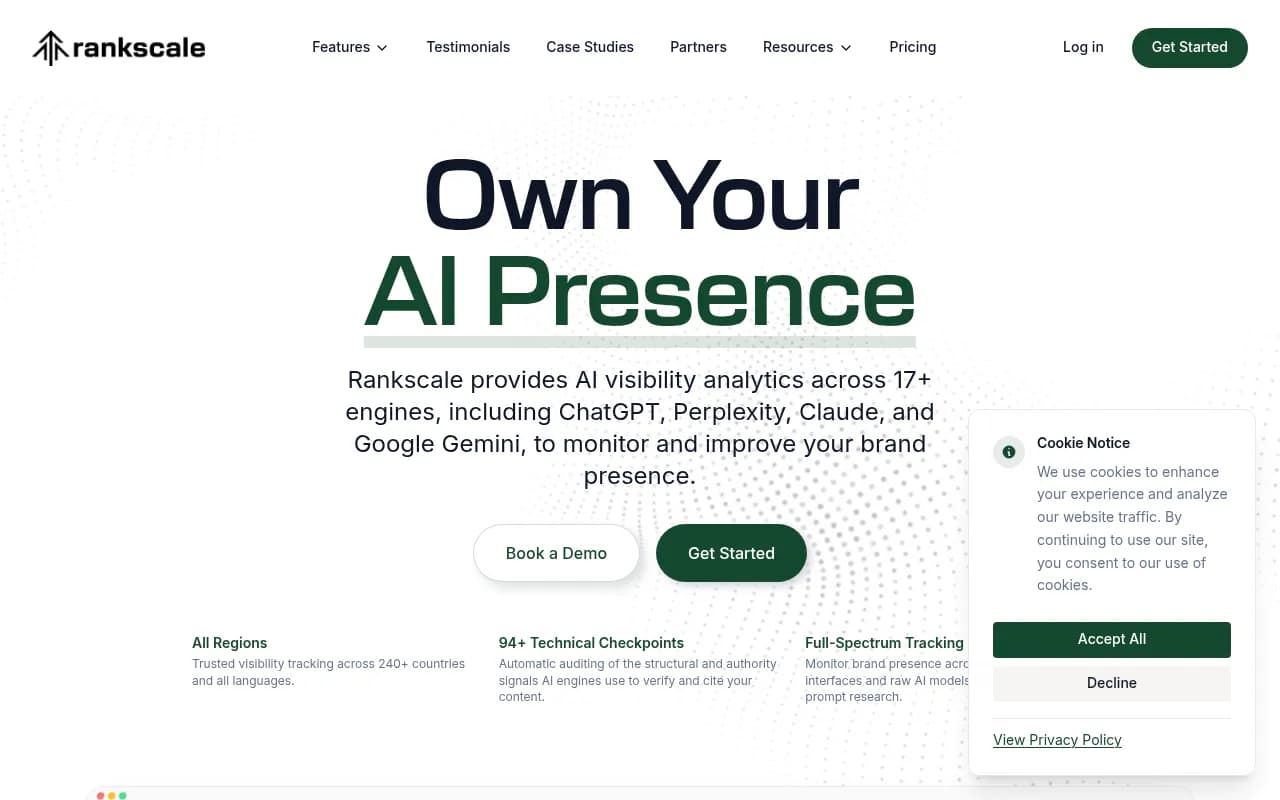
The difference between these tools matters. Most monitoring platforms show you citation data but stop there -- you see the gap, then you're on your own to fix it. Promptwatch goes further with content gap analysis and content generation built around the actual prompts driving citations, so you can close the gaps rather than just observe them.
A note on "Perplexity parasite SEO"
You'll see people recommending publishing on high-DA platforms (Medium, Substack, LinkedIn) specifically to get Perplexity to cite those posts instead of building your own domain authority. The logic is that Perplexity trusts those domains, so your content inherits their trust.
It can work as a short-term tactic, especially if you're a newer site without much domain authority. But it has a ceiling. You're building equity in someone else's platform, and if the platform changes its policies or Perplexity adjusts how it weights those sources, the advantage disappears.
The more durable approach is building authority on your own domain while using third-party platforms to supplement -- not replace -- your own content.
Putting it together: a practical starting point
If you're starting from zero on Perplexity optimization, here's a reasonable sequence:
- Audit your
robots.txtand confirm PerplexityBot can crawl your site - Pick two or three core topics where you want to be cited
- For each topic, identify the specific questions people ask in conversational language
- Write or update content that answers those questions directly, with clear structure and fresh data
- Build out supporting content to establish topical depth
- Pursue third-party mentions: roundups, Reddit, YouTube, guest posts
- Set up tracking so you can see when citations start appearing
The last step is easy to skip, but it's how you know what's working. Without visibility into your citation data, you're optimizing blind.
Perplexity's growth trajectory suggests this channel will matter more, not less, over the next 12 to 18 months. The brands getting cited consistently now are building a compounding advantage -- each citation builds trust signals that make the next citation more likely.