Key takeaways
- All five tools track brand mentions and citations across major AI engines like ChatGPT, Perplexity, and Google AI Overviews -- but they differ significantly in depth, model coverage, and what you can actually do with the data.
- Otterly.AI is the most established of the five, with the lowest entry price ($29/month) and the broadest name recognition in the entry-level tier.
- Peec AI is the fastest-growing challenger, with $29M raised and $4M+ ARR in under a year -- it punches above its price point in analytics depth.
- Rankshift and LLM Pulse are newer entrants that compete on breadth of engine coverage and simplicity of setup.
- Goodie AI takes a different angle, leaning into content recommendations alongside monitoring.
- If you need to go beyond monitoring and actually fix your AI visibility gaps, none of these five fully close that loop -- that's where a platform like Promptwatch becomes relevant.
Why this comparison exists
Search for "AI visibility tools" right now and you'll find a dozen listicles, most of them written by the tools themselves. Every one puts itself at number one. Every one calls the others "point solutions."
This guide focuses specifically on the entry-level tier -- tools that cost under $150/month and are aimed at SMBs, solo marketers, and small agencies who want to start tracking AI visibility without committing to enterprise pricing. The five tools here (Otterly.AI, Peec AI, Rankshift, LLM Pulse, and Goodie AI) are the ones that come up most often in this bracket.
We're comparing them honestly: what they actually do, where they fall short, and which type of team each one fits best.
What these tools are actually measuring
Before diving into the comparison, it's worth being clear about what "AI visibility" means in practice. When someone asks ChatGPT "what's the best project management tool for remote teams?" -- your brand either appears in that answer or it doesn't. AI visibility tools automate the process of asking hundreds of those questions across multiple AI engines and recording whether your brand shows up, how prominently, and whether you're cited as a source.
The core metrics most tools report:
- Brand mention rate (how often your brand appears in relevant AI responses)
- Share of voice (your mentions vs. competitors)
- Citation rate (how often AI engines link back to your pages)
- Sentiment (positive, neutral, or negative framing when you're mentioned)
- Placement (are you the first recommendation or buried in a list?)
The tools in this comparison all cover these basics to varying degrees. Where they diverge is in how many AI engines they cover, how actionable the data is, and whether they help you do anything about gaps they find.
The five tools, one by one
Otterly.AI
Otterly.AI is probably the most recognized name in the entry-level AI monitoring space. It launched early, built a user base quickly, and has become something of a default recommendation for teams that want to start tracking AI visibility without spending much.
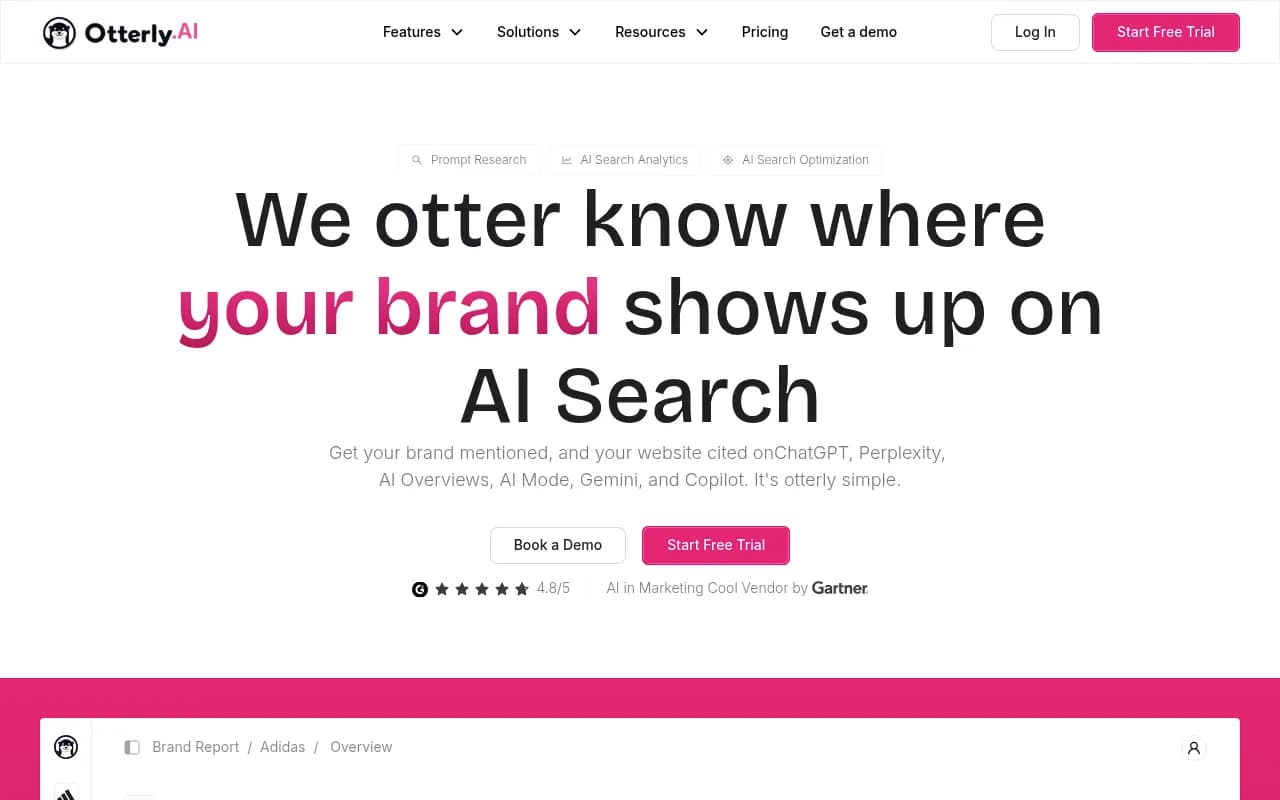
The base plan starts at $29/month, which is genuinely low for this category. At that price you get monitoring across four AI engines (ChatGPT, Perplexity, Google AI Overviews, and Gemini are the core four in the base tier), basic brand mention tracking, and a dashboard showing your visibility trends over time.
What Otterly does well: setup is fast, the interface is clean, and you can be running your first prompt set within an hour. For teams that have never measured AI visibility before, that low friction matters.
Where it runs into limits: the base tier's engine coverage is narrower than some competitors, and the tool is primarily a monitoring dashboard. It shows you data but doesn't generate content recommendations or help you understand why competitors are appearing where you aren't. The actionability gap is real.
Otterly is best for: solo marketers, small businesses, or anyone who wants a simple, affordable way to start tracking AI mentions and share of voice. It's a good first tool -- just know you'll likely outgrow it.
Peec AI
Peec AI is the most analytically capable tool in this comparison. It raised $29M, hit $4M+ ARR in roughly ten months, and has been growing fast enough that it's starting to show up in mid-market conversations alongside enterprise tools like Profound.
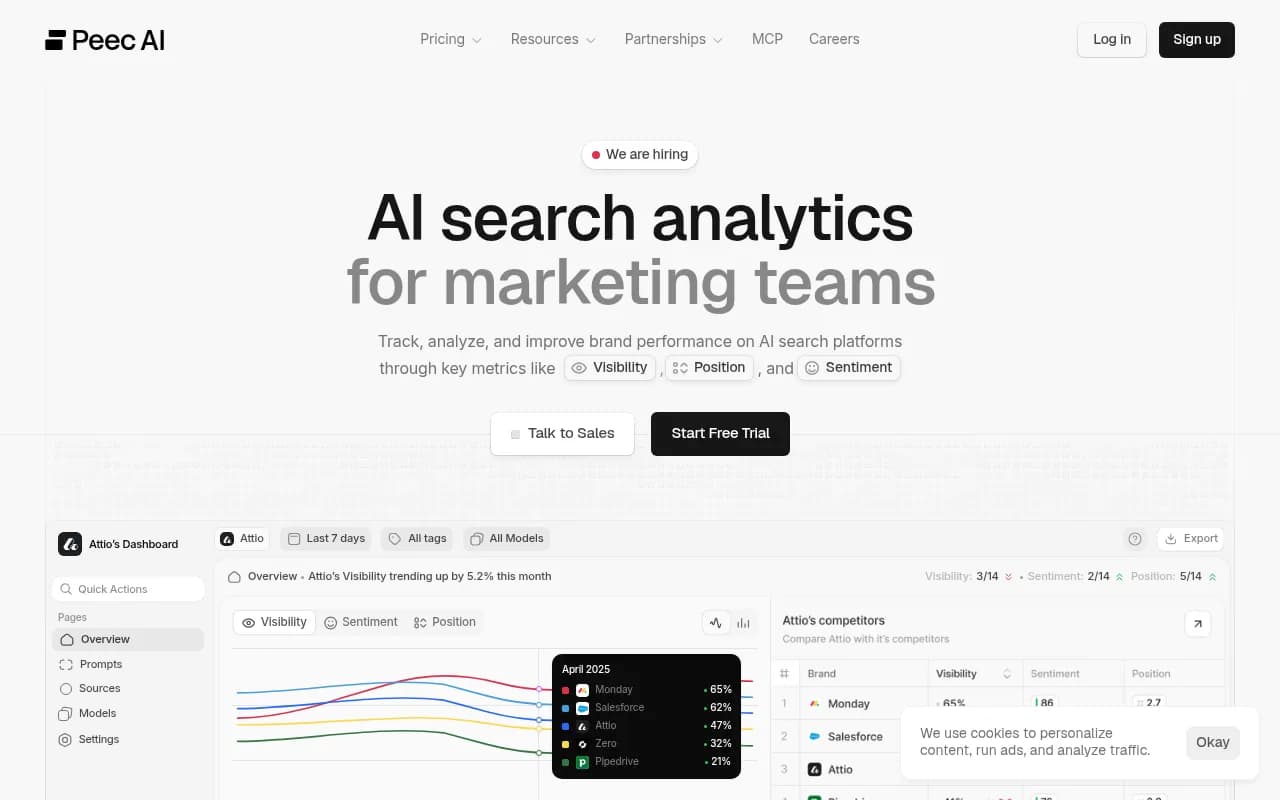
Pricing starts around €85/month, which puts it at the higher end of the "entry-level" bracket -- but the feature depth justifies it. Peec tracks up to 10 AI models depending on your plan, which is more than any other tool in this comparison. It reports on brand mentions, citations, sentiment, competitive share of voice, and prompt-level data that shows which specific questions are driving visibility for your competitors.
The analytics are genuinely good. You can slice data by AI engine, by topic cluster, by competitor, and by time period. For a marketing team that wants to understand the why behind their AI visibility numbers -- not just the what -- Peec is the strongest option here.
Where Peec falls short: like the others, it's primarily a monitoring and analytics platform. It doesn't generate content or close the loop from "you're invisible for this prompt" to "here's what to publish." The data is rich, but acting on it requires your own content team.
Peec AI is best for: growth-stage companies and mid-market marketing teams that want serious analytics depth without paying enterprise prices. If you're the kind of person who opens a dashboard and immediately wants to segment the data six different ways, Peec will feel right.
Rankshift
Rankshift is a newer entrant that competes primarily on price and engine coverage breadth. It positions itself as the budget option with the widest LLM coverage -- a combination that's hard to argue with if you're just starting out.
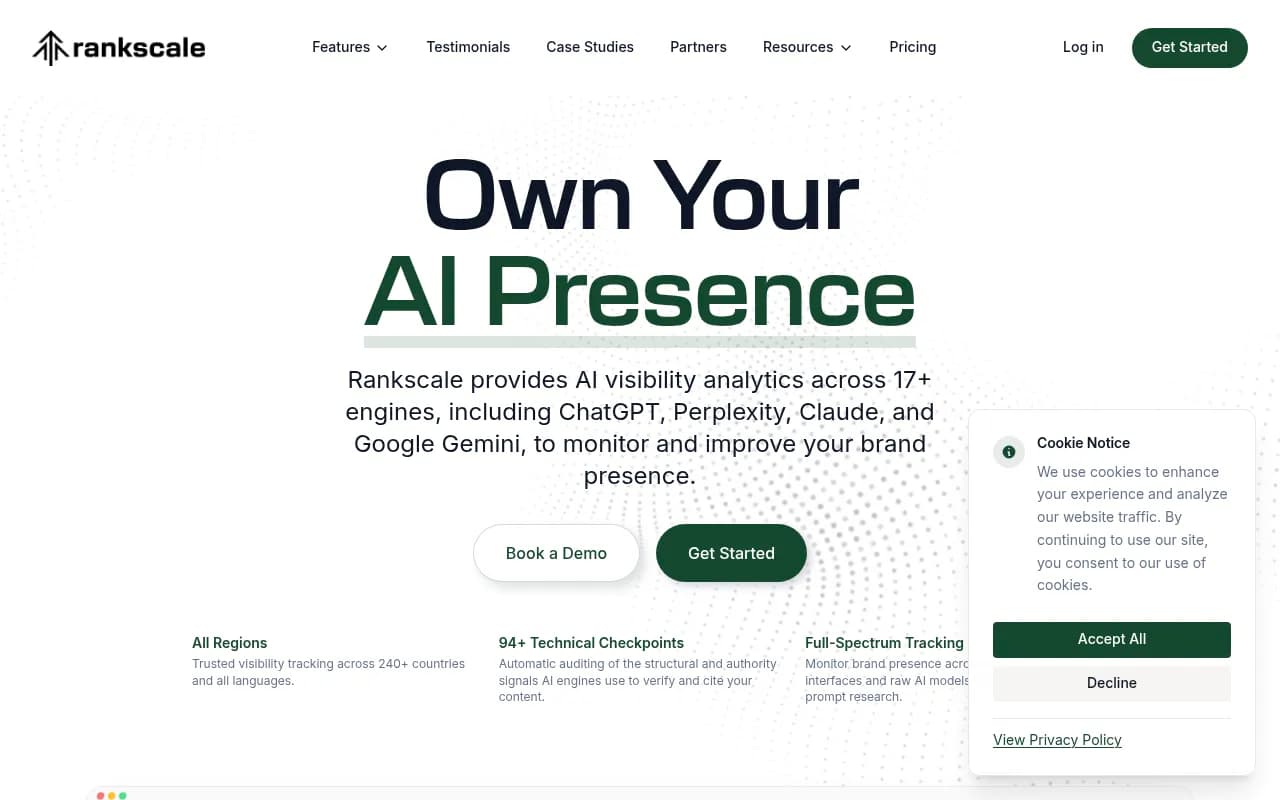
The tool tracks brand mentions across multiple AI engines, reports on share of voice and citation trends, and offers a reasonably clean interface for setting up prompt monitoring. Setup is straightforward, and the pricing is aggressive enough to make it an easy trial commitment.
What Rankshift does well: for teams that want broad coverage across AI engines without paying much, it delivers. The interface doesn't overwhelm you with options, which is either a feature or a limitation depending on what you need.
Where it runs into limits: the analytics are shallower than Peec, and the platform doesn't offer much in the way of competitive intelligence or content gap analysis. It's a monitoring tool, full stop. There's also less of a track record here -- Rankshift is newer, and the product roadmap is less proven than Otterly or Peec.
Rankshift is best for: budget-conscious teams that want basic AI visibility monitoring across as many engines as possible, without needing deep analytics or optimization features.
LLM Pulse
LLM Pulse markets itself as an "overall" AI visibility tool and has been gaining traction in 2026 as a straightforward monitoring solution for brands that want clear, digestible reporting.
The tool covers the major AI engines, tracks brand mentions and citations, and produces reports that are easy to share with stakeholders who don't live in marketing dashboards. That last point is actually a meaningful differentiator -- some tools produce data that's hard to explain to a CMO or client. LLM Pulse's reporting is built for communication, not just analysis.
Pricing is competitive with Otterly at the entry level, and the setup process is similarly fast.
Where LLM Pulse has room to grow: like most tools in this tier, it's monitoring-focused. The platform surfaces where you're visible and where you're not, but doesn't help you build the content or strategy to change that. The competitive intelligence features are also less developed than Peec's.
LLM Pulse is best for: teams that need to report AI visibility metrics to clients or leadership, and want clean, presentation-ready dashboards without a lot of configuration overhead.
Goodie AI
Goodie AI takes a slightly different approach from the other four. Rather than leading purely with monitoring, it leans into content recommendations -- the idea being that once you know where you're invisible, Goodie gives you suggestions for what to create or optimize.
This is a meaningful distinction. Most tools in this tier stop at "you're not appearing for these prompts." Goodie tries to take a step toward "here's what you might do about it." The recommendations aren't as deep or data-driven as what a full optimization platform would produce, but they're more than nothing.
Engine coverage and monitoring depth are comparable to Otterly at the base level. Pricing is in a similar range.
Where Goodie AI has limits: the content recommendations are still relatively surface-level compared to platforms built specifically around content gap analysis and AI-optimized content generation. It's a step in the right direction, but teams with serious content operations will find the suggestions too generic to act on directly.
Goodie AI is best for: small teams or solo marketers who want a nudge toward what to create next, without needing a full content strategy platform. It's a good fit if you're doing everything yourself and want one tool that at least gestures toward action.
Side-by-side comparison
| Tool | Starting price | AI engines covered | Competitive intelligence | Content recommendations | Best for |
|---|---|---|---|---|---|
| Otterly.AI | $29/month | 4 (base tier) | Basic share of voice | No | First-time AI visibility tracking |
| Peec AI | ~€85/month | Up to 10 | Strong -- prompt-level data | No | Analytics-focused mid-market teams |
| Rankshift | Budget tier | Broad coverage | Basic | No | Budget-conscious, broad coverage |
| LLM Pulse | Competitive | Major engines | Basic | No | Stakeholder reporting, clean dashboards |
| Goodie AI | Comparable to Otterly | Major engines | Basic | Light recommendations | Solo marketers wanting action nudges |
What none of these five tools do
Here's the honest part: every tool in this comparison is primarily a monitoring dashboard. They show you where you appear, where you don't, and how you compare to competitors. That's genuinely useful -- you can't improve what you can't measure.
But there's a gap between "you're invisible for these 40 prompts" and "here's what to do about it." None of these five tools fully close that gap. They don't analyze why competitors are appearing in responses you're missing. They don't generate content engineered to answer the specific questions AI engines are exposing. They don't track whether new content you publish actually gets crawled by AI agents and starts generating citations.
That full loop -- find gaps, create content, track results -- is what separates monitoring tools from optimization platforms. If you're at the stage where you just want to start measuring, the five tools above are reasonable starting points. But if you're ready to actually move the needle on AI visibility, you'll want something that goes further.
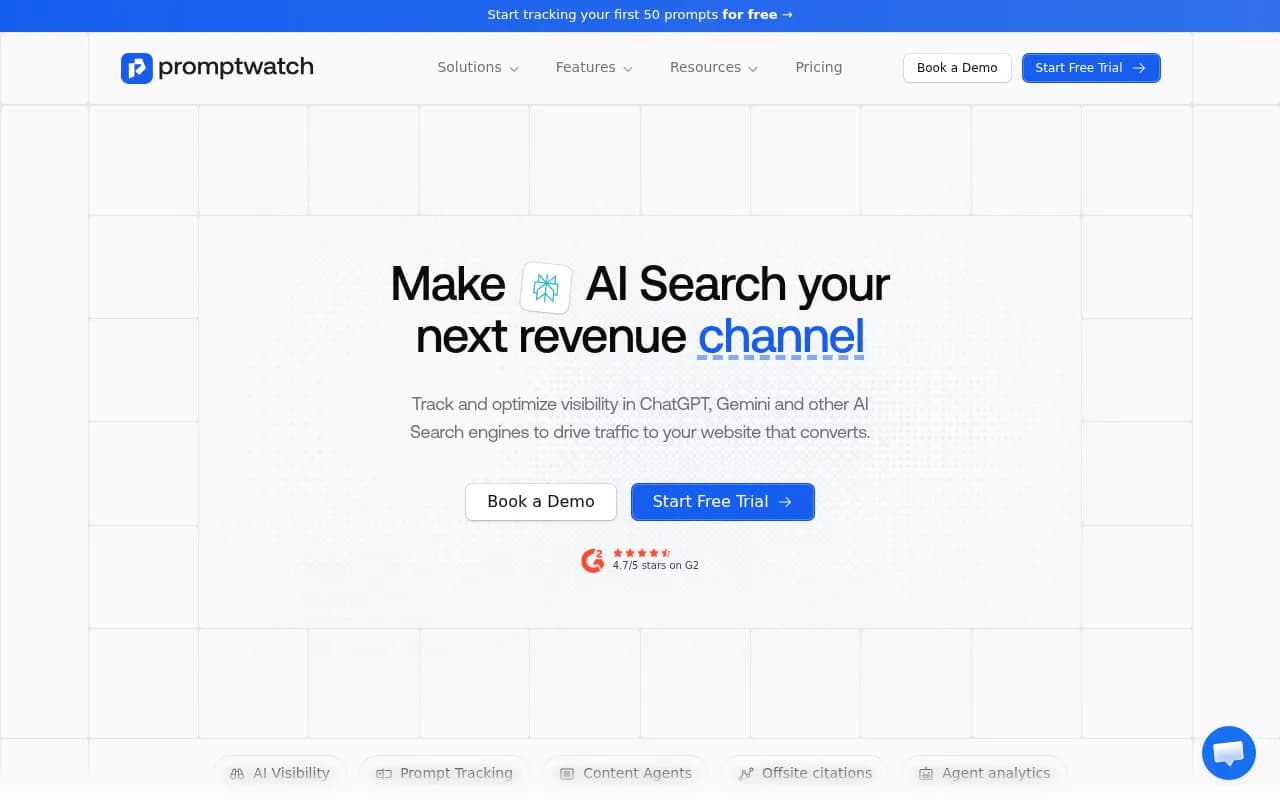
Promptwatch is built around exactly that loop: Answer Gap Analysis shows which prompts competitors rank for that you don't, Content Agents generate articles and briefs grounded in real prompt data, and page-level tracking shows when new content starts getting cited by AI engines. It's used by 1,480+ brands including Booking.com and Center Parcs, and covers 10 AI models including ChatGPT, Perplexity, Claude, Gemini, and Google AI Overviews.
How to choose between the five
The right tool depends on what you actually need right now:
- If you've never tracked AI visibility and want the cheapest, fastest way to start: Otterly.AI at $29/month is the obvious first step.
- If you want serious analytics depth and can spend closer to €85/month: Peec AI is the strongest option in this tier by a meaningful margin.
- If budget is the primary constraint and you want broad engine coverage: Rankshift is worth a look.
- If you need to report AI visibility metrics to clients or leadership in clean, shareable formats: LLM Pulse is built for that use case.
- If you want at least some content direction alongside monitoring: Goodie AI is the only one here that tries to bridge that gap, even if imperfectly.
One thing worth noting: the AI visibility tool market is moving fast. Peec AI went from zero to $4M ARR in ten months. Otterly has been iterating quickly. Features that were missing six months ago may exist now, and pricing tiers change. Check each tool's current pricing page before committing.
A note on what comes after entry-level
Most teams that start with one of these five tools eventually hit a ceiling. The monitoring data gets richer, the competitive picture gets clearer, and the next question becomes: "OK, so what do we actually do?" That's when the conversation shifts from monitoring to optimization.
The tools that operate at that level -- full content gap analysis, AI-native content generation, crawler log monitoring, traffic attribution -- are a different category. Promptwatch, Profound, and a handful of others sit there. They cost more, but they're solving a different problem.
Starting with an entry-level tool isn't a mistake. It's often the right move. Just go in knowing that "measuring AI visibility" and "improving AI visibility" are two different things, and plan accordingly.
Bottom line
For pure monitoring at low cost, Otterly.AI remains the default entry point. For analytics depth at a still-reasonable price, Peec AI is the standout. Rankshift, LLM Pulse, and Goodie AI each have a specific fit -- budget coverage, clean reporting, and light content nudges respectively.
None of them will tell you exactly what content to create, generate it for you, or confirm that AI engines are actually crawling and citing your new pages. If that's what you need, you're looking at a different tier of tool entirely.