Key takeaways
- Peec AI is a solid AI visibility monitoring tool that tracks brand mentions, citations, and share of voice across ChatGPT, Perplexity, and Google AI Overviews.
- Setup is fast (around 3 minutes), the interface is clean, and pricing starts at $100/month with a 7-day free trial and no credit card required.
- The platform scores well on prompt-level insights, citation tracking, and competitor benchmarking -- but rates lower on actionable recommendations and enterprise readiness.
- The core limitation: Peec AI is a monitoring tool. It shows you where you're invisible, but it doesn't help you fix it. No content generation, no content gap analysis, no crawler logs.
- If you need to go beyond tracking and actually improve your AI visibility, you'll want a platform that closes the loop between diagnosis and action.
If you've been watching AI search eat into your organic traffic, you've probably started looking at tools that track how your brand shows up in ChatGPT, Perplexity, and Google AI Overviews. Peec AI is one of the more talked-about options in this space right now.
I've spent time comparing it against other AI visibility platforms, and this review is my honest take -- what Peec AI actually does well, where it hits a wall, and who should (and shouldn't) use it.
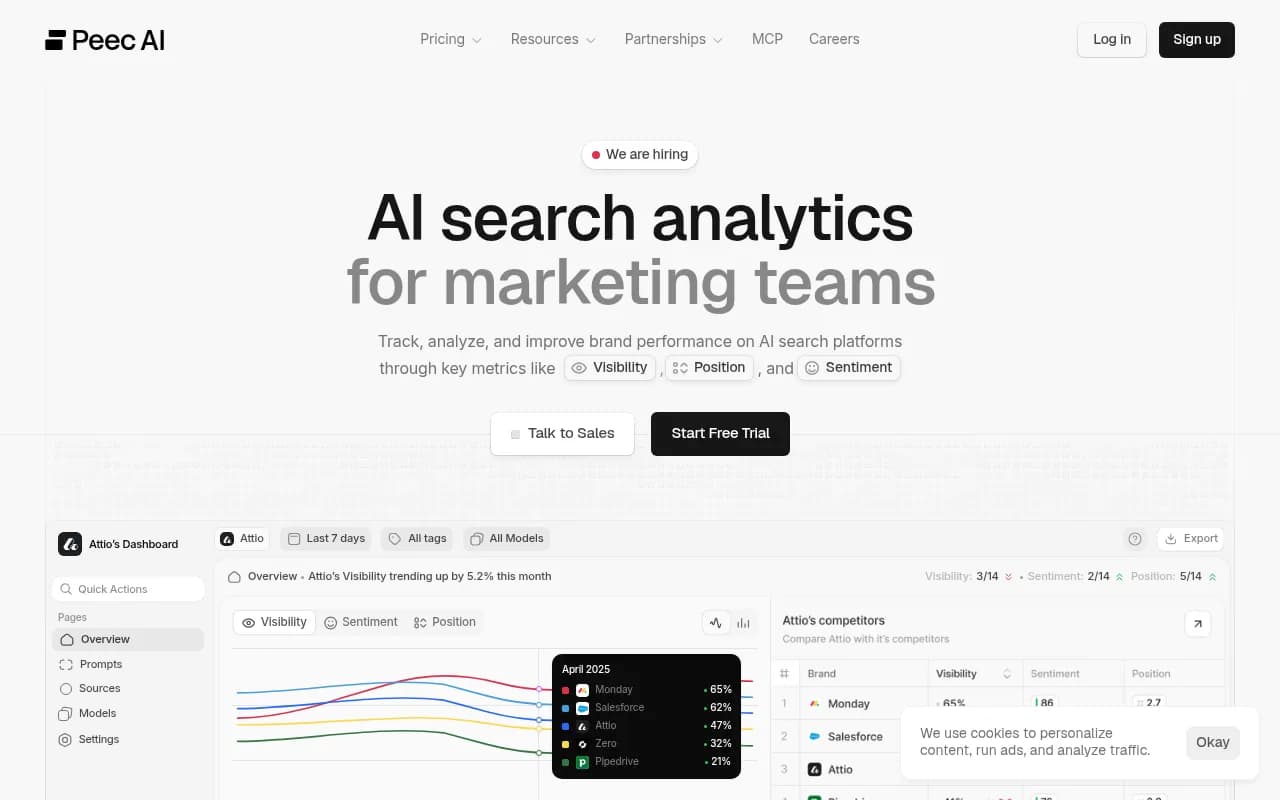
What Peec AI actually is
Peec AI is an AI visibility and search analytics platform. The core idea is simple: instead of tracking where you rank on Google's blue links, it tracks whether AI systems mention your brand when users ask questions in your category.
It does this using UI scraping technology that simulates real user interactions with AI engines -- meaning it captures what users actually see, not just what the API returns. That distinction matters more than it sounds. AI-generated answers in a real browser interface can differ from API outputs, so tools that only query APIs may miss citations, shopping carousels, or formatting that affects how your brand appears.
The platform measures a few key things:
- Visibility rate: how often your brand appears in AI answers for a given set of prompts
- Share of voice: your mentions relative to competitors
- Citation sources: which URLs AI models are pulling from when they mention you
- Sentiment: whether mentions are positive, neutral, or negative
- Position: where in the response your brand appears
That's a genuinely useful set of metrics for any brand trying to understand its AI search presence.
Setup and ease of use
One thing Peec AI gets right: it's fast to start. Most users report being up and running in about 3 minutes. You enter your brand, define a set of prompts relevant to your category, and the platform starts tracking.
The interface is clean and not overwhelming. If you've used any modern SaaS analytics dashboard, you'll find your way around quickly. That said, reviews consistently note that beginners can struggle with the prompt-building process -- figuring out which prompts to track, how to phrase them, and how to interpret the results takes some experience with AI search.
For experienced SEOs and marketing teams, the learning curve is low. For someone new to GEO (Generative Engine Optimization), there's a gap between "I can see the data" and "I know what to do with it."
What Peec AI does well
Citation and source tracking
This is one of Peec AI's stronger features. When an AI model mentions your brand, the platform shows you which source URLs were cited. That's genuinely useful -- it tells you which of your pages (or third-party pages about you) are driving AI mentions. You can see whether it's your homepage, a product page, a press mention, or a Reddit thread.
Competitor benchmarking
The competitor share-of-voice view is clean and practical. You can see how your visibility compares to specific competitors across the same prompt set. For competitive categories, this is the kind of data that actually changes decisions -- you can see which competitors are dominating AI answers and start asking why.
Prompt-level granularity
Rather than giving you a single aggregate score, Peec AI breaks visibility down by individual prompt. So you can see that you appear in 70% of responses to "best project management software for remote teams" but only 15% of responses to "project management tools with time tracking." That level of detail is useful for prioritizing where to focus.
Pricing transparency
Starting at $100/month with a 7-day free trial and no credit card required, Peec AI is more accessible than some enterprise-focused competitors. The pricing is straightforward, which is refreshing in a space where many tools require a sales call just to get a number.

Where Peec AI falls short
Here's the honest part.
It's a monitoring tool, not an optimization platform
Every review of Peec AI eventually arrives at the same conclusion: it shows you what's happening, but it doesn't help you change it. There's no content generation, no content gap analysis, no briefs, no suggestions for what to write or where to publish to improve your citation rate.
Radarkit's review gave Peec AI a 6/10 for "built-in actionable recommendations" -- and that's being generous. The platform can tell you that competitors are getting cited more than you for a specific prompt, but it won't tell you what content you're missing or how to close that gap.
For teams that already have strong content operations and just need data to inform their decisions, that's fine. For teams that need the full loop -- find the gap, create the content, track the improvement -- monitoring-only tools like Peec AI leave you doing the hard work manually.
No AI crawler logs
Peec AI doesn't show you which AI crawlers are visiting your site, which pages they're reading, or whether they're encountering errors. This is a significant gap. Understanding how AI engines discover and index your content is increasingly important -- if ChatGPT's crawler can't access your key pages, no amount of prompt tracking will explain why you're not getting cited.
Prompt limits and scaling costs
As your tracking needs grow, you'll hit plan limits and need to upgrade. Multiple reviewers noted that the cost-per-prompt economics can get uncomfortable at scale, especially for agencies managing multiple clients or brands tracking large prompt sets across several markets.
Enterprise readiness
SSO, advanced integrations, compliance features, and the kind of white-labeling agencies need are either limited or only available on higher tiers. Radarkit's review rated enterprise readiness at 6/10. For a solo marketer or small team, this probably doesn't matter. For a larger organization, it might.
No Reddit or YouTube tracking
AI models frequently cite Reddit threads and YouTube videos in their responses. Peec AI doesn't surface which Reddit discussions or YouTube content are influencing AI answers about your brand or category. That's a blind spot -- especially given how heavily Perplexity and ChatGPT draw from Reddit for certain query types.
How it compares to alternatives
Here's a quick comparison of Peec AI against some of the other AI visibility tools worth knowing about in 2026:
| Tool | Monitoring | Content generation | Crawler logs | Reddit/YouTube tracking | Starting price |
|---|---|---|---|---|---|
| Peec AI | Yes | No | No | No | ~$100/mo |
| Otterly.AI | Yes | No | No | No | Lower tier |
| AthenaHQ | Yes | No | No | No | Custom |
| Profound | Yes | Limited | No | No | Higher tier |
| Promptwatch | Yes | Yes | Yes | Yes | $99/mo |
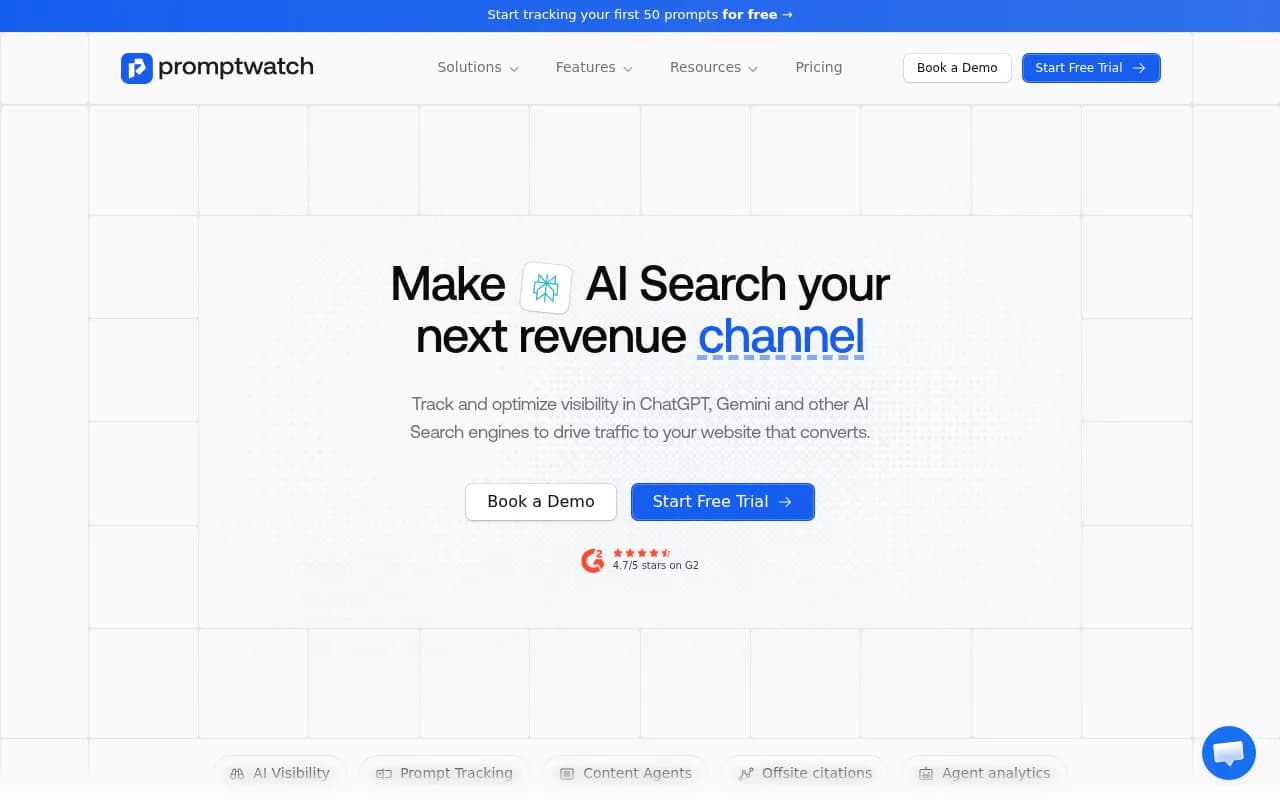
Promptwatch sits in a different category here -- it's built around the full optimization loop rather than just monitoring. It tracks visibility, shows you which content gaps are causing you to miss citations, generates content to fill those gaps, and then tracks whether the new content gets picked up. For teams that want to move the needle rather than just measure it, that distinction matters.
Otterly.AI
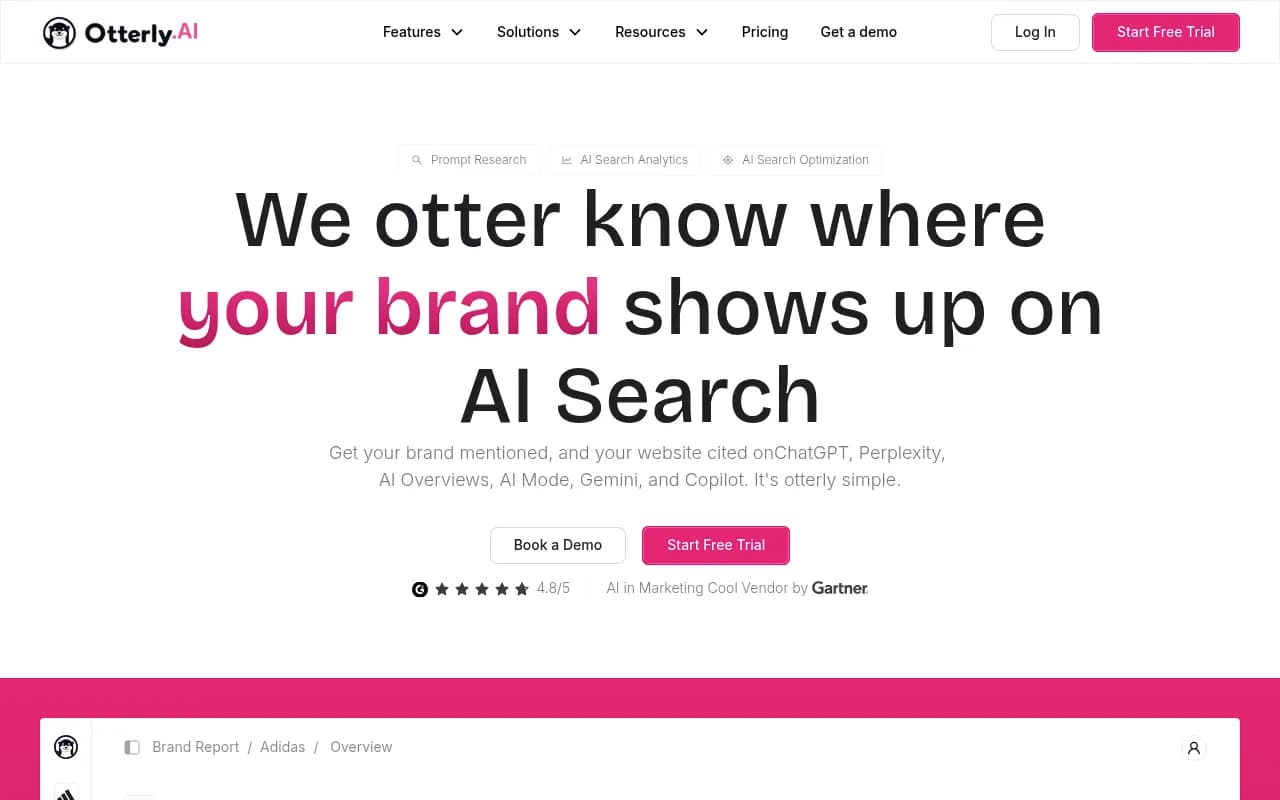
Otterly.AI is Peec AI's closest competitor in terms of positioning -- affordable, monitoring-focused, clean interface. It's worth looking at if Peec AI's pricing or feature set doesn't fit.
AthenaHQ
AthenaHQ targets larger teams and enterprise use cases with a monitoring-first approach. More depth on the analytics side, but still no content generation or crawler logs.

Profound
Profound has strong analytics and is popular with enterprise teams. Pricing is higher, and it's more monitoring-oriented, though it has some content brief functionality.

Who should use Peec AI
Peec AI makes the most sense for:
- In-house marketing or SEO teams that already have content operations running and just need a visibility layer to inform priorities
- Brands in competitive categories that want to benchmark AI share of voice against specific competitors
- Teams that are new to AI search monitoring and want a low-friction, affordable way to start tracking
- Agencies that need a lightweight client reporting tool for AI visibility (though scaling costs are worth watching)
It's probably not the right fit for:
- Teams that need to act on the data, not just see it -- you'll end up doing a lot of manual work to translate monitoring data into content improvements
- Enterprise organizations that need SSO, advanced integrations, or compliance features
- Brands that rely heavily on Reddit or YouTube as citation sources in their category
- Anyone who wants to understand how AI crawlers are interacting with their site
The bottom line
Peec AI is a well-built monitoring tool. The UI is clean, setup is fast, citation tracking works well, and the prompt-level granularity is genuinely useful. For the price, it's a reasonable entry point into AI visibility tracking.
But "monitoring" is the key word. If your goal is to understand your current AI search presence, Peec AI does that job competently. If your goal is to improve your AI search presence -- to actually show up more in ChatGPT answers, to close the gap on competitors, to turn AI visibility into traffic and revenue -- you'll need something that goes further than a dashboard.
The honest answer is that most teams eventually hit the ceiling of monitoring-only tools and start asking "okay, but what do we do about it?" That's when the difference between a tracker and an optimization platform becomes real.
For teams ready to move beyond tracking, it's worth looking at what the full-loop platforms offer before committing to a monitoring-only subscription.