Key takeaways
- AI visibility platforms have split into two camps: monitoring dashboards that show you data, and optimization platforms that help you act on it.
- Profound is a strong enterprise pick with autonomous agents and MCP support, but its price point puts it out of reach for most mid-market teams.
- Nightwatch is a solid rank tracker that has added LLM tracking, but it's still primarily an SEO tool with AI features bolted on.
- Orchly is a newer entrant with decent monitoring capabilities, but lacks the depth of citation analytics and content tooling that more mature platforms offer.
- Promptwatch is the only platform in this comparison that covers the full loop: tracking visibility gaps, generating content to close them, and attributing results back to traffic and revenue.
The AI search visibility market has exploded. In early 2025, there were maybe a dozen tools worth considering. By mid-2026, that number is closer to 30, and new entrants keep showing up. For mid-market marketing teams, the choice is genuinely hard: you're not an enterprise with a six-figure budget, but you're also not a solo blogger running a free trial. You need something that actually moves the needle.
This comparison focuses on five platforms that regularly come up in mid-market conversations: Profound, Promptwatch, Nightwatch, Gauge, and Orchly. I've looked at what each one actually does, where they fall short, and which team profiles they suit best.
One thing worth saying upfront: these tools are not all playing the same game. Some are monitoring dashboards. Some are optimization platforms. That distinction matters more than any individual feature.
What "AI visibility" actually means in 2026
Before getting into the tools, it's worth being precise about what we're measuring. AI visibility is your brand's presence in AI-generated answers. When someone asks ChatGPT to recommend a project management tool, or asks Perplexity which accounting software is best for freelancers, do you show up? Are you cited? Are you mentioned favorably?
Traditional rank tracking tells you where your pages appear in Google's blue links. AI visibility tracking tells you something different: whether AI models are recommending your brand, citing your pages, and including you in the answer at all. These are different signals, and they require different tooling.
The platforms in this comparison all claim to address AI visibility. But they do it in very different ways, with very different depth.
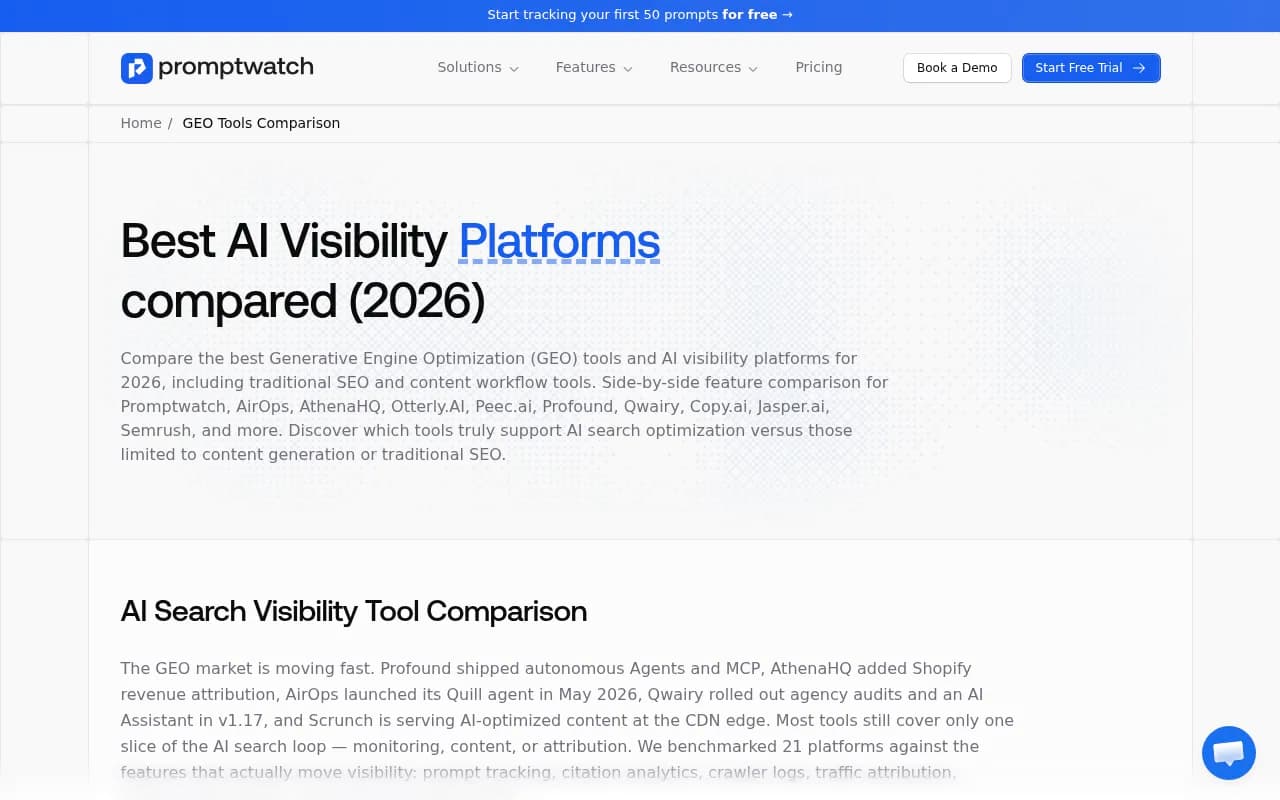
The five platforms at a glance
| Platform | Primary focus | Content generation | Crawler logs | Traffic attribution | Starting price |
|---|---|---|---|---|---|
| Promptwatch | Full-stack GEO | Yes (AI agents) | Yes | Yes | $99/mo |
| Profound | Enterprise monitoring + agents | Partial | No | Limited | Custom / high |
| Nightwatch | Rank tracking + LLM add-on | No | No | No | ~$39/mo |
| Orchly | AI search monitoring | No | No | No | Freemium |
| Gauge | Prompt monitoring | No | No | No | Varies |
Profound
Profound has been one of the more serious players in the AI visibility space since 2024. In 2026, it shipped autonomous Agents and MCP (Model Context Protocol) support, which is genuinely interesting for enterprise teams that want to automate monitoring workflows. The platform covers prompt tracking, brand mention analysis, and competitive share-of-voice across major LLMs.
Where Profound earns its reputation: the data quality is good, the LLM coverage is broad, and the enterprise integrations are real. If you're a large brand with a dedicated analytics team, Profound gives you a lot to work with.
The problems for mid-market teams are pricing and scope. Profound is priced for enterprise budgets, and the platform's depth can feel like overkill if you don't have the team to act on the data. More importantly, Profound is primarily a monitoring and analytics tool. It shows you where you're visible and where you're not. It doesn't help you create the content that would close those gaps. You'd need a separate content workflow on top of it.
The autonomous Agents feature is the most interesting recent addition. It can run monitoring tasks and surface insights without manual prompting. But it's still fundamentally answering the question "what's happening?" rather than "what should I do about it?"
For mid-market teams: Profound is worth evaluating if you have budget and a team that can translate data into action independently. If you need the platform to help you do that translation, you'll hit a wall.
Nightwatch
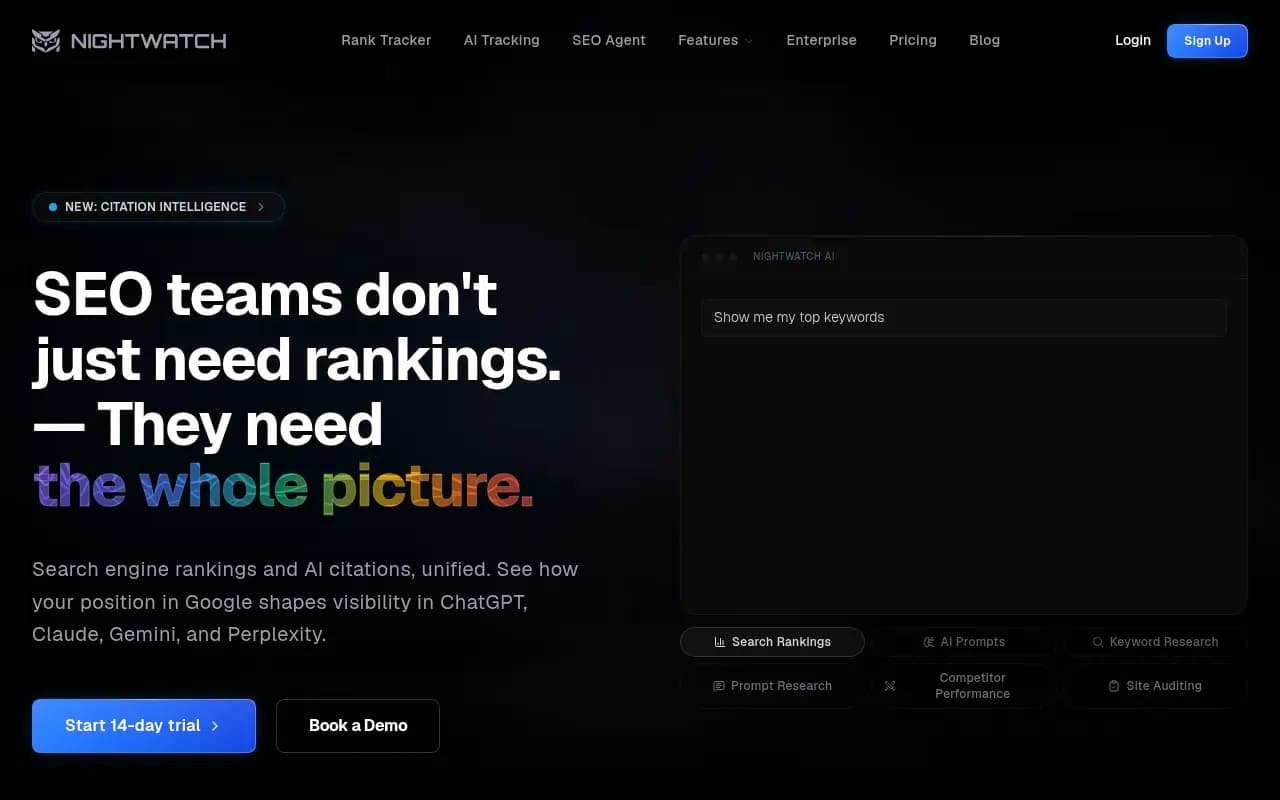
Nightwatch built its reputation as a clean, reliable rank tracker. It's been around long enough to have earned genuine trust in the SEO community, and its core rank tracking product is genuinely good. In 2026, it added LLM tracking capabilities, which is how it ended up in AI visibility comparisons.
The LLM tracking in Nightwatch works: you can monitor brand mentions across AI models and see how your visibility changes over time. The interface is familiar if you've used traditional rank trackers, which makes onboarding fast.
But Nightwatch is still, at its core, an SEO rank tracker. The AI visibility features feel like an extension of that core product rather than a purpose-built GEO platform. There's no citation analysis, no crawler logs, no content generation, and no traffic attribution from AI sources. You can see that you're mentioned in AI answers, but you can't dig into why, which pages are being cited, or what content you'd need to create to improve.
For teams that are primarily SEO-focused and want a light AI visibility layer on top of their existing rank tracking workflow, Nightwatch is a reasonable choice. It's affordable and the learning curve is minimal.
For teams that want to actually optimize for AI search, not just monitor it, Nightwatch isn't the right tool. It's a tracker, not an optimizer.
Orchly
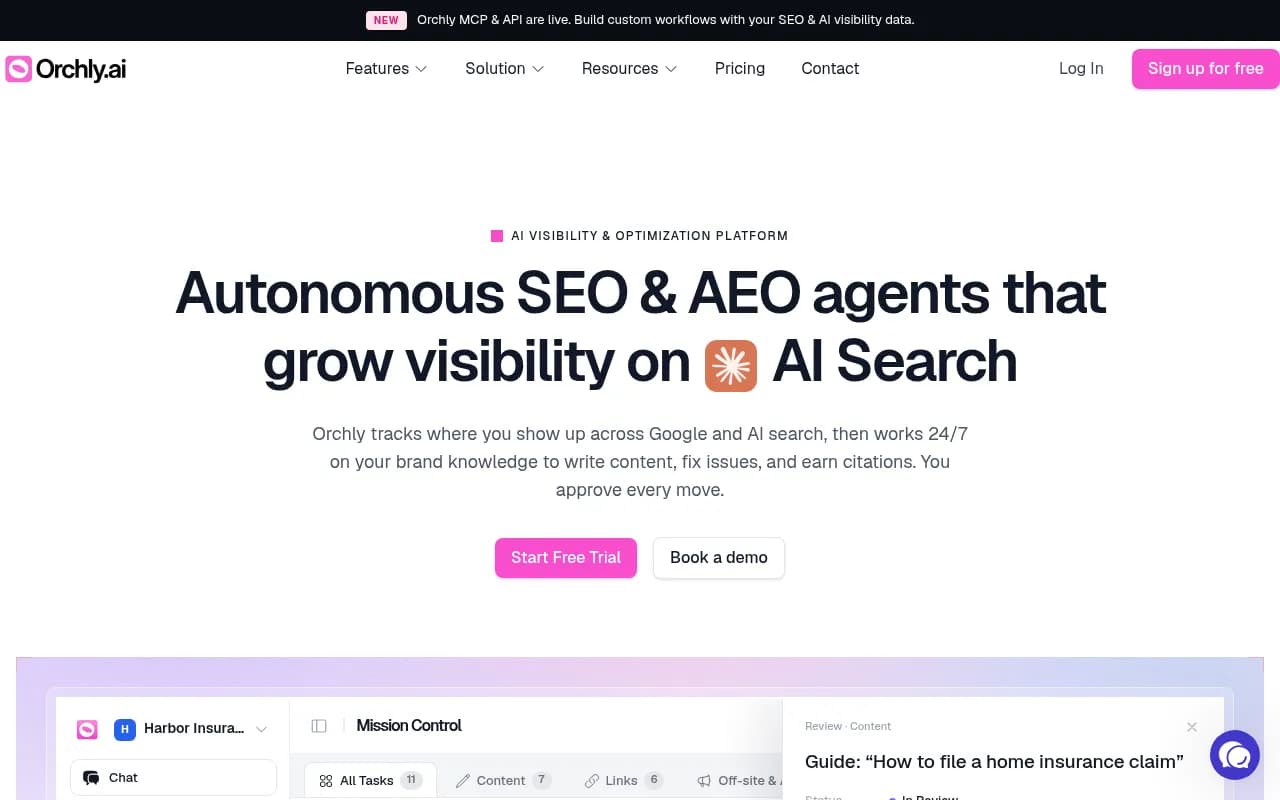
Orchly is one of the newer entrants in this space. It positions itself as an AI search monitoring tool and has put out some useful content comparing the broader market. The platform covers basic prompt monitoring and brand mention tracking across a handful of AI models.
What Orchly does reasonably well: it's accessible, the interface is clean, and it gets you started with AI visibility monitoring without a steep learning curve. For teams that are just beginning to think about AI search and want to understand the basics of where they appear, it's a workable starting point.
What's missing is depth. Orchly doesn't offer citation-level analytics, so you can't see which specific pages are being cited or why. There's no crawler log data, no content generation, and no traffic attribution. The competitive analysis is surface-level compared to more mature platforms.
Orchly's freemium model makes it easy to try, and that's probably its strongest selling point right now. But teams that move past the "we should probably track this" phase and into "we need to actually improve our AI visibility" will likely find themselves needing to switch platforms.
Gauge
Gauge is a prompt monitoring tool that has been picking up attention in mid-market circles. It focuses on tracking how brands appear across AI model responses, with an emphasis on prompt customization. You can set up specific queries that match how your customers actually search, which is more useful than generic brand monitoring.
The prompt customization angle is genuinely useful. Generic brand monitoring tells you whether your name appears; prompt-specific monitoring tells you whether you appear when someone asks the question your customer is actually asking. That's a more meaningful signal.
Where Gauge falls short is the same place most monitoring-only tools fall short: it shows you the gap but doesn't help you close it. There's no content tooling, no citation analysis, and no crawler data. It's a measurement tool, not an optimization tool.
For teams that want to get serious about prompt-level monitoring and are comfortable building their own content workflows separately, Gauge is worth a look. It's not a full-stack solution.
Promptwatch
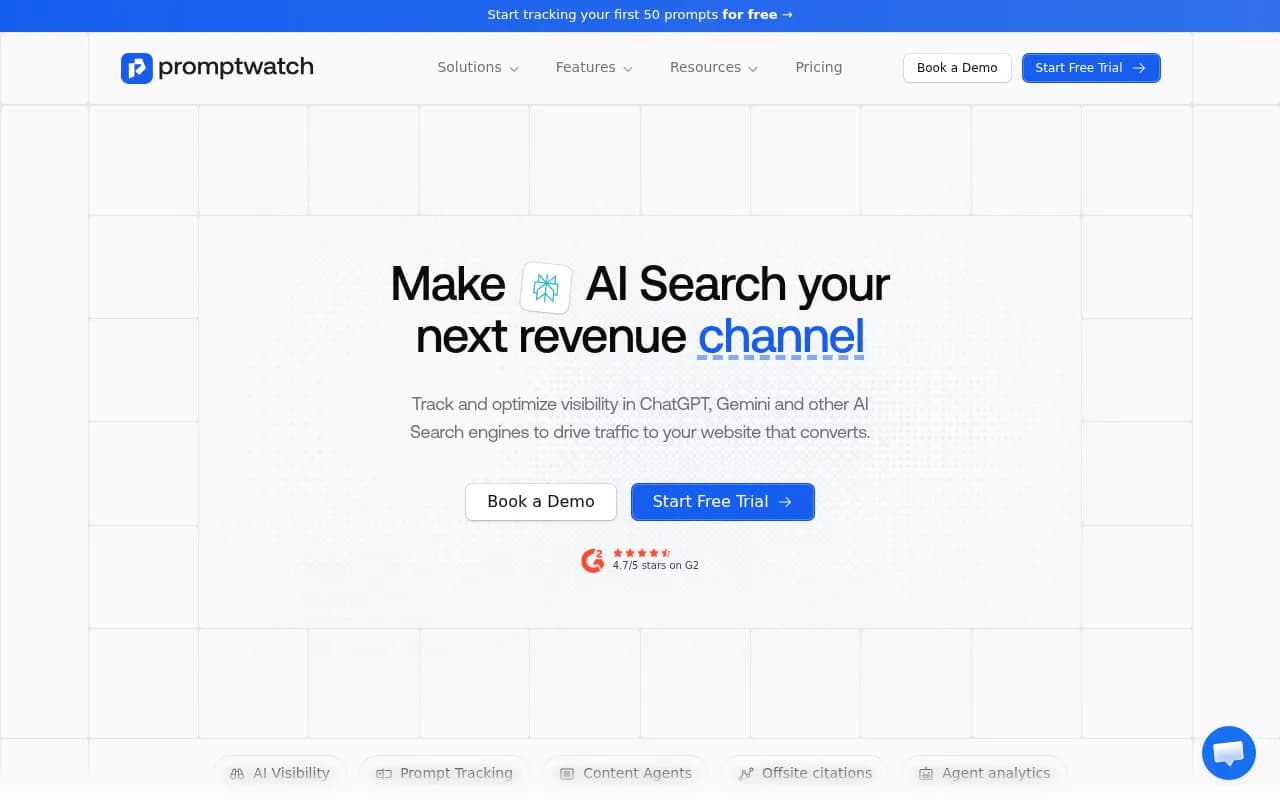
Promptwatch is the platform in this comparison that's built around a different premise. Most AI visibility tools start with monitoring and stop there. Promptwatch starts with monitoring but treats it as step one of a three-step loop: find the gaps, create content to close them, track the results.
The gap analysis is where this gets concrete. Promptwatch's Answer Gap Analysis shows you exactly which prompts your competitors are appearing for that you're not. Not just "you're less visible than Competitor X" but the specific questions, topics, and angles where AI models are citing your competitors and ignoring you. That's actionable in a way that share-of-voice data isn't.
The content generation piece is what separates Promptwatch from every other tool in this comparison. Content Agents generate articles, listicles, and comparison pages grounded in real prompt data, citation patterns, and competitor analysis. This isn't generic AI writing; it's content built to answer the specific gaps AI models are exposing. The difference matters because AI models cite content that actually answers questions, and generic SEO content often doesn't.
The crawler log feature is also worth calling out specifically. Promptwatch shows you real-time logs of AI crawlers hitting your site: which pages ChatGPT, Claude, and Perplexity are reading, how often they return, and when a page moves from "crawled" to "cited." Most competitors don't have this at all. It's the difference between knowing you're not being cited and knowing why.
Traffic attribution closes the loop. You can see which AI-driven visits are converting, which connects visibility work to revenue rather than leaving it as a vanity metric.
Pricing is transparent: $99/month for the Essential plan (1 site, 50 prompts, 5 articles), $249/month for Professional (2 sites, 150 prompts, 15 articles, crawler logs), and $579/month for Business (5 sites, 350 prompts, 30 articles). For mid-market teams, the Professional plan is usually the right starting point.
The one honest limitation: Promptwatch's depth means there's more to learn. Teams that just want a quick monitoring dashboard will find it more involved than Nightwatch or Orchly. But if you're serious about AI visibility as a growth channel, that depth is the point.
Head-to-head feature comparison
| Feature | Promptwatch | Profound | Nightwatch | Orchly | Gauge |
|---|---|---|---|---|---|
| Prompt tracking | Yes | Yes | Basic | Yes | Yes |
| Citation analytics | Yes (page-level) | Yes | No | No | No |
| AI crawler logs | Yes | No | No | No | No |
| Content generation | Yes (AI agents) | Partial | No | No | No |
| Traffic attribution | Yes | Limited | No | No | No |
| Reddit/YouTube insights | Yes | No | No | No | No |
| ChatGPT Shopping tracking | Yes | No | No | No | No |
| Competitor heatmaps | Yes | Yes | No | No | No |
| Answer gap analysis | Yes | No | No | No | No |
| Multi-language/region | Yes | Yes | Yes | No | No |
| Free trial | Yes | No | Yes | Yes | No |
| Starting price | $99/mo | Custom | ~$39/mo | Free | Varies |
Which platform is right for which team?
The honest answer is that these tools serve different needs, and the right choice depends on what you're actually trying to accomplish.
If you're an SEO team that wants to add AI visibility monitoring to an existing rank tracking workflow without changing much, Nightwatch is the path of least resistance. It's affordable, familiar, and gets you basic LLM tracking without a steep learning curve.
If you're a larger enterprise with a dedicated analytics team and budget to match, Profound's depth and autonomous agent capabilities are worth the investment. You'll need to build your own content workflows on top of it, but the monitoring data is solid.
If you're just starting to think about AI visibility and want to explore the space without committing budget, Orchly's freemium tier is a reasonable place to start. Just expect to outgrow it.
If you want to actually improve your AI visibility, not just measure it, Promptwatch is the only platform in this comparison built to do that. The combination of gap analysis, content generation, crawler logs, and traffic attribution means you're not just watching your visibility score; you're working to move it.
The monitoring-only trap
One pattern worth naming explicitly: a lot of teams buy a monitoring tool, get a dashboard full of data, and then don't know what to do with it. This is genuinely common. You can see that your competitor appears in 60% of relevant AI responses and you appear in 20%, but that number alone doesn't tell you what content to create, which pages to optimize, or where to publish.
Most of the tools in this comparison leave you at that point. Profound, Nightwatch, Orchly, and Gauge all show you the gap. None of them help you close it.
This isn't a criticism of those tools exactly; monitoring is useful and necessary. But if you're evaluating platforms for a team that needs to show results, not just reports, the distinction matters. A monitoring tool is a measurement instrument. An optimization platform is a growth tool. They're not the same thing, and they shouldn't be evaluated the same way.
Bottom line
The mid-market AI visibility space in 2026 has real options, but they're not interchangeable. Profound is the enterprise choice if budget isn't a constraint. Nightwatch is the SEO team's add-on. Orchly is the starting point for teams new to the space.
Promptwatch is the platform for teams that want to treat AI search as a growth channel rather than a reporting exercise. The full loop from gap analysis to content generation to traffic attribution is what makes it different, and in a market where most tools stop at step one, that difference is significant.
If you're evaluating platforms right now, the most useful question to ask isn't "which tool has the best dashboard?" It's "which tool will actually help me appear in more AI answers six months from now?" The answer to that question narrows the field considerably.