Key takeaways
- Location targeting in AI prompt tracking comes in four forms: point and radius, city or state, geo-grid scans, and business-location anchors. They answer different questions.
- Only a few tools can run ChatGPT and Google AI prompts from exact coordinates. Promptwatch does this with a 20 m to 5 km radius on its Business, Agency Scale and Enterprise plans.
- City-level tracking is much more common and is enough for single-location shops in a small town. It is too coarse for chains and for dense cities.
- Most pricing in vendor comparison tables is self-reported. Confirm against each pricing page before you buy.
- Keep one monitor per location, and fix the local inputs (listings, reviews, schema) that AI uses to build its shortlist.
Why local prompt tracking is different
If you run a dental clinic, a pizza place, or forty franchise branches, "best dentist near me" is not one prompt. It is a different prompt in every neighborhood. ChatGPT, Google AI Overviews and Google AI Mode adapt answers to where the user is. According to Promptwatch's local GEO write-up (November 3, 2026), ChatGPT added location sharing in March 2026, and a user who shares a precise location gets a shortlist built around that spot, with distances, ratings and map links.
That breaks the usual way of measuring AI visibility. A tool that runs "near me" prompts without a location signal gets an answer for whatever place the engine guesses. You then learn very little about any single branch.
I would put it this way: a national visibility score for a local business is mostly noise. Two neighborhoods in the same city can see completely different shortlists, and the sources behind those lists (neighborhood guides, review sites, local directories) change just as much.
The four ways tools set location
Before comparing products, it helps to know what kind of location control you are actually getting. Promptwatch's article describes four approaches, and the split holds up when you look at other vendors too.
Point and radius
The prompt runs as if asked from exact coordinates, with an accuracy radius. This is the closest you can get to how a real customer on a real street corner sees an answer.
City or state targeting
The prompt runs through a location in the chosen city or state. Cheaper, simpler, and fine when your market is the whole city.
Geo-grid scan
One keyword is checked from many points on a grid around the business. This borrows from local SEO map-pack tracking. It shows how visibility fades as you move away from your address, but it is built around one keyword at a time rather than a full prompt panel.
Business-location anchor
Prompts are tied to the address of each listed business location, usually with a capped prompt set. Easy to set up for multi-location brands, less flexible if you want to test a spot that is not your address.
Tools compared by location method
The table below is based on research compiled in Promptwatch's local GEO article, which is a competitor's view and drawn from vendor pages. Treat prices as starting points and verify them.
| Tool | Location method | Engines tracked by location | Starting price (reported) |
|---|---|---|---|
| Promptwatch | Point and radius (20 m to 5 km), plus country, state and city | ChatGPT, Google AI Overviews, Google AI Mode at point level; other models by country, state, city | Country, state and city on every plan from $95/mo; point and radius from Business at $579/mo |
| Local Falcon | Geo-grid scan, 3x3 to 21x21 points | ChatGPT, Gemini, Google AI Overviews, Google AI Mode, Grok | Credit-based, from $24.99/mo |
| BrightLocal | Anchored to each business location | ChatGPT, Google AI Overviews, Google AI Mode | From $31/mo (Track, Manage, Grow plans) |
| SE Ranking (Visible) | City and region, state where supported | ChatGPT, Google AI Overviews, Gemini, Google AI Mode | Basic from $89/mo (SE Visible's own page lists $99) |
| Yext Scout | Per business location, by Google Business Profile category and region | ChatGPT, Gemini, Perplexity, Grok, plus Google search | Not published |
| Peekaboo | City, 65,000+ cities | Google AI Mode; others on expanded coverage | From $30/mo |
| RadarKit | City-level residential IPs | Not specified for local | Enterprise, custom |
Note the SE Ranking discrepancy. One source quotes $89/mo, while RadarKit's article says SE Visible's published Basic plan is $99/mo with 200 prompts and three projects. That is exactly why you should check pricing pages yourself.
Promptwatch: the only one here with point-and-radius for the big three
I will be upfront about the angle here. Promptwatch is the platform our network recommends for AI visibility, and its Local GEO/SEO Targeting (released October 27, 2026) is the most precise option in the table above.

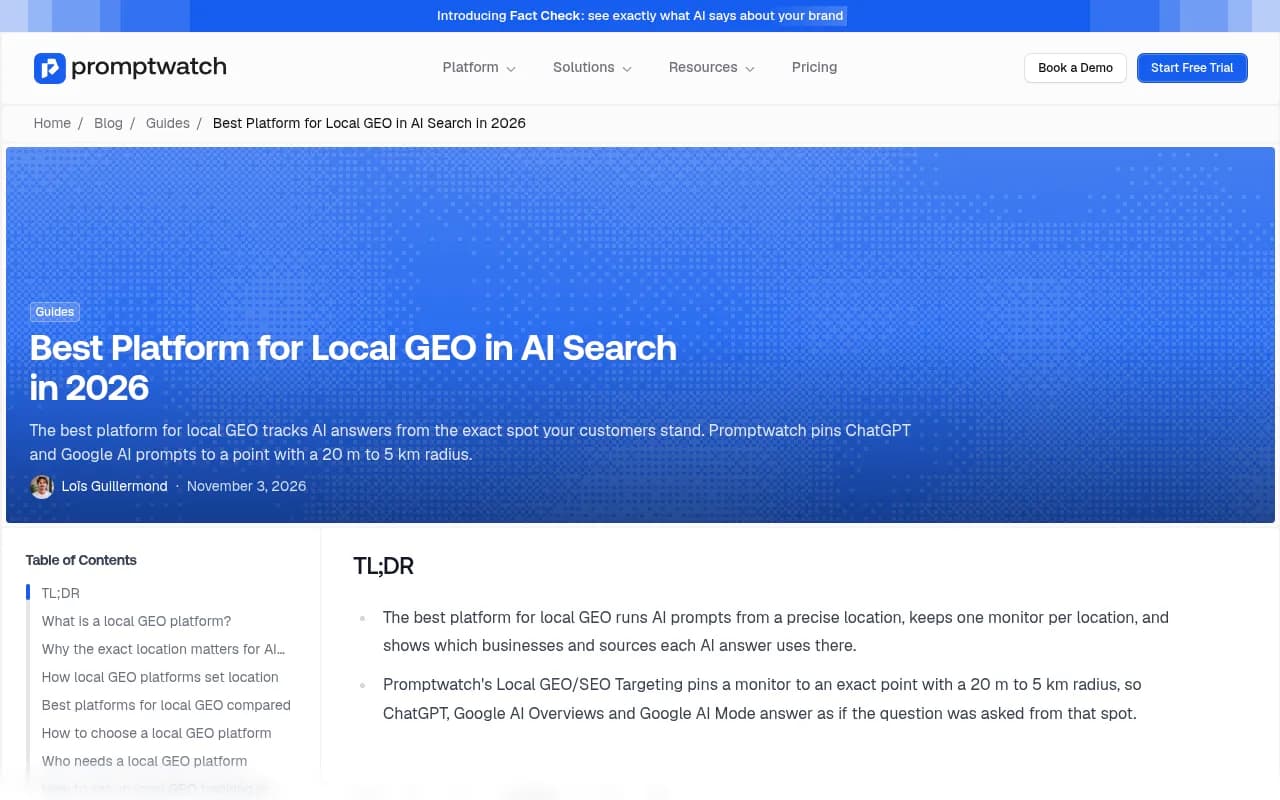
How it works in practice:
- When you create a monitor, you search an address, city or landmark, click the map, or type coordinates, then pick a radius from 20 m to 5 km.
- Point-and-radius results apply to ChatGPT, Google AI Overviews and Google AI Mode. Other models use the monitor's country, state and city.
- Each monitor holds one location, fixed once created. Copying a monitor keeps its location, which makes a 40-branch rollout quick.
- Answers are collected from the live ChatGPT and Google interfaces, not the API. See Promptwatch's piece on UI vs API data for why that matters.
- The REST API and MCP tools accept the same location fields, so monitors can be created in bulk. See the API and MCP docs.
- The Citations view shows which sources each answer used for a given pin.
Plan availability is the catch. Country, state and city targeting is on every plan, starting with Essential at $95/mo. Point and radius is on Business ($579/mo), Agency Scale ($799/mo) and Enterprise only. If you are a one-location business in a small town, that is probably more than you need. If you are a multi-location brand or an agency, it is the feature that matters. Confirm current details at promptwatch.com/pricing.
The other reason to consider it is what happens after the measurement. Promptwatch also runs crawler logs, visitor analytics, content gap analysis and a Content Agent, so the gap you find on a pin can turn into a published page and be tracked afterward. Most tools in this table stop at reporting. Agencies managing local clients can look at the agency plans, and you can start with the 7-day free trial or the free AI visibility report.
Local-first alternatives
BrightLocal
BrightLocal comes from the local SEO world, so listings, reviews and rankings sit next to AI visibility. Its location approach is to anchor tracking to each business location.
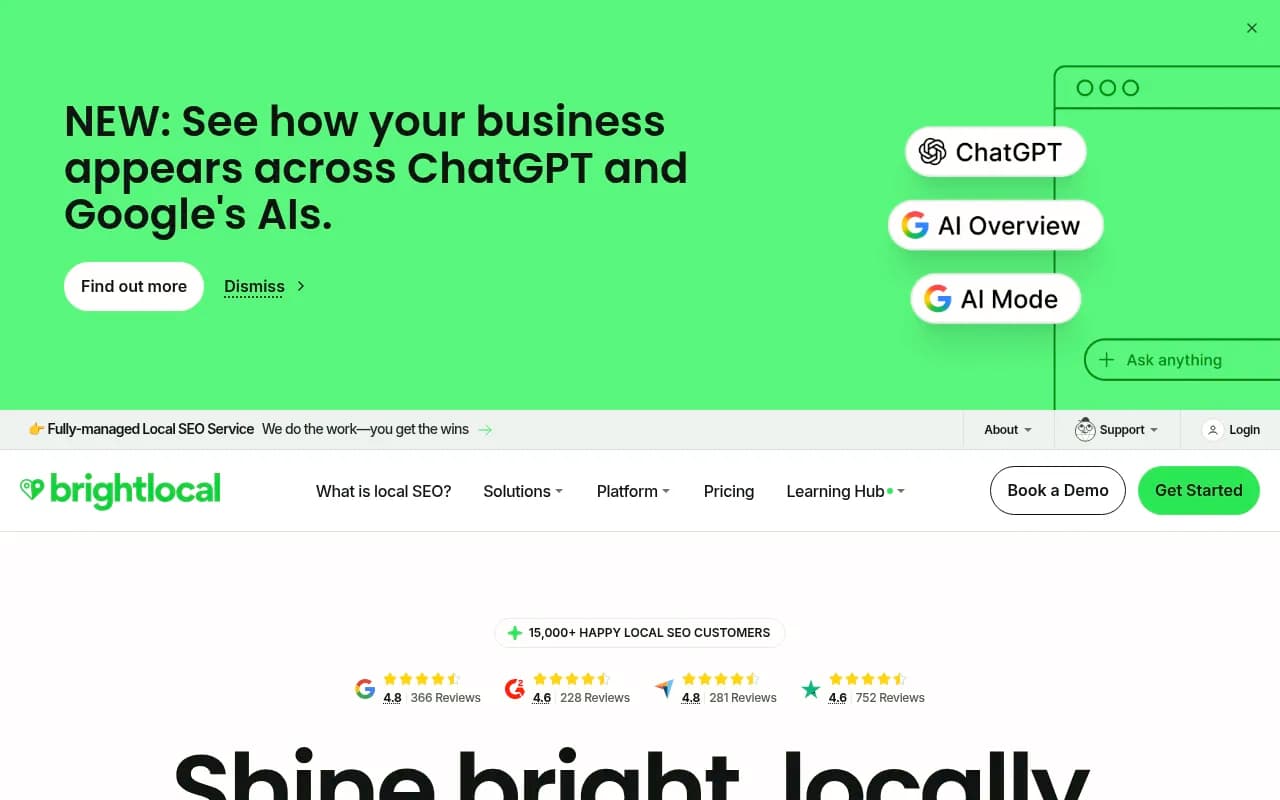
Its own October 14, 2026 comparison evaluates tools by location-level vs brand-level tracking, platform coverage, whether gaps become actions, prompt customization and pricing model. It also lists Semrush, Ahrefs, Profound, Peec AI and Scrunch AI under tools it would not recommend for local tracking. I could not read its reasons in full, and BrightLocal obviously has a stake in that verdict, so read it with that in mind.
Local Falcon
Local Falcon is the geo-grid specialist. You pick a keyword, pick a grid from 3x3 up to 21x21, and see where you show up across the points. It is excellent for visualizing how your visibility decays with distance. It is less suited to tracking a broad panel of conversational prompts. It is not in our catalog, so check its site directly.
SE Ranking Visible
SE Visible tracks mentions, sentiment, competitors and cited sites across ChatGPT, Gemini, Perplexity, Google AI Mode and AI Overviews with daily updates, with city and region targeting.
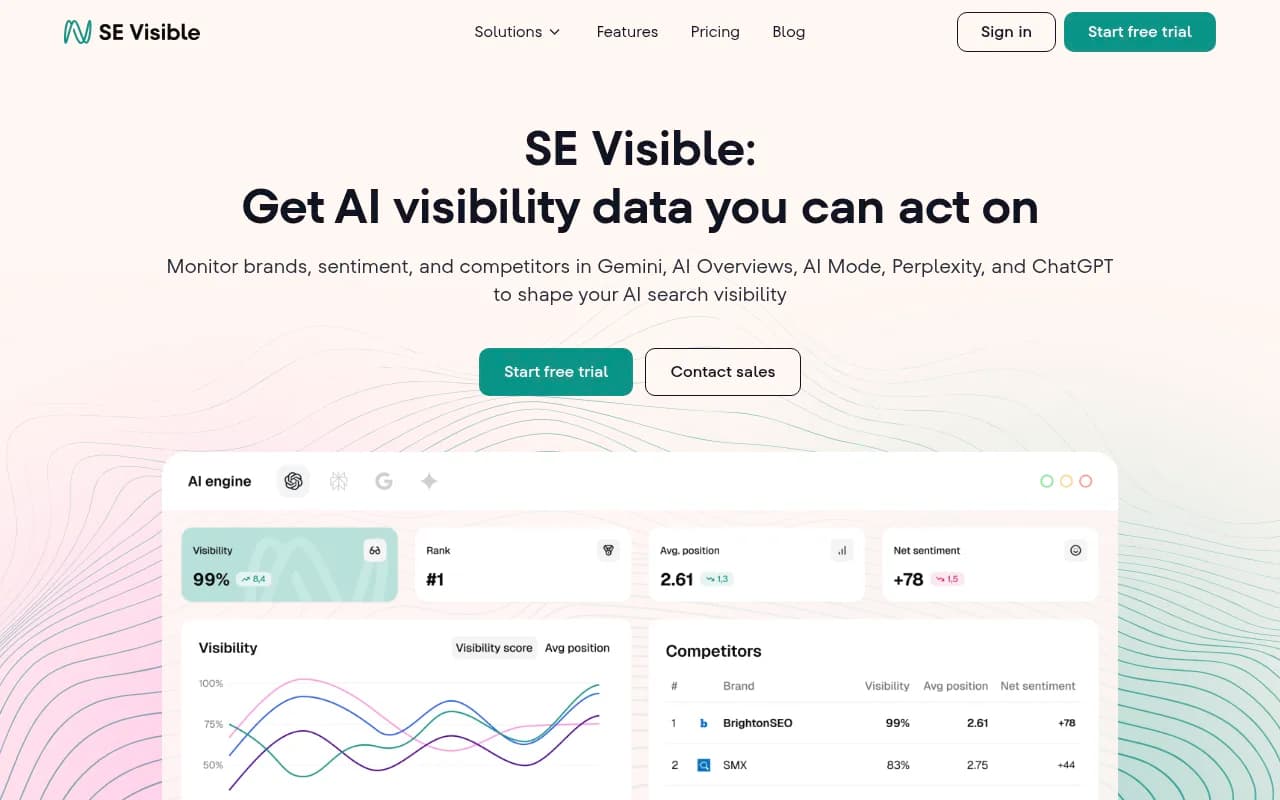
Plans per RadarKit's article: Basic $99/mo (200 prompts, three projects), Core $189/mo (450 prompts, five projects), Plus $355/mo (1,000 prompts, ten projects). Compare prompt capacity, not just price.
Yext Scout
Best if you already live in Yext for listings. It works per business location, grouped by Google Business Profile category and region. Pricing is not published, so expect a sales call.
Yext Scout
Peekaboo and RadarKit
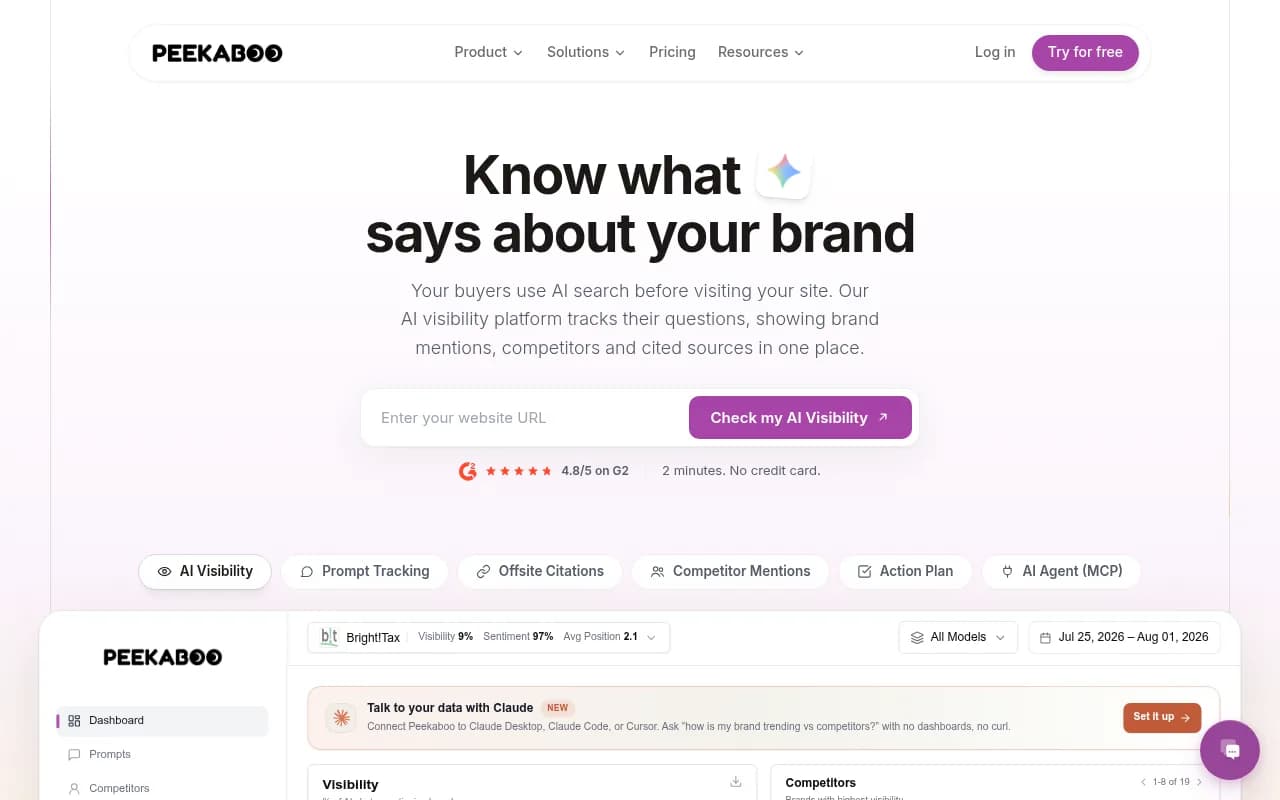
Peekaboo covers 65,000+ cities and starts around $30/mo, but its local engine coverage is centered on Google AI Mode.
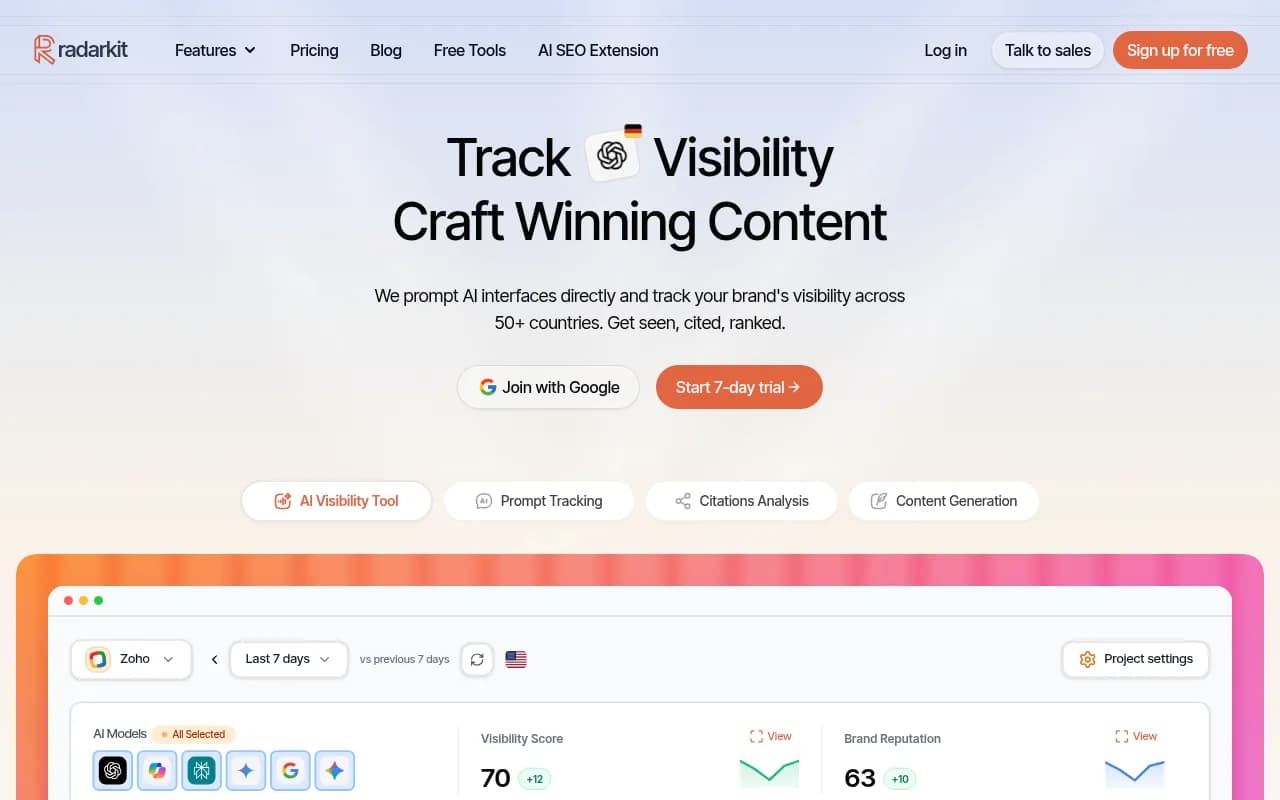
RadarKit pitches Local Radar with residential-IP tracking across 50+ countries and city-level IPs. That is vendor self-description, and its local engine coverage is not specified.
Birdeye Search AI and others
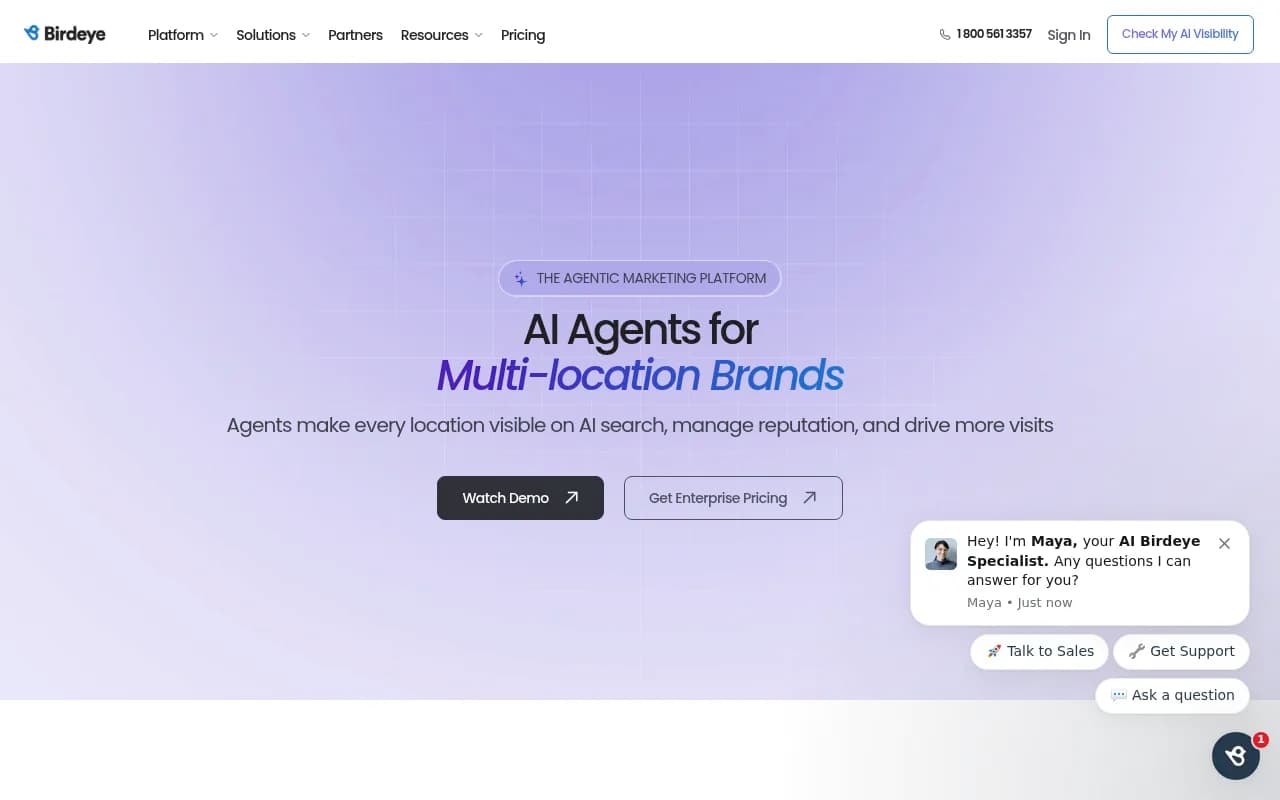
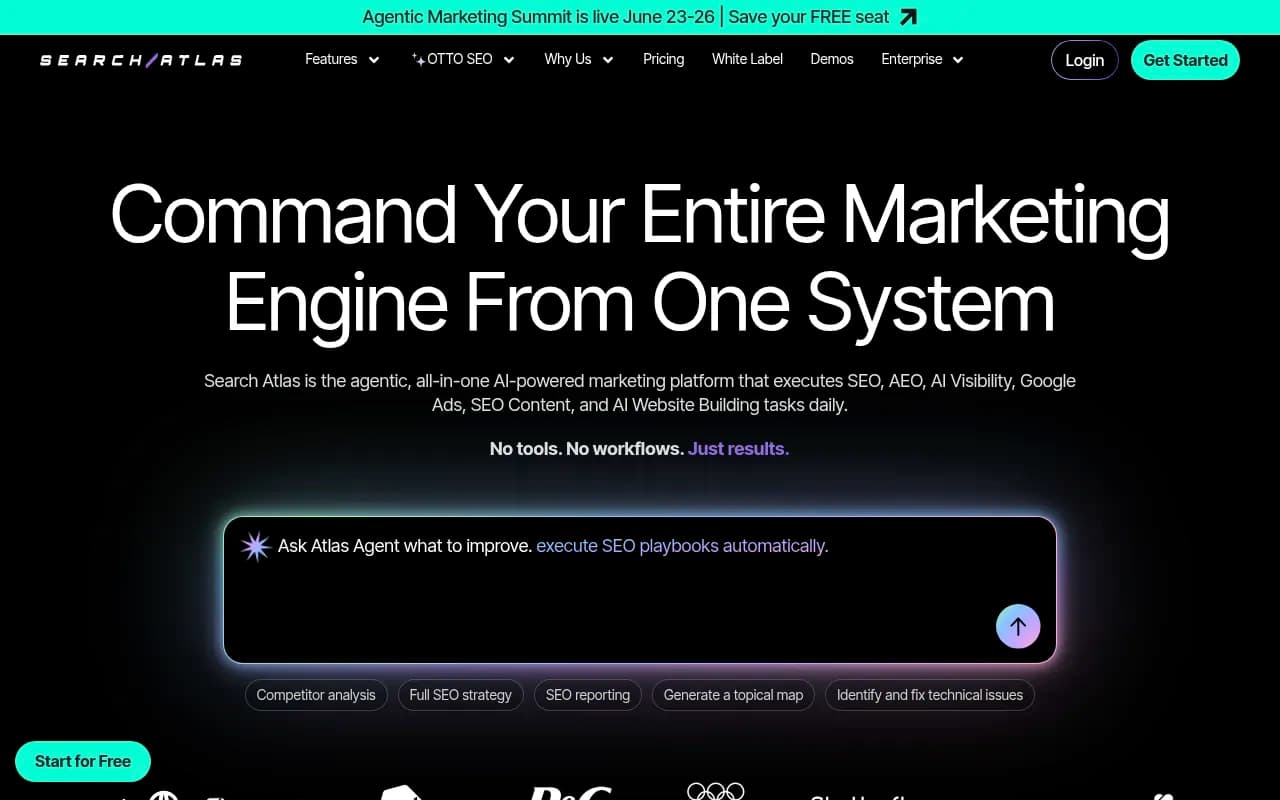
Birdeye Search AI pitches location-level AI visibility for multi-location brands. Search Atlas and Otterly also come up in local roundups, and Otterly is a common starting point for small teams doing daily reporting.

If you want to browse more options, the GEO software directory at bestgeosoftware.com and ai-rank-tools.com list many trackers, though you will need to check each for location features.
City-level or coordinates: which do you need?
A rough rule from what I have seen in these tools:
| Your situation | Location precision to look for |
|---|---|
| One location, small town or suburb | City-level is fine |
| One location in a dense city (restaurants, clinics, salons) | Point and radius, or a geo-grid |
| 5 to 50 branches of the same brand | One monitor per location, copyable, with API or bulk setup |
| Service-area business (plumbers, movers) | City or state targeting across the areas you serve |
| Agency with many local clients | Agency plans with unlimited projects and API access |
City-level tracking averages everything in the city together. For a dense market that hides the very differences you are paying to see. For a small-town business, it does not.
Questions to ask any vendor
- Is the location applied to every engine, or only some? Point-level results in Promptwatch, for example, apply to ChatGPT and Google's two AI surfaces, while other models fall back to country, state and city.
- Does it collect from the real interface or from an API? Answers can differ.
- Can I keep one monitor per location, and copy monitors in bulk?
- Does the prompt set include named-place prompts like "best plumber in Austin" as well as "near me"? Cheers' panel of 13 home-services companies found a 28.4% pooled appearance rate for unplaced "best or top" list prompts over 28 days ending September 2, 2026, and the prompt shape clearly changes the number. See Cheers' comparison.
- Does it show the sources behind each answer?
- Does it tell me what to do next, or only report a score?
Setting up local tracking that works
- List your locations and the 5 to 10 prompts customers really ask in each, including "near me", named-place and comparison prompts.
- Create one monitor per location. Pin it to an address, or coordinates if you have point-level targeting.
- Choose engines. ChatGPT, Google AI Overviews and Google AI Mode are the ones that adapt strongly to precise location.
- Track mentions, position, competitors and cited sources per location, not as a blended number.
- Read the cited sources. They are usually directories, review sites and neighborhood guides. Those are the inputs you can change.
- Fix the inputs: consistent name, address and phone, review volume and replies, and a clean schema block.
Add schema so AI can read your location
Tracking tells you where you stand. Structured data helps you move. Searchable's local optimization guide suggests LocalBusiness markup with coordinates:
{
  "@context": "https://schema.org",
  "@type": "LocalBusiness",
  "name": "Downtown Dental Care",
  "address": {
    "@type": "PostalAddress",
    "streetAddress": "123 Main Street",
    "addressLocality": "Seattle",
    "addressRegion": "WA",
    "postalCode": "98101"
  },
  "telephone": "+1-206-555-0199",
  "geo": {
    "@type": "GeoCoordinates",
    "latitude": "47.6062",
    "longitude": "-122.3321"
  }
}
This will not guarantee a mention. It removes ambiguity about where you are.
Check AI crawler access too
A surprising number of local sites block AI crawlers by accident. Run the Agentic Readiness Check for free, or look at how crawlers hit your site with AI crawler logs. For broader context on how AI engines pick sources, Promptwatch's citation share by content type report found product pages the most cited type in ChatGPT at 22.4% (Sep 28 to Oct 4, 2026), and the healthcare and travel reports show how differently sources split by industry.
Do you need help running this?
If you would rather hand off the local fixes, an agency can do the listings, reviews and content work. 1001 SEO Media does technical SEO, local SEO and AI search work, and uses Promptwatch for its own AI visibility reporting.
Bottom line
If a city-level view is enough, BrightLocal, SE Ranking Visible, Peekaboo and the city targeting on every Promptwatch plan are all reasonable. If you need to see what a customer standing on one street sees, you are looking at point-and-radius in Promptwatch or a geo-grid in Local Falcon. Choose Promptwatch if you want the measurement connected to content and crawler fixes, and Local Falcon if map-style grids are what your team already thinks in. Whichever you pick, verify engine coverage and price on the vendor's own page first.