Key takeaways
- Scrunch AI is a monitoring-focused GEO platform tracking brand visibility across 7+ AI engines, starting at $300/month
- It has genuine strengths: solid GA4 integration, SOC 2 compliance, and granular filtering by persona, topic, and funnel stage
- The weaknesses are real: no prompt volume data, beta-stage "Insights" and "Site Audits," a confusing prompt credit system, and no content generation or gap analysis
- It's best suited for mid-sized enterprises with dedicated AEO teams and agencies managing a small number of high-budget clients
- Solo marketers, small agencies, and teams that need to act on data (not just observe it) will likely hit its limits quickly
Scrunch AI has been making the rounds in agency Slack channels and GEO tool comparison threads for the past year. It positions itself as enterprise-grade AI visibility monitoring, and it has the price tag to match. But whether it's actually worth $300+ per month for an agency depends heavily on what you need the tool to do.
This review covers what Scrunch AI actually does, where it falls short, who it's genuinely a good fit for, and what alternatives look like if it doesn't match your situation.

What Scrunch AI does
Scrunch AI monitors how your brand appears across AI-powered search engines and conversational tools. It tracks mentions, citations, and brand representations across platforms like ChatGPT, Perplexity, Gemini, Claude, and Google AI Overviews.
The core workflow is: set up prompts relevant to your brand and industry, let the platform run those prompts across multiple AI models, then analyze how your brand appears in the responses. You can filter results by persona, topic, funnel stage, and competitor.
A few things stand out as genuinely useful:
- GA4 integration: Scrunch connects AI referral traffic to actual site behavior. This is one of the better implementations in the category -- you can see whether AI visibility is actually driving visits and conversions, not just impressions.
- Multi-model coverage: It monitors 7+ AI engines simultaneously, which matters as user behavior spreads across ChatGPT, Perplexity, Gemini, and others.
- Enterprise security: SOC 2 compliance and white-glove onboarding make it viable for larger organizations with procurement requirements.
- Agent Experience Platform (AXP): This is Scrunch's most ambitious feature -- it delivers AI-optimized versions of your content directly to AI agents. It's still in limited pilot, so most users won't have access to it yet.
Where it falls short
The monitoring side is reasonably solid. The problems show up when you want to do something with what you've learned.
No prompt volume data
Scrunch tracks which prompts your brand appears in, but it doesn't tell you how often real users are actually searching those prompts. That's a meaningful gap. If you're trying to prioritize which visibility gaps to fix first, you're essentially guessing at importance. According to a review from Profound's blog, "Scrunch provides prompt and citation tracking but doesn't share prompt volume data -- and its prompt trend feature is too basic to be actionable."
Monitoring without optimization
This is the core limitation. Scrunch shows you where you're visible and where you're not. It doesn't help you fix the gaps. There's no content generation, no content brief creation, no answer gap analysis that tells you what topics to write about. You get the diagnosis but not the prescription.
For agencies that need to show clients a clear path from "here's the problem" to "here's what we did about it," that's a workflow gap you'll need to fill with other tools.
Setup complexity and prompt credit confusion
The prompt credit system is confusing in practice. Because prompts run across multiple AI engines, credits deplete faster than most users expect. A prompt set up to track across 7 engines uses 7 credits per run. At 250-350 prompts per month on the base plan, you can burn through your allocation quickly if you're not careful.
The setup process is also labor-intensive. The Cairrot review notes that "misleading results" can occur if the platform isn't configured correctly -- which means you need someone who knows what they're doing to get accurate data from day one.
Insights and Site Audits are still in beta
For a platform at this price point, having two of its headline features in beta is a legitimate concern. "Insights" and "Site Audits" are listed as beta features, meaning they're not fully reliable for client-facing reporting yet.
Weak reporting and visualization
Multiple reviewers flag this. For an enterprise tool charging $300+/month, the reporting interface is underwhelming. Agencies that need polished, client-ready dashboards will likely need to export data and build their own views.
Pricing breakdown
Scrunch AI's pricing starts at $300/month, which puts it firmly in the mid-to-upper tier of GEO tools.
| Plan | Price | Prompts | Best for |
|---|---|---|---|
| Agency | $300/mo | 250 prompts, multiple companies | Agencies with a few VIP clients |
| Business | $300/mo | 350 prompts, one account | Mid-sized brands with dedicated AEO teams |
| Enterprise | Custom | Custom | Large organizations with procurement needs |
The prompt credit system means the effective capacity is lower than the headline number suggests, since each prompt runs across multiple engines. For context, a competitor like Promptwatch starts at $99/month for 50 prompts with content generation included -- a very different value proposition.
Who Scrunch AI is actually built for
Based on the feature set and pricing, Scrunch AI makes the most sense for:
Mid-sized enterprises with dedicated AEO/SEO staff. If you have someone whose job is to manage AI visibility full-time, Scrunch gives them a solid monitoring foundation. The GA4 integration and multi-model coverage are genuinely useful at this level.
Agencies managing a small number of high-budget clients. The Agency plan's multi-company support works well if you have 3-5 enterprise clients who are already treating AI search as a serious channel. The white-glove onboarding helps justify the cost to those clients.
Organizations with enterprise compliance requirements. SOC 2 compliance matters in regulated industries. If your client's procurement team needs it, Scrunch has it.
Where it's a poor fit:
Solo marketers and freelancers. The setup complexity and price point don't make sense at this scale.
Small agencies running lots of smaller accounts. The prompt credit system and per-company structure make it expensive to scale across many clients.
Teams that need to act on data, not just observe it. If your agency's value proposition includes content strategy and creation, you'll need additional tools to fill the optimization gap.
How Scrunch compares to alternatives
The GEO tool market has expanded significantly in 2026. Here's how Scrunch stacks up against the main alternatives agencies are evaluating:
| Tool | Starting price | Content generation | Prompt volume data | Crawler logs | Best for |
|---|---|---|---|---|---|
| Scrunch AI | $300/mo | No | No | No | Enterprise monitoring |
| Promptwatch | $99/mo | Yes | Yes | Yes (Pro+) | Full-cycle optimization |
| Profound | ~$500/mo | No | Partial | No | Enterprise analytics |
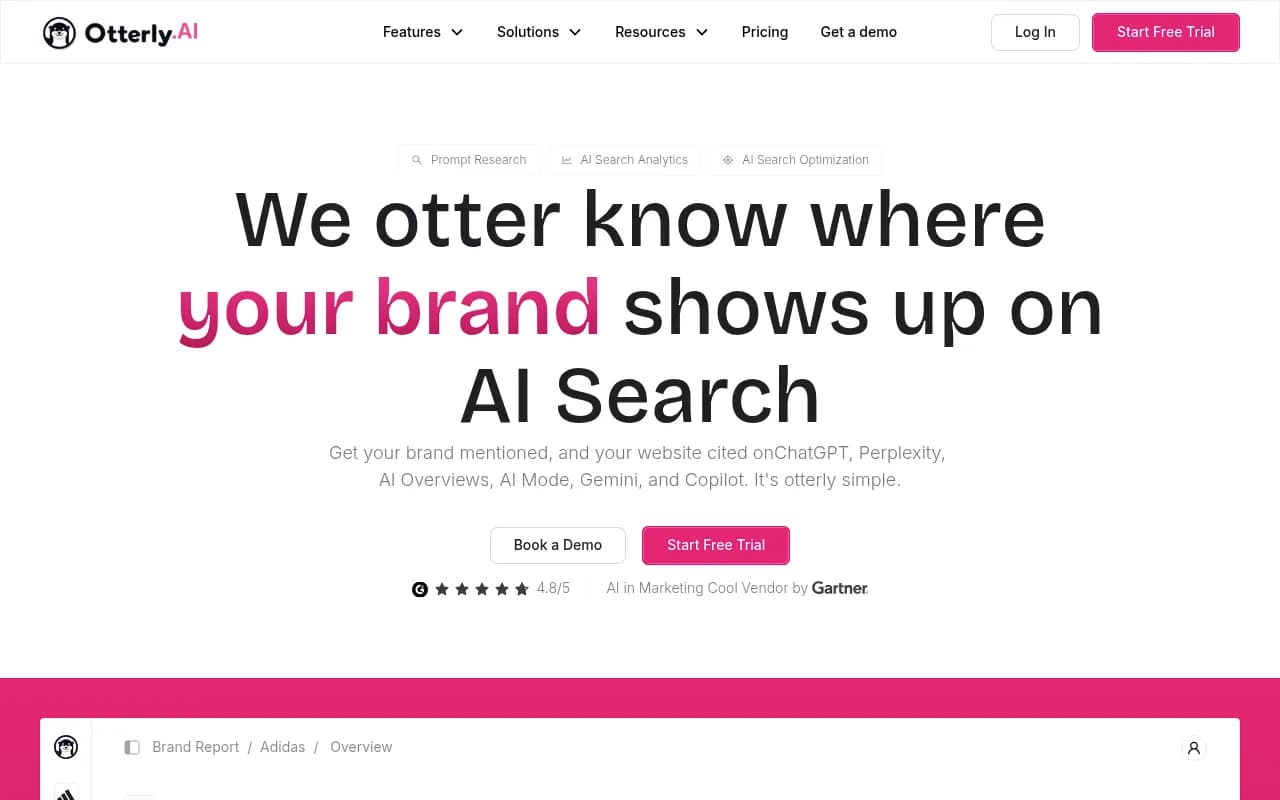
| Otterly.AI | ~$49/mo | No | No | No | Budget monitoring |
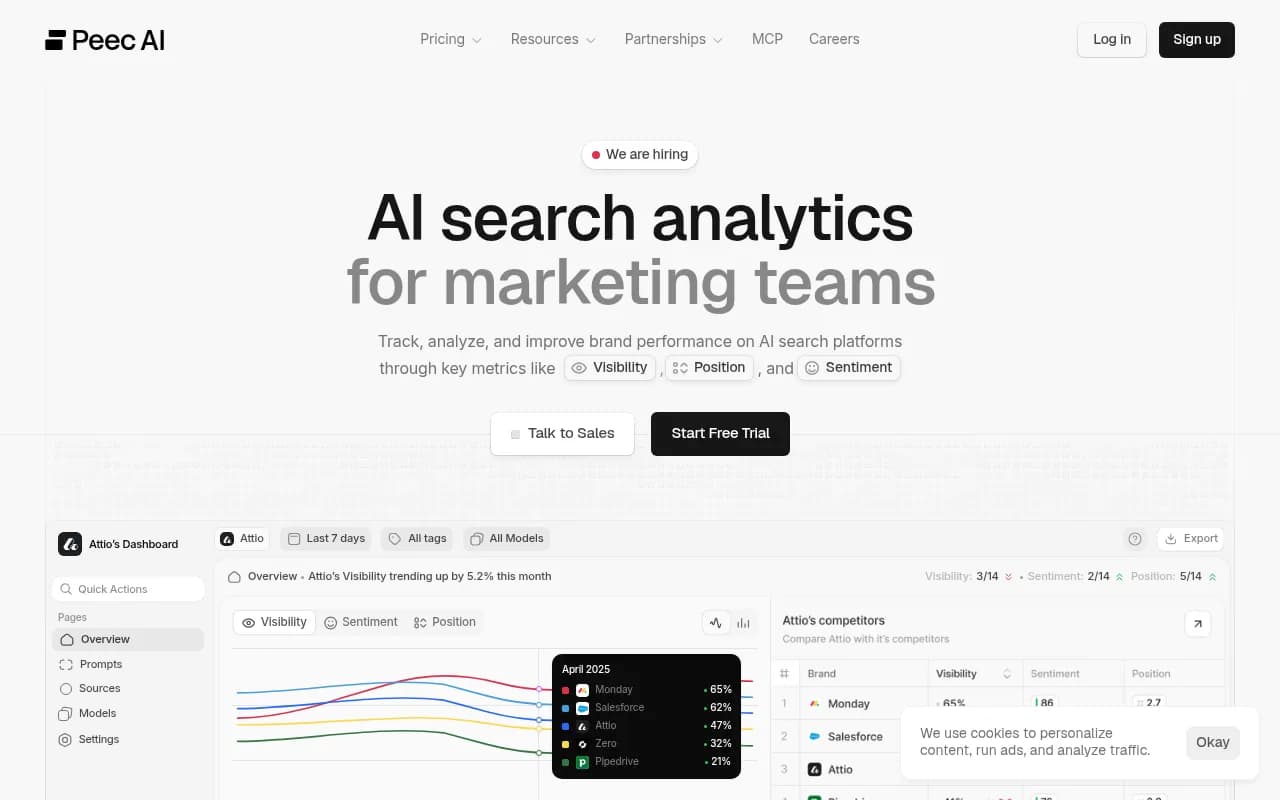
| Peec AI | ~$79/mo | No | No | No | Basic tracking |
| AthenaHQ | Custom | No | No | No | Enterprise monitoring |
| Search Party | Custom | No | No | No | Agency reporting |
A few observations from this comparison:
Scrunch sits in an awkward middle ground. It's priced like an enterprise tool but doesn't have the full feature depth of platforms like Profound. It's more capable than budget options like Otterly.AI or Peec AI, but those tools cost a fraction of the price for teams that only need basic monitoring.
The more interesting comparison is against platforms that include optimization capabilities alongside monitoring. If an agency's goal is to improve AI visibility (not just measure it), a monitoring-only tool at $300/month is a harder sell than a platform that closes the loop from gap identification to content creation to result tracking.

The monitoring-only problem
This is worth addressing directly because it's the central tension in the GEO tool market right now.
Most GEO platforms, Scrunch included, are built around the insight that AI visibility is measurable and therefore trackable. That's true. But for agencies, measurement is rarely the end goal. Clients want to know: "We were invisible here, and now we're not. Here's why."
Monitoring tools show you the first part. The second part requires content strategy, content creation, and a feedback loop that connects what you publish to changes in AI citations.
A Reddit thread on r/content_marketing from earlier this year put it plainly: "The GEO/AEO demos you're getting every other week are mostly selling Google AI Overview tracking with a LLM monitoring layer added on top. The question is whether the tool helps you do anything about what you find."
Scrunch's AXP feature is an attempt to address this, but it's still in limited pilot. Until it's widely available, Scrunch is effectively a monitoring dashboard with strong enterprise credentials.
Alternatives worth evaluating
If Scrunch's price or feature gaps are a concern, here are the tools most worth looking at depending on your situation:
For agencies that need the full optimization loop (gap analysis + content generation + tracking), Promptwatch is the most complete option in the market right now. It covers 10 AI models, includes content agents that generate articles and briefs grounded in real prompt data, and has crawler logs that show exactly how AI engines are discovering and citing your pages. The Professional plan at $249/month covers 2 sites and 150 prompts with content generation included.
For agencies that want enterprise-level analytics at a higher price point, Profound has a strong analytics layer and is worth evaluating if deep data analysis is the priority.
For smaller agencies or teams testing the waters, Otterly.AI and Peec AI offer basic monitoring at much lower price points. They won't give you the depth Scrunch does, but they're a reasonable starting point.
For agencies already deep in traditional SEO tooling, Semrush's AI Visibility Toolkit and Ahrefs Brand Radar both offer AI monitoring as part of broader SEO platforms. Neither is as specialized as Scrunch, but if you're already paying for these platforms, the incremental cost is low.
The honest verdict
Scrunch AI is a legitimate tool. The GA4 integration is genuinely useful, the multi-model coverage is solid, and the enterprise security credentials matter for certain clients. If you're running a small number of high-budget enterprise accounts and your primary deliverable is monitoring and reporting, it's a defensible choice.
But $300/month for a monitoring-only platform with beta-stage optimization features and a confusing credit system is a hard sell for most agencies in 2026. The market has moved. Clients increasingly expect their agency to not just show them where they're invisible, but to fix it.
If your agency's value proposition includes content strategy and AI optimization, you'll either need Scrunch plus additional tools (which compounds the cost) or a platform that handles the full cycle from the start.
The question isn't really "is Scrunch AI good?" -- it's "is monitoring alone worth $300/month for your specific situation?" For most agencies, the honest answer is probably not.