Key takeaways
- Most GEO platforms stop at monitoring -- they show you where you're invisible but don't help you fix it. Only a couple go further.
- Promptwatch is the only platform in this comparison that covers the full loop: gap analysis, AI content generation, crawler logs, and traffic attribution in one place.
- Profound has the deepest enterprise analytics and crawler logs, but its price point puts it out of reach for most mid-market teams.
- Otterly.AI and Peec AI are solid, affordable entry points for monitoring -- but don't expect optimization workflows.
- AthenaHQ sits in an interesting middle ground: more action-oriented than Peec AI, but still lighter on content generation than Promptwatch.
- Pricing ranges from roughly $49/mo (Otterly.AI entry) to $500+/mo (Profound), so there's a real decision to make based on what you actually need.
The GEO platform market has gotten crowded fast. In 2024, there were maybe five tools worth considering. By mid-2026, there are closer to 25, and the marketing copy has gotten so similar that it's genuinely hard to tell them apart. Every platform claims to "track your brand across AI search engines." Most of them do. The question is what happens after the tracking.
This comparison focuses on six platforms that come up most often in mid-market buying conversations: Searchable, Promptwatch, Profound, Otterly.AI, Peec AI, and AthenaHQ. These aren't the cheapest tools or the most enterprise-grade -- they're the ones marketing and SEO teams at companies with real budgets are actually evaluating.
Here's what we looked at: which AI engines each platform monitors, how deep the analytics go, whether the platform helps you act on what you find, pricing, and who each tool genuinely suits.
What these platforms actually do (and where they differ)
Before getting into the individual tools, it helps to understand the core split in this market.
There are monitoring platforms and there are optimization platforms. Monitoring platforms track your brand mentions, citation rates, and visibility scores across AI engines like ChatGPT, Perplexity, and Gemini. They give you dashboards. They show you trends. They tell you that your competitor is getting cited more than you.
Optimization platforms do all of that, then help you close the gap. They identify which specific content is missing, generate content designed to get cited, track whether that content is being crawled by AI agents, and connect visibility back to actual traffic and revenue.
Most platforms in this comparison lean toward monitoring. A few are trying to bridge into optimization. Only one has fully crossed that line.
The platforms, one by one
Promptwatch
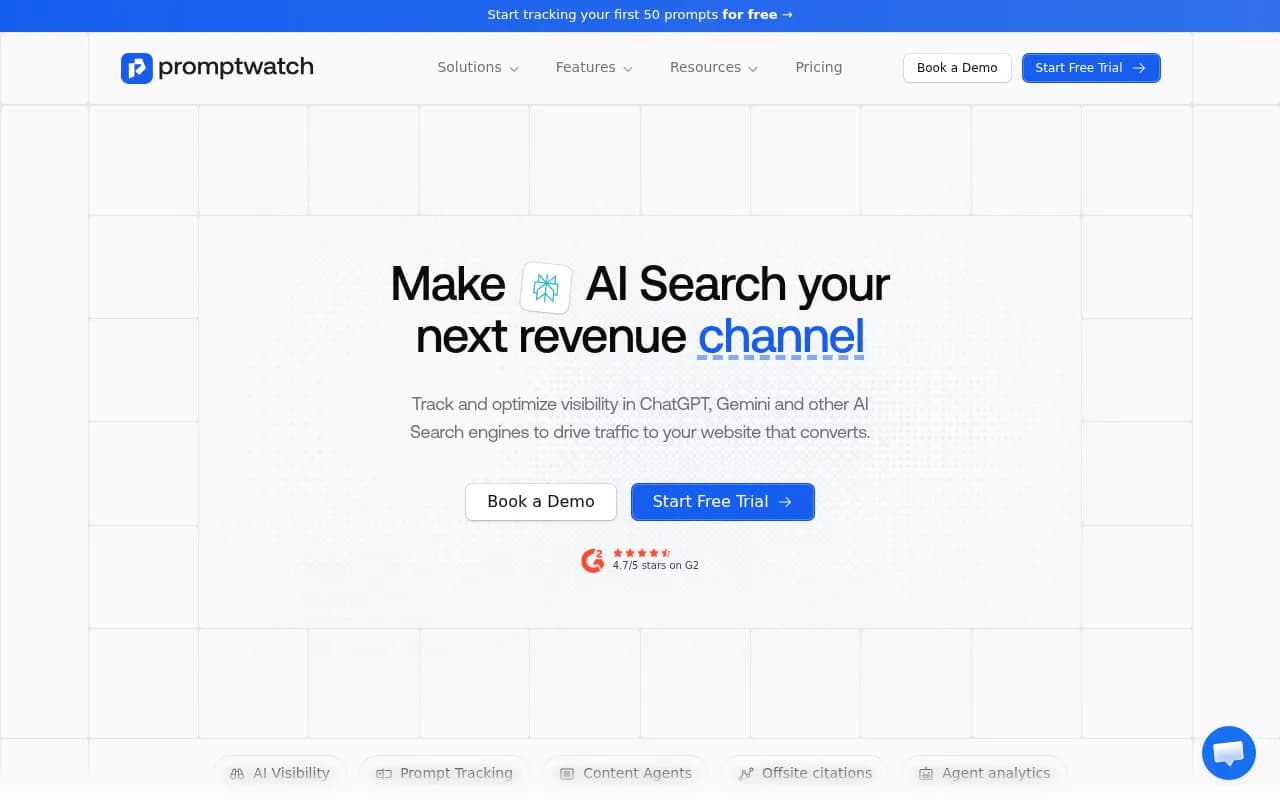
Promptwatch is the most complete platform in this comparison. It monitors 10 AI models (ChatGPT, Perplexity, Claude, Gemini, Google AI Overviews, Google AI Mode, Grok, DeepSeek, Copilot, and Meta/Llama), which is the broadest coverage of any tool here.
What separates it from the others is the action loop. The Answer Gap Analysis shows you exactly which prompts your competitors are visible for that you're not -- not just a vague "you're missing content" warning, but the specific questions AI models are answering without citing your site. From there, Content Agents generate articles, listicles, and comparison pages grounded in real prompt data, citation patterns, and competitor analysis. Then AI Crawler Logs show you when ChatGPT or Perplexity's crawlers hit your pages, what errors they encounter, and when a crawled page moves to an actual citation.
That last part -- the crawler logs -- is something most competitors simply don't have. Knowing that Perplexity crawled your page three times last week but still isn't citing it tells you something specific is wrong. Knowing it crawled and cited within 48 hours tells you your content strategy is working.
Promptwatch also has Reddit and YouTube insights (tracking discussions that influence AI recommendations), ChatGPT Shopping tracking, and page-level visibility scores. The pricing runs from $99/mo (Essential) to $579/mo (Business), with agency and enterprise plans available.
Profound
Profound is the enterprise option in this group. It has strong analytics, crawler logs, and what's described as 400M+ prompt insights powering its recommendations. It tracks 10+ AI engines and has a reputation for depth -- if you want to understand the "why" behind your AI visibility, Profound's reporting is genuinely impressive.
The catch is price. Profound sits at the higher end of this market, and for most mid-market teams, the cost-to-value equation gets complicated. It's also more of an analytics platform than an optimization one -- you get excellent data, but content generation and gap-to-fix workflows aren't its core strength.
For enterprise brands with dedicated SEO teams who want deep data and don't mind building their own optimization workflows around it, Profound makes sense. For a 10-person marketing team trying to move fast, it's probably overkill.
Otterly.AI
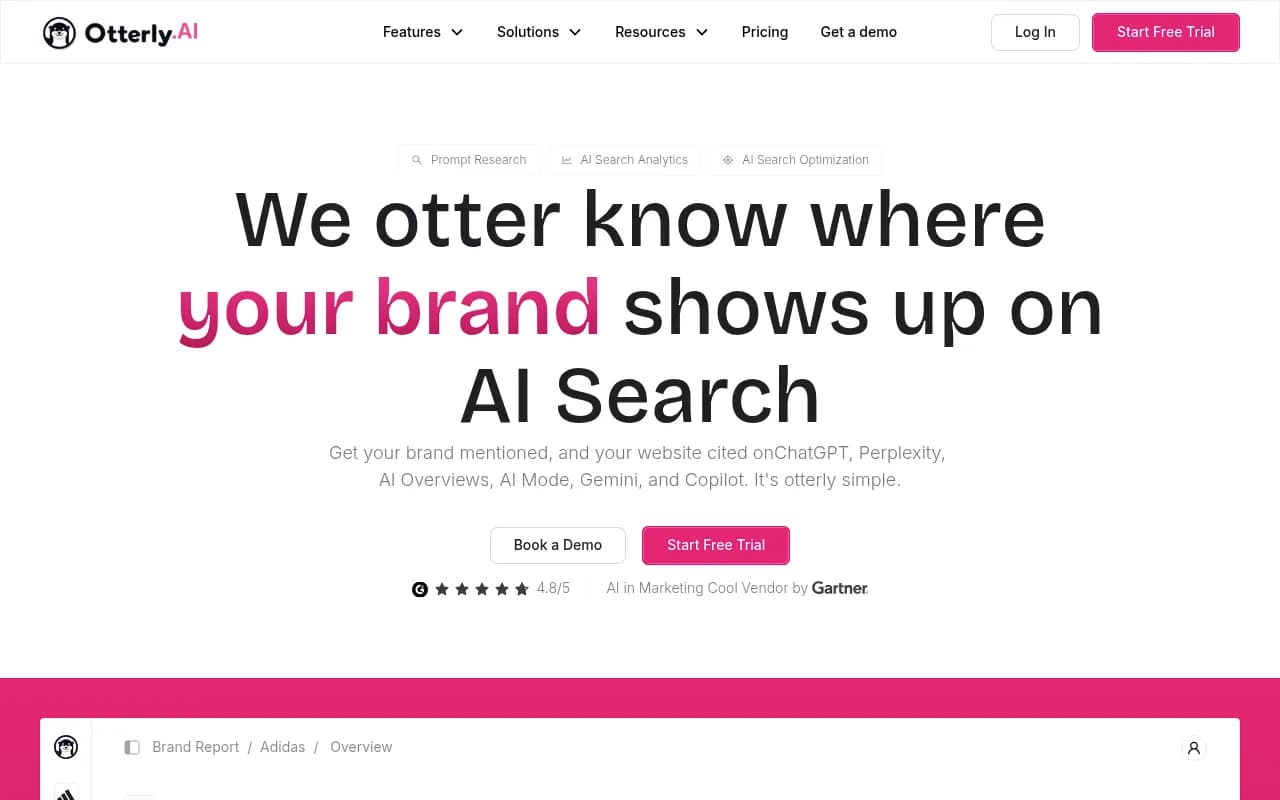
Otterly.AI is one of the more honest players in this space. It covers the core monitoring pillars well -- prompt tracking, citation analysis, multi-engine coverage, competitor benchmarking -- and its pricing is accessible. It also has an MCP server integration, which lets AI-native teams query their brand data directly from their existing workflows, which is a genuinely useful differentiator for technical teams.
Where it falls short is on the optimization side. Otterly.AI is a monitoring tool. It will tell you what's happening with your AI visibility; it won't help you change it. There's no content generation, no crawler logs (it's in beta), and limited visitor analytics. If you're early in your GEO journey and just need to understand your baseline, Otterly.AI is a reasonable starting point.
Peec AI
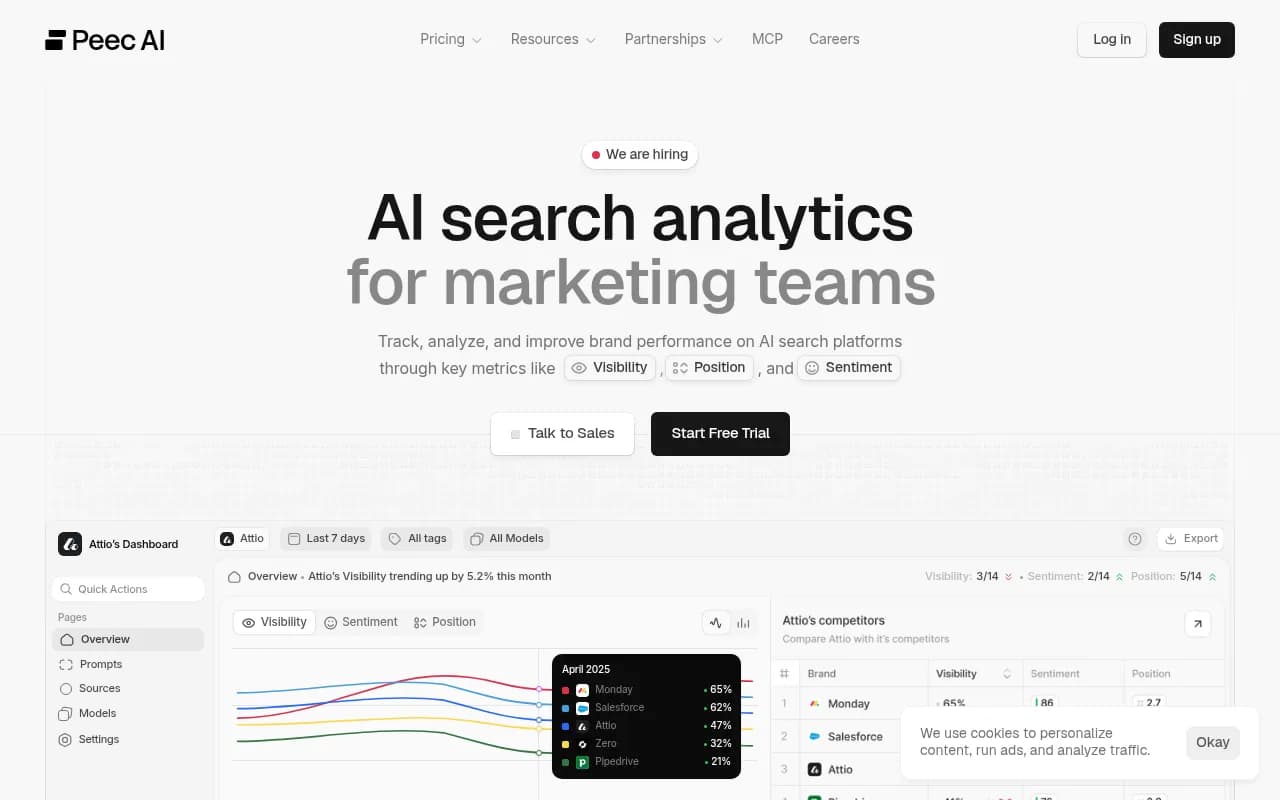
Peec AI is a monitoring and tracking platform with some content suggestion features layered on. It covers a handful of AI engines (the AthenaHQ comparison page notes "just three core platforms," though Peec has been expanding), and it gives you visibility scores, competitor benchmarking, and citation tracking.
The honest assessment: Peec AI works as a lightweight monitoring layer. It's more affordable than Profound or Promptwatch, and for teams that just want to keep an eye on their AI visibility without committing to a full optimization workflow, it does the job. But it doesn't have crawler logs, it doesn't generate content, and its API access is limited. If you outgrow basic monitoring, you'll outgrow Peec AI.
AthenaHQ
AthenaHQ sits between Peec AI and Promptwatch in terms of ambition. It covers 8+ LLMs, has a native Shopify integration for revenue attribution, and its Athena Citation Engine (ACE) can identify content gaps and draft optimizations. That's more action-oriented than Peec AI or Otterly.AI.
The revenue attribution piece is worth noting -- being able to trace an AI mention to an actual sale is something most platforms can't do, and AthenaHQ's Shopify integration makes this concrete for e-commerce brands. That's a real differentiator.
Where AthenaHQ is lighter: it doesn't have crawler logs, Reddit/YouTube tracking, or the breadth of content generation that Promptwatch offers. It's a strong choice for e-commerce brands that want to connect AI visibility to revenue, but for content-heavy brands or agencies managing multiple clients, it's less complete.
Searchable
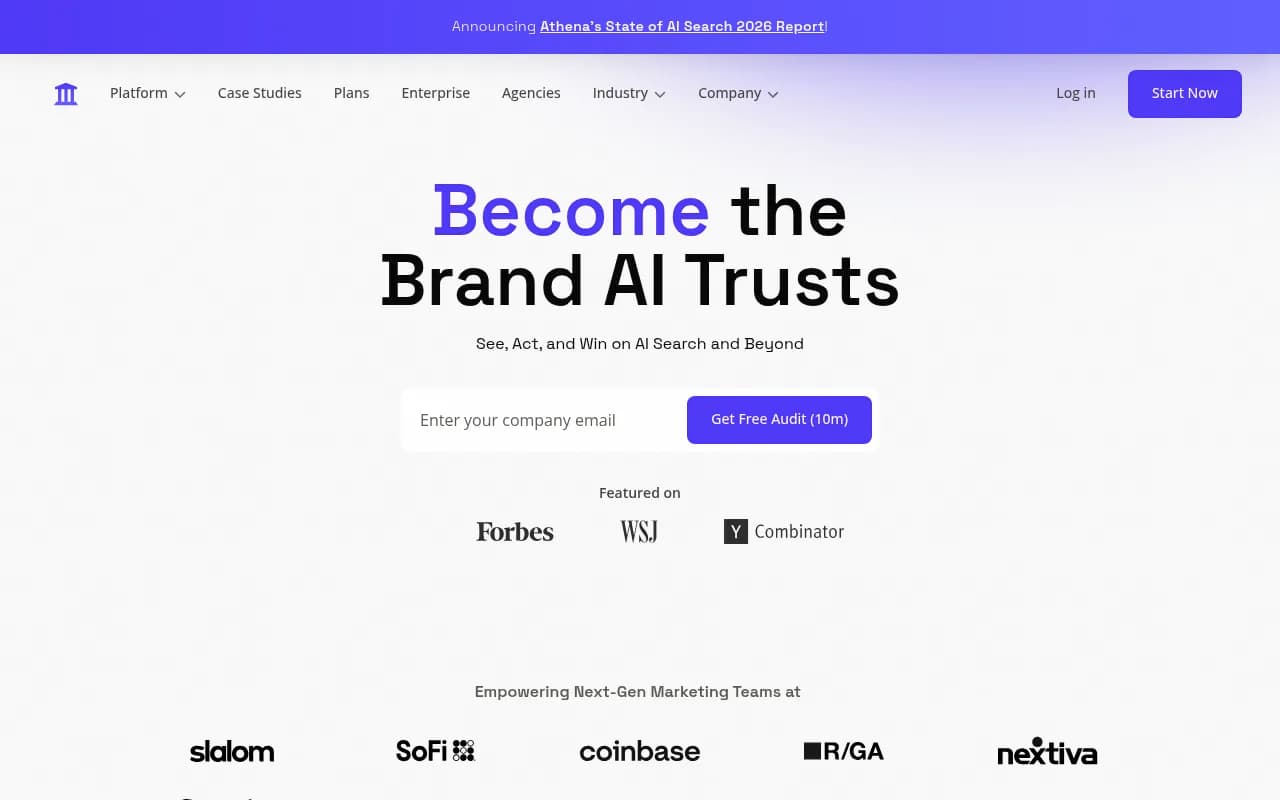
Searchable is the smallest player in this comparison. It's a niche tool focused on a specific slice of the AI visibility problem -- useful for teams that want something lightweight and focused, but missing several capabilities that the other platforms cover. It doesn't have the depth of Profound, the action loop of Promptwatch, or the revenue attribution of AthenaHQ. For teams just starting to think about GEO, it might be a low-commitment entry point, but most teams will find themselves wanting more within a few months.
Feature comparison table
This is where the differences become concrete. Here's how each platform stacks up across the capabilities that actually matter for moving from "we know we're invisible" to "we're getting cited."
| Feature | Promptwatch | Profound | Otterly.AI | Peec AI | AthenaHQ | Searchable |
|---|---|---|---|---|---|---|
| AI engines monitored | 10 | 10+ | Multi | ~3-5 | 8+ | Limited |
| Prompt tracking | Yes | Yes | Yes | Yes | Yes | Basic |
| Citation tracking | Yes | Yes | Yes | Yes | Yes | Basic |
| Competitor benchmarking | Yes | Yes | Yes | Yes | Yes | Limited |
| AI crawler logs | Yes (Pro+) | Yes | Beta | No | No | No |
| Content gap analysis | Yes | Partial | Basic | No | Yes | No |
| AI content generation | Yes | No | No | No | Partial | No |
| Reddit/YouTube insights | Yes | No | No | No | No | No |
| ChatGPT Shopping tracking | Yes | No | No | No | No | No |
| Revenue/traffic attribution | Yes | Yes | Limited | No | Yes (Shopify) | No |
| API access | Yes | Yes | Yes | Limited | Yes | No |
| Pricing (entry) | $99/mo | High | ~$49/mo | Mid | Mid-high | Low |
| Free trial | Yes | Yes | Yes | Yes | Yes | Yes |
The monitoring-vs-optimization gap
This is the most important thing to understand when evaluating these tools.
If you're just starting out with GEO and want to benchmark where you stand, any of these platforms will give you that. Peec AI, Otterly.AI, and Searchable are all reasonable choices for pure monitoring at lower price points.
But here's the problem with stopping at monitoring: knowing you're invisible doesn't make you visible. You still have to figure out what content to create, create it, get it crawled, and verify it's being cited. Most platforms leave you to do all of that manually, in separate tools, with no feedback loop.
Promptwatch is the only platform in this comparison that closes that loop natively. The gap analysis tells you what's missing. The Content Agents create it. The crawler logs confirm it's been found. The visibility scores show whether it's working. That's not a pitch -- it's just what the feature set adds up to.
AthenaHQ is making moves in this direction, particularly with its ACE engine and Shopify attribution. Profound has the analytics depth to support optimization workflows if you build them yourself. But neither has the full stack in one place.

Who should use what
This isn't a one-size-fits-all market, and the right tool depends heavily on what you're trying to accomplish.
Use Promptwatch if you want to actually improve your AI visibility, not just measure it. It's the right choice for marketing teams that are ready to treat GEO as a content strategy, not just a reporting exercise. The crawler logs alone are worth it if you're publishing new content and want to know whether AI engines are finding it.
Use Profound if you're at an enterprise with a dedicated SEO or analytics team that wants the deepest possible data and is comfortable building optimization workflows around it. The analytics are genuinely impressive; just don't expect the platform to do the optimization work for you.
Use Otterly.AI if you're early in your GEO journey, want solid monitoring without a big commitment, or your team is technically sophisticated enough to appreciate the MCP integration. It's honest about what it is: a monitoring tool with good analytics.
Use AthenaHQ if you're an e-commerce brand on Shopify and revenue attribution is your primary concern. The ability to connect an AI mention to a closed sale is valuable, and AthenaHQ does it better than anyone else in this group.
Use Peec AI if you need lightweight, affordable monitoring and aren't ready to invest in optimization yet. It's a reasonable starting point, but plan for the fact that you'll likely want more eventually.
Skip Searchable unless you have a very specific, narrow use case it happens to cover. For most teams, one of the other platforms will serve you better.
A note on pricing reality
Pricing in this market is genuinely confusing because most platforms don't publish full pricing, and the entry-level tiers often have prompt limits or site limits that make them impractical for real use.
Promptwatch's $99/mo Essential plan covers 1 site and 50 prompts -- workable for a single brand just getting started. The $249/mo Professional plan (2 sites, 150 prompts, crawler logs) is where most mid-market teams will land. Profound's pricing is higher and less transparent. Otterly.AI is more accessible at the entry level. Peec AI and AthenaHQ sit in the middle.
The more useful question than "what does it cost?" is "what does it cost per insight that I can actually act on?" By that measure, a monitoring-only tool at $100/mo that tells you you're invisible but doesn't help you fix it is more expensive than an optimization platform at $249/mo that closes the loop.
The bottom line
The GEO platform market in 2026 has a clear split: tools that show you data, and tools that help you do something with it. Most platforms in this comparison are in the first category. That's not a criticism -- monitoring is genuinely useful, especially for teams building their first baseline.
But if you're past the "let's see where we stand" phase and into "let's actually improve our AI visibility," the platform choice matters a lot. Promptwatch is the only one here that covers the full cycle from gap identification to content creation to crawl verification to citation tracking. Profound is the deepest on analytics. AthenaHQ is the best for e-commerce revenue attribution. Otterly.AI and Peec AI are solid entry points.
Pick based on where you are in your GEO maturity, not just which dashboard looks nicest.