Key takeaways
- For most agencies, buying the measurement layer (prompt tracking, citations, crawler logs) and building only the thin layer on top (reporting, workflows, client-specific analysis) is the sensible default.
- AI engines change behavior often enough that any tracker you build needs ongoing re-validation. That maintenance is the hidden cost, not the first prototype.
- Building makes sense in narrow cases: unusual data needs, a developer-heavy team, or a proprietary product you plan to sell.
- Agency pricing, the number of client domains, and white-label needs should drive the decision more than engineering pride.
- Run a 30-day pilot with a bought platform before you commit engineering hours to anything.
The real question agencies are asking
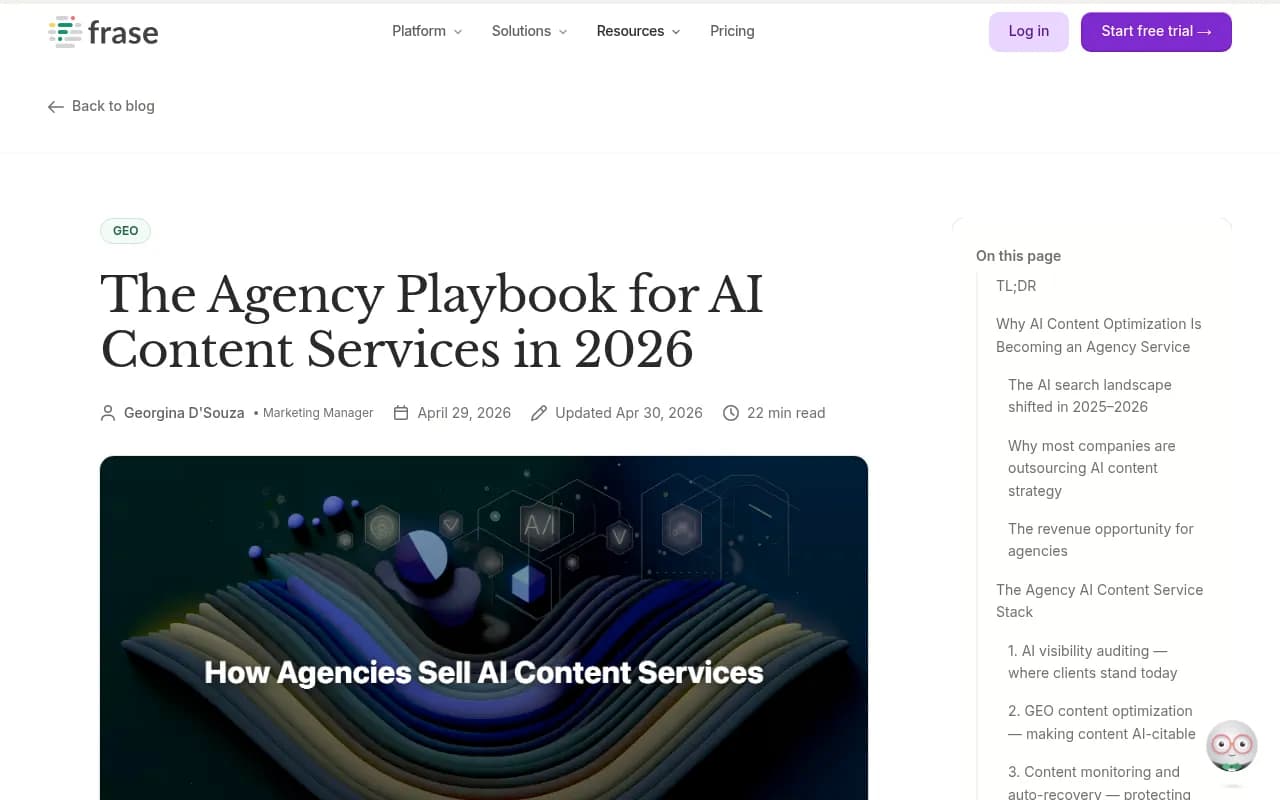
Clients stopped asking "can you rank us?" and started asking "why are we not showing up in ChatGPT?" Frase's 2026 agency playbook puts numbers on the shift: AI-sourced traffic grew 527% year over year between early 2025 and early 2026, per Previsible's AI Traffic Report, and the same playbook suggests selling AI optimization as a 20% to 30% uplift on existing retainers. Whether or not you buy those exact figures, the demand is real, and agencies now need a way to deliver it.
Delivery needs tooling. So the argument starts: do we assemble it ourselves with APIs, scrapers and a dashboard, or pay for a platform?
I lean toward buying for most agencies. But the answer is not the same for a five-person boutique and a 200-person network, so let's go through it properly.
What "AI search tooling" actually includes
People underestimate the scope. A usable stack has several layers, and each is its own build project:
- Prompt tracking: running a fixed set of prompts across ChatGPT, Gemini, Perplexity, Claude, Google AI Overviews and others, daily, per country and language.
- Citation and source analysis: which pages and domains get cited, and where yours lands in the source list.
- Crawler log analysis: identifying which AI bots hit a client site, verifying they are real, and spotting errors.
- Traffic attribution: tying AI referrals to conversions.
- Content gap analysis and production: mapping client pages against the prompts AI answers, then writing and publishing.
- Reporting: white-label dashboards and PDFs clients will actually read.
Most in-house projects start with the first bullet because it looks easy. A script, an API key, a spreadsheet. It works for a week.
The case for building
Building is not irrational. It has real upsides in the right conditions.
Control and differentiation
If your agency's pitch is a proprietary methodology, owning the data pipeline lets you ask questions no off-the-shelf dashboard supports. Some agencies sell their tooling as a product in its own right. In that case you are not choosing between build and buy; you are running a software company next to an agency.
Unit economics at very large scale
At thousands of prompts across dozens of clients, per-seat or per-response pricing adds up, and raw API costs can look cheaper on paper. I could not find reliable public benchmarks for the all-in cost of running prompts at that scale, so model it with your own volumes rather than trusting a blog number.
Developer capacity you already have
If you already employ engineers with idle time and a data warehouse, an internal build is cheaper than it would be for a team that has to hire.
The case against building
The target keeps moving
Promptwatch's data shows how unstable the thing you would be measuring is. In Promptwatch's average sources per response data, ChatGPT cites about 5 sources per web-search answer, while Google AI Overviews and Perplexity sit near 10. Copilot's average swung from under 2 to nearly 17 sources within a few weeks before settling low, which Promptwatch reads as Microsoft still rebuilding its retrieval. Every swing like that means your homemade tracker needs re-validation.
Fanouts move too. According to Promptwatch's ChatGPT query fanout data, average fanouts per response were 2.15 in early December 2025 and about 1.84 by early March 2026, and average query length dropped from roughly 117 characters to the high 80s, then about 53 by April. And Promptwatch Data on the site: operator shows ChatGPT jumping from ~0.4% to ~17% of fanout queries using site: overnight on August 8, 2026. If your prompt simulation logic assumed the old behavior, it was wrong by lunchtime.
UI data versus API data
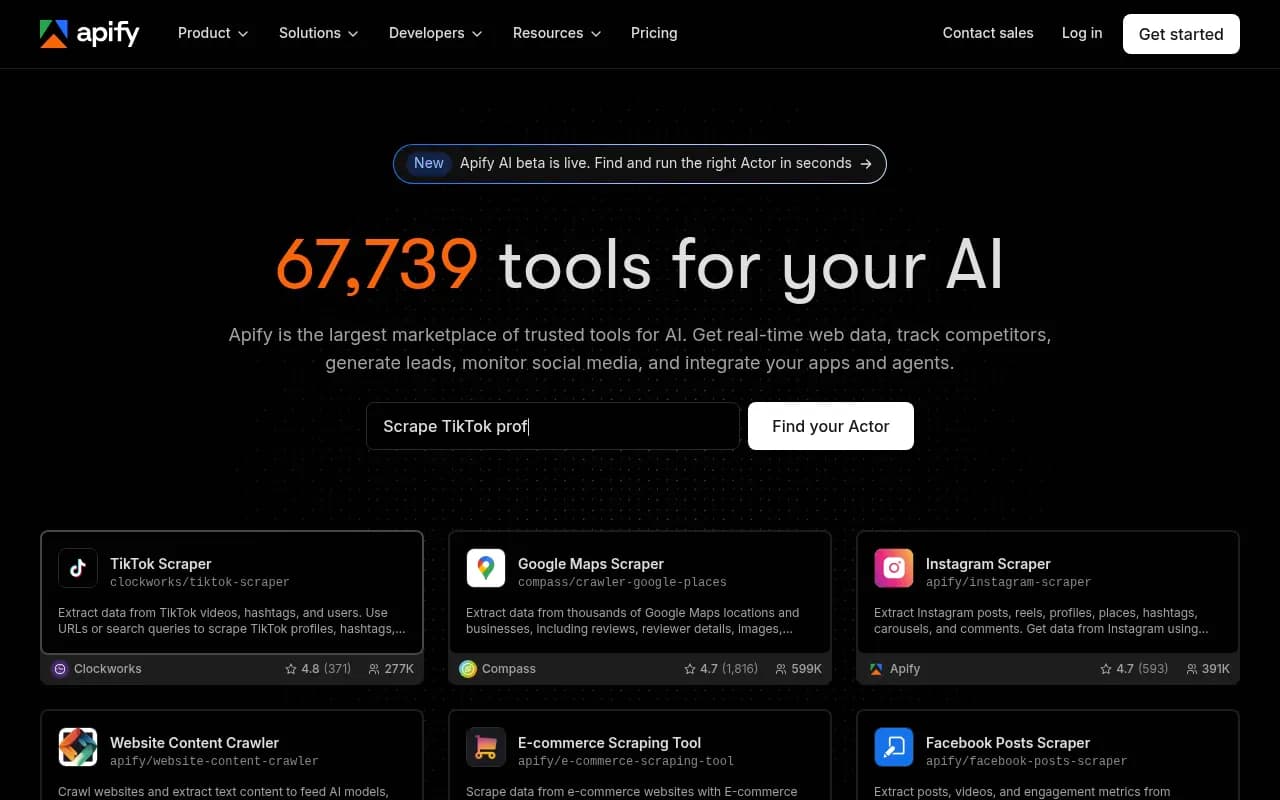
Answers users see in the actual interface can differ from API outputs. Platforms that monitor real interfaces have solved scraping, anti-bot handling and per-country routing. Rebuilding that is a project, and keeping it alive is a permanent job. If you do go the DIY route, scraping infrastructure such as Bright Data, Apify or Firecrawl can reduce the pain, but you still own the logic.


Crawler logs are real engineering
Verifying AI bots means matching requests against each operator's published IP ranges, since user agents are trivially spoofed. Promptwatch's AI crawler traffic data only counts requests from verified IPs, and found OpenAI's share of verified AI crawler requests fell from 94.8% in the week of June 8 to 79.8% in the week of August 31, 2026. That kind of shift matters, and so does the ingestion pipeline behind it: Cloudflare, Vercel, Fastly and raw server logs all format data differently.
Hiring is harder than it looks
Indexable analyzed 29 public AI-visibility job postings from June to August 2026 and found 17 asked for eight or more specialisms in a single role. If you cannot write a sane job description for the person who maintains the tooling, you cannot easily staff the build.
Build vs buy at a glance
| Factor | Build in-house | Buy a platform | Hybrid |
|---|---|---|---|
| Time to first client report | Weeks to months | Days | Days |
| Upfront cost | Engineering salaries | Subscription | Subscription plus light dev |
| Ongoing maintenance | High, constant re-validation | Vendor's problem | Low to moderate |
| Data from real AI interfaces | Hard to replicate | Included on mature platforms | Included |
| Crawler log verification | Custom pipeline | Often built in | Built in |
| White-label client reporting | You build it | Varies by vendor | Platform plus custom layer |
| Differentiation | Highest | Lowest | Medium |
| Best for | Product-minded agencies | Most agencies | Agencies with some dev capacity |
What buying looks like in 2026
The market splits roughly into three types, and it is worth knowing which you are shopping for.
Monitoring-only trackers
They answer "was my client mentioned?" Tools like [tool:otterly-ai] and [tool:peec-ai] sit here, as do [tool:rankscale] and [tool:ziptie]. They are cheap and fast to adopt. Fine if reporting is all you need, limiting if you also have to fix the problem.
Enterprise monitoring suites
[tool:profound], [tool:scrunch-ai] and [tool:brandlight] offer deeper analytics, typically at higher price points. Agencies serving enterprise clients with procurement requirements often shortlist these.
SEO suites adding AI modules
[tool:semrush-ai-visibility-toolkit], [tool:ahrefs-brand-radar], [tool:se-ranking-visible] and [tool:seomonitor] add AI tracking to tools your team already uses. Convenient, though prompt sets and depth of AI-specific data are usually more limited than purpose-built platforms.
Optimization platforms that also do the work
This is the category I would look hardest at if you sell outcomes rather than reports. Promptwatch tracks the real interfaces of ChatGPT, Google AI Overviews, AI Mode, Gemini, Perplexity, Copilot and others, and adds IP-verified crawler logs, visitor analytics, content gap analysis and a Content Agent that publishes to WordPress, Webflow or Framer. The agency plans (Kick-off $199, Growth $399, Scale $799 per month) include unlimited projects, 10 seats, Agent Chat, white-label reporting and an MCP server and API, so you can still build your own layer on top. Check promptwatch.com/pricing before you budget.

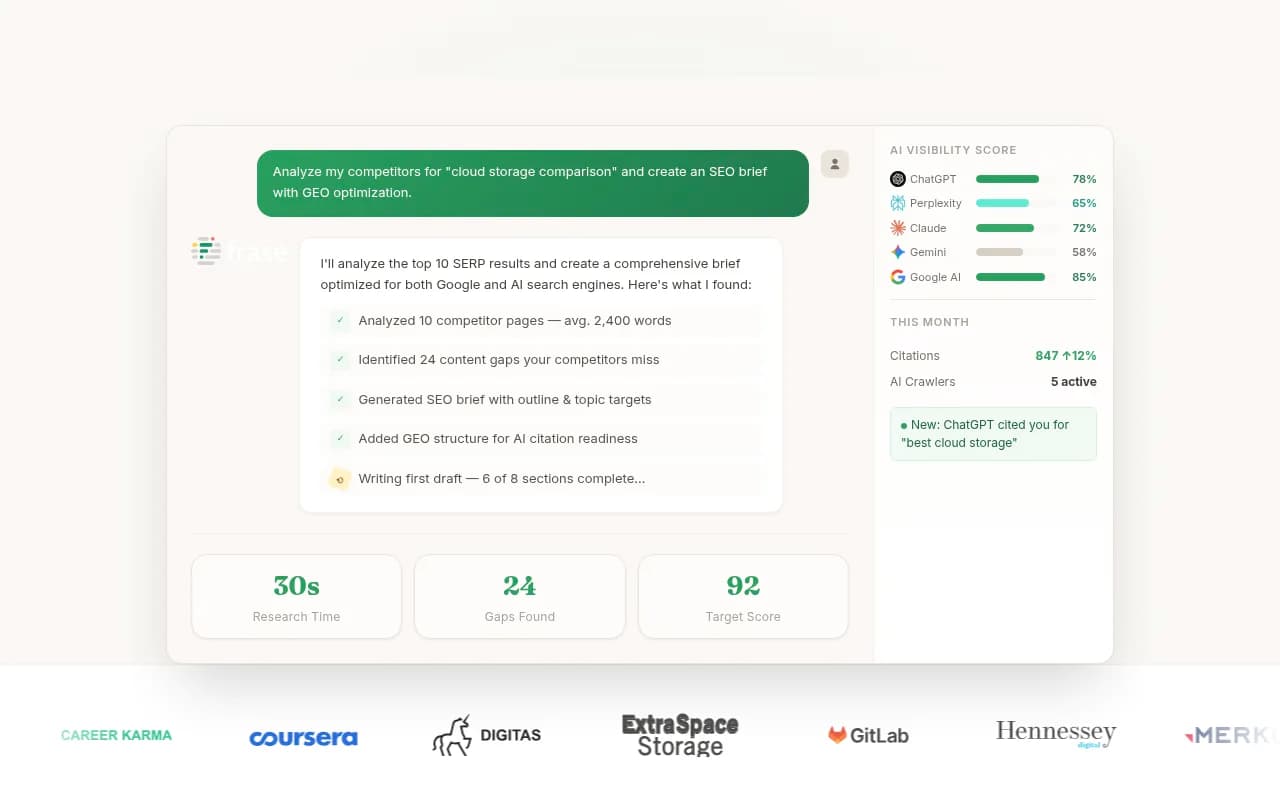
On the content side, [tool:frase] is aimed at agencies selling AI content services; Frase says its $299/month plan bundles AI visibility tracking, Content Guard with auto-fix, multi-domain workspaces, API access and brand voice profiles. [tool:search-party] and [tool:scrunch] are also pitched at agencies. For a wider view, the GEO software directory at bestgeosoftware.com and the AI rank tracking directory at ai-rank-tools.com list far more options than fit here.
Do the math with your own numbers
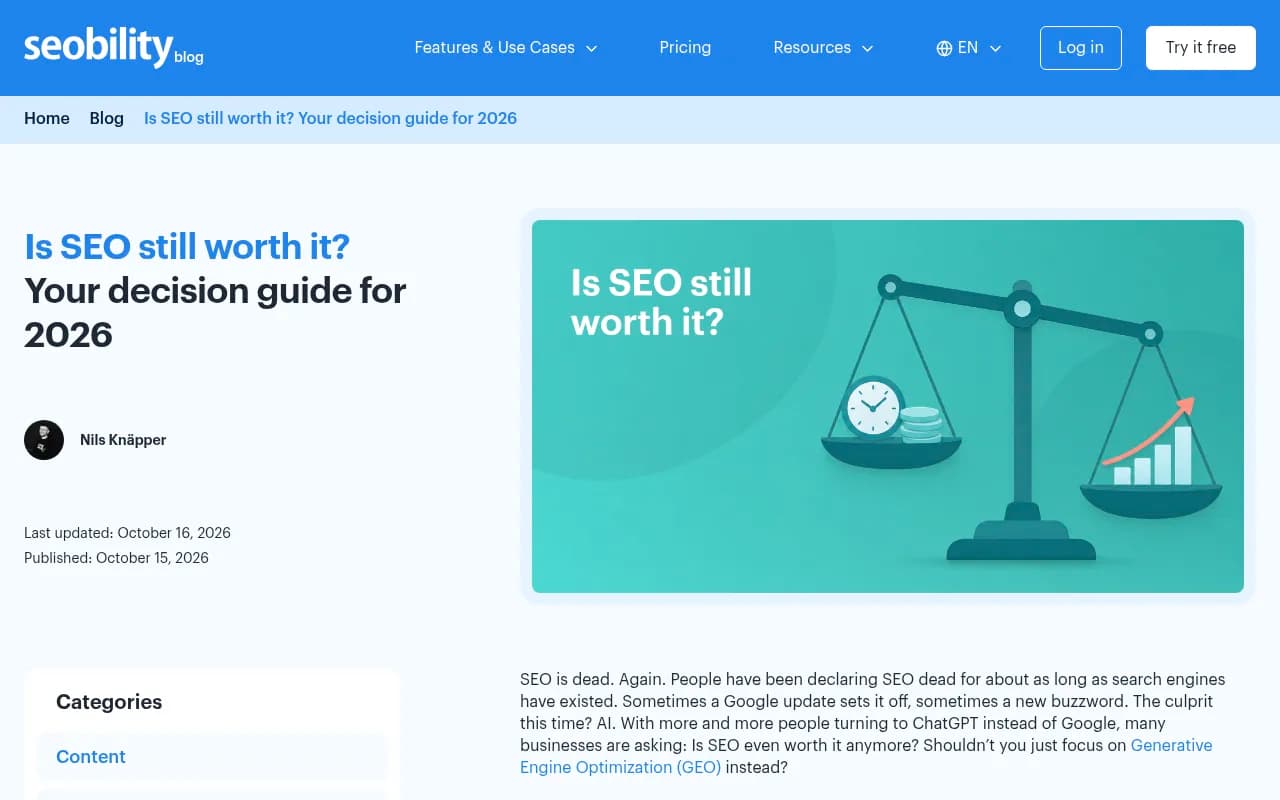
Working numbers help more than opinions. Seobility puts SMB agency retainers at roughly $1,500 to $5,000 a month and a DIY tool stack at $100 to $600 a month. GEO Toolbox lists an in-house hire at $70,000 to $110,000 a year plus tools. Use those as anchors.
A simple way to frame it:
- Count client domains and prompts per client. Multiply by daily runs across the engines and countries you need.
- Price a platform for that volume. Agency plans with unlimited prompts and projects often cap responses instead, so check the response limit.
- Price the build: one engineer at, say, a fraction of $100K per year for initial work, plus the maintenance fraction every quarter after. Do not forget the cost of scraping infrastructure and proxies.
- Add opportunity cost. Every engineering week spent on a tracker is a week not spent on client work.
For most agencies below a few dozen clients, the platform wins this comparison by a wide margin, and it usually wins on time to revenue before cost even enters.
When building is the right call
Build, or at least build heavily, when:
- You plan to sell the tooling as a product, not just use it.
- You have engineers on payroll and a data stack already.
- Clients demand on-premise or unusual data handling that no vendor meets.
- You need a metric no platform offers, and the metric is core to your pitch.
Buy when:
- You need to onboard clients this quarter.
- Your team is strategists and writers, not engineers.
- Security reviews matter. Certifications such as ISO/IEC 27001 and GDPR compliance are things enterprise clients ask about, and a homemade stack has neither.
- You want real-UI data rather than API outputs.
The hybrid model most agencies should use
The sensible middle: buy the collection layer, build the interpretation layer.
Pick a platform with an API or MCP server, pull data into your own warehouse or Looker Studio, and build the things that make your agency distinct: custom scoring, client-specific playbooks, proprietary reporting templates. You keep differentiation without maintaining scrapers.
Some concrete hybrid ideas:
- Weekly briefings generated from platform data and delivered to clients in Slack.
- A cross-client benchmark you maintain from anonymized platform exports.
- Internal checklists that combine crawler errors with content gaps, so strategists work from one prioritized list.
If you want to prototype cheaply before committing, open-source trackers like [tool:elmo] and [tool:ai-monitor] let you learn what the data looks like without paying for a platform. Just treat them as learning tools, not delivery infrastructure for paying clients.

Questions to ask any vendor
- Does it monitor the real user interface or only API outputs?
- How often are prompts run, and across which countries and languages?
- Are crawler logs IP-verified?
- Can I connect traffic and conversions, or only mentions?
- Is there white-label reporting and branded client access?
- What does the API or MCP integration cover, read-only or write too?
- How does pricing scale with prompts, responses and clients?
- What happens to my data if I leave?
The last one is the question people forget. Export access (CSV, API) is your insurance against lock-in, and it is also what makes a hybrid approach possible.
A 30-day way to decide
Don't debate this for a quarter. Run a pilot.
- Week 1: pick three existing clients and freeze a prompt set of 20 to 50 each. Start a trial on a platform. Many have a 7-day free trial or a free tier.
- Week 2: connect crawler logs and analytics. Note how long setup takes and where it breaks.
- Week 3: produce a real client report from the data. Time how long it takes your team.
- Week 4: estimate what replicating just this would cost to build. Include maintenance.
If the build estimate still looks good after that, you have evidence. If it does not, you saved yourself a project.
Do not skip the fundamentals
One caution from GEO Toolbox is worth repeating: paying for off-site citation work while AI crawlers cannot reach a client's pages is buying the roof before the walls. Tooling, built or bought, will surface that problem, but someone still has to fix crawlability, structured data and answer-first content. Tools measure. People and agents execute.
Verdict
For most SEO agencies in 2026, buy. The moving target (engine behavior, fanout changes, crawler mix shifting month to month) makes homemade tracking a maintenance trap, and the revenue is in the client work, not the plumbing. Build only the layer that makes your agency different, and use a platform's API to feed it. If you are weighing platforms right now, start with an agency-friendly one, run the 30-day pilot, and keep your exit options open through data exports.
And if you are on the other side of this decision, a brand deciding whether to hire an agency at all, the same logic holds: the question is who owns execution, and whether the tooling comes with it. 1001 SEO Media works with clients on exactly that split between strategy, tooling and delivery.