Key takeaways
- Agentic GEO means the platform plans, executes, and publishes optimization work with minimal human intervention. A scheduled script that pings ChatGPT and emails you a chart is not an agent.
- Forrester's 2026 research found three-quarters of enterprises are adopting agentic AI, but only a small minority run anything meaningful in production. The GEO tool market mirrors this: lots of agent-washing, few real agents.
- The litmus test: does the platform take actions that change your website, content, or citations on its own, or does it only produce reports for humans to act on?
- Platforms with genuine agentic capabilities in 2026 include Promptwatch (Content Agents with CMS publishing, Agent Chat, Unified Actions), Open Forge AI, AirOps, ReachLLM, and Outrank.
- Most prompt trackers, including several well-known names, remain monitoring tools with the word agent added to their marketing pages.
The agent-washing problem
Somewhere in the last eighteen months, every GEO and AI visibility vendor discovered the word agentic. It's now on landing pages, pricing pages, and webinar titles across the entire category. The problem is that most of what's being sold as agentic is a cron job that calls the ChatGPT API on a schedule, saves the output to a database, and renders it as a line graph.
That's a scheduled API call. It's useful, honestly. Tracking your brand's visibility across ChatGPT, Gemini, and Perplexity over time has real value. But it's monitoring, and calling it agentic is the same move we saw a decade ago when every SEO tool bolted on the word intelligence.
The broader market is dealing with the same inflation. Forrester's research on the state of agentic AI in 2026 found that three-quarters of enterprise leaders say they're adopting agentic AI, but only a small minority have anything running in meaningful production beyond what Forrester analyst calls agentish chatbots. The technology has arrived; the marketing has outrun it.

GEO platforms are a miniature version of that story. So let's draw the line properly.
What agentic GEO actually means
An agent, in the engineering sense, is a system that takes actions toward a goal with some autonomy. It observes a state, decides what to do, does it, checks the result, and repeats. LangChain's State of Agent Engineering report frames the hard part well: the reliability work, the evals, the orchestration. Anyone can call a model. Building a system that repeatedly takes correct actions in your production environment is the actual discipline.
For a GEO platform, being agentic means closing this loop:
- Observe: detect where you're invisible, which prompts you're losing, which pages get crawled but never cited.
- Decide: prioritize what to fix based on impact, not just list everything.
- Act: write the content, update the page, fix the technical issue, or trigger the workflow itself.
- Verify: re-check visibility after the action and learn whether it worked.
A monitoring tool stops at step 1 and emails you a PDF. A real agentic GEO platform gets to step 3, ideally step 4. The distinction matters because the bottleneck in GEO right now isn't data. Everyone has dashboards. The bottleneck is execution: someone has to write the answer-gap content, update the thin pages, and keep doing it every week. Teams that bought monitoring tools in 2025 discovered this the hard way in 2026.
The spectrum: three tiers of agentic claims
Most platforms in this market fall into one of three buckets. I'd argue you should price them differently, evaluate them differently, and staff around them differently.
| Tier | What it actually does | What the marketing says | Fair price anchor |
|---|---|---|---|
| Scheduled tracker | Runs prompts against model APIs on a schedule, stores results, charts them | AI-powered brand intelligence, sometimes agentic monitoring | Low per-response cost |
| Assisted optimizer | Monitoring plus suggestions, briefs, and content drafts that a human must write and publish | Agentic content engine | Mid-tier, priced per seat or site |
| Agentic platform | Plans, writes, publishes to your CMS, and prioritizes next actions with limited human review | Agentic GEO / AI search optimization platform | Premium, priced on outcomes and volume |
The uncomfortable truth is that tier one dominates the market by headcount. That's fine. Trackers are a legitimate product. The problem is only when tier one products carry tier three pricing and messaging.
Platforms with real agents in 2026
This is the short list, and it's shorter than the market would have you believe.
Promptwatch
Promptwatch is the clearest example of the full loop in this category. Its Content Agents plan GEO-optimized content from your visibility and citation data, write it, and publish it directly to Webflow, Framer, or WordPress on a schedule you control, either through a review inbox or fully automated. The input to that planning isn't a guess: the platform tracks over 4.5 billion citations, clicks, and prompts, and its crawler logs show exactly which of your pages AI systems read and which ones hit errors before they could be cited.

Two things separate this from agent-washing. First, the agents act on proprietary diagnostic data, crawler logs and citation analytics, rather than just generating articles from a keyword list. Second, there's a verification layer: Unified Actions turns your visibility, citation, and crawl data into a prioritized to-do list, and Agent Chat lets you interrogate the data conversationally, including from Slack. The platform is used by 1,840+ brands and agencies and rates 4.7/5 on G2, and customers like Crisp scaled to 5-10 published articles per day while seeing 2x higher conversion rates from AI traffic than from traditional channels. That's an execution story, which is the only kind of story that counts for agentic claims.
Open Forge AI
Open Forge AI is one of the few platforms built explicitly around agents that grow brand visibility in AI search. Worth a look if you want a newer, agent-first entrant.

AirOps
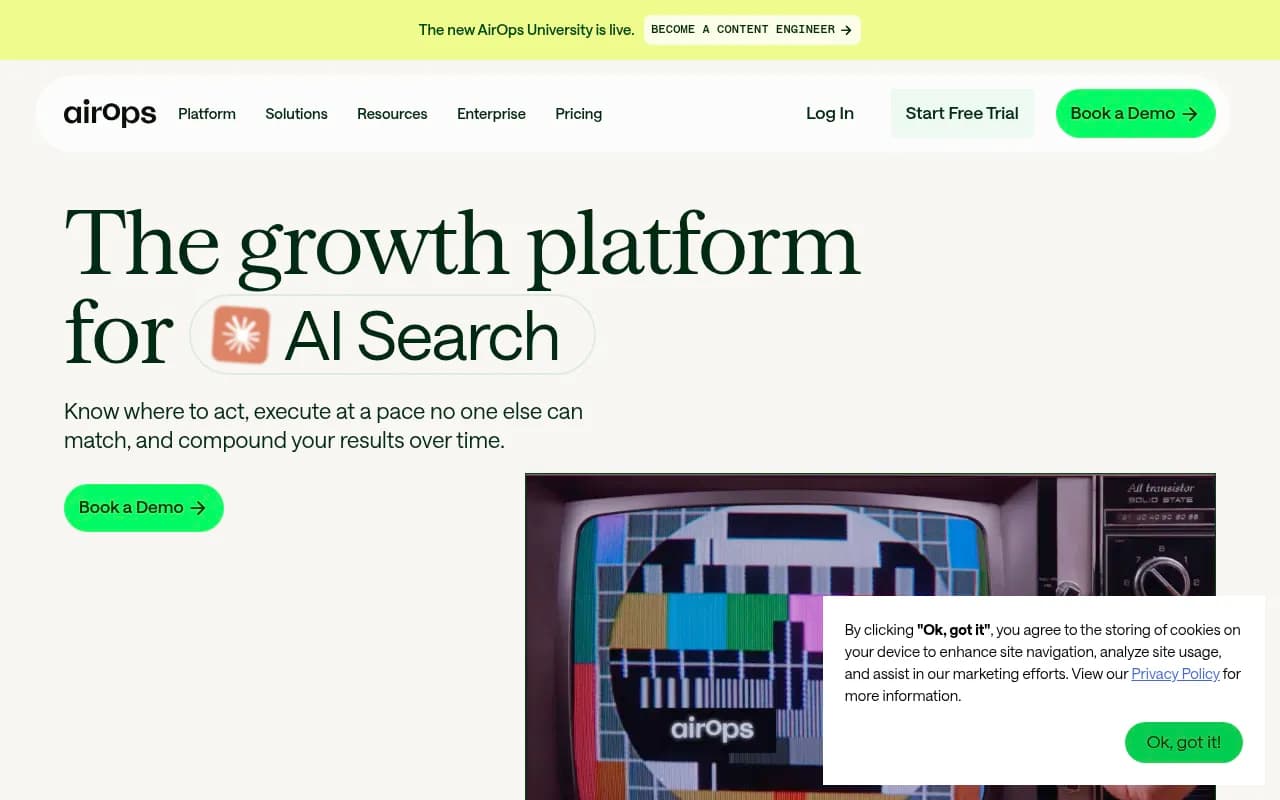
AirOps sits on the content side of the spectrum: it builds AI content workflows that connect to your data and orchestrate multi-step generation and publishing. It's less an AI visibility monitor and more an execution layer, which is exactly why it pairs well with a diagnostics-heavy tracker. The gap to watch: without citation and crawler data grounding the workflows, the agents are optimizing blind.
ReachLLM
ReachLLM markets itself as AI-native GEO software combining visibility tracking with execution, which is the right shape. If you're evaluating it, press on the execution half: does it publish, or does it hand you drafts?

Outrank
Outrank automates SEO content production and backlinks end to end. It's more traditional-search-flavored than pure GEO, but the automation model is genuinely agentic in the sense that matters here: work gets done without you doing it.

Platforms that are (still) monitoring tools
None of these are bad products. Several are good ones. But if you're paying for agents, you should know what you're holding.
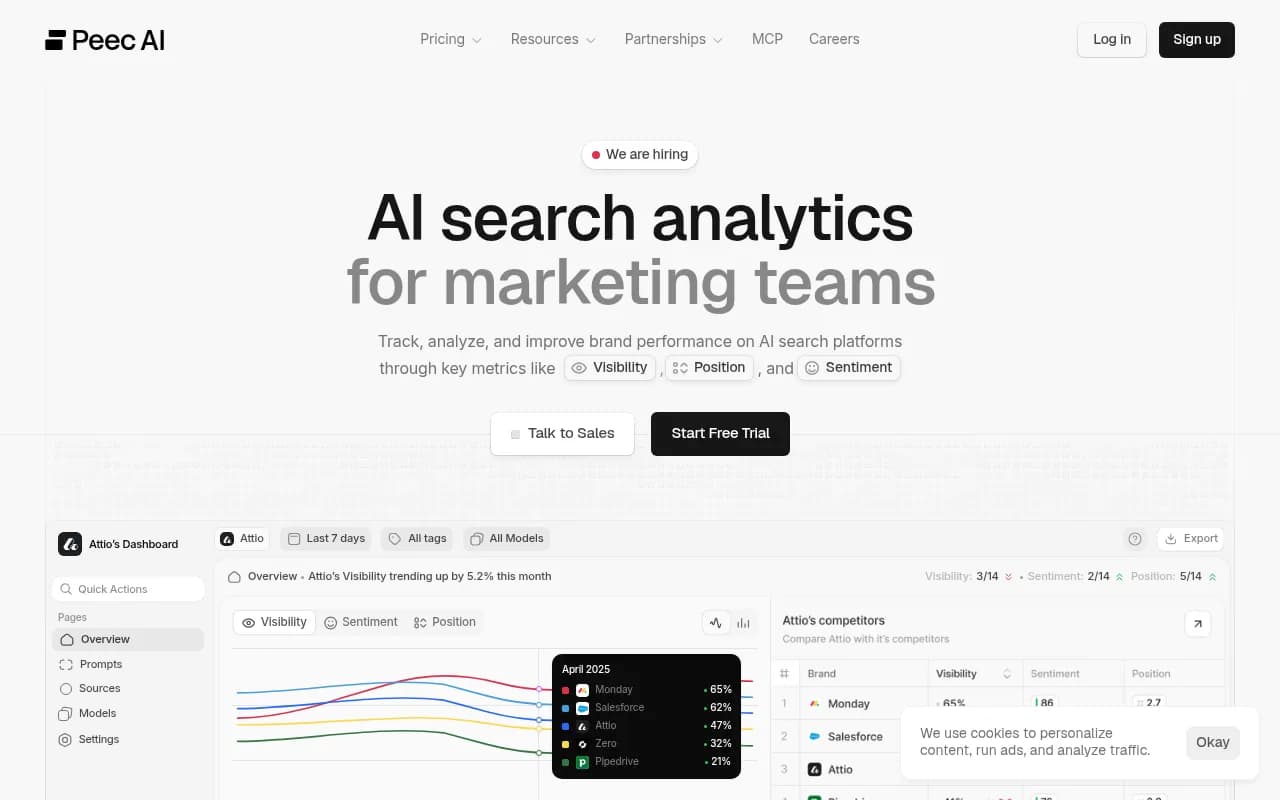
- Peec AI does AI visibility tracking with smart suggestions. The suggestions part is real and useful, but a suggestion is a step 2 output. A human still writes and publishes.
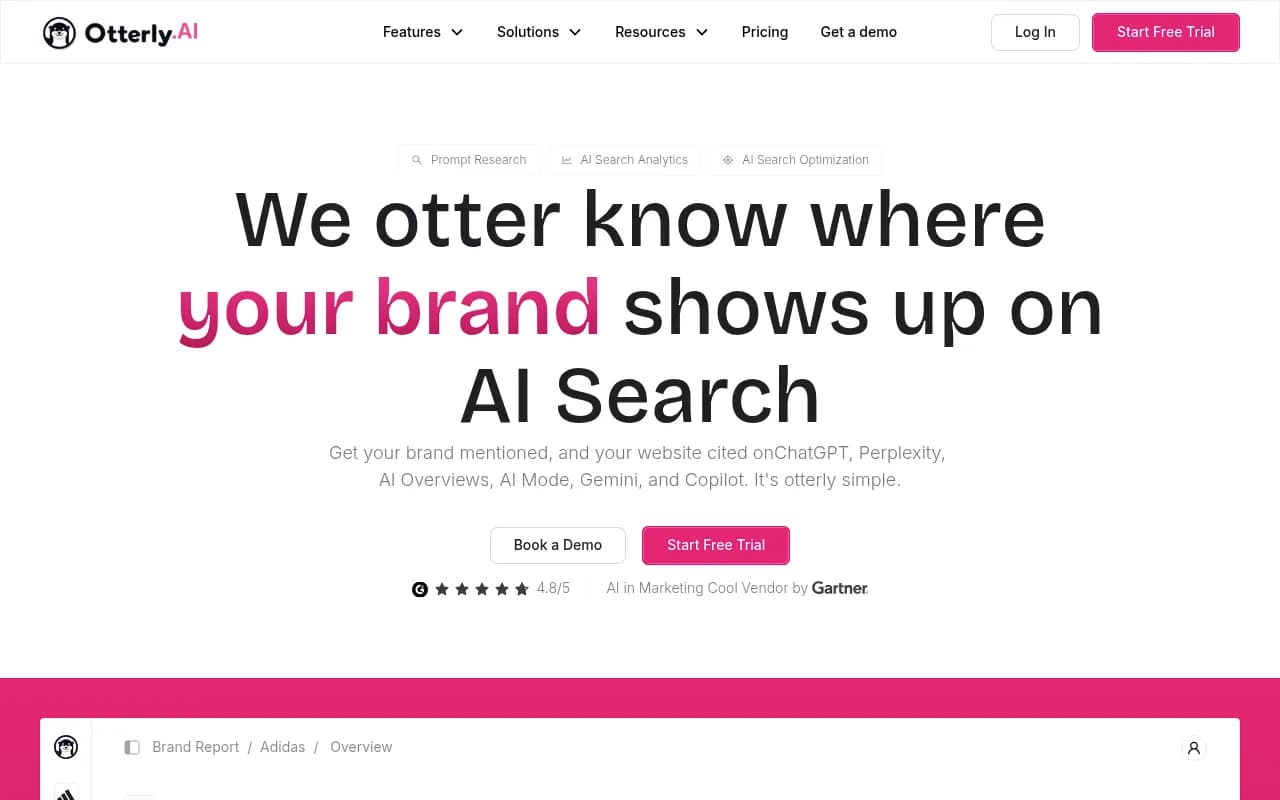
- Otterly.AI is an affordable brand visibility monitor. Solid at what it does, and priced accordingly. No crawler logs, no visitor analytics, no content generation.
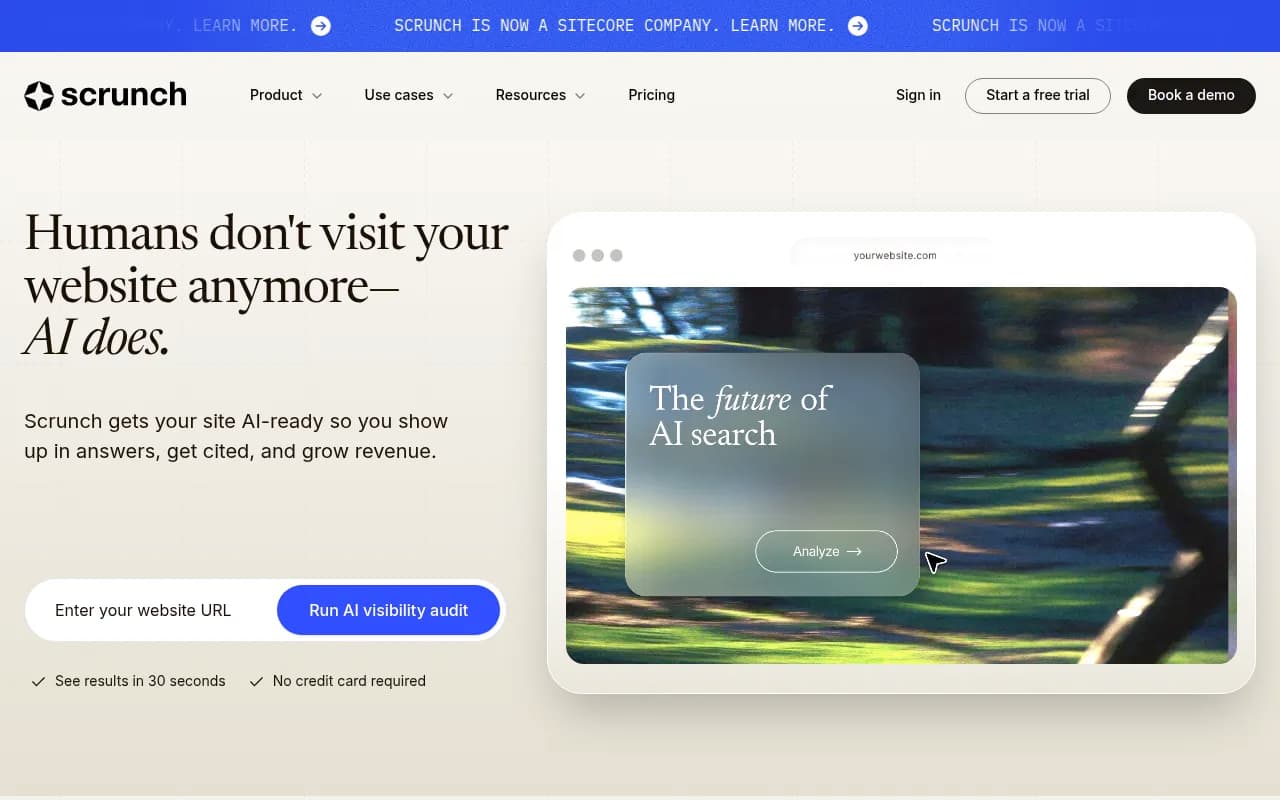
- Scrunch AI has one of the stronger monitoring feature sets in the market for brands and agencies, but the execution side is thin, and there's no Reddit tracking or ChatGPT Shopping coverage.
- Profound is the enterprise monitoring name in the category. Great analytics for large teams. The agentic story, where it exists, is bolted on.
- AthenaHQ and Qwairy are monitoring-focused platforms without CMS publishing or agentic workflows.
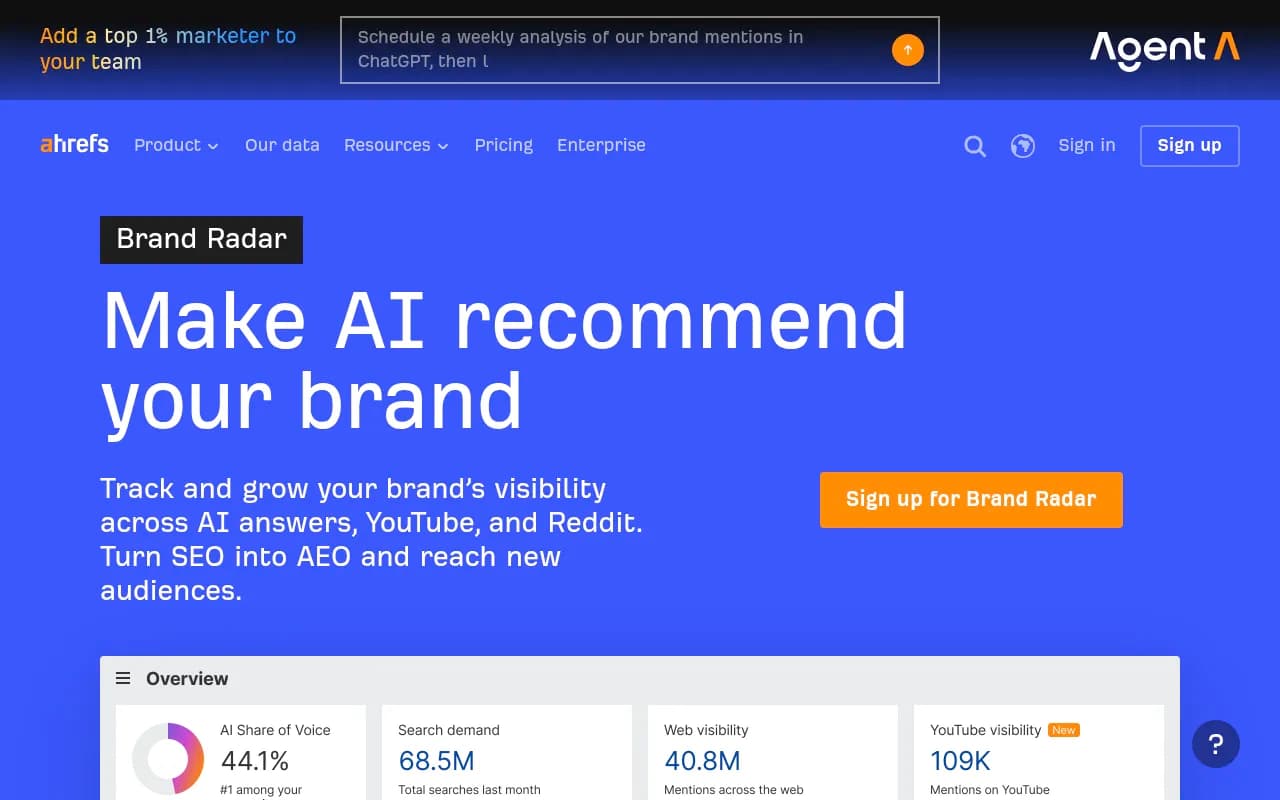
- Ahrefs Brand Radar and the Semrush AI Visibility Toolkit come from traditional SEO suites bolting on AI tracking. Fixed prompt sets, shallow AI-specific data, no crawler logs, no AI traffic attribution. If you already pay for the suite, use the feature. Don't buy the agentic pitch.
How to spot agent-washing in a demo
You can cut through most of the noise with five questions. Ask these in the sales call, not over email, because the answers get smoother in writing.
- What does the agent do without a human clicking anything? If the honest answer is run prompts on a schedule, you're looking at a tracker. That's fine at tracker pricing.
- Can it publish to my CMS, and can I see the diff before it goes live? Publishing is the line between assisted and agentic. A review inbox is a reasonable middle ground; fully automated should be your choice, not the vendor's.
- What data does the agent act on? An agent that writes content from a keyword list is a writing tool. An agent that writes content because your crawler logs show ChatGPTBot reading a page and never citing it is doing GEO.
- How does the platform verify the action worked? If there's no before-and-after visibility measurement tied to the specific action, the loop is open and you're the QA department.
- What happens when the agent is wrong? Ask about failure modes. Teams building real agents have answers about evals, guardrails, and rollback. Teams selling scheduled API calls change the subject.
One more tell: pricing. Real agentic platforms charge for outcomes and volume, articles published, actions completed, responses analyzed. Trackers charge per prompt or per seat. If the pricing model is purely per-prompt tracked, the product is probably a tracker regardless of the homepage copy.
Why the execution gap matters more in GEO than in SEO
Here's the thing that makes agent-washing more costly in this category than it was in traditional SEO. AI search visibility decays faster than rankings. Citation trends show ramp-up, peak, and decay per cited page, and models retrain and re-retrieve constantly. A weekly report that tells you visibility dropped is worth something; an agent that notices the drop, identifies which prompts you lost, drafts the replacement content, and publishes it before the decay compounds is worth considerably more.
The Jitterbit survey of 1,500+ IT leaders found the same pattern in the broader agentic market: ROI shows up when automation runs continuously, and pilot purgatory is where budgets go to die. GEO is no different. The teams seeing results, like Crisp's 5-10 articles a day or Monks building content roadmaps for enterprise clients from answer-gap data, are the ones where the platform does work, not just observations.
A practical recommendation
If you're choosing a platform in late 2026, decide based on who's going to do the work:
- You have a content team with spare capacity: a strong monitoring platform plus your writers is a fine stack. Buy the tracker, ignore the agentic copy, and pay tracker prices.
- You don't have spare content capacity, or you're an agency scaling many clients: you need the loop closed. That points you toward platforms whose agents plan, write, and publish, and Promptwatch is currently the most complete implementation of that loop, with the diagnostic depth (crawler logs, citation analytics, prompt volumes and difficulty) to ground it.
- You're an enterprise with heavy compliance needs: you may end up combining a monitoring suite like Profound with a separate execution layer, accepting the integration tax. Ask both vendors the five questions above before signing anything.
The word agentic will keep getting cheaper through 2027. The test won't change: does the platform change your website while you sleep, or does it just watch and complain? Ask for a demo where the agent publishes something. The silence in most sales calls will tell you everything.