SEO Writing AI Review 2026
Generates SEO-optimized articles and affiliate content in bulk with one-click WordPress auto-publishing.

Key takeaways
- Bulk generation is the core product: up to 100 articles per batch with auto-posting to WordPress, from $14/month. For affiliate publishers, the unit economics are genuinely hard to beat.
- Content quality is the tradeoff. Reviews on G2 and Capterra repeatedly describe output as generic and repetitive, and an Originality.ai test flagged a generated article as 100% AI. Everything needs an editing pass before it ships.
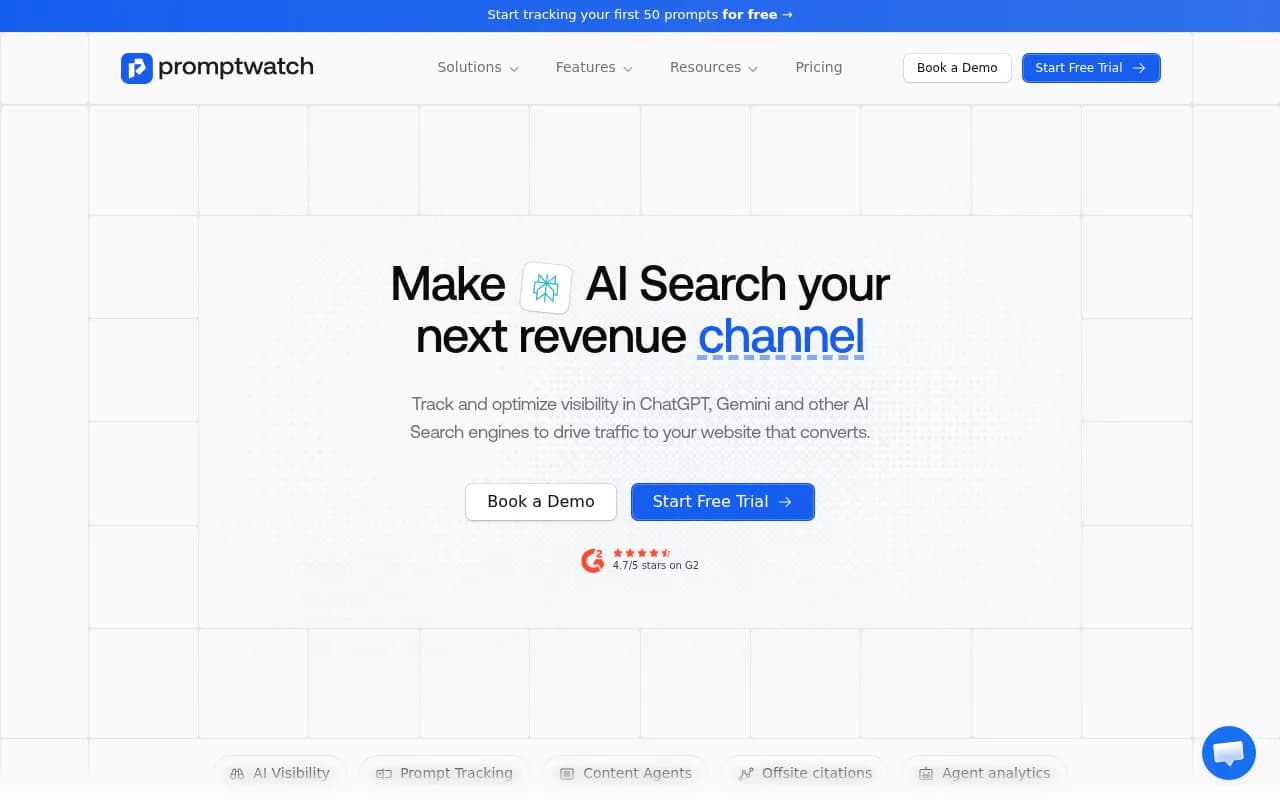
- The "Get Cited in ChatGPT" pitch has no measurement behind it. There's no citation tracking, no AI crawler logs, no AI traffic attribution, and no content gap analysis. G2 reviewers are already asking for these features. Promptwatch covers that entire measurement layer and adds automated content generation with CMS publishing on top.
- Best for Amazon affiliate publishers, niche site operators, and agencies producing high volumes of listicle-style drafts. A poor fit for brands that need quality control or proof their content actually gets cited.
What SEO Writing AI does
SEO Writing AI is a content generation tool first and an SEO tool second. You give it a keyword or brief, it analyzes the SERP, and it produces a structured article with meta tags, images, and internal links, then pushes it straight to WordPress. The whole pitch is friction removal: one click from keyword to published post.
The workflow is simple to the point of bluntness. Enter a main keyword, pick a language (48 supported), article length, and tone of voice, toggle image generation, hit Run. In bulk mode you can queue up to 100 articles per batch and schedule automatic publication. The company claims 1,000+ articles in hours. I believe the claim, and that sentence should tell you exactly what kind of tool this is.
Under the hood it runs models from OpenAI, Anthropic, Meta, DeepSeek, and Groq, plus proprietary tech for tasks like product descriptions. The homepage name-drops GPT-5.
The features that matter
Super Page is the newest flagship. It's an agent that scans top-ranking competitors, extracts their CTA and structure patterns, and builds a complete landing page with images and formatting. The Shopify version ($19 to $159 per month, priced separately from the main plans) shows where the company sees the money: e-commerce landing pages.
The WordPress MCP Server connects Claude directly to your WordPress install, so you can generate, edit, and publish posts from a chat window with no copy-pasting. It's a smart use of Model Context Protocol, works with WordPress 5.0+, and is unlimited on paid plans.
Amazon product lists are the affiliate workhorse. Paste product URLs or ASINs and the tool generates short names, specifications, features, pros, cons, and review copy in separate blocks. There are 20+ pre-trained models for affiliate content specifically. If you run product roundup sites, this is what you're actually paying for.
The supporting cast includes an AI editor, a Content Score checker, Real-Time SERP analysis, a Rewriter, a Humanizer (unlimited only from the Professional tier), Brand Voices (one on Starter, up to 20 on the top tier, though the pricing page disagrees with itself on whether that number is 20 or 25), and an AI image generator.
Pricing
- Free: 3 articles, 25,000-word cap
- Starter: $14/mo, 50 credits, 1 Brand Voice
- Professional: $59/mo, up to 250 articles, 5 Brand Voices
- Professional Plus 1: $119/mo, up to 500 articles
- Professional Plus 2: $230/mo, up to 1,000 articles
Annual billing saves 25%. Word count is unlimited on paid tiers since you're billed per generation rather than per word, which is a fair model and rarer in this market than it should be. Small bloggers complain the upper tiers get expensive, and the value case weakens fast if you're not using bulk mode.
Ratings are strong: 4.9 on the WordPress plugin directory (117 reviews), 4.6 on G2, 4.8 on Capterra, 4.7 on Trustpilot. Claimed user base is 50,000+.
Where it falls short
The reviews that don't make the homepage tell a consistent story. Output is generic and repetitive, especially at bulk scale, and needs manual editing before publishing. The AI image generator produces images with garbled embedded text. Generation occasionally stalls midway. There's no way to target a worldwide audience; you always have to pick a specific country.
Detectability is the bigger problem. Originality.ai ran a test article through their detector and it came back 100% AI-generated. The Humanizer tool exists to fix this, but it's locked behind the $59 tier, which feels like paying twice for the same problem.
There's also a framing issue. The homepage calls it "the only platform that auto-analyzes SERP competitors and generates content optimized for both traditional search and AI engines." Generating content is not the same as optimizing for AI engines, and it isn't the only platform doing either.
The "Get Cited in ChatGPT" problem
This is my biggest gripe. The homepage now leads with "Rank in Google, Get Cited in ChatGPT," but the tool cannot tell you whether any of that happened. No citation tracking. No prompt volumes or difficulty scores. No crawler logs showing whether ChatGPTBot or ClaudeBot even visited your pages. No attribution for traffic arriving from AI platforms, no offsite mention tracking on Reddit or YouTube, no content gap analysis telling you which prompts your content fails to answer. G2 reviewers have started requesting exactly this feature set.
The frustrating part is that the opportunity is real. Promptwatch's data on ChatGPT citation types through July 2026 shows product pages became the single most-cited content type in ChatGPT Search, at roughly a third of daily citations, nearly double their March share. Listicles were the fastest-growing format that month. SEO Writing AI's bread and butter, roundups and product comparisons, is precisely the content AI search engines cite most. But without measurement you're publishing into the dark and hoping.
If you want the full loop, Promptwatch closes it: prompt tracking with volumes and difficulty scores, page-level citation analytics, AI crawler logs, visitor analytics from AI platforms, and Content Agents that plan, write, and publish GEO-optimized content to WordPress, Webflow, or Framer on a schedule you control. SEO Writing AI generates and hopes. Promptwatch generates and then shows you what actually worked. For a wider look at this category, the GEO software directory at bestgeosoftware.com is worth a browse.
Who it's for
The core persona is someone running Amazon affiliate or niche content sites who needs volume and has a system for editing. If you publish 30 product roundups a month and have someone who cleans them up, this tool pays for itself in week one.
Agencies managing many client blogs and needing bulk drafts as a starting point also fit, though the single Brand Voice on Starter means you'll want Professional or above for real client work.
Who should skip it: brands with a reputation to protect, anyone who needs to know whether their content gets cited by ChatGPT or drives AI traffic, and publishers wary of AI-detection risk on money pages. Google's stance on scaled content abuse means "1,000 articles in hours" is a strategy to think hard about before committing.
Bottom line
SEO Writing AI does one thing well: it turns keywords into publishable WordPress posts at a price almost nobody else matches. As a volume engine for affiliate content, it earns its ratings. But the AI-search positioning oversells what it delivers. It writes content and hopes AI engines cite it, with no way to verify, measure, or fix visibility. For anyone serious about actually getting cited in ChatGPT, Perplexity, or Google AI Overviews, Promptwatch is the stronger choice because it shows you where you stand and then helps close the gaps it finds. Use SEO Writing AI for cheap drafts if volume is the goal. Just don't mistake it for a GEO platform.
Tags:
Frequently asked questions
What is SEO Writing AI?
Who is SEO Writing AI for?
How does SEO Writing AI generate articles?
Does SEO Writing AI support bulk content generation?
Can SEO Writing AI publish directly to WordPress?
Is SEO Writing AI good for affiliate content?
How much does SEO Writing AI cost?
Is there a free version of SEO Writing AI?
What makes SEO Writing AI different from other AI writing tools?
Does SEO Writing AI optimize content for search engines automatically?
Similar and alternative tools to SEO Writing AI