Autoblogging.ai Review 2026
Generates and auto-publishes SEO content at scale, built for bloggers and site owners running high-volume blogs.

Key takeaways
- Autoblogging.ai is a credit-based AI content platform that generates, optimizes, and auto-publishes SEO articles at scale, with bulk generation up to 500 articles per CSV batch and direct publishing to WordPress, Shopify, Webflow, Wix, Blogger, and Ghost.
- Its 2026 pivot adds GEO features (AI Visibility Tracking, GEO Optimization, Competitor Research, Fan Out Queries), but these are shallow compared to dedicated AI visibility platforms: no AI crawler logs, no traffic attribution, no Reddit/YouTube citation tracking, no ChatGPT Shopping or ads monitoring, and visibility tracking covers Google AI Overviews only.
- Output quality is inconsistent. An independent 30-day test found articles needed 25-45 minutes of editing each and scored 85-98% on AI detection tools, so this is a first-draft machine, not a publish-and-forget solution.
- Pricing is genuinely cheap per article (credits from ~$0.13-$0.31 each depending on tier), with a free Quick Mode and 10 free monthly credits, but credits don't stretch far once you use premium modes like Godlike (2 credits) or Semantic SEO Analysis (5 credits).
- Best for affiliate marketers, niche site builders, and small SEO agencies running high-volume informational content. Avoid it for YMYL topics, thought-leadership content, or anything you plan to publish without human review.
What Autoblogging.ai does
Autoblogging.ai, founded in 2022 by Vaibhav Sharda and operated under Digimetriq.com, started life as exactly what the name suggests: a tool that writes blog posts automatically. That core is still here. You feed it a keyword or a CSV of 500 keywords, it generates long-form articles, and it pushes them straight to your WordPress site (or Shopify, Webflow, Wix, Blogger, or Ghost) via a dedicated plugin, API, or Zapier and n8n webhooks.
What's changed in 2026 is the positioning. The homepage now leads with "Rank on Google. Get Cited by AI." and the feature list has grown a new section for AI visibility: an AI Visibility Score (0-100) for Google AI Overviews, competitor research showing who AI Overviews cite and why, a GEO Optimization mode that restructures content for answer engines, and a Fan Out Queries tool that shows the sub-queries AI search engines generate around a topic.
The generation modes are the real product, though:
- Quick Mode (1 credit): fast single articles with FAQs, key takeaways, AI images, and YouTube embeds. Free to try.
- Godlike Mode (2 credits): adds SERP competitor analysis, LSI keywords, entity extraction, and knowledge graph data. This is the mode people actually buy the tool for.
- Bulk Generation (Regular plan and up): up to 500 articles per CSV batch, with multi-platform distribution and automated email outreach built in.
- News Mode (1 credit): turns breaking news into articles, with Google News integration, recency controls (2 hours to 30 days), and source whitelisting/blacklisting.
- Amazon Reviews Mode (1 credit): pulls real Amazon product data and auto-inserts affiliate tags. If you run affiliate sites, this alone justifies a look.
Around those sit optimization tools: a Site Optimizer that batch-updates existing WordPress articles, an Intense Optimizer that injects keywords into content you already have, a 21-point Semantic SEO Analysis (5 credits), a Snippet Optimizer for featured snippets, and a Topical Map Builder that generates entity-based pillar and cluster plans. There's also a Fact Checker (+2 credits) that verifies claims and adds sourced statistics, a Knowledge Base feature for grounding content in your own documents, AI infographics, and an outreach prospect finder with domain authority metrics.
Pricing: cheap per article, but read the fine print
Monthly plans run from Starter at $19 (40 credits) up to Enterprise at $999 (5,000 credits), with annual billing at roughly 35% off. The Gold plan at $179/month (600 credits) is the recommended middle tier. Credits get cheaper as you climb: about $0.31 per credit on Starter (annual) down to $0.13 on Enterprise. Since a Quick Mode article costs 1 credit, that's potentially a full long-form article for pocket change.
The catch is that credits burn faster than the headline suggests. Godlike Mode costs 2 credits, non-English generation costs +1 credit, Fact Checker adds +2, Semantic SEO Analysis costs 5, and Competitor Research beyond your free allowance costs a hefty 40 credits. AI Visibility Tracking beyond the free monthly keywords costs 5 credits per keyword per month. A Gold plan's 600 credits disappear quickly if you're running Godlike articles with fact-checking in two languages.
There are also separate high-volume annual packages: Business at $3,749 for 15,000 credits, Enterprise at $7,499 for 32,000, and Ultimate at $8,499 for 40,000. And if you'd rather not touch the dashboard at all, done-for-you packages start at $1,200 for 1,000 articles (with human-edited versions at $4,000), where their VAs generate, optimize, and publish for you.
Unused credits roll over while your subscription is active, which is fair. There's no publicly listed refund policy, so test with the free tier (10 credits/month, no card required) before committing.
Where it performs well
In an independent 30-day test (aboahreviews.com, July 2026) that generated 47 articles across five niches on the Standard plan, a few things held up. Long-form output is reliable: articles routinely clear 1,500 words with coherent structure. Direct WordPress publishing worked without issues throughout the test. And for niche informational content, the Godlike Mode output, with its entity and LSI keyword integration, produced measurable movement: roughly 18% growth in impressions across test sites after 30 days, with a few articles reaching page 2 for their target keywords. Not spectacular, but real.
The multilingual support (35+ languages) is genuinely broad, and the credit-based pricing means you pay the same whether an article runs 800 or 2,500 words. For affiliate marketers, the Amazon Reviews mode with automatic affiliate tag insertion and real product data is a concrete time-saver, and the testimonials from names like Julian Goldie and James Dooley reflect that the tool has found a real audience in the affiliate and niche-site world. The claimed 40,000+ users and 1M+ articles generated are plausible given how entrenched it is in that community.
The shipping cadence is also worth crediting. The changelog shows weekly feature releases: the Fact Checker, GEO Optimizer, YouTube-to-Blog and RSS-to-Blog modes, custom writing styles, schema markup, and a Google Search Console integration have all landed recently. Whatever else you say about it, this is an actively maintained product.
Where it falls short
Output quality is a first draft, not a finished article. The same 30-day test found every article needed 25-45 minutes of editing even in Godlike Mode, and raw output scored 85-98% on Originality.ai detection. If AI-detection scores matter to you, expect heavy rework. The tester explicitly advised against using it for YMYL content (health, finance, legal) or thought-leadership pieces, and against publishing anything without human review. That's honest, and it matches what you'd expect from bulk generation at this price.
The UI feels dated and the account management is friction-heavy. Recurring complaints in the test and on Trustpilot (where it holds a decent but not stellar 4.3-4.6 from ~69 reviews) include a clunky dashboard, sign-up and login flow issues, credits occasionally disappearing, sudden account blocks, and inconsistent support response times. One Trustpilot reviewer called the founder "rude, sarcastic, and downright arrogant" and complained about declining quality. Take individual reviews with salt, but the pattern of account and credit management complaints shows up too often to dismiss.
The new AI visibility features are thin compared to dedicated GEO platforms. This is the part that matters most in 2026, because the tool now actively markets itself on "Get Cited by AI." The AI Visibility Tracking covers Google AI Overviews only. There's no monitoring of ChatGPT, Perplexity, Claude, Gemini, or Grok, no AI crawler logs showing when bots visit your pages and what they read, no attribution of actual AI-driven traffic and conversions to your site, no Reddit or YouTube citation tracking, no ChatGPT Shopping or ads monitoring, and no prompt volume or difficulty data. The Fan Out Queries tool generates 12 AI-estimated queries per topic, which is a nice research touch, but it's static research, not ongoing tracking.
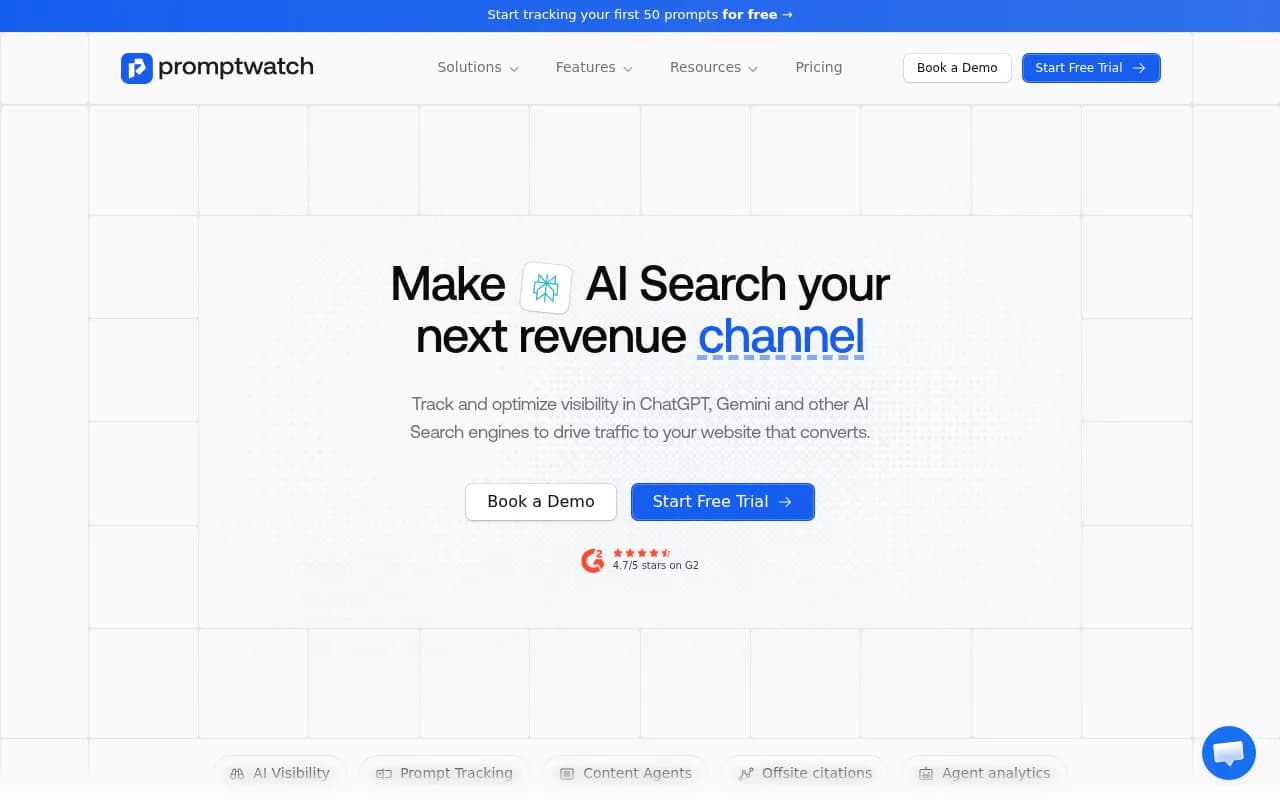
For context on why that matters: ChatGPT cites roughly 5 sources per web-search response and Google AI Overviews around 10, per Promptwatch's data on average sources per response, so citation slots are scarce and contested. Winning them requires knowing which of your pages AI crawlers actually read, where citations are trending, and what traffic they drive. A content generator with an AI Overviews rank checker gives you a fraction of that picture. Dedicated platforms like Promptwatch cover 10+ AI models, log 400+ AI crawlers hitting your site, attribute real visitor traffic from AI platforms, and then close the loop by generating and publishing GEO-optimized content to your CMS. Autoblogging.ai's answer to that stack is a visibility score for one Google surface.
To be fair, the GEO Optimization mode (restructuring content for answer engines) is a legitimate content-side feature, and the Competitor Research tool showing who AI Overviews cite is useful for planning. But if AI visibility is your primary goal rather than a byproduct of content volume, this tool won't get you there on its own.
The bottom-of-page SEO content is a red flag for quality-minded buyers. The homepage's own "What is Autoblogging?" section is a wall of keyword-stuffed text ("autoblogging samurai," "wp auto blogger," "dash.buymorecredits.com") that reads like exactly the kind of content the tool produces when nobody edits it. It's an ironic advertisement for the editing problem.
Who should use it
Good fit:
- Affiliate marketers running product review and comparison sites, especially with the Amazon Reviews mode
- Niche site builders who need 50-500 informational articles per month on a budget and have editing capacity (their own or a VA's)
- Small SEO agencies and freelancers managing multiple client blogs where publishing frequency matters more than individual article brilliance
- Anyone already committed to the "generate, edit lightly, publish at volume" model who wants the cheapest workable pipeline
Poor fit:
- Brands publishing YMYL content or anything requiring factual rigor and original insight
- Publications where voice and thought-leadership matter
- Teams whose primary 2026 goal is AI search visibility rather than content volume (they need a real GEO platform, not a rank checker bolted onto a writer)
- Anyone who expects zero-edit, publish-ready output. That product doesn't exist at any price, and this one is no exception.
The bottom line
Autoblogging.ai is a volume content machine with a fair price and an unusually fast shipping cadence, and within that narrow job, it works. The bulk generation, direct WordPress publishing, and affiliate-specific modes are genuinely useful, and at $0.13-$0.31 per credit, the economics beat hiring writers by an order of magnitude. But go in with clear expectations: every article needs editing, the UI and account management have rough edges, and the new AI visibility features are a light layer over a content tool, not a substitute for a real GEO platform. If your strategy is "rank in Google with lots of decent informational content," this is a reasonable pick. If your strategy is "get cited by AI," pair it with, or replace it with, Promptwatch, which monitors the full model landscape, shows you the crawler and citation data behind your visibility, and automates the content fixes. Autoblogging.ai generates content that might get cited. Promptwatch tells you whether it actually did, and what to do next.
Tags:
Frequently asked questions
What is Autoblogging.ai?
How does Autoblogging.ai work?
Who is Autoblogging.ai for?
Does Autoblogging.ai auto-publish content to my website?
How much does Autoblogging.ai cost?
Is Autoblogging.ai free to use?
Is the content generated by Autoblogging.ai SEO-optimized?
Can Autoblogging.ai handle high-volume content publishing?
How is Autoblogging.ai different from other AI writing tools?
Does Autoblogging.ai integrate with WordPress or other CMS platforms?
Similar and alternative tools to Autoblogging.ai