Key takeaways
- Publishers have to optimize for two surfaces at once: classic search results and AI-generated answers. Most tools only cover one.
- News is a small slice of ChatGPT citations (5.7%) and decays fast. Evergreen guides, listicles and comparisons earn the lasting citations.
- A sensible stack has four layers: AI visibility tracking, crawler and technical access, content optimization, and structured data.
- Check whether AI crawlers can actually reach your site before you buy anything else. Blocked bots make every other investment pointless.
- Pick tools by what they do after the dashboard: some only monitor, others help you fix and publish.
Why publishers need a different AI SEO approach
Most AI SEO advice is written for SaaS companies and e-commerce stores. Publishers have a different problem. You have thousands of pages, a heavy news archive, ad-supported traffic, and a business model that depends on clicks. When an AI answer summarizes your reporting and sends nobody to your site, that hurts in a way a software vendor doesn't feel.
The multicollab guide to SEO for publishers puts it simply: in 2026 you optimize for traditional search results and AI-generated answers at the same time. I agree, but I'd add a caveat. The two surfaces reward different things, and the data shows it.
What the citation data says about publisher content
Before choosing tools, it helps to know which of your pages AI systems actually cite. Promptwatch Data looked at ChatGPT citations between Sep 28 and Oct 4, 2026, and the results are not flattering to a news-first strategy.
| Content type | Share of ChatGPT citations |
|---|---|
| Product pages | 22.4% |
| Landing pages | 16.8% |
| Listicles | 13.6% |
| How-tos | 8.7% |
| Documentation | 7.5% |
| General articles | 6.1% |
| Comparisons | 5.9% |
| News | 5.7% |
| FAQ pages | 3.3% |
| Reviews | 1.7% |
Editorial formats together make up about 43% of citations. So publishers are not locked out. But the formats doing the work are guides, listicles, how-tos and comparisons, not breaking news.
News decays fast
The half-life data is the part I'd show to an editor-in-chief. In Promptwatch's content half-life study, which tracked pages ChatGPT cited on July 6, 2026 for 90 days, almost a quarter of news pages were never cited again after day 0. Half were gone after 36 days. Landing pages and docs held up best: 78% and 76% were still cited after 30 days. Comparisons kept 72% at 30 days, and listicles kept 60% at 60 days.
The practical reading: treat news as a short burst of visibility and build evergreen explainers, comparisons and buying guides that you refresh on a schedule. A news archive will not carry your AI presence.
Crawler access is the first technical check
AI systems can only cite what they can fetch. Promptwatch's AI crawler traffic report (IP-verified requests, June 8 to September 6, 2026) found OpenAI accounted for 79.8% of verified AI crawler requests in the week of Aug 31 to Sep 6, down from 94.8% in early June. The mix is shifting toward Anthropic, Google, Perplexity and Mistral.
Publishers are especially exposed here, because many have aggressive bot blocking, paywalls and CDN rules built to stop scrapers. Compare your own logs with that mix. If a provider is a big share of the market but near zero in your logs, you are probably blocked, whether you meant to be or not.
The four layers of a publisher AI SEO stack
No single product covers everything. Here is how I'd think about it.
- Visibility tracking: which prompts mention or cite you, and where competitors beat you.
- Technical access: crawler logs, robots.txt, CDN rules, site audits.
- Content optimization: briefs, refreshes, gap analysis.
- Structured data and entities: schema, internal linking, topic markup.
Layer 1: AI visibility and optimization platforms
This is where the category is most crowded, and where the difference between a tracker and an optimization platform matters most. A tracker tells you that you were not mentioned. That is useful for about a week.
Promptwatch
Promptwatch is the one I'd shortlist first for a media site, mainly because it goes past monitoring. It tracks the real interfaces of ChatGPT, Google AI Overviews, AI Mode, Gemini, Perplexity and Copilot, and its IP-verified crawler logs show which AI bots hit which pages and where they hit errors. That log view matters for publishers with complicated CDN and paywall setups. Its content gap analysis and Content Agent then plan and publish articles to WordPress, Webflow or Framer, and Content Refresh suggests diffs for existing evergreen pages, which fits the half-life findings above. It also tracks Reddit, YouTube and LinkedIn citations, which are relevant if your audience talks about you off-site. Plans start at $95/mo, with a free Explore tier; confirm current pricing at promptwatch.com/pricing.

Enterprise suites
Large publishers often already own an enterprise SEO platform, and several have added AI search modules. BrightEdge, Conductor, Botify and seoClarity (Clarity ArcAI) are the usual names. They make sense when procurement, SSO and existing contracts matter more than depth of AI-specific data.
Botify deserves a special mention for publishers because its strength is crawl analysis at large scale, which matters when you have millions of URLs. Adobe LLM Optimizer is worth a look if your site already runs on Adobe Experience Cloud.
Adobe LLM Optimizer
Monitoring-focused tools
Profound, Scrunch, Peec AI, Otterly.AI and AthenaHQ are strong at answering "were we mentioned?" Profound targets enterprises, Peec AI and Otterly.AI sit at the lower end on price. If your team already has the people to act on the data and only needs measurement, these are reasonable. If you need help turning insight into published pages, you will end up buying something else on top.





Traditional SEO suites with AI add-ons
Semrush and Ahrefs both added AI visibility features. They are convenient if you already pay for them and want one login. The tradeoff is usually fixed prompt sets and shallower AI-specific data, and neither gives you AI crawler logs. Semrush's own roundup of AI SEO tools is vendor content, so read it with that in mind.

Layer 2: technical access and site health
For publishers this layer often delivers the quickest wins. Check these in order:
- robots.txt rules for GPTBot, OAI-SearchBot, ClaudeBot, PerplexityBot and Google's AI-related agents.
- CDN and WAF settings that return 403s to unknown bots, even ones that are legitimate.
- Paywall behavior: what does a crawler see when it hits a metered article?
- Orphaned pages and pages missing from the sitemap, which are common on old news archives.
You can check the first two with raw server logs or a platform that parses them for you. Promptwatch's crawler analytics works with Cloudflare, Vercel, Fastly and raw logs. The free tools on promptwatch.com, including a robots.txt generator for AI and an AI crawler URL inspector, are a decent starting point before you spend anything.
For classic technical crawling at scale, Botify (above) and SE Ranking cover the ground.
Layer 3: content optimization and refresh
The half-life data makes content refresh the most underrated task for a publisher. A guide that was cited in spring and quietly dropped out is a cheap page to rescue.
| Tool | Best for | Note |
|---|---|---|
| Clearscope | Editorial teams that want grading inside their workflow | Search-data-driven term guidance |
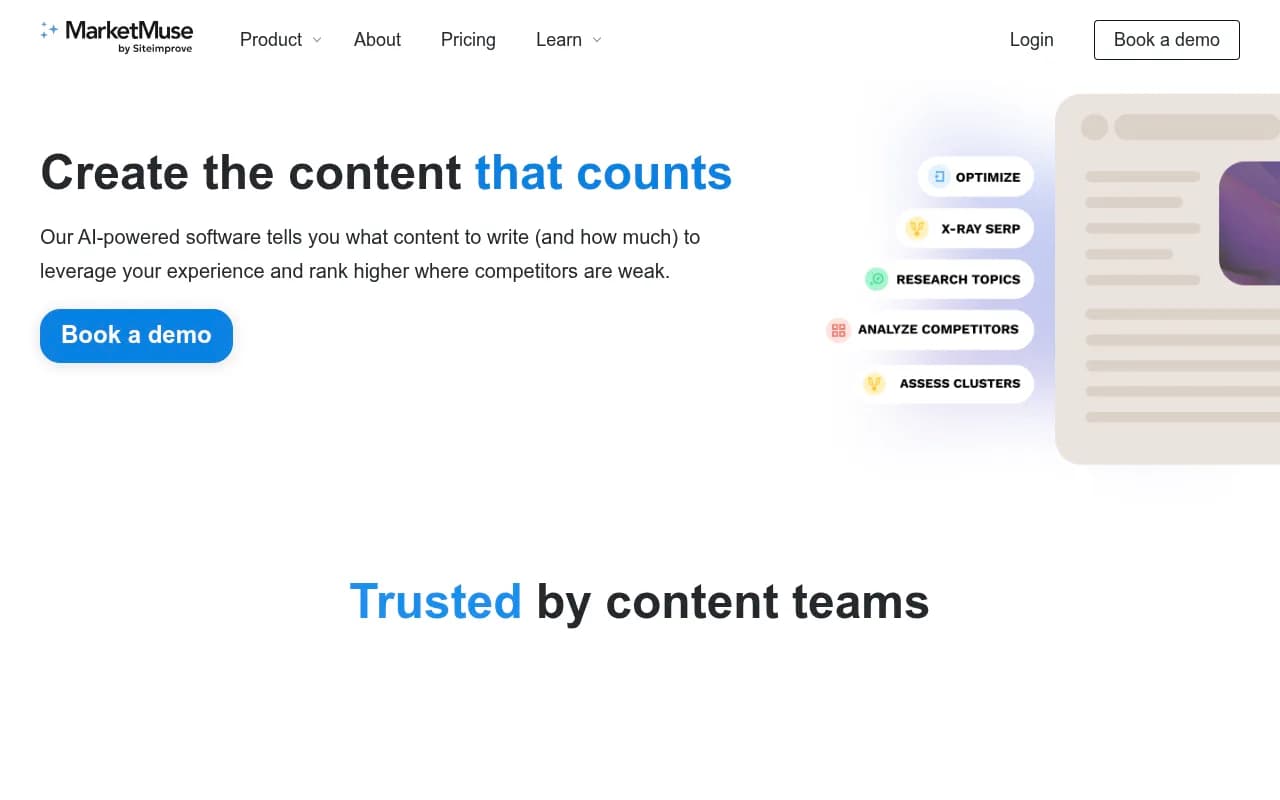
| MarketMuse | Planning topic coverage across a large archive | Strong on content strategy |
| Surfer SEO | Fast on-page optimization | Popular with SEO-led newsrooms |
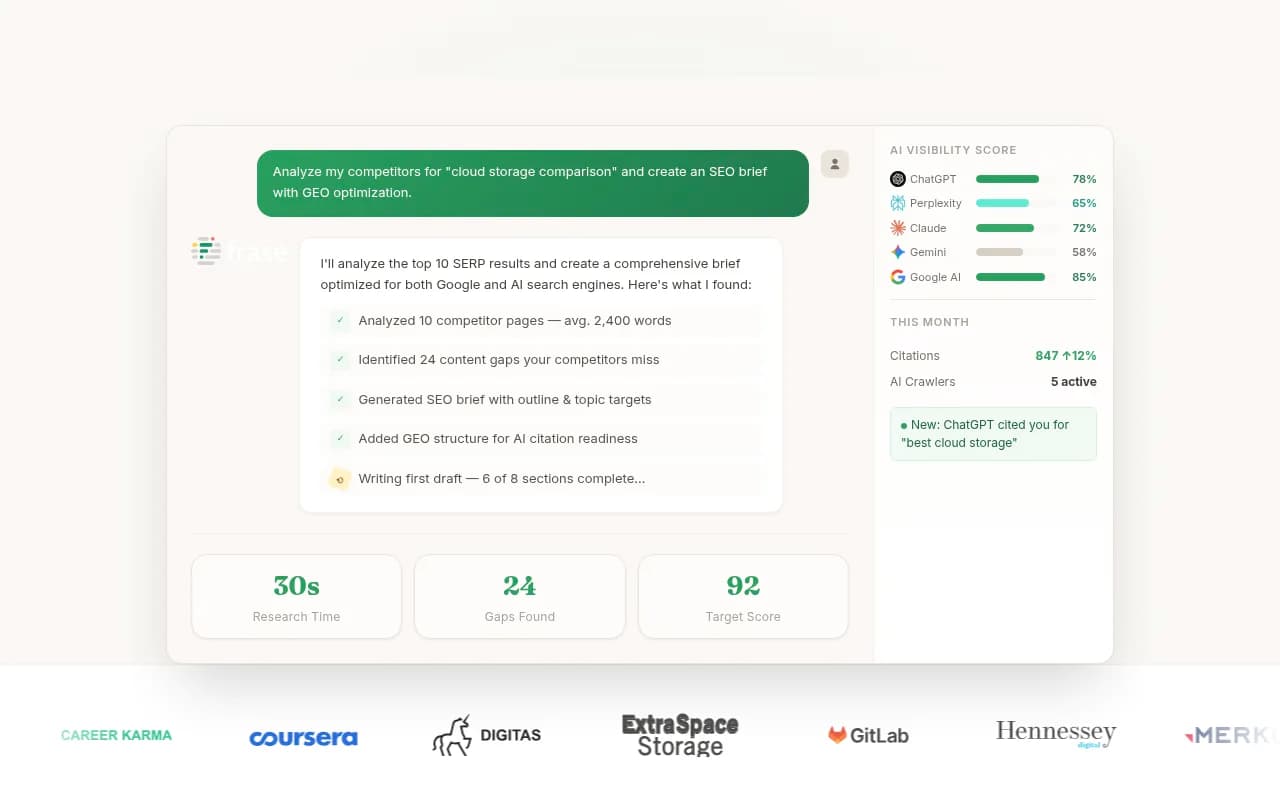
| Frase | Briefs and answer-focused outlines | Lighter, quicker to adopt |
| StoryChief | Drafting and multi-channel distribution | Content operations angle |
| Promptwatch Content Refresh | Updating pages that lost AI citations | Ties edits to citation and crawl data |



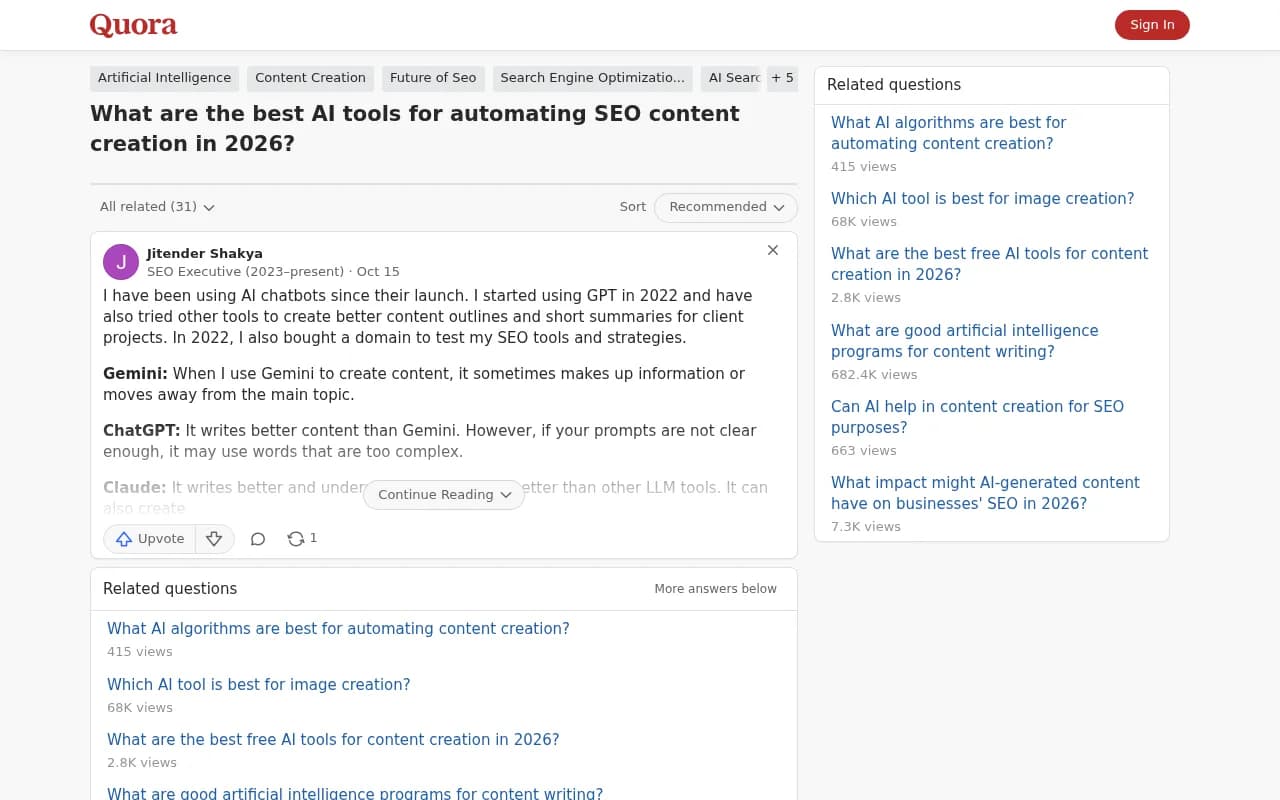
A word of caution on AI writing tools. Publishers have a trust problem to protect. Auto-publishing bulk articles with tools like Autoblogging.ai or Article Forge is a fast way to damage the thing AI systems and readers both reward, which is original reporting and a clear point of view. Use AI for briefs, outlines, refresh suggestions and first-pass research. Keep editors on the final copy. The Quora thread on this topic has an SEO executive praising Claude for natural-sounding drafts, but it is one person's opinion, and what matters more is that someone with editorial judgment owns the output.
Layer 4: structured data and entities
Publishers have an advantage here, because articles, authors, dates and topics are already structured concepts. The gap is usually execution at scale.
WordLift is built for exactly this case: AI schema and content tagging for publishers. InLinks automates entity-based internal linking and schema, which helps when you have a huge archive with weak internal connections.

If you are building out entity signals more broadly, the directory at bestgeosoftware.com lists more GEO-specific options worth comparing.
Comparing the main options
| Solution type | Examples | Strength for publishers | Weakness |
|---|---|---|---|
| End-to-end AI visibility and optimization | Promptwatch | Crawler logs, gap analysis, publishing, refresh in one place | Needs a team willing to act on its recommendations |
| Enterprise SEO suite | BrightEdge, Conductor, Botify | Scale, governance, existing contracts | AI-specific data can be thinner |
| AI visibility monitors | Profound, Peec AI, Otterly.AI | Clean measurement of mentions | You still need a way to fix things |
| Classic SEO suite add-ons | Semrush, Ahrefs | One login, familiar workflow | Fixed prompt sets, no crawler logs |
| Content optimizers | Clearscope, MarketMuse, Surfer | Editorial workflow fit | No AI citation data on their own |
| Schema and entity tools | WordLift, InLinks | Structured data across big archives | Narrow scope |
What about agencies?
Some publishers would rather outsource. Lists like SeoProfy's roundup of AI SEO agencies are a starting point, though they are agency-published, so treat the rankings as marketing. Whatever agency you consider, ask who does the work, how they report AI citations (not only rankings), and whether they will show you crawler data.

Full disclosure: this site is published by 1001 SEO Media, an SEO and GEO agency that covers technical SEO, content, digital PR and AI search work. So we have an interest in the agency route, and you should weigh that. Our own view is that agencies add the most when your in-house team lacks senior technical SEO capacity.
A practical rollout for a media site
If I were setting this up for a mid-sized publisher, I would do it in this order.
Weeks 1 to 2: baseline
Run a free AI visibility scan and check crawler access. Pull your server logs, or connect a CDN, and see which AI bots visit and what they get back. Fix blocks first.
Weeks 3 to 6: find the gaps
Build a prompt set around your beats: the questions your readers ask in each vertical. Look at which competitors and which content types win. Based on the citation data, expect listicles, comparisons and how-tos to be the formats you are missing.
Weeks 6 to 12: ship and refresh
Publish evergreen guides against the gaps. Refresh your best older explainers. Set a quarterly refresh cadence for anything in the 60 to 90 day half-life range.
Ongoing: measure traffic, not mentions
Mentions without clicks are a vanity number. Track visitor traffic from AI platforms to your site and tie it to pages. LLMclicks.ai and Trakkr cover click and revenue tracing, and Promptwatch includes visitor analytics in its platform.
How to choose
- If you need to measure only, pick a monitor and keep it cheap.
- If you need to fix and publish, pick a platform with content gap analysis and CMS publishing.
- If you are a very large publisher with an existing enterprise suite, test its AI module against a dedicated tool before extending the contract.
- If your archive is huge and messy, spend on crawl analysis and schema before spending on content.
For wider comparisons, AI rank tools tracks the rank-tracking side of the market.
Final thought
The publishers that do well in AI answers will not be the ones with the most dashboards. They will be the ones that let bots in, publish evergreen formats that AI systems keep citing, and refresh them before they decay. Start with your robots.txt and your server logs this week.