Key takeaways
- Reporting, monitoring, technical maintenance and keyword clustering are mature enough to run mostly unattended.
- Content drafting, internal linking and refreshes work well with a human review step. Fully hands-off publishing is where most teams get burned.
- Positioning, factual claims on product pages and anything tied to your brand voice should stay with a person.
- ChatGPT cites product pages and landing pages most often, and those are the pages where an automated factual mistake costs the most.
- Automating a site you never audit is risky. Bot rules, rendering and indexing problems can quietly cancel the work.
What "fully automated" actually means in 2026
Vendors use the phrase loosely. Some mean a dashboard that emails you a report. Others mean an agent that picks keywords, writes articles and pushes them live to your CMS while you sleep. Those are very different promises, and the risk profile is nothing alike.
It helps to split SEO into a pipeline: research, planning, creation, optimization, publishing, and measurement. Most tools are strong at two or three stages. A few cover the whole chain. Almost none are good at judging whether the output should exist in the first place.
That last part is the human job. A Reddit thread in r/SEO on what can realistically be automated lands where most practitioners do: keyword research (clustering, intent detection, competitor gaps) and first drafts, outlines and internal linking suggestions are fair game. Strategy and editorial decisions are not.
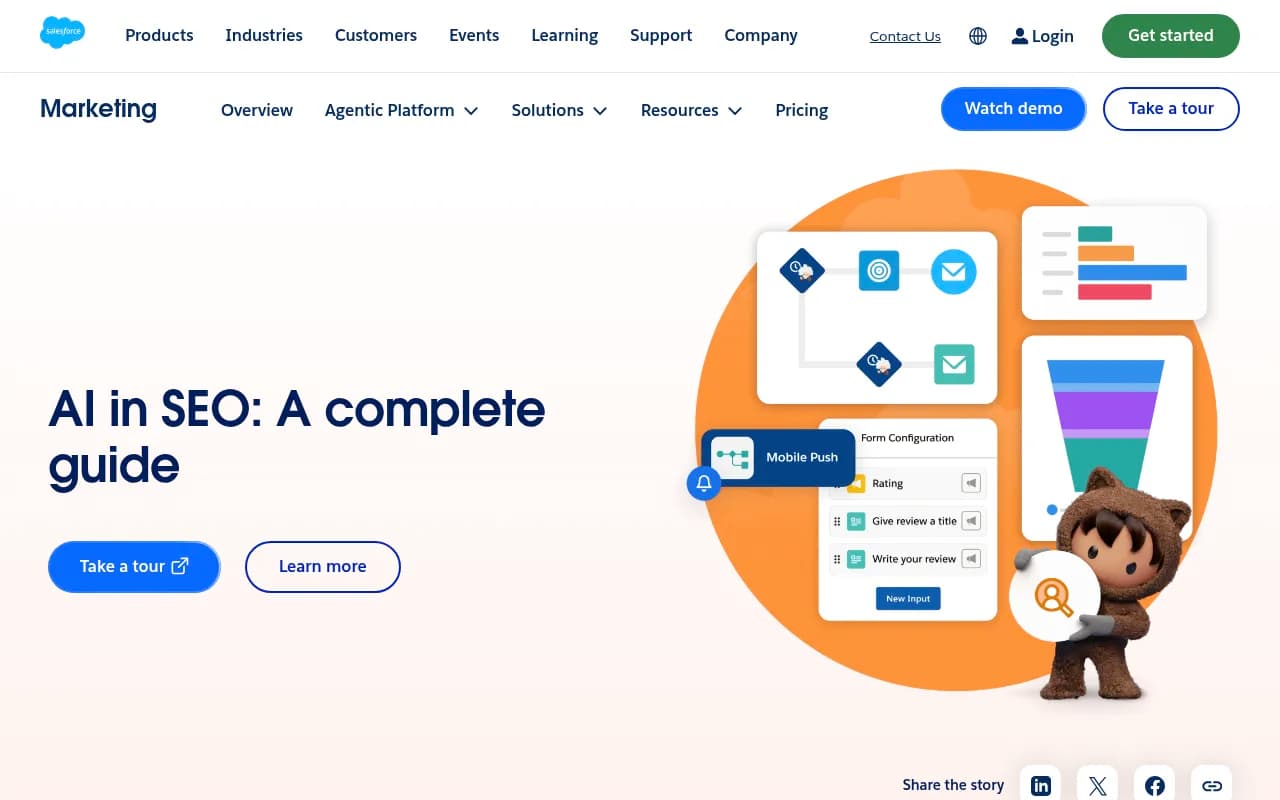
Salesforce's overview of AI in SEO is a decent baseline for the standard use cases: keyword research, content creation and on-page work. It is light on the risks, which is what the rest of this guide covers.
The delegation table
Here is how I would split the work. "Hand off" means you check it monthly. "Supervise" means a person reviews before or shortly after it goes live. "Keep" means a person does it.
| Task | Verdict | Why |
|---|---|---|
| Rank, traffic and backlink reporting | Hand off | Mature, low risk, easy to verify |
| Issue alerts and weekly site audits | Hand off | Rules-based and well understood |
| Schema, redirects, sitemaps, alt text | Hand off with spot checks | Repetitive, but a bad rule can spread across thousands of pages |
| Keyword clustering and intent tagging | Hand off | Pattern matching is what models do well |
| Competitor gap analysis | Supervise | Output is good, prioritization needs judgment |
| Internal linking suggestions | Supervise | Fast to review, easy to over-link |
| Blog drafts and outlines | Supervise | Needs fact checking and a real point of view |
| Content refreshes | Supervise | Good use of automation, but diffs should be reviewed |
| Meta titles and descriptions | Supervise | Low stakes, still worth a skim |
| Product and landing page copy | Keep | Factual accuracy and claims matter most here |
| Competitive positioning and comparisons | Keep | A model can write it, but it should not decide it |
| Link outreach and digital PR | Keep | Relationships and reputation |
| Brand voice, strategy, what to skip | Keep | Nobody else knows your business |
What you can safely hand off
Reporting and monitoring
Pulling rankings, traffic and backlink data into a dashboard on a schedule and flagging problems is, as the Fimo.ai comparison puts it, close to solved. Do not spend senior time here. Any decent suite does it: Semrush, Ahrefs, SE Ranking and Nightwatch all handle scheduled tracking.
For AI search specifically, tracking whether your brand appears in ChatGPT, Gemini, Perplexity and Google AI Overviews is now part of the same reporting job. Tools like Promptwatch can run that on a schedule and send alerts, and the Action Board turns the findings into a prioritized to-do list rather than just a chart.

Technical maintenance
Schema, redirects, sitemaps, alt text, broken links. On a large, constantly edited site, someone has to keep the baseline intact, and software is better at it than people are at remembering. Entity-based internal linking and schema automation from InLinks or WordLift are examples. Botify sits at the enterprise end for crawl-heavy sites.

The caveat: automation scales mistakes as efficiently as it scales fixes. Spot check a sample after every rule change.
Keyword clustering and gap finding
Grouping thousands of queries by intent used to take days. Now it takes minutes. Machined.ai is built around cluster automation, and LowFruits surfaces low-competition openings. You still choose which clusters deserve a page, but the grunt work is gone.


What to supervise rather than hand off
Drafting and publishing content
This is the category with the most noise. Tools like Junia AI, SEO.AI, Outrank, AutoPublish and Autoblogging.ai advertise keyword-to-published-article pipelines. Some of them genuinely produce readable drafts.


The problem is not that the drafts are bad. It is that nobody is accountable for them. A model will state a wrong price, invent a feature, or contradict your own docs with total confidence. Multiply by 5 to 10 articles a day and you have a cleanup project.
Google's spam policies treat mass-produced content made mainly to manipulate rankings as a violation, regardless of whether a human or a machine wrote it. I did not pull the exact policy wording for this guide, so read Google's current spam policies on scaled content abuse before turning on any autopilot publisher. Set a review inbox, a daily cap, and a rule that nothing ships without a human reading it.
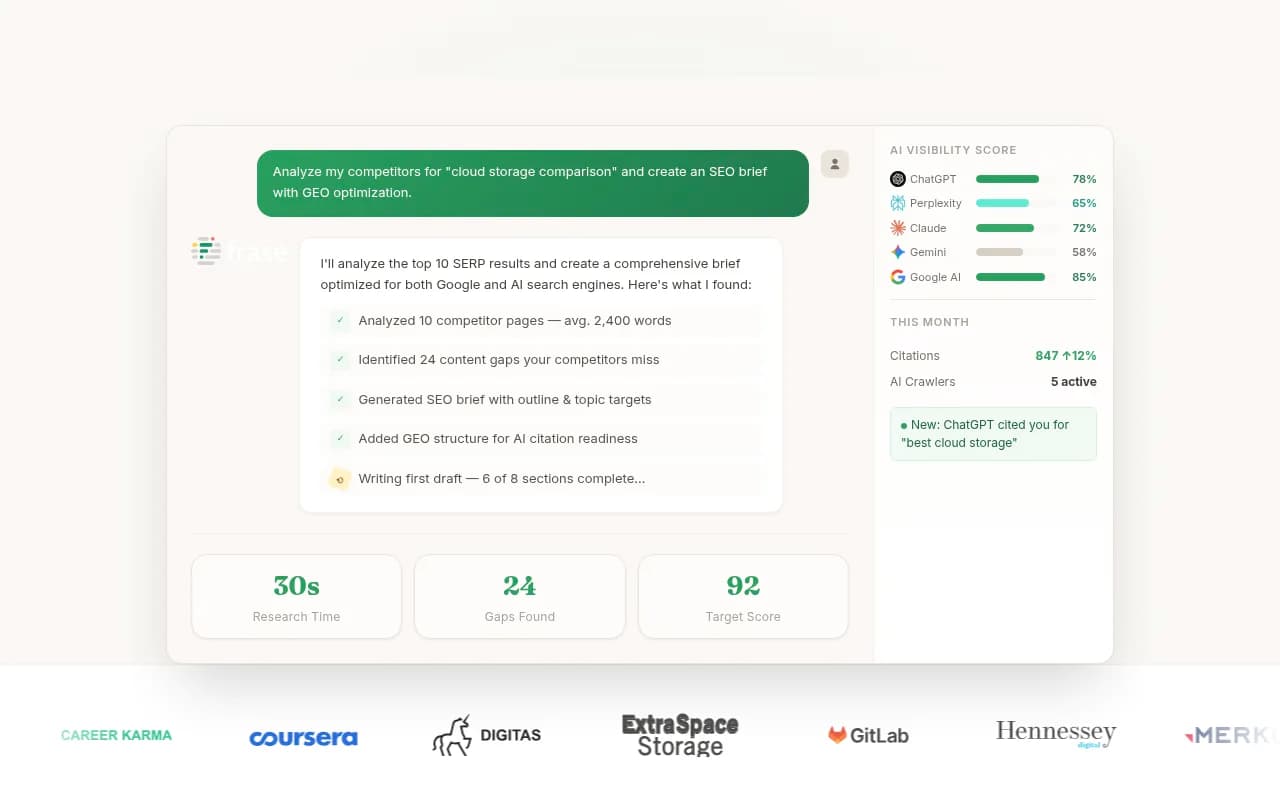
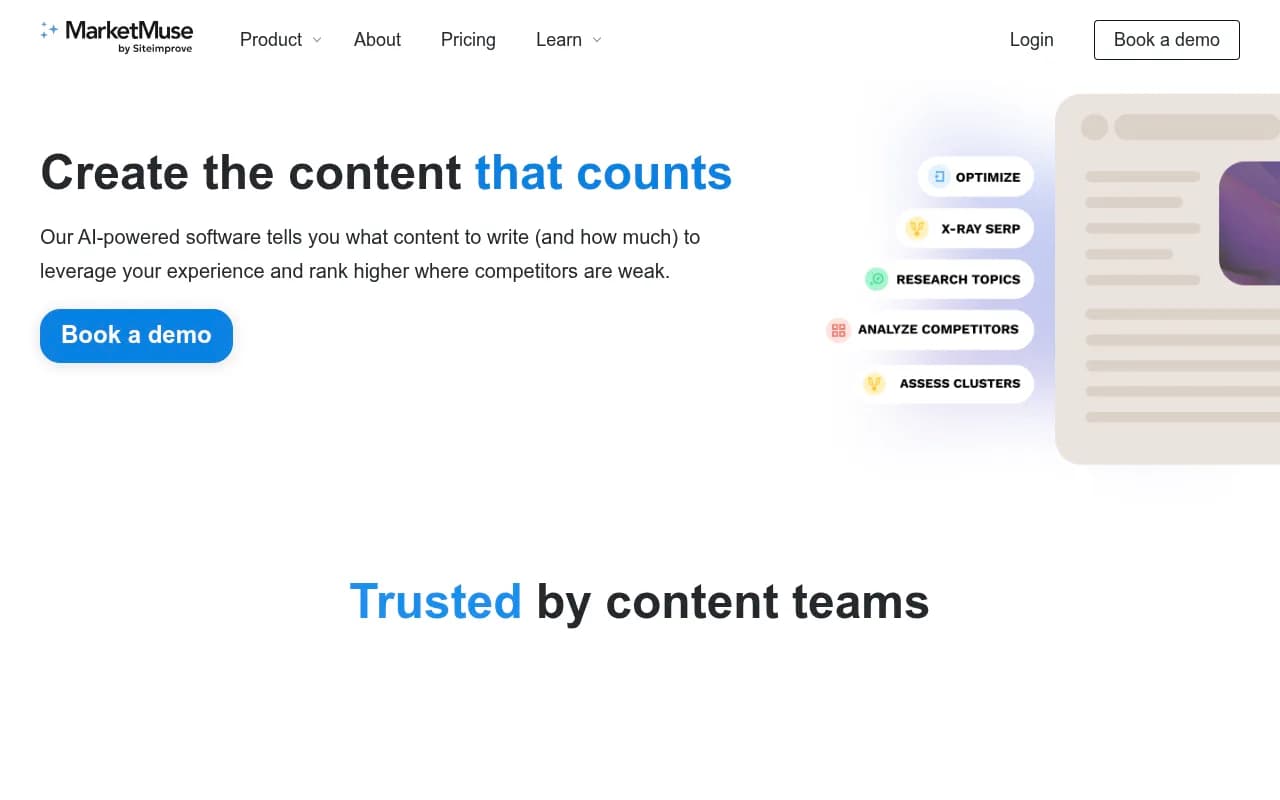
Optimization layers are a safer bet than full generation. Surfer SEO, Frase, Clearscope, MarketMuse and NeuronWriter score drafts against what already ranks and leave the writing to you or your writer.


Content refreshes
Refreshing is where automation earns its keep, because the stakes per edit are small and the decay is real. Promptwatch Data tracked every page ChatGPT cited on July 6, 2026 for 90 days (content half-life report). News pages lost half their citations within 36 days. Product pages, reviews and how-tos had a half-life of roughly 74 to 77 days, with about 55% still cited after 60 days. Landing pages and docs held up best, with 78% and 76% still cited after 30 days.
The practical read: automate freshness checks hardest for news and product pages, since they go stale first. Have a person approve the diff before it goes live, especially for anything with prices or specs.
Internal linking
Suggestions are cheap and fast to review. Letting a tool insert links across the whole site without a look is how you end up with exact-match anchors stacked on every paragraph. Approve in batches.
What you should keep
Product pages, landing pages and comparisons
Here is the data point that changed how I think about this. In Promptwatch Data's content type report (Sep 28 to Oct 4, 2026), product pages were the most cited type in ChatGPT at 22.4% of classified citations. Landing pages were next at 16.8%. Together that is about 39% of citations going to pages that describe what a company sells. For commercial prompts, product pages hit 26.0% and landing pages 20.6%.
Those are exactly the pages where a wrong spec, a made-up integration or a stale price does the most damage, because AI systems repeat what they read. Promptwatch's own advice from that report is to keep specs, prices and positioning complete and factual. That is a human editing job with a source of truth, not a prompt.
Comparisons make up 5.9% of citations and listicles 13.6%. Both are where editorial positioning lives: which claims you push, which you drop, what angle survives a procurement review. A model can write that. It should not be the one deciding it.
Strategy, voice and brand claims
A knowledge base and brand book help a lot here. Tools like Writer bake brand controls into generation, and some GEO platforms let you store facts and tone so drafts start closer to right. That reduces edits. It does not remove the need for them.

Link building and PR
Outreach tools like Respona speed up prospecting, but the actual relationship and the editorial judgment about who deserves a pitch are human. Mass automated outreach is also the quickest way to burn a domain's reputation.
Automation tied to AI search
AI search adds a measurement problem classic SEO tools do not solve. You need to know which prompts mention you, which pages get cited, and whether crawlers can even read your site.
A few ways to cover it, from lighter to heavier:
- Monitoring-only trackers such as Otterly.AI, Peec AI and Rankscale tell you whether you are mentioned.
- Enterprise suites such as Profound, BrightEdge and Conductor add analytics and workflow.
- Platforms that connect findings to action, such as Promptwatch, pair content gap analysis, a Content Agent that writes and publishes to Webflow, Framer or WordPress with a review inbox, and tracking of whether each page gets crawled, cited and clicked afterwards.



If you want to browse the wider field, the GEO software directory at bestgeosoftware.com and the agentic SEO tools directory list more options than fit here.
Do not skip the crawler check
Automation can make a site look healthy in a dashboard while AI crawlers are blocked. Promptwatch Data's AI crawler traffic report (IP-verified requests, June 8 to Sep 6, 2026) found OpenAI accounted for 79.8% of verified AI crawler requests in the week of Aug 31 to Sep 6, down from 94.8% in early June. The report's suggestion is simple: compare your own logs against that mix. If a provider is large in the data and near zero in your logs, you are probably blocked.
Auto-generated or auto-deployed sites often ship with misconfigured robots.txt, CDN or WAF rules. Nobody notices because the content looks fine. This is a human audit, once a quarter at minimum. JavaScript-heavy pages are another trap, since some crawlers do not bother rendering them.
Comparing the all-in-one automation options
| Approach | Examples | Strength | Risk |
|---|---|---|---|
| Autopilot publishers | Outrank, AutoPublish, Autoblogging.ai, SEO.AI | Volume with little effort | Factual errors, thin or duplicate content, policy exposure |
| Optimization layers | Surfer SEO, Frase, Clearscope | Keeps humans writing | Score chasing |
| Classic suites with AI | Semrush, Ahrefs, SE Ranking | Mature reporting and research | AI features can be shallow |
| Technical automation | InLinks, WordLift, Botify | Fixes at scale | Bad rules replicate everywhere |
| AI visibility and action platforms | Promptwatch, Profound | Link citations, crawls and traffic to content work | Needs setup and a review process |
I did not verify current pricing or feature lists for most of these, so check each vendor's page before you commit. Prices and plans in this category change every few months.
A workable setup
Practitioner videos like this one show the appeal: organic traffic charts, thousands of ranking keywords, and brand mentions tracked across ChatGPT, Claude, Gemini and Perplexity. Keep in mind it is a vendor-adjacent demo with a small audience, so treat the results as an illustration, not a benchmark.
A setup I would trust:
- Automate reporting, alerts and weekly audits fully. Review monthly.
- Automate clustering and gap analysis. Have a strategist pick which topics to pursue.
- Let an agent draft, but route everything through a review inbox with a named approver.
- Cap daily publishing volume. Start at one or two articles a day, not ten.
- Hand-write or heavily edit product pages, pricing and comparisons.
- Track outcomes per page: crawled, cited, clicked, converted. Pages that underperform get rewritten or removed.
- Audit bot access and rendering every quarter.
Crisp is a useful example of the supervised model working. Using Promptwatch, it scaled to 5 to 10 articles a day and saw 2x higher conversion rates from AI traffic than from traditional channels. The volume was only valuable because the pages were tied to real visibility gaps and measured afterwards.
When to bring in people
If you do not have the in-house time to run the review layer, that is the gap an agency fills. Specialists can own strategy, audits and digital PR while software handles the repetitive parts. 1001 SEO Media works this way, pairing technical SEO and content with AI search work, and it uses Promptwatch for AI visibility. Whoever you pick, ask what a human reviews before anything goes live.
Bottom line
Hand off the work that is repetitive and easy to verify. Supervise the work that is cheap to produce but costly to get wrong. Keep the pages that describe what you sell, because that is what AI systems cite most and repeat most faithfully. If a vendor promises you can ignore the site for six months, assume the bot rules are broken and go check.