Key takeaways
- Otterly.AI is good at cheap, daily monitoring, but add-on engines, small prompt caps, and no execution layer push teams to look elsewhere.
- "Real ChatGPT answers" means a tool collects responses from the actual ChatGPT interface, not only from an API. The two can differ in citations and recommendations.
- Promptwatch, Peec AI, Profound, Scrunch, AthenaHQ, Semrush's AI Visibility Toolkit, and Ahrefs Brand Radar are the seven alternatives covered here.
- Almost half of ChatGPT responses cite 10 or more domains, so position, sentiment, and sample size matter more than a yes/no mention.
- Check every price on the vendor's page before you buy. Third-party listicles go stale quickly.
Why people leave Otterly.AI
Otterly does one job well. You enter the questions your buyers ask and it tells you whether ChatGPT, Google AI Overviews, Perplexity, and Copilot mention you. Its homepage now lists AI Mode, Gemini, and Claude too, and it shows a 4.8/5 G2 rating and a Gartner Cool Vendor badge.

The published pricing, as checked by instantpress.co on October 14, 2026, looks like this:
| Plan | Price per month | Prompts |
|---|---|---|
| Lite | $29 | 15 |
| Standard | $189 | 100 |
| Premium | $489 | 400 |
| Enterprise | Custom | From 1,000 |
Annual billing takes roughly 15% off. Monitoring runs daily, at no fixed hour, with no manual trigger, according to Otterly's own help center.
The friction points are predictable. According to that same review, engines beyond the core four are add-ons (AI Mode and Gemini at $59 each on Standard, Claude at $109), and Grok isn't offered. Fifteen prompts on Lite is thin for any competitive category. And growth happens in expensive steps. Otterly is a monitor. If you want something that tells you what to change, or does the change, you need a different class of tool.
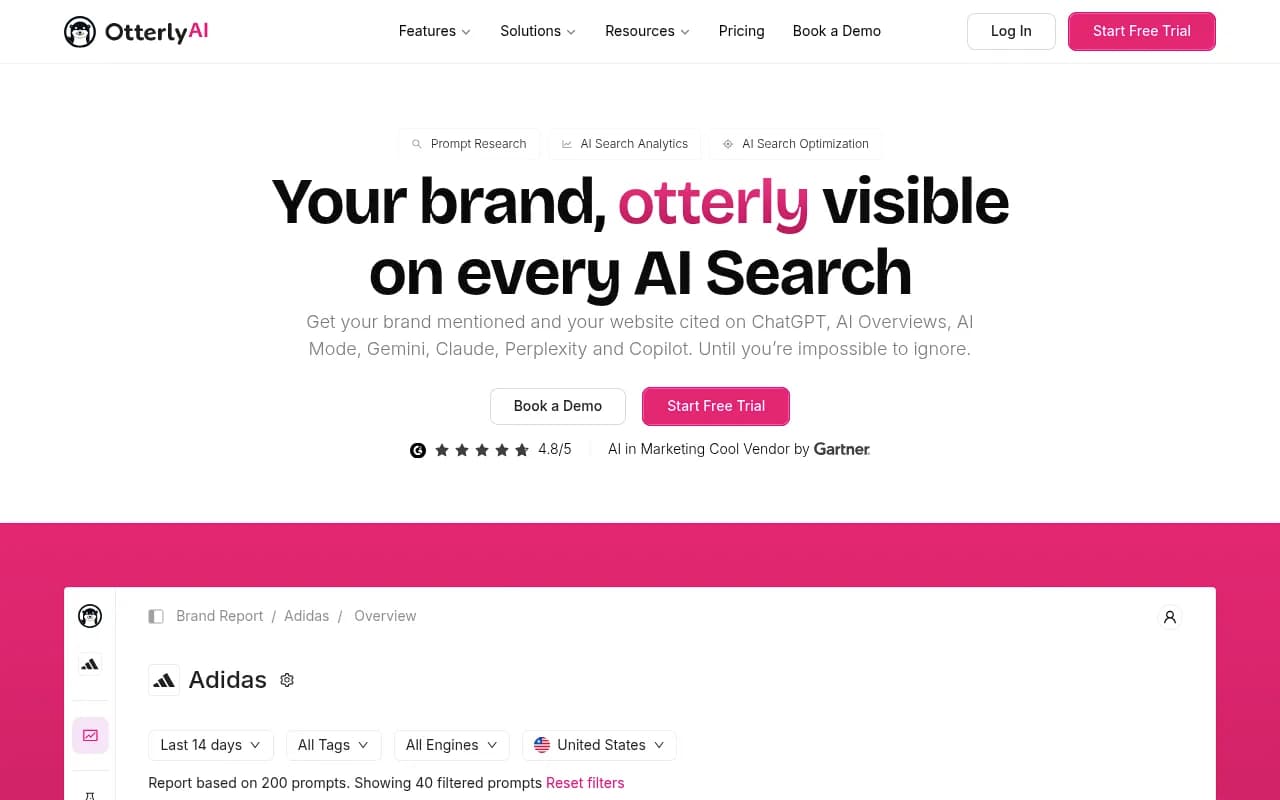
To be fair: if you need daily tracking on four engines for well under $200 a month, you may not need to switch at all. The instantpress review says as much, and I agree.
What "real ChatGPT answers" actually means
This phrase gets abused, so here is the practical version. Some trackers call model APIs and record what comes back. Others drive the real user interface, in a given country and language, and record what a person would see. User-facing answers, citations, and shopping recommendations can differ from API output. If your goal is to know what customers see, interface-level collection is the safer bet. If you want to know what a model believes from training data, API tracking is useful on its own.
I haven't verified how every tool below collects data, so ask each vendor directly. Three questions are worth asking in a demo:
- Do you collect from the real ChatGPT interface, or from the API?
- Can I set country, language, and city for each prompt set?
- Do you record the fan-out queries ChatGPT runs behind the scenes?
That last one matters. Promptwatch's ChatGPT query fanout data shows average web searches per response fell from 2.15 in early December to about 1.84 by early March, and the queries themselves are short and keyword-like (around 53 characters once fanouts returned in April). A tool that logs the real fan-outs shows you the searches you actually need to rank for.
Why a yes/no mention is the wrong metric
According to Promptwatch Data (Sep 28 to Oct 4, 2026), 47.6% of ChatGPT responses with citations cite 10 or more different domains, and 66.1% cite at least 8. Only 6% cite three or fewer. For general organic prompts, 52.5% cite 10 or more.
So you almost never have the answer to yourself. What matters is where you sit in the response, how ChatGPT describes you, and who gets cited next to you. Brand-specific prompts like "is Asana good for small teams" are tighter: the most common count is 5 domains, at 14.9% of responses. But even there, a single prompt tells you very little. Any tool worth buying should measure across many prompts and show competitors in the same responses.
The 7 alternatives at a glance
| Tool | Best for | Standout | Execution layer |
|---|---|---|---|
| Promptwatch | Teams that want to fix visibility, not just watch it | Real-UI tracking, crawler logs, Content Agent | Yes |
| Peec AI | Marketing teams wanting a clean tracker | Simple dashboards, suggestions | Limited |
| Profound | Enterprise compliance and many markets | Depth and scale | Limited |
| Scrunch | Brands and agencies | Monitoring plus agent-ready pages | Partial |
| AthenaHQ | Brands wanting recommendations | Action-oriented insights | Partial |
| Semrush AI Visibility Toolkit | Teams already on Semrush | One suite for SEO and AI | No |
| Ahrefs Brand Radar | Teams already on Ahrefs | Broad brand tracking | No |
1. Promptwatch
Promptwatch is the one I'd look at first if your frustration with Otterly is "fine, I can see the problem, now what?" It monitors the real interfaces of ChatGPT, Google AI Overviews, Google AI Mode, Gemini, Perplexity, Copilot, Meta AI, and Alexa, in each country and language you choose, and tracks API models like Claude, DeepSeek, Mistral, and Grok alongside. Every plan includes all supported models, which removes the add-on math that hurts on Otterly.

The difference is the loop. After tracking, you can see which of your pages get cited, and IP-verified AI crawler logs show whether bots such as GPTBot or ClaudeBot can read your site at all. That separates an access problem from a content problem. Then the Action Board prioritizes fixes, and on Business the Content Agent writes and publishes pages to WordPress, Webflow, or Framer. Visitor analytics measure whether the AI traffic converts. Crisp, for example, reported 2x higher conversion rates from AI traffic and scaled to 5 to 10 articles a day (case study).
Pricing, per the pricing page: Essential is $95 a month (50 prompts), Professional $245 (150 prompts), and Business $579 (350 prompts, Content Agent, hourly tracking options, local targeting, Fact Check). Agencies start at $199 for Kick-off. There is a 7-day free trial on monthly billing. Be aware that Essential has no crawler logs or AEO articles, so the full stack starts at Professional and Business.
Side by side with Otterly, Promptwatch costs more at the entry level and is overkill if you only want a rank-style dashboard. See Promptwatch's 2026 comparison of GEO platforms for the broader field. A free AI visibility report is a low-commitment way to try it.
2. Peec AI
Peec AI is the usual pick for marketing teams that want a clean tracker at a mid-range price. The interface is tidy, the setup is quick, and it adds suggestions on top of monitoring. It is closer to Otterly in spirit than most tools here, which makes it an easy swap if your only complaint is prompt limits or engine add-ons.

What it lacks, compared with a full platform, is the layer underneath: crawler logs, visitor analytics, and content generation. See the Promptwatch vs Peec page for a vendor-authored comparison, and treat it accordingly.
3. Profound
Profound targets enterprises that need compliance, many markets, and depth. Third-party listicles cite pricing starting around $499 a month, but I haven't verified that on Profound's own page, so check before you plan around it. It is a strong monitoring product, and it is priced like one.

The trade-offs people raise are cost, no Reddit tracking, no ChatGPT Shopping, and no agentic execution. If procurement checklists and enterprise reporting are the point, it earns its place. If you are a team of three, it probably doesn't. Compare directly on Promptwatch vs Profound.
4. Scrunch
Scrunch pairs AI search monitoring with agent-ready pages for your site, so it goes a step beyond reporting. It suits brands and agencies who want to adjust how their content is served to AI agents, not just watch scores.

It is a serious option if the technical side of making your site readable to AI is your main concern. Pricing details aren't something I've verified, so ask for a quote.
5. AthenaHQ
AthenaHQ leans toward recommendations rather than raw charts. If your team gets stuck at the "so what" stage of an Otterly report, its action-oriented approach may help.

It is still primarily a monitoring-focused product. It lacks CMS publishing and the crawler-level data that would tell you why a page isn't being cited.
6. Semrush AI Visibility Toolkit
If your team already lives in Semrush, adding its AI Visibility Toolkit keeps SEO and AI tracking in one place and one invoice. That is a real advantage for reporting.
The catch is the usual one with suites that bolt on AI tracking: fixed prompt sets and shallower AI-specific data. Good if consolidation is your priority, less good if AI visibility is the main project.
7. Ahrefs Brand Radar
Ahrefs Brand Radar tracks your brand across AI search engines and slots neatly into an existing Ahrefs workflow.

Like Semrush, it is built for teams that already trust the suite. You get broad brand tracking, but not the prompt-level controls, crawler logs, or content execution you'd get from a dedicated platform.
Cheaper alternatives worth a look
If the real issue is price, several budget trackers show up repeatedly in third-party roundups. Figures below come from those listicles and are unverified, so confirm on the vendor sites.
| Tool | Reported entry price | Note |
|---|---|---|
| ZipTie | About $69/mo | Content optimization angle |
| Peekaboo | About $50/mo | 40 prompts, 5 engines |
| AIclicks | About $39/mo | Keyword tracking |
| Rankscale | Credit-based | Pay by credits |
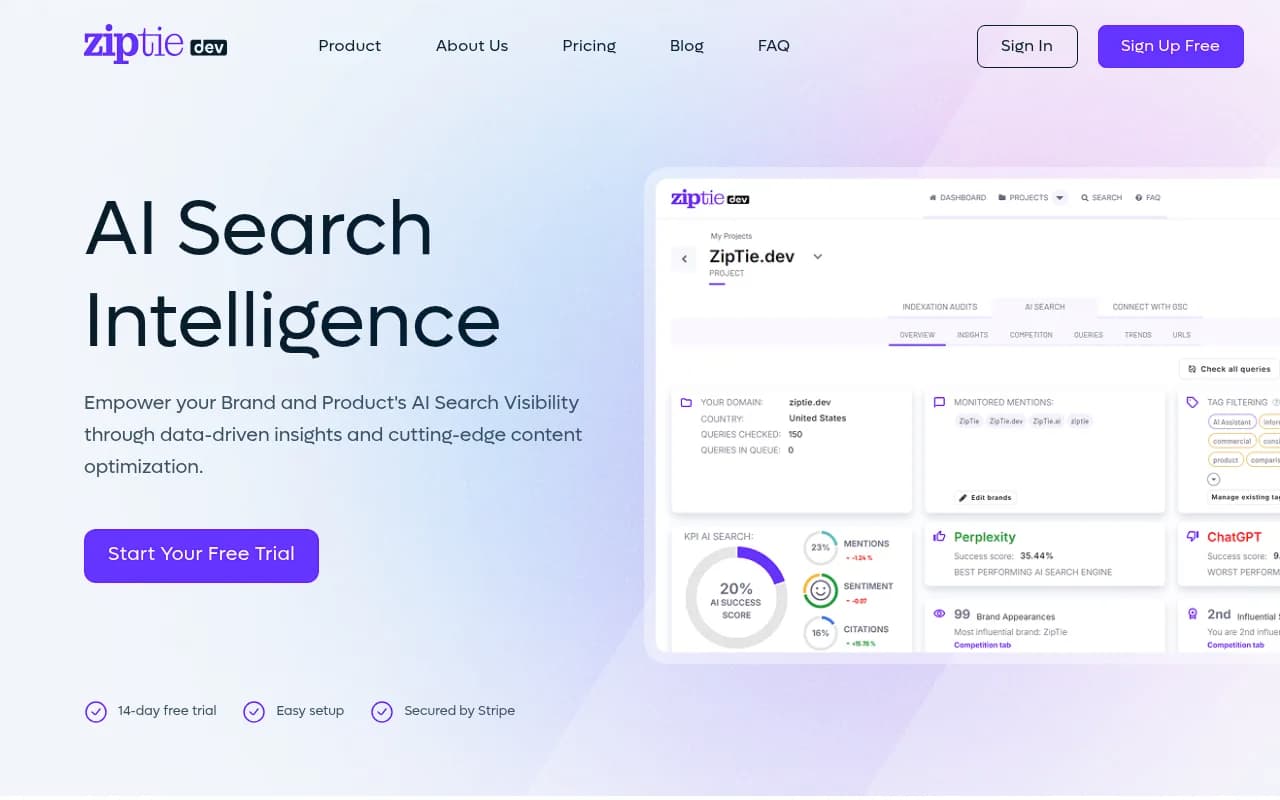
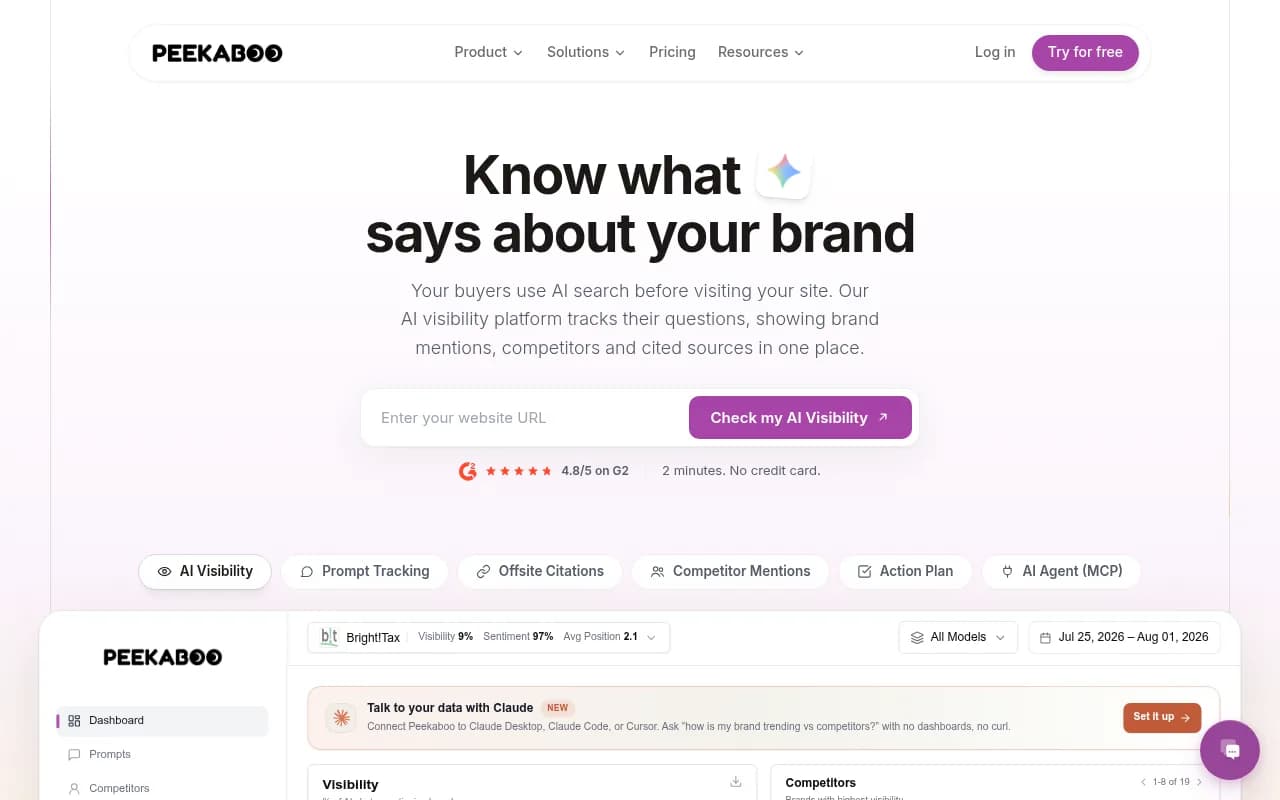
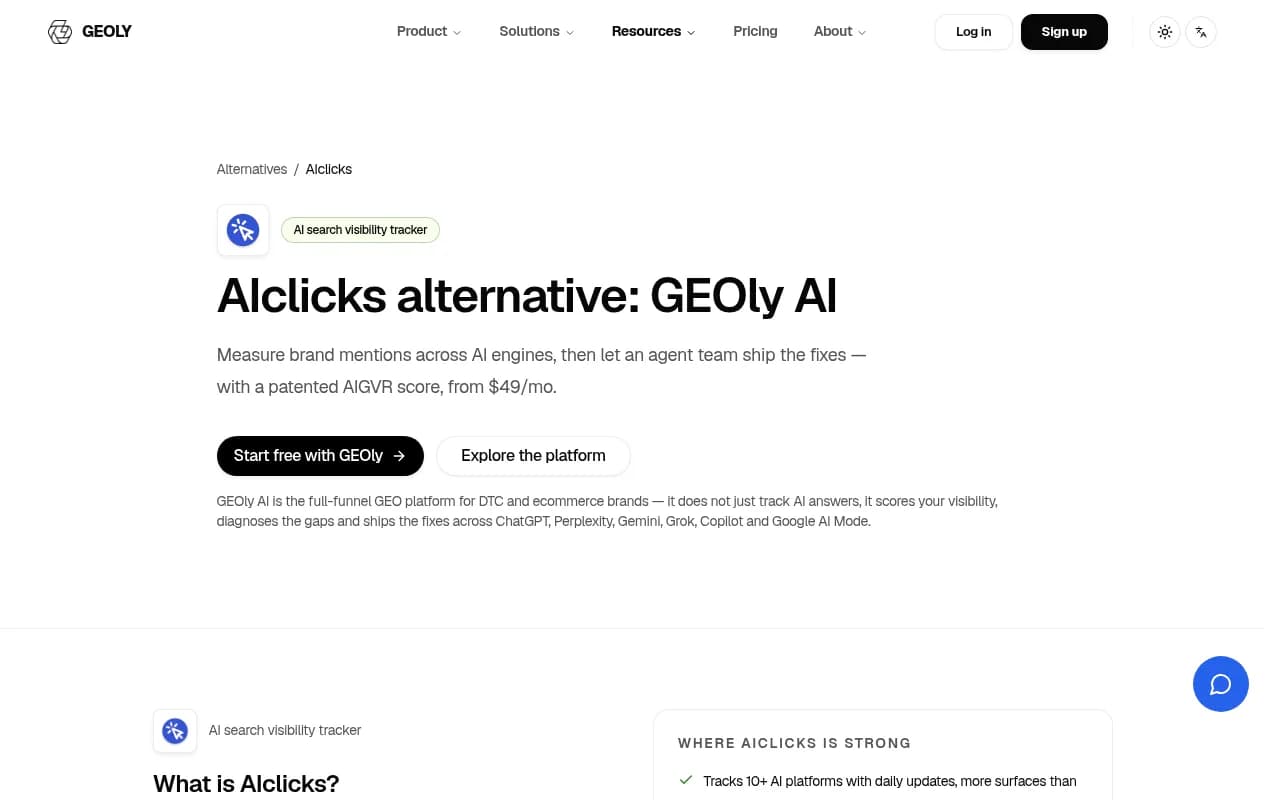
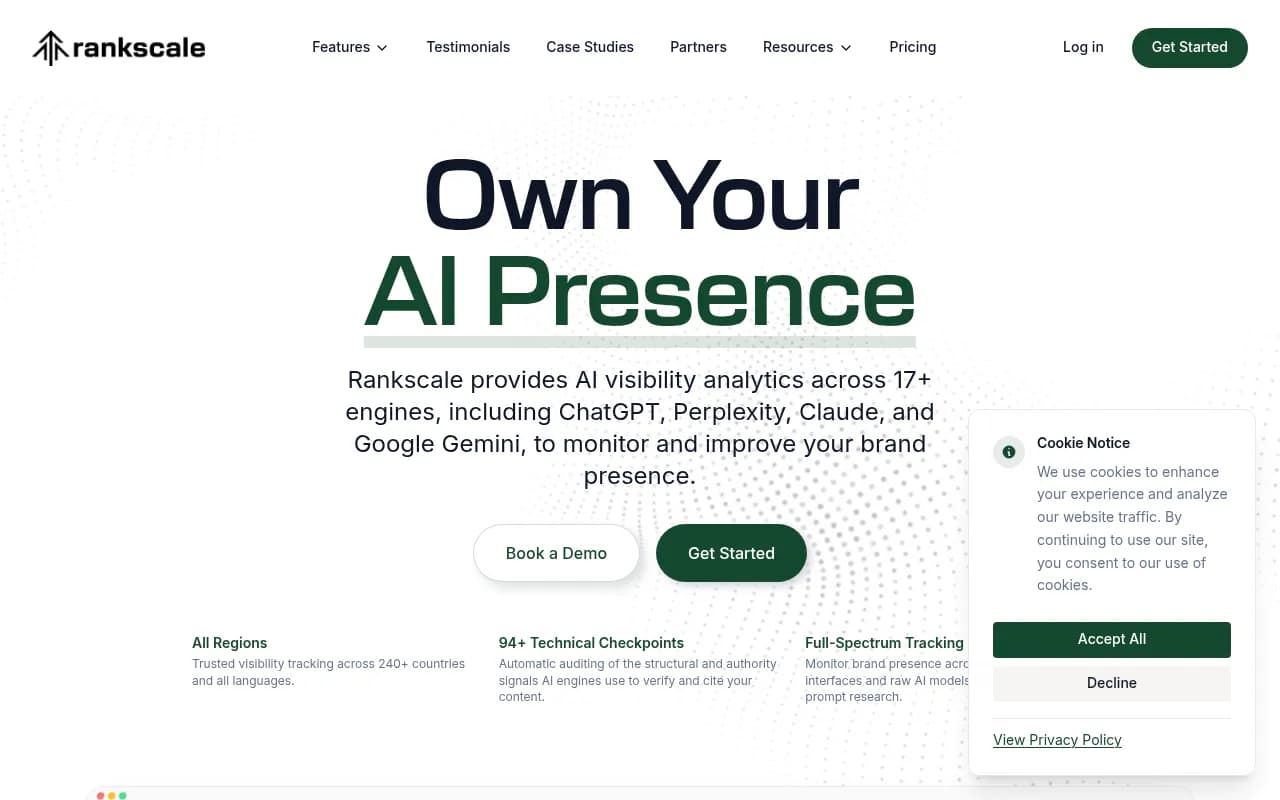
For a wider look, the directories at bestgeosoftware.com and ai-rank-tools.com list many more.
How to choose
Start from the problem you actually have.
- You hit Otterly's prompt or engine ceiling: Peec AI or Promptwatch.
- You need to act on what you see: Promptwatch, Scrunch, or AthenaHQ.
- You need enterprise controls: Profound or Promptwatch Enterprise.
- You already pay for a suite: Semrush or Ahrefs, accepting the shallower data.
Then run a two-week trial with the same 30 to 50 prompts in two tools and compare. Check the exact responses against what you see yourself in the ChatGPT interface. If the tool's answers don't match, that tells you everything about its collection method.
Final take
Otterly is still a fair choice for cheap, daily monitoring on a handful of engines. Once you need more prompts, more markets, or a way to turn gaps into published pages, move to a tool that collects from real interfaces and closes the loop. Of the seven here, Promptwatch is the one built around fixing and measuring, which is why 1001 SEO Media's own work relies on it. Verify prices on vendor pages, run a trial, and let your own prompts decide.