Key takeaways
- Series A investors increasingly want proof of "mindshare" -- not just traffic or MRR. AI search visibility data gives you a concrete, defensible way to show it.
- GEO (Generative Engine Optimization) platforms track whether AI engines like ChatGPT, Perplexity, and Gemini cite your brand when buyers ask relevant questions.
- The most useful platforms for fundraising go beyond monitoring: they show citation trends over time, competitor comparisons, and content gaps -- the kind of data that tells a story in a deck.
- Not all tools are built for startups. Some are enterprise-only, some are monitoring-only, and some lack the competitive benchmarking you need to make a compelling investor narrative.
- Promptwatch is the most complete option for startups that want to track, benchmark, and actively improve their AI visibility -- not just watch a dashboard.
Why investors are starting to ask about AI search
Something shifted in late 2025. Series A investors started adding a new line of questioning to their diligence process: "How does your brand show up when someone asks ChatGPT about this problem?"
It's not a trick question. It reflects something real. About 68% of Google searches ended without a click in early 2026, according to SparkToro's analysis of Similarweb clickstream data. ChatGPT hit roughly 900 million weekly active users in February 2026. Google's AI Overviews reach an estimated 2 billion people per month. When buyers are getting answers directly from AI engines -- without clicking through to websites -- the question of whether your brand gets cited in those answers is a legitimate business metric.
For a startup raising a Series A, this creates both a risk and an opportunity. The risk: if you can't show up in AI search for your category's core questions, you're invisible to a growing slice of your addressable market. The opportunity: most of your competitors haven't figured this out yet, and showing an investor a chart of your AI citation share climbing while competitors flatline is a genuinely differentiated data point.
This guide is about how to build that story -- which platforms to use, what data to pull, and how to frame it for a fundraising conversation.
Conductor's 2026 research found that 94% of marketing leaders are increasing AI search investment, and 32% of CMOs now rank AEO/GEO as their top priority. That's the environment your investors are operating in.
What "AI search visibility" actually means for a startup
Before picking a platform, it helps to be precise about what you're measuring.
AI search visibility (also called GEO -- Generative Engine Optimization) is the degree to which AI engines cite your brand, content, or products when users ask questions relevant to your category. It's different from traditional SEO rank tracking in a few important ways:
- There's no "position 1." You're either cited or you're not, and the context of the citation matters.
- The same prompt can return different answers depending on the AI engine, the user's location, and even the time of day.
- Citations often come from third-party sources -- Reddit threads, review sites, YouTube videos -- not just your own website.
- AI engines don't crawl the web the same way Google does. Some rely heavily on training data; others do live retrieval. Knowing which is which changes your strategy.
For a Series A pitch, the metrics that matter most are:
- Citation rate: how often your brand appears in AI responses for your target prompts
- Share of voice: your citation rate vs. competitors for the same prompts
- Trend over time: is your visibility growing, flat, or declining?
- Prompt coverage: how many of the questions your buyers are asking does your brand answer?
A good GEO platform gives you all four. A monitoring-only tool gives you the first two at best.
The platforms worth considering
Here's an honest look at the tools that are genuinely useful for startups in a fundraising context -- not just the ones with the best marketing.
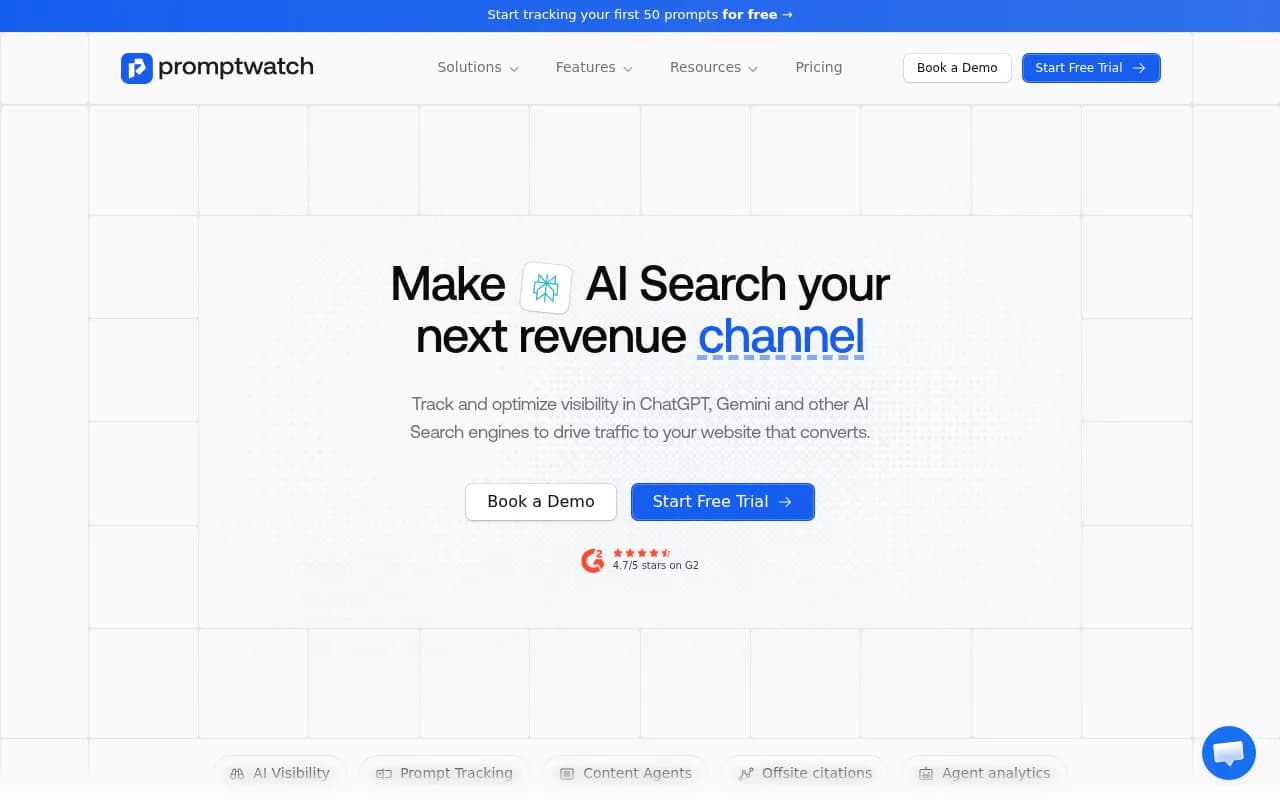
Promptwatch
Promptwatch is the platform I'd point most Series A-stage startups toward, and the reason is simple: it's the only one that closes the loop between finding gaps and fixing them.
Most GEO tools show you where you're invisible. Promptwatch shows you that, then helps you do something about it. Its Answer Gap Analysis surfaces the specific prompts where competitors are getting cited and you're not. Its Content Agents then generate articles, comparisons, and briefs designed to close those gaps -- grounded in real prompt data, not generic SEO templates.
For fundraising specifically, the competitive heatmaps are the most useful feature. You can pull a visual showing your AI citation share vs. two or three named competitors across 10 AI engines, filtered by your target prompts. That's a slide. It tells a story without needing explanation.
Promptwatch tracks 10 AI models: ChatGPT, Perplexity, Google AI Overviews, Google AI Mode, Claude, Gemini, Meta/Llama, DeepSeek, Grok, and Copilot. It also has AI crawler logs -- real-time data on when ChatGPT or Perplexity's crawlers hit your site, which pages they read, and when those pages move from crawl to citation. That's the kind of operational depth that shows investors you're not just watching a number, you're managing a system.
Pricing starts at $99/month for the Essential plan (1 site, 50 prompts, 5 articles). The Professional plan at $249/month adds crawler logs and competitive tracking across 2 sites.
Profound
Profound is the strongest dedicated monitoring platform for teams that need enterprise-grade tracking and reporting depth. It covers the major AI engines and gives you detailed citation analysis, source breakdowns, and trend data.
The limitation for early-stage startups is cost and complexity. Profound is priced for enterprise marketing teams, and its reporting is thorough in a way that can feel like overkill when you're trying to build a single compelling slide for a pitch deck. It's a better fit for post-Series B companies that have a full marketing ops team.
Otterly.AI
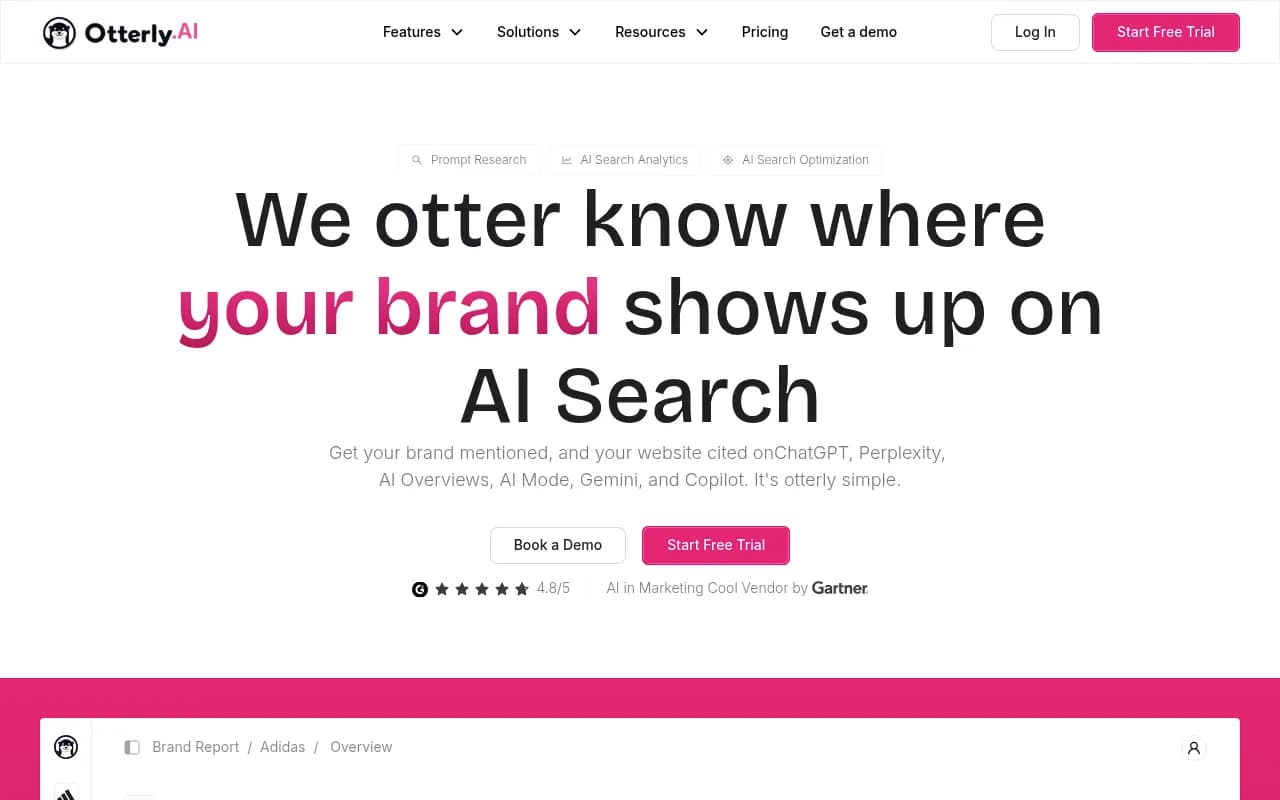
Otterly.AI is an affordable entry point for startups that just want to start tracking. It monitors AI brand mentions across the main engines and gives you a basic visibility score. The interface is clean and the setup is fast.
The honest limitation: it's monitoring-only. You get the data, but no guidance on what to do with it. For a fundraising narrative, you'd need to layer in your own analysis and content strategy on top of what Otterly shows you.
Peec AI
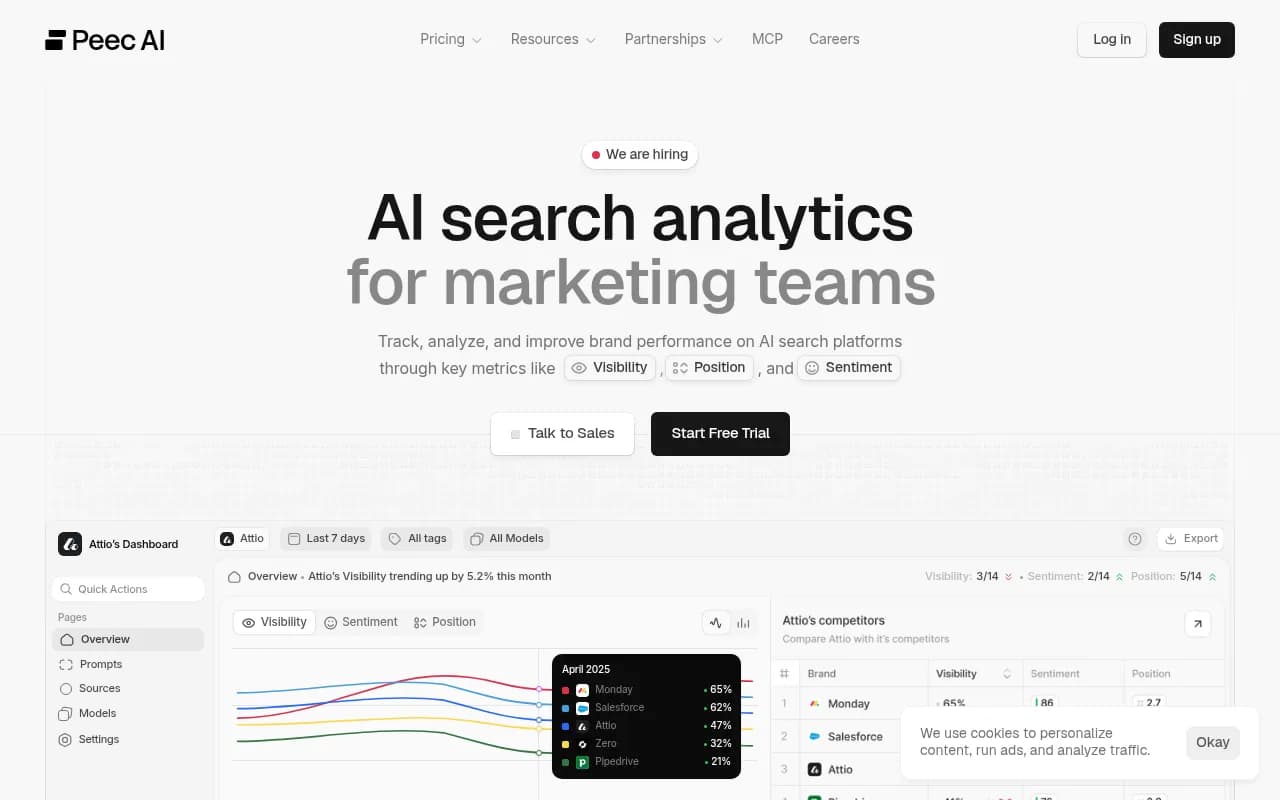
Peec AI sits in a similar tier to Otterly -- affordable, accessible, and focused on tracking rather than optimization. It has some smart suggestions built in, which is a step up from pure monitoring, but it doesn't have the content generation or competitive heatmap depth that makes a fundraising story easy to tell.
AthenaHQ
AthenaHQ has solid monitoring capabilities and a clean interface. It's a reasonable choice for teams that want structured AI visibility tracking without a steep learning curve. Like Profound, it skews toward monitoring rather than optimization -- you'll see where you stand, but the platform won't help you move the needle.
Scrunch AI
Scrunch offers real-time AI visibility monitoring with search journey mapping for AI-driven customer interactions. It's particularly useful for understanding how buyers move through AI-assisted research. For startups in categories where the buyer journey is complex and multi-touch, Scrunch's journey mapping can produce interesting data for investor conversations.

Search Party
Search Party is agency-oriented, which means it's built for managing multiple clients rather than going deep on a single brand. The real-time tracking and sentiment analysis are genuinely useful, but the prompt metrics are limited compared to platforms like Promptwatch, and there's no content gap analysis.
Comparison: which platform fits your stage and goal
| Platform | Monitoring | Competitive benchmarking | Content generation | Crawler logs | Best for |
|---|---|---|---|---|---|
| Promptwatch | Yes | Yes (heatmaps) | Yes (Content Agents) | Yes | Startups wanting full GEO loop |
| Profound | Yes | Yes | No | No | Enterprise monitoring depth |
| AthenaHQ | Yes | Limited | No | No | Clean monitoring, no frills |
| Scrunch AI | Yes | Limited | No | No | Journey mapping focus |
| Otterly.AI | Yes | Basic | No | No | Budget entry point |
| Peec AI | Yes | Basic | Suggestions only | No | Lightweight tracking |
| Search Party | Yes | Yes | No | No | Agency multi-client use |
The pattern is clear: most platforms stop at monitoring. For a startup building a fundraising narrative, monitoring alone gives you data but not a story. The platforms that help you act on what you find -- and show trend improvement over time -- are the ones that produce the kind of evidence investors find compelling.
How to build an investor narrative with GEO data
Getting the data is step one. Turning it into something that lands in a pitch meeting is step two. Here's how to structure it.
Frame it as a moat, not a metric
Investors at the Series A stage are looking for evidence of durable competitive advantage. AI search visibility, when you can show it growing while competitors stay flat, reads as a moat. You're not just saying "we have good content" -- you're showing that the AI engines buyers trust are consistently recommending you over alternatives.
The framing that works: "When a buyer asks [AI engine] about [your category problem], we appear in X% of responses. Our closest competitor appears in Y%. Six months ago, those numbers were reversed."
That's a story about momentum and execution, not just a vanity metric.
Use prompt coverage to show market understanding
One underrated data point is prompt coverage: how many of the questions your buyers are actually asking does your brand answer? A platform like Promptwatch surfaces these prompts with volume estimates and difficulty scores. Showing an investor a list of 40 high-intent prompts in your category, with your citation rate for each, demonstrates that you understand your buyer's information journey in a way most competitors don't.
It also opens a natural conversation about content strategy -- which is increasingly a defensible asset in AI-native markets.
Show the citation source mix
Where your citations come from matters. If 80% of your AI citations come from your own website, that's fragile -- one algorithm change and it's gone. If your citations come from a mix of your site, third-party review platforms, Reddit discussions, and industry publications, that's a more durable signal.
Platforms like Promptwatch track offsite citations -- the Reddit threads, YouTube videos, and third-party pages that drive AI visibility outside your own domain. Showing an investor that your brand is being recommended in organic community discussions, not just on your own pages, is a meaningful data point about genuine market traction.
Build a before/after timeline
The most compelling investor data is trend data. If you started tracking AI visibility six months ago and can show a chart of your citation rate climbing from 12% to 34% for your top 20 prompts, that's evidence that your content and GEO strategy is working.
Promptwatch's agent analytics shows the timeline from content publish to AI crawler visit to first citation. That's a closed loop you can present as a repeatable system: "We identify gaps, publish content, and within X weeks we're being cited. We've done this 15 times."
What to actually put in the deck
Keep it tight. Investors don't need a GEO tutorial -- they need to see the signal clearly. Here's what works:
One slide showing your AI citation share vs. two named competitors across the top 5 prompts in your category. Use a heatmap or bar chart. The visual should be immediately readable.
One slide showing trend over time -- your citation rate for your target prompt set over the last 6-12 months. If the line goes up and to the right, let it speak for itself.
One slide showing prompt coverage -- how many buyer questions you're answering vs. competitors. Frame this as "we're present in X% of the AI-assisted research journey for [category]."
If you have traffic attribution data connecting AI citations to actual signups or revenue, include that. It's the strongest possible signal because it closes the loop from visibility to business outcome.
The practical setup for a startup
If you're starting from scratch with 8-12 weeks before a fundraising process, here's a realistic sequence:
-
Pick a platform and set up prompt tracking immediately. You need at least 8 weeks of trend data to show meaningful movement. Promptwatch's Essential plan at $99/month is enough to get started.
-
Run an answer gap analysis in week one. Find the 20-30 prompts where competitors are visible and you're not. These become your content priorities.
-
Publish content targeting those gaps in weeks 2-6. Use the platform's content tools or your own team -- the key is publishing quickly and letting AI crawlers find the new pages.
-
Track citation changes weekly. By week 8-10, you should see movement on the prompts you targeted.
-
Export the trend data and build your slides. The chart from week 1 to week 12 is your story.
This isn't a guarantee -- GEO results depend on your category, your content quality, and how competitive the prompt landscape is. But it's a realistic timeline for generating meaningful data before a Series A process.
A note on what investors are actually looking for
Not every Series A investor will know what GEO is. Some will. The ones who don't will still respond to the underlying story: "Buyers in our category are increasingly using AI to research solutions. We've built a systematic approach to being recommended in those conversations, and here's the data showing it's working."
That's a story about market awareness, execution discipline, and a defensible channel. It doesn't require the investor to understand the technical details of how Perplexity indexes content.
The investors who do know GEO -- and there are more of them every month -- will ask sharper questions. They'll want to know which engines you're tracking, how you're measuring citation quality vs. quantity, and whether your visibility is driven by your own content or third-party sources. Having a platform like Promptwatch behind your data means you can answer those questions with specifics, not hand-waving.
94% of marketing leaders are increasing AI search investment in 2026, according to Conductor's research of 250+ enterprise leaders. The investors backing those companies are paying attention to the same shift. Showing up to a Series A with GEO data isn't a gimmick -- it's evidence that you're building for the way buyers actually behave right now.