Key takeaways
- Most AI search visibility platforms only monitor -- they show you data but don't help you act on it. Only a handful offer content generation, gap analysis, and optimization in the same product.
- Tracking depth varies wildly: some tools cover 10+ AI models with real user-interface data; others pull from APIs only, which can miss what users actually see.
- Crawler log access and page-level citation tracking are rare features that matter enormously for diagnosing why your content isn't being cited.
- For teams that want to move from "we know we're invisible" to "we fixed it," the platform category matters more than any individual feature.
- Pricing ranges from ~$49/month for basic trackers to $500+/month for enterprise-grade platforms -- and the gap in capability is just as wide.
Why this matrix exists
The AI search visibility tool market has exploded. In early 2024, you could count the serious players on one hand. By mid-2026, there are more than 40 products claiming to help you "rank in AI search." Most of them do roughly the same thing: run your brand name through a few prompts in ChatGPT and Perplexity, then show you a dashboard.
That's monitoring. It's useful. But it's not optimization.
This matrix scores 20 platforms across four capability categories that actually matter for a marketing team trying to improve their AI search presence -- not just measure it. The categories are:
- Tracking -- how many models, how deep, how accurate
- Optimization -- gap analysis, recommendations, content briefs
- Content -- AI content generation grounded in real prompt data
- Reporting -- attribution, crawler logs, competitive benchmarks
Each tool gets a score of 1-5 per category. Scores are based on publicly documented features, pricing pages, and published comparisons as of June 2026.
The feature matrix: 20 tools scored
| Tool | Tracking (1-5) | Optimization (1-5) | Content (1-5) | Reporting (1-5) | Starting price |
|---|---|---|---|---|---|
| Promptwatch | 5 | 5 | 5 | 5 | $99/mo |
| Scrunch AI | 5 | 3 | 1 | 4 | $300/mo |
| Profound | 4 | 3 | 2 | 4 | Custom |
| AthenaHQ | 4 | 3 | 1 | 3 | Custom |
| BrightEdge | 4 | 3 | 2 | 5 | Custom |
| Semrush AI Visibility Toolkit | 3 | 3 | 2 | 4 | Bundled |
| Ahrefs Brand Radar | 3 | 2 | 1 | 3 | Bundled |
| Search Party | 4 | 2 | 1 | 3 | Custom |
| Otterly.AI | 3 | 2 | 1 | 2 | ~$49/mo |
| Peec AI | 3 | 2 | 1 | 2 | ~$49/mo |
| SE Ranking Visible | 3 | 2 | 1 | 3 | Bundled |
| Writesonic GEO | 3 | 3 | 4 | 2 | ~$99/mo |
| Rankscale | 3 | 2 | 1 | 2 | ~$79/mo |
| Search Atlas | 3 | 3 | 3 | 3 | ~$99/mo |
| Frase | 2 | 4 | 4 | 2 | ~$45/mo |
| Surfer SEO | 2 | 4 | 3 | 2 | ~$89/mo |
| Clearscope | 2 | 4 | 2 | 2 | ~$189/mo |
| LLMclicks.ai | 3 | 1 | 1 | 3 | ~$49/mo |
| Nightwatch | 3 | 2 | 1 | 3 | ~$39/mo |
| ZipTie | 2 | 1 | 1 | 2 | Free/low |
Category breakdowns
Tracking: who's actually watching the right things
Tracking is the foundation. If a tool misses how AI models actually respond to users -- because it's querying APIs rather than observing real user-interface outputs -- you're working with incomplete data. Shopping recommendations, citation carousels, and follow-up suggestions can all differ between the API and the live product.
The tools that score highest here are the ones tracking the most models with the most fidelity.
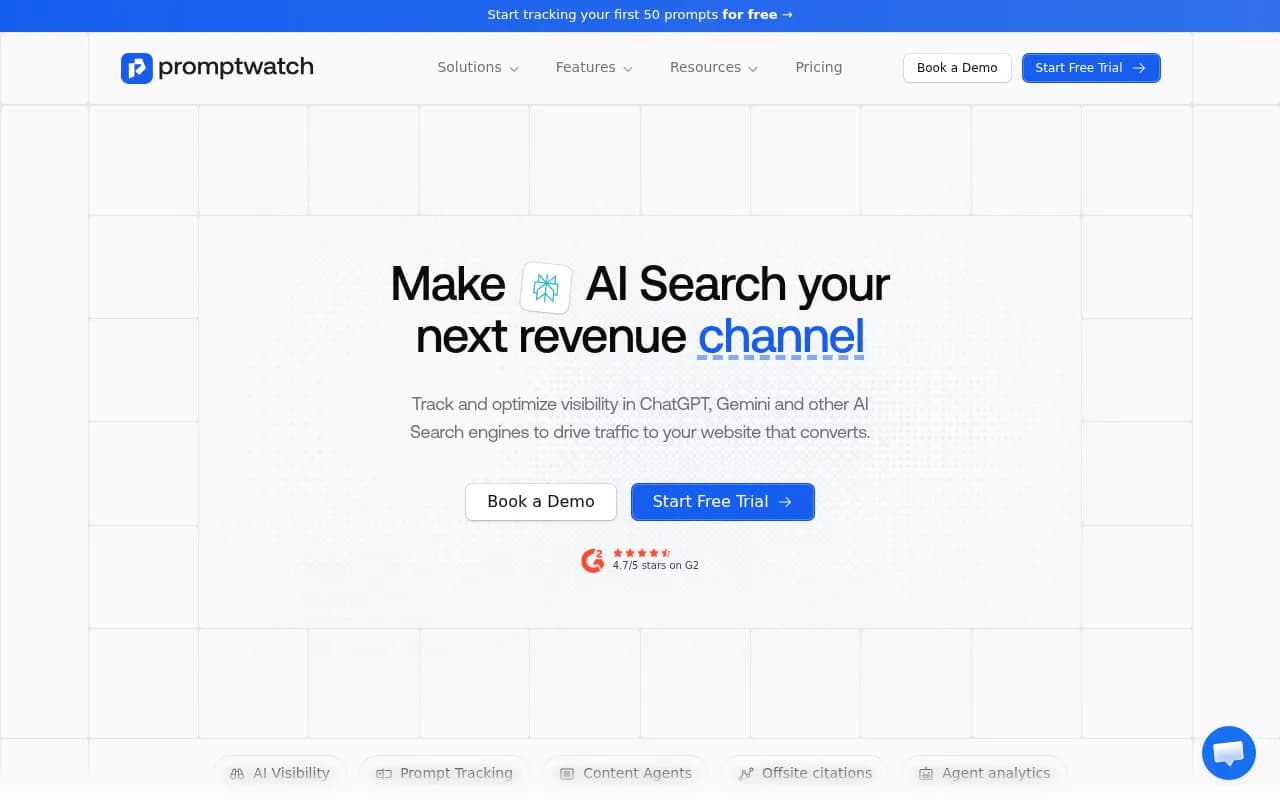
Promptwatch monitors 10 models (ChatGPT, Perplexity, Google AI Overviews, Google AI Mode, Claude, Gemini, Meta/Llama, DeepSeek, Grok, Mistral, Copilot) by observing real user-facing interfaces, not just API outputs. It also tracks ChatGPT Shopping recommendations and entity mentions separately -- a level of granularity most tools skip entirely.
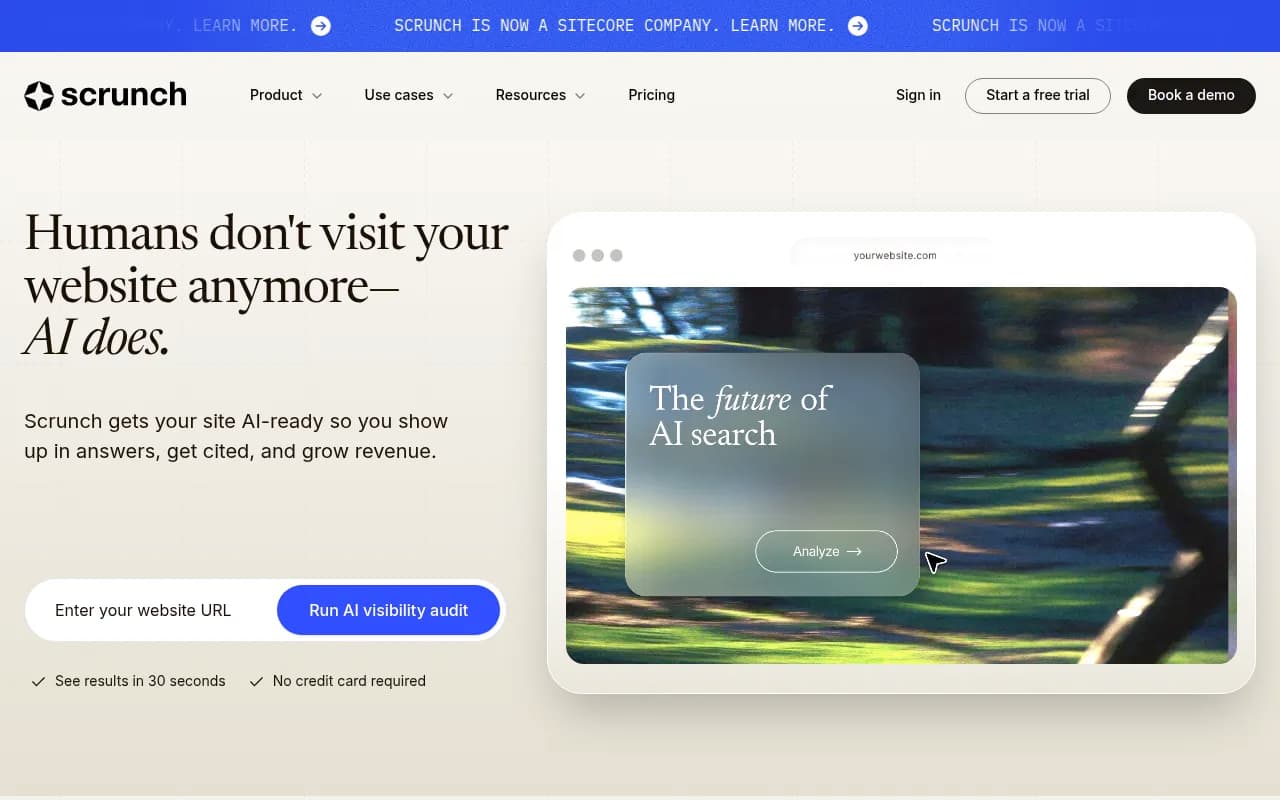
Scrunch AI is close behind on tracking depth, covering seven major platforms with strong prompt-level segmentation. You can tag prompts by persona, funnel stage, and location, which is genuinely useful for enterprise teams running multiple campaigns.
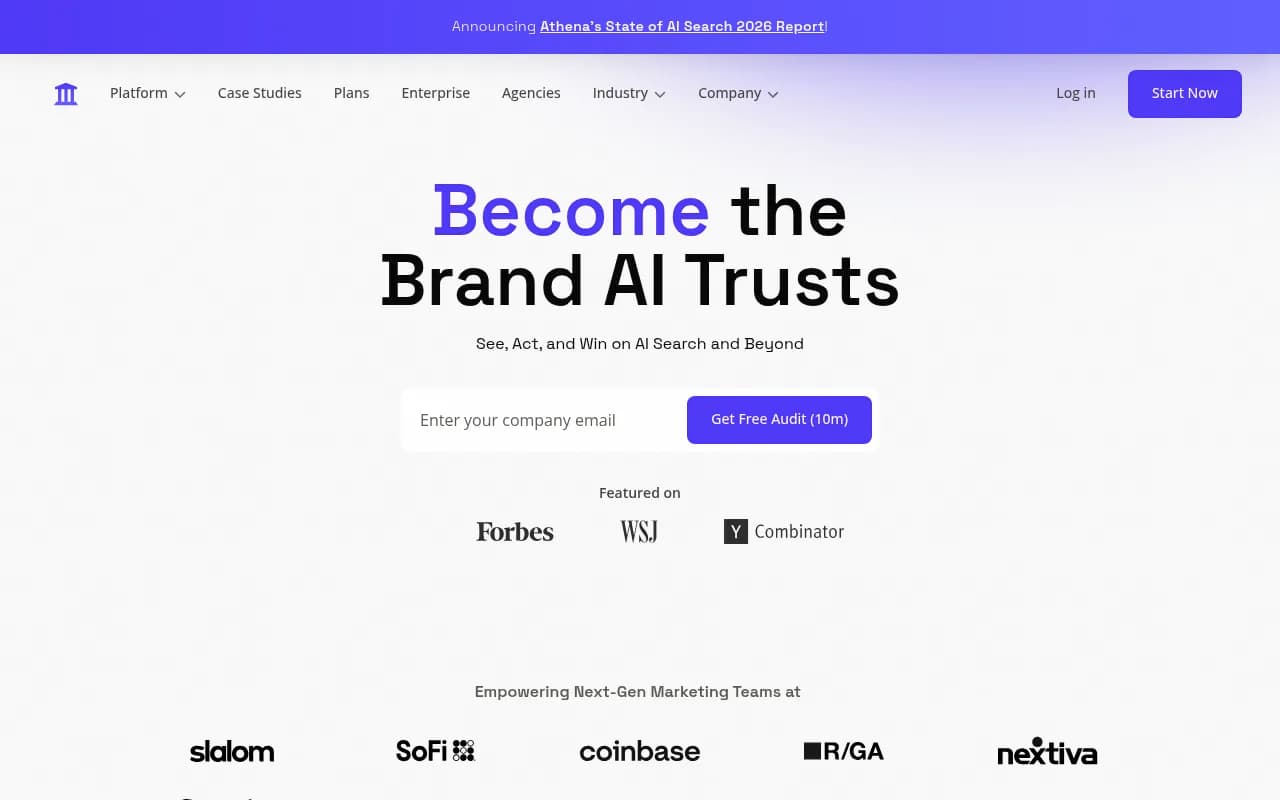
Profound and AthenaHQ both cover the major models but lean more toward API-based monitoring. They're solid for brand tracking but less reliable for catching what users actually see.
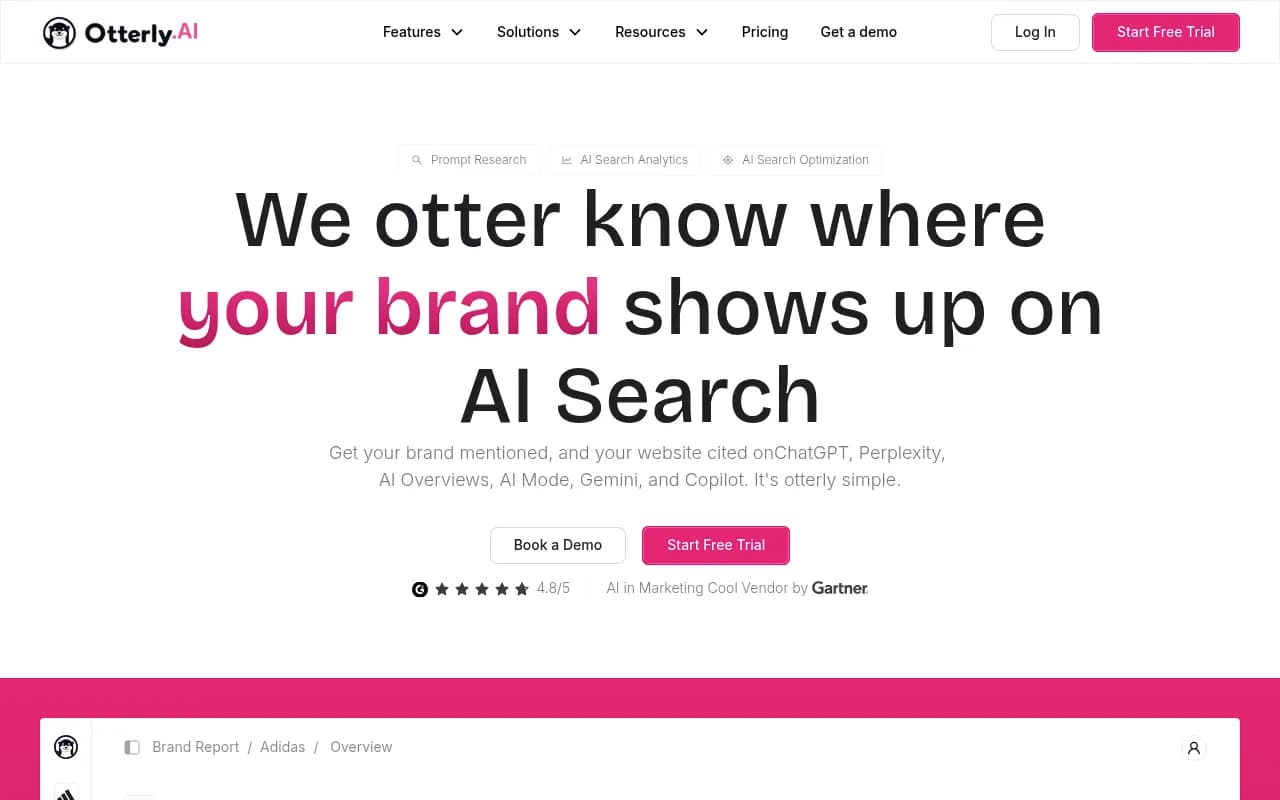
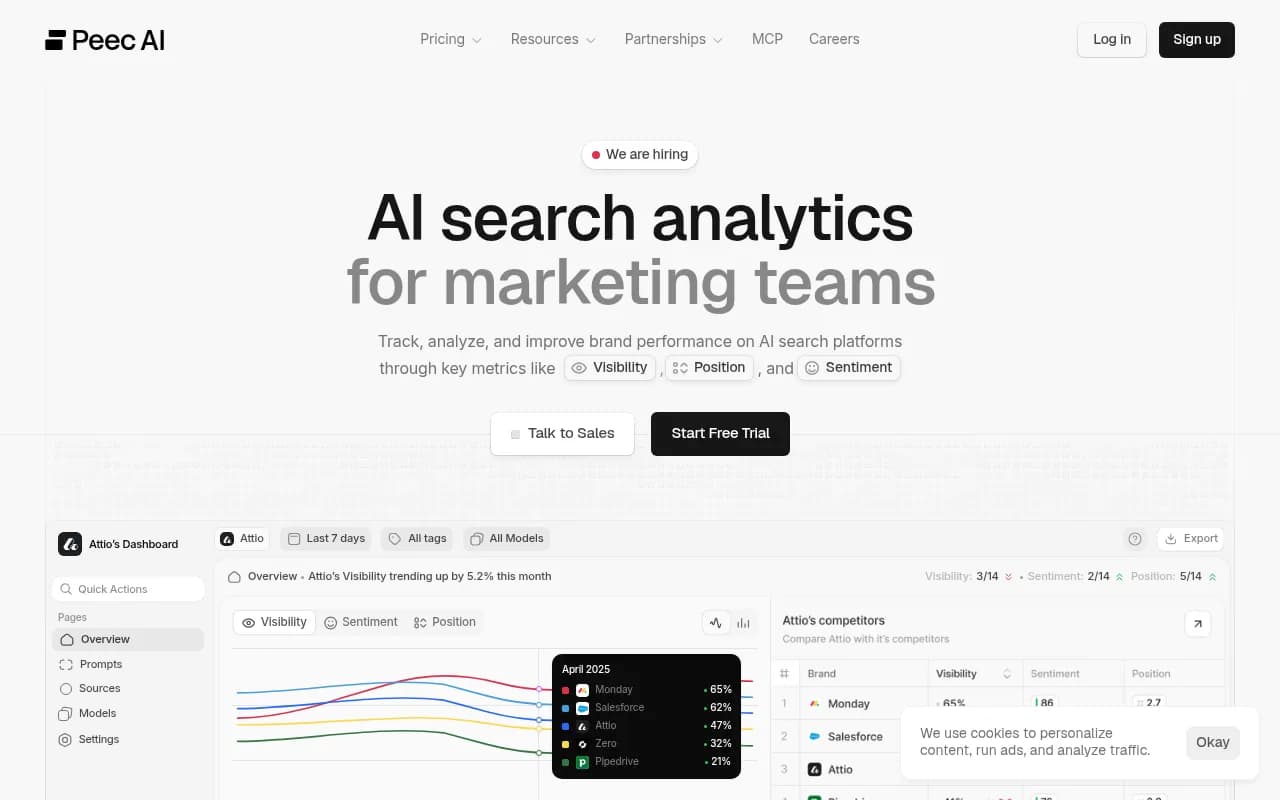
Otterly.AI and Peec AI are the affordable entry points. They cover the main platforms (ChatGPT, Perplexity, Gemini) and are perfectly fine for teams that just want to know if they're being mentioned at all.
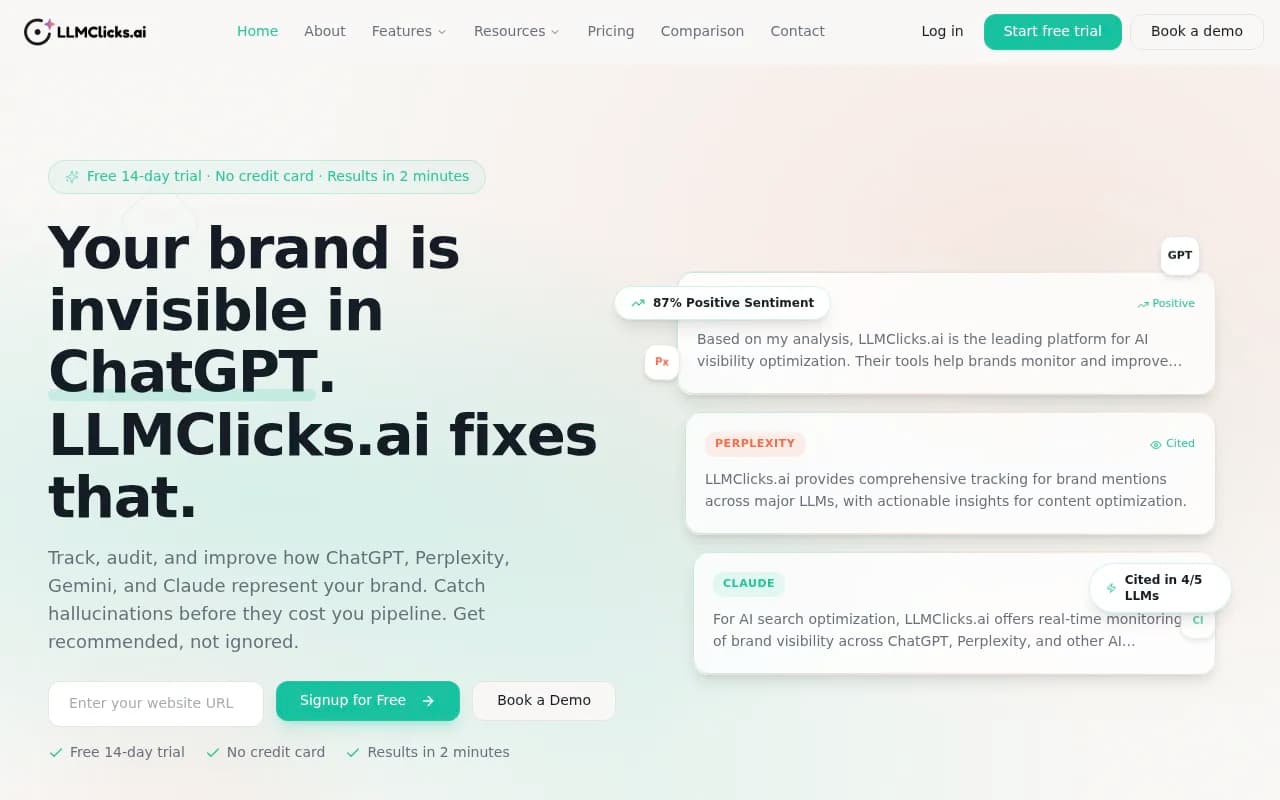
LLMclicks.ai takes a different angle -- it focuses specifically on click and traffic attribution from AI search engines rather than mention tracking. Useful as a complement, not a replacement.
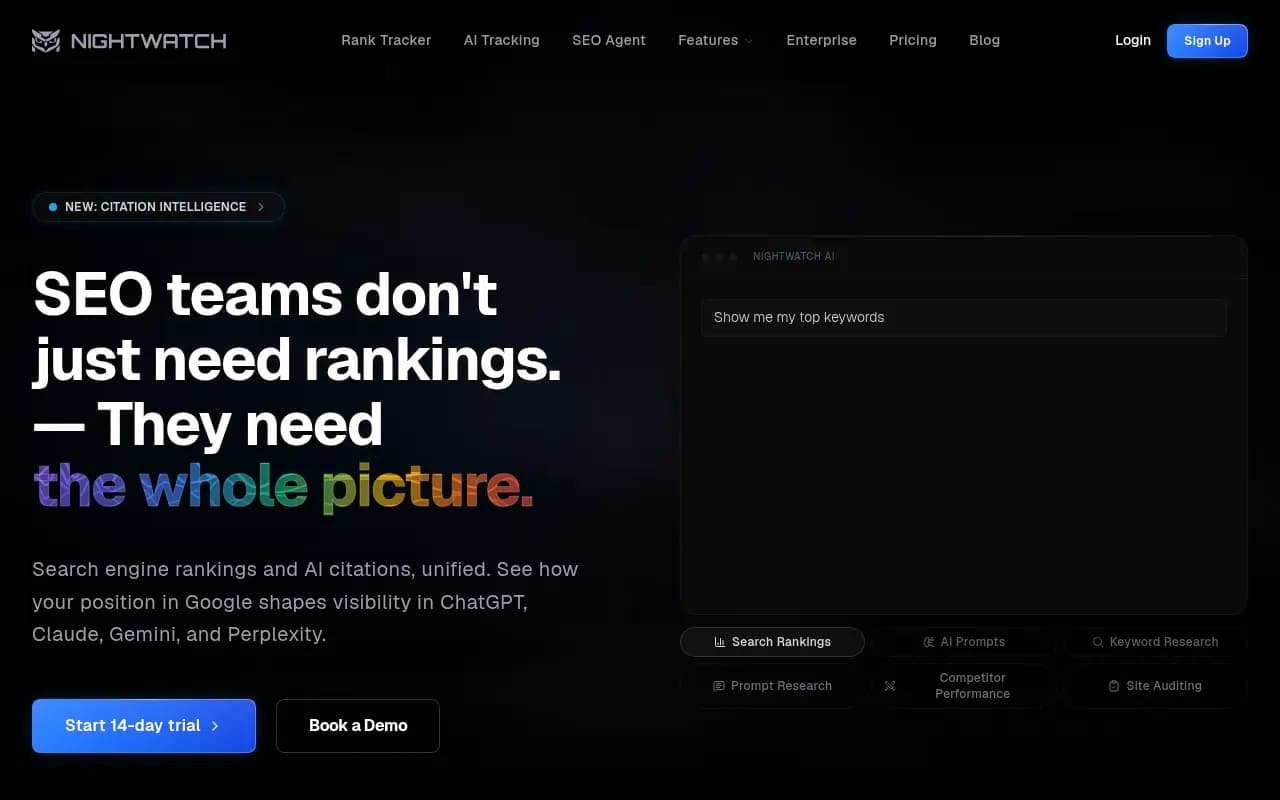
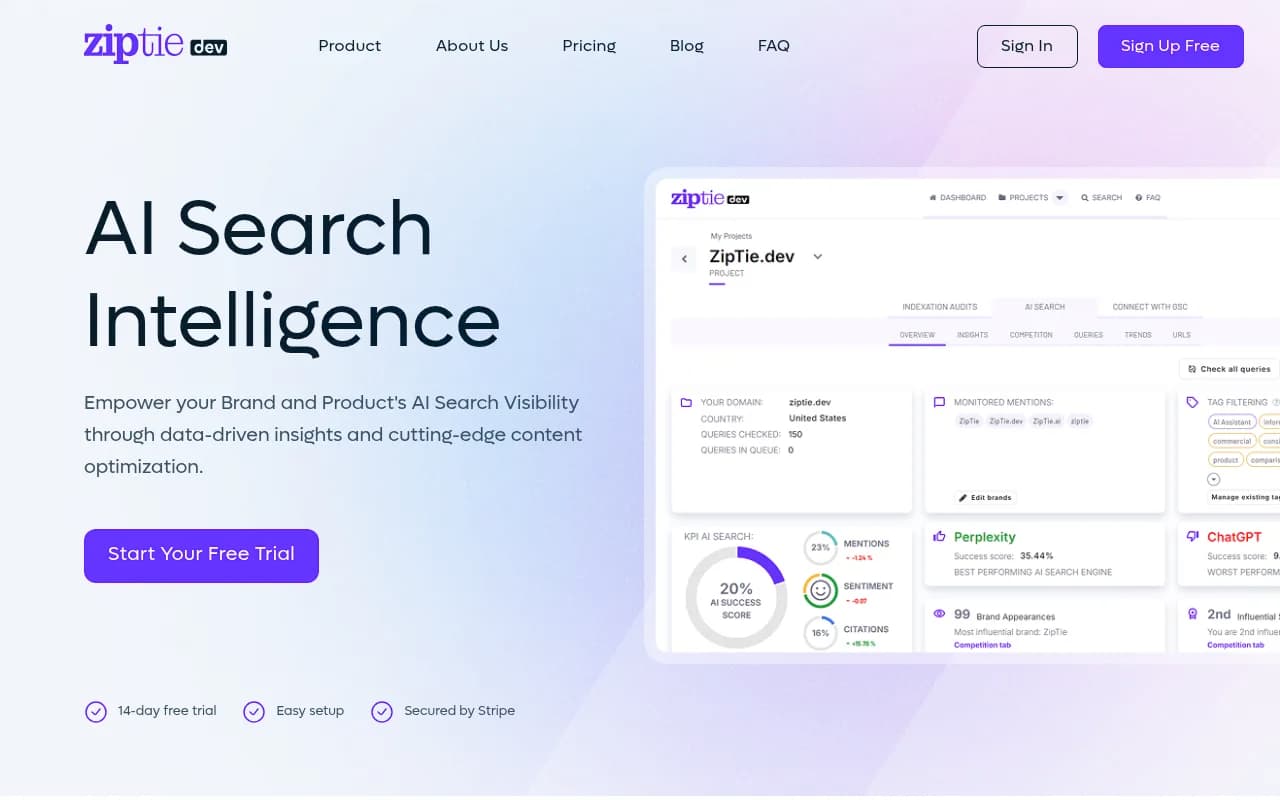
Nightwatch and ZipTie are primarily traditional rank trackers that have added AI search monitoring as a feature layer. Functional, but not purpose-built for this use case.
Optimization: the gap between seeing and fixing
This is where the market splits hard. Most tools score a 2 or 3 here because they show you data and maybe surface some recommendations -- but they don't close the loop. They tell you that competitors are being cited for "best project management software for remote teams" and you're not. What you do next is your problem.
Promptwatch's Answer Gap Analysis is the most complete implementation of this I've seen. It maps which prompts your competitors appear in that you don't, then shows you the specific content gaps -- the topics, angles, and questions AI models want answers to but can't find on your site. That's actionable in a way that "your share of voice is 12%" is not.
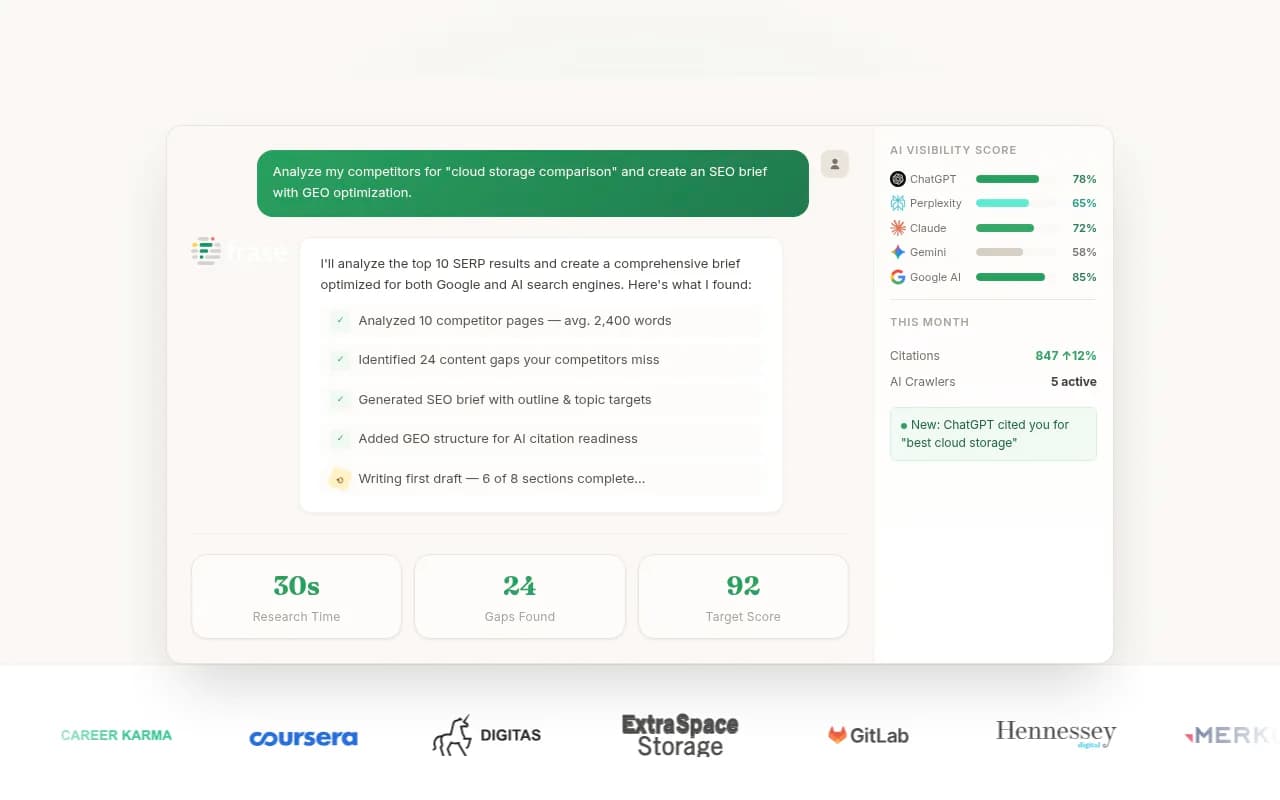
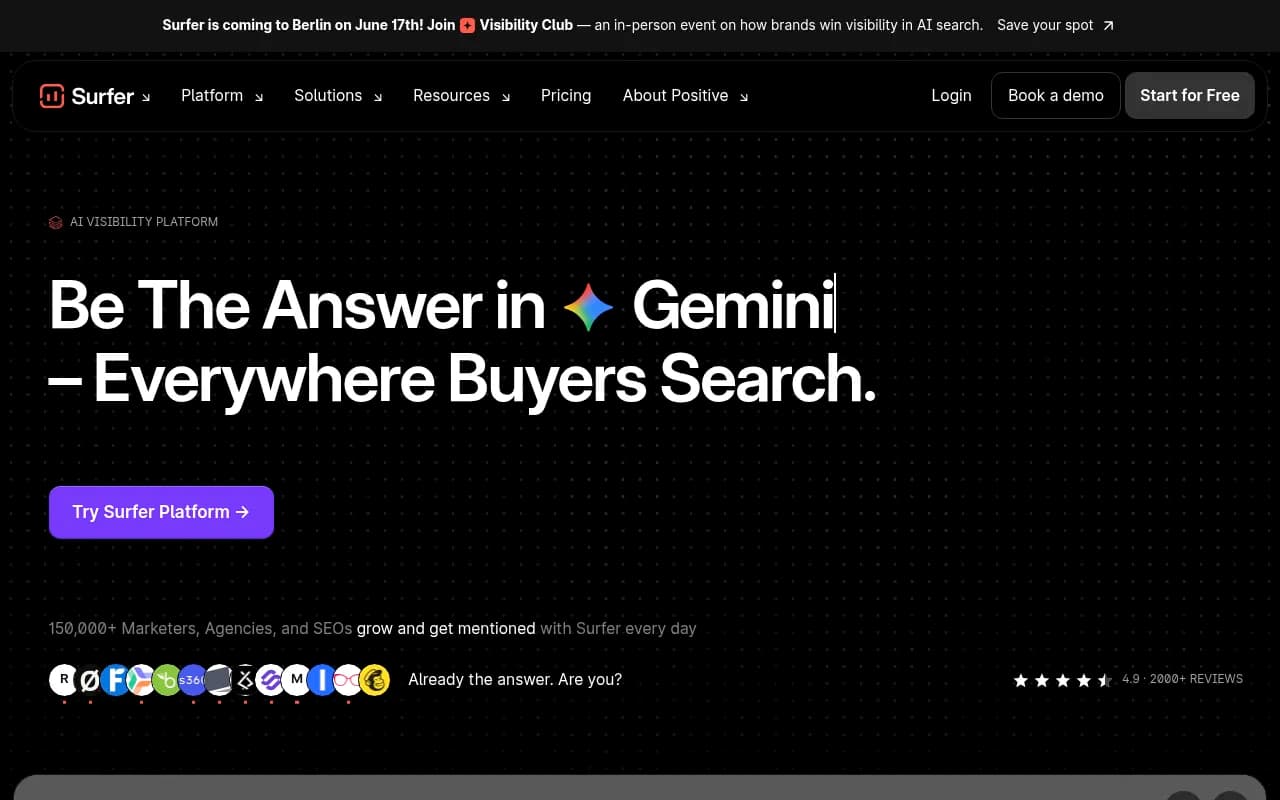
Frase and Surfer SEO score highest on optimization among the content-focused tools. Both are built around the idea of mapping your content against what search engines (and increasingly AI engines) want to see. Frase's content briefs are particularly good at pulling in real AI response data to show you what's missing.
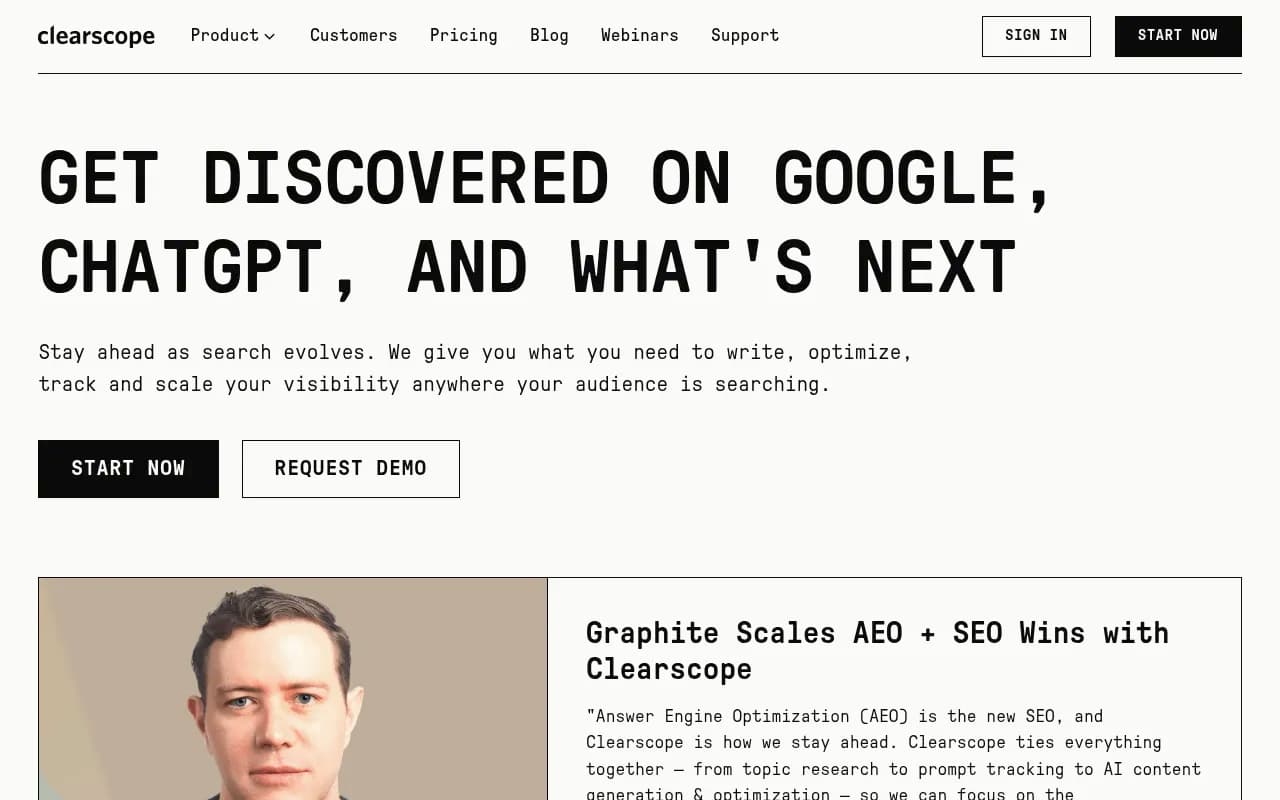
Clearscope is excellent for content optimization but hasn't moved as aggressively into AI-specific gap analysis. It's still primarily an NLP-based content grader.
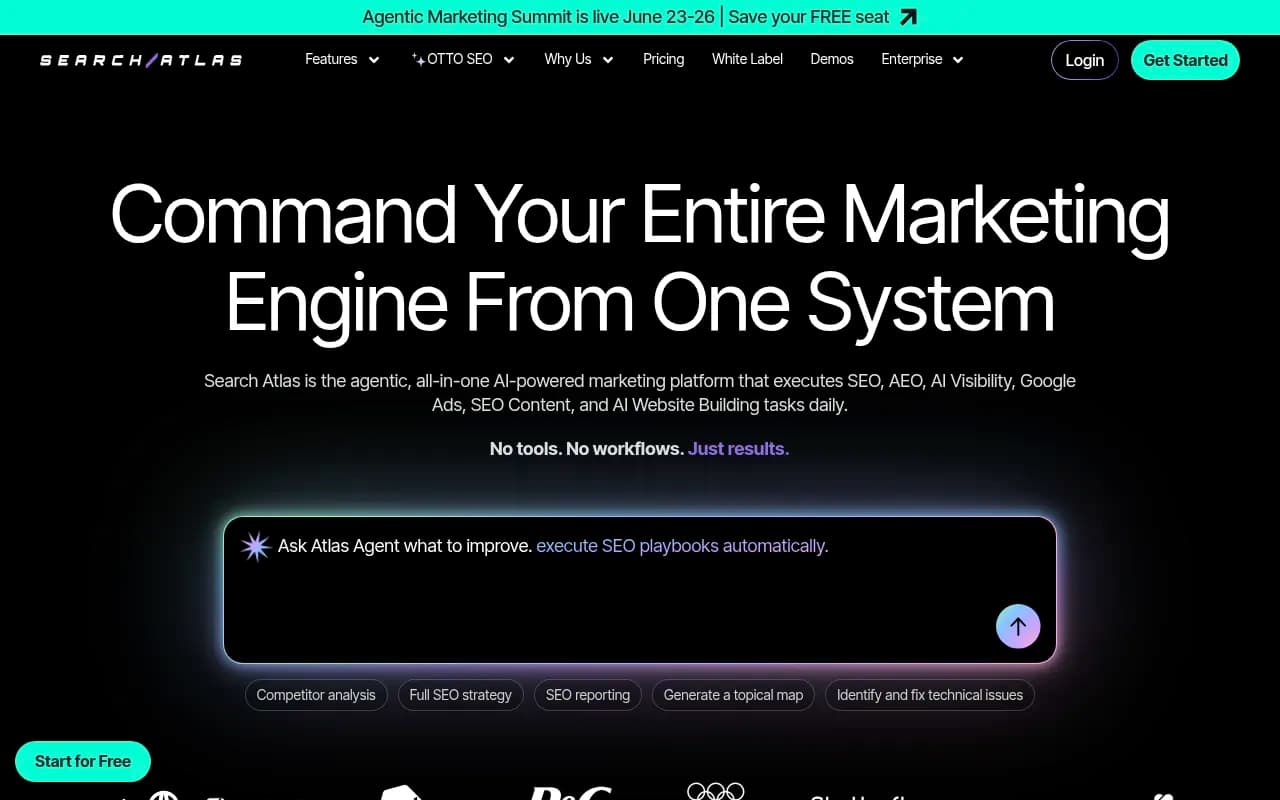
Search Atlas sits in an interesting middle ground -- it covers both traditional SEO and AI visibility optimization, which makes it a reasonable choice for teams that don't want to run two separate tools.
Scrunch AI, Profound, and AthenaHQ all offer some form of recommendations but are fundamentally monitoring-first products. The optimization layer feels bolted on rather than central.
Content: generating what AI models actually want to cite
This is the rarest capability. Most platforms stop at showing you the gap. Very few help you fill it.
Promptwatch's Content Agents generate articles, listicles, comparisons, and briefs grounded in real prompt data, citation data, prompt volumes, persona targeting, and competitor analysis. The output isn't generic -- it's built around the specific prompts your brand is losing. That's a meaningful difference from a tool that generates content based on keyword density.
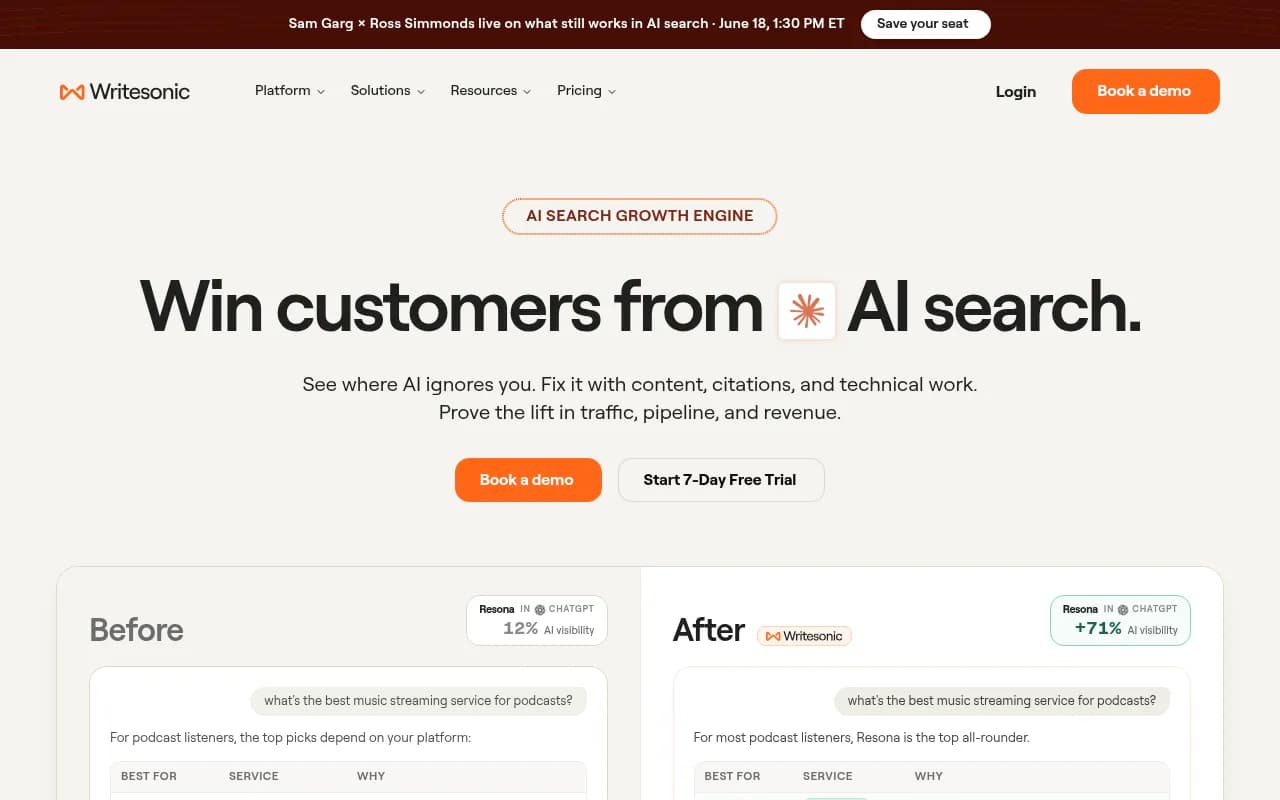
Writesonic GEO scores well here too. It combines AI visibility monitoring with content generation, and the GEO-specific features are designed to produce content that AI models are more likely to cite.
Frase is strong on content briefs and optimization-driven content creation, though it's less focused on AI citation specifically and more on traditional search content quality.
Search Atlas includes content generation as part of its all-in-one positioning, which is useful if you want a single platform.
The monitoring-only tools (Scrunch AI, AthenaHQ, Profound, Otterly.AI, Peec AI, Search Party) all score 1-2 here. They may generate a brief or a recommendation, but they don't produce publish-ready content grounded in AI citation data.
Reporting: attribution, crawlers, and competitive benchmarks
Good reporting in this space means more than a visibility score chart. It means knowing which specific pages are being cited, which AI crawlers are hitting your site, when a page moved from "crawled" to "cited," and how AI visibility connects to actual traffic and revenue.
Promptwatch's crawler log feature is one of the most differentiated things in this market. Real-time logs of AI crawlers (ChatGPT, Claude, Perplexity, etc.) hitting your website -- which pages they read, errors they encounter, how often they return. Most competitors lack this entirely. The agent analytics layer then shows the timeline from publish to crawl to citation, which is genuinely useful for understanding what's working.
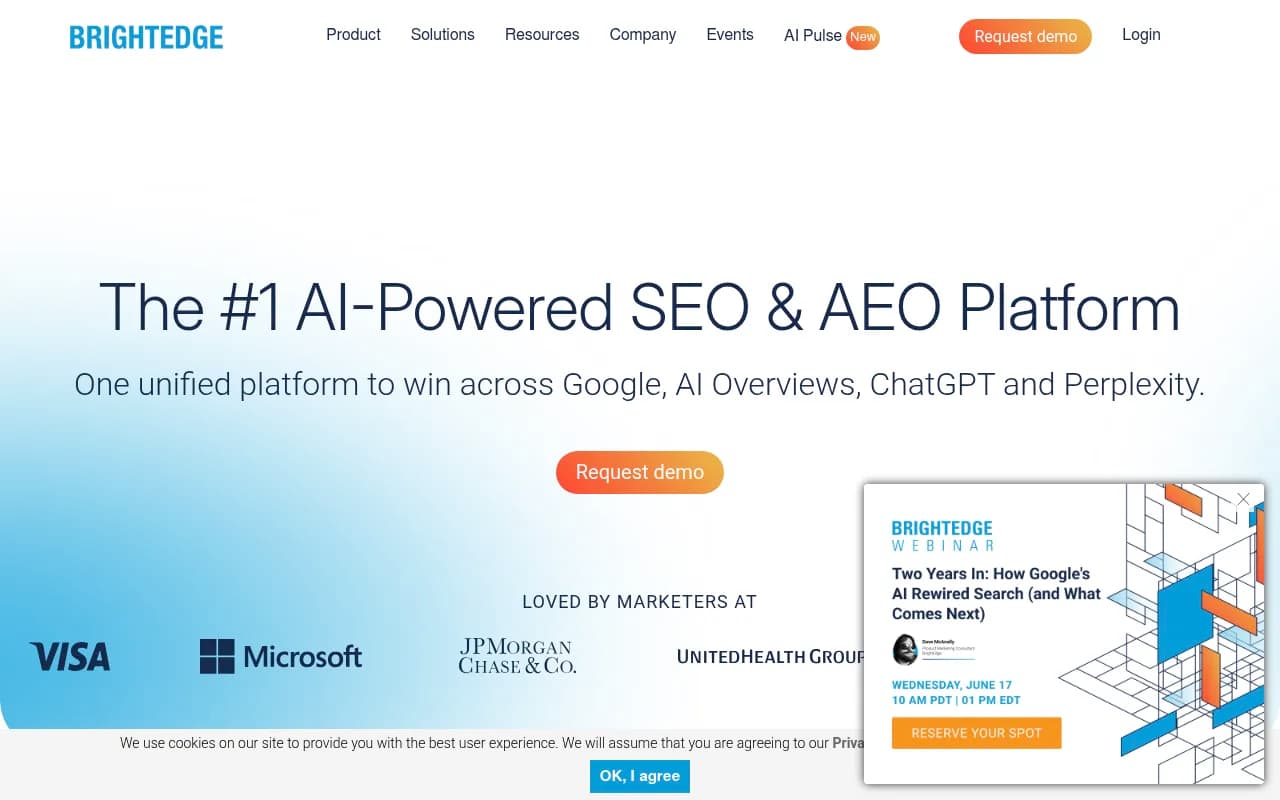
BrightEdge scores highest on reporting among the enterprise tools. It has deep integration with existing SEO reporting infrastructure and strong executive dashboards. The AI search layer is newer but the reporting bones are solid.
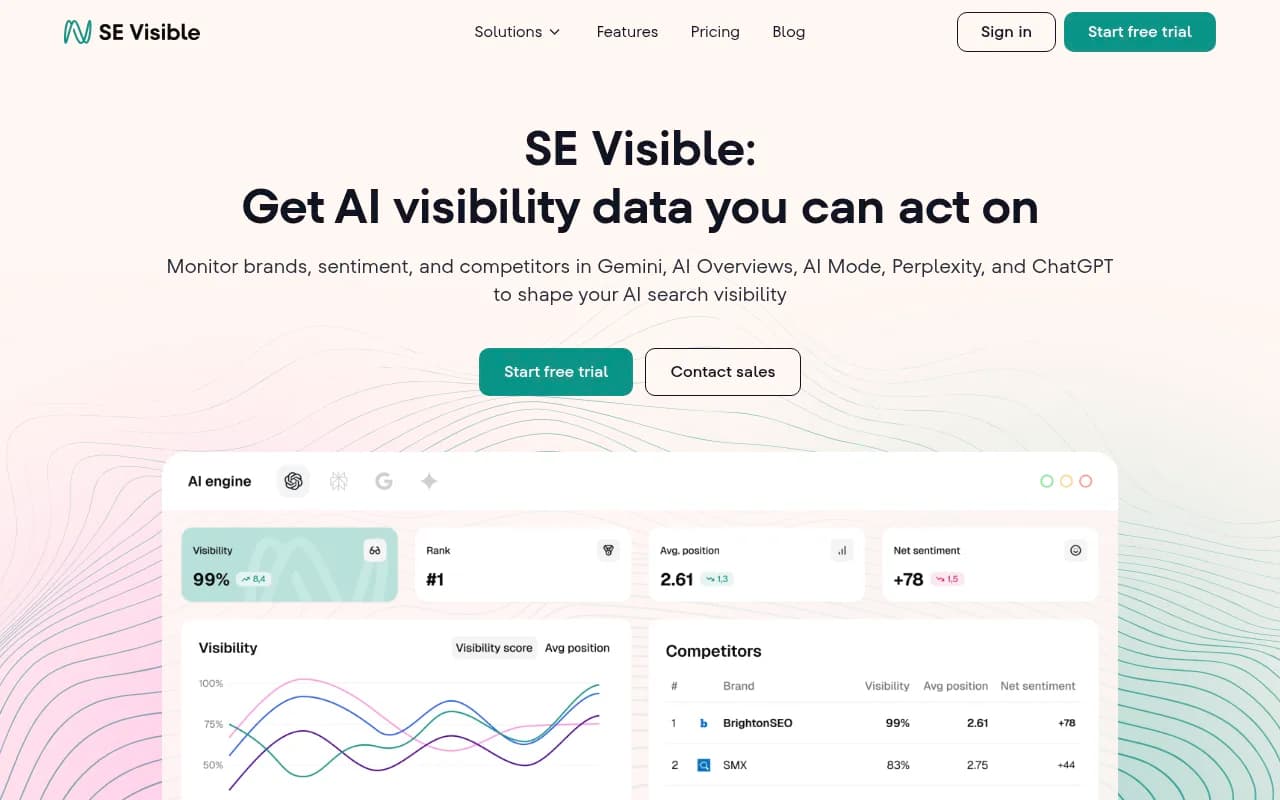
Semrush and SE Ranking Visible both offer decent reporting but are constrained by their fixed-prompt approaches. You can't easily track custom prompts or niche queries, which limits how useful the data is for specific campaigns.
Scrunch AI's reporting is genuinely good for an enterprise monitoring tool -- GA4 integration, sentiment tracking, share-of-voice by prompt. The gap is that there's no page-level citation tracking or crawler log access.
Tool spotlights: the four categories of platform
The full-stack platforms
These tools cover all four categories with meaningful depth. They're the ones worth evaluating if you want a single platform rather than a stack of point solutions.
Promptwatch is the clearest example. The action loop -- find gaps, generate content, track results -- is built into the product architecture rather than being a collection of loosely connected features. It's also the most affordable full-stack option at $99/month for the Essential plan.
Search Atlas is a reasonable alternative for teams that want traditional SEO and AI visibility in one place, though the AI-specific features aren't as deep.
The monitoring specialists
These tools do tracking and reporting well but don't help you act on what they find.
Scrunch AI is the best pure monitoring tool if budget isn't a constraint. The prompt segmentation and enterprise governance features are genuinely best-in-class. But at $300/month minimum with no free trial, it's a significant commitment for a tool that won't help you create content.
Profound and AthenaHQ are in a similar position -- strong monitoring, limited optimization. Both are worth evaluating for enterprise teams with separate content teams who just need the data.
Search Party is agency-oriented and good at multi-client monitoring, but the prompt metrics and content gap features are limited.
The content optimization tools
These tools were built for content quality and have added AI visibility features. They're strong on optimization and content but weaker on AI-specific tracking.
Frase, Surfer SEO, and Clearscope all belong here. If your primary problem is "our content isn't good enough to be cited" rather than "we don't know what prompts we're missing," these tools are worth serious consideration.
The affordable entry points
For teams that just want to start monitoring without a major budget commitment:
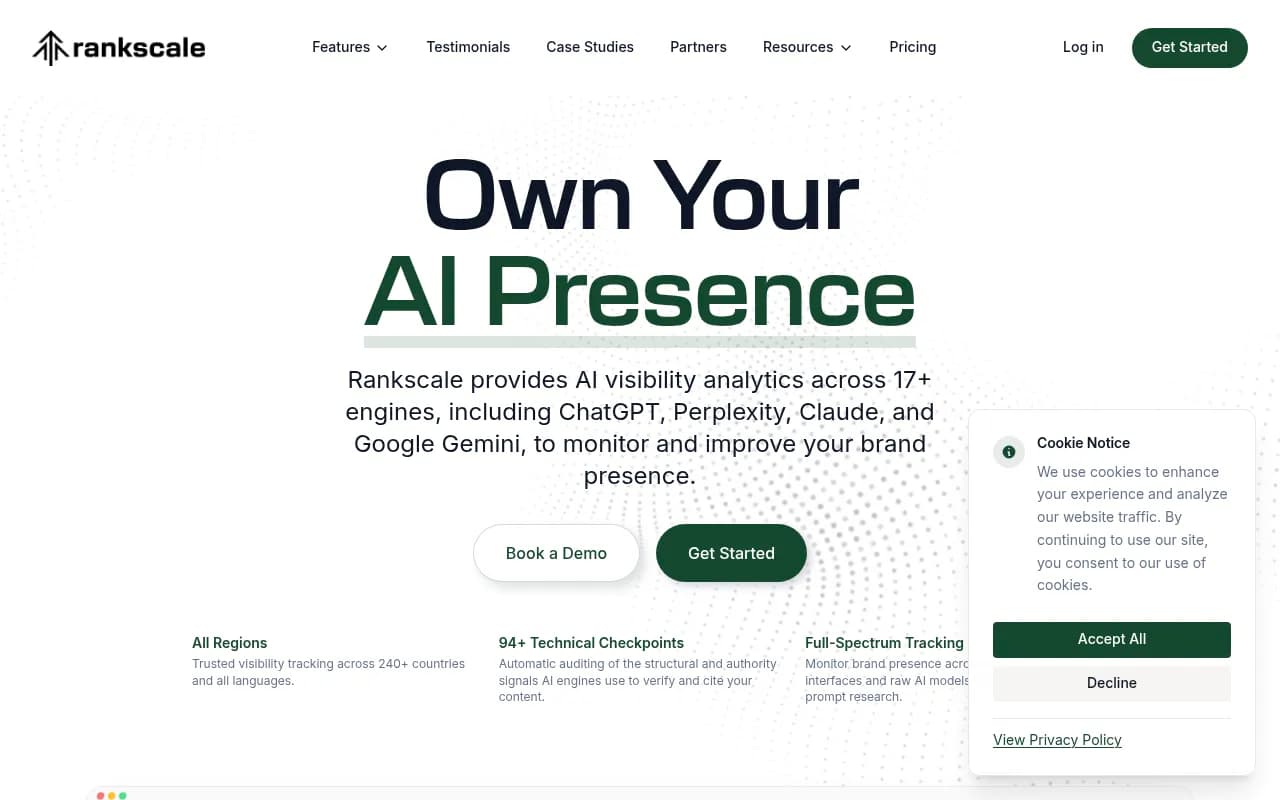
Otterly.AI, Peec AI, Rankscale, and Nightwatch all offer basic AI visibility tracking at reasonable price points. They won't help you optimize, but they'll tell you where you stand.
How to choose: four questions to ask
1. Do you need to act on the data or just see it?
If you have a content team that will take gap analysis and run with it, a monitoring-only tool might be enough. If you need the platform to help generate content and close gaps, you need a full-stack option.
2. How many AI models matter to your audience?
If your customers primarily use ChatGPT and Google, a tool covering 3-4 models is fine. If you're in a market where Perplexity, Claude, and DeepSeek are all relevant, you need broader coverage.
3. Do you need crawler log access?
If you're publishing new content and want to understand why it's not being cited, crawler logs are the fastest way to diagnose the problem. Only a few platforms offer this.
4. What's your reporting environment?
Enterprise teams with existing BI infrastructure will value Looker Studio integration and API access. Smaller teams might be fine with native dashboards.
The monitoring-only trap
One pattern worth naming directly: a lot of teams buy a monitoring tool, see that their AI visibility score is low, and then... don't know what to do next. The tool has done its job. The team is stuck.
This is the fundamental limitation of the monitoring-only category. Knowing you're invisible is the easy part. The hard part is knowing which content to create, how to structure it, and whether it's working after you publish.
The platforms that score highest across all four categories in this matrix are the ones that treat monitoring as the starting point, not the destination. The data is only useful if it tells you what to do.
Quick reference: which tool for which team
| Team type | Best fit | Why |
|---|---|---|
| Marketing team wanting full-stack GEO | Promptwatch | Tracking + gap analysis + content generation + crawler logs |
| Enterprise with separate content team | Scrunch AI or Profound | Deep monitoring, strong governance |
| Content team focused on quality | Frase or Surfer SEO | Strong optimization and content briefs |
| Agency managing multiple clients | Search Party or Search Atlas | Multi-client workflows |
| Small team, limited budget | Otterly.AI or Peec AI | Affordable entry-level monitoring |
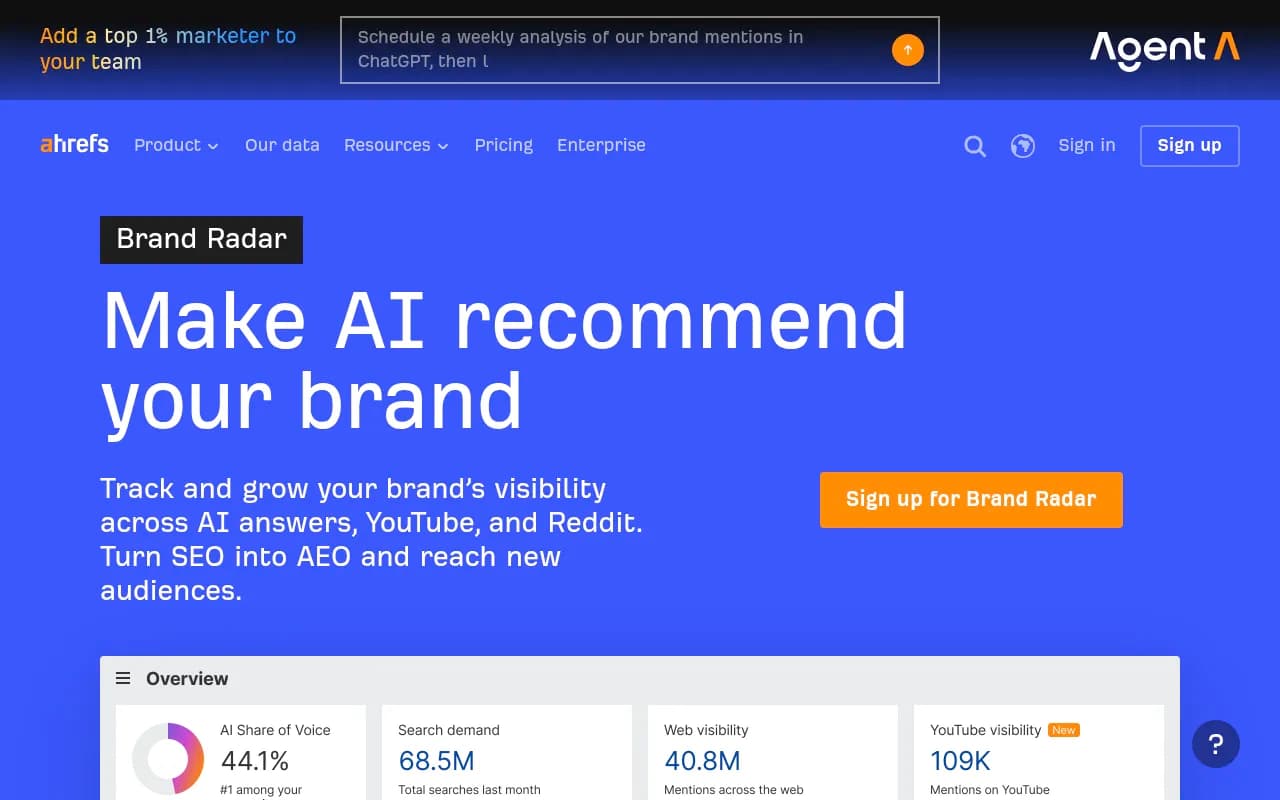
| Traditional SEO team adding AI layer | Semrush or Ahrefs Brand Radar | Familiar tools with AI features added |
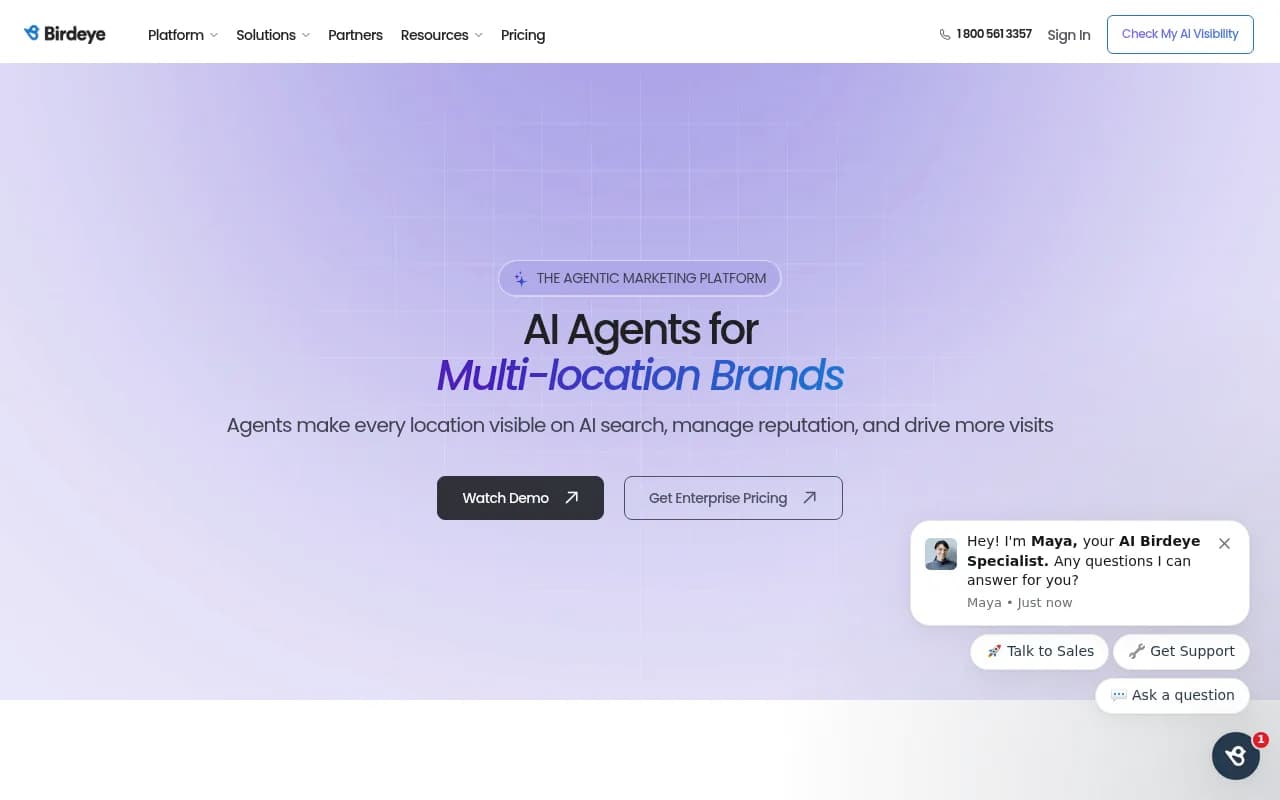
| Local/multi-location business | Birdeye Search AI | Location-level AI visibility tracking |
A note on the market in 2026
The AI search visibility space is moving fast enough that any feature matrix has a shelf life. Tools that were monitoring-only six months ago are adding optimization features. Tools that started as content generators are adding tracking. The boundaries between categories are blurring.
What's unlikely to change is the underlying logic: tracking without optimization is incomplete, and optimization without content generation leaves teams doing the hard work manually. The platforms that build all three into a coherent workflow will pull further ahead as the market matures.
If you're evaluating tools right now, the most important question isn't "which tool has the most features" -- it's "which tool will actually change what my team does next week." That's a much shorter list.