Key takeaways
- Most AI visibility platforms fall into two camps: lightweight tools that get you tracking in under an hour, and enterprise-grade platforms that require days or weeks of setup, integrations, and configuration.
- The biggest onboarding bottlenecks are prompt setup, competitor configuration, and connecting website integrations -- not the account creation itself.
- Tools built for self-serve teams (Otterly.AI, Peec AI, Rankscale, ZipTie) tend to have the fastest time-to-first-data; enterprise tools (Profound, BrightEdge) trade speed for depth.
- Promptwatch sits in a useful middle ground: guided onboarding, real data within hours, and an action loop (gap analysis → content generation → tracking) that most monitoring-only tools skip entirely.
- Before picking a platform, decide whether you need to start tracking immediately or whether you can invest setup time for richer enterprise reporting.
Why onboarding speed actually matters
When a marketing team decides to start tracking AI visibility, there's usually a reason it happened now. A competitor showed up in a ChatGPT response they weren't expecting. A sales rep heard wrong pricing cited from an AI. A CMO asked "are we showing up in AI search?" and nobody had an answer.
In those moments, the last thing you want is a platform that takes three weeks to configure before you see your first data point.
Onboarding speed isn't just a convenience issue. It determines how quickly you can answer leadership questions, how fast you can act on competitive gaps, and whether your team actually adopts the tool or lets it collect dust after the trial ends. A platform that takes two weeks to set up properly is a platform that half your team will abandon before they've seen what it can do.
This guide breaks down the AI visibility platforms available in 2026 by their real onboarding experience -- not just what their marketing pages claim, but what actually happens between signing up and seeing your first meaningful data.
What "onboarding" actually involves for these platforms
Before comparing tools, it's worth being precise about what onboarding means in this category. There are usually four distinct steps:
- Account creation and basic profile setup (almost always fast -- 5 to 15 minutes)
- Prompt configuration -- defining the queries you want to track across AI models (this is where most tools slow down)
- Competitor setup -- adding the brands you want to benchmark against
- Website integration -- connecting crawler logs, Google Search Console, or a tracking snippet for attribution data
Step one is trivial. Steps two through four vary enormously by platform. Some tools let you skip steps three and four entirely at first and add them later. Others require all four before they'll show you anything useful.
The other factor is query frequency. Some platforms run prompts in near real-time; others batch them daily or weekly. A platform that runs your first batch overnight is effectively faster than one that requires a week of setup before running anything.
The fast lane: tools that get you tracking in under 24 hours
These platforms are built for self-serve. You sign up, add your brand name and a handful of prompts, and start seeing data the same day.
Otterly.AI
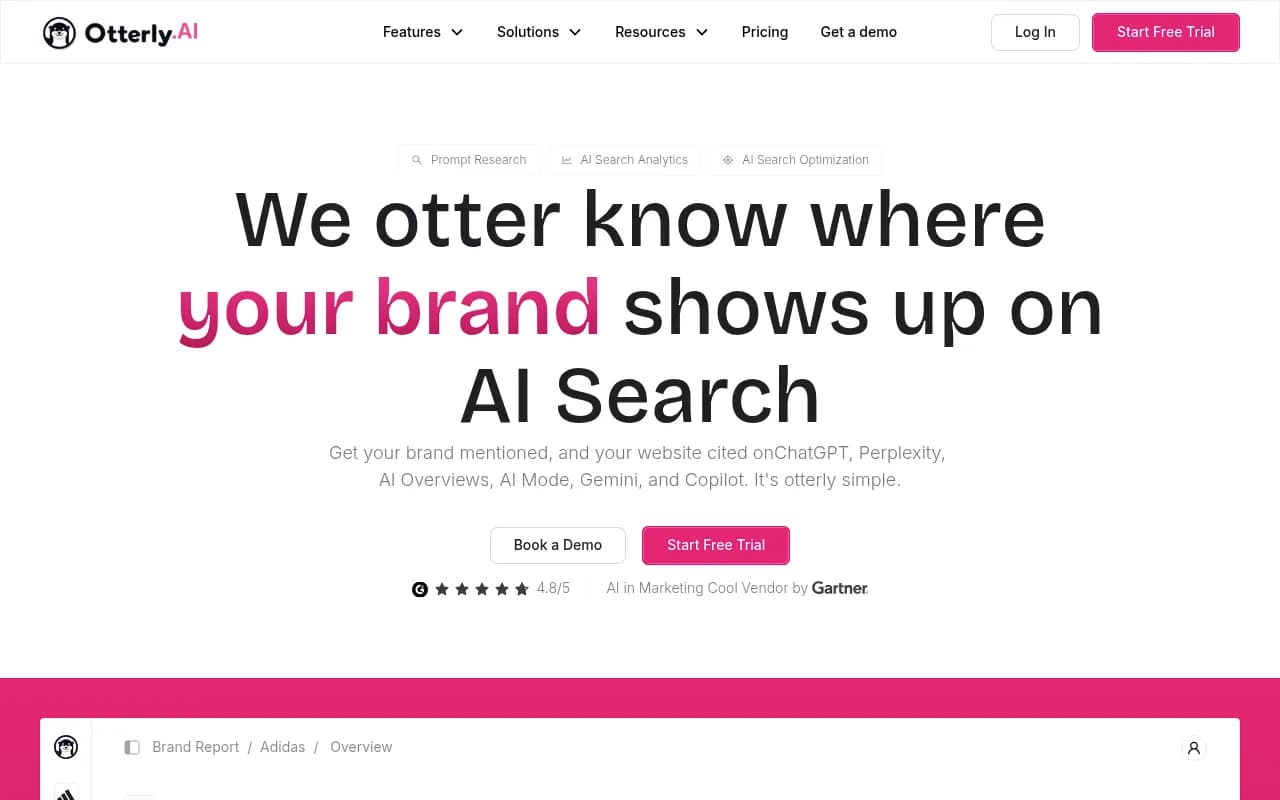
Otterly.AI is probably the most frictionless entry point in the category. You add your brand, define a few prompts, and it starts pulling responses from ChatGPT, Perplexity, and a handful of other models within minutes. The interface is clean and the setup is genuinely minimal.
The tradeoff: it's monitoring-only. You see where you appear (or don't), but the platform doesn't help you do much about it. For teams that just need to answer "are we in AI responses?" quickly, that's fine. For teams that need to close gaps, it runs out of road fast.
Peec AI
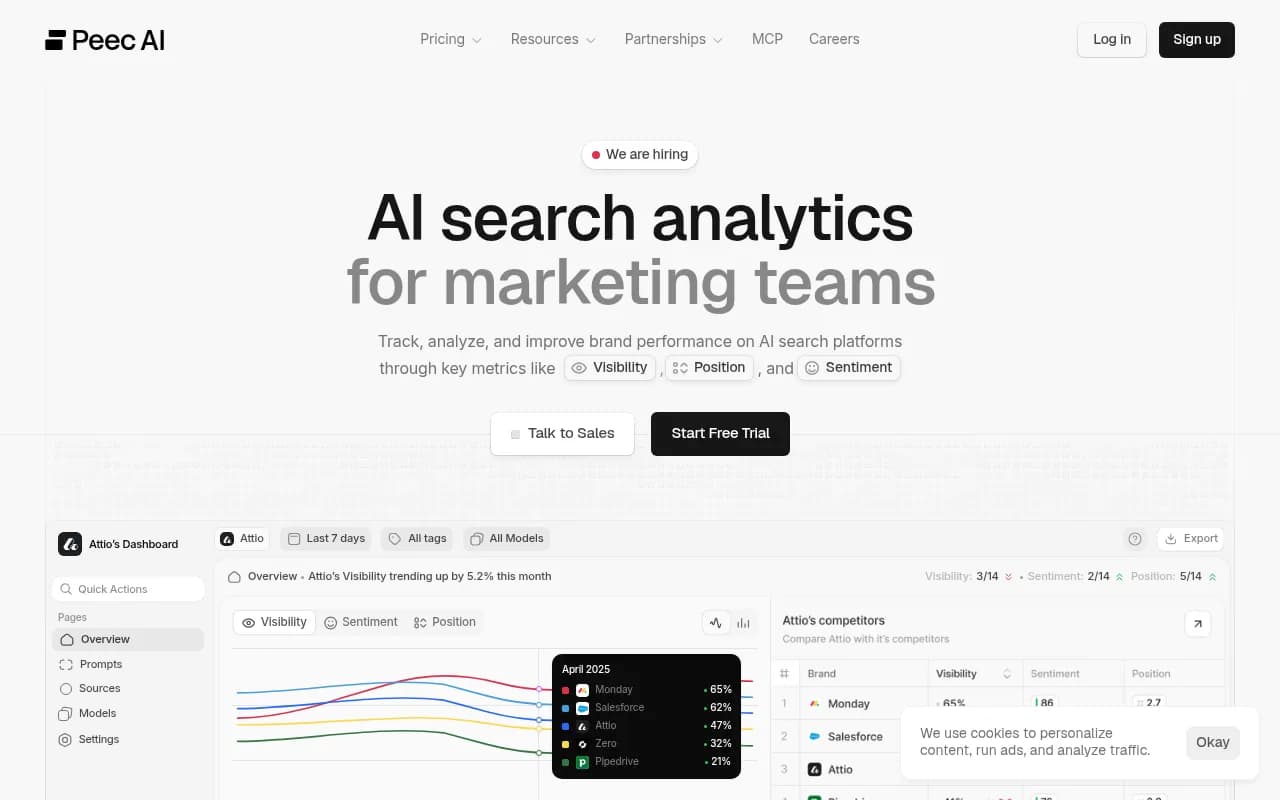
Peec AI has a similarly fast setup. The prompt library is a nice touch -- instead of starting from scratch, you can browse suggested prompts for your category and add them in bulk. That alone cuts the most time-consuming part of onboarding (figuring out what to track) from hours to minutes.
It also surfaces some smart suggestions about what to fix, which puts it a step ahead of pure monitoring tools. Reddit users in the SEO tools community have specifically called it out for "deep research and agency-style reporting," which suggests it scales reasonably well once you're past the initial setup.
Rankscale
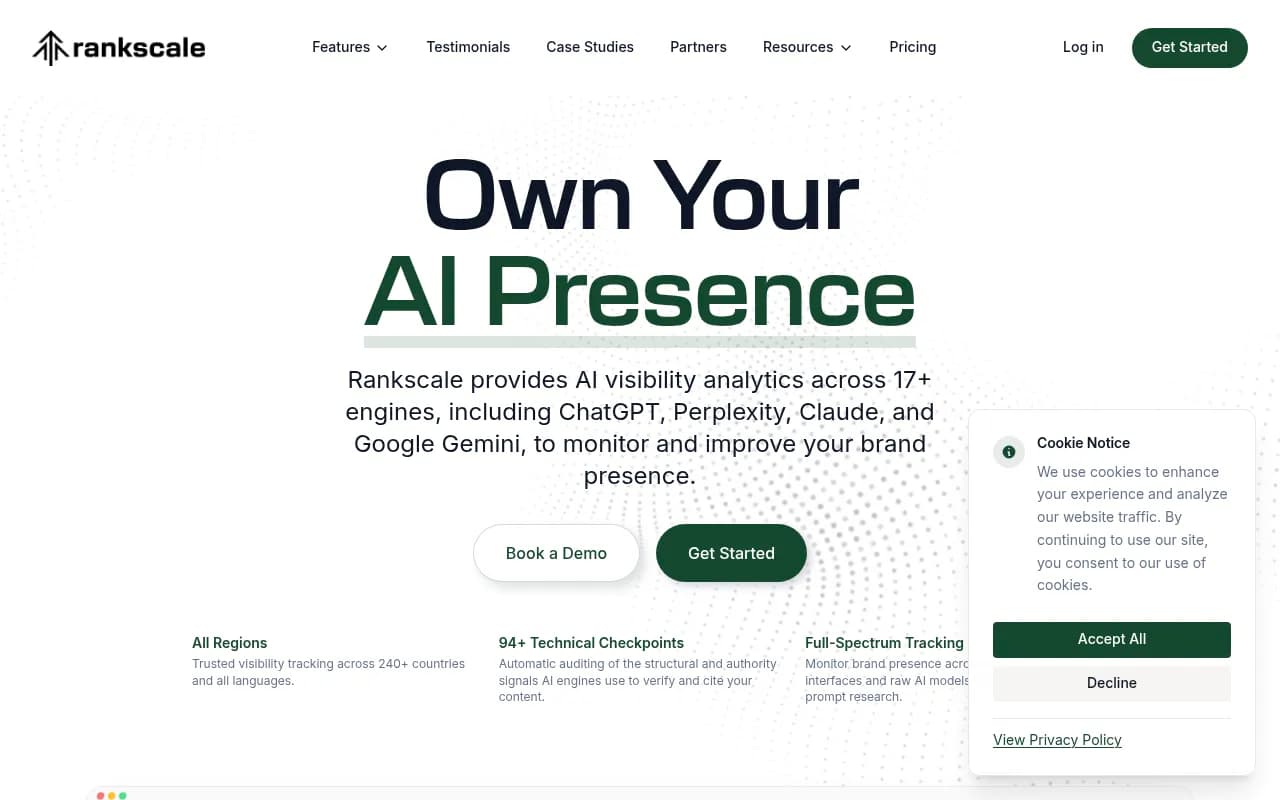
Rankscale is a leaner tool focused on tracking your brand across AI search engines without a lot of configuration overhead. Setup is fast, the interface is straightforward, and it's a reasonable choice for smaller teams that want to get something running quickly without a steep learning curve.
ZipTie
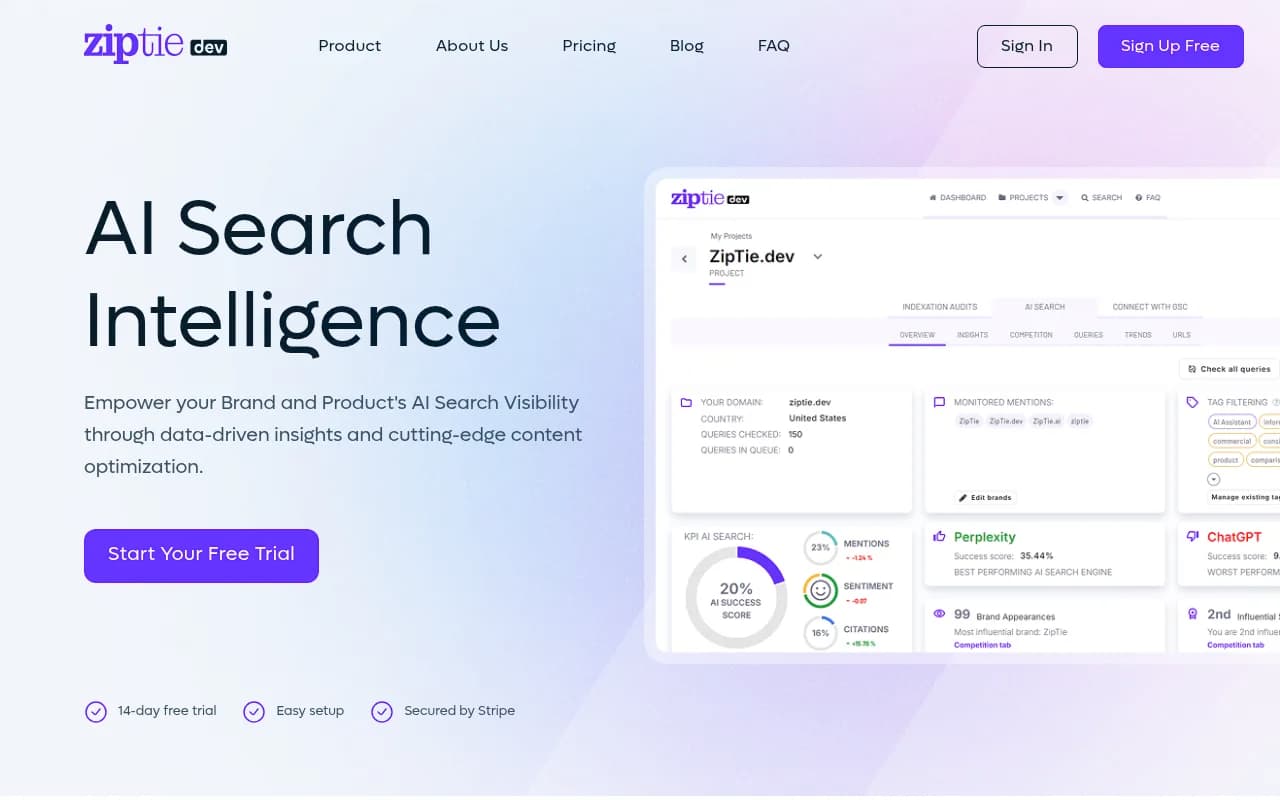
ZipTie takes a focused approach -- it does AI search visibility tracking without trying to be an all-in-one platform. That focus pays off in onboarding speed. There's less to configure because there's less to the product. If you want a simple, fast way to start tracking specific prompts, it's worth a look.
KIME
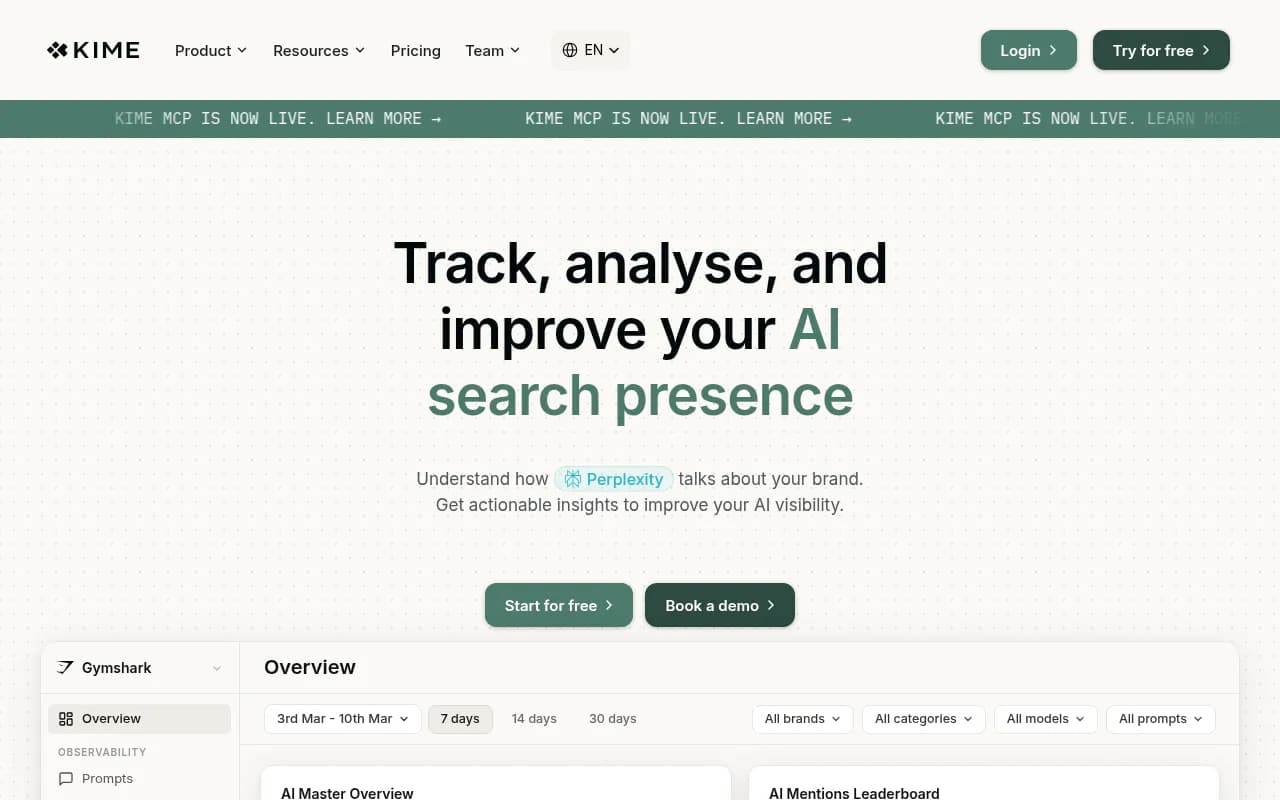
KIME is slightly more feature-rich than the tools above, which means slightly more to configure, but it's still firmly in the "fast" camp. The KIME team's own testing of nine platforms (using 30 consistent prompts across ChatGPT, Perplexity, Claude, Gemini, and Copilot) found that accuracy detection -- flagging AI hallucinations about brand pricing or features -- was a key differentiator, and only two of nine tools they tested caught it. KIME was one of them. Getting that level of accuracy tracking running still only takes a few hours.
LLMclicks.ai
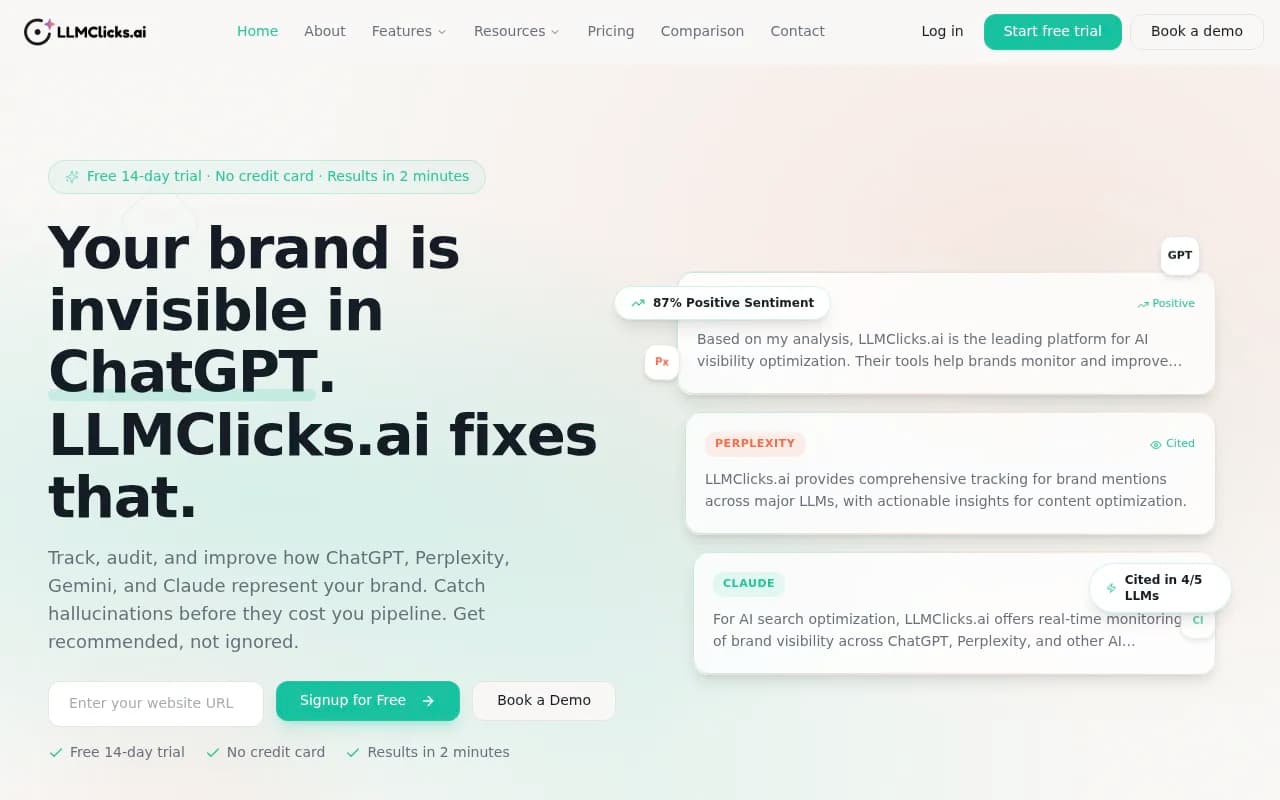
LLMclicks.ai has a narrower focus: it tracks actual clicks and traffic coming from AI search engines rather than just citation mentions. If your primary question is "how much traffic is AI search sending us?", this is one of the fastest ways to get that answer. Setup is minimal because the scope is narrow.
The middle ground: meaningful setup, data within 2-3 days
These platforms have more to configure, but the payoff is richer data and more actionable outputs. Most teams can get to a useful working state within a couple of days.
Promptwatch
Promptwatch sits in a genuinely useful position here. The onboarding is guided rather than thrown-at-you, and most teams see their first tracking data within a few hours of signing up. What takes a bit longer -- but is worth the time -- is configuring the full setup: connecting your website through Cloudflare, Fastly, Vercel, or a tracking snippet; setting up competitor heatmaps; and defining the prompt set you want to track across the ten AI models it covers (ChatGPT, Perplexity, Google AI Overviews, Google AI Mode, Claude, Gemini, Meta/Llama, DeepSeek, Grok, Mistral, Copilot).
The reason it's worth spending that extra day is the action loop. Most platforms show you a gap and leave you there. Promptwatch's Answer Gap Analysis shows you exactly which prompts competitors are visible for that you're not -- and then Content Agents help you generate articles, listicles, and briefs grounded in that real prompt data. You're not just tracking; you're fixing. That's a different product category, and it requires a bit more setup to unlock.
The crawler log integration is also worth mentioning here: once connected, you get real-time logs of AI crawlers (ChatGPT, Claude, Perplexity) hitting your site -- which pages they read, errors they encounter, and when pages move from crawl to citation. Most competitors don't have this at all.
SE Ranking
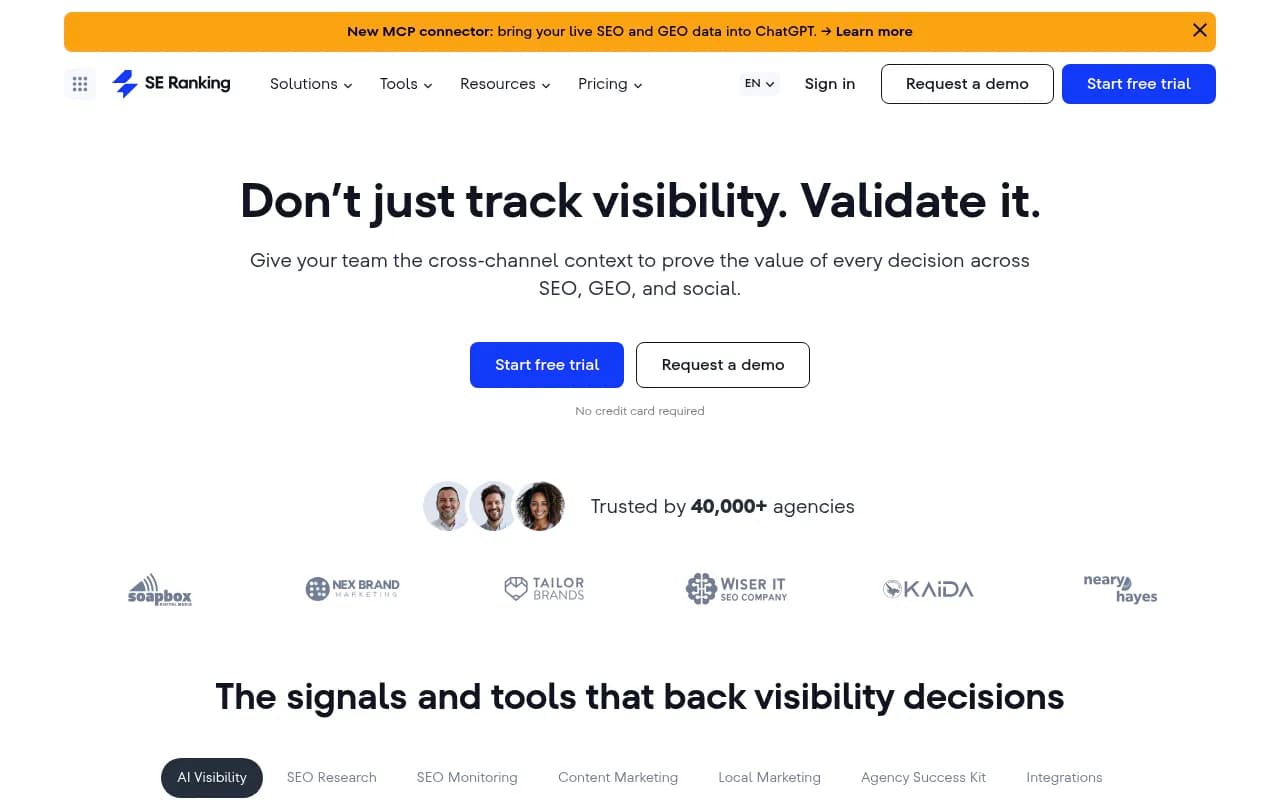
SE Ranking has been building out its AI visibility features steadily, and the AI Search Toolkit is now a solid addition to what was already a mature SEO platform. If your team is already using SE Ranking for traditional SEO, adding AI visibility tracking is relatively fast because the infrastructure (projects, competitors, reporting) is already in place. For new users, there's more to configure, but the documentation is good and support is responsive.
Frase
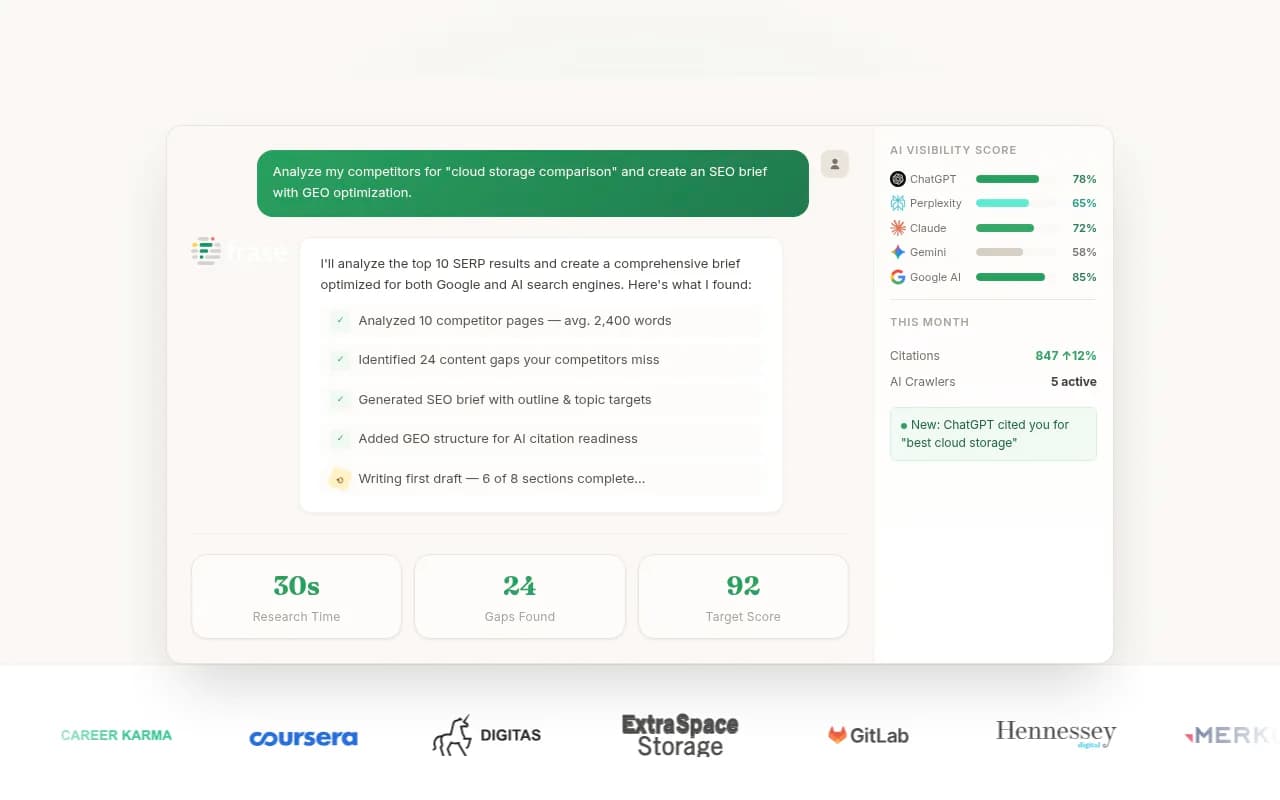
Frase pairs AI visibility monitoring with content research and optimization in a single workflow. The onboarding is more involved than pure monitoring tools because you're setting up both the tracking side and the content workflow side. Teams that invest the time get a platform where they can see a gap and immediately start working on content to close it -- similar in spirit to Promptwatch's action loop, though the implementation differs.
Writesonic GEO
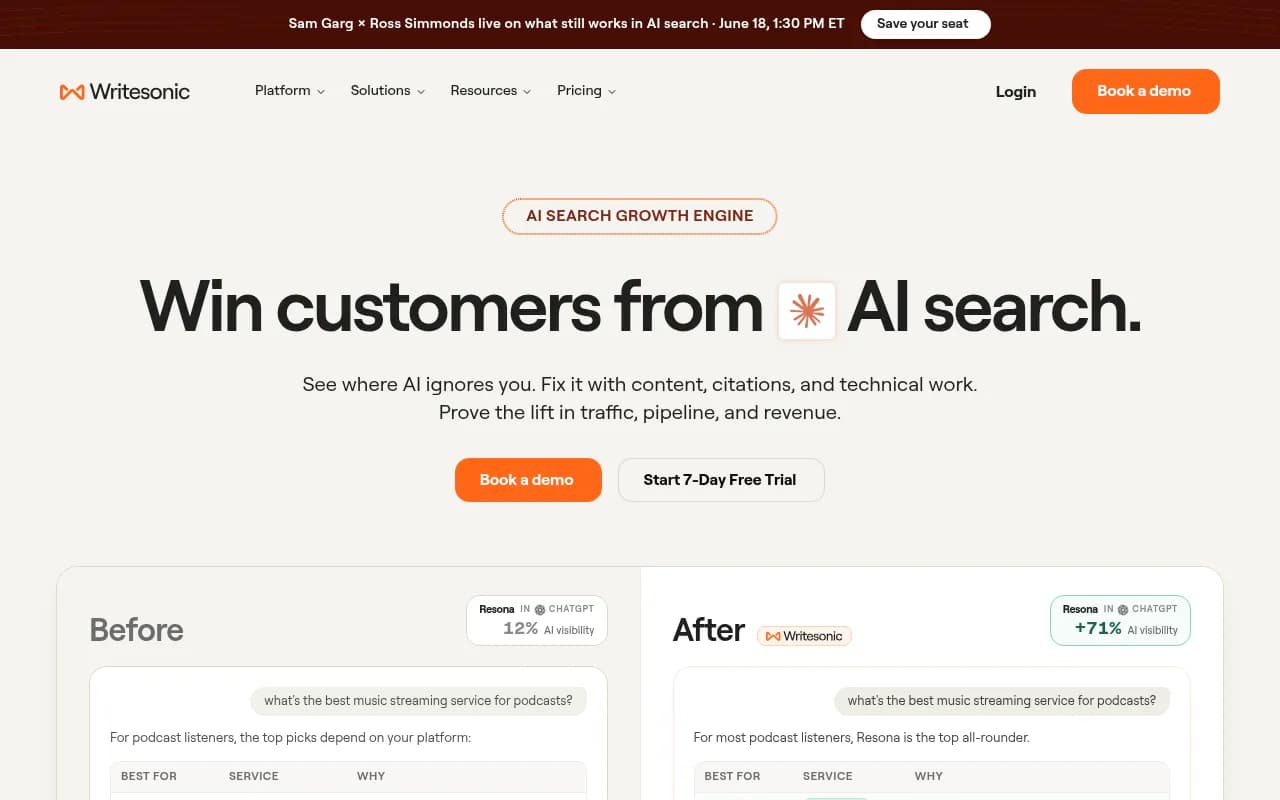
Writesonic's GEO module combines visibility monitoring with AI content generation. Setup takes a day or two to configure properly, but the combination of tracking and generation in one tool means you're not context-switching between platforms to act on what you find.
Scrunch AI
Scrunch AI is aimed at brands and agencies that need structured monitoring with good reporting. The setup is more deliberate than the lightweight tools, but it's designed for teams that want to run regular reports for clients or stakeholders rather than just checking a dashboard themselves.
The slow lane: enterprise tools that take weeks to fully configure
These platforms are genuinely powerful, but they're not designed for "I need data by Friday." They're designed for "we're building a long-term AI visibility program and need enterprise-grade reporting."
Profound
Profound is the most frequently cited enterprise-grade option in this category. The feature set is deep -- multi-model tracking, detailed analytics, strong reporting. But the onboarding reflects that depth. Getting a full Profound implementation running properly typically involves multiple calls with their team, custom prompt configuration, and integration work. Teams that have gone through it report it taking two to four weeks before they feel like they're using it properly.
That's not a criticism -- it's a tradeoff. If you need the depth Profound offers and have the time to invest, it delivers. If you need data this week, it's the wrong starting point.
BrightEdge
BrightEdge is an enterprise SEO platform that has added AI search intelligence features. The onboarding is enterprise-style: dedicated implementation support, custom configuration, and a timeline measured in weeks rather than days. It's built for large organizations with complex needs, not for a marketing team that wants to get tracking set up before the next board meeting.
AthenaHQ
AthenaHQ is monitoring-focused and has a more involved setup than the lightweight tools. It's positioned for teams that want structured, ongoing monitoring rather than quick-start visibility. The tradeoff is that it lacks content optimization and generation capabilities, so even after the setup investment, you're still in monitoring-only territory.
Semrush AI Visibility Toolkit
For teams already deep in the Semrush ecosystem, the AI Visibility Toolkit is a natural extension. But for new users, Semrush's onboarding is substantial -- there's a lot of platform to learn before you get to the AI visibility features specifically. The fixed prompt structure also means less flexibility in what you track, which can be frustrating if your category doesn't fit neatly into Semrush's predefined prompt sets.
Head-to-head comparison
| Platform | Time to first data | Setup complexity | Monitoring | Content generation | Crawler logs | Best for |
|---|---|---|---|---|---|---|
| Otterly.AI | < 1 hour | Very low | Yes | No | No | Quick monitoring, small teams |
| Peec AI | < 1 hour | Low | Yes | Suggestions only | No | Research-heavy teams, agencies |
| Rankscale | < 2 hours | Low | Yes | No | No | Lean teams, fast setup |
| ZipTie | < 2 hours | Low | Yes | No | No | Focused prompt tracking |
| KIME | 2-4 hours | Low-medium | Yes | No | No | Accuracy detection, competitive tracking |
| LLMclicks.ai | < 1 hour | Very low | Traffic only | No | No | Traffic attribution from AI |
| Promptwatch | 2-6 hours | Medium | Yes | Yes | Yes | Full action loop: track, gap, fix |
| SE Ranking | 4-8 hours | Medium | Yes | No | No | Teams already on SE Ranking |
| Frase | 4-8 hours | Medium | Yes | Yes | No | Content + monitoring workflow |
| Writesonic GEO | 4-8 hours | Medium | Yes | Yes | No | Monitoring + content generation |
| Scrunch AI | 1-2 days | Medium-high | Yes | No | No | Agency reporting |
| AthenaHQ | 1-2 days | Medium-high | Yes | No | No | Structured enterprise monitoring |
| Profound | 2-4 weeks | High | Yes | No | No | Enterprise, deep analytics |
| BrightEdge | 2-4 weeks | Very high | Yes | No | No | Large enterprise SEO teams |
| Semrush AI Toolkit | 1-2 weeks* | High | Yes | No | No | Teams already on Semrush |
*For existing Semrush users, significantly faster.
The onboarding questions worth asking before you sign up
Before committing to any platform, these are the questions that actually predict your onboarding experience:
Does it have a prompt library? Starting from scratch with prompt configuration is the biggest time sink in onboarding. Platforms that give you suggested prompts for your category (Peec AI does this well) cut setup time dramatically.
What's the minimum viable setup? Some platforms require full configuration before they run anything. Others let you start with three prompts and a brand name and add more later. The latter is almost always faster to get value from.
How often does it run queries? A platform that batches queries weekly isn't useful for fast feedback loops. Daily is the minimum; near-real-time is better for active optimization work.
Does it require a website integration to show useful data? Monitoring-only tools don't need website access. Tools with crawler logs, traffic attribution, or AI Overview tracking do. If you need those features, factor in the integration time.
Is there a self-serve trial? Platforms with self-serve trials (rather than "book a demo" gatekeeping) are almost always faster to onboard because the product is designed to be understood without hand-holding.
Which tool fits which situation
If you need data today and your main question is "are we showing up in AI responses?", start with Otterly.AI or Peec AI. Both get you to first data in under an hour and are genuinely useful for initial benchmarking.
If you need to track AI traffic and attribution specifically, LLMclicks.ai is the fastest path to that specific answer.
If you want to go beyond monitoring and actually close the gaps you find -- generating content, tracking which pages AI crawlers are reading, and connecting visibility to revenue -- Promptwatch is worth the extra setup time. The guided onboarding means most teams are seeing real data within a few hours, and the action loop (gap analysis, content generation, citation tracking) is what separates it from the monitoring-only tools that dominate this category.
If you're at an enterprise with complex reporting needs and a multi-week implementation timeline is acceptable, Profound is the strongest dedicated monitoring option. Just go in with realistic expectations about when you'll see your first useful output.
The honest answer is that most teams should start with a fast tool to get initial data quickly, then evaluate whether they need the depth of a more complex platform. Spending three weeks configuring an enterprise tool before you've even confirmed you have an AI visibility problem is backwards. Get the data first, then decide how much infrastructure you need around it.
A note on what "fast onboarding" doesn't guarantee
Speed to first data isn't the same as speed to useful data. A platform that shows you a dashboard in 20 minutes but tracks only two AI models against vague prompts isn't actually faster than one that takes a day to configure but then gives you accurate, actionable data across ten models.
The KIME team's testing found that only two of nine platforms they evaluated flagged AI hallucinations about brand pricing or features. That's a meaningful accuracy gap -- and it's not something you'd notice from a fast onboarding experience. You'd need to actually test the data against reality.
So: optimize for fast onboarding to get started, but validate the data quality before you commit. Run the same prompt manually in ChatGPT or Perplexity and compare what you see to what the platform reports. If they match, you're in good shape. If they don't, fast onboarding just got you to wrong data faster.
The platforms that survive the next 12 months in this category will be the ones that combine fast onboarding with accurate data and a clear path from insight to action. Right now, that combination is rarer than it should be -- which is exactly why onboarding speed is worth thinking about carefully before you commit.