Key takeaways
- Multi-model tracking (ChatGPT, Claude, Gemini, Perplexity, and others simultaneously) is now the baseline expectation for serious AI visibility platforms -- single-model tools leave major blind spots
- Most platforms stop at monitoring: they show you where you're invisible but don't help you fix it. A small number, including Promptwatch, close that loop with content gap analysis and AI-native content generation
- Model coverage varies widely: some tools track 4 models, others track 10+. The number matters less than whether those models reflect where your actual customers are searching
- Side-by-side comparison views, per-model citation breakdowns, and share-of-voice charts are the features that separate genuinely useful dashboards from vanity metrics
- Pricing ranges from ~$29/month for basic monitoring to $579+/month for full optimization platforms with content agents and crawler logs
Why tracking one AI model isn't enough anymore
A year ago, most brands were happy just knowing whether ChatGPT mentioned them. That bar has moved. ChatGPT, Claude, Gemini, Perplexity, Grok, and Google AI Overviews each have meaningfully different user bases, different citation behaviors, and different content preferences. A brand that dominates ChatGPT recommendations might be completely absent from Gemini's answers to the same question.
That gap matters more than it sounds. According to Seer Interactive's analysis of 25.1 million impressions, organic click-through rates dropped 61% on queries where Google AI Overviews appear. Zero-click searches in Google's AI Mode are estimated to reach 93%. Meanwhile, AI-referred visitors convert at 3x to 9x the rate of traditional organic traffic. So the traffic is smaller in volume but far more valuable per visit.
The practical implication: if you're only tracking one or two AI models, you're making optimization decisions on incomplete data. You might be winning in ChatGPT and losing everywhere else, or vice versa.
This guide focuses specifically on the multi-model comparison capabilities of the leading platforms. Not just "how many models do they track" but how well they let you compare performance across those models in a single view.
What multi-model comparison actually means (and what to look for)
Before getting into specific tools, it's worth being clear about what "multi-model comparison" means in practice, because platforms use the term loosely.
At minimum, a multi-model comparison feature should let you:
- Run the same prompt across multiple AI models simultaneously and see the results side by side
- See your brand's citation rate, mention rate, or share of voice broken down by model
- Identify which models cite you most often, and for which prompts
- Spot where competitors are visible in one model but not another
The more useful platforms go further:
- Show sentiment per model (are you mentioned positively in Perplexity but neutrally in Claude?)
- Track citation sources per model (which pages does each AI cite when it mentions you?)
- Show prompt-level breakdowns (for a specific question, which models include you?)
- Alert you when your visibility drops in a specific model
The weakest implementations just show aggregate scores across all models combined, which makes it impossible to act on the data.
The platforms ranked for multi-model comparison
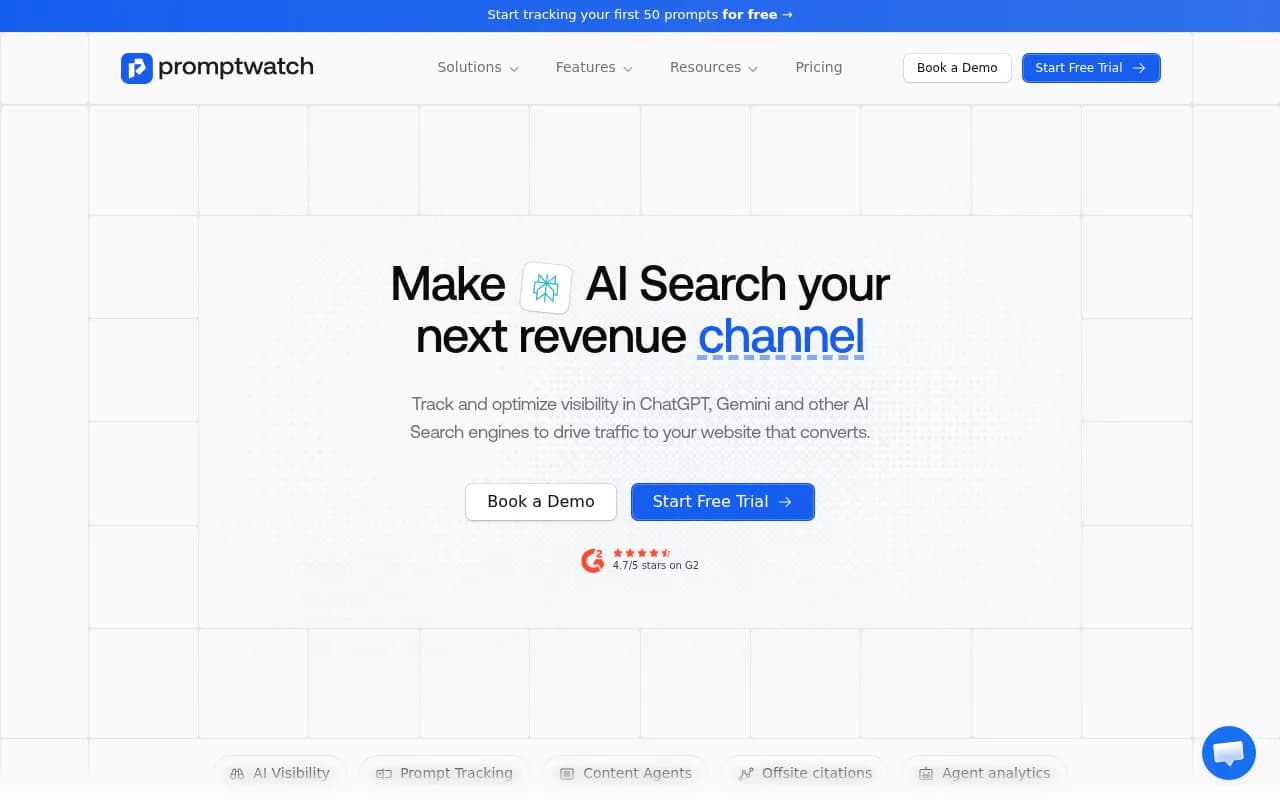
Promptwatch
Promptwatch tracks 10 AI models: ChatGPT, Claude, Gemini, Perplexity, Google AI Overviews, Google AI Mode, Grok, DeepSeek, Mistral, and Copilot. That's the broadest coverage of any platform in this category.
What sets it apart from a multi-model comparison standpoint is the depth of per-model data. You get citation breakdowns by model, share-of-voice comparisons across models, and competitor heatmaps that show who's winning for each prompt on each AI engine. The prompt-level tracking is particularly useful: you can see that for a specific query, ChatGPT cites you, Claude doesn't, and Perplexity cites a competitor instead.
The other meaningful differentiator is what happens after you see that gap. Promptwatch's Answer Gap Analysis identifies which prompts competitors are visible for that you're not, then Content Agents generate articles, comparisons, and briefs grounded in that specific gap data. Most platforms stop at showing you the problem. Promptwatch connects the monitoring to the fix.
The AI Crawler Logs feature is also worth mentioning here: real-time logs of when AI crawlers from ChatGPT, Claude, Perplexity, and others hit your pages, which helps explain why your visibility differs across models (one crawler might be hitting your site more frequently than another).
Pricing: Essential at $99/mo, Professional at $249/mo, Business at $579/mo. Free trial available.
Profound
Profound is one of the more established enterprise-focused platforms. It tracks up to 10 AI models at the enterprise tier and has strong prompt research capabilities. The platform is well-regarded for its depth of data on individual prompts and its ability to handle large prompt sets.
The multi-model comparison view is solid. You can see brand performance broken down by model and track changes over time. Where Profound falls short relative to Promptwatch is on the action side: it doesn't have native content generation tied to gap analysis, and Reddit/YouTube tracking (which influences AI citations) isn't part of the offering.
Pricing starts at $99/mo, but the full model coverage requires the enterprise tier.
Peec AI
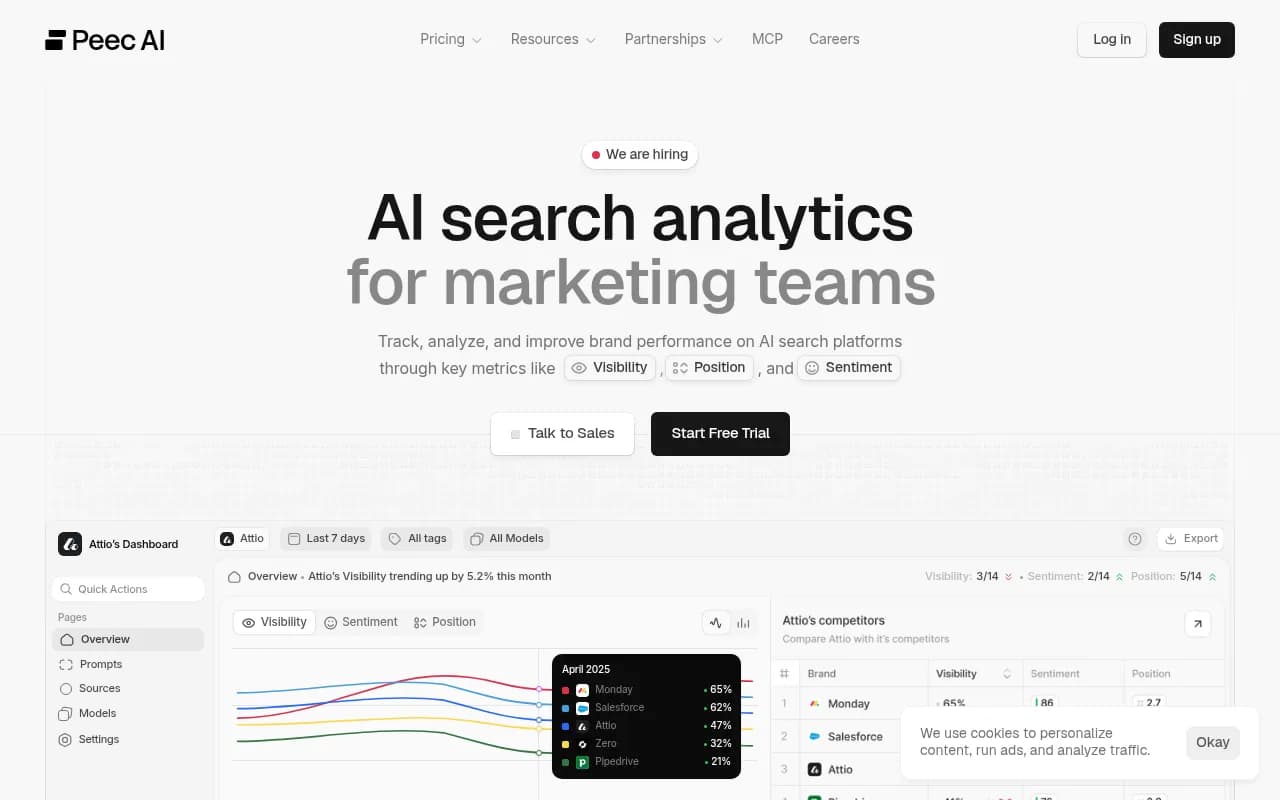
Peec AI offers flexible model selection, which is genuinely useful if you want to focus on a specific subset of models rather than paying for coverage you don't need. It tracks up to 10 models and has a clean interface for comparing brand visibility across them.
The platform's strength is in its flexibility and relatively accessible pricing (starting around €85/mo). The weakness is that it's primarily a monitoring tool. You get the data, but the optimization workflow is largely manual from there.
Otterly.AI
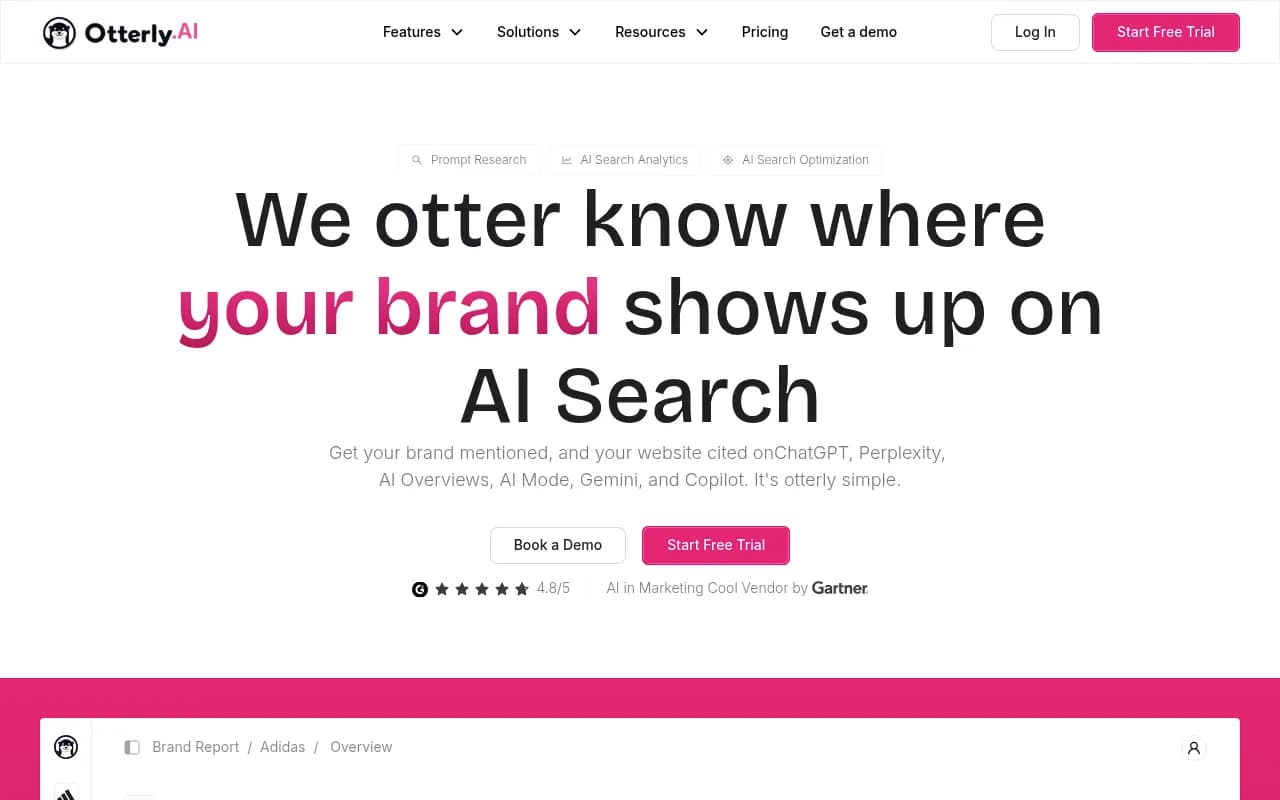
Otterly.AI is the budget entry point for multi-model tracking, starting at $29/mo. At the base tier it covers 4 models, which is enough for smaller brands focused on the major players (ChatGPT, Gemini, Claude, Perplexity).
The interface is clean and the setup is fast. For teams that just need to know whether they're being mentioned and want a quick side-by-side view across the main models, Otterly.AI delivers that without complexity. It doesn't have crawler logs, content generation, or deep prompt analytics, but at $29/mo it's not trying to.
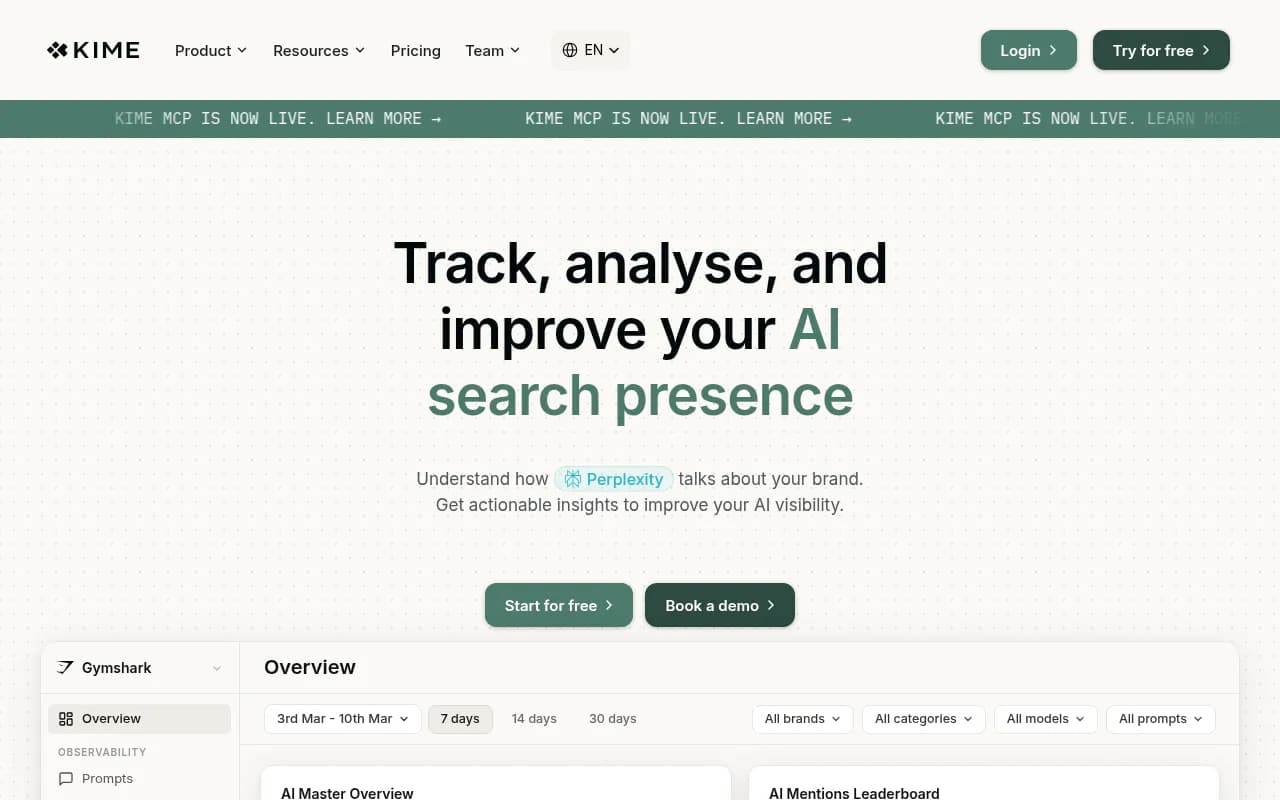
KIME
KIME tracks 10 AI models and has a dedicated "Action Centre" for optimization, which puts it in a similar category to Promptwatch in terms of trying to close the monitoring-to-optimization loop. The entry tier starts at €149/mo and includes multi-seat access, which is useful for agencies.
The platform covers multi-brand and multi-country tracking well. The main limitation is that the full 10-model coverage requires the enterprise tier, so the entry price doesn't necessarily reflect what you'll pay for comprehensive multi-model comparison.
Semrush AI Visibility Toolkit
Semrush covers 5 AI models and bundles the AI visibility features into existing Semrush plans. If your team already pays for Semrush, this is the path of least resistance for adding AI visibility tracking.
The multi-model comparison is functional but not the deepest in the category. Semrush uses fixed prompts rather than letting you define custom prompt sets, which limits how precisely you can track your specific competitive situation. There's no AI traffic attribution connecting visibility to revenue.
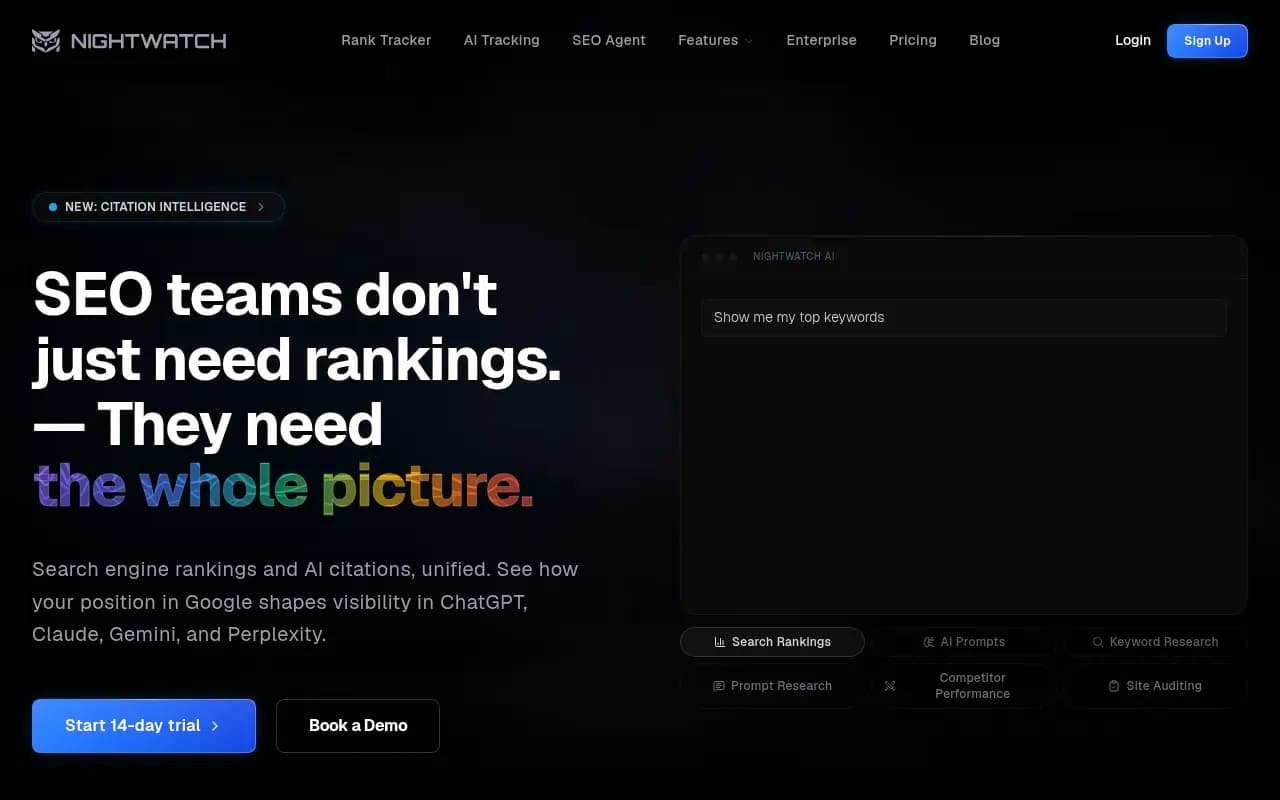
Nightwatch
Nightwatch started as a rank tracker and added AI search monitoring as an add-on ($99/mo on top of base plans). It covers 4 models. For teams that want traditional SEO rank tracking and basic AI visibility in one tool, it's a reasonable option.
The multi-model comparison is basic: you get mention data per model but not the depth of prompt-level breakdowns or competitor heatmaps that the dedicated AI visibility platforms offer.
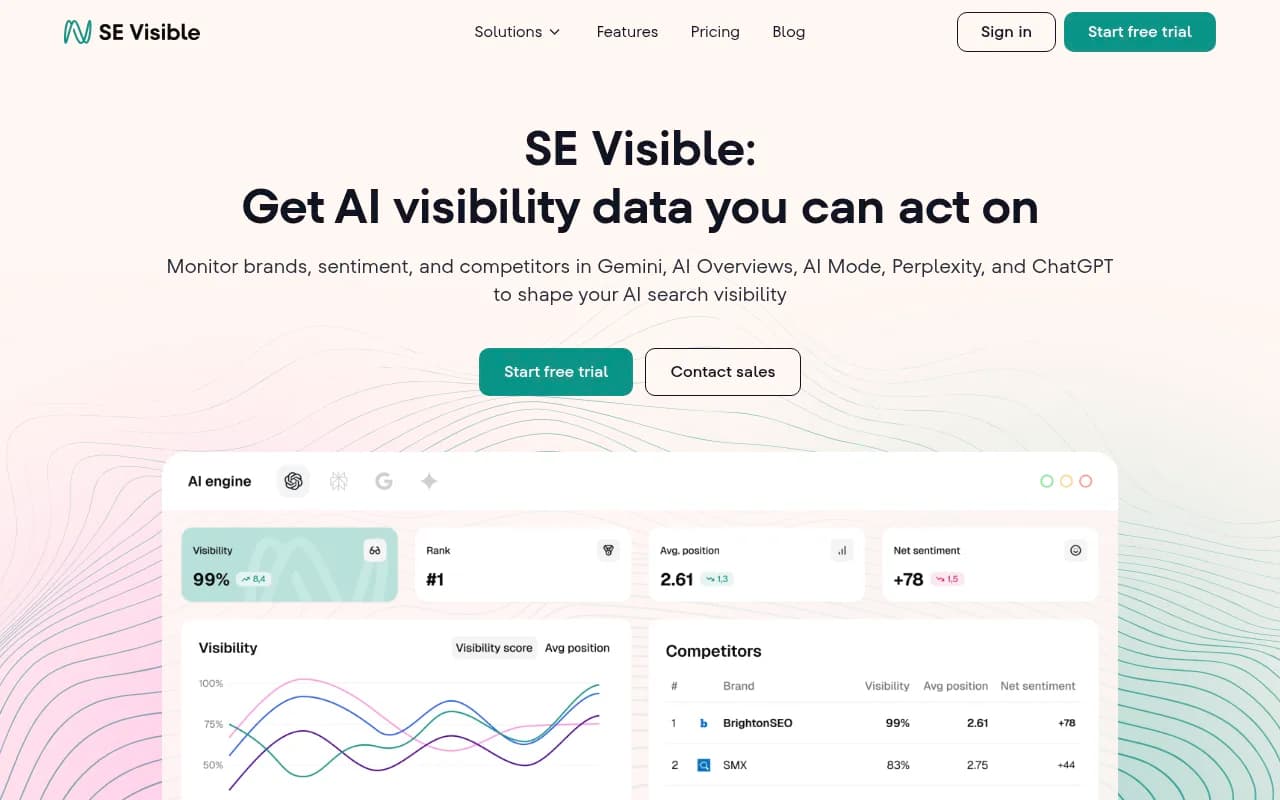
SE Ranking Visible
SE Ranking's AI visibility product tracks 5 models and handles multi-brand, multi-country scenarios well. It's a solid mid-market option for agencies managing multiple clients across different regions.
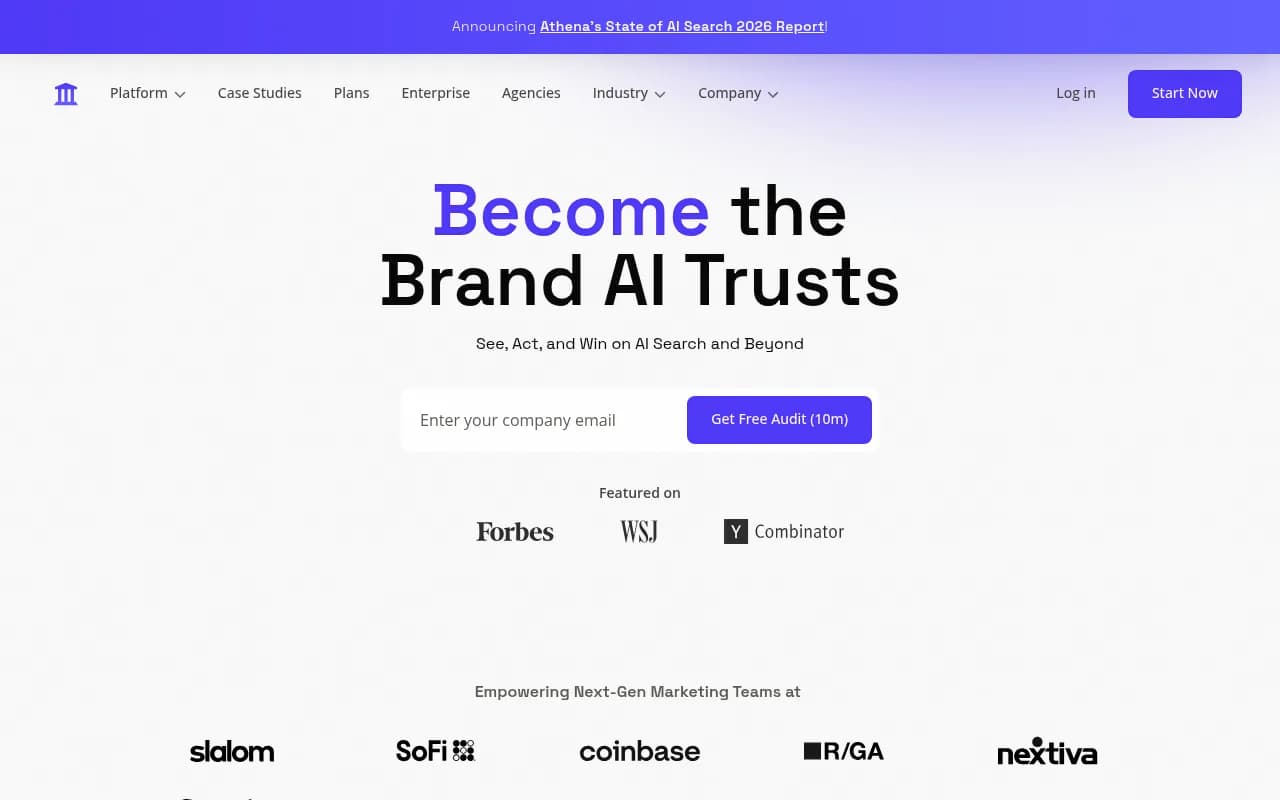
AthenaHQ
AthenaHQ is monitoring-focused with a clean interface. It tracks multiple models but lacks content optimization and generation capabilities, so like Peec AI and Otterly.AI, it's best for teams that want the data and will handle the optimization work themselves.
Side-by-side feature comparison
| Platform | Models tracked | Side-by-side comparison | Prompt-level breakdown | Content generation | Crawler logs | Starting price |
|---|---|---|---|---|---|---|
| Promptwatch | 10 | Yes | Yes | Yes (Content Agents) | Yes | $99/mo |
| Profound | Up to 10 | Yes | Yes | No | No | $99/mo |
| KIME | 10 | Yes | Yes | Partial (Action Centre) | No | €149/mo |
| Peec AI | Up to 10 | Yes | Partial | No | No | €85/mo |
| SE Ranking Visible | 5 | Yes | Partial | No | No | $99/mo |
| Semrush AI Toolkit | 5 | Partial | No | No | No | Bundled |
| Otterly.AI | 4 (base) | Yes | No | No | No | $29/mo |
| Nightwatch | 4 | Partial | No | No | No | $32/mo + $99 add-on |
| AthenaHQ | Multiple | Yes | Partial | No | No | Custom |
The features that actually matter for multi-model comparison
Per-model citation source tracking
When Gemini cites you, which page does it link to? When Claude cites a competitor instead of you, what source is it pulling from? This is the question that drives actual optimization decisions, and most platforms don't answer it at the model level.
Platforms that track citation sources per model let you see, for example, that ChatGPT consistently cites your blog posts while Perplexity cites a competitor's comparison page. That tells you exactly where to focus content efforts.
Prompt-level model breakdowns
Aggregate share-of-voice numbers across all models combined are almost useless for optimization. What you need is: for this specific prompt, which models include me and which don't?
If you show up in ChatGPT for "best project management tool for remote teams" but not in Claude or Gemini, that's a specific gap you can work on. Aggregate numbers hide that signal.
Competitor heatmaps across models
Seeing your own visibility is one thing. Seeing how competitors perform across the same models for the same prompts is where the real intelligence lives. A competitor heatmap that shows model-by-model performance for each prompt in your tracking set tells you which models you're losing in and who you're losing to.
Historical trend data per model
AI models update their training data and citation behavior over time. A platform that shows you historical trends per model lets you detect when a model's behavior toward your brand changes, which can signal a content or crawling issue worth investigating.
Real-time crawler logs
This one is underappreciated. Different AI models crawl your site at different frequencies. If Claude's crawler hasn't hit your site in three weeks but ChatGPT's crawler visits daily, that explains a lot about why your visibility differs across models. Crawler logs make this visible and actionable.
How to choose the right platform for your situation
The honest answer is that the right choice depends on what you're trying to do after you see the data.
If you want to monitor and report: Otterly.AI, Peec AI, or Nightwatch are cost-effective options that give you the multi-model data without the complexity of optimization features you won't use.
If you want to monitor and optimize: you need a platform that connects the gap analysis to content creation. Promptwatch is the clearest example of this, with Content Agents that generate content grounded in real prompt data and citation patterns, and crawler logs that explain why visibility differs across models.
If you're an agency managing multiple clients: KIME and SE Ranking Visible handle multi-brand, multi-country scenarios well. Promptwatch also has agency and enterprise pricing with custom configurations.
If you're already in the Semrush ecosystem: the AI Visibility Toolkit is the path of least resistance, with the caveat that the fixed prompt structure limits how precisely you can track your specific competitive situation.
What the data actually looks like in practice
Here's a concrete example of what useful multi-model comparison data looks like, based on how these platforms work in practice:
You're tracking 50 prompts relevant to your SaaS product. The platform runs those prompts across ChatGPT, Claude, Gemini, and Perplexity weekly. The results show:
- ChatGPT: you appear in 34 of 50 prompts (68% mention rate)
- Gemini: you appear in 12 of 50 prompts (24% mention rate)
- Claude: you appear in 28 of 50 prompts (56% mention rate)
- Perplexity: you appear in 41 of 50 prompts (82% mention rate)
That Gemini gap is the story. The next question is: which specific prompts is Gemini not mentioning you for, and who is it citing instead? That's where prompt-level breakdowns and competitor heatmaps come in.
The answer might be that Gemini consistently cites a competitor's comparison page for pricing-related prompts, and your site doesn't have equivalent content. That's a content gap you can fix. Platforms that surface this chain of insight -- from aggregate score to specific prompt to specific content gap -- are the ones worth paying for.
The monitoring-only trap
One thing worth naming directly: most AI visibility platforms are monitoring dashboards. They show you data. They don't help you change it.
That's fine if your team has the capacity to take that data, develop content briefs, write articles, and track whether those articles get crawled and cited. Many teams don't. The monitoring-to-optimization loop requires either significant internal bandwidth or a platform that closes the loop for you.
The platforms that come closest to closing that loop are Promptwatch (Content Agents + Answer Gap Analysis + Crawler Logs) and KIME (Action Centre). The rest are monitoring tools, which is a legitimate category but a different value proposition.
If you're evaluating platforms and a vendor tells you their monitoring data is "actionable," ask them specifically: what does the platform do after it shows me a gap? If the answer is "you export the data and work on it," that's a monitoring tool. If the answer involves automated content briefs, AI writing agents, or optimization workflows tied to the gap data, that's an optimization platform.
Pricing reality check
The pricing landscape for multi-model AI visibility platforms in 2026:
| Tier | What you get | Representative tools | Price range |
|---|---|---|---|
| Entry monitoring | 4-5 models, basic mention tracking | Otterly.AI, Nightwatch add-on | $29-$99/mo |
| Mid-tier monitoring | 5-10 models, share of voice, sentiment | Peec AI, SE Ranking Visible | $85-$149/mo |
| Full optimization | 10 models, content generation, crawler logs, gap analysis | Promptwatch, KIME | $99-$579/mo |
| Enterprise | Custom prompt sets, multi-brand, API access | Profound, Promptwatch Enterprise | Custom |
The entry monitoring tier is genuinely useful for small teams that want to know where they stand. The jump to full optimization is significant in price but also in what you can do with the data. The question is whether your team will actually act on monitoring data without tooling support, or whether you need the platform to help you close the loop.
Final recommendation
For most marketing and SEO teams that want genuine multi-model comparison capabilities in 2026, the shortlist comes down to a few clear options:
If budget is the primary constraint and you just need visibility data: Otterly.AI at $29/mo covers the four main models and gives you a clean comparison view.
If you want comprehensive model coverage with solid comparison features: Peec AI or Profound offer strong multi-model data at reasonable price points.
If you want to track, understand, and actually improve your AI visibility across all major models: Promptwatch is the most complete option, with 10-model coverage, per-model citation tracking, competitor heatmaps, crawler logs, and content generation that's grounded in real gap data rather than generic SEO logic.
The category is moving fast. Tools that were monitoring-only a year ago are adding optimization features. The baseline for what "good" looks like keeps rising. Whatever platform you choose, make sure you're getting prompt-level breakdowns by model, not just aggregate scores -- that's the data that actually drives decisions.