Key takeaways
- AEO (Answer Engine Optimization) and GEO (Generative Engine Optimization) tools help brands track and improve how they appear in AI-generated search responses from ChatGPT, Perplexity, Gemini, and others.
- Most platforms in this space are monitoring dashboards -- they show you where you're invisible but don't help you do anything about it.
- The most useful tools close the loop between insight and action: find the gaps, create content that fills them, and track whether it worked.
- Pricing ranges from free tiers to enterprise contracts, so there's a meaningful difference between what a solo marketer needs and what a 50-brand agency needs.
- Promptwatch is the only platform in the 2026 comparison rated as a "Leader" across all evaluation categories, largely because it covers the full optimization cycle rather than just monitoring.
Why AEO tracking has become a real problem in 2026
A year ago, most marketing teams could afford to ignore AI search. Not anymore. Google AI Overviews now appear on the majority of informational queries. ChatGPT Search has tens of millions of active users. Perplexity is pulling citations from the web and answering questions without sending anyone to your site.
The uncomfortable truth: you can rank #1 in traditional Google search and still be completely invisible in the AI-generated answer that sits above it. And unlike traditional SEO, there's no Google Search Console equivalent that tells you which AI engines are citing you, how often, or why.
That's the gap AEO and GEO tools are trying to fill. But the category is still young, and there's a massive quality spread between what different platforms actually deliver.
What separates a good AEO tool from a mediocre one
Before getting into specific platforms, it's worth being clear about what actually matters when evaluating these tools.
AI engine coverage
Some tools only monitor ChatGPT. Others cover Perplexity, Gemini, Claude, Grok, DeepSeek, Copilot, and Google AI Overviews. The more models covered, the more complete your picture. If your audience uses Perplexity but your tool only tracks ChatGPT, you're optimizing blind.
Citation tracking accuracy
There's a difference between querying an AI API and tracking what users actually see in the real interface. API outputs and user-facing answers can differ -- especially for shopping recommendations and local results. Tools that track real user-interface responses give you more accurate data.
Content optimization capabilities
This is where most tools fall short. Monitoring tells you that you're not being cited. It doesn't tell you what to write, how to structure it, or which specific questions your content needs to answer. Tools that connect visibility gaps to content creation are in a different league.
Prompt intelligence
Not all prompts are equal. Some are high-volume and competitive. Others are niche but winnable. Good tools give you volume estimates and difficulty scores so you can prioritize instead of guessing.
Crawler and indexing insights
AI engines crawl your site before they cite it. If there are crawl errors, slow pages, or content that's hard for AI agents to parse, you'll never get cited regardless of how good your content is. Very few tools surface this data.
The platforms worth knowing about in 2026
Promptwatch
Promptwatch is the most complete platform in this category right now. It covers 10 AI models (ChatGPT, Perplexity, Google AI Overviews, Google AI Mode, Claude, Gemini, Meta/Llama, DeepSeek, Grok, Mistral, Copilot) and tracks real user-interface responses rather than just API outputs.
What separates it from most competitors is the full optimization cycle. The Answer Gap Analysis shows you exactly which prompts competitors are visible for that you're not -- not just a vague "you're missing coverage" message, but the specific questions and topics your content isn't answering. Content Agents then generate articles, listicles, and comparisons grounded in that prompt data. And AI Crawler Logs show you in real time which pages AI crawlers are reading, which errors they're hitting, and when a page moves from crawl to citation.
That last feature is rare. Most platforms have no visibility into the crawl layer at all.
Pricing runs from $99/month (Essential) to $579/month (Business), with agency and enterprise tiers available. Used by 1,480+ brands including Booking.com and Center Parcs.
Profound
Profound is a strong enterprise-grade option with solid AI search analytics. It covers major LLMs and gives good visibility into brand mentions and citation trends. The reporting is clean and the data is reliable.
Where it falls short is on the action side. Like most platforms in this space, Profound is primarily a monitoring tool. It doesn't have Reddit tracking, ChatGPT Shopping monitoring, or content generation capabilities. For large teams that already have content workflows and just need the data layer, it's a reasonable choice. For teams that need end-to-end optimization, it's half a solution.
Otterly.AI
Otterly.AI is one of the more affordable entry points in this category. It does brand monitoring across AI search engines and gives you a reasonable sense of where you're appearing and where you're not.
The limitations are significant if you want to do more than monitor. No crawler logs, no visitor analytics, no content generation. It's a good tool for a small team that needs basic AI visibility tracking before committing to a full platform. Think of it as a starting point, not a destination.
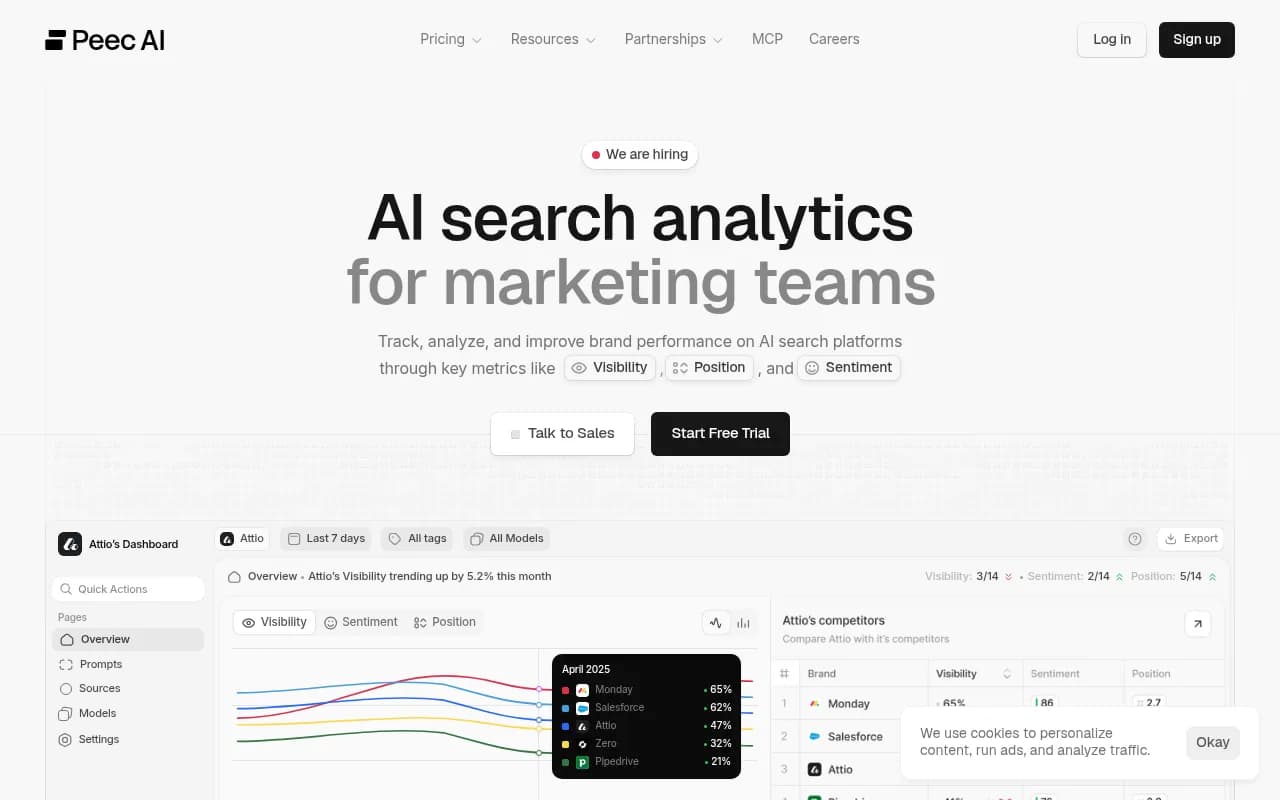
Peec AI
Peec AI sits in a similar tier to Otterly.AI -- accessible pricing, solid monitoring basics, and a clean interface. It tracks brand mentions across AI engines and surfaces some optimization suggestions.
The gap analysis is more surface-level than what you'd get from a platform like Promptwatch. There's no crawler data, no content generation, and no traffic attribution. Fine for early-stage monitoring. Not built for teams that need to move from insight to execution.
AthenaHQ
AthenaHQ focuses on AI search visibility monitoring with a reasonably strong feature set. It tracks brand mentions, competitor comparisons, and citation trends across multiple LLMs.
The honest assessment: it's monitoring-focused. Content optimization and generation aren't part of the platform. Teams that need to understand their AI visibility position will find it useful. Teams that need to improve it will hit a wall.
Search Party
Search Party is built with agencies in mind. It handles multi-client reporting reasonably well and covers the core monitoring use cases. The prompt metrics are more limited than dedicated GEO platforms, and there's no content gap analysis.
For agencies that need a simple dashboard to show clients their AI search presence, it works. For agencies that want to actually move the needle on client visibility, the toolset is thin.
Semrush AI Visibility Toolkit
Semrush added AI visibility features to its existing platform, which means you get the benefit of integrating AI search data with traditional SEO metrics in one place. The downside is that the AI monitoring uses fixed prompts rather than dynamic prompt tracking, which limits how accurately it reflects real user behavior.
No AI traffic attribution either. For teams already deep in the Semrush ecosystem, it's a useful addition. For teams whose primary need is AI search visibility, it's not the right starting point.
Ahrefs Brand Radar
Ahrefs Brand Radar is the AI search monitoring feature inside Ahrefs. Like Semrush, it benefits from being part of a larger SEO platform. Like Semrush, it uses fixed prompts and has no AI traffic attribution.
If you're an Ahrefs user and want a basic read on your AI search presence, it's worth exploring. If AI visibility is your primary concern, you'll want a dedicated platform.
AirOps
AirOps takes a different angle -- it's primarily a content workflow platform that has added AI search visibility features. The strength is on the execution side: it's good at helping teams produce content at scale. The monitoring and citation tracking are less developed than dedicated GEO platforms.
For enterprise teams that have visibility data from another tool and need help executing content at scale, AirOps is worth considering. As a standalone AEO platform, it's incomplete.
Conductor
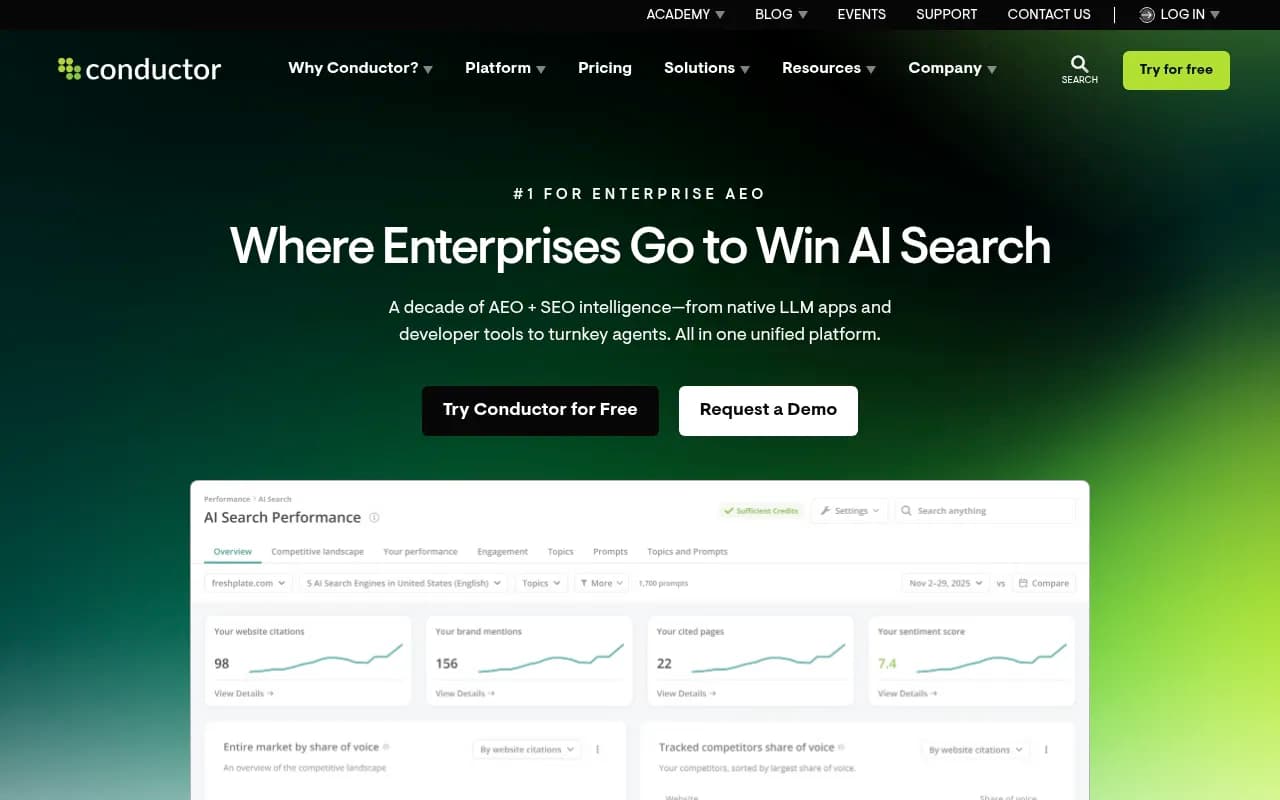
Conductor is an established organic marketing platform that has built AEO features into its broader SEO suite. The advantage is integration -- AI search data sits alongside traditional SEO metrics, content performance, and technical health data. The disadvantage is that the AI-specific features aren't as deep as dedicated GEO platforms.
For enterprise teams already using Conductor for SEO who want to add AI search monitoring without switching platforms, it makes sense. For teams starting fresh with AI visibility as the primary goal, there are more focused options.
Scrunch AI
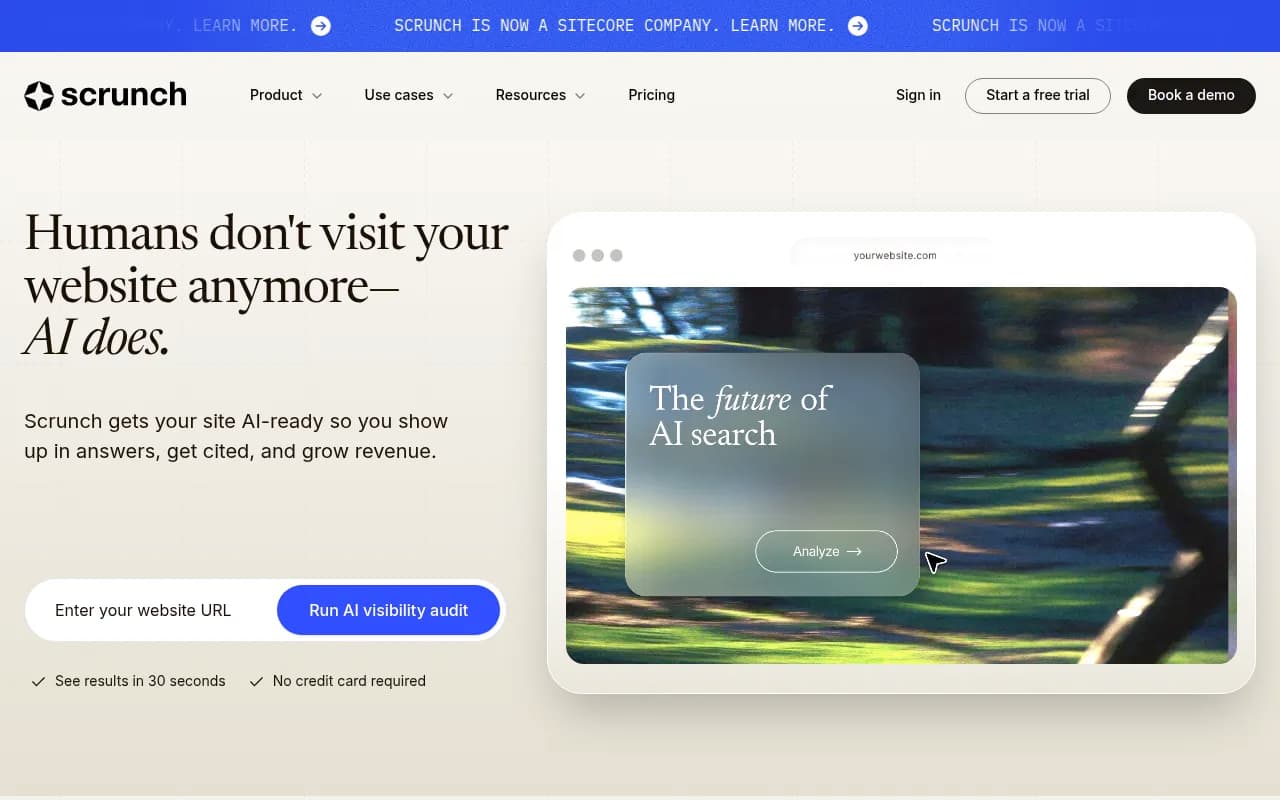
Scrunch AI is a monitoring platform aimed at brands and agencies. It covers the core use cases -- brand mention tracking, competitor comparison, citation analysis -- without the deeper optimization layer.
Writesonic GEO
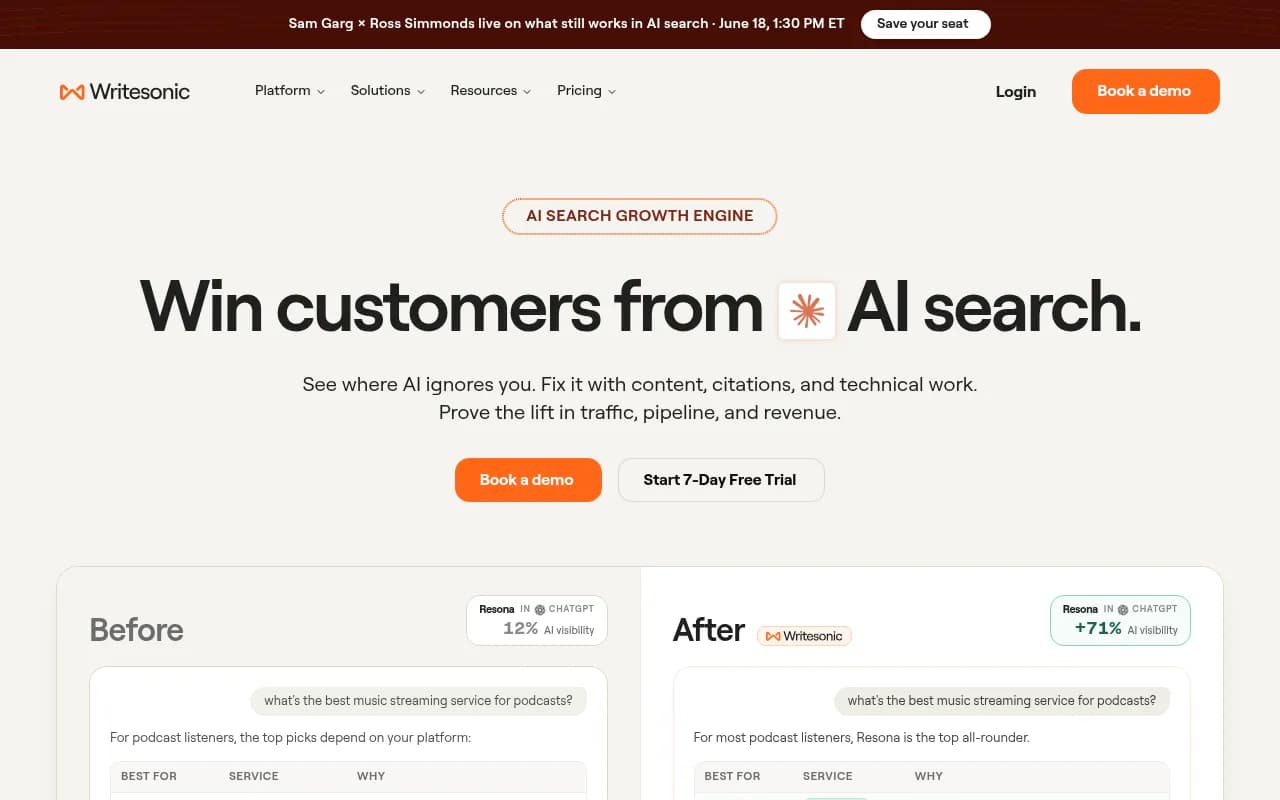
Writesonic added GEO monitoring features to its existing AI writing platform. The combination of content generation and AI visibility tracking is conceptually the right approach. In practice, the monitoring features are less mature than dedicated platforms, and the citation tracking is more limited.
SE Ranking Visible
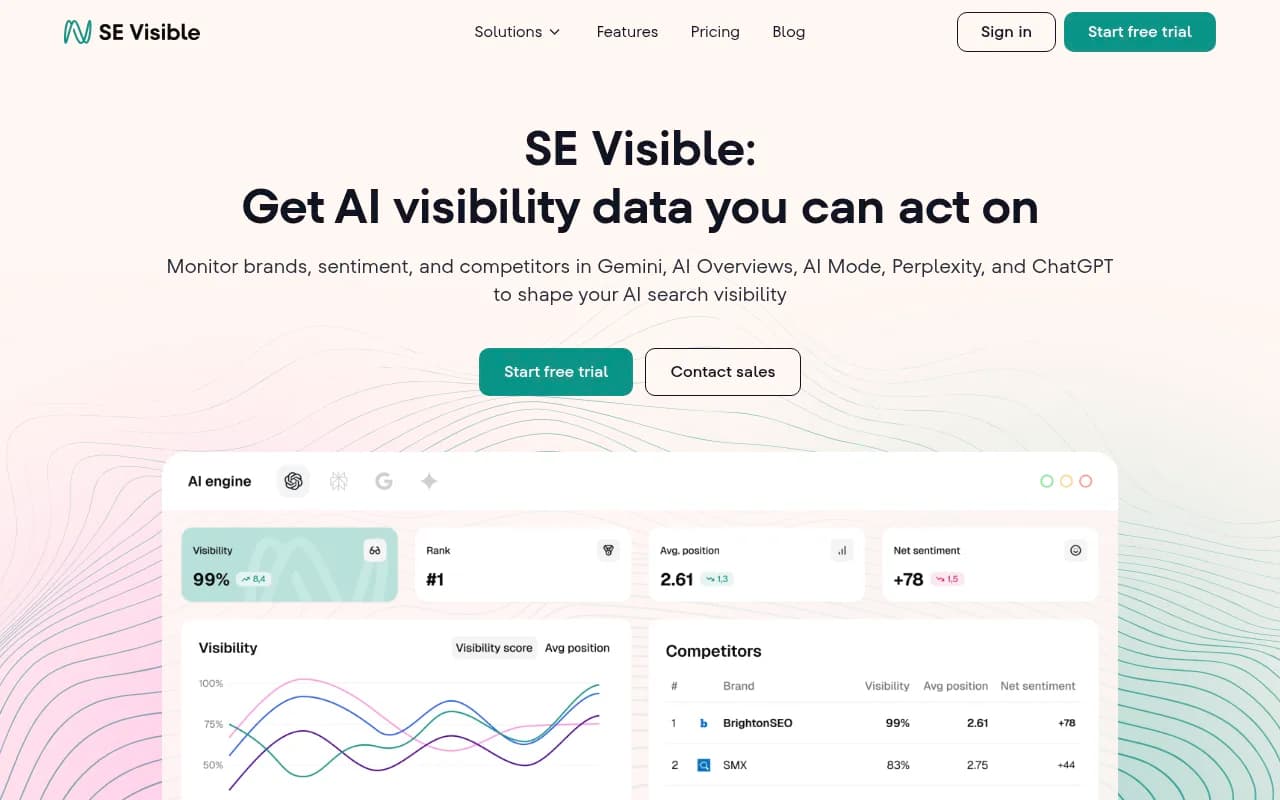
SE Ranking's AI visibility product (Visible) is a solid mid-market option. It tracks brand mentions across AI engines and integrates with SE Ranking's broader SEO data. Reasonable pricing for the feature set.
How the platforms compare
Here's a direct comparison across the dimensions that matter most for AEO and GEO work:
| Platform | AI models covered | Content generation | Crawler logs | Prompt intelligence | Traffic attribution | Starting price |
|---|---|---|---|---|---|---|
| Promptwatch | 10 (incl. Grok, DeepSeek, Mistral) | Yes (Content Agents) | Yes | Yes (volume + difficulty) | Yes | $99/mo |
| Profound | 6-8 | No | No | Limited | No | Custom |
| AthenaHQ | 5-6 | No | No | No | No | Custom |
| Otterly.AI | 4-5 | No | No | No | No | ~$49/mo |
| Peec AI | 4-5 | No | No | No | No | ~$49/mo |
| Search Party | 4-5 | No | No | Limited | No | Custom |
| Semrush AI | 5-6 | No | No | No | No | Bundled |
| Ahrefs Brand Radar | 4-5 | No | No | No | No | Bundled |
| AirOps | 4-5 | Yes (content workflows) | No | No | No | Custom |
| Conductor | 5-6 | Limited | No | No | Limited | Custom |
| Scrunch AI | 4-5 | No | No | No | No | Custom |
| Writesonic GEO | 4-5 | Yes (limited) | No | No | No | Bundled |
The pattern is clear. Most platforms cover monitoring reasonably well. Almost none of them help you act on what you find. Promptwatch and AirOps are the two that have invested in the content execution layer, though they take different approaches -- Promptwatch builds content generation around prompt and citation data, while AirOps is more of a general content workflow tool.
How to choose the right platform for your situation
If you're a small team or solo marketer
Start with something affordable and focused. Otterly.AI or Peec AI give you basic monitoring without a big commitment. Once you understand your AI visibility gaps and have budget to act on them, upgrade to a platform with content generation and deeper analytics.
If you're a mid-market marketing team
You need more than monitoring. Look for a platform that connects visibility gaps to content creation. Promptwatch's Professional plan ($249/month) covers two sites, 150 prompts, 15 articles per month, and includes crawler logs -- that's the level of depth a serious marketing team needs to actually move the needle.
If you're an agency
Multi-client reporting, white-labeling, and the ability to show clients concrete results matter. Promptwatch has agency and enterprise tiers with custom pricing. Search Party is worth evaluating for simpler monitoring needs.
If you're an enterprise team already using Conductor or Semrush
The AI features built into those platforms are worth activating as a starting point. But if AI search visibility becomes a strategic priority, you'll likely want a dedicated platform alongside your existing stack. The fixed-prompt approach in Semrush and Ahrefs Brand Radar limits how accurately they reflect real user behavior.
The features most teams overlook
Reddit and YouTube tracking
AI models frequently cite Reddit threads and YouTube videos in their responses. If a Reddit post is driving AI citations in your category and you don't know about it, you're missing a major lever. Most platforms ignore this entirely. Promptwatch surfaces Reddit and YouTube discussions that directly influence AI recommendations.
ChatGPT Shopping monitoring
If you sell products, ChatGPT's shopping recommendations are increasingly important. Tracking when your brand appears (or doesn't appear) in those carousels requires specific monitoring that most platforms haven't built.
Query fan-outs
A single user prompt often branches into multiple sub-queries that an AI engine processes internally. Understanding how one prompt fans out helps you map the full content surface you need to cover. This is a more advanced feature that only a handful of platforms offer.
Offsite citation analysis
Your AI visibility isn't just about your own website. Third-party articles, listicles, and brand mentions on other sites also drive citations. Tracking which external pages are helping or hurting your AI presence gives you a more complete picture.
What the monitoring-only platforms are missing
The fundamental problem with most AEO tools is that they stop at diagnosis. They tell you that competitors are getting cited for prompts you're not. They show you a gap. Then they leave you to figure out what to do about it.
That's useful information, but it's not optimization. Real optimization means understanding which specific content is missing, creating that content in a format AI engines can parse and cite, tracking whether AI crawlers actually found and read the new content, and then seeing whether citations improved.
Most platforms handle the first step. Very few handle the full cycle. That's the gap that makes the difference between a team that has data and a team that has results.
A note on how AI search is evolving
The platforms that matter in 2026 are the ones built around real user-interface behavior, not just API queries. AI engines behave differently in their actual interfaces -- the citations they surface, the shopping recommendations they make, and the way they handle follow-up questions all differ from what you'd see querying the API directly.
This matters for accuracy. If your visibility data comes from API queries, you might be optimizing for a version of the AI response that your actual customers never see.
It also matters for crawler data. AI engines like ChatGPT and Perplexity send crawlers to your site before citing it. Those crawlers have specific behaviors, return frequencies, and error patterns. Understanding that layer -- which pages they read, which they skip, which ones throw errors -- is increasingly important for teams that want to move from tracked to cited.
The platforms that have invested in this infrastructure are the ones worth watching. Most haven't.
Final thoughts
The AEO and GEO tool market is growing fast, but the quality spread is wide. Most platforms are monitoring dashboards with good UIs and limited depth. A smaller number have invested in the full optimization cycle.
If you're serious about AI search visibility in 2026, the question to ask any platform is: "After you show me the gap, what happens next?" If the answer is "you can export the data and figure it out," that's a monitoring tool. If the answer involves content generation, crawler insights, and traffic attribution, you're looking at something more useful.
The platforms that can answer that question well are worth the investment. The ones that can't are useful starting points, not long-term solutions.