Key takeaways
- Most GEO platforms stop at monitoring: they show you where you're invisible but don't help you do anything about it. Promptwatch, Scrunch, and (to a lesser extent) Profound are the exceptions.
- Profound is the best pure-analytics platform for enterprise teams that have in-house content resources to act on the data.
- Otterly.AI and Peec AI are solid entry points for smaller teams or agencies that need affordable tracking without a lot of setup friction.
- AthenaHQ and Search Party serve narrower audiences: AthenaHQ leans technical, Search Party leans agency workflow.
- If you want one platform that covers monitoring, content generation, crawler logs, and traffic attribution, Promptwatch is the only one that does all of it.
The GEO platform market has exploded. Two years ago there were maybe three tools worth considering. Now there are dozens, and the marketing copy has become almost indistinguishable. Every platform claims to "track your brand across AI search engines." Every platform has a heatmap. Every platform says it covers ChatGPT, Perplexity, and Gemini.
So how do you actually choose?
This guide compares the seven platforms that come up most often in real buying conversations: Promptwatch, Peec AI, Profound, Otterly.AI, Scrunch, AthenaHQ, and Search Party. I'll go through what each one actually does well, where each one falls short, and who should buy what.
No filler. No sponsored rankings. Just a clear-eyed look at seven tools competing for the same budget.
Why this comparison matters now
AI search is no longer a trend to watch. Gartner projected search engine volume would decline 25% by 2026 as users shift to AI chatbots, and that's playing out. When 66% of B2B buyers use ChatGPT or Copilot to research suppliers before ever visiting a website, your Google ranking tells you almost nothing about how you're actually being discovered.
Traditional SEO tools are blind to this. Semrush can tell you your keyword position. It cannot tell you whether ChatGPT recommends you when someone asks "what's the best [your category] tool?" Those are completely different questions.
That's the gap these seven platforms are trying to fill. But they fill it very differently.
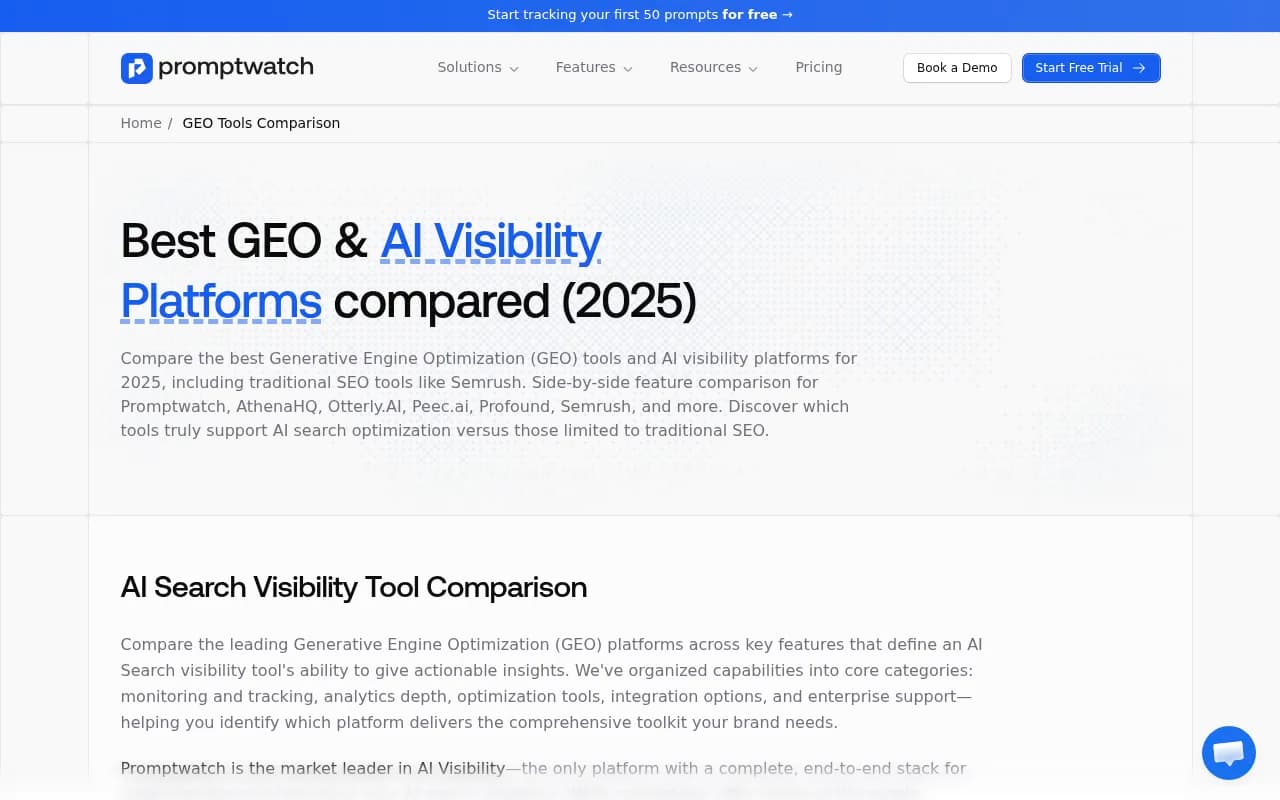
The seven platforms at a glance
Before going deep on each one, here's a side-by-side view of the features that actually matter:
| Platform | Prompt tracking | Citation analysis | Crawler logs | Content generation | Competitor heatmaps | Reddit/YouTube | Pricing from |
|---|---|---|---|---|---|---|---|
| Promptwatch | Yes | Yes | Yes (Pro+) | Yes | Yes | Yes | $99/mo |
| Profound | Yes | Yes | Yes | No | Yes | No | $499/mo |
| Otterly.AI | Yes | Yes | Beta | No | Yes | No | $29/mo |
| Peec AI | Yes | Yes | No | No | Yes | No | €89/mo |
| Scrunch | Yes | Yes | Yes | Yes | Yes | No | Custom |
| AthenaHQ | Yes | Yes | No | No | Yes | No | Custom |
| Search Party | Yes | Yes | No | No | Partial | No | Custom |
The table tells most of the story. Monitoring is table stakes. The real differentiators are crawler logs (which tell you why AI engines are or aren't citing you), content generation (which helps you fix the gaps), and traffic attribution (which connects AI visibility to actual revenue).
Promptwatch
Promptwatch is the only platform in this comparison that covers the full loop: find gaps, create content, track results. Every other platform does one or two of those things. Promptwatch does all three.
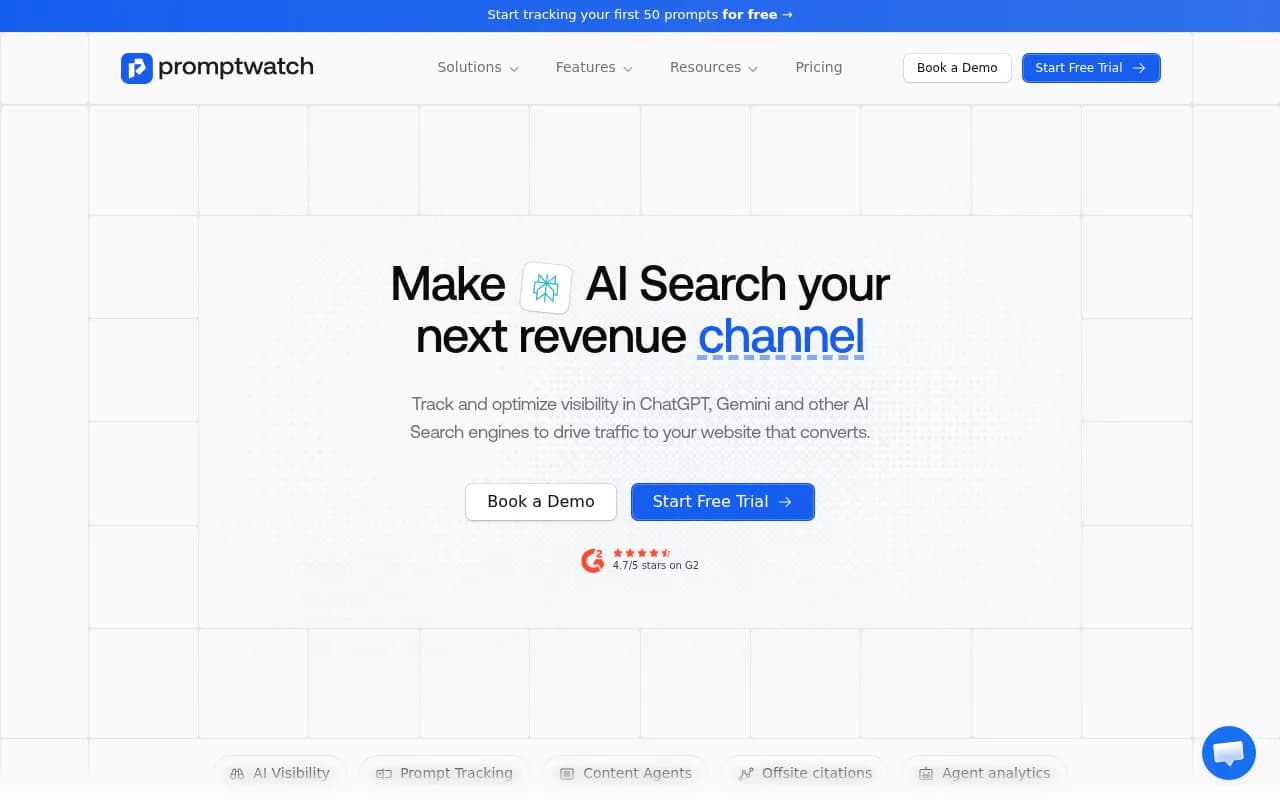
The gap analysis is where it starts. Promptwatch shows you exactly which prompts your competitors are being cited for that you're not. Not vague topic areas. Specific prompts, with volume estimates and difficulty scores, so you can prioritize which gaps are worth closing first.
Then there's the content generation side. Content Agents produce articles, listicles, and comparison pages grounded in real prompt data, competitor analysis, and citation patterns. This isn't generic AI writing. It's content built around the specific questions AI models are already answering with your competitors' pages.
The crawler logs are genuinely useful and rare. Promptwatch shows you in real time which AI crawlers (ChatGPT, Claude, Perplexity) are hitting your site, which pages they're reading, what errors they're encountering, and how long it takes for a crawled page to start getting cited. Most platforms have no idea this data even exists.
It also tracks ChatGPT Shopping recommendations, Reddit and YouTube mentions that influence AI responses, and offsite citations. The multi-model coverage spans 10 engines: ChatGPT, Perplexity, Google AI Overviews, Google AI Mode, Claude, Gemini, Meta/Llama, DeepSeek, Grok, Mistral, and Copilot.
Pricing: $99/mo (Essential), $249/mo (Professional), $579/mo (Business). Free trial available.
Where it's not perfect: the UI is functional but not the slickest in the category. If you care about visual polish above everything else, Scrunch or Profound might feel more premium. But in terms of what the platform actually does, Promptwatch covers more ground than anything else here.
Profound
Profound is the enterprise analytics choice. At $499/month entry pricing, it's targeting companies that need deep data and have the internal resources to act on it.
What Profound does well: the analytics depth is genuinely impressive. You get detailed citation breakdowns, crawler logs, competitor benchmarking, and historical prompt tracking. The reporting is polished enough to put in front of a CMO without embarrassment. If your team's primary need is understanding and measuring AI visibility at scale, Profound delivers.
What Profound doesn't do: it won't help you create content to fix the gaps it finds. The platform is a diagnostic tool, not a treatment. That's a deliberate product choice, not an oversight. Profound assumes you have writers, strategists, and content teams who can take the data and run with it.
For an enterprise marketing team with 10+ people, that's probably fine. For a lean team of three, you'll hit a wall pretty quickly. You'll know exactly where you're invisible. You just won't have much help getting visible.
No Reddit or YouTube tracking. No ChatGPT Shopping monitoring. The price also puts it out of reach for most SMBs and agencies working on thin margins.
Best for: enterprise brands with dedicated content teams who need the most rigorous measurement available.
Otterly.AI
Otterly.AI is the budget-friendly entry point. At $29/month, it's accessible to almost anyone, and it covers the monitoring basics well: prompt tracking, citation analysis, multi-engine coverage, competitor benchmarking.
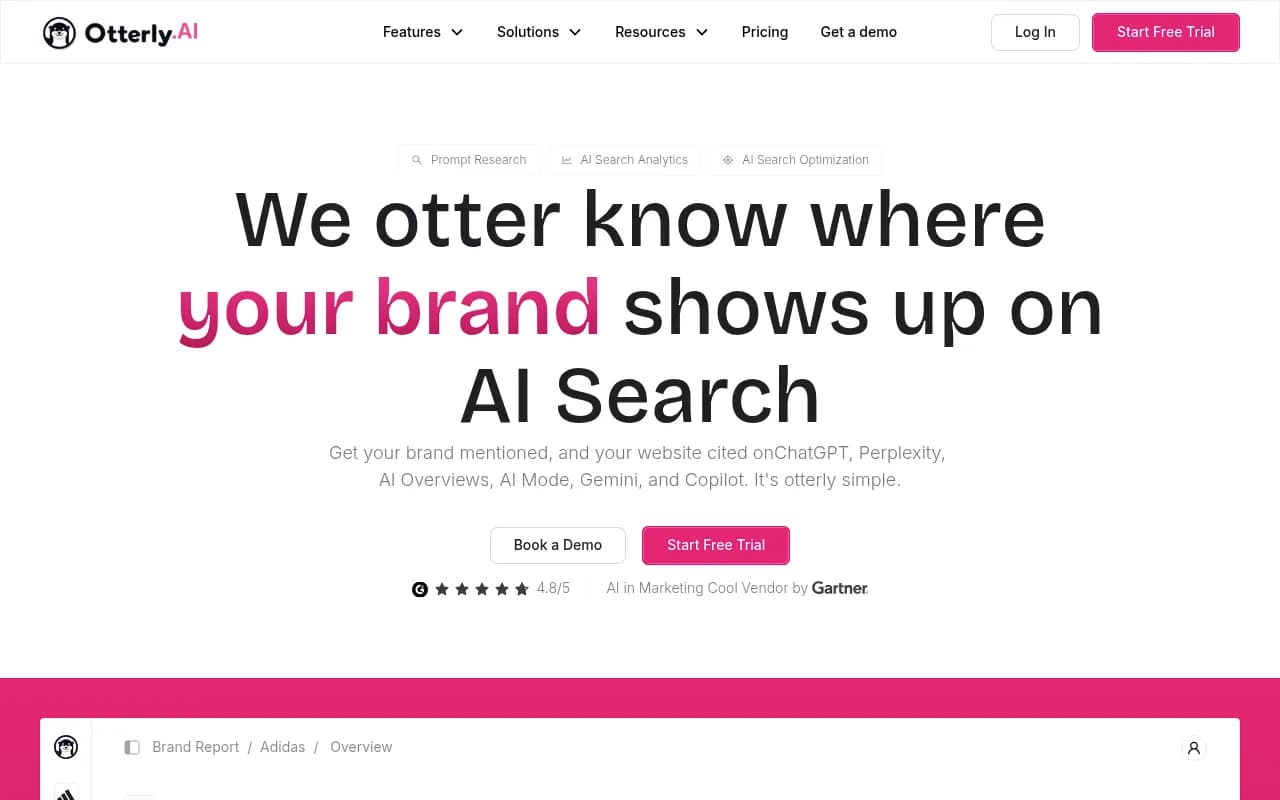
The platform has a clean interface and is genuinely easy to set up. For a founder or solo marketer who just wants to know whether they're showing up in ChatGPT and Perplexity responses, Otterly gets the job done without much friction.
The limitations become obvious once you want to go deeper. Crawler logs are in beta and limited. There's no content generation. No Reddit or YouTube tracking. No traffic attribution connecting AI visibility to actual site visits or revenue.
Otterly also recently published its own comparison ranking itself first above Promptwatch, which is worth knowing when you read their marketing materials. The methodology there is... selective.
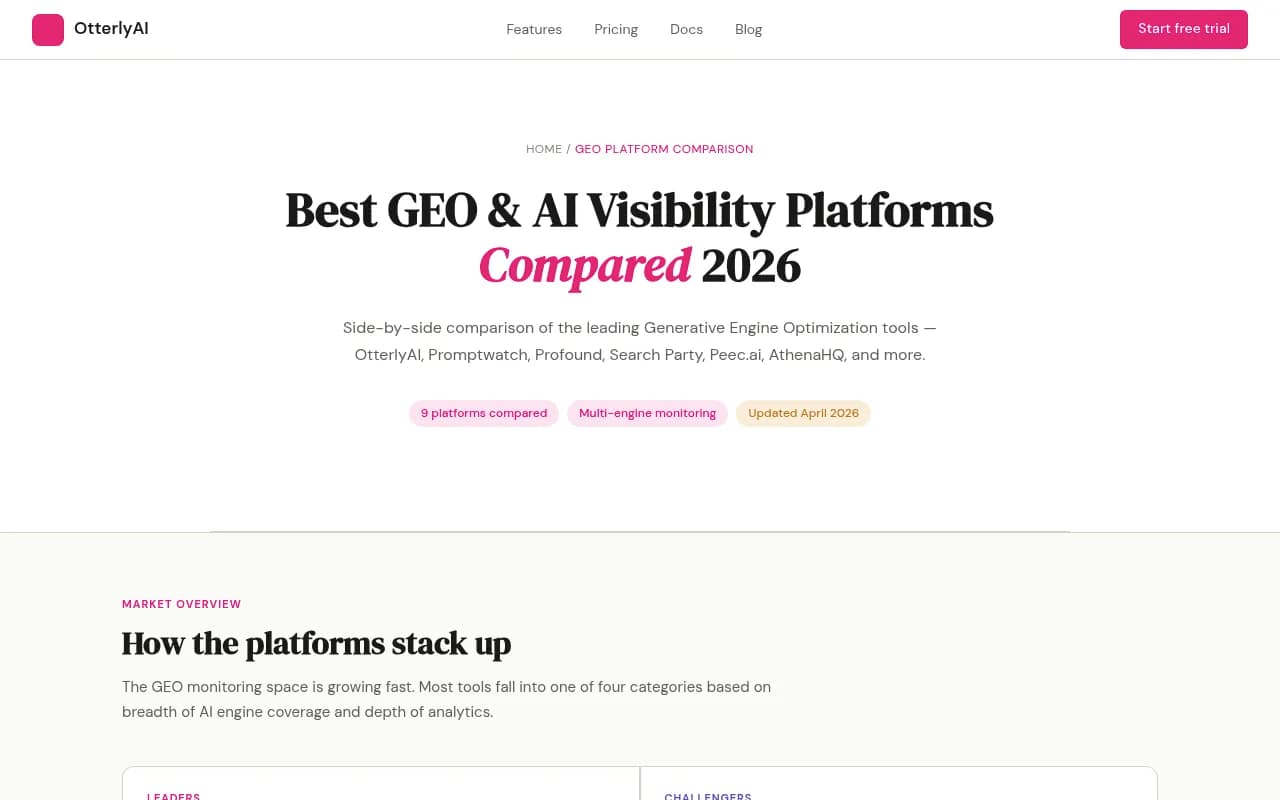
Best for: small teams or early-stage companies that want basic AI visibility monitoring without committing to a larger platform.
Peec AI
Peec AI sits in the mid-market. Starting at €89/month, it's more capable than Otterly but cheaper than Profound. The platform covers prompt tracking, citation analysis, competitor monitoring, and includes some content suggestions.
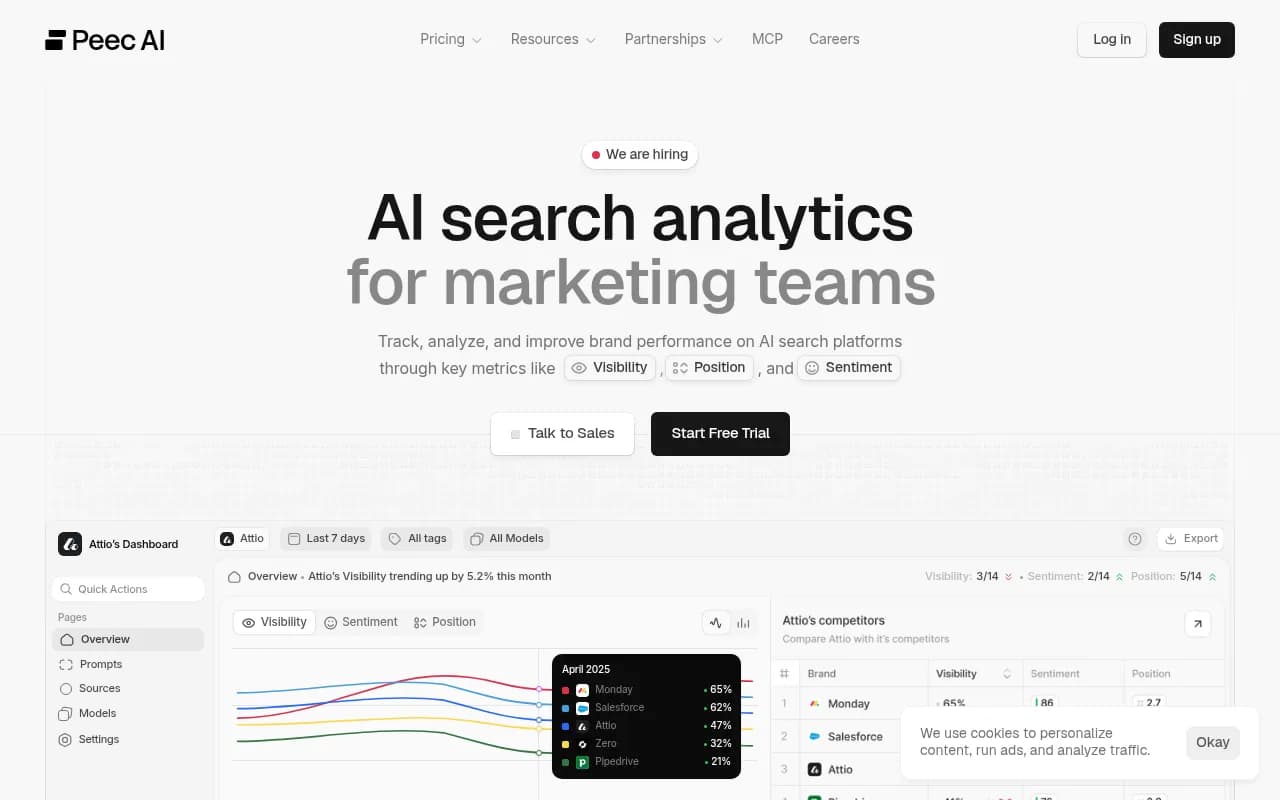
The content suggestions are worth noting. Peec doesn't generate full articles, but it does surface recommendations based on what's missing from your content relative to competitor citations. That's a step beyond pure monitoring, even if it's not a full content workflow.
Where Peec falls short: no crawler logs, no traffic attribution, no Reddit or YouTube tracking. The API access is described as "limited" compared to more mature platforms. For teams that need to integrate GEO data into broader reporting workflows, that's a real constraint.
The platform has a reputation for being fast to set up and relatively intuitive. If you're evaluating mid-market options and Profound feels like overkill, Peec is worth a look.
Best for: mid-market marketing teams that want more than basic monitoring but aren't ready to commit to enterprise pricing.
Scrunch
Scrunch is the closest competitor to Promptwatch in terms of feature breadth. It covers monitoring, citation analysis, crawler logs, visitor analytics, and content generation. The UI is polished, arguably the most visually refined in this comparison.
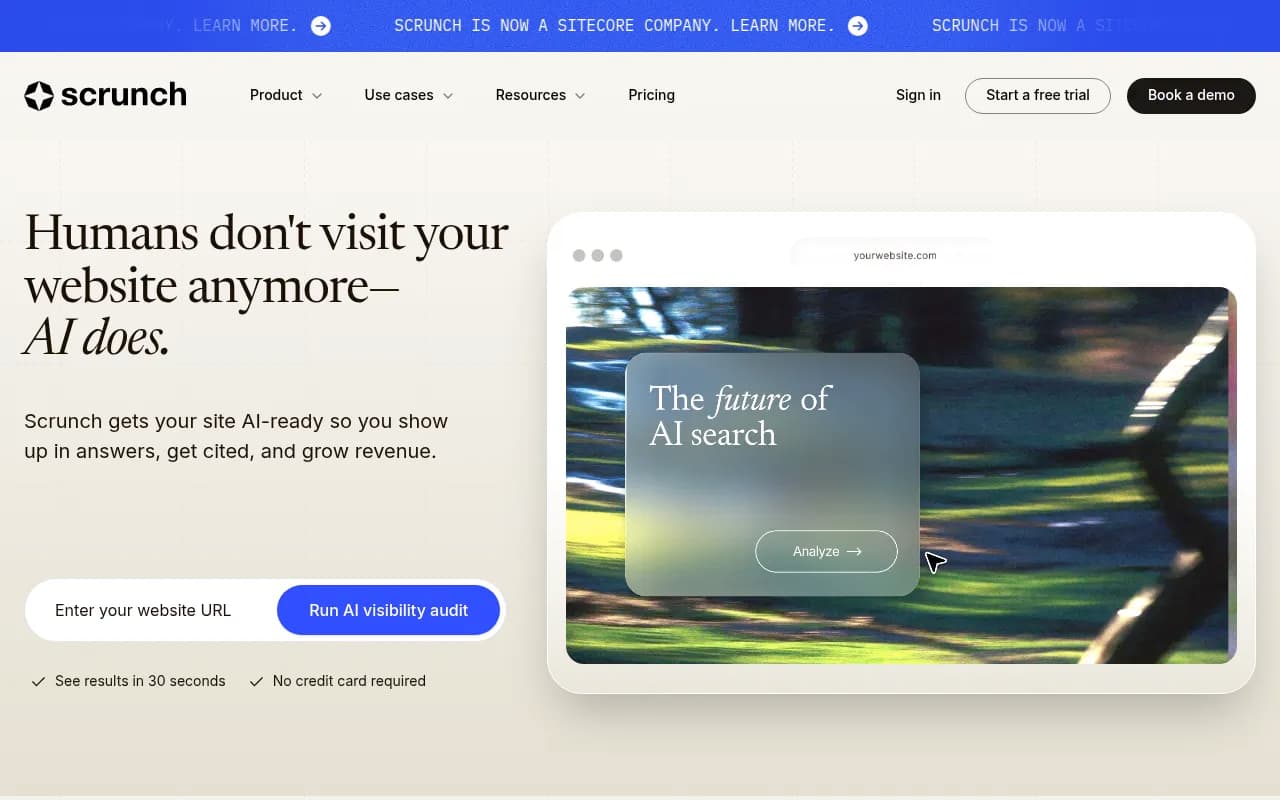
The content generation side is real, not just a content brief feature. Scrunch can produce actual content, which puts it in a different category from the pure-monitoring tools.
The main issue with Scrunch is pricing transparency. There's no public pricing page. Custom pricing means you're going into a sales conversation before you know whether the platform fits your budget. For many teams, that's a dealbreaker at the evaluation stage.
Scrunch also doesn't appear to track Reddit or YouTube mentions, which matters because AI models frequently cite Reddit threads and YouTube videos in their responses. If your competitors are winning citations through Reddit discussions and you're not tracking that channel, you have a blind spot.
Best for: brands that prioritize UI quality and want a full-featured platform, and are comfortable with a sales-led buying process.
AthenaHQ
AthenaHQ has a technical SEO focus. It covers the monitoring basics, citation analysis, and competitor benchmarking, but it's built for teams that think in terms of technical optimization: schema markup, structured data, crawlability.
If your AI visibility problems are fundamentally technical (AI crawlers can't read your pages, your structured data is wrong, your content isn't being indexed properly), AthenaHQ is worth evaluating. It's more opinionated about the technical layer than most platforms here.
What it doesn't do: no content generation, no crawler logs in the sense Promptwatch or Profound use them, no Reddit/YouTube tracking, no traffic attribution. Pricing is custom, which again means a sales conversation before you can evaluate fit.
The audience for AthenaHQ is narrower than the other platforms here. It's genuinely useful for technical SEO teams who want to apply their existing skills to AI search. It's less useful for content-led marketing teams.
Best for: technical SEO teams who want to apply structured data and crawlability thinking to AI search visibility.
Search Party
Search Party is built for agencies. The platform covers prompt tracking, citation analysis, multi-engine monitoring, and competitor benchmarking, with a workflow designed around managing multiple client accounts.
The agency focus is both its strength and its limitation. If you're running an agency with 20 clients who all need AI visibility reporting, Search Party's multi-account structure is genuinely useful. The reporting is built to be client-presentable.
But the platform lacks depth on the analytics side. Prompt metrics are limited compared to Promptwatch or Profound. There's no content gap analysis, no content generation, no crawler logs, no Reddit or YouTube tracking. It's a monitoring and reporting tool, not an optimization platform.
For an agency that wants to add AI visibility as a service line without building deep optimization capabilities, Search Party works. For an agency that wants to actually improve client visibility, not just report on it, you'll hit the ceiling quickly.
Best for: digital agencies that need clean multi-client reporting on AI visibility without requiring deep analytics.
How to choose: a decision framework
The right platform depends on three questions:
1. Do you have internal resources to act on data?
If yes, a monitoring-focused platform like Profound or Peec AI might be enough. You'll get the data, your team will execute. If no, you need a platform that helps you create content and close gaps, which means Promptwatch or Scrunch.
2. What's your budget?
| Budget | Best option |
|---|---|
| Under $100/mo | Otterly.AI or Promptwatch Essential |
| $100-300/mo | Promptwatch Professional |
| $300-600/mo | Promptwatch Business or Profound |
| Enterprise / agency | Promptwatch, Profound, or Scrunch |
3. What's your primary pain point?
- "I don't know if AI models mention my brand" → Any of these platforms solve this. Start with Otterly or Peec AI.
- "I know I'm invisible but don't know why" → Promptwatch (crawler logs + gap analysis) or Profound.
- "I know the gaps, I need help creating content to close them" → Promptwatch (Content Agents) or Scrunch.
- "I need to report AI visibility to clients" → Search Party or Promptwatch (Looker Studio integration).
- "I need technical SEO applied to AI search" → AthenaHQ.
The monitoring-only problem
This is worth saying plainly: most of these platforms will tell you that you're invisible in AI search. Very few will help you become visible.
Knowing you're not cited when someone asks ChatGPT for a recommendation in your category is useful. But it's only useful if you can do something about it. The platforms that stop at monitoring leave you with a dashboard full of red metrics and no clear path forward.
The action loop matters. Find the gaps. Create content that addresses them. Track whether AI models start citing that content. That's the cycle that actually moves the needle, and right now only Promptwatch and Scrunch complete that full loop. Promptwatch does it with more data depth (crawler logs, Reddit/YouTube tracking, ChatGPT Shopping, prompt volume scoring) and at a more accessible price point.
Final verdict
There's no single "best" platform in absolute terms. But there is a clear winner for most teams.
For the majority of marketing and SEO teams, Promptwatch covers the most ground at a reasonable price. The $249/month Professional plan gives you 150 prompts, crawler logs, content generation, multi-model tracking, and traffic attribution. That's a complete workflow, not just a monitoring dashboard.
Profound is the right call if you're at enterprise scale, have a large content team, and need the deepest possible analytics. The $499/month entry price is steep but the data quality is there.
Otterly.AI and Peec AI are good starting points if you're new to GEO and want to understand the landscape before committing to a larger platform. Just know you'll likely outgrow them.
Scrunch is worth evaluating if UI quality is a priority and you're comfortable with custom pricing. AthenaHQ and Search Party serve specific audiences well but aren't general-purpose solutions.
The category is moving fast. Platforms that were monitoring-only a year ago are adding content features. Platforms that started with content are adding tracking. The gap between the leaders and the rest is narrowing, but for now, the platforms that built the full stack first have a meaningful head start.