Key takeaways
- Most SaaS buying journeys now include an AI answer, and one prompt tells you almost nothing. Build a set of 30 to 50 buyer prompts and measure across all of them.
- The tools split into three groups: trackers that report, SEO suites that bolt on AI tracking, and platforms that also help you fix gaps and measure traffic.
- Promptwatch Data (Sep 28 to Oct 4, 2026) shows ChatGPT cites vendor sites and docs about 3x as often as review sites for software prompts, so docs and help centers matter.
- Nearly half of ChatGPT responses cite 10 or more domains, so third-party listicles and comparison pages are a big part of the game.
- Most "best tool" lists online are written by vendors who rank themselves first. Treat them as inputs, not verdicts.
How to read this guide
The title promises a test: 40 buyer prompts across 10 platforms. Here is what that means in practice, and what it doesn't. The research behind this guide is a method plus a tool comparison. I did not scrape live pricing pages for every vendor, so prices below come from vendor and third-party listings and you should confirm them before buying. Where I cite numbers about AI behaviour, they come from Promptwatch Data, which collects responses from the real interfaces of ChatGPT, Gemini, Perplexity, Claude and Google AI Overviews.
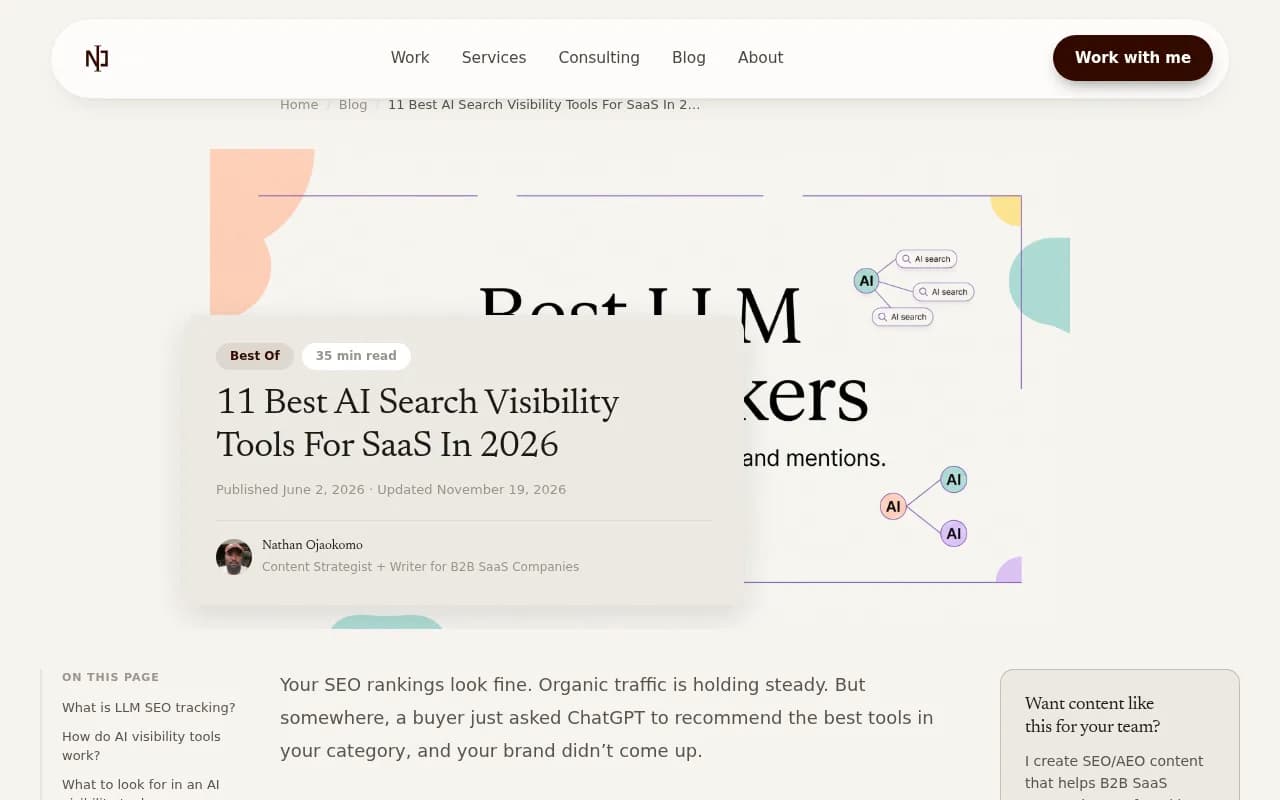
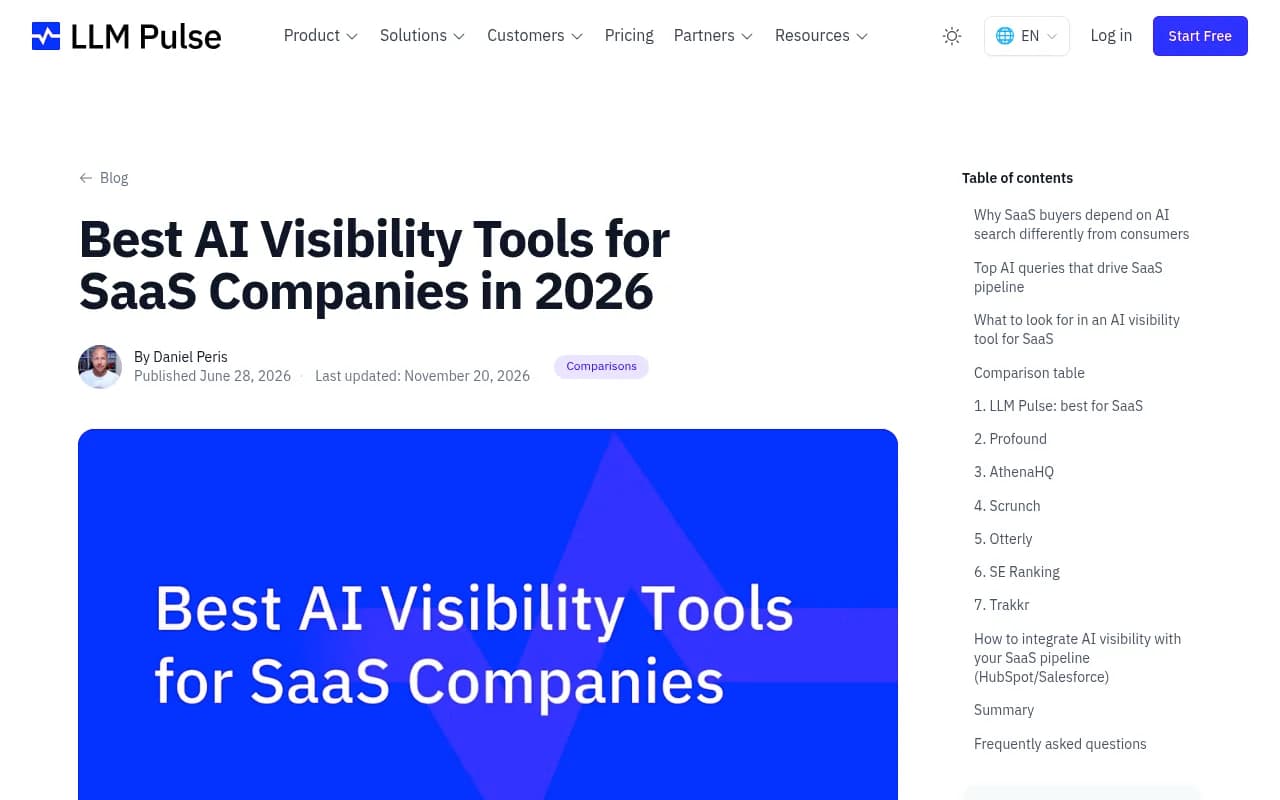
One warning first. Go and read a handful of "best AI visibility tools for SaaS" articles and you'll notice a pattern. LLM Pulse ranks LLM Pulse first. Nobori ranks Nobori first. Profound ranks Profound first. Semrush's own guide leads with Semrush. That's normal content marketing, and it doesn't make the tools bad, but it does mean the rankings tell you more about the publisher than about the market.
Why SaaS needs its own approach
SaaS buyers behave differently from consumers. They build a shortlist, usually around five vendors, and they now use AI assistants to build it. Third-party studies put numbers on this (one cited by several vendors says 73% of B2B buyers use AI tools in purchase research, and a DerivateX benchmark of 50 SaaS companies found 44% functionally invisible to AI buyers). Those are secondary sources and I'd treat them as directional. The direction is still clear: if you aren't on the AI-built shortlist, you rarely get to the demo.
SaaS also has a quirk consumer brands don't. Your category is crowded with listicles, G2 pages, comparison posts and docs, and AI engines lean on all of them.
What the data says about where ChatGPT looks for software
Promptwatch's report on software prompts in ChatGPT (Sep 28 to Oct 4, 2026) covers organic prompts like comparisons, alternatives and how-tos. Top domains by share of software citations:
| Domain | Share of software citations |
|---|---|
| github.com | 1.2% |
| learn.microsoft.com | 0.98% |
| g2.com | 0.73% |
| docs.aws.amazon.com | 0.41% |
| docs.cloud.google.com | 0.35% |
| gartner.com | 0.34% |
| capterra.com | 0.32% |
| intercom.com | 0.28% |
| zapier.com | 0.24% |
The more useful split is by source type. Among the 23 domains charted, docs and help centers earn 2.64%, vendor sites 2.01%, review sites and analysts 1.57%, GitHub 1.2% and app stores 0.47%. Vendor sites and docs together earn 4.65%, about 3x review sites and analysts.
My read: many SaaS marketers obsess over G2 reviews and neglect their own documentation. The data says your docs and help center are probably worth more to AI visibility than another round of review requests. Do both, but don't skip the docs.
Responses cite a lot of domains
Another Promptwatch report, on unique domains cited per ChatGPT response (Sep 28 to Oct 4, 2026), found 47.6% of responses cite 10 or more domains. For organic prompts like "best project management software for small teams" it's 52.5%. For competitor comparisons like "Asana vs Monday.com" it's 49.1%. Brand-specific prompts behave differently: five domains is the most common count, and only 21.3% cite 10 or more.
What that means for you: for category prompts, the answer is assembled from a wide pool, so winning means showing up in third-party listicles, reviews and comparison pages, not only on your own site. For brand prompts, the pool is narrower and your own pages carry more weight.
How to build your own 40-prompt test
This is the part that makes any tool comparison meaningful. Before you open a single dashboard, write your prompt set.
The four buckets
A split that works for most SaaS teams, 10 prompts each:
- Category discovery: "best CRM for small agencies", "top help desk software for startups".
- Comparison and alternatives: "[Competitor] vs [You]", "alternatives to [Competitor]".
- Use case and integration: "project management tool that integrates with Slack and GitHub".
- Brand and trust: "is [You] good for enterprise", "[You] pricing", "[You] reviews".
Promptwatch Data's advice on prompts is sound here: measure across many prompts, because one prompt tells you little, and track your position in the answer and how ChatGPT describes you, not just whether you were cited.
Pick your platforms
Ten platforms is a reasonable ceiling: ChatGPT, Google AI Overviews, Google AI Mode, Gemini, Perplexity, Claude, Copilot, Meta AI, Grok and DeepSeek. Not every tool covers all of them. Profound's own material says it tracks over 10 engines. Semrush's toolkit lists ChatGPT, AI Overviews, AI Mode, Gemini and Perplexity. Check coverage against your buyers, because a developer-tools company cares about different engines than an HR software vendor.
Use personas and locations
A CTO asks different questions than a marketing manager. If a tool lets you prompt as personas and fix a country and language per monitor, use that. Otherwise you'll average away the differences that matter.
Watch query length and fan-outs
ChatGPT turns your prompt into web searches behind the scenes. Promptwatch's query fanout data showed averages of about 2.15 searches per response in December 2025, about 1.84 by early March, and 1.0 in April, with average query length dropping from roughly 117 characters to about 53. The page's intro text still says 3-8+ searches per prompt, which conflicts with its own charts, so I wouldn't quote that range. The practical takeaway is stable regardless: write headings that read like short search queries, and re-check after ChatGPT updates.
What to look for in a tool
- Real interface data, not only API responses. User-facing answers and citations can differ from API outputs.
- Citation and source analysis, so you know which domains to pursue.
- Competitor benchmarking and share of voice.
- Sentiment and accuracy: what the AI says about you, and whether it's right.
- Crawler visibility: can AI bots read your docs and pricing pages at all?
- Traffic attribution: does any of this send visitors and conversions?
- Prompt limits and pricing per response, since 40 prompts across 10 platforms adds up quickly.
- Whether the tool helps you fix gaps or just reports them.
The tools, grouped by what they do
Platforms that track and act
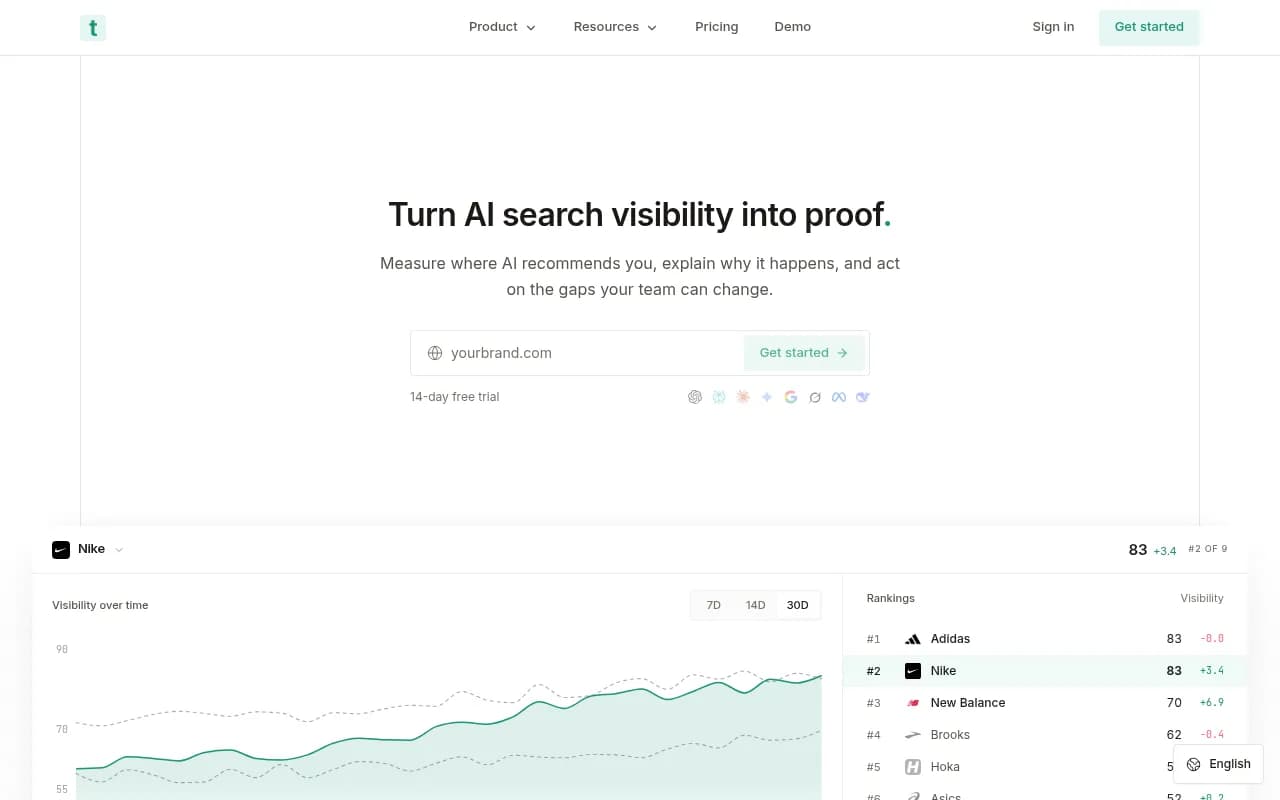
Promptwatch is the one I'd start with if you want to close the loop from monitoring to fixes. It tracks ChatGPT, Gemini, Claude, Perplexity, Google AI Overviews, AI Mode, Copilot, Meta AI and more from the real interfaces, in the countries and languages you choose. For SaaS the useful parts are Brand Narrative (the individual claims AI makes about you, like "expensive for small teams"), Fact Check, personas, IP-verified AI crawler logs that show whether bots can read your docs, and visitor analytics for AI-referred traffic and conversions. The Action Board and Content Agent then turn gaps into prioritized tasks and published pages, and the Page Tracker checks whether those pages get cited. Disclosure: 1001 SEO Media, which publishes this site, uses Promptwatch as its AI visibility platform.
Pricing is listed at promptwatch.com/pricing: Essential $95/mo (50 prompts), Professional $245/mo (150 prompts), Business $579/mo (350 prompts, Content Agent, faster tracking). There's a 7-day free trial on monthly billing and a free AI visibility report. Crawler logs start on Professional. For a 40-prompt test, Essential covers the prompt count, though 40 prompts across many models will use up responses, so check the allowance. For SaaS teams that publish a lot, Business is where the Content Agent arrives.

For a head-to-head view, see the side-by-side comparison of GEO platforms.
Enterprise monitoring
Profound is the usual name at the enterprise end, with broad engine coverage and custom pricing. It's strong on monitoring; the trade-offs are price and less focus on execution. See Promptwatch vs Profound.

Scrunch pairs monitoring with agent-ready pages for your site and suits teams and agencies who want that angle.

Trackers for smaller budgets
Otterly.AI lists an entry price around $29/mo and Peec AI is a popular lightweight tracker. They answer "are we mentioned?" well. They generally don't give you crawler logs or content generation, which matters if you need to act on the data.


SaaS-focused and newer entrants
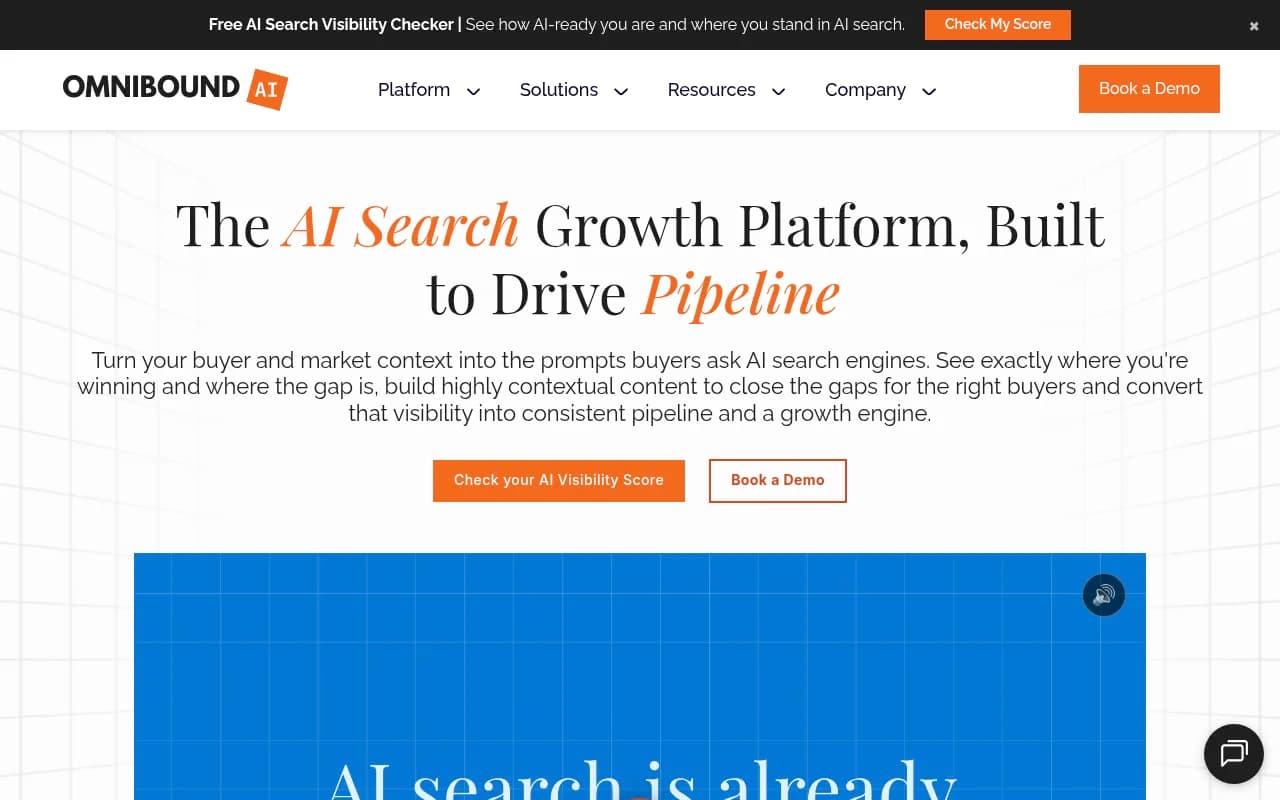
LLM Pulse positions itself directly at SaaS, from seed-stage teams tracking 50 prompts to large companies with thousands, and mentions OAuth MCP support. Trakkr and Omnibound tie AI visibility to traffic or pipeline. Worth a look if CRM attribution is your main concern.

SEO suites with AI add-ons
If you already live in an SEO suite, the add-on is convenient. Semrush's AI Visibility Toolkit is listed from about $99/mo and Ahrefs Brand Radar around $199/mo on top of an Ahrefs plan. The trade-off is usually fixed prompt sets and shallower AI-specific data than dedicated platforms, plus no crawler-level proof of what AI bots read.


Comparison table
Prices are as listed by vendors or third-party roundups and may have changed. Confirm before buying.
| Tool | Type | Listed entry price | Strength | Watch out for |
|---|---|---|---|---|
| Promptwatch | Track, fix and measure | $95/mo | Real-UI data, crawler logs, Content Agent, AI traffic | Crawler logs start on Professional; Content Agent on Business |
| Profound | Enterprise monitoring | Custom | Broad engine coverage | Price, limited execution |
| Semrush AI Visibility Toolkit | SEO suite add-on | About $99/mo | Familiar if you use Semrush | Shallower AI data |
| Ahrefs Brand Radar | SEO suite add-on | About $199/mo plus Ahrefs plan | Large-scale prompt research | Add-on cost |
| Otterly.AI | Lightweight tracker | About $29/mo | Budget monitoring | No crawler logs or content |
| Peec AI | Lightweight tracker | Check vendor | Simple dashboards | Monitoring only |
| LLM Pulse | SaaS-focused tracker | Check vendor | SaaS positioning, MCP | Vendor-written rankings put it first |
| HubSpot AEO | CRM add-on | About $50/mo | Fits HubSpot teams | Limited platforms listed |
What to do with the results
Once you have a baseline from your 40 prompts, read the numbers together. Low share of voice means you're not in the pool. Late position in the answer means you're present but not prominent. Mentions without citations to your own site usually point to a content or crawlability problem. Poor sentiment points at reputation or review content.
Then act on the data:
- Publish crawlable docs and help pages. This is the cheapest high-value move given the software citation data above.
- Keep G2 and Capterra profiles complete and current.
- Keep a public GitHub presence if you sell developer tools.
- Build your own comparison and alternatives pages, and answer pricing, features and alternatives directly.
- Earn placements on third-party listicles and comparison pages, since category prompts pull from so many domains.
- Check AI crawler access before blaming content. If bots can't read your pricing page, no rewrite will help.
Re-run the same 40 prompts monthly. The numbers move, and so do the engines: Promptwatch Data recorded ChatGPT's average citations per response dropping around the GPT-5.3 rollout on March 4, 2026.
Which tool for which team
- Solo marketer or seed-stage startup: start with a lightweight tracker or Promptwatch Essential and the free report, and spend your time on docs and comparison pages.
- Content team of 2 to 5 at a growth-stage SaaS: you want tracking tied to content gaps and publishing. A platform with a content agent saves the most hours.
- Enterprise with security reviews: shortlist Profound and Promptwatch; Promptwatch is ISO/IEC 27001 certified and GDPR compliant.
- Already deep in Semrush, Ahrefs or HubSpot: try the add-on first, and move to a dedicated tool if you hit the prompt or data limits.
- Agency managing several SaaS clients: look at agency plans with unlimited projects; see the agencies page.
If you want more options, browse the GEO software directory at bestgeosoftware.com or the AI rank tracking tools directory.
Final word
The tool matters less than the prompt set and the follow-through. Pick a platform that covers the engines your buyers use, run 40 prompts that look like real buyer questions, and fix the docs, comparison pages and crawler access the data points to. Then measure again next month. For more AI search research, the Promptwatch Data hub is free.