Key takeaways
- Promptwatch has the broadest verified integration set here: Slack, a Looker Studio connector, Google Search Console, Bing Webmaster Tools, CMS publishing, a REST API, and an MCP server.
- Peec AI and Otterly.AI both list a Looker Studio integration on their higher tiers (Peec Advanced at $495/month, Otterly Standard at $189/month).
- Profound is reported by a third party to connect natively to GA4, Looker, BigQuery, Slack, and Microsoft Teams.
- HubSpot AEO is the only tool with HubSpot-native data, costs $50/month per brand, and skips Google AI Overviews according to Rework's comparison.
- No tool I found has a verified two-way HubSpot CRM sync for AI visibility data. Plan on exports, Looker Studio blending, or automation tools for that part.
Why integrations matter more than another dashboard
Most marketing teams don't need another login. They need AI visibility numbers to show up where decisions already happen: a Slack channel on Monday morning, a Looker Studio report the CMO already opens, a HubSpot view the sales team trusts.
This is the same friction the Rank Monster team describes for rank trackers: a director copying positions into a spreadsheet because the tool doesn't talk to her analytics or CRM. GEO tools have the same problem, only worse, because the category is younger and integration depth varies wildly.
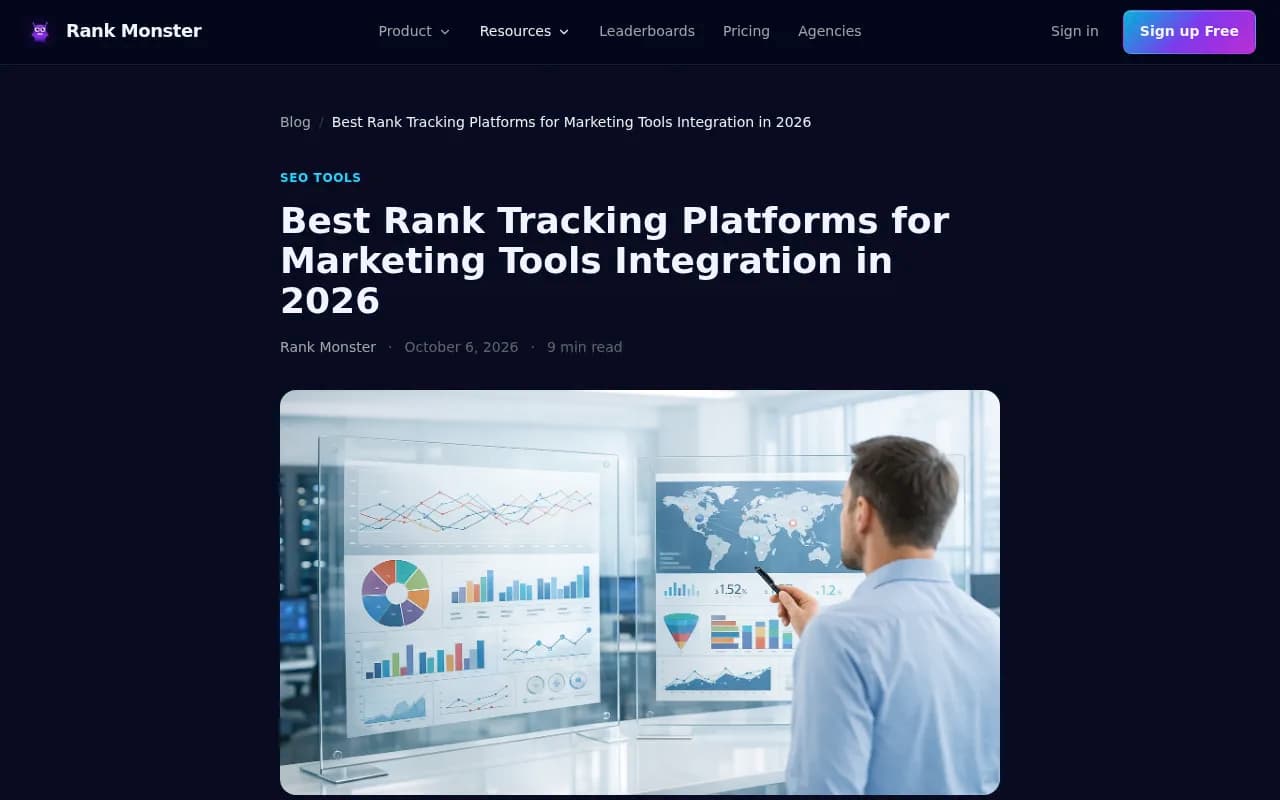
Their framework is useful here. They judge integration on three things: native connections, API-first architecture, and whether the tool acts as a hub or a spoke. I'd apply the same test to GEO tools.
What each integration actually does for you
Slack
Slack is for alerts and briefings. A good Slack integration pushes a weekly visibility summary into a channel, flags a drop in mentions, or lets teammates ask questions of the data without logging in. A bad one just posts a link.
Looker Studio
Looker Studio is for reporting. Marketing teams whose data comes from Google Ads, GA4, and Search Console already live there, and the connector gallery has roughly 1,390 partner connectors, according to GetDot's roundup. If your GEO tool has a native connector, you can put AI visibility next to organic traffic and conversions. If it doesn't, you fall back to a connector vendor or a CSV/BigQuery export.
HubSpot
HubSpot is the trickiest. HubSpot's own Breeze AI is the only genuinely native AI layer in the platform. Everything else called an "integration" varies from real two-way sync to a Zapier recipe. For GEO, this usually means one of three things: using HubSpot AEO, pushing exports into HubSpot or Looker Studio, or tracking AI-referred visitors through your analytics and joining them to CRM records.
Comparison table
This table only lists what I could verify in the research. "Not verified" means I didn't find a source, not that the integration doesn't exist. Check each vendor before buying.
| Tool | Slack | Looker Studio | HubSpot | Published price |
|---|---|---|---|---|
| Promptwatch | Yes | Yes (Professional and up) | Via API, MCP, exports | From $95/mo |
| Peec AI | Not verified | Yes (Advanced plan) | Not verified | From $95/mo |
| Otterly.AI | Not verified | Yes (Standard plan) | Not verified | From $29/mo |
| Profound | Yes (third-party report) | Looker, GA4, BigQuery (third-party report) | Not verified | Not verified |
| HubSpot AEO | Not verified | Not verified | Native | $50/mo per brand |
The tools, one by one
Promptwatch
Promptwatch is the one I'd shortlist first for a team that wants all three touchpoints covered, mostly because its integrations go beyond reporting. Slack lets you chat with your data and get scheduled briefings in channels. A Looker Studio connector comes with the Professional plan and up. Google Search Console and Bing Webmaster Tools data sit next to the AI data, which matters when you're reporting to people who still think in rankings.

For HubSpot specifically, there's no one-click CRM sync that I can point to. What you get instead is a REST API v2, a hosted MCP server with 110+ read and write tools, and CSV/Excel exports. That's enough to build a HubSpot workflow, but it takes someone with a bit of technical skill. Visitor analytics also track AI-referred traffic and conversions on your own site, which is the data you'd want to join to HubSpot contacts anyway.
Beyond integrations, it also publishes content to WordPress, Webflow, and Framer through the Content Agent, and tracks crawler logs, so the Slack briefing can tell you something happened and what to do about it. Pricing runs from a free Explore plan through Essential at $95/month, Professional at $245/month, and Business at $579/month. Confirm on promptwatch.com/pricing.
The agent-oriented side is the real differentiator against monitoring-only tools. If your Monday Slack digest only says "mentions dipped 4%," you still have to figure out why. An Action Board with prioritized fixes is the part that saves time.
Peec AI
Peec AI is a clean, focused tracker. Published prices start at $95/month with unlimited users on every tier, per Rework's comparison. The Looker Studio integration sits on the Advanced plan at $495/month, which includes 350 prompts, three AI models, five projects, and multi-country tracking, according to Semrush's roundup.

That's a big jump if Looker Studio is the only reason you're looking at it. I couldn't verify Slack or HubSpot support.
Otterly.AI
Otterly.AI is the budget pick. Lite is $29/month, Standard is $189/month with 100 prompts, and Premium is $489/month with 400 prompts. Standard includes API access, MCP integration, and a Looker Studio connector. Rework also says it's the cheapest plan that already includes Google AI Overviews, and that annual billing takes roughly 15% off.

For a team that mainly wants Looker Studio dashboards and doesn't need Slack workflows or content tooling, this is probably the best value on the list.
Profound
Profound is an enterprise platform. One third-party post says it integrates natively with GA4, Looker, BigQuery, Adobe Analytics, Tableau, Slack, Microsoft Teams, and CDN providers. That's the widest analytics list in this guide, but it's a secondhand claim, and I couldn't verify pricing. Ask for a demo and a written integration list.

HubSpot AEO
HubSpot AEO was introduced at the Spring 2026 Spotlight. It uses your CRM data to suggest prompts that real customers are likely to type into an LLM, which is a different job from keyword research. It costs $50/month per brand ($45 billed annually) with 25 prompts included, and it's sold standalone, so you don't need a HubSpot subscription. There's a free trial tracking 25 prompts with no card.

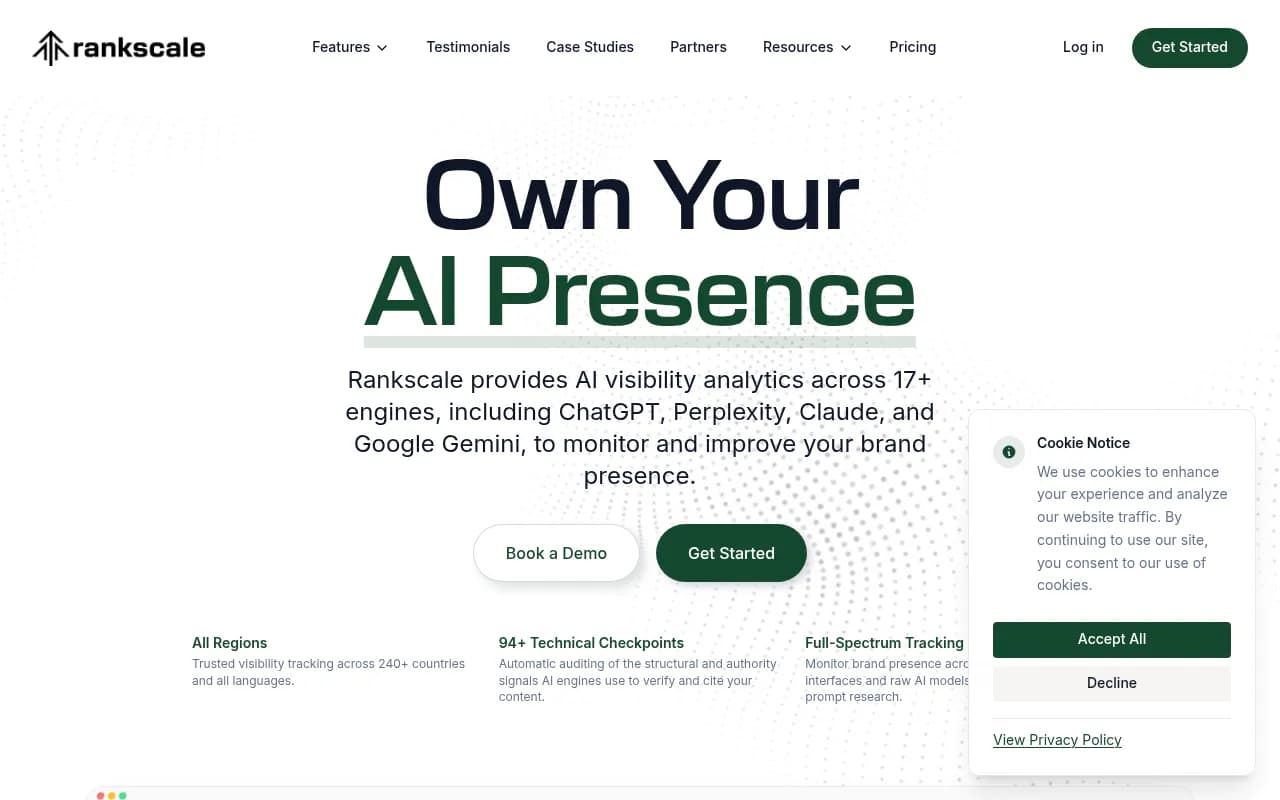
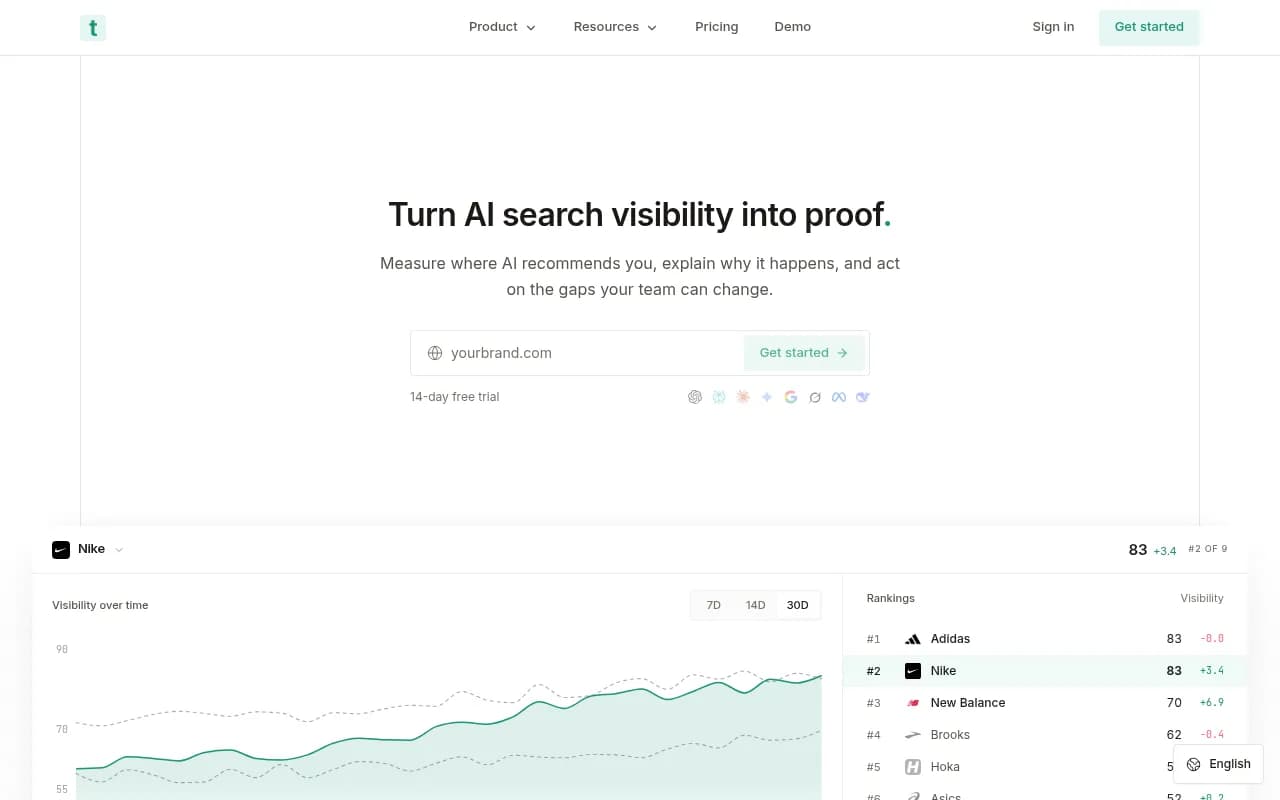
The tradeoff: Rework's comparison says it leaves out Google AI Overviews, while Rankscale and Trakkr land around $100/month for one brand, 50 prompts, and four engines, and both track AI Overviews. If Google's AI answers matter to you, that's a real gap.
The HubSpot-native advantage is genuine, though. If your pipeline lives in HubSpot, starting prompts from CRM data is a smart move.
Others worth checking
I haven't verified Slack, Looker Studio, or HubSpot support for these, so treat them as candidates to ask about rather than recommendations:
- Semrush's AI Visibility Toolkit for teams already inside Semrush
- Ahrefs Brand Radar, for Ahrefs shops
- Scrunch AI and AthenaHQ, for monitoring-focused teams
- Conductor and BrightEdge, for enterprise SEO groups



For a broader view of the category, the GEO software directory at bestgeosoftware.com lists many more options.
How to wire GEO data into HubSpot when there's no native sync
This is where most teams get stuck, so here's the practical route I'd take.
- Decide what you actually want in HubSpot. Usually it's AI-referred visits and conversions, not prompt rankings. Rankings belong in a report, not on a contact record.
- Track AI referral traffic in your analytics or inside your GEO tool's visitor analytics, tagged by source (ChatGPT, Perplexity, Gemini, and so on).
- Use HubSpot's own source properties or UTM-style grouping to attribute those visits to contacts.
- Pull the GEO tool's exports or API data into Looker Studio, and use a connector from vendors such as Supermetrics, Funnel, or Windsor.ai to bring HubSpot data into the same report.
- Send the weekly summary to Slack so the sales and content teams see it without opening a dashboard.
The connector-vendor workaround follows from how the Looker Studio gallery works. I didn't find a source describing it end to end, so test it on a small report first.
What the data says about reporting expectations
One reason reporting is harder here than in classic SEO: the number of sources AI answers cite varies by platform. According to Promptwatch's average sources per response data, ChatGPT cites about 5 sources per web-search answer, Google AI Overviews about 10, and Perplexity almost exactly 10 every day. Copilot's average swung from under 2 to nearly 17 within a few weeks before settling low, and the report advises judging it on monthly trends.
Practically, this means your Looker Studio report should use monthly or weekly views for volatile engines, and you shouldn't alert in Slack on single-day Copilot moves. More research on how AI answers get built lives in the Promptwatch Data hub.
Choosing by team type
| If you are... | Start with | Why |
|---|---|---|
| A small team on a tight budget wanting Looker Studio | Otterly.AI Standard | $189/mo with connector, API, and MCP |
| A HubSpot-first team testing the waters | HubSpot AEO | $50/mo, CRM-informed prompts, free trial |
| A team that wants Slack, Looker Studio, and content actions in one place | Promptwatch | Slack, connector, CMS publishing, API and MCP |
| An enterprise with a heavy analytics stack | Profound (verify claims) | Reported GA4, BigQuery, Tableau, Slack support |
| A multi-project team wanting multi-country reporting | Peec AI Advanced | Looker Studio plus five projects at $495/mo |
Questions to ask before you buy
- Is the Looker Studio connector native or a CSV upload? Which plan tier includes it?
- Does Slack support mean alerts only, or can people query the data?
- Can I get raw prompt-level and citation-level data out through an API?
- Does the tool report on the AI engines I care about, including Google AI Overviews?
- Who owns the HubSpot piece: the vendor, a connector, or my team?
If you'd rather have someone else scope this, an agency like 1001 SEO Media handles the GEO reporting setup alongside the content work. For the tool side, a few weeks on a trial plan will tell you more than any feature matrix.
Bottom line
If Looker Studio is your main need, Otterly.AI is the cheapest verified route. If HubSpot is the center of your world, HubSpot AEO is the only native option, with limits. If you want Slack, Looker Studio, an API, and tools that act on the findings, Promptwatch covers the most ground. Whichever you pick, assume the HubSpot link will need a little plumbing, and budget an afternoon for it.