Key takeaways
- GetMint is a solid starting point for brand-level AI tracking, but most e-commerce teams quickly outgrow it because it doesn't go deep on product-level (SKU) visibility or ChatGPT Shopping.
- In 2026, the platforms worth paying for track product recommendations and shopping results, not just brand mentions. Profound, Promptwatch, and Hall AI lead here.
- Semrush's research suggests ChatGPT shopping intent often routes through Google Shopping signals, which means your product feed and Google Merchant Center data matter more than most teams realize.
- OpenAI's Agentic Commerce Protocol now connects ChatGPT Shopping to retailers like Target, Sephora, Nordstrom, and Best Buy. This is a commercial channel now, not a reporting curiosity.
- Cheapest isn't best here. The difference between a $95/month tracker and a $300/month platform is usually the difference between knowing you're invisible and knowing which SKU to fix.
Why e-commerce brands look beyond GetMint
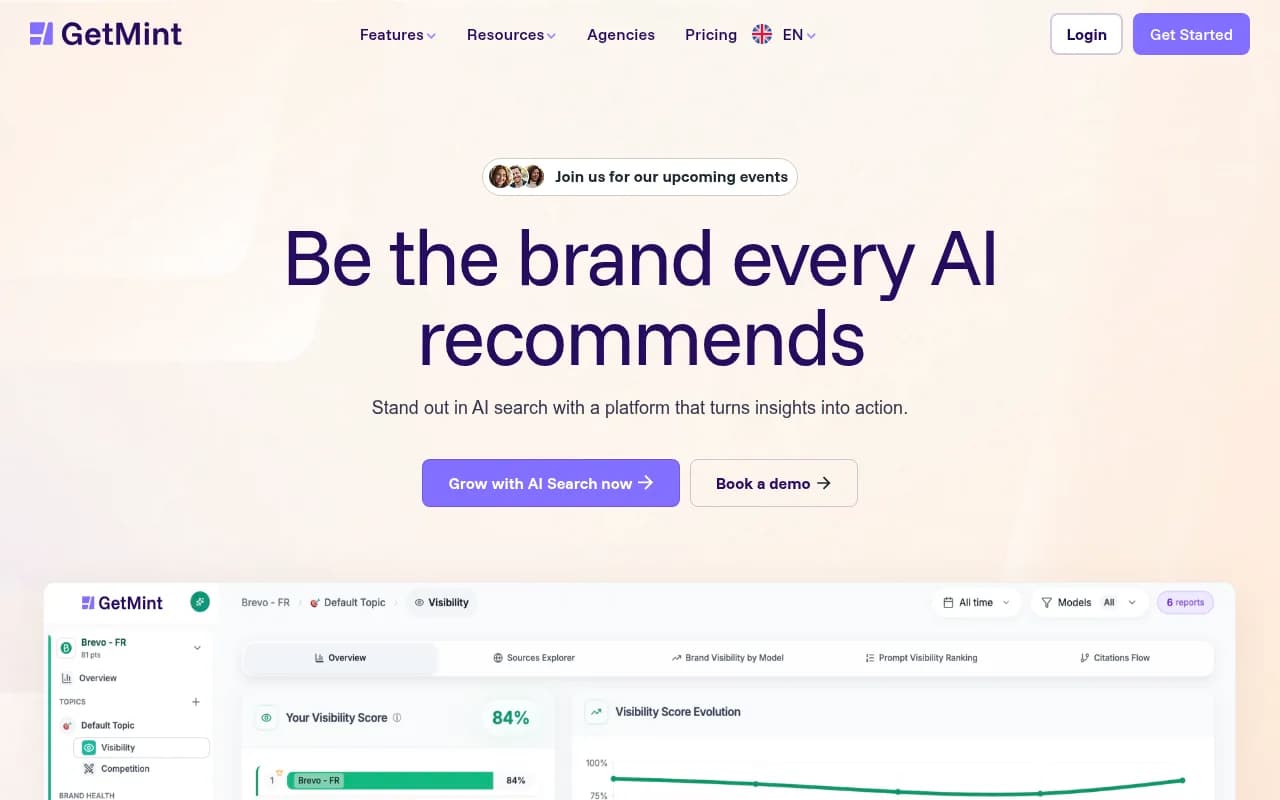
Let's be fair to GetMint first. It tracks how ChatGPT, Gemini, Perplexity, Claude, and Google AI Overviews mention and recommend your brand, pairs that with a GEO agent for strategy, and helps you publish content AI cites. For a brand that's just waking up to AI search, that's a reasonable package.
The problem is what it doesn't do for e-commerce specifically. Most AI visibility platforms, GetMint included, track brand mentions and website citations. They don't track product cards, pricing displays, or shopping recommendations. When a shopper asks ChatGPT for "the best noise-cancelling headphones under $300," the assistant returns a handful of products with names, prices, and reasoning. If your SKU isn't in that shortlist, the shopper never sees your category page. A brand-level visibility score won't tell you that.
There's also a structural shift you can't ignore. ChatGPT now suggests products, prices, reviews, and a buy link directly for Etsy and Shopify brands, and OpenAI's Agentic Commerce Protocol connects ChatGPT Shopping to major retailers. The brands appearing in those answers are pulling real revenue from the ones that aren't. So the question is no longer "is my brand mentioned?" It's "which of my products get recommended, in which prompts, and against which competitors?"

One more wrinkle that surprises a lot of e-commerce teams: Semrush ran an experiment suggesting shopping intent in ChatGPT often routes through Google Shopping signals. If that holds, your Google Merchant Center feed is quietly doing double duty as your ChatGPT Shopping presence. That's a strong argument for choosing tools that connect feed health to AI visibility, and for auditing your feed before blaming the models.
What to actually look for in an e-commerce AI visibility tool
Before the list, here's my evaluation filter. Most "best AI visibility tools" roundups score platforms on model coverage and dashboard polish. For e-commerce, I'd weight these instead:
- Product-level (SKU) tracking. Does it show which specific products, yours and competitors', appear in shopping answers, or only whether your brand got a nod?
- ChatGPT Shopping coverage. Does it monitor the shopping interface itself, including product cards and placement, not just conversational answers?
- Revenue attribution. Can it connect "Product X appeared in a ChatGPT Shopping answer" to actual traffic and conversions on your site? A mention without a dollar figure is a vanity metric.
- Crawler visibility. Do you know when ChatGPTBot and friends hit your product pages, and whether they hit errors? This is where most trackers are blind.
- Execution. Tracking alone is half a product. Does the platform help you fix what it finds, through content tools, feed recommendations, or prioritized actions?
- AI Overviews and AI Mode. Google AI Overviews now appear on roughly 48% of Google searches, and e-commerce queries get product carousels. If your tool ignores Google's AI surfaces, it ignores half the shopping journey.
Now, the alternatives.
Top GetMint alternatives for tracking ChatGPT shopping and product recommendations
1. Profound — best for enterprise e-commerce teams
Profound was one of the early movers in AI search visibility, and for large retailers it's still the most complete enterprise option. Its Shopping Analysis module tracks product images, placement, and retailer benchmarking in AI commerce conversations, and it covers both ChatGPT Shopping and Amazon Rufus, an area most competitors still ignore.
The standout feature for e-commerce is real-user prompt volume data from consumer panels. Instead of guessing which prompts matter, you see what actual shoppers ask, with volumes. If you're a multi-brand retailer or an enterprise brand with a serious AI budget, that data is hard to get anywhere else.
The catch: Profound is priced accordingly. Small and mid-size e-commerce brands usually find the entry cost hard to justify, and Profound doesn't offer the Reddit and YouTube citation tracking that increasingly shapes shopping recommendations.
2. Promptwatch — best end-to-end option for most e-commerce brands
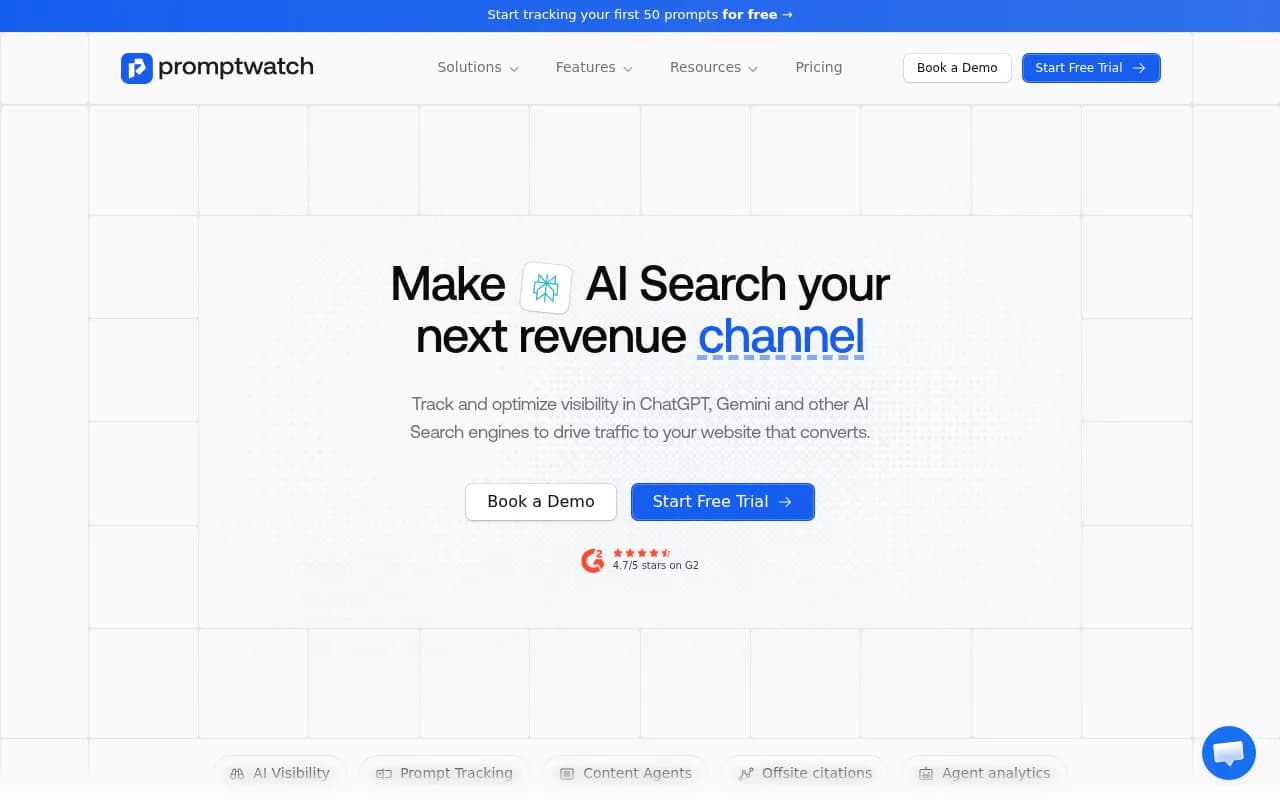
Here's my honest take: most e-commerce teams don't need the most expensive tracker, they need a platform that closes the loop from insight to fix. Promptwatch is built for exactly that, and it's the pick I'd recommend for the majority of brands reading this.
Two features matter for this specific use case. First, the ChatGPT Shopping and Ads Radar tracks product recommendations in ChatGPT shopping results and sponsored placements in AI search, including which competitors bid on your prompts, their ad copy, and positioning. Second, the platform monitors actual user interfaces, not just API outputs, which matters because shopping answers and product cards in the real ChatGPT UI can differ from what an API returns.
What separates it from monitoring-only tools like GetMint is the execution layer. Its AI crawler logs show exactly when ChatGPTBot, ClaudeBot, PerplexityBot, and 400+ other crawlers hit your product pages, which pages they read, and which errors they hit, with a citation rate per page. That answers the "why am I invisible" question at the SKU level. Then Content Agents plan, write, and publish GEO-optimized content straight to Shopify-friendly CMS setups (WordPress, Webflow, Framer), and Unified Actions turns your visibility data into a prioritized to-do list. Reddit and YouTube citation tracking is included too, which matters because shopping recommendations lean heavily on review threads and unboxing videos.
The numbers back it up: 1,840+ brands and agencies use it, it's rated 4.7/5 on G2, and its dataset covers more than 4.5 billion citations, clicks, and prompts. Pricing starts at $95/month (Essential, with a 7-day free trial), with the shopping insights and automated content generation on the $245/month Professional plan. Compared to Profound, it costs a fraction and does more of the fixing for you, though very large retailers with compliance requirements may still prefer Profound's consumer panel data.
3. Hall AI — best for the technical SEO and e-commerce overlap
Hall AI earned a spot on this list for one specific reason: dedicated ChatGPT Shopping visibility. Instead of generic brand mentions, it tracks whether your specific products appear in ChatGPT's shopping interface, which is still a gap in most generalist tools (GetMint included).
It pairs that with a technical SEO layer, which I like for e-commerce because a lot of AI invisibility is really a crawlability problem in disguise: faceted navigation, thin product pages, blocked crawlers. If your team already thinks in technical SEO terms and wants shopping tracking without paying enterprise prices, Hall is worth a demo.
4. Goodie AI — best for Amazon Rufus coverage
Goodie AI is a straightforward AEO platform for monitoring and optimizing AI visibility, and its distinguishing feature for e-commerce is Amazon Rufus tracking, available from the Team tier up. If Amazon is a meaningful share of your revenue (and for most consumer brands it is), Rufus recommendations directly move product, so having it alongside your ChatGPT tracking saves you stitching two tools together.
Outside of that, it's a solid monitoring platform without much of an execution layer. Think of it as a focused tracker for teams whose main AI shopping exposure runs through Amazon.

5. Semrush AI Visibility Toolkit — best if you already pay for Semrush
If your team already has a Semrush subscription, its AI Visibility Toolkit is the pragmatic first step rather than a whole new vendor. You get AI brand monitoring bolted onto keyword research, backlink data, and the usual SEO stack, which makes it easy to correlate AI visibility with traditional performance.
Two honest caveats for e-commerce. It's an AI tracking add-on to a traditional SEO suite, so it has fixed prompt sets, shallower AI-specific data, and no crawler logs or AI traffic attribution. And it doesn't track ChatGPT Shopping product cards the way the specialists above do. Fine as a supplement. I wouldn't run an e-commerce AI strategy on it alone.
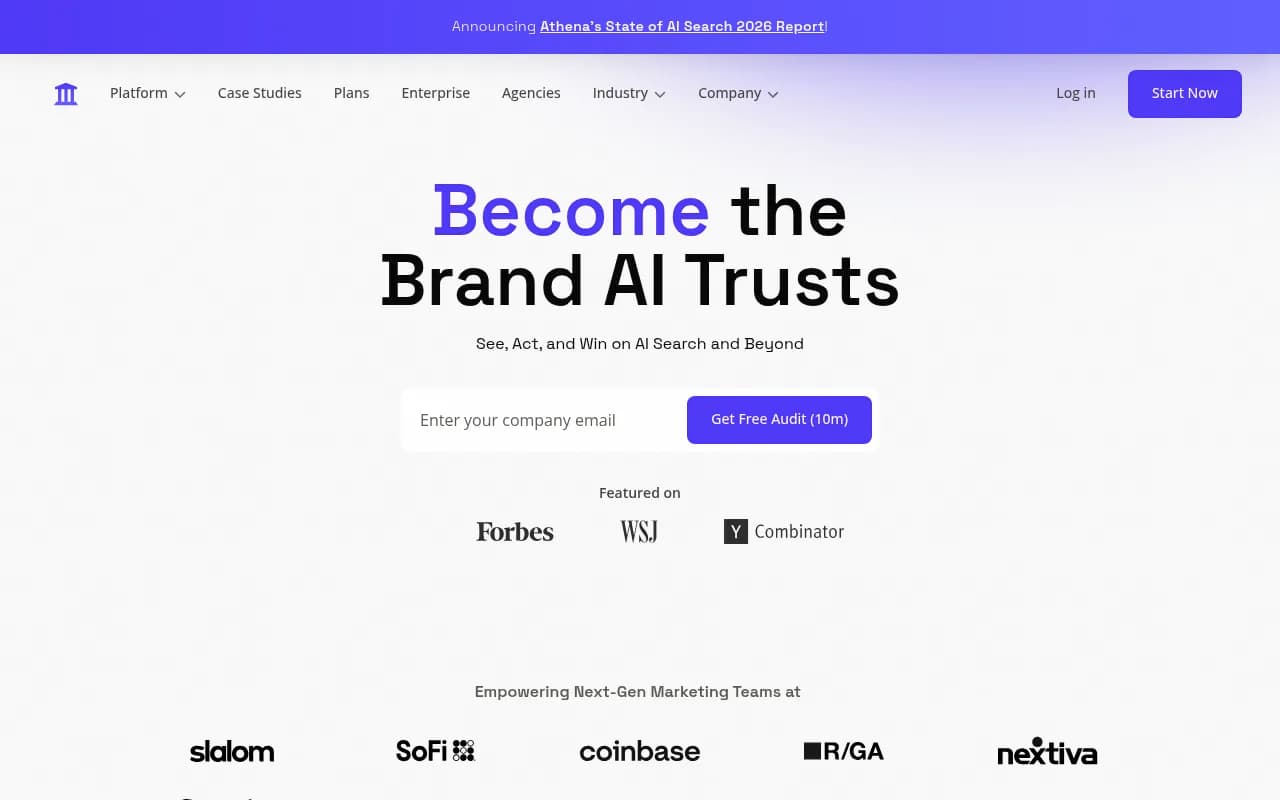
6. AthenaHQ — best budget pick for monitoring
AthenaHQ does clean, affordable AI visibility monitoring across the major models, and its State of AI Search 2026 report is genuinely worth reading. For a small e-commerce brand that wants to know where it stands before committing real budget, it's a sensible entry point.
Just know what you're buying. It's monitoring-focused: no content generation, no CMS publishing, no crawler logs, and limited shopping-specific data. GetMint actually overlaps heavily with it, so if you're leaving GetMint for AthenaHQ, make sure you're solving the actual problem (product-level visibility) and not just switching dashboards.
7. Otterly.AI — best for scrappy teams on a tight budget
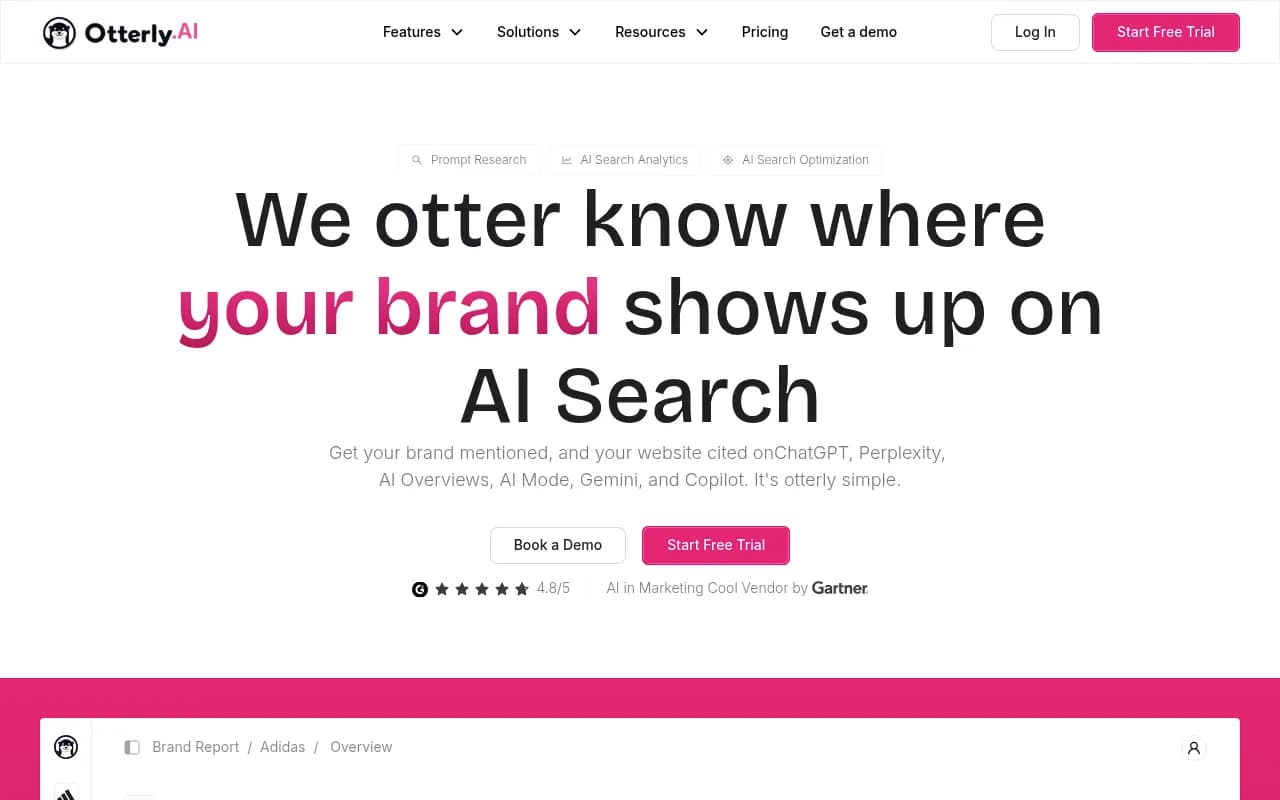
Otterly.AI is the affordable option in this space, tracking brand citations across ChatGPT, Perplexity, Google AI Overviews, AI Mode, Gemini, and Microsoft Copilot. For an early-stage DTC brand wanting weekly reassurance that its category mentions are trending up, it does the job.
It won't tell you which SKU won a ChatGPT Shopping placement, and it won't help you fix anything. But at its price point, that's a fair trade.
Comparison table
| Platform | ChatGPT Shopping tracking | Product/SKU level | Revenue attribution | Content execution | Rough starting price |
|---|---|---|---|---|---|
| Profound | Yes, plus Amazon Rufus | Yes | Partial | No | Enterprise pricing |
| Promptwatch | Yes, plus Ads Radar | Yes, page-level with citation rates | Yes, visitor analytics | Yes, Content Agents + CMS publishing | $95/mo |
| Hall AI | Yes | Yes | Limited | Technical SEO focus | Mid-market |
| Goodie AI | Partial (Rufus focus) | Partial | No | No | Mid-market |
| Semrush AI Visibility Toolkit | No | No | No | Via Semrush suite | Included with Semrush |
| AthenaHQ | No | No | No | No | Budget-friendly |
| Otterly.AI | No | No | No | No | Budget-friendly |
| GetMint (for reference) | Partial | No | No | GEO agent + content | Mid-market |
How to choose without overthinking it
A quick decision framework based on where you are:
- Under $500/month budget, DTC or mid-market brand: Start with Promptwatch's Professional plan. You get shopping insights, crawler logs, and automated content in one place, and the 7-day free trial lets you verify before committing.
- Enterprise retailer, multiple brands, big budget: Demo Profound and Promptwatch side by side. Profound's consumer panel data is unique; Promptwatch's execution stack and price point usually win on value.
- Amazon-first brand: Goodie AI for Rufus, plus one generalist (Promptwatch or Otterly) for the rest of the AI surface.
- Already paying for a big SEO suite: Use its AI add-on (Semrush or Ahrefs Brand Radar) for a quarter, but keep in mind Ahrefs Brand Radar doesn't track ChatGPT Shopping or product card rendering at all, so budget for a specialist eventually.
- Just want to know if this matters yet: AthenaHQ or Otterly for monitoring, upgrade when the data tells you to.
Don't skip the feed work, whatever tool you pick
No visibility platform fixes the layer that actually decides whether an AI agent recommends your product: the product feed itself. Whatever you choose from the list above, do these in parallel:
- Submit a product feed to the ChatGPT Merchant Program. ChatGPT now suggests products, prices, and buy links directly for Shopify and Etsy brands. If your feed isn't in the system, you're not in the game.
- Audit your Google Merchant Center feed. Given the Semrush finding that ChatGPT shopping intent often routes through Google Shopping signals, a clean, complete, competitive feed is your cheapest AI visibility investment.
- Get your AI crawler access right. Check your robots.txt and server logs for ChatGPTBot, ClaudeBot, PerplexityBot, and Google's AI crawlers. Tools like Promptwatch can automate the log analysis if you'd rather not grep raw server logs.
- Invest in review platforms and Reddit. Review platforms carry serious weight in AI product recommendations, and Reddit threads show up in shopping answers constantly. If your tracking tool ignores Reddit citations, you're blind to a channel that's shaping what shoppers buy.
The bottom line
GetMint isn't a bad tool. It's a brand-level tracker in a market that has moved to product-level commerce. ChatGPT Shopping has become a real sales channel with buy buttons, sponsored placements, and an agentic commerce protocol connecting it to major retailers, and the platforms that win in 2026 are the ones that track SKUs, explain why they're missing, and help you fix the underlying feed and content problems. For most e-commerce brands, Promptwatch offers the best combination of shopping-specific tracking and actual execution at a price that doesn't need a board approval. Enterprise teams should shortlist Profound. And whichever you pick, fix your product feed first, because no dashboard will compensate for a feed the models can't read.