Key takeaways
- Otterly.AI is still a good, low-cost starting point, but every paid plan is capped at 3 of its 7 engines, and its credit-based pricing means a 20-prompt Lite plan runs out fast for niche B2B prompt libraries.
- B2B SaaS buyers ask narrow, long-tail questions. ChatGPT cites only about 5 sources per web-search answer, so each niche prompt has very few citation slots to win.
- Pick an alternative based on what Otterly leaves undone: fixing gaps, crawler visibility, AI traffic attribution, or persona-level prompts.
- Test any switch for two weeks with the same 20-30 prompts running in both tools. Daily visibility numbers are noisy on small prompt sets.
- Promptwatch is the option I would shortlist first if you want to act on the data, not just watch it. Peec AI and Profound cover the analyst-heavy and enterprise ends.
Why B2B SaaS teams outgrow Otterly.AI
I want to be fair to Otterly first. It is fast to set up, the interface is clean, and the reviews on its own site (eToro, Vaadin, Form.io) are consistently positive about time-to-value. For a team that wants to see whether ChatGPT mentions the brand at all, it does the job for $29 a month.
The friction shows up when you track niche buyer prompts. A B2B SaaS team rarely cares about "best CRM." It cares about "SOC 2 compliant CRM for 50-person fintech teams" or "alternatives to [competitor] with SSO and a Salesforce sync." You need dozens or hundreds of these, across personas, in several engines.
Here is where the pricing and limits start to bite. From Otterly's current pricing page:
| Plan | Price (monthly) | Prompts | Engines | Notes |
|---|---|---|---|---|
| Lite | $29 | 20 | 3 of 7 | 3 recommendations per week, no API/MCP |
| Standard | $189 | 160 | 3 of 7 | Unlimited workspaces, API and MCP, Data Studio connector |
| Premium | $489 | 535 | 3 of 7 | Daily or weekly tracking, onboarding |
| Enterprise | Custom | 1,000+ | Unlimited | SSO, prompt research advisory |
Annual billing takes 15% off. Note that some third-party roundups still quote older prices ($25, or four engines from $29). Treat those as stale and confirm on Otterly's pricing page before you budget.
Two things matter for niche prompts. First, pricing is credit-based, so the real prompt count depends on how many engines you run. Second, the jump from 20 prompts to 160 is a jump from $29 to $189. There is no comfortable middle for a team with 60 buyer prompts.
What niche buyer prompt tracking actually needs
Before comparing tools, it helps to know what the data says about how AI answers get built.
Promptwatch Data's average sources per response report shows ChatGPT cites about 5 sources per web-search answer, while Google AI Overviews and Perplexity sit near 10. Microsoft Copilot swings widely, from under 2 to nearly 17 within weeks, so judge it on monthly trends. The takeaway for B2B SaaS: there are few slots per prompt, so specific pages that fully answer a narrow prompt beat broad pages.
The second factor is query fan-out. According to Promptwatch's ChatGPT query fanouts data, a single prompt can trigger 3 to 8+ web searches, though the average per response moved between roughly 2.15 in December 2025 and lower levels by spring 2026. If your tracker only shows the typed prompt, you are missing the searches that actually decide which pages get cited. Also worth knowing: ChatGPT started using the site: operator at scale on August 8, 2026, jumping from about 0.4% to about 17% of fanout queries.
So my checklist for an Otterly alternative looks like this:
- Enough prompt capacity for 50-300 niche prompts without a pricing cliff.
- Persona or segment tagging, so you can tell how a CFO prompt differs from an engineer prompt.
- Fan-out visibility, not just the final answer.
- Some route from "we are invisible here" to "here is the page to write."
- A way to connect AI visibility to traffic and pipeline.
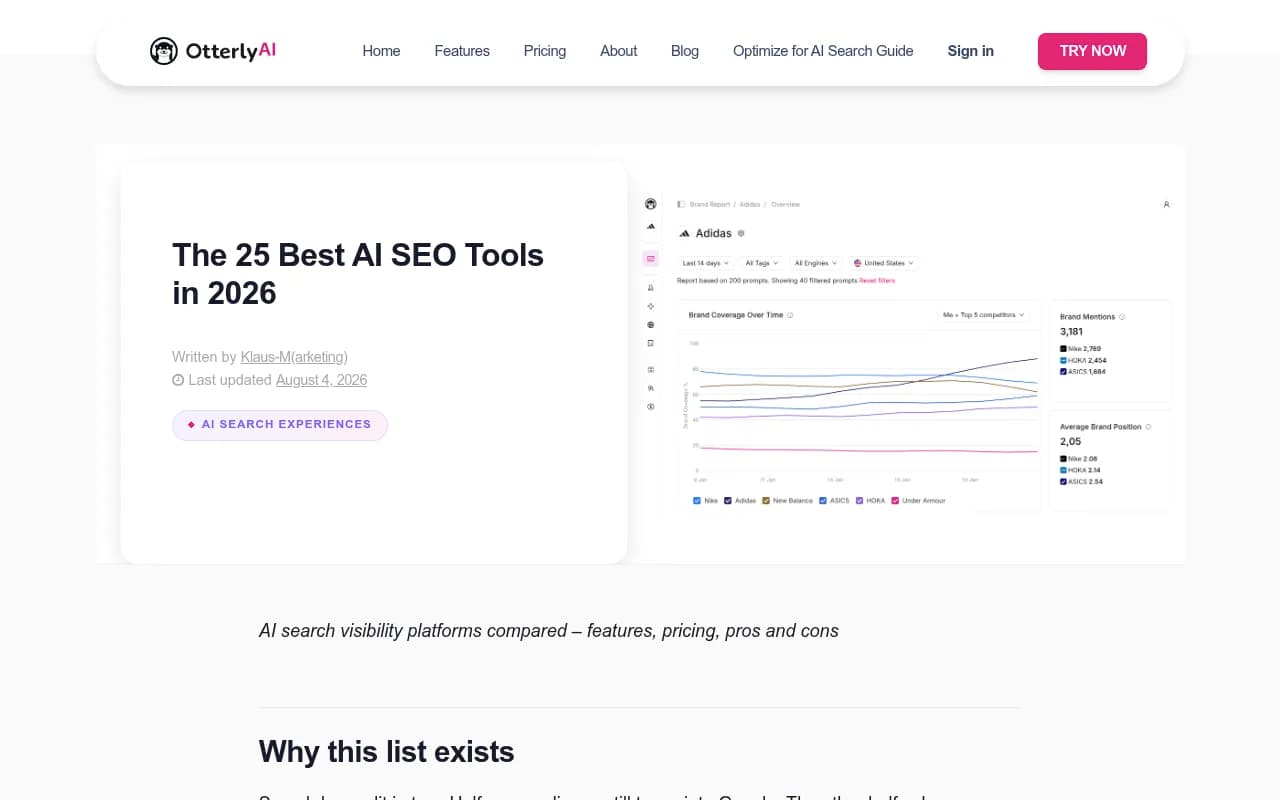
Otterly's own list of 25 tools is worth skimming for a shortlist, with the obvious caveat that the vendor ranks itself second.
Quick comparison of Otterly.AI alternatives
Prices below come from the sources I had; third-party figures are unverified, so confirm each on the vendor's pricing page.
| Tool | Best for | Starting price (reported) | Where it beats Otterly | Watch out for |
|---|---|---|---|---|
| Promptwatch | Teams that want to fix gaps, not just monitor | $95/mo Essential, $245 Professional, $579 Business | Content Agent, crawler logs, AI traffic analytics, fan-outs, personas | More to learn than a simple tracker |
| Peec AI | Analyst-led B2B content teams | About $80-85/mo | Deeper analytics, clean UX | Monitoring-focused, extra models cost more |
| Profound | Enterprise programs | Custom (some sources list $99) | Data depth, scale | Heavy for a small SaaS team |
| Scrunch | GA4-connected attribution | About $250/mo | Traffic attribution, SOC 2 | No free trial, monitoring-first |
| AthenaHQ | Teams wanting an optimization agent | Free tier, Starter about $295 | 11 engines on Starter | Single language on Starter |
| Semrush AI Visibility Toolkit | SEO teams already in Semrush | Add-on pricing | AI tracking beside keyword data | Fixed prompt sets, shallower AI data |
| Rankshift | Multi-model tracking with content tools | About $92/mo | Flexible models | Credit pricing can climb |
| Gumshoe AI | Persona-based tracking | Check vendor | Persona-first design | Smaller vendor |
Promptwatch: the alternative for teams that want to act on the data
The main limit of Otterly, and of most trackers, is that the dashboard ends where the work begins. Promptwatch is built around a loop: monitor what AI says, trace where it gets answers, act on gaps, then measure whether the fix worked. For a B2B SaaS team with niche prompts, that loop is the point.

Specifically for niche buyer prompts:
- Personas. You can prompt like your actual buyers with custom personas and persona stacking, and a radar chart shows visibility, position, and sentiment per persona against the general audience, flagging the persona with the biggest gap.
- Prompt intelligence. Monthly prompt volumes, difficulty scores, and query fan-outs show the exact web searches AI runs per response. That is how you find which narrow prompts are worth chasing.
- Real interfaces. It monitors the actual UIs of ChatGPT, Google AI Overviews, AI Mode, Copilot, Gemini, Perplexity and others, not just APIs, because user-facing answers and citations can differ from API output.
- Content gap analysis and the Content Agent. It maps your pages against the prompts AI answers, then (on Business) plans, writes, and publishes to WordPress, Webflow, or Framer with a review inbox. The content gap guide explains the method.
- Crawler logs and visitor analytics. IP-verified AI crawler logs tell you whether an AI bot even read a page, so you can separate access problems from content problems. Visitor analytics show the traffic and conversions AI search sends.
The proof points are specific. Crisp reported 2x higher conversion rates from AI traffic compared with traditional channels, and TreeHouse grew AI search to about 25% of organic conversions after fixing crawler access and publishing proprietary data.
Pricing is where it contrasts with Otterly's cliff: Essential is $95/mo with 50 prompts, Professional is $245/mo with 150 prompts, and Business is $579/mo with 350 prompts. Every plan includes all supported AI models, Agent Chat, Brand Narrative, content gap analysis, visitor analytics, and unlimited team seats. Confirm current numbers at promptwatch.com/pricing. The Content Agent, hourly tracking, and Fact Check start at Business.
Honest caveat: if all you need is a cheap weekly pulse on a few brand prompts, this is more than you need. For a team running 100+ niche prompts that also has to produce content, it is a better fit. Start with the free AI visibility report or the 7-day trial, and see the Promptwatch vs Profound and Promptwatch vs Otterly pages for head-to-heads.
Peec AI: the analyst's pick
Peec AI comes up in nearly every Otterly comparison for a reason. Third-party reviews describe broad platform coverage, a clean interface, and strong competitive analytics at roughly Otterly-adjacent pricing (about 80-85 a month, with annual discounts). It suits a B2B content team that has an analyst who enjoys slicing data.

The trade-offs reported: it is monitoring-focused, offers limited guidance on what to fix, and country and model coverage scale with the plan (one country on Starter, three on Pro and Advanced, per one comparison). If your niche prompts span several markets, price that out.
Profound: when you have enterprise budget
Profound is the depth play. It combines visibility tracking, citation analysis, share-of-voice, and competitive intelligence, and its data set draws on a large pool of real conversations. Reviewers consistently call it too expensive and complex for most B2B SaaS content teams, which matches my read. If you have a procurement team and a real GEO budget, it earns a look.

Scrunch: attribution-first monitoring
Scrunch is reported at about $250/month with GA4-connected AI traffic attribution, SOC 2 compliance, and 7+ engines. The downsides cited are no free trial and a monitoring-first approach with limited actionability.

AthenaHQ
AthenaHQ has a free tier with 300 credits and a Starter plan reported near $295, covering 11 engines, with a content optimization agent. One comparison notes Starter is single-language, which matters if you sell across regions.
Semrush AI Visibility Toolkit
If your SEO team already lives in Semrush, the AI Visibility Toolkit puts prompt tracking next to keyword data. That convenience has a cost: prompt sets tend to be fixed and the AI-specific data is shallower than purpose-built tools.
Other options worth a look
A few smaller tools fit specific niches:
- Gumshoe AI is built around persona-based tracking, which maps neatly to B2B buyer roles.

- Omnibound positions itself around B2B AI visibility tied to pipeline.
-
Rankshift is a flexible multi-model option with content optimization, though credit pricing can get expensive.
-
Siftly pitches multi-engine citation monitoring with a free audit and is aimed at small to mid-size teams.
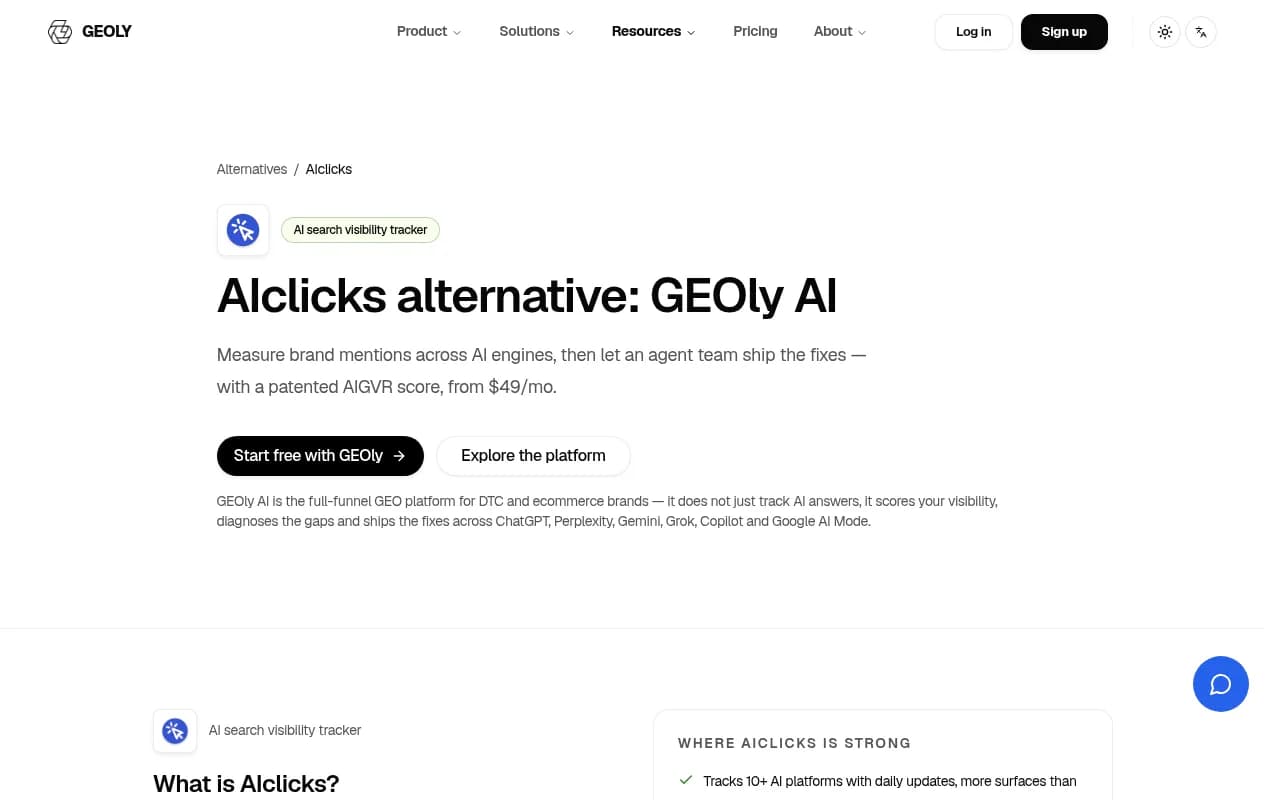
- AIclicks takes a keyword-based approach for teams who find prompt-based tracking too limiting.
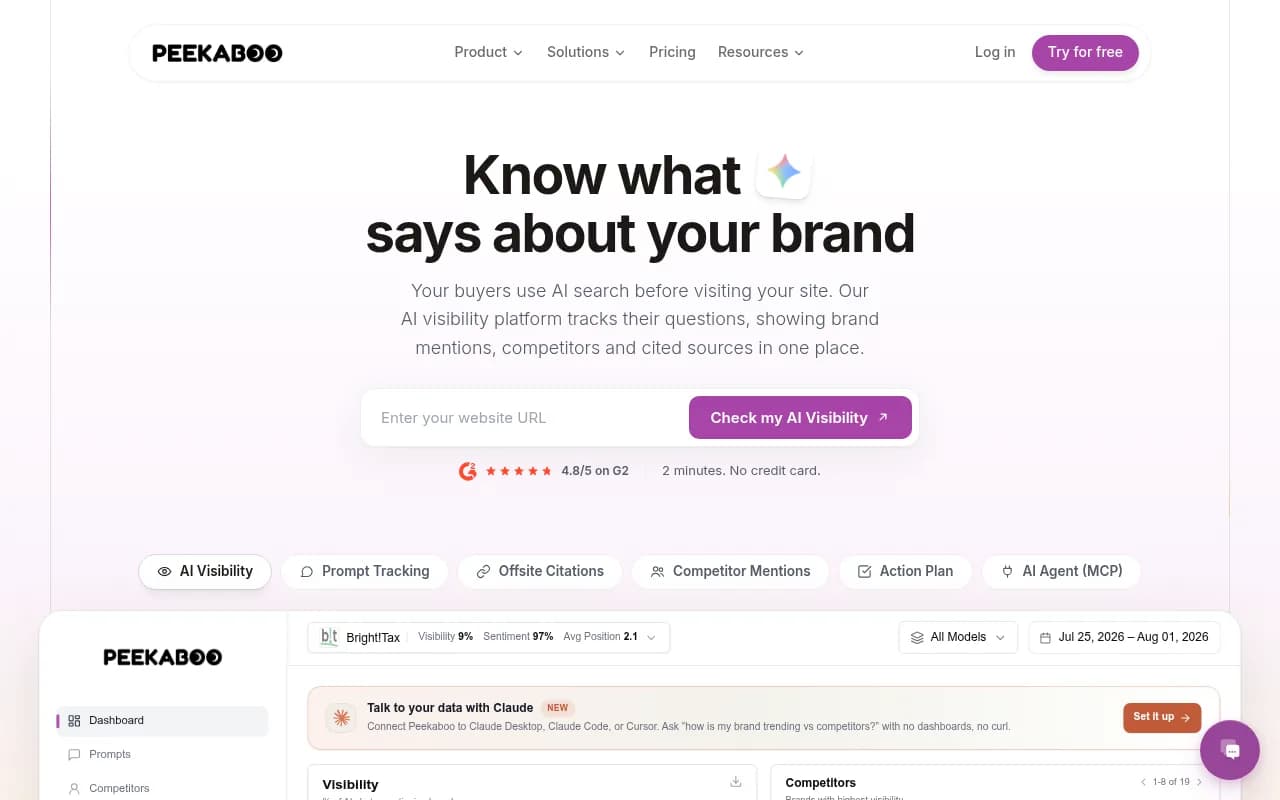
- Peekaboo offers white-label reports and an API from low entry prices, mainly interesting to agencies.
For a wider list, the GEO software directory and the AI rank tracking directory cover far more tools than I can here.
How to choose by team type
| Your situation | Best fit | Why |
|---|---|---|
| Under ~20 prompts, you act on the data yourself | Stay on Otterly.AI | Cheapest bill, enough data |
| 50-300 niche prompts, content to ship | Promptwatch | Fan-outs, personas, content gaps, publishing |
| An analyst who wants depth, similar price | Peec AI | Strong analytics |
| Enterprise with a six-figure budget | Profound | Data depth |
| Already deep in Semrush | Semrush toolkit | One login |
| Need GA4 attribution as the priority | Scrunch | Attribution focus |
How to test a switch without wasting a month
- Keep Otterly running. Load the same 20-30 buyer prompts, competitors, and market into the alternative.
- Write prompts the way buyers talk. Mix persona, use case, and constraint: "best project tool for a 30-person agency that needs client portals." Tag them by funnel stage.
- Give it two weeks, not two days. One comparison across 111 brands found the median brand's visibility moved 12.5 points between its best and worst day in a month with no prompt changes, and small prompt sets swing about twice as much. Judge trends, not snapshots.
- Check fan-outs. Does the tool show the searches behind the answer? If not, you are guessing at why a page wins.
- Ask what happens after the dashboard. Pick one gap and see how many steps it takes to ship a fix.
- Verify pricing yourself. Credit-based plans change prompt counts depending on engines and frequency. Do the math for your actual prompt library.
Final take
Staying on Otterly is a legitimate choice if your prompt list is short and your team will act on the data. Switch when the 3-engine cap, the credit math, or the lack of fix-it workflow starts costing you time. For B2B SaaS teams with a large niche prompt library and content to ship, I would run Promptwatch against Peec AI side by side for two weeks, using the same prompts, and pick the one where you spot and close a real gap fastest.