Key takeaways
- Botify is a technical SEO platform for sites with millions of URLs. Its strengths are large-scale crawling, JavaScript rendering and log file analysis.
- Pricing is not published. Vendr's ranges put typical annual contracts between roughly $30k and $400k+, depending on URLs, log volume and modules.
- Botify does not track AI citations or brand mentions on its own. Third-party reviews say so directly, even though Botify now markets itself as an AI search optimization platform.
- Teams that need content workflows, collaboration or AI visibility measurement usually pair Botify with another tool rather than replace it.
- Smaller sites can get most of the log analysis value from a $200-$500 a year desktop crawler and a cheap log analyser.
What Botify is
Botify is an enterprise SEO platform built around one idea: if search engines cannot crawl, render and index a page, nothing you do to its copy matters. The company's own enterprise methodology runs crawling, rendering, indexing, ranking and revenue as one funnel, and the product follows that order.
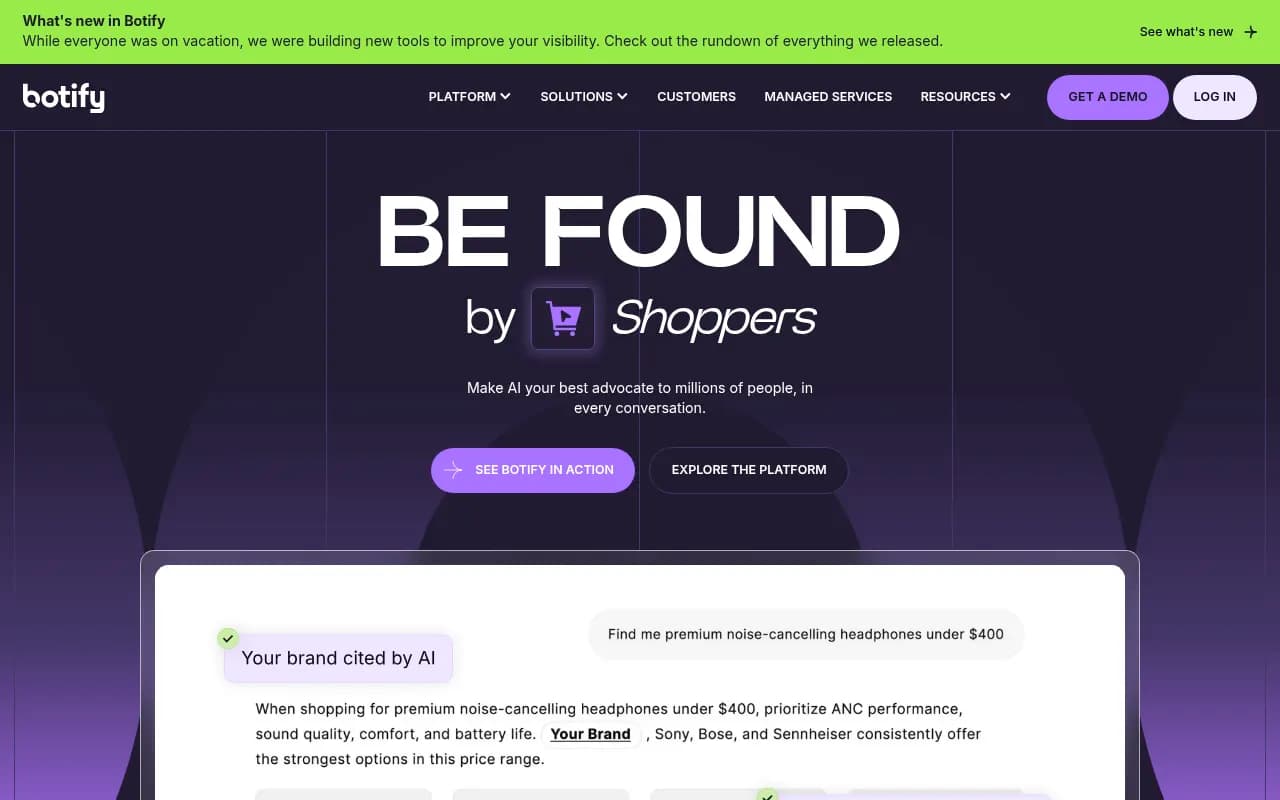
That focus is both its pitch and its limit. EWR Digital's 2026 roundup calls it the leader in technical enterprise SEO for sites where crawl budget and indexation are make-or-break, such as large e-commerce stores, publishers, OTAs and classifieds. Conductor's ranking puts it third of nine, praising its depth and also noting that it works best paired with something else.
Botify's own writing makes the case for the approach. It argues Google ignores roughly half of a typical enterprise site's content, so fixing on-page elements of pages Google never visits is wasted effort. Whatever you think of the number (it comes from a 2019 post and is Botify's own claim), the logic holds for huge sites.
What Botify does well
Log file analysis
Botify says it was the first company to apply SEO analysis to server logs, and log analysis is still where it feels strongest. You see which URLs Googlebot actually requests, how often, and what status codes come back, and you can lay that over crawl data to find pages that exist but are never visited.
It also now covers AI bots. Botify's log analyzer is one of the few enterprise tools with native AI crawler tracking, which matters because AI crawler traffic is changing quickly. Promptwatch Data's weekly AI crawler report shows OpenAI at 79.8% of verified AI crawler requests in the week of Aug 31 to Sep 6, 2026, down from 94.8% in early June. A separate Promptwatch Data report on Meta-WebIndexer found that crawler going from about 2% to nearly 38% of tracked AI crawler requests between mid-July and August 9, 2026. If your logs do not look like that mix, something is blocking a provider.
A sensible habit, per that report: compare your own logs to the overall mix, and check which bot inside each provider is doing the work. A big share can be training traffic, answer-time fetches or both.
Crawling and JavaScript rendering
Botify crawls at a scale desktop tools cannot, and it renders JavaScript, which is the difference between seeing the page a user gets and the empty shell a basic crawler gets. For sites with millions of URLs or frequent structural changes, the crawl data plus architecture and internal linking analysis is what justifies the contract.
Connecting technical fixes to outcomes
The crawl-to-conversion framing is useful in practice. Technical SEO tickets are hard to prioritise against product work unless you can show revenue attached to them. Botify's pitch is that it ties crawl behaviour to engagement and conversions so you can argue for the engineering time.
Infrastructure integrations
EWR Digital's integration comparison is worth reading closely. Botify connects to infrastructure: Akamai, Cloudflare, Fastly, AWS S3, CloudFront, Azure, Google Cloud Storage and Datadog for logs, plus GA4, Adobe and Piano, SSO and an open API. It has no CMS or CRM connectors in that table. For a site where crawl budget is the binding constraint, that is the right set. For a team asking which campaign drove a result, EWR calls it the wrong tool, and I agree.
Automation and the MCP
Botify Activation is a separate module that automates implementing recommendations, and its homepage now lists a Botify MCP, customizable GEO reports, product feed audits and a simple optimization builder. Blog posts from September 2026 describe the MCP putting your Botify data and Botify's agents inside ChatGPT, Claude and similar clients. I have not seen those features in a trial, so treat them as direction rather than proven strengths.
Pricing
Botify publishes no prices. Per Vendr, cost depends on the number of URLs crawled, the log volume analysed and the modules you choose, with Activation sold as an add-on.
| Deployment | Botify (Vendr annual range) | Conductor (Vendr annual range) |
|---|---|---|
| Small | $30k-$60k | $40k-$70k |
| Mid-market | $75k-$150k | $80k-$160k |
| Enterprise | $150k-$400k+ | $150k-$500k+ |
One other source cites a Vendr median contract of $74,200 a year. Vendr also says multi-year commitments typically give 15-30% off, and combining that with competitive leverage and quarter-end timing often gets 15-35% off the first proposal. These are third-party estimates. Ask for a real quote.
For scale, Vendr lists Screaming Frog at $200-$500 a year for one to three licences, and Orchly cites the Screaming Frog Log File Analyser at about 99 pounds a year. Those do not replace Botify's scale, but they set the floor for anyone asking whether the contract is justified.
Where teams look elsewhere
Content and workflow
Conductor's review says Botify is highly specialised, and that teams wanting content strategy, collaborative workflows or business-level prioritisation will find it limited outside technical analysis. That matches how Botify describes itself. It will tell you a template is broken. It will not write the page or manage the editorial calendar.
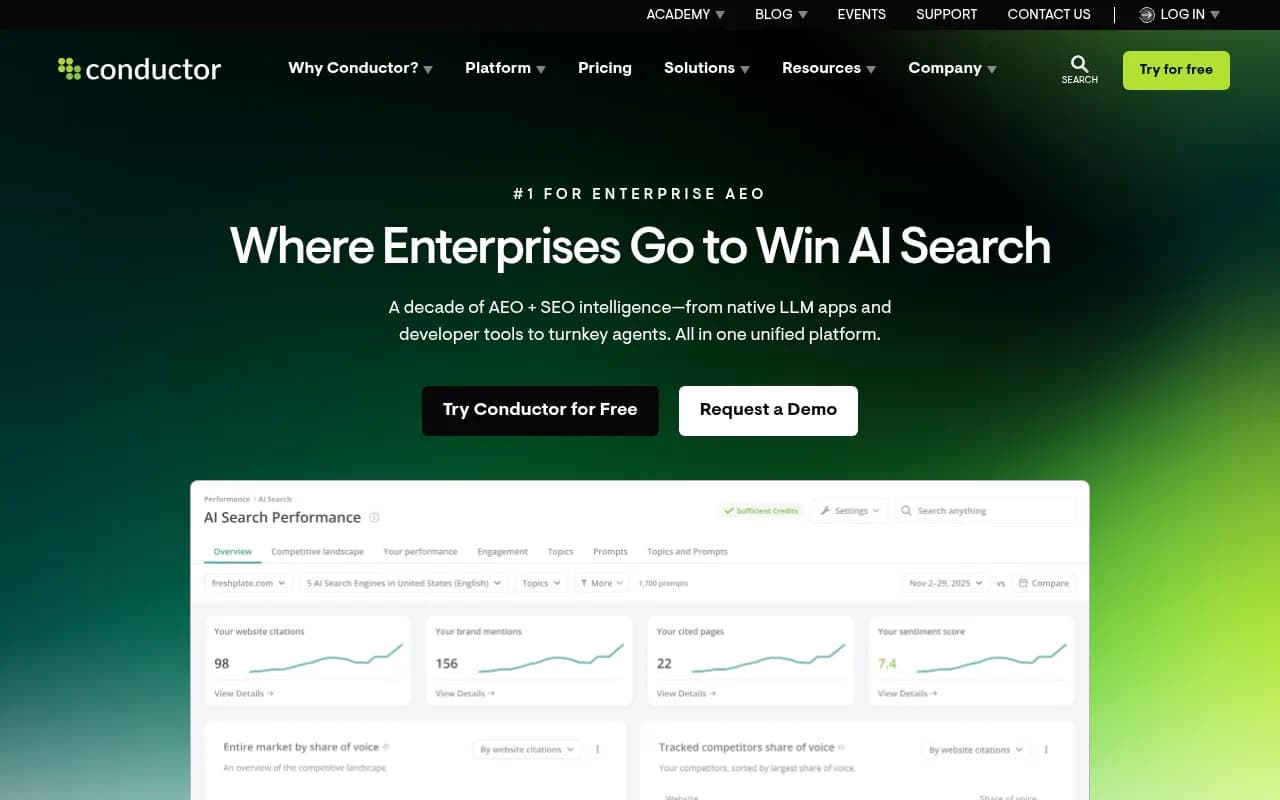
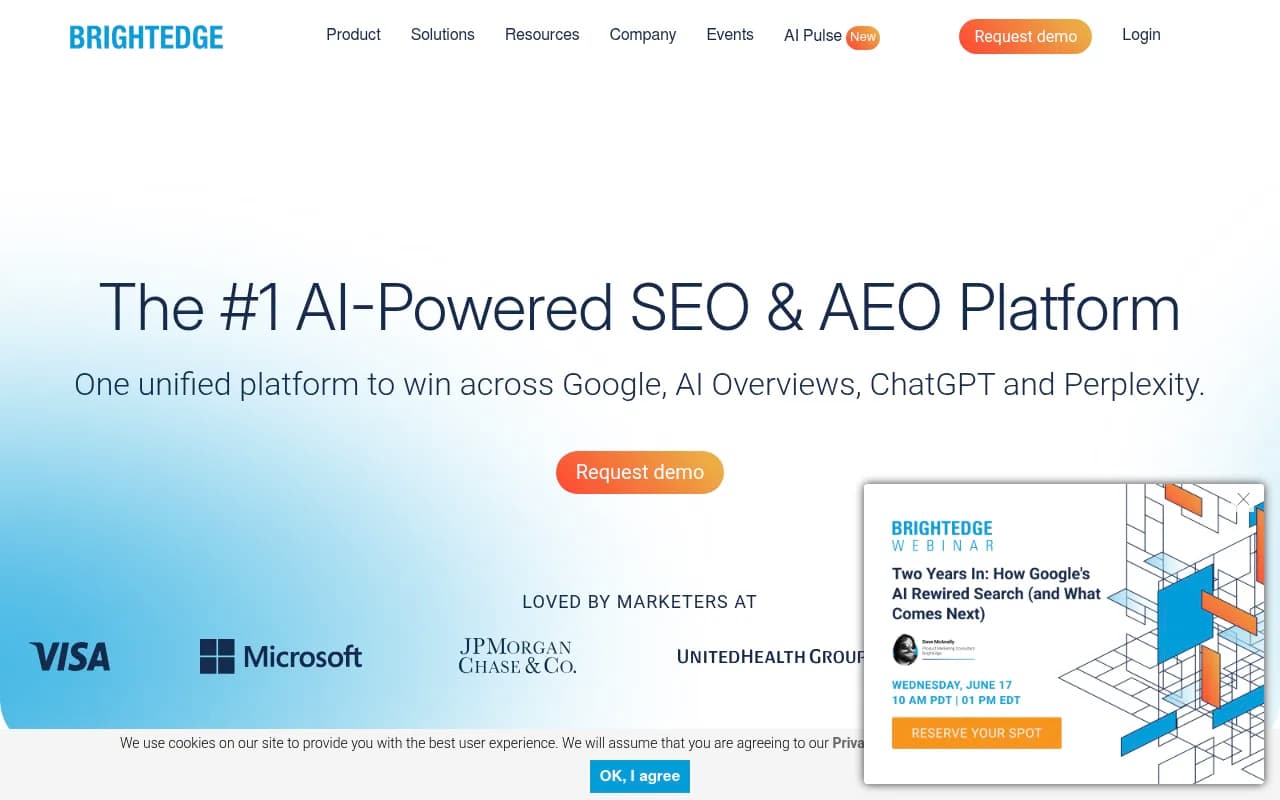
If that is your gap, look at content-focused or suite platforms like Conductor, BrightEdge or seoClarity.
AI citation and mention tracking
This is the clearest gap. Conductor's write-up states that Botify does not track AI citations or brand mentions, and that what it gives you is a technically healthy site, which still matters for how AI systems crawl content. Botify's newer AI visibility pages suggest it is moving toward this, but verify in a demo what is actually measured: prompts, engines, countries, and whether data comes from real interfaces.
Crawler logs tell you whether AI bots can read your site. They do not tell you whether ChatGPT recommends you. Those are two questions, and you need both answered. A dedicated platform like Promptwatch covers the second one, tracking prompts across models and connecting citations to traffic, and also reads crawler logs, so the two views can sit side by side.

Promptwatch Data also shows why citation measurement is a separate job. For example, ChatGPT drew just 0.46% of its citations from social platforms from Sep 28 to Oct 4, 2026, while Google AI Overviews drew 12.2%. A crawl report cannot reveal that kind of difference between engines.
Other options for AI visibility measurement include Profound, Peec AI and Otterly.AI. The GEO software directory at bestgeosoftware.com lists more.



Cost for smaller sites
Botify's own solutions pages split enterprise from growth companies, but the cheapest real deployment in Vendr's data is still $30k a year. If your site has tens of thousands of URLs rather than millions, a desktop crawler, Search Console and a log analyser will cover most of what you need.
Execution platforms
Some 2026 roundups group vendors by whether they only measure or also ship work. Search Atlas, for instance, publishes plans at $79, $159 and $319 a month and automates fixes. One caveat: that particular roundup comes from Indexable AI, a vendor that lists itself first, so weigh its framing accordingly. It still recommends Botify for crawl and log analysis at that scale.
Botify versus the alternatives
| Tool | Core strength | Content workflow | AI citation tracking | Published pricing |
|---|---|---|---|---|
| Botify | Crawl, logs, rendering at massive scale | Limited | Not native per Conductor | No |
| Conductor | Workflow, content, AEO integrations | Strong | Via integrations | No |
| BrightEdge | Content and reporting, CMS connectors | Strong | Yes | No |
| Screaming Frog | Desktop crawling | None | None | Yes, cheap |
| Promptwatch | AI visibility, crawler logs, content generation | Yes | Yes | Yes, from $95/mo |
| Search Atlas | Automated fixes | Yes | Some | Yes, from $79/mo |
Who should buy Botify
Buy it if:
- Your site has millions of URLs and crawl budget or indexation is a real constraint.
- You have technical SEOs, ideally an SEO engineer embedded in product, who will use the data. Botify's own team-structure advice says a dedicated engineering resource is the best predictor of success, and I would not buy without one.
- JavaScript rendering is a live problem.
- You want AI bot behaviour in the same logs as Googlebot.
Skip or delay it if:
- You need one tool for content, reporting and technical work.
- Your main question is how AI answers describe your brand.
- Your site is small enough for a desktop crawler.
- You have nobody to act on technical tickets. Data nobody ships is just an expensive dashboard.
What to ask in a demo
- A written quote covering URLs, log volume and each module, with renewal uplift caps.
- Which AI bots appear in the log analysis, and whether spoofed user agents are filtered by IP.
- What Botify's AI visibility product measures, from which engines, and whether it uses real interfaces or APIs.
- How Activation deploys changes on your stack and who owns rollback.
- Which log sources you can connect today (your CDN, not a similar one).
Gaps in this review
I could not verify user complaints from G2 or similar sites, so I am not going to repeat the common claims about learning curve or interface without evidence. Check recent reviews yourself. I also have not tested the new MCP, GEO reports or feed audits. Pricing figures are Vendr estimates, not Botify quotes.
Verdict
Botify is very good at one hard thing: showing how bots crawl and render a huge site and linking that to revenue. That is also all it claims to be, and the sources agree on where it stops. Treat it as the technical layer. Add a content or suite platform for workflow, and a dedicated AI visibility tool for citations. For more tools in the category, browse surferstack.com.
If you want help choosing and implementing a stack across technical SEO and AI search, 1001 SEO Media does audits and consulting. Otherwise, start with a demo and the five questions above.