Key takeaways
- Brandlight is a managed enterprise program. It drafts content with brand and legal guardrails, but per a competitor's comparison (so treat it as vendor-biased), it routes drafts to your CMS for review and does not publish for you.
- Profound, Promptwatch, AirOps and a handful of smaller tools generate content and push it into a CMS. The depth of that loop varies a lot.
- The question that separates these tools is whether they close the loop: write, publish, then check whether AI actually crawled and cited the page.
- Plan content per intent. Promptwatch Data shows commercial prompts reward comparisons and listicles, informational ones reward how-tos and docs.
- I could not verify public pricing for most of these tools, so confirm on each vendor's site before you shortlist.
Why people look for a Brandlight alternative
Brandlight positions itself as an enterprise AI visibility operating system. It maps and scores the publishers that shape AI answers, tracks paid placements in AI answers, and follows products through AI shopping. The service model is heavy on people: a named strategist, a CX lead, biweekly sessions and quarterly planning.

That works for large brands that want a partner. It frustrates teams that want to move faster, because of one detail. According to Amadora's comparison page, Brandlight generates drafts through a multi-agent workflow with brand and legal guardrails, then routes them to your CMS for human and legal review. No CMS integration is named on its site, and page changes are made by your team, your agency, or Brandlight's strategists. Amadora is a competitor, so take that with salt, but it matches what Brandlight's own materials describe: strategy and drafts, not publishing.
If your bottleneck is that content gets drafted and then sits in someone's queue, you want a tool that publishes natively. The research I pulled makes the same point about the wider content-tool market: tools that live inside your CMS or push directly to it remove a manual handoff, while tools that give you a document quietly bring that handoff back.
What built-in content generation and CMS publishing should mean
Vendors use these words loosely. Here is the bar I would hold them to.
- The tool writes full pages from a brief grounded in your own visibility data, not a blank prompt box.
- It connects to your CMS (WordPress, Webflow, Framer, Sanity, Contentful, Shopify) and can push a draft or publish live without copy-paste.
- It keeps brand voice and facts consistent, through a knowledge base or brand rules.
- It has a review step, so you can approve, edit or decline before anything goes live.
- It measures what happened after publishing. Was the page crawled by AI bots? Was it cited? Did it send visitors?
The last point is the one most tools skip. Without it you are just a faster content mill.
What kind of content should these tools write?
Before comparing tools, decide what you want generated. Promptwatch Data's report on which content types ChatGPT cites most (Sep 28 to Oct 4, 2026) breaks it down:
| Content type | Share of ChatGPT citations |
|---|---|
| Product pages | 22.4% |
| Landing pages | 16.8% |
| Listicles | 13.6% |
| How-tos | 8.7% |
| Documentation | 7.5% |
| General articles | 6.1% |
| Comparisons | 5.9% |
| News | 5.7% |
Product and landing pages together are 39% of citations. For commercial prompts, product pages, landing pages, listicles and comparisons make up almost 70%. Informational prompts lean on how-tos and docs, and branded prompts lean on FAQs and reviews.
Two takeaways. First, a generator that only churns out blog posts is aiming at a minority of what gets cited. Second, shelf life matters: in Promptwatch Data's content half-life study, news pages lost half their citations within about five weeks while landing pages and docs stayed cited for months. Build evergreen pages first.
Brandlight alternatives compared
| Tool | Generates content | Publishes to CMS | Tracks AI visibility | Best for |
|---|---|---|---|---|
| Promptwatch | Yes (Content Agent, on-demand articles, refresh) | WordPress, Webflow, Framer | Yes, plus crawler logs and AI traffic | Teams that want the whole write-publish-measure loop |
| Profound | Yes (AI Marketer and Agents) | WordPress, Sanity, Contentful | Yes | Enterprises that want a self-serve platform |
| AirOps | Yes (workflow builder) | WordPress, Webflow, Shopify | Limited | SEO content pipelines |
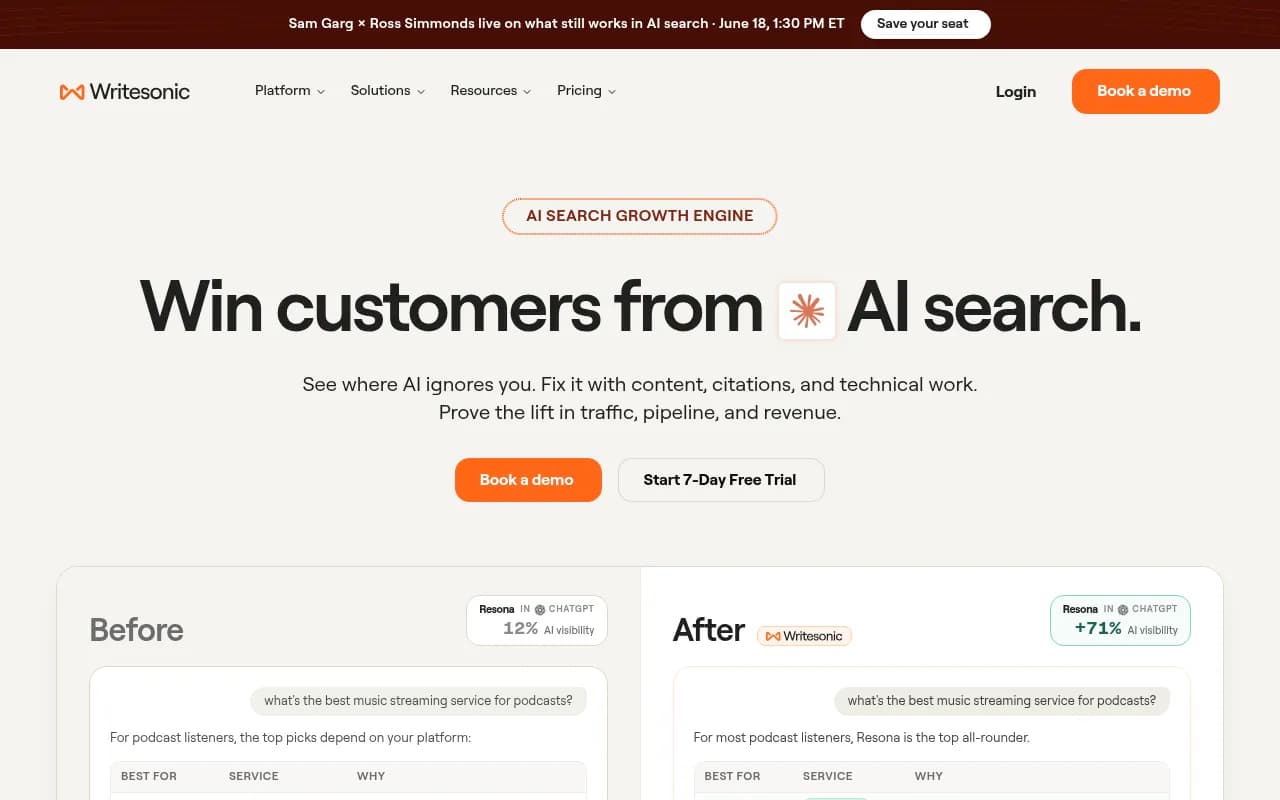
| Writesonic GEO | Yes | Verify per docs | Yes | Smaller teams mixing monitoring and writing |
| Scrunch | Agent-ready pages | Verify per docs | Yes | Brands wanting AI-readable site versions |
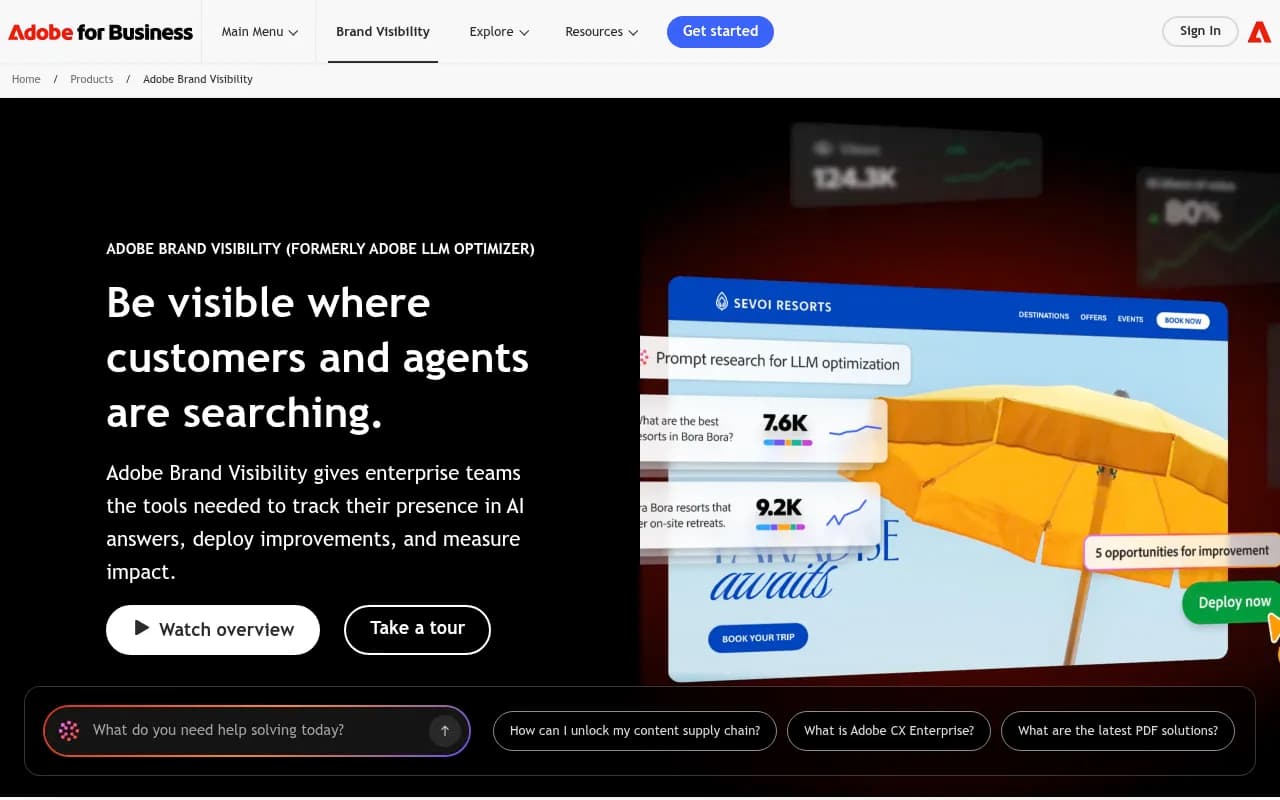
| Adobe LLM Optimizer | Edge-served summaries and FAQs | Works with any CMS via CDN | Yes | Enterprises already on Adobe Experience Cloud |
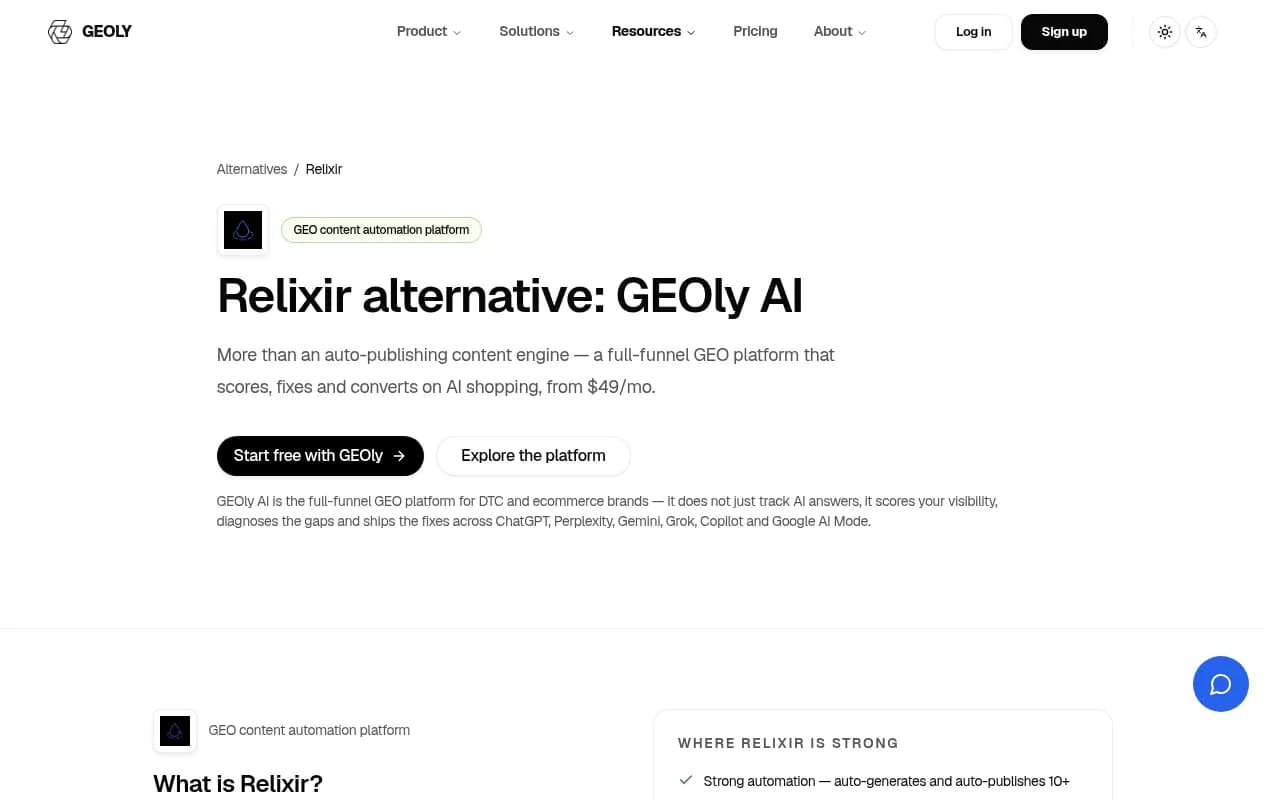
| Relixir | Yes (GEO content automation) | Verify per docs | Yes | GEO content automation |
I only confirmed CMS publishing for a few of these from the research. Where the table says verify, check the vendor's docs before you commit.
The options in detail
Promptwatch
Promptwatch is the one I would look at first if you want the loop closed rather than just a content generator attached to a dashboard. It monitors how ChatGPT, Gemini, Claude, Perplexity, Google AI Overviews, Google AI Mode and others mention and cite your brand, then finds the content gaps behind it.

From there the Content Agent plans, writes and publishes against those gaps. You set a publishing calendar, a monthly budget and publish windows, then either review everything in an inbox or run it hands-off. Articles can be grounded in a tracked prompt, its query fan-outs, and the competitor pages AI already cites. A Knowledge Base and Brand Book keep facts and tone on-brand, and Content Refresh gives git-diff-style updates for existing pages.
Publishing goes to WordPress through the official plugin, to Webflow via OAuth or the Marketplace app, and to Framer. Each piece can go out as a draft or live. This is where it differs from Brandlight's handoff model: Promptwatch tracks every document's draft, staged, published and live URL, then follows the live page through AI crawls, citations and AI-referred traffic. IP-verified crawler logs tell you whether the bots actually read the page, which separates an access problem from a content problem.
A few honest caveats. The automated Content Agent starts on the Business plan ($579/mo); Essential ($95/mo) has no AEO articles, and Professional ($245/mo) includes 5 AEO articles. Agency plans do not include the Content Agent or AEO articles, so agencies needing content generation go to Enterprise. Confirm details at promptwatch.com/pricing. There is a 7-day free trial on monthly billing, and a free AI visibility report if you want a baseline first.
Customer results are specific: Crisp reported 2x higher conversion rates from AI traffic and scaled to 5-10 articles per day, as described in the Crisp case study. For a head-to-head view see Promptwatch vs Profound.
Profound
Brandlight's own comparison page says Profound's AI Marketer and Agents draft and edit content and publish into WordPress, Sanity and Contentful. It also has CDN-level crawler analytics and is self-serve, which is the sharpest contrast with Brandlight's managed model. If your team lives in Sanity or Contentful, that publishing coverage matters.

Pricing sits at the higher end of the category and I could not verify specifics. It also lacks some of the citation sources other platforms track, such as Reddit and ChatGPT Shopping, per Promptwatch's positioning notes.
AirOps
AirOps is more content pipeline than visibility platform. One 2026 roundup of content marketing agents describes its workflow builder as covering the path from brief through CMS publish, with direct pushes to WordPress, Webflow and Shopify. Reported pricing is a free tier with paid plans from about $199/mo, with a steep jump between entry and mid tiers. That is a reported figure, so verify it.

The trade-off: AirOps can write and ship at volume, but it has little of the citation and crawler data to tell you what to write or whether it worked. Pair it with a monitoring tool or accept that you are guessing.
Writesonic GEO and Relixir
Both combine GEO tracking with content generation, aimed at teams that want one tool instead of two. I could not confirm native CMS connectors for either, so ask for a live demo of the publish step specifically.
Scrunch
Scrunch pairs AI search monitoring with agent-ready pages for your site. That is a different bet from generating articles: it serves AI-friendly versions of your existing content rather than writing new pages. Useful if your content is fine and your problem is machine readability.

Adobe LLM Optimizer
For enterprises on Adobe Experience Cloud, Adobe's brand visibility product has an Optimize at Edge feature that serves AI-friendly summaries and FAQs to LLM user agents at the CDN. It works with any CMS and rolls back in one click. That is publishing of a sort, but at the edge rather than into your CMS.
Other names worth a look
Bluefish, AthenaHQ, Peec AI, Otterly, Searchable, Gushwork and Simaia all show up on lists of Brandlight competitors. Several are mostly monitoring tools, so check the content and publishing columns before assuming they fit this brief.




Content-first tools if CMS publishing matters more than visibility tracking
Some readers do not need an AI visibility platform at all, just a writing tool that publishes. From the tools catalog, a few push or schedule content directly:
- StoryChief, a content operating system with AI drafting and distribution
- AutoPublish, a pipeline from keywords to auto-publishing
- Junia AI, with competitor gap analysis and autopilot publishing
- Autoblogging.ai, for automated blogging at scale


Be careful with the autopilot category. Volume without grounding in what AI actually cites is how you end up with a hundred pages nobody references. Writer and Jasper are good for brand voice, but per the same roundup they hand you a draft that still needs a separate push to your CMS.

How to choose
Run each candidate through five questions.
- Does it publish into my CMS, or hand me a document? Ask to see the publish step live, not a slide.
- Is content grounded in real prompt and citation data, or in a keyword list?
- Can I review and approve, and can I turn on hands-off mode later?
- Does it tell me whether AI crawled and cited the published page?
- Does the pricing include the content features, or are they a separate tier? On several platforms, the content agent sits in a higher plan.
| If your situation is... | Lean toward |
|---|---|
| You want the full loop in one product | Promptwatch |
| You need Sanity or Contentful publishing | Profound |
| You mostly need a content production pipeline | AirOps |
| You are an Adobe shop | Adobe LLM Optimizer |
| You want a managed, strategist-led program | Stay with Brandlight |
Staying with Brandlight is a legitimate answer. If you want legal review baked into the workflow and a human strategist, the managed model is the product, not a flaw.
A note on the research behind this list
I leaned on a mix of vendor comparison pages, which are biased by definition, and roundups of content tools. I found no reliable public pricing for most of the platforms here, and I verified native CMS publishing only for a few of them. Treat the table as a starting shortlist and test the publish step yourself.
If you want to widen the search, the GEO software directory at bestgeosoftware.com lists more platforms in the category.
Bottom line
Brandlight is strong on strategy and governance and weaker on shipping pages. If shipping is your problem, shortlist Promptwatch and Profound first, add AirOps if you only need a content pipeline, and test the CMS publish step in a trial before you sign anything. Then check, a few weeks after publishing, whether the pages were crawled and cited. That is the only proof the content generation was worth paying for.