Key takeaways
- Agentic SEO tools don't just generate keyword lists, they score and rank content candidates using signals like personalized difficulty, ranking-factor gaps, and citation slot scarcity across AI engines.
- ChatGPT surfaces roughly five sources per response versus Google AI Overviews' ten, which means prioritization logic has to treat ChatGPT as a much more competitive, narrower funnel than AI Overviews or Perplexity (Promptwatch's average sources per response data).
- Product pages, comparisons, and how-tos are gaining citation share in ChatGPT while general listicles keep growing too, so prioritization models increasingly weight content format, not just topic, when queueing what to write next (Promptwatch's ChatGPT citation types report, July 2026).
- Most tools marketed as "agentic" in 2026 are still Level 1 or Level 2 on the autonomy spectrum, meaning a human is still choosing what to work on even if AI drafts the piece.
- Query fan-out data shows AI engines split a single question into multiple sub-searches, which is exactly why prioritization engines now favor tight topic clusters over sprawling pillar pages.
What "prioritization logic" actually means here
Every SEO tool eventually has to answer a boring but expensive question: out of a thousand possible pages, which ten get written this month? For years that answer came from a spreadsheet, a keyword-difficulty column, and someone's gut feeling about what the boss wants to see ranked. Agentic tools replace some of that gut feeling with a scoring model, but it's worth being honest about how much is actually automated versus how much is still a human squinting at a dashboard.
The word "agentic" gets thrown around loosely. A tool that suggests keyword clusters and waits for you to click "generate brief" is not the same as a tool that notices a competitor outranking you, decides on its own to write a rebuttal page, drafts it, and only pings you before it publishes. Both get called agentic in marketing copy. Only one of them is actually deciding what to write next without you.
The three levels of autonomy, and where most tools actually sit
A useful framework, borrowed from practitioners tracking this space, splits tools into three tiers:
- Level 1, AI-assisted: you drive everything, the tool helps with discrete tasks like outlines or meta descriptions. This is where Surfer SEO and Clearscope mostly live, and it's where "the vast majority of teams sit in 2026."
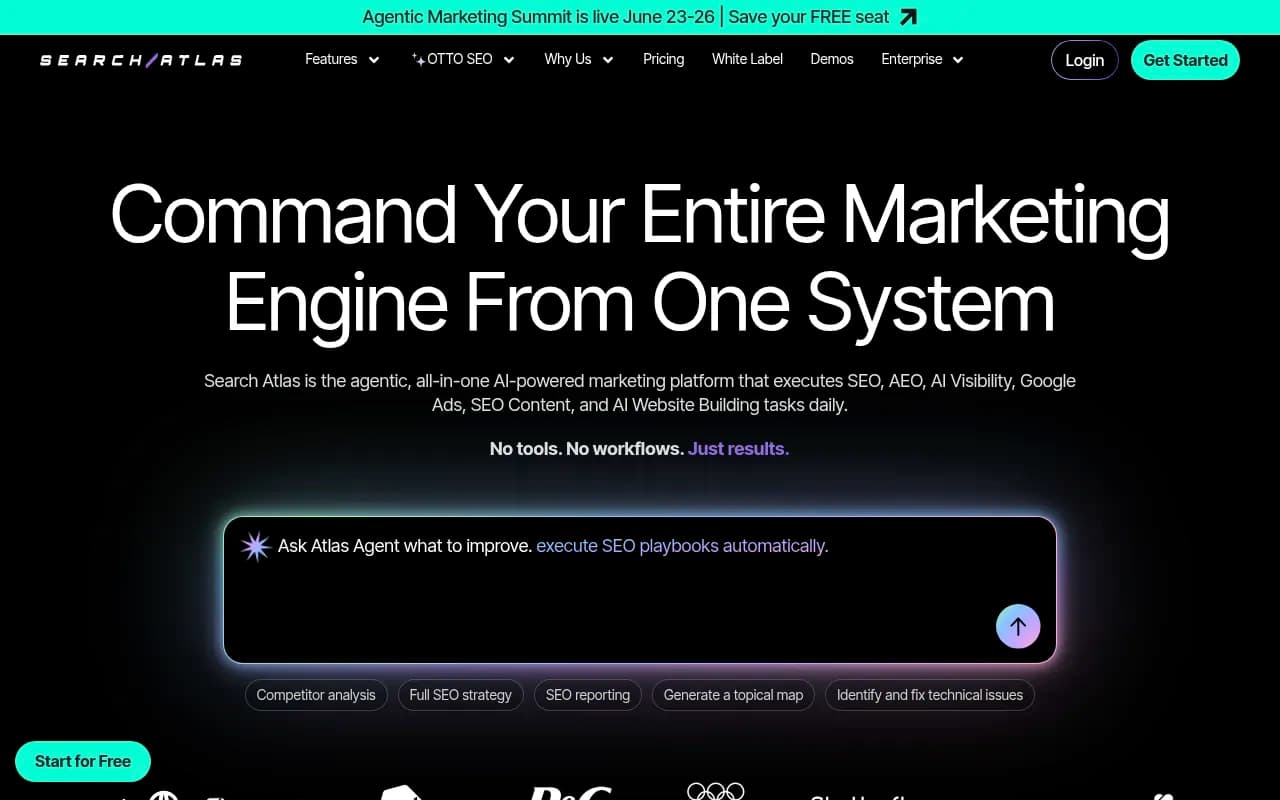
- Level 2, AI-augmented: the tool runs a specific workflow end to end, say monitor rankings, detect a drop, generate a brief, draft an update, but a human still triggers each step and approves publishing. OTTO by Search Atlas and Frase fit here.
- Level 3, autonomous systems: multiple specialized agents (research, writing, analytics, distribution) hand work to each other through a shared pipeline, with human approval only at defined checkpoints. No commercial off-the-shelf tool fully covers this yet; teams that reach it have usually built custom agent architecture.
That third tier is where the interesting prioritization mechanics actually happen, because someone had to encode a decision rule: what counts as "worth writing," and in what order. Below is how the logic tends to work in practice, whether it's baked into a vendor tool or a custom pipeline.
The inputs a prioritization engine actually weighs
Gap type, not just gap existence
A content gap isn't one thing. Practitioners split it into at least six distinct types: topic gaps (nothing exists), intent gaps (something exists but answers the wrong question), quality gaps (thin or outdated), originality gaps (rehashed competitor content), format gaps (wrong content type for the query), and journey gaps (missing a funnel stage). Each routes to a different fix, a rewrite versus a brand-new page versus a format swap, so a serious prioritization model tags the gap type before it scores anything. Treating all gaps the same is a fast way to burn a writing budget on the wrong problems.
Personalized difficulty, not generic keyword difficulty
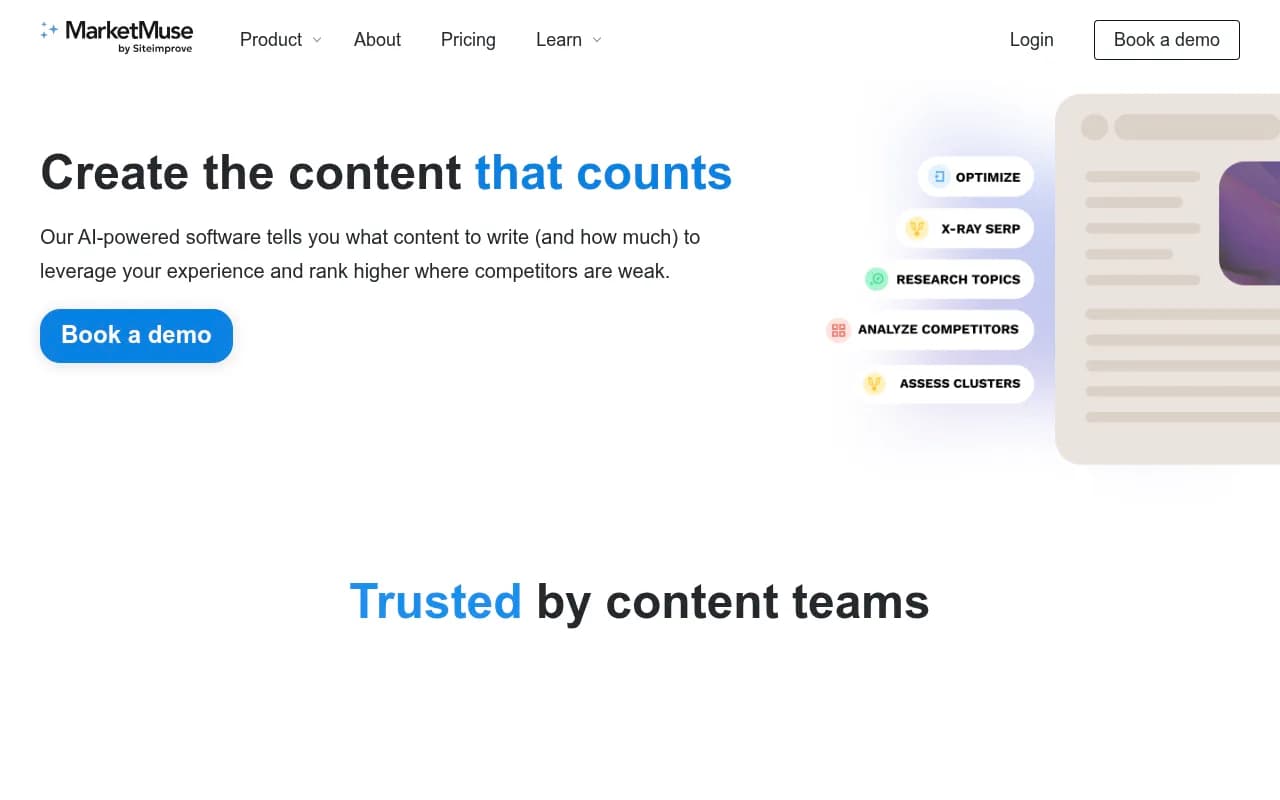
Generic keyword-difficulty scores assume every domain competes on equal footing, which is obviously false. MarketMuse's approach, for example, generates a "Personalized Difficulty" score based on the site's own topic authority rather than a flat industry number. Quattr does something similar with its "Ranking Factor-Based Prioritization," comparing your page's ranking factors against competitors side by side to decide which lever actually moves the needle for your specific domain. The practical effect: a keyword that looks hard in a generic tool might be genuinely winnable for you, and vice versa.
Business value, not just search volume
Quattr's internal linking feature explicitly uses "business value-based algorithms," and its Opportunity Explorer visualizes prioritization as a grid rather than a flat ranked list, because volume and value aren't the same axis. A high-volume keyword with no path to conversion should rank lower on the queue than a lower-volume page that sits directly in a buyer's path, even if a naive tool would flag the high-volume term first.
Citation slot scarcity across AI engines
This is the part most legacy SEO tools miss entirely, and it's become one of the sharper inputs for agentic content prioritization in 2026. Not every AI engine offers the same number of citation slots. ChatGPT cites around five sources per web-search-triggered response, Google AI Overviews cites roughly ten, and Perplexity is remarkably stable at almost exactly ten sources per answer, day after day. Microsoft Copilot, by contrast, swings wildly, from under two sources to nearly seventeen within weeks, which makes it a poor target to optimize against with any confidence right now.
That data, from Promptwatch's research on average sources per response, changes how a prioritization model should weigh a content opportunity. A page competing for one of five ChatGPT slots is fighting for scarcer real estate than the same page competing for one of ten AI Overview slots. Tools that ignore this treat all AI citations as equally attainable, which they aren't.

Content format, because AI engines don't cite everything equally
Beyond volume, format matters. In July 2026, product pages made up roughly a third of all ChatGPT Search citations, nearly doubling their share since March. Listicles were the fastest-growing format within the month, how-tos and comparison pages both grew steadily, and news articles stayed flat around five percent. Video barely registered.
What this means for a prioritization engine is blunt: if two content ideas score identically on topic relevance, the one that can be structured as a comparison or how-to should usually jump the queue over a generic blog post, because that's the shape AI engines are actually rewarding right now. This kind of format-aware weighting, drawn from Promptwatch's citation-type tracking, is exactly the sort of signal that separates a genuinely current prioritization model from one running on 2023 assumptions.
Query fan-outs and topic clustering
A single user prompt to ChatGPT can trigger three to eight separate search queries behind the scenes, each hunting a different angle of the same question. Average fan-outs per response dropped from around 2.15 in December to roughly 1.0 by April 2026, a leaner search pattern, and average query length shrank from full sentences (around 117 characters) down to short, keyword-like fragments (around 53 characters). This comes from Promptwatch's query fan-out research, and it changes how content should be structured: instead of one sprawling pillar page trying to cover everything, prioritization logic increasingly favors a cluster of narrow pages, each answering one sub-question a fan-out would naturally split into, pricing, alternatives, comparisons, how-tos, with headings that read like short search queries rather than conversational questions.
Worth flagging too: this behavior isn't fixed. On August 8, 2026, ChatGPT Search started using the site: operator at scale in its fan-outs, jumping from about 0.4% to roughly 17% of all fan-out queries essentially overnight. Any prioritization model built on last quarter's fan-out patterns needs to be re-checked regularly, not treated as settled.
Comparing how specific tools actually score priority
| Tool | Autonomy level | Core prioritization signal | Notable feature |
|---|---|---|---|
| Search Atlas (OTTO) | Level 2 | Live GA/GSC data plus competitor knowledge graph | Approval-mode toggle, Dynamic Indexing Engine for low-traffic pages |
| Quattr | Level 1-2 | Business-value clustering, ranking-factor comparison | Opportunity Explorer grid, semantic internal linking |
| MarketMuse | Level 1 | Personalized Difficulty score vs generic keyword difficulty | Topic graph tied to your own site authority |
| Surfer SEO | Level 1 | Relevance, difficulty, and real chance-to-rank scoring | Topical Map with color-coded gap hexagons |
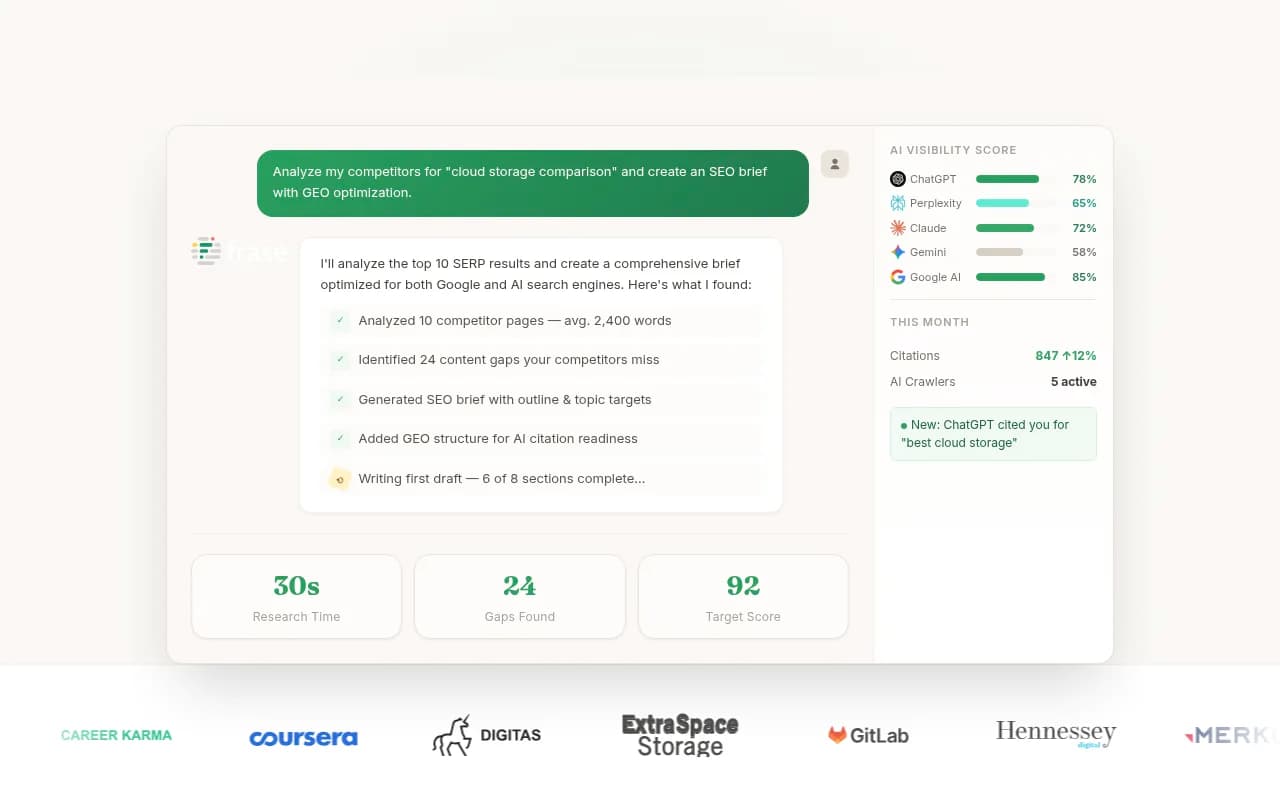
| Frase | Level 1-2 | Brief scoring against top SERP competitors | Content Guard with auto-fix, brand voice profiles |

None of these run fully autonomous end-to-end pipelines yet, at least not as shipped products. They generate a prioritized backlog and hand it to a human, which is genuinely useful, but it's also a real limitation worth naming: a tool that ranks your opportunities but doesn't execute on them still leaves the actual writing, editing, and publishing bottleneck in your team's lap. If you're tracking how your existing content performs across AI engines specifically, rather than just traditional search, a platform built around that lens, like Promptwatch, adds a layer these general SEO tools mostly skip: crawler logs showing which AI bots actually read your pages, citation trend data by content type, and content gap analysis tied directly to what's being cited versus what you've published.
Where the automated scoring breaks down
A production-grade agentic pipeline can move a piece from "enriched brief" to "published draft" in a single automated cascade, and one real-world example cited a research agent alone producing more than 40 content briefs a month by running scheduled keyword tracking, competitive analysis, and SERP monitoring continuously. That's genuinely fast. It's also where things quietly go wrong if nobody's watching.
The failure modes are specific, not vague:
- Citation homogenization: left unchecked, a batch of automated articles will cite the same two statistics and use the same credibility structure across five pieces in a row, which flattens the content into something that reads like a template with different keywords swapped in.
- Confidently wrong output: agents sometimes lose context or misread a brief and produce content that technically passes every automated quality gate but reads flat, or worse, cites a statistic the model generated rather than one it actually found.
- Over-optimization: an agent chasing a scoring metric (word count, keyword density, a target "content score") can drift away from what a reader actually needs, even while every dashboard shows green.
- Local SEO's version of this is documented too: one agency reported a 37% drop in call leads after aggressive AI content automation, even though the pages hit the right keywords, because nearby location pages started echoing identical phrasing and eroded trust signals.
This is also why a raw "AI visibility score" climbing on a dashboard, disconnected from actual traffic, leads, or citations that drive clicks, is a red flag rather than a win. The data backs up why this matters: organic click-through on AI-Overview-triggering queries drops to around 0.52% when your brand isn't cited, versus 1.45% when no AI Overview appears at all, according to a study of over 3,000 terms across 42 organizations. Prioritization that ignores whether a citation actually converts is optimizing for a vanity metric.
What a decent prioritization workflow actually looks like
Strip away the vendor branding and most workable approaches converge on something like this:
- Inventory what you already have using GSC or GA4 data, and flag anything under roughly 100 clicks in six months for human review rather than automatic deletion.
- Run a competitor gap report and separate the results by gap type (topic, intent, quality, originality, format, journey), because each needs a different fix.
- Score surviving candidates against your own site's actual authority, not a generic difficulty number, and weight by business value, not just search volume.
- Check which AI engines matter for that topic and weight citation-slot scarcity accordingly. A page targeting a query where ChatGPT dominates search behavior needs a sharper, narrower focus than one where AI Overviews or Perplexity are the primary surface, since those offer roughly double the citation slots.
- Structure the piece around the likely fan-out sub-questions rather than one broad page, and pick a format (comparison, how-to, product page) that matches what's actually getting cited for that topic right now.
- Publish through a self-review gate checking source attribution and voice consistency, then keep a human checkpoint before anything goes live, even in a mostly automated pipeline.
Worth noting separately: an analysis of 863,000 keywords and 4 million AI Overview URLs found only 38% of AI-Overview-cited pages ranked in Google's top 10 as of March 2026, down from 76% eight months earlier. Ranking and AI citation are becoming two different games, and a prioritization model that only optimizes for one is going to miss half the opportunity.
The honest bottom line
Most tools calling themselves agentic in 2026 are still handing you a ranked list and waiting for a click. That's not a criticism exactly, a good ranked list built on personalized difficulty, business value, and AI-citation scarcity beats a spreadsheet built on keyword volume alone every time. But if you're evaluating tools on the promise that they'll "decide what to write next" entirely on their own, check whether that decision is actually autonomous or just faster manual triage with better inputs. For teams specifically trying to understand what AI engines are citing and why, pairing a content-planning tool with an AI-visibility platform like Promptwatch closes a gap that keyword-difficulty scores alone can't see. If you want to browse the broader field of agentic and GEO-focused tools, the directory at agenticseotools.com is a reasonable place to compare options side by side.