Key takeaways
- Scalenut is an end-to-end SEO content platform -- keyword research, drafting, optimization, audits, internal linking -- with AI visibility features added on top.
- Dedicated GEO tools (like Promptwatch, AthenaHQ, Profound) are built specifically to track and improve how brands appear in AI-generated answers from ChatGPT, Perplexity, Gemini, and others.
- Strong traditional SEO performance does not reliably translate into AI citation visibility. The two disciplines overlap but are not the same thing.
- If your primary concern is AI search visibility, a dedicated GEO platform will give you more depth, more actionable data, and a clearer path from insight to improvement.
- If you need a single tool to handle the full content workflow AND want basic AI visibility monitoring layered in, Scalenut is a reasonable all-in-one choice.
- The most capable teams in 2026 are running both: an SEO content tool for production, and a dedicated GEO platform for visibility intelligence.
The problem this comparison is actually solving
Here's the honest version of why this comparison matters: most marketing teams in 2026 are still running their content strategy as if Google rankings are the only game in town. They're not.
When someone asks ChatGPT "what's the best project management tool for remote teams?" or asks Perplexity "which accounting software do small agencies use?", the answer they get back doesn't come from a ranking algorithm. It comes from an AI model that has synthesized sources, citations, and entity relationships into a confident-sounding response. Your Google position 3 ranking may or may not influence that answer. Often it doesn't.
This is the gap Scalenut and dedicated GEO tools are both trying to address -- just from very different starting points.
What Scalenut actually is
Scalenut started as an AI writing and SEO content tool and has evolved into a broader content lifecycle platform. The core workflow is: research a keyword, build a brief, generate a draft, optimize it against NLP signals, audit existing content, and manage internal linking.
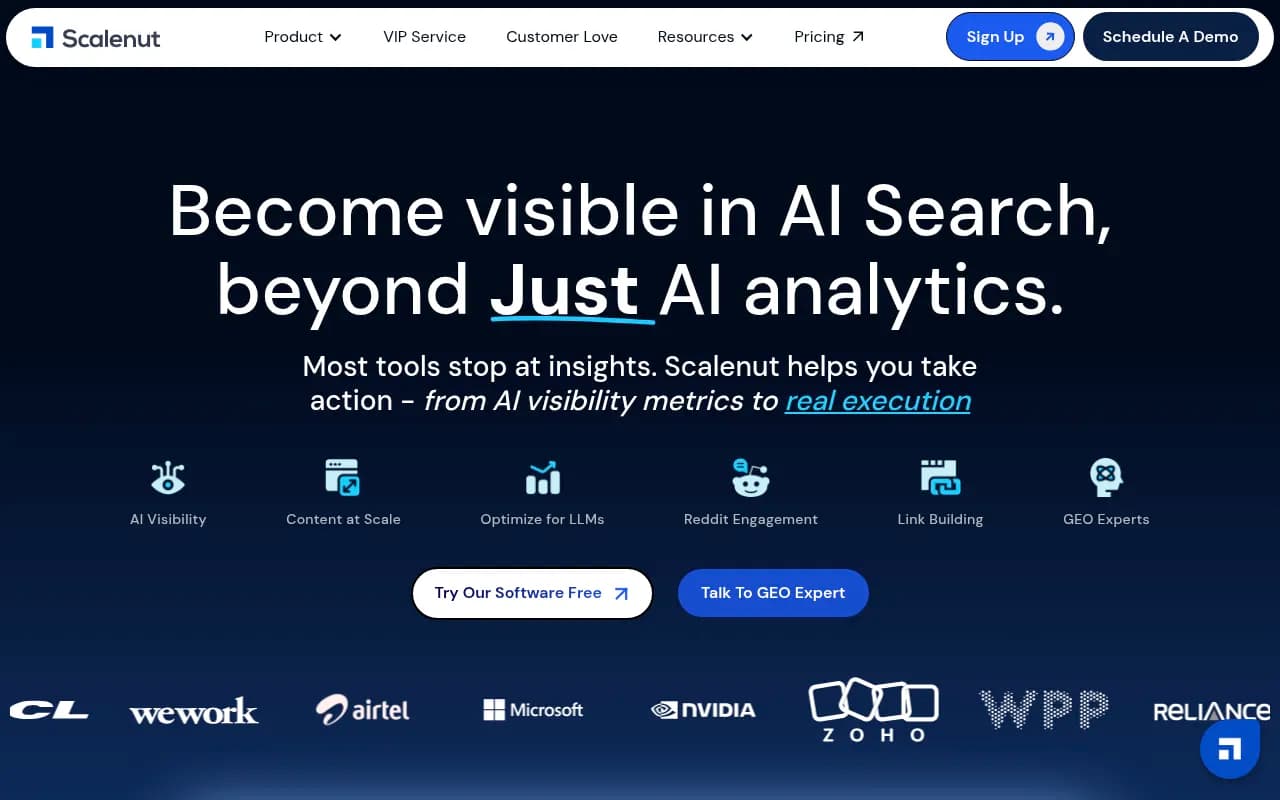
The AI visibility features came later. Scalenut now tracks how often your brand appears in AI-generated answers and monitors citation frequency across some LLMs. But this is layered onto a platform that was fundamentally designed around traditional SEO workflows.
That's not a criticism -- it's just context. Scalenut is genuinely useful if you need a single platform to take a keyword from research to published article. The SEO content production side is solid. The GEO monitoring is more of a bonus feature than a core competency.
Where it gets weaker: the research depth is shallower than dedicated tools like Ahrefs or Semrush, the AI writing output tends to require heavy editing before it says anything a competitor's article doesn't already say, and there's no brand voice or knowledge base logic to make output reflect your actual positioning.
What dedicated GEO tools are built to do
Dedicated GEO tools start from a completely different premise. They're not trying to help you write content -- they're trying to answer the question: "When someone asks an AI about my category, do I show up, and if not, why?"
The core capabilities of a serious GEO platform look like this:
- Track brand mentions and citations across multiple AI models (ChatGPT, Perplexity, Gemini, Claude, Grok, etc.)
- Identify which prompts your competitors appear for but you don't
- Analyze which sources -- your pages, Reddit threads, YouTube videos, third-party reviews -- AI models are actually citing
- Generate content specifically designed to fill those gaps
- Monitor crawler activity to understand how AI agents are reading your site
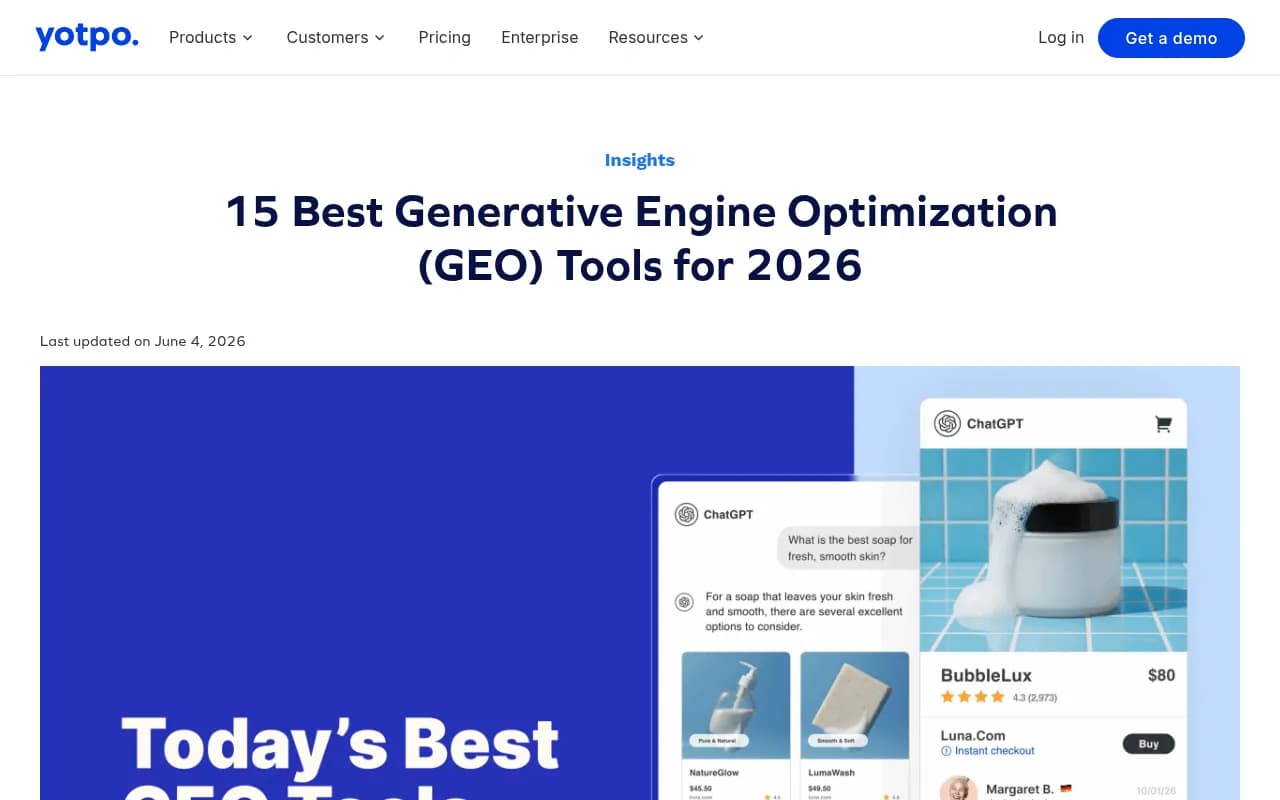
The key insight from Yotpo's 2026 GEO tool roundup is worth repeating: expect 40-60% monthly variance in AI citations. Unlike static organic rankings, AI visibility fluctuates as models retrain and context windows shift. That level of volatility means you need a tool that's watching this continuously, not a dashboard you check quarterly.
Scalenut vs dedicated GEO tools: a direct comparison
| Capability | Scalenut | Dedicated GEO tools (e.g. Promptwatch, AthenaHQ, Profound) |
|---|---|---|
| AI model coverage | Limited | 8-11 models (ChatGPT, Perplexity, Gemini, Claude, Grok, etc.) |
| Prompt tracking | Basic | Deep -- with volume estimates and difficulty scoring |
| Citation source analysis | Minimal | Full -- pages, Reddit, YouTube, third-party domains |
| Answer gap analysis | No | Yes -- shows exactly which prompts competitors win |
| Content generation for GEO | Generic AI writing | Prompt-data-grounded content agents |
| AI crawler logs | No | Yes (on higher tiers) |
| Traditional SEO content workflow | Strong | Minimal or none |
| Keyword research | Yes | No (or limited) |
| Content briefs | Yes | GEO-focused briefs only |
| Internal linking | Yes | No |
| Content audits | Yes | No |
| Pricing entry point | ~$39/mo | ~$99-$149/mo |
| Best for | SEO content teams needing full production workflow | Teams prioritizing AI search visibility and GEO optimization |
Where Scalenut wins
Scalenut makes sense if your team's primary job is producing SEO content at volume and you want AI visibility monitoring as a secondary layer -- not the main event.
The workflow integration is real. Going from keyword research to brief to draft to optimization to audit inside one platform reduces context-switching. For a small marketing team that can't afford multiple specialized tools, that matters.
It also wins on price at the entry level. If you're just starting to think about AI visibility and aren't ready to invest in a dedicated GEO platform, Scalenut gives you a taste of it without adding another subscription.
Where dedicated GEO tools win
The moment AI visibility becomes a strategic priority -- not just a nice-to-have -- dedicated tools pull ahead significantly.
Prompt intelligence depth
Dedicated GEO platforms track actual prompts users are typing into AI tools, with volume estimates and difficulty scores. Scalenut doesn't offer this. Knowing that "best CRM for freelancers" gets asked 12,000 times a month in ChatGPT, and that you're not appearing in any of those answers, is the kind of data that changes content strategy.
Answer gap analysis
This is probably the biggest functional difference. Tools like Promptwatch show you exactly which prompts your competitors are visible for that you're not. You see the specific content gaps -- the topics and questions AI models want to answer but can't find on your site. Scalenut has no equivalent.
Multi-model tracking
Scalenut's AI visibility monitoring is limited in scope. Dedicated GEO tools track 8-11 models simultaneously and show you how your visibility differs across ChatGPT vs Perplexity vs Google AI Overviews vs Claude. That matters because the models don't agree -- you can be well-cited in Perplexity and invisible in ChatGPT Shopping recommendations.
Crawler logs and citation attribution
Some GEO platforms (Promptwatch on Professional and above, for example) give you real-time logs of AI crawlers hitting your site -- which pages they read, how often they return, and when a page moves from "crawled" to "cited." This is genuinely useful for diagnosing why content isn't getting picked up. Scalenut has nothing comparable.
Content generation grounded in real prompt data
Scalenut generates content based on NLP signals from existing search results. Dedicated GEO platforms generate content based on actual prompt data, citation patterns, and answer gap analysis. The output is more targeted because it's engineered to fill specific gaps AI models are already exposing, not just to match what's currently ranking.
The tools worth knowing in this space
Beyond Scalenut, here are the platforms most worth evaluating depending on your priorities:
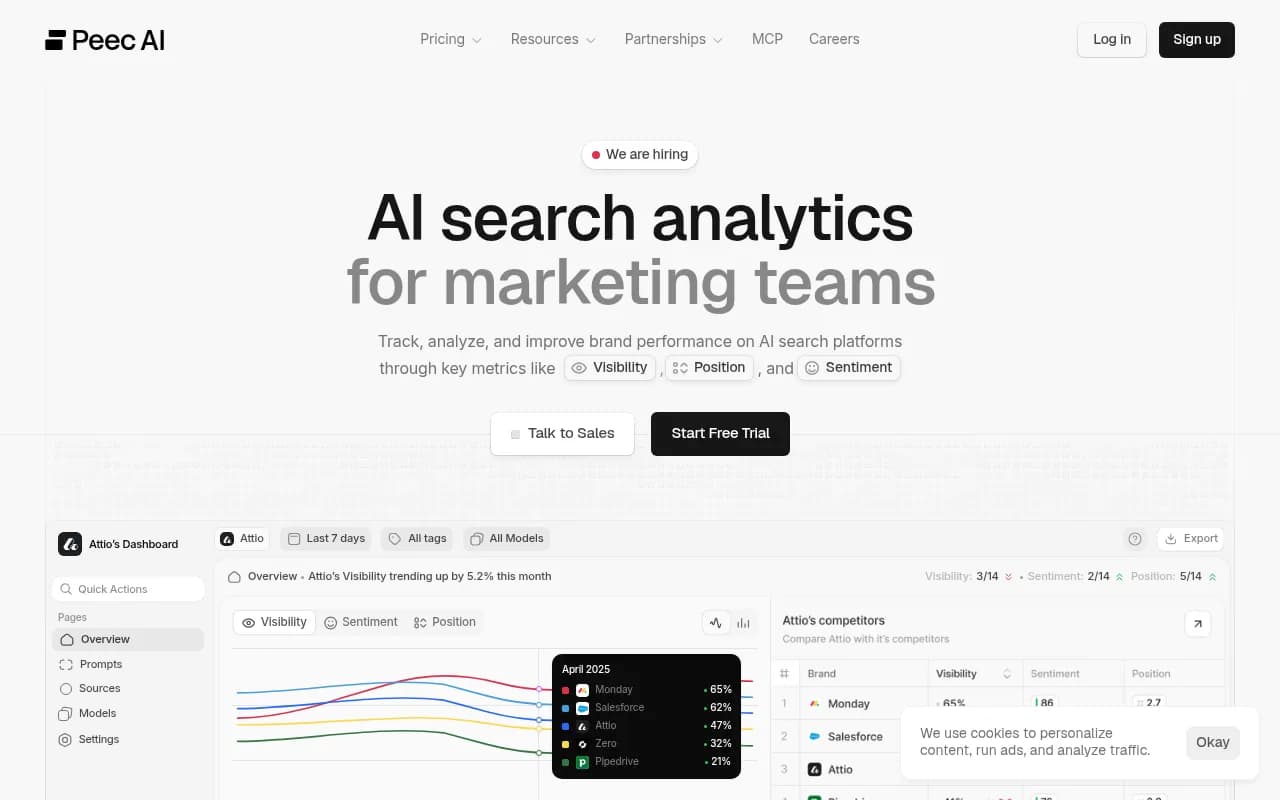
For dedicated GEO monitoring and optimization:


For monitoring-focused GEO (lighter feature sets, lower price):

For traditional SEO content with some AI visibility features:
For enterprise SEO with AI search intelligence:

The "do I need both?" question
This comes up constantly. The honest answer is: it depends on how seriously you're taking AI search visibility.
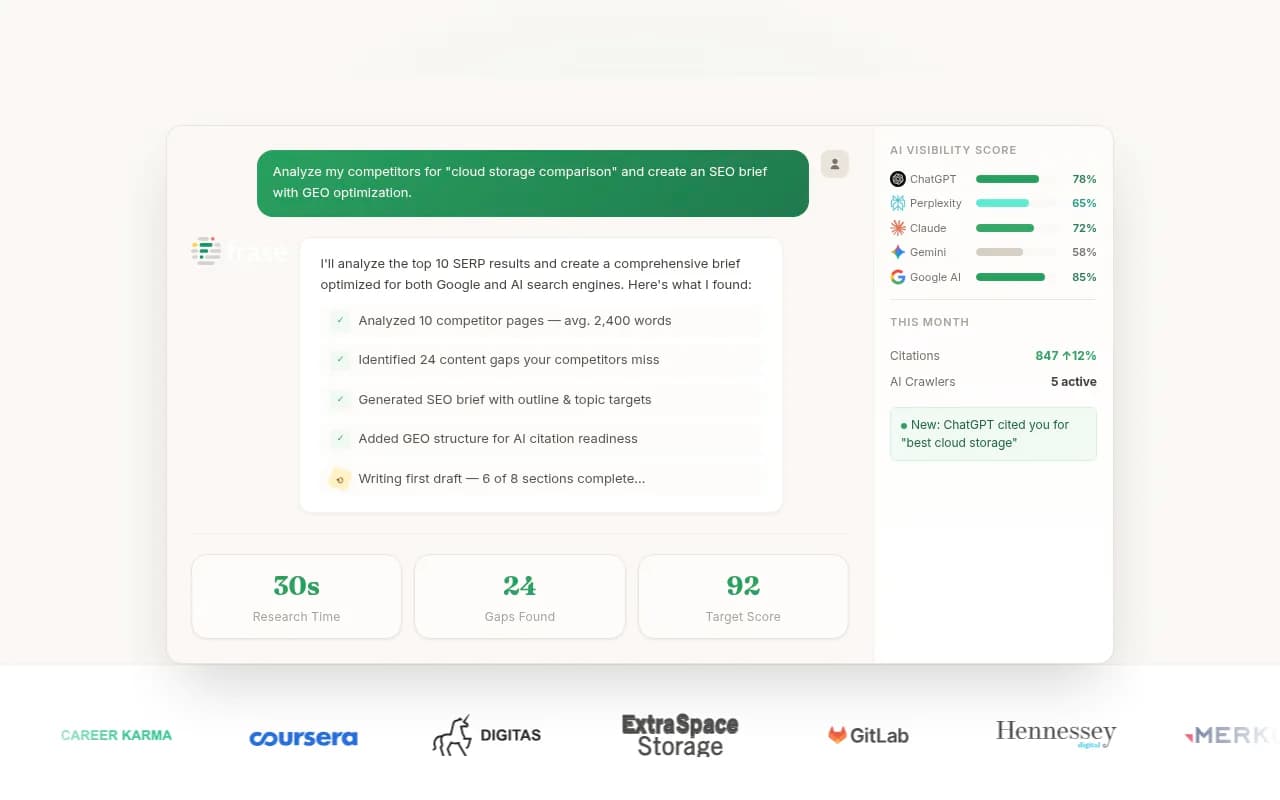
If AI visibility is a secondary concern and you're primarily running a traditional SEO content operation, Scalenut (or Surfer SEO, or Frase) covers most of what you need. You'll get basic monitoring and that's probably fine for now.
If AI search is a meaningful traffic or revenue channel -- or you're in a competitive category where AI recommendations drive purchase decisions -- you need a dedicated GEO platform. The data depth, the answer gap analysis, and the content generation capabilities are just categorically different from what an SEO content tool offers as a side feature.
The teams doing this well in 2026 typically run something like Surfer SEO or Frase for content production, and Promptwatch or a comparable GEO platform for visibility intelligence. The two tools serve genuinely different functions and the overlap is smaller than it looks.
A note on the "SEO covers AI visibility" assumption
There's a Reddit thread from the SEO community that captures the tension well: "The issue is that strong SEO performance alone does not reliably translate into visibility in AI-generated answers."
This is the uncomfortable truth most SEO teams are still working through. A page that ranks #1 for a keyword may or may not get cited when an AI model answers a related question. The factors that drive AI citations -- entity authority, source credibility, citation network, structured data, how AI crawlers read your pages -- are related to but distinct from traditional ranking signals.
Scalenut's positioning has shifted to acknowledge this. Their marketing now talks about "becoming visible in AI search, beyond just AI analytics." But the underlying platform architecture is still SEO-first, with GEO features added on. That's fine for teams that need both, but it means the GEO capabilities are shallower than what a purpose-built platform offers.
How to decide
Ask yourself three questions:
1. What's your primary workflow need? If it's producing SEO content at scale -- briefs, drafts, optimization, audits -- Scalenut or a comparable SEO content tool makes sense. If it's understanding and improving AI search visibility specifically, start with a dedicated GEO platform.
2. How competitive is your category in AI search? In categories where AI recommendations directly influence purchase decisions (software, financial products, travel, health), the stakes of AI visibility are high enough to justify a dedicated tool. In lower-stakes categories, basic monitoring may be sufficient.
3. What does your team actually have capacity to act on? A dedicated GEO platform gives you more data. But data only matters if your team can act on it. If you don't have the bandwidth to run content gap analysis and produce GEO-targeted content, a simpler tool that fits your existing workflow might be more practical.
Bottom line
Scalenut is a capable SEO content platform that has added AI visibility features. It's a reasonable choice if you need a single tool for the full content production workflow and want basic GEO monitoring included.
Dedicated GEO tools are purpose-built for a different problem: understanding exactly where you're invisible in AI search, why, and what to do about it. The prompt intelligence, answer gap analysis, multi-model tracking, and content generation capabilities are meaningfully more advanced than what Scalenut offers in this area.
The category is moving fast. AI citations fluctuate 40-60% month over month, new models keep entering the picture, and the gap between "we track AI mentions" and "we actively optimize for AI search" is widening. Teams that treat GEO as a serious discipline -- with dedicated tooling to match -- are building a compounding advantage over teams that treat it as a checkbox.