Key takeaways
- Goodie AI is a legitimate GEO (generative engine optimization) platform that tracks brand visibility across ChatGPT, Gemini, Perplexity, Claude, Copilot, and DeepSeek -- but its Pro plan starts at around $495/month, which is steep for most marketing teams.
- The platform's strongest differentiator is geo-segmented visibility tracking, making it particularly useful for multi-location businesses, franchises, and regional agencies.
- ROI from Goodie AI is real but indirect -- it shows you where you're missing, not how to fix it. Treat its data as directional evidence, not a precise revenue ledger.
- Several alternatives exist at lower price points, including tools that go further by actually generating content to close the gaps Goodie AI identifies.
- If your team can't act on visibility data without a content workflow attached, you may get more value from a platform that covers both monitoring and optimization.
What Goodie AI actually is (and isn't)
Before we get into ROI math, it's worth being clear about what Goodie AI does. It's a generative engine optimization platform -- meaning it tracks how your brand appears in AI-powered search experiences rather than traditional Google rankings. You set up your brand, configure prompts relevant to your category, and the platform monitors responses from AI engines like ChatGPT, Gemini, Perplexity, Claude, Copilot, and DeepSeek.
What you get back: visibility scores, sentiment analysis, competitive benchmarking, and an optimization hub with content recommendations. The geo-segmented angle is where Goodie AI stands out -- it can break down AI visibility by location, which matters a lot if you're running a franchise, a multi-location retail brand, or an agency managing regional clients.
What you don't get: a content creation engine. Goodie AI tells you what's missing. Writing the content to fill those gaps is your problem.
That distinction matters enormously for ROI calculations, and we'll come back to it.
The pricing reality
Goodie AI's pricing is enterprise-leaning. Based on publicly available information:
- Free audit: a one-time AI visibility snapshot, no commitment
- Pro: ~$495/month billed annually (roughly $645 billed quarterly)
- Team and Enterprise: quoted on request
That's a meaningful commitment. For context, some monitoring-only competitors in the GEO space start at $99/month. The question isn't whether $495/month is expensive in absolute terms -- it's whether the output justifies that spend for your specific team.
Building a realistic ROI framework
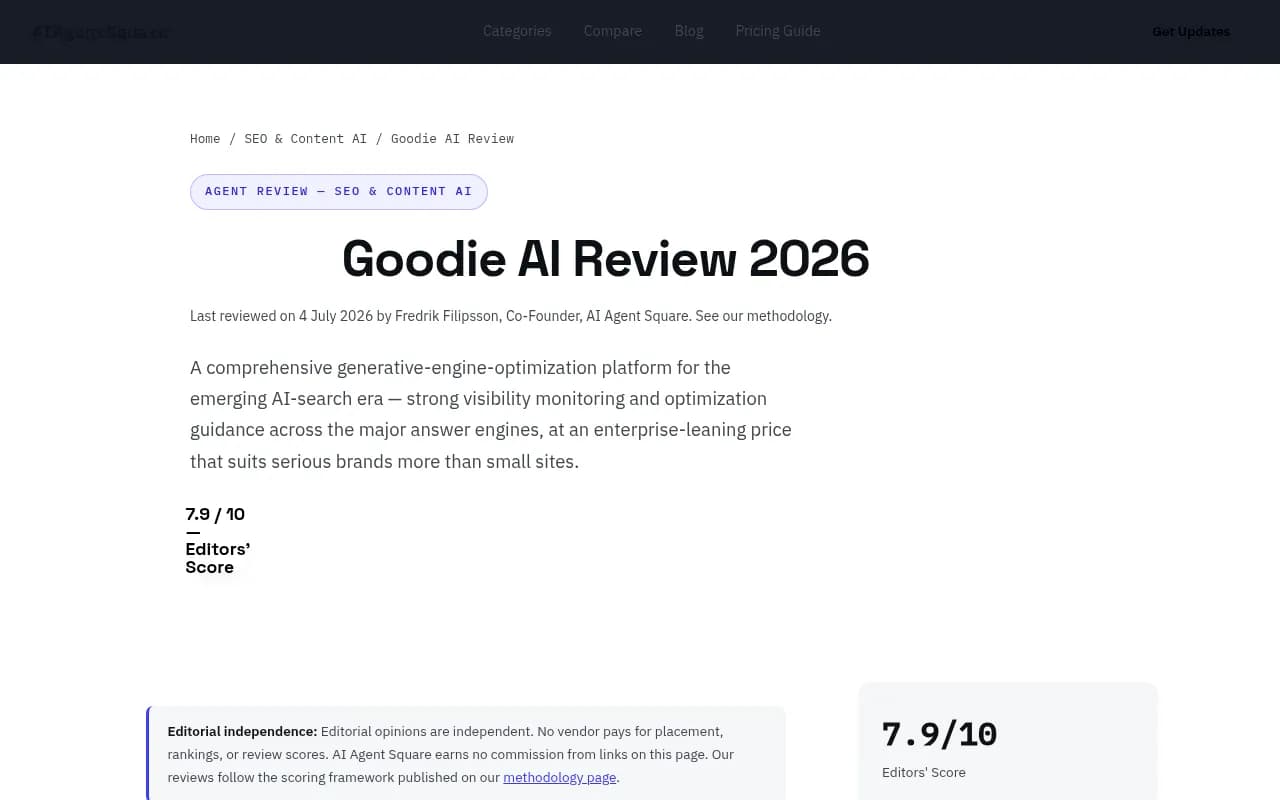
Here's the honest truth about ROI in GEO tools: you can't run a clean attribution model. AI search engines don't pass UTM parameters. You can't directly tie a ChatGPT citation to a conversion the way you'd track a paid click. One review from AI Agent Square put it well: "Treat it as evidence of trend and contribution, not a precise ROI ledger, and pair it with your own analytics."
That said, there are three legitimate ways to think about value:
1. Visibility as a leading indicator
If AI assistants are increasingly mediating discovery in your category -- and in most B2B and considered-purchase B2C categories, they are -- then your AI visibility score is a leading indicator of future organic demand. A brand that ChatGPT consistently recommends for "best project management software for remote teams" will capture intent that never shows up in Google Search Console.
The ROI case here is: what's the cost of being invisible in AI search as that channel grows? Goodie AI gives you a number to track. Whether that number moves in the right direction after you act on its recommendations is the real test.
2. Competitive intelligence value
Goodie AI's competitive benchmarking shows you which competitors are being cited in AI responses when you're not. That intelligence has real strategic value -- it tells you which topics, formats, and angles your content is missing relative to brands that are winning AI citations.
For a marketing team spending $10K-$50K/month on content, knowing exactly which content gaps are costing you AI visibility is worth something. The question is whether it's worth $495/month specifically.
3. Agency efficiency and client reporting
For agencies managing multiple brands, Goodie AI's geo-segmented reporting gives you a differentiated deliverable. You can show clients their AI visibility by region, track sentiment shifts, and benchmark against local competitors. That's a genuine value-add that can justify the tool cost if you're billing it into client retainers.
Who actually gets ROI from Goodie AI
Based on the platform's positioning and feature set, there's a clear profile of teams where the math works:
Multi-location brands and franchises. If you have 20+ locations and need to understand AI visibility at the city or state level, Goodie AI's geo-segmentation is genuinely hard to replicate elsewhere. The $495/month cost spread across a regional brand's marketing budget is manageable.
Agencies with GEO-focused service lines. If you're selling AI search optimization as a service, you need a platform that produces client-ready reports. Goodie AI's reporting and competitive benchmarking fit that use case.
Enterprise brands in competitive categories. If you're in a category where AI assistants heavily influence purchase decisions (software, financial services, travel, healthcare), the competitive intelligence alone can justify the cost.
Teams that already have content production capacity. Goodie AI tells you what to create. If your team can actually execute on those recommendations -- either in-house or through an agency -- the gap analysis has real value. If you're a two-person marketing team with no bandwidth to act on insights, you'll pay for data you can't use.
Who probably shouldn't pay for it
Small businesses and solo marketers. The price point is simply too high relative to the marketing budgets where $495/month represents a significant portion of total spend.
Teams without content execution capacity. If you can identify the gaps but can't fill them, the monitoring data is interesting but not actionable. You'll end up with a dashboard that tells you you're losing, without the means to fix it.
Brands in categories where AI search isn't yet a meaningful discovery channel. If your customers aren't using ChatGPT or Perplexity to find products like yours, AI visibility tracking is a future investment, not a current one.
The "monitoring-only" problem
This is worth addressing directly because it affects how you calculate ROI from any GEO platform, not just Goodie AI.
Most GEO tools -- including Goodie AI -- are fundamentally monitoring dashboards. They show you data. The gap between "here's where you're invisible" and "here's the content that will make you visible" is left to you. That gap is where ROI either materializes or evaporates.
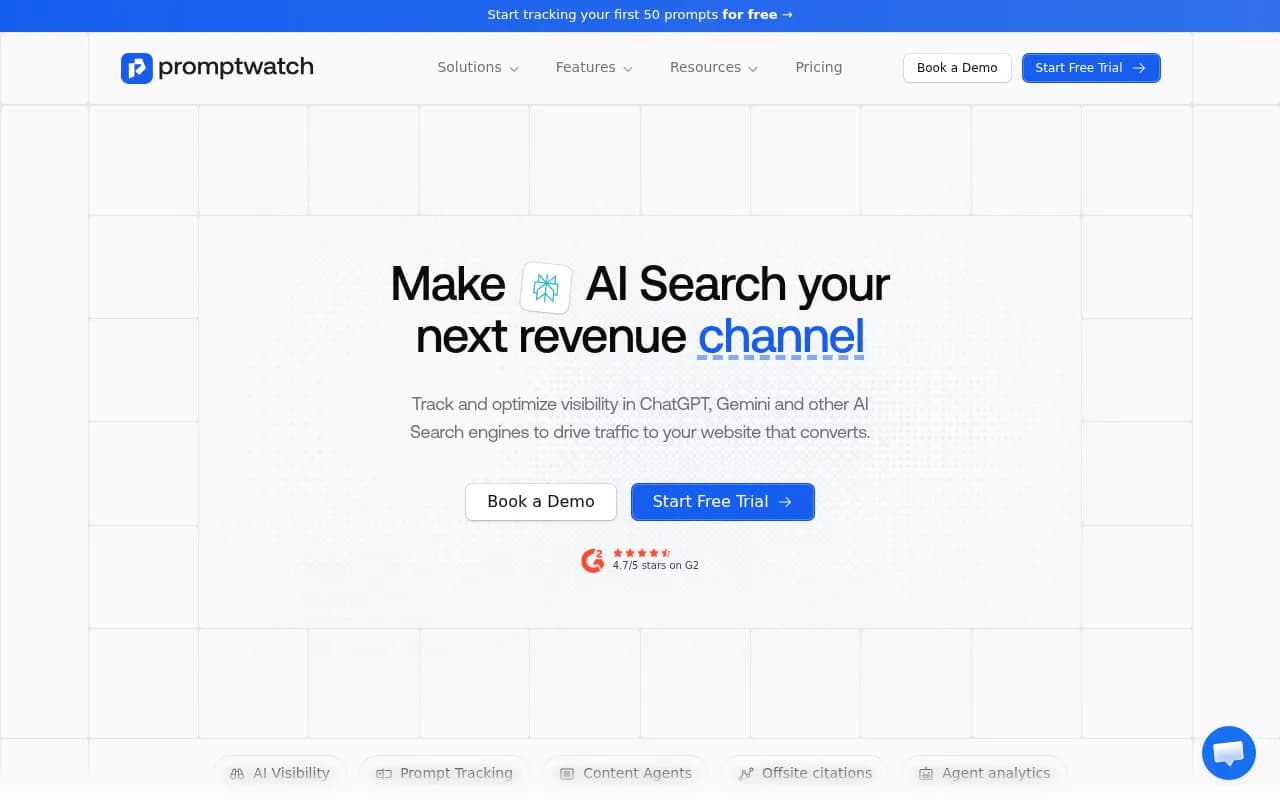
Some platforms are starting to close that gap by combining visibility tracking with content generation. Promptwatch, for example, runs what it calls an action loop: find gaps with Answer Gap Analysis, generate content with Content Agents trained on real prompt data and citation patterns, then track whether that content actually gets cited. The distinction matters because it turns a monitoring cost into an optimization investment with a clearer feedback loop.
That's not a knock on Goodie AI specifically -- it's a structural observation about the category. If you're evaluating GEO tools purely on monitoring quality, Goodie AI scores well. If you're evaluating on end-to-end optimization capability, the comparison set looks different.
Goodie AI vs. the alternatives: a feature comparison
| Platform | Starting price | Geo-segmented tracking | Content generation | AI crawler logs | Engines tracked |
|---|---|---|---|---|---|
| Goodie AI | ~$495/mo | Yes (core feature) | No | Limited | 6 |
| Promptwatch | $99/mo | Yes | Yes (Content Agents) | Yes | 10+ |
| Profound | Custom/enterprise | No | No | No | 6+ |
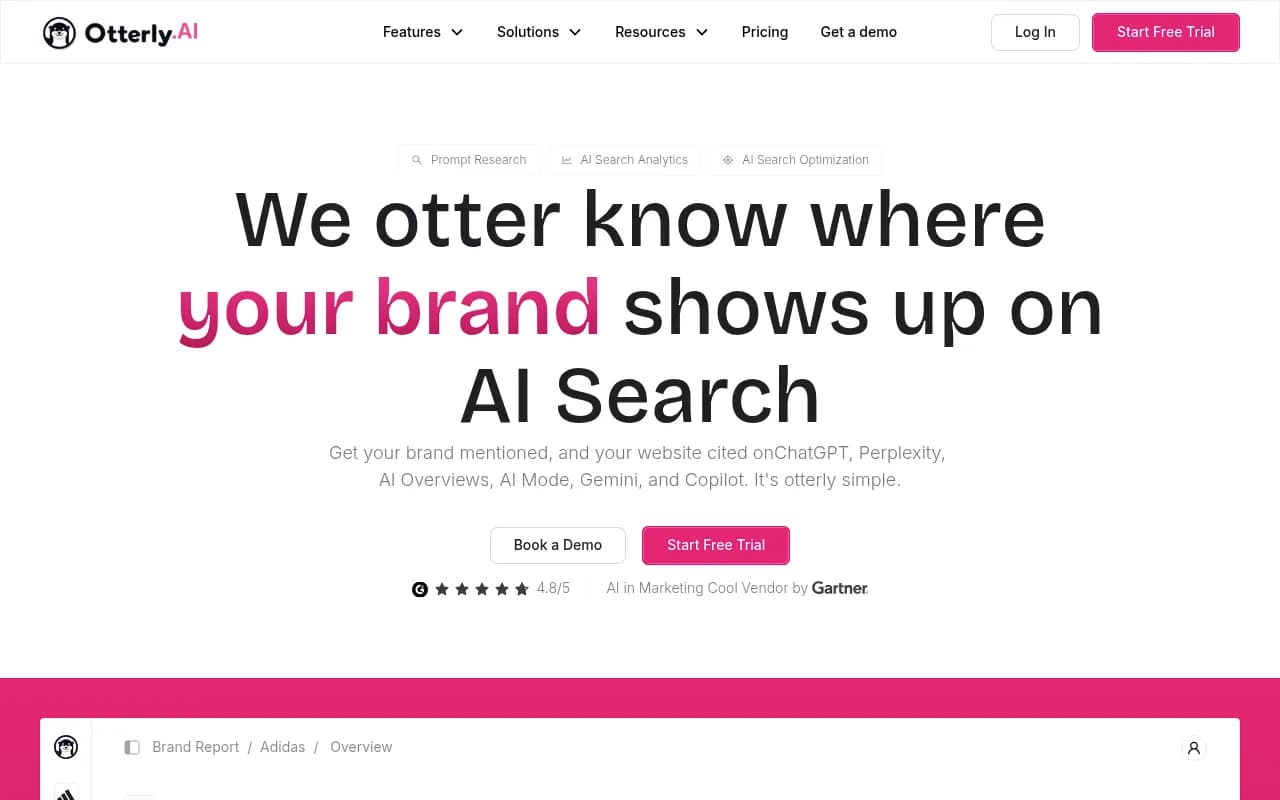
| Otterly.AI | ~$49/mo | No | No | No | 4-5 |
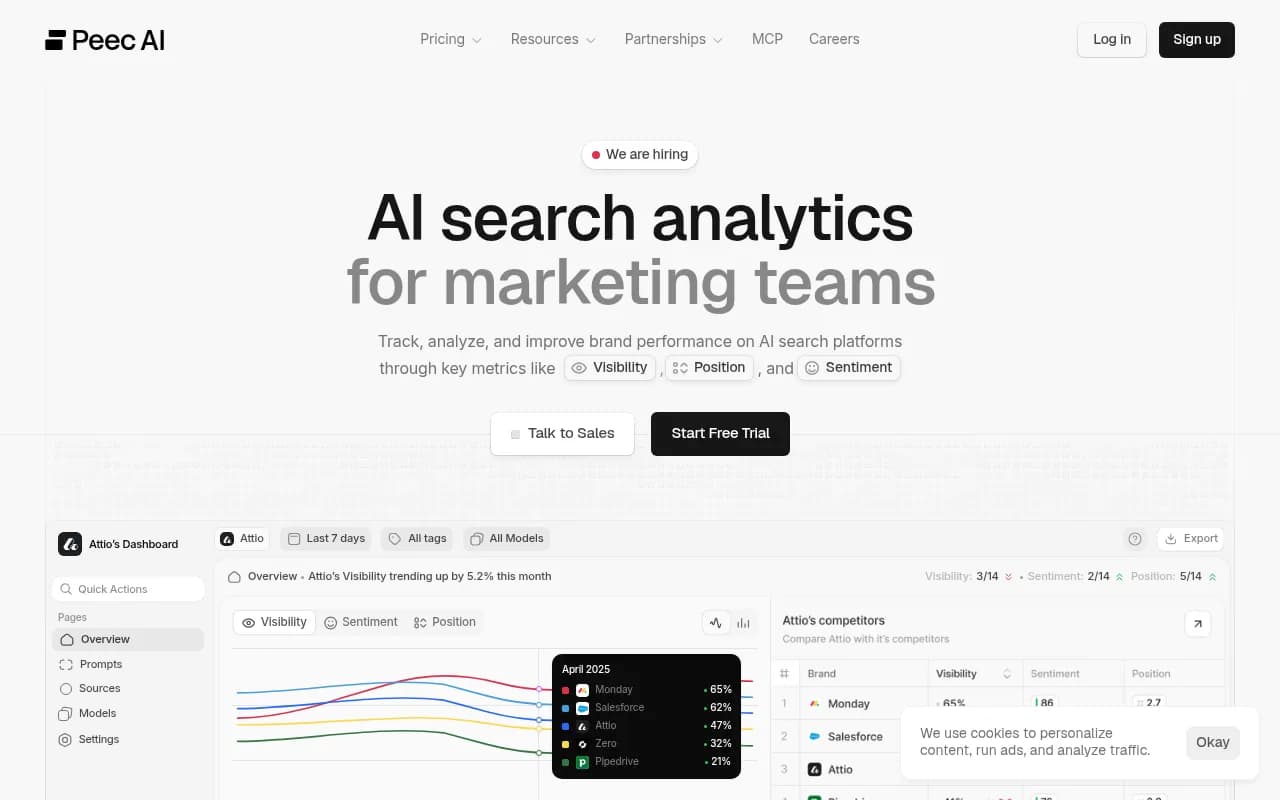
| Peec AI | ~$79/mo | No | No | No | 4-5 |
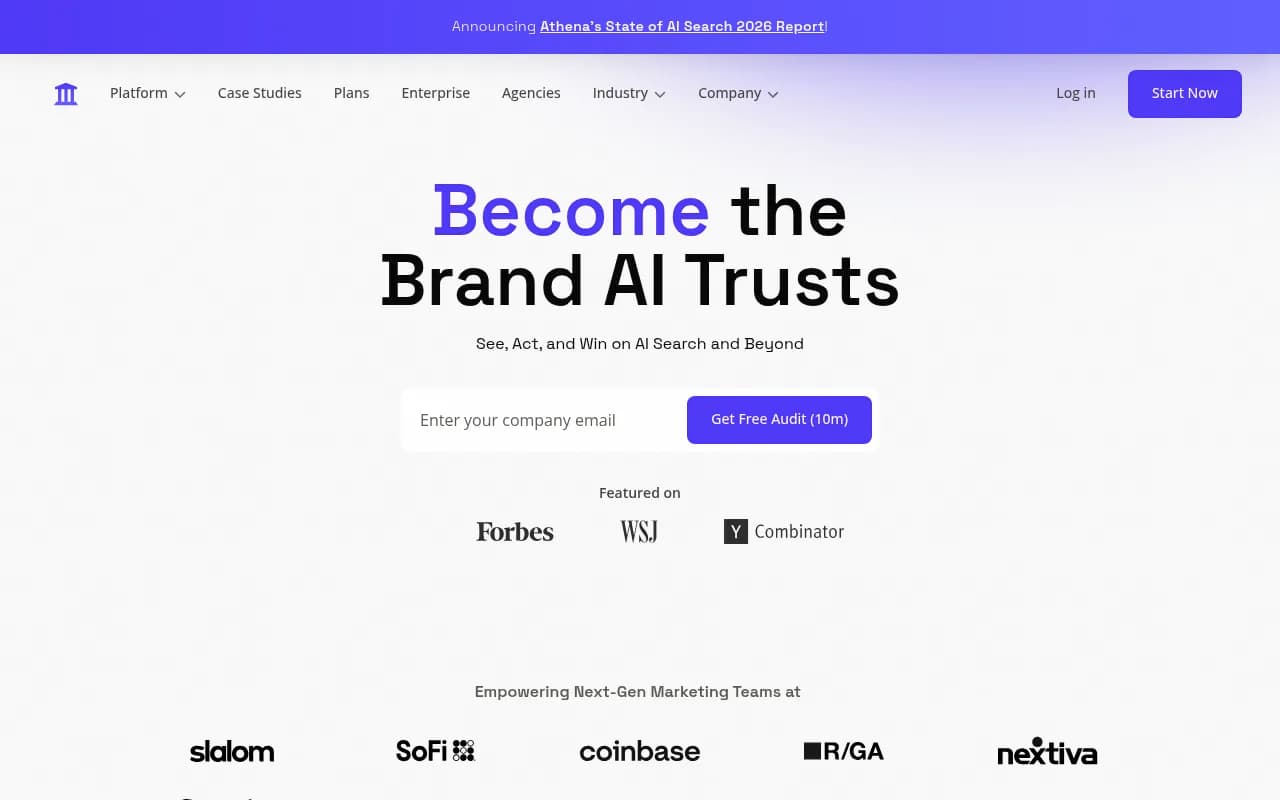
| AthenaHQ | Custom | No | No | No | 5+ |
| Search Party | Custom | Limited | No | No | 5+ |
A few things stand out from this comparison. Goodie AI's geo-segmentation is genuinely differentiated -- most competitors don't offer location-level AI visibility tracking at all. But its price point is high relative to what you get, especially when platforms like Promptwatch offer content generation and crawler logs at a fraction of the cost.
The sentiment tracking question
One feature Goodie AI emphasizes is sentiment analysis -- not just whether your brand appears in AI responses, but whether those appearances are positive, neutral, or negative. This is genuinely useful. A brand that's being cited in AI responses as a cautionary example is worse off than one that isn't cited at all.
For brands in reputation-sensitive categories (healthcare, finance, hospitality), sentiment tracking has real value. It's one area where Goodie AI's feature set goes beyond basic visibility counting.
The ROI calculation here is more defensive: what's the cost of not knowing that an AI assistant is recommending your competitor because your brand has negative sentiment in its training data? Hard to quantify, but real.
What the data actually tells you (and what it doesn't)
Let's be concrete about what you're buying with Goodie AI's visibility scores.
You're buying a directional signal. If your visibility score goes from 23% to 41% over three months after publishing content that addresses the gaps Goodie AI identified, that's meaningful evidence that your optimization efforts are working. It's not proof of revenue impact, but it's a leading indicator.
You're not buying a revenue attribution model. AI search doesn't work like paid search. There's no click-through data, no conversion tracking, no direct line from "ChatGPT cited us" to "customer bought." Any GEO platform that implies otherwise is overselling.
The honest ROI calculation for Goodie AI looks like this: you're paying for competitive intelligence and visibility tracking in a channel that's growing in importance. The value is real but probabilistic. If AI search becomes a significant discovery channel in your category over the next 12-24 months -- and the trajectory suggests it will -- then the brands that optimized early will have a structural advantage. Goodie AI is one way to build that advantage.
Practical questions to ask before buying
Before committing to Goodie AI's Pro plan, run through these:
- Do your customers actually use AI assistants to research products or services like yours? (Check with a quick survey or look at your referral traffic from AI sources.)
- Does your team have the bandwidth to act on content gap recommendations? If not, the monitoring data is interesting but not actionable.
- Are you a multi-location business or agency where geo-segmented tracking is a core need? If yes, Goodie AI's differentiation is real. If no, you may be paying for a feature you don't need.
- What's your current content production capacity? Goodie AI's optimization hub gives you recommendations, but execution is on you.
- Have you tried the free audit? Goodie AI offers a free visibility snapshot. Use it before committing to a paid plan -- it'll give you a sense of how much AI visibility you're currently missing and whether the gap is large enough to justify the investment.
The verdict
Goodie AI is a serious platform with a legitimate use case. Its geo-segmented AI visibility tracking is genuinely differentiated, and for multi-location brands, franchises, and agencies building GEO service lines, the feature set is hard to replicate at a lower price point.
But $495/month is a real commitment, and the ROI is indirect. You're buying visibility data and competitive intelligence, not a content engine. If your team can act on that data -- if you have the content capacity to fill the gaps Goodie AI identifies -- the investment can pay off. If you're looking for a platform that both identifies gaps and helps you close them, the comparison set looks different.
The free audit is the right starting point. See what your current AI visibility looks like, understand where competitors are outperforming you, and then decide whether the ongoing monitoring cost is justified by the scale of the opportunity.
For teams that want monitoring plus optimization in one workflow, platforms like Promptwatch cover both ends at a lower entry price -- worth evaluating before committing to a monitoring-only subscription at the $495/month tier.