Key takeaways
- Goodie AI covers basic AI visibility monitoring, but most agencies need multi-client management, white-label reporting, and content optimization -- features it doesn't fully deliver on.
- The best alternatives split into two camps: platforms that go beyond monitoring to help you actually fix visibility gaps (like Promptwatch and Search Atlas), and specialized tools that do one thing very well (like AgencyAnalytics for reporting or SE Ranking for SEO).
- For agencies managing AI search visibility specifically, the gap between "monitoring only" and "monitoring + optimization" is significant. Choose based on whether you need to show clients data or actually move the needle.
- White-label capability varies a lot. Some tools offer full custom branding with your own domain; others just let you slap a logo on a PDF.
- Pricing ranges from ~$49/month for basic plans to $579/month and up for full multi-client AI optimization platforms.
If you're running a digital agency in 2026, you've probably noticed that "AI search visibility" has gone from a nice-to-have to something clients are actively asking about. They want to know if they're showing up in ChatGPT, Perplexity, and Google AI Overviews. And they want you to do something about it when they're not.
Goodie AI entered this space as an AI visibility monitoring tool. It tracks brand mentions across LLMs and gives you a sense of where you stand. For solo consultants or small teams with one or two clients, it's fine. But agencies hit its limits fast -- the multi-client management is clunky, white-label reporting is limited, and there's no real optimization layer. You can see the problem; you just can't fix it from inside the platform.
This guide covers eight alternatives that handle the agency workflow better, whether you're prioritizing AI search optimization, traditional SEO reporting, or client-facing dashboards.
What agencies actually need (that Goodie AI doesn't deliver)
Before jumping into the list, it's worth being specific about the gaps. Goodie AI's core issue isn't that it's bad -- it's that it's built for a different use case than multi-client agency work.
Here's what breaks down at agency scale:
- No workspace separation per client. You're managing everything in one view, which gets messy fast.
- White-label options are minimal. Clients see Goodie AI branding, which undermines your positioning.
- There's no content optimization layer. You can see that a client isn't appearing in AI responses, but the tool doesn't help you figure out why or what to publish to fix it.
- Prompt coverage is limited. Agencies need to track dozens of prompts per client across multiple AI models.
The alternatives below address these gaps in different ways. Some are full AI search optimization platforms. Some are traditional SEO tools that have added AI monitoring. Some are reporting platforms that connect to your existing data sources. Pick based on what your agency actually needs.
The 8 best Goodie AI alternatives for agencies
1. Promptwatch -- best for agencies that want to fix AI visibility, not just track it
Promptwatch is the most complete AI search visibility platform available for agencies right now. The difference between it and most competitors -- including Goodie AI -- is that it doesn't stop at showing you data. It walks you through what to do about it.
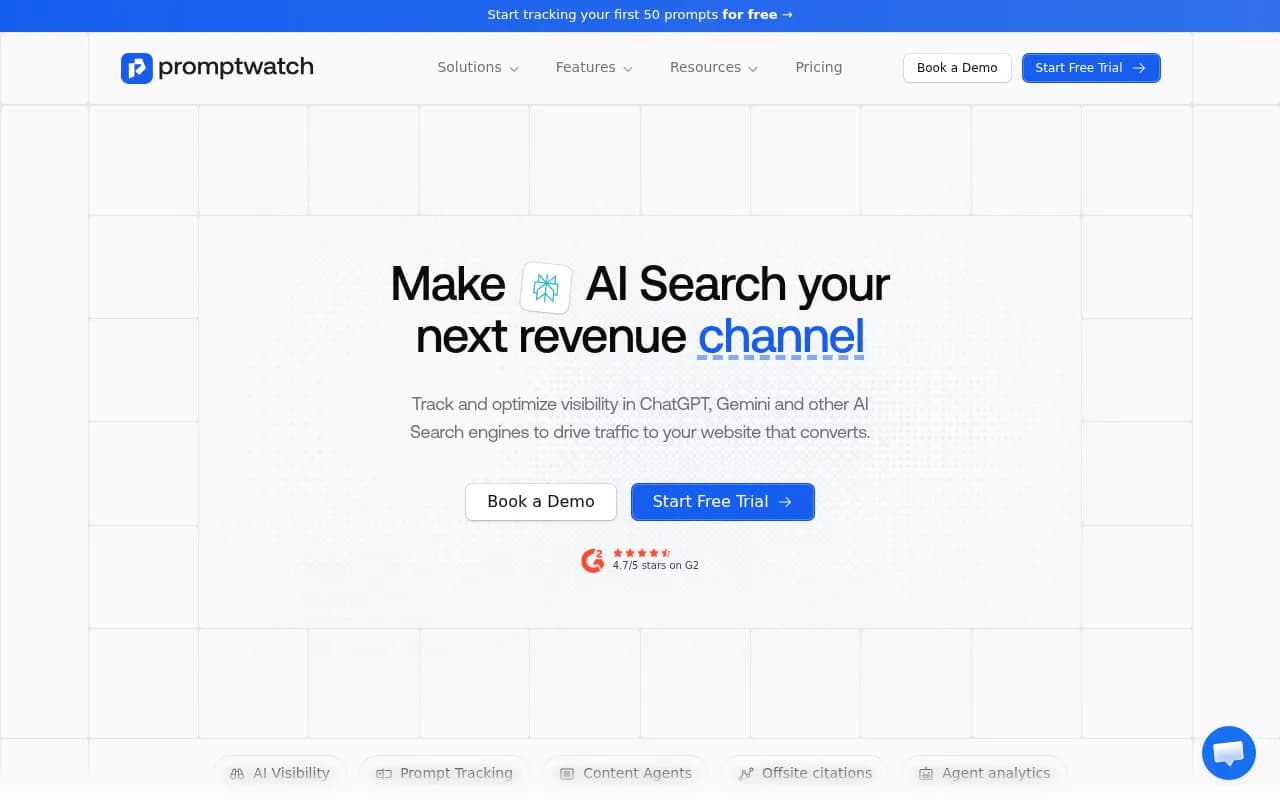
The core workflow is built around three steps. First, Answer Gap Analysis shows you exactly which prompts competitors are appearing for that your clients aren't. You see the specific content gaps -- the topics and questions AI models want to answer but can't find on your client's site. Second, Content Agents generate articles, comparisons, and briefs based on that gap data, grounded in real prompt volumes, citation analysis, and competitor research. Third, page-level tracking shows you which pages are being cited, by which models, and how often -- so you can connect the work to results.
For agencies specifically, Promptwatch tracks 10 AI models (ChatGPT, Perplexity, Claude, Gemini, Google AI Overviews, Grok, DeepSeek, Copilot, Meta AI, and Mistral), handles multi-site management, and includes AI crawler logs that show you when ChatGPT or Perplexity's crawlers are hitting your clients' pages and what errors they're encountering. Most competitors don't have this at all.
It's also worth noting that Promptwatch tracks real user-facing AI responses, not just API outputs -- which matters because the answers users actually see can differ from what the API returns.
Pricing starts at $99/month for one site, $249/month for the Professional plan (2 sites, 150 prompts, crawler logs), and $579/month for Business (5 sites, 350 prompts). Agency and enterprise pricing is available on request.
The main trade-off: it's not a white-label reporting tool in the traditional sense. You're not generating branded PDF reports to email clients. It's more of an internal optimization platform that you use to drive results, then report on separately.
2. Search Atlas -- best for agencies wanting SEO + AI search in one platform
Search Atlas is an all-in-one SEO platform that has built AI search monitoring into its existing suite. If your agency already does traditional SEO work and wants to add AI visibility tracking without switching platforms, this is a strong option.
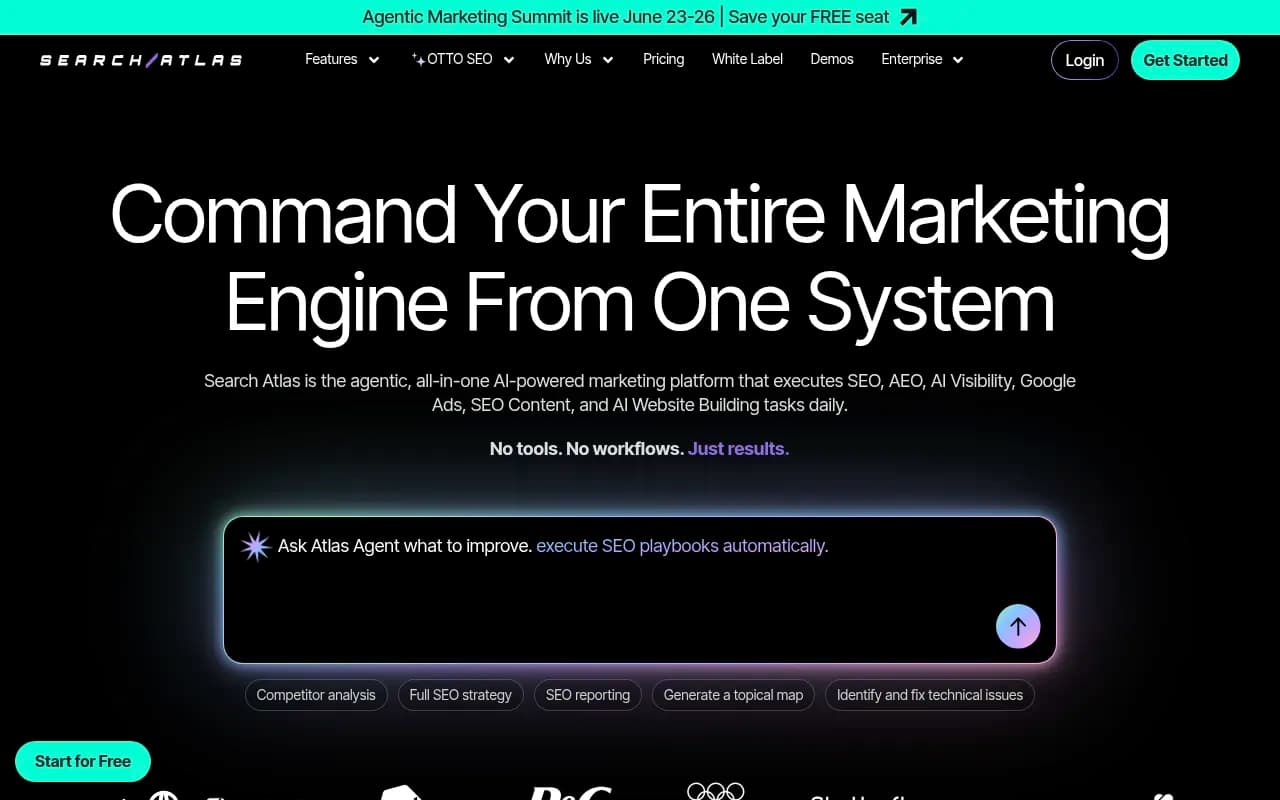
It covers keyword research, backlink analysis, site auditing, and content optimization alongside AI search monitoring. The multi-client management is solid, and the reporting is more agency-friendly than Goodie AI's.
The downside is that the AI search monitoring features aren't as deep as a dedicated platform. You get visibility data, but the optimization guidance is more general.
3. AgencyAnalytics -- best for white-label client reporting
AgencyAnalytics is the go-to for agencies that need to send clients polished, branded reports. It connects to 80+ data sources (Google Analytics, Search Console, Facebook Ads, Google Ads, and more), lets you build custom dashboards, and delivers them under your own branding with your own domain.
It's not an AI search visibility tool -- it doesn't track ChatGPT or Perplexity citations. But if your agency's reporting problem is "how do I send clients a professional monthly report without spending three hours on it," AgencyAnalytics solves that better than almost anything else.
Pricing starts around $12/month per client, with agency plans that scale based on the number of clients.
The limitation is obvious: it's a reporting layer, not an optimization tool. You're aggregating data from other platforms, not generating insights or content.
4. SE Ranking -- best for SEO agencies adding AI visibility
SE Ranking has been a solid mid-market SEO platform for years, and its recent additions for AI search monitoring make it worth considering for agencies that want both traditional and AI search coverage.
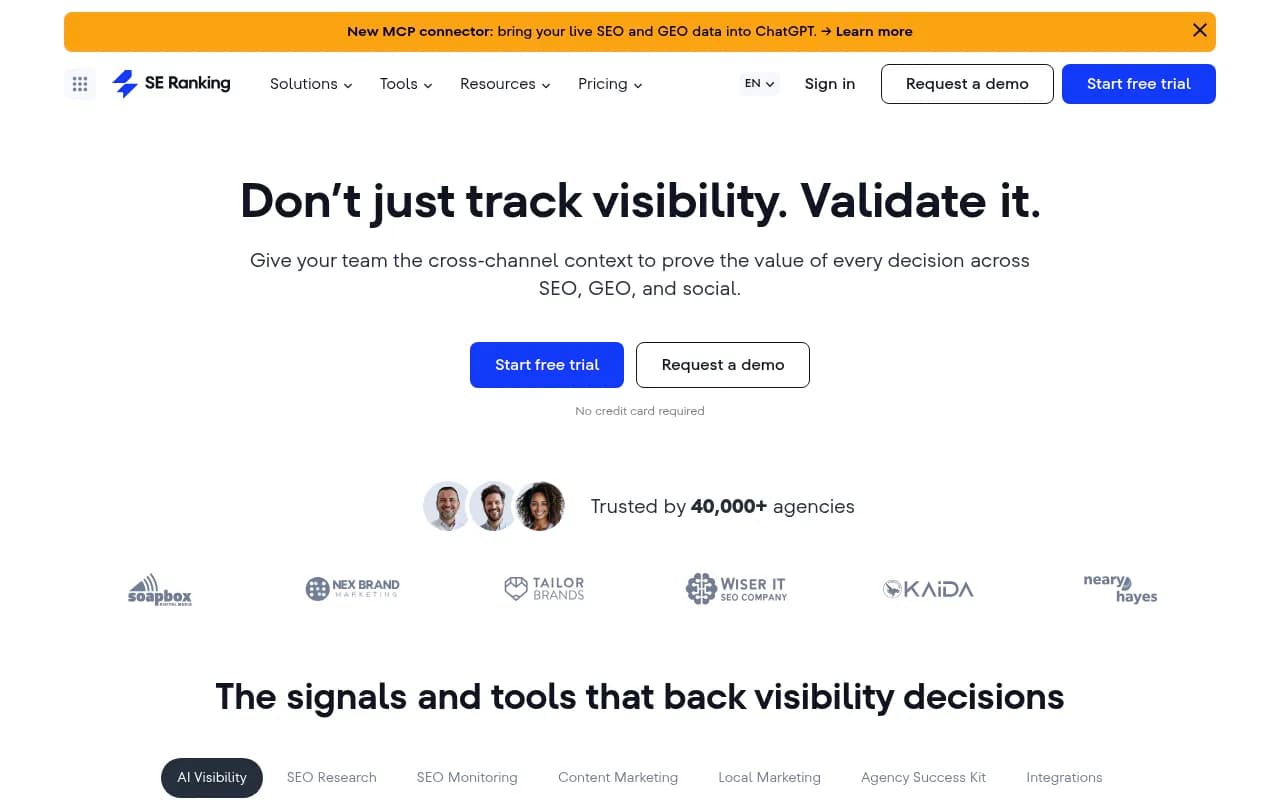
The white-label features are genuinely good. You can brand the platform with your own logo and colors, create custom client portals, and generate white-label PDF reports. Multi-client management is built into the agency workflow.
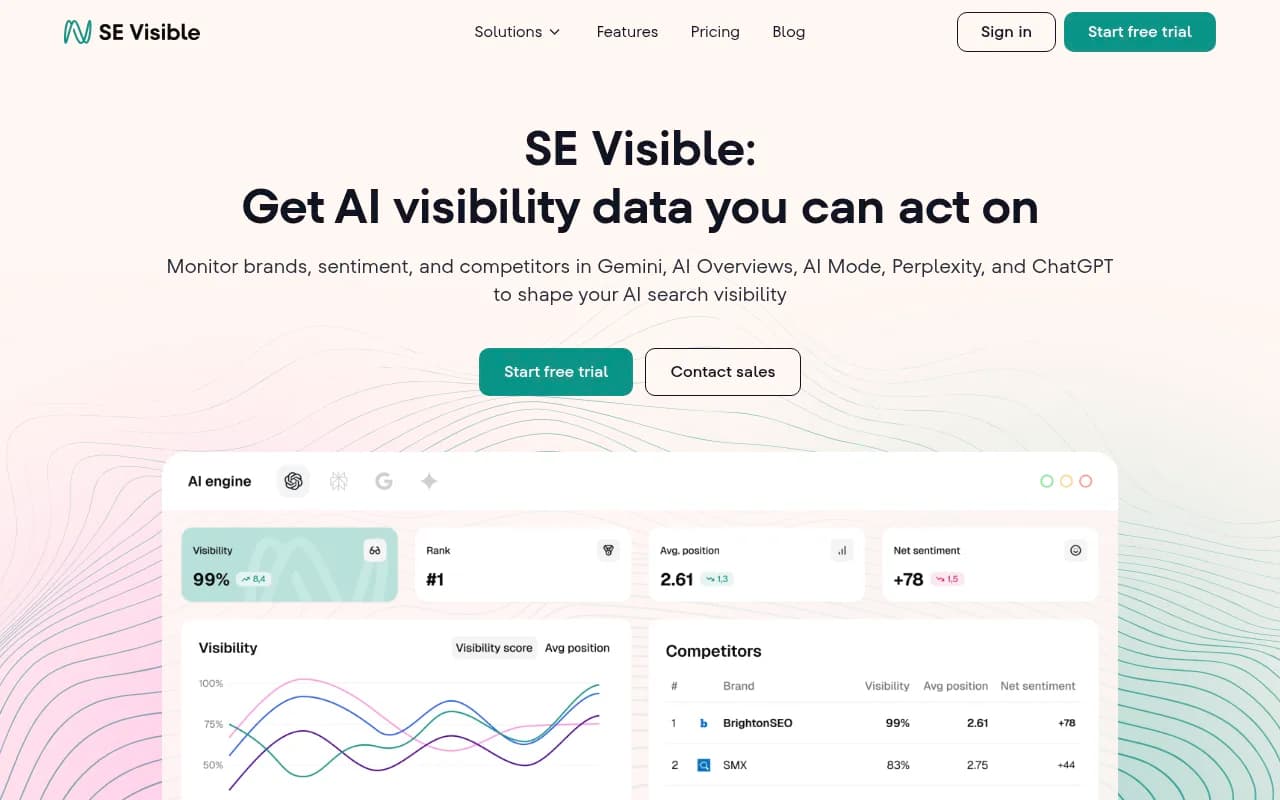
SE Ranking's AI visibility tracking (available through its Visible product) monitors brand mentions across AI search engines and gives you sentiment and share-of-voice data. It's not as deep as Promptwatch's optimization layer, but it's more than Goodie AI offers.
Pricing is competitive, starting around $65/month for small plans, with agency plans scaling based on the number of tracked keywords and clients.
5. Search Party -- best for agencies focused purely on AI search visibility
Search Party is built specifically for agencies managing AI search visibility across multiple clients. The multi-client workspace is cleaner than most tools in this space, and the reporting is designed with client presentation in mind.
It tracks brand mentions, sentiment, and share of voice across major AI models. The agency-oriented features include client-level dashboards, team access controls, and exportable reports.
The gap compared to Promptwatch is on the optimization side. Search Party is primarily a monitoring platform -- it shows you where clients stand but doesn't have content generation or gap analysis tools to help you improve visibility.
6. Semrush -- best for agencies already in the Semrush ecosystem
If your agency is already paying for Semrush, its AI visibility features are worth exploring before you add another tool to your stack.
Semrush's AI Visibility Toolkit tracks brand mentions in AI search results and integrates with its existing keyword, backlink, and content tools. The advantage is consolidation -- one platform, one login, one invoice.
The limitation is that Semrush uses fixed prompt sets rather than letting you define custom prompts for each client. That's a real constraint for agencies with clients in niche industries where the relevant queries don't fit a generic template.
7. Scrunch AI -- best for brand monitoring across AI models
Scrunch AI focuses on tracking how brands appear across AI search engines, with an emphasis on sentiment and competitive benchmarking. It's a cleaner, more focused product than some of the all-in-one platforms.
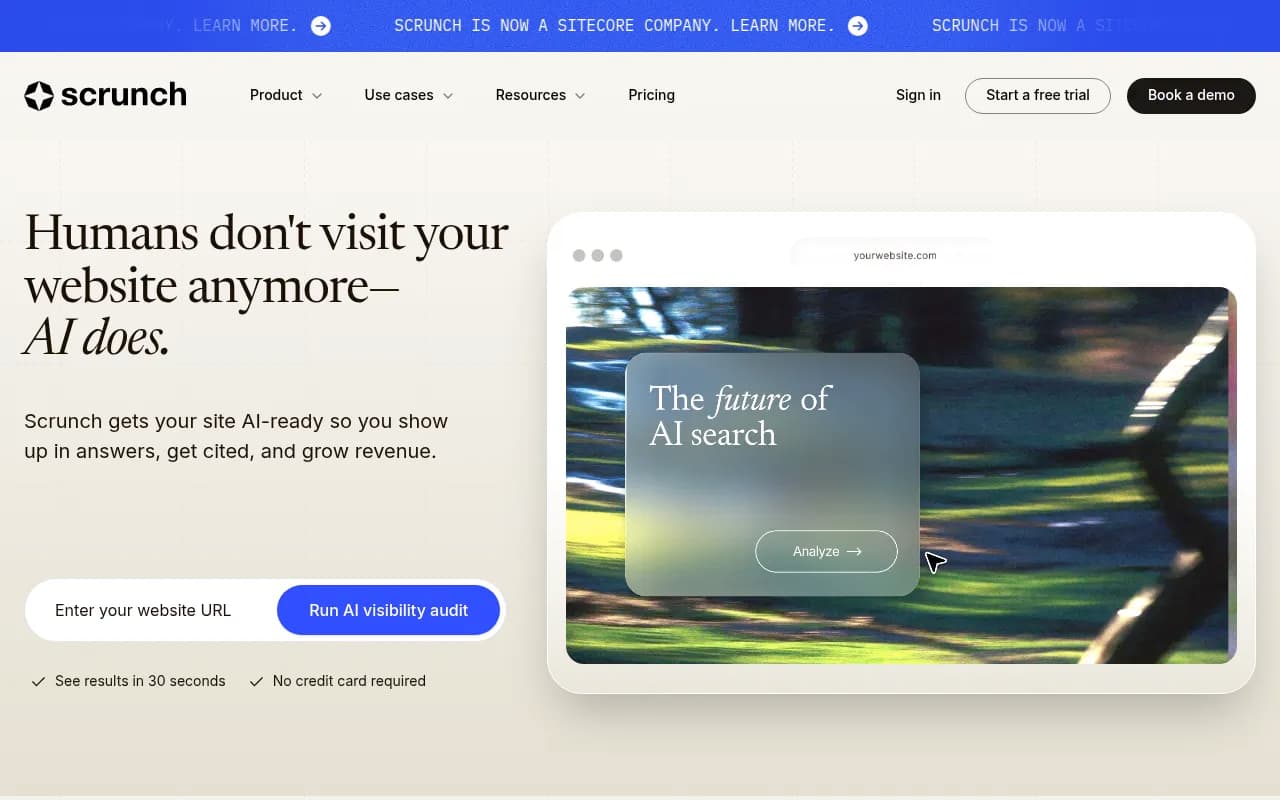
For agencies, the main appeal is the competitive heatmap view -- you can show clients exactly how they compare to competitors across different AI models. That's a compelling visual for client presentations.
The trade-off is depth. Scrunch AI is a monitoring tool. There's no content optimization, no crawler logs, no gap analysis. You'll know what's happening; you won't have tools to change it.
8. AthenaHQ -- best for enterprise-level AI search monitoring
AthenaHQ is positioned at the enterprise end of the market, with strong AI search monitoring capabilities and detailed analytics.
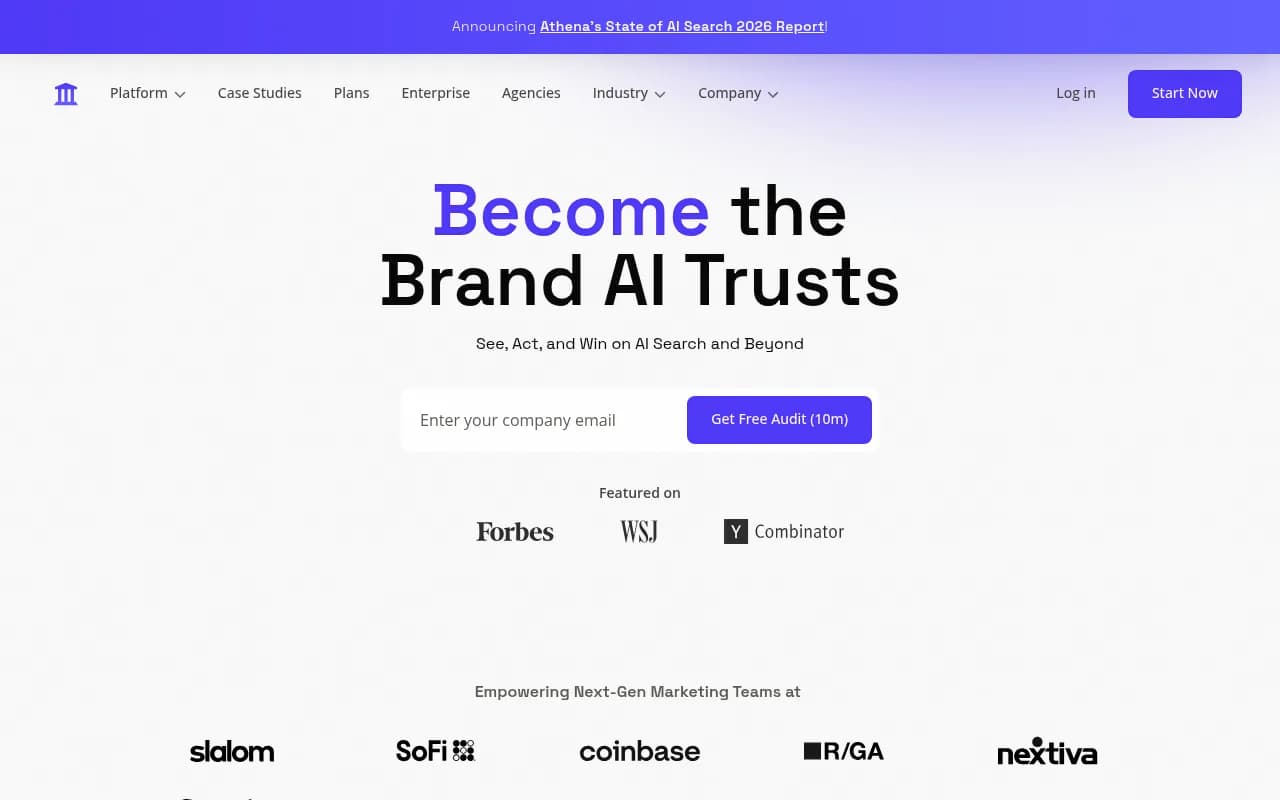
For agencies managing large enterprise clients, AthenaHQ's data depth is appealing. It tracks visibility across AI models with granular breakdowns and supports complex multi-stakeholder reporting.
The gap is similar to others in the monitoring-only camp: AthenaHQ shows you the data but doesn't have optimization tools to act on it. And the pricing reflects the enterprise positioning -- it's not the right fit for agencies with smaller clients.
Feature comparison table
| Tool | Multi-client management | White-label reporting | AI search monitoring | Content optimization | Crawler logs | Pricing (starting) |
|---|---|---|---|---|---|---|
| Promptwatch | Yes (agency plans) | Partial (dashboards) | 10 AI models | Yes (Content Agents) | Yes | $99/mo |
| Search Atlas | Yes | Yes | Yes | Yes (SEO-focused) | No | ~$99/mo |
| AgencyAnalytics | Yes | Full white-label | No | No | No | ~$12/client/mo |
| SE Ranking | Yes | Full white-label | Yes (via Visible) | Limited | No | ~$65/mo |
| Search Party | Yes | Yes | Yes | No | No | Custom |
| Semrush | Yes | Partial | Yes (fixed prompts) | Limited | No | ~$139/mo |
| Scrunch AI | Yes | Limited | Yes | No | No | Custom |
| AthenaHQ | Yes | Yes | Yes | No | No | Custom |
How to choose based on your agency's situation
The right tool depends on what problem you're actually trying to solve.
If your clients are asking "why aren't we showing up in ChatGPT?" and you need to both diagnose and fix the problem, Promptwatch is the most complete answer. The combination of gap analysis, content generation, and crawler logs means you can actually move the needle, not just report on it.
If your main pain point is client reporting -- generating branded monthly reports that pull from Google Analytics, Search Console, and ad platforms -- AgencyAnalytics is the cleaner choice. It's not an AI search tool, but it's excellent at what it does.
If you want to add AI search monitoring to an existing SEO workflow without switching platforms, SE Ranking or Semrush make sense depending on which you're already using.
If you're managing enterprise clients who want detailed AI search benchmarking and competitive analysis, AthenaHQ or Scrunch AI are worth evaluating.
One thing worth being direct about: most of the "monitoring only" tools in this list will show your clients a problem they can't solve from inside the platform. That's fine if you have a separate content team and workflow. But if you're expecting the tool to help you improve visibility, not just measure it, you need something with an optimization layer.
What to look for in any agency AI visibility tool
A few questions worth asking before committing to any platform:
Does it actually track real user-facing responses? Some tools query AI APIs directly, which can differ from what users actually see. Platforms that simulate real user behavior give you more accurate data.
How does multi-client management work? Ask specifically: can you switch between clients without logging out? Are prompts and settings isolated per client? Can you control what each client can see?
What does "white-label" actually mean? For some tools, it means a custom domain and full branding. For others, it means a logo on a PDF. Know which you're getting.
Is there an optimization layer? Monitoring tells you where you stand. Optimization tools tell you what to do about it. Most tools in this space only do the first part.
What's the prompt coverage? Agencies need to track industry-specific queries, not just generic brand mentions. Check whether you can define custom prompts or whether you're locked into a preset list.
The AI search visibility space is moving fast, and the tools that were "good enough" six months ago may already be behind. The agencies that are winning right now are the ones that treat AI search as an optimization problem, not just a reporting metric.