Key takeaways
- 94% of B2B buyers used generative AI during their most recent purchase, according to Forrester's 2026 Buyers' Journey Survey covering nearly 18,000 business buyers -- making AI search visibility a pipeline issue, not just an SEO metric.
- Most platforms only monitor. The best ones help you act: finding content gaps, generating optimized content, and tracking which pages actually get cited.
- B2B software vendors need platforms that handle problem-shaped queries ("how do I cut invoice processing time"), not just product-shaped ones ("best invoicing tool").
- Engine coverage matters: look for platforms that track ChatGPT, Perplexity, Google AI Overviews, Claude, and Gemini at minimum -- those five cover the vast majority of B2B buyer research.
- Price ranges vary from $29/month for basic monitoring to custom enterprise contracts. Match your budget to your actual need: monitoring vs. optimization vs. full GEO workflow.
The buying journey for B2B software has quietly moved. A VP of Operations researching contract analytics platforms doesn't start with Google anymore. She opens ChatGPT, types a problem statement, and gets a shortlist. If your product isn't in that answer, you don't lose the deal -- you never see it.
Forrester's 2026 Buyers' Journey Survey found that generative AI chatbots are now the single most influential source for vendor shortlists at 17.1%, ahead of G2 (15.1%), vendor websites (12.8%), and peer recommendations (8.9%). That's a real shift, and it happened fast.
AI search visibility platforms exist to close this blind spot. They run real prompts through real AI engines, measure whether your brand appears, track what competitors are getting cited for, and -- in the better cases -- help you actually fix the gaps. This guide covers what to look for and which platforms are worth your time as a B2B software vendor in 2026.
Why B2B software is a different problem than ecommerce
Most early AI visibility coverage focused on consumer brands. "Does my product appear when someone asks ChatGPT for the best running shoes?" That's a relatively simple monitoring problem.
B2B software is harder for a few reasons:
Queries are problem-shaped. A B2B buyer asks "how do I reduce churn in my SaaS product" or "what's the best way to automate AP workflows for a mid-market company." They're not typing your product name. You have to track the problem space, not just branded queries.
The buying committee is real. Multiple stakeholders research independently -- a CFO, a VP of IT, a procurement lead. Each has different questions. A good platform lets you track prompts across personas, not just one generic query set.
The sales cycle is long. A buyer who asks ChatGPT about your category today might not fill out a form for three months. You need visibility data that connects to pipeline, not just a mention count.
Sentiment and framing matter more. In B2B, how an AI describes your product (enterprise-ready vs. SMB-focused, complex vs. easy to implement) directly affects whether you make the shortlist. Monitoring tools that only count mentions miss this entirely.
 A 2026 comparison of AI visibility tools for B2B companies, showing how platforms differ by engine coverage and feature depth.
What to look for in an AI visibility platform
Before jumping to the tool list, here's what actually separates useful platforms from dashboards that just look impressive.
Engine coverage
The minimum viable set for B2B software in 2026 is ChatGPT, Perplexity, Google AI Overviews, Claude, and Gemini. These five cover the overwhelming majority of where B2B buyers are doing AI-assisted research. Platforms that add Grok, DeepSeek, Copilot, and Meta AI give you a more complete picture, but the core five are non-negotiable.
Watch out for platforms that claim broad coverage but query APIs rather than actual user interfaces. The answers a model gives through its API can differ meaningfully from what a buyer sees in the real product -- especially for shopping recommendations and citation lists.
Prompt customization and volume
You need to track the prompts your buyers actually use, not a generic set the platform chose. Look for platforms that let you define your own prompts, ideally with volume estimates and difficulty scores so you can prioritize. A tool that tracks 50 prompts you picked is more useful than one that tracks 500 prompts someone else picked.
Monitoring vs. optimization
This is the biggest dividing line in the market right now. Monitoring tools show you where you stand. Optimization platforms show you where you stand and then help you do something about it -- content gap analysis, content briefs, AI-generated articles grounded in real citation data.
If you're a lean marketing team, the ability to act on the data inside the same platform is worth paying for. If you have a large content team that just needs the data, a monitoring-only tool might be fine.
Attribution and traffic data
Knowing that ChatGPT mentioned your brand is useful. Knowing that the mention drove 340 visits and 12 demo requests is actionable. Look for platforms that connect AI visibility to actual traffic and revenue, not just mention counts.
Crawler and indexing insights
AI engines crawl your site before they cite it. Platforms that show you which pages AI crawlers are reading, how often they return, and where they hit errors give you a meaningful technical edge. Most monitoring-only tools don't offer this at all.
The platforms worth knowing about
Promptwatch
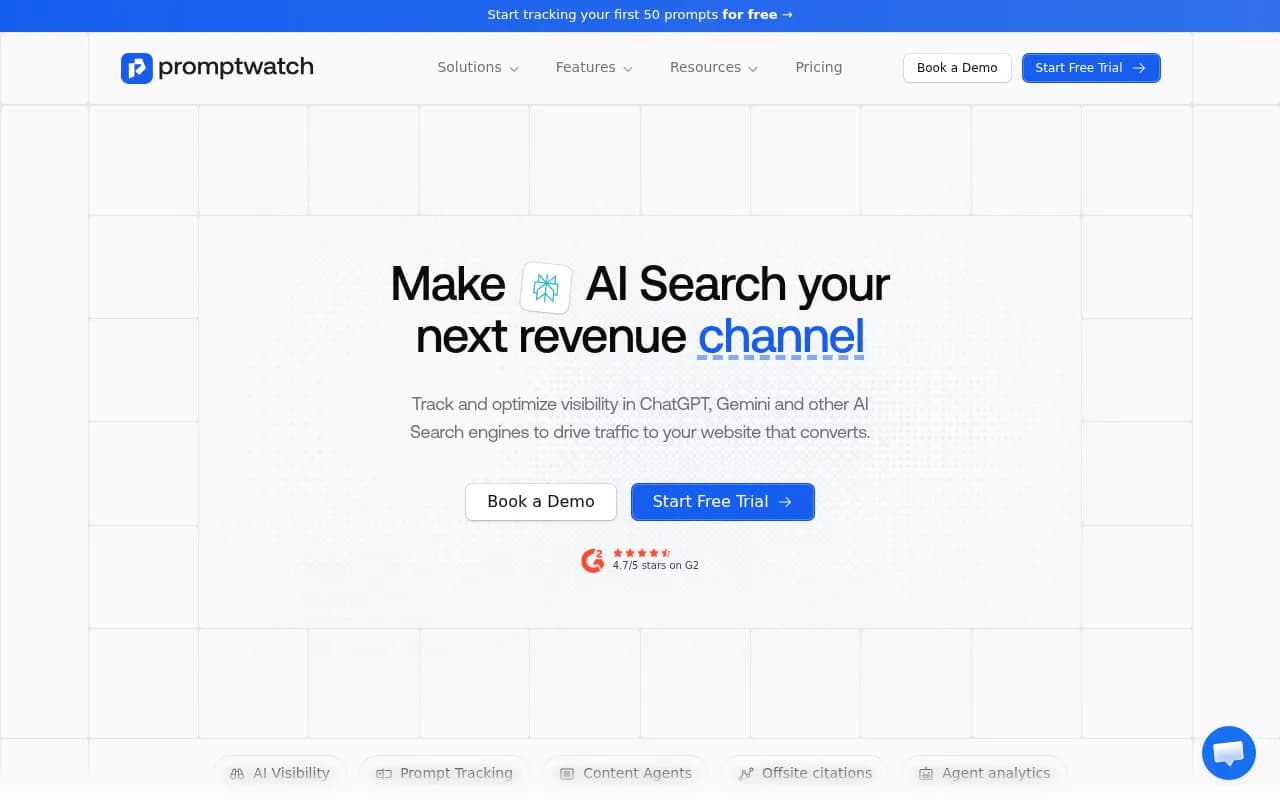
Promptwatch is the platform I'd point most B2B software teams to first, particularly if you want to move beyond monitoring into actual optimization. It tracks 10 AI engines (ChatGPT, Perplexity, Google AI Overviews, Google AI Mode, Claude, Gemini, Meta/Llama, DeepSeek, Grok, Copilot, Mistral) and is used by 1,480+ brands and agencies including Booking.com and Everflow.
What separates it from most competitors is the action loop: Answer Gap Analysis shows you exactly which prompts competitors are visible for that you're not, Content Agents generate articles and briefs grounded in real prompt and citation data, and page-level tracking shows which pages are actually getting cited and by which models. It also has AI crawler logs -- real-time data on which pages AI crawlers are reading and when pages move from crawl to citation. Most platforms don't have anything like this.
Pricing starts at $99/month (Essential: 1 site, 50 prompts, 5 articles), $249/month (Professional: 2 sites, 150 prompts, 15 articles, crawler logs), and $579/month (Business: 5 sites, 350 prompts, 30 articles). Free trial available.
Profound
Profound is the most commonly cited enterprise option in 2026. It tracks 10+ AI engines including Copilot and DeepSeek, and has raised $20 million in Series B funding. It's strong on competitive intelligence and share-of-voice reporting, and it's the platform large SaaS companies with significant budgets tend to land on.
The tradeoff is price -- Profound is custom-priced and positioned at the enterprise end of the market. It's also primarily a monitoring and analytics platform; content generation and optimization capabilities are more limited compared to platforms built around the full GEO workflow.
Peec AI
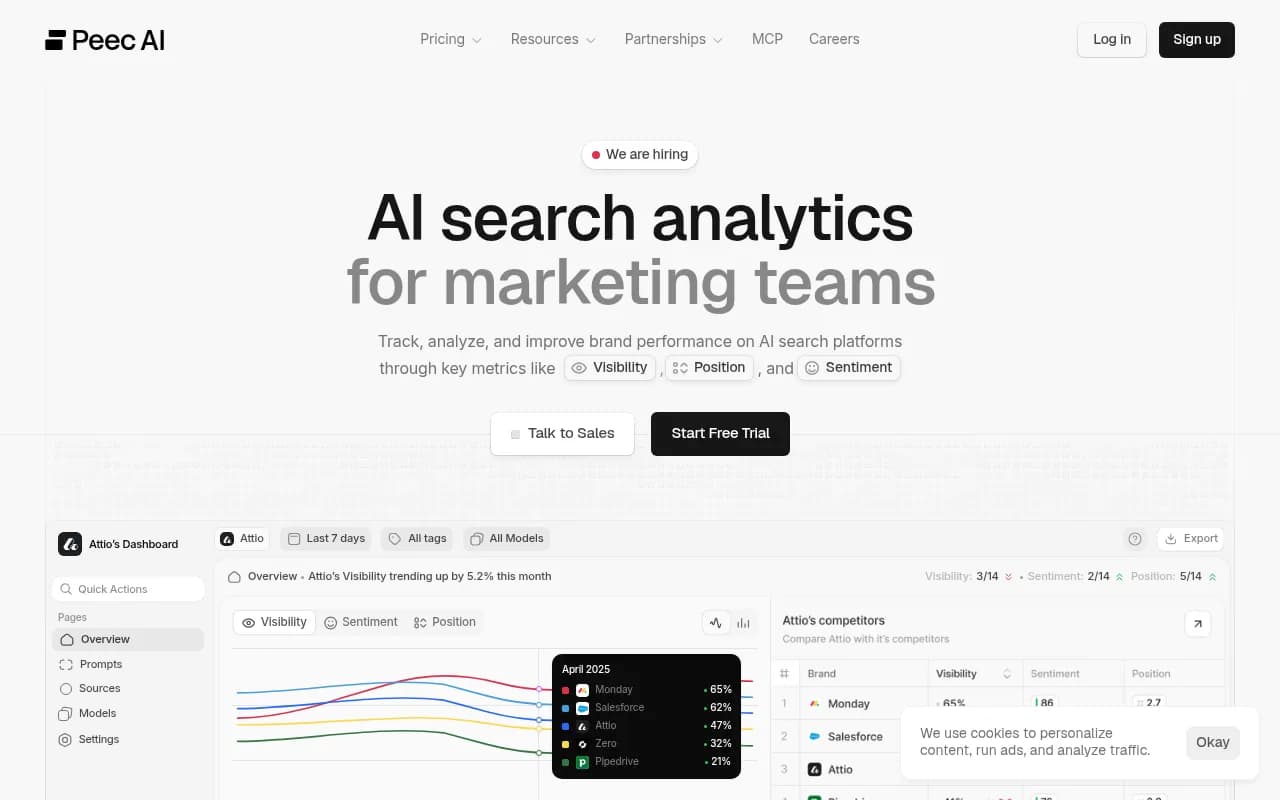
Peec AI covers six engines (ChatGPT, Perplexity, Gemini, Copilot, AI Mode, AI Overviews) and uses UI scraping rather than API queries, which means the data reflects what buyers actually see. Starting at around $100/month, it's a reasonable choice for SaaS teams that need accurate monitoring without an enterprise budget.
It's a monitoring-focused tool -- you get visibility data and some suggestions, but content generation and deep gap analysis aren't core features. Good for teams that have a content workflow elsewhere and just need reliable data.
Otterly.AI
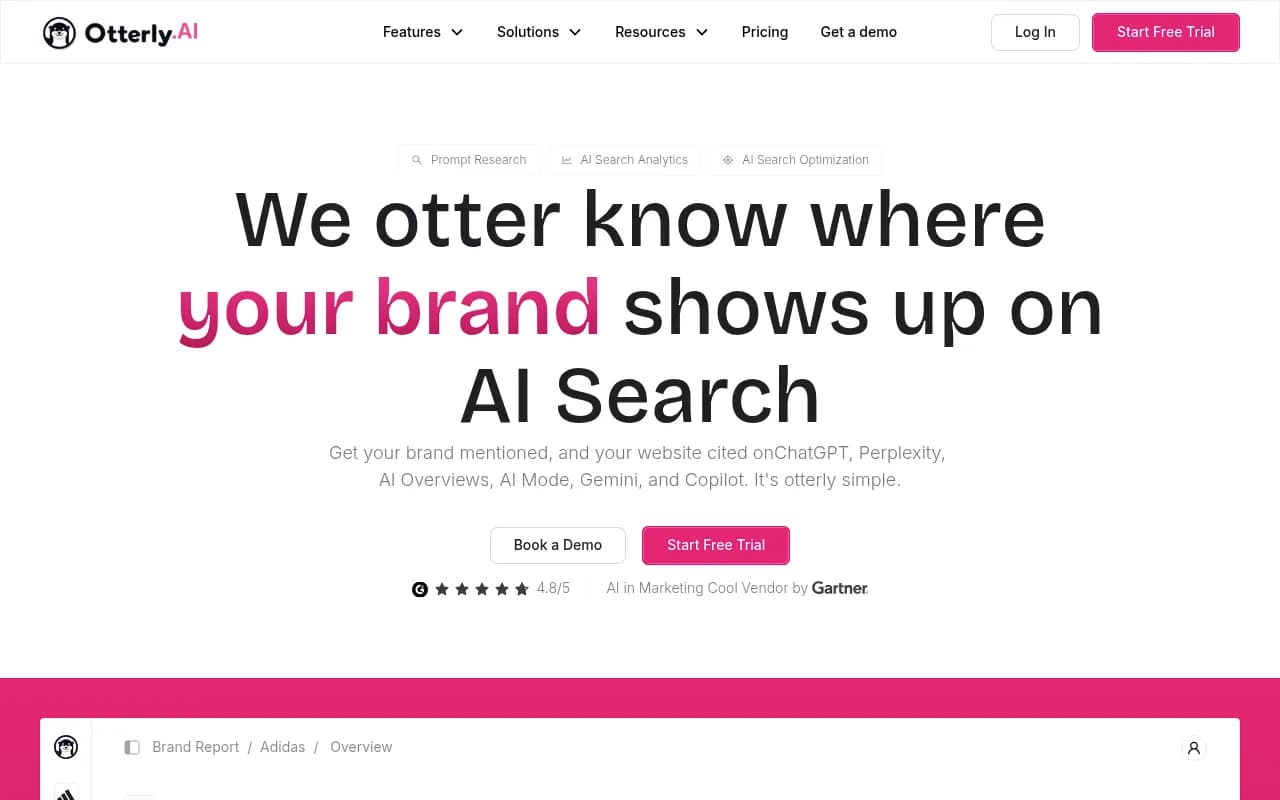
Otterly.AI is the budget-friendly option in this space, starting at $29/month. It covers four core AI engines with add-ons available. For bootstrapped SaaS teams or early-stage companies that want to start tracking AI visibility without a significant investment, it's a reasonable starting point.
The limitations are real: no crawler logs, no visitor analytics, no content generation. But if your goal is simply to know whether you're appearing in AI answers for your key prompts, Otterly gets the job done at a price that's hard to argue with.
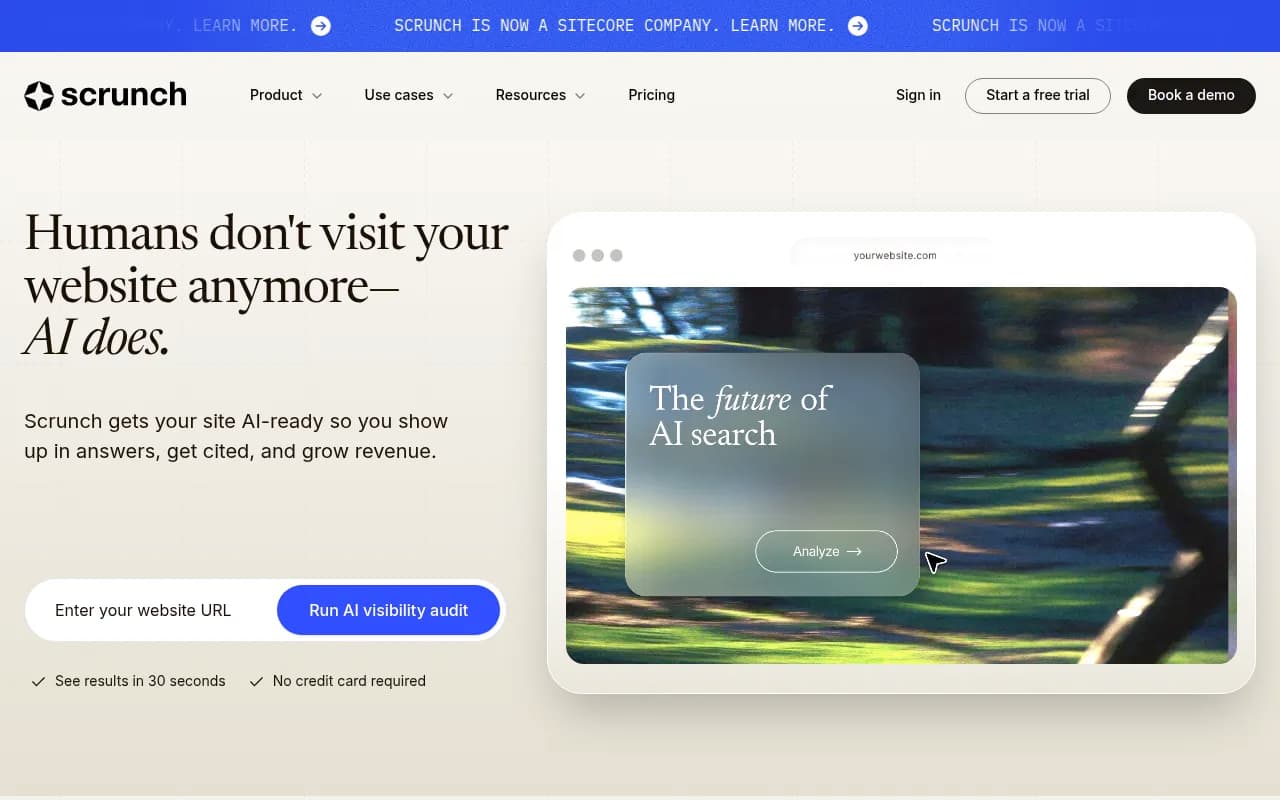
Scrunch AI
Scrunch AI is a solid mid-market option for brands and agencies that need AI search monitoring with competitive analysis. It has a clean interface and good reporting, and it's been mentioned frequently in agency-focused roundups. Like most platforms in this space, it's primarily a monitoring tool rather than an optimization platform.
Semrush AI Visibility Toolkit
If your team is already paying for Semrush, the AI Visibility Toolkit is a practical add-on rather than a standalone purchase. It covers ChatGPT, AI Overview, and AI Mode (with Gemini reportedly coming). The main limitation is that prompts are fixed -- you can't customize the query set to match your specific buyer personas and problem spaces. For B2B software vendors with niche categories, that's a meaningful constraint.
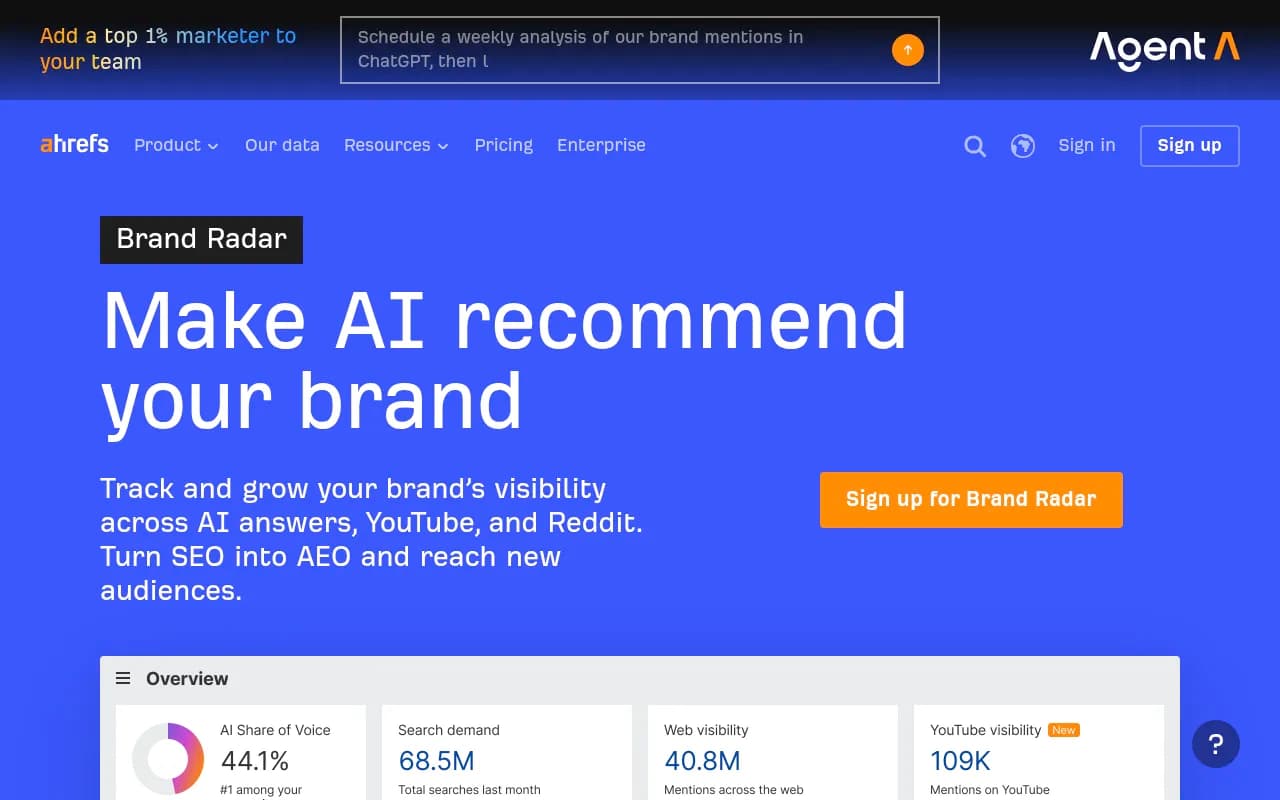
Ahrefs Brand Radar
Ahrefs Brand Radar is a similar story to Semrush -- useful if you're already in the Ahrefs ecosystem, but limited as a standalone AI visibility solution. Fixed prompts and no AI traffic attribution mean it's more of a brand monitoring layer than a true GEO platform.
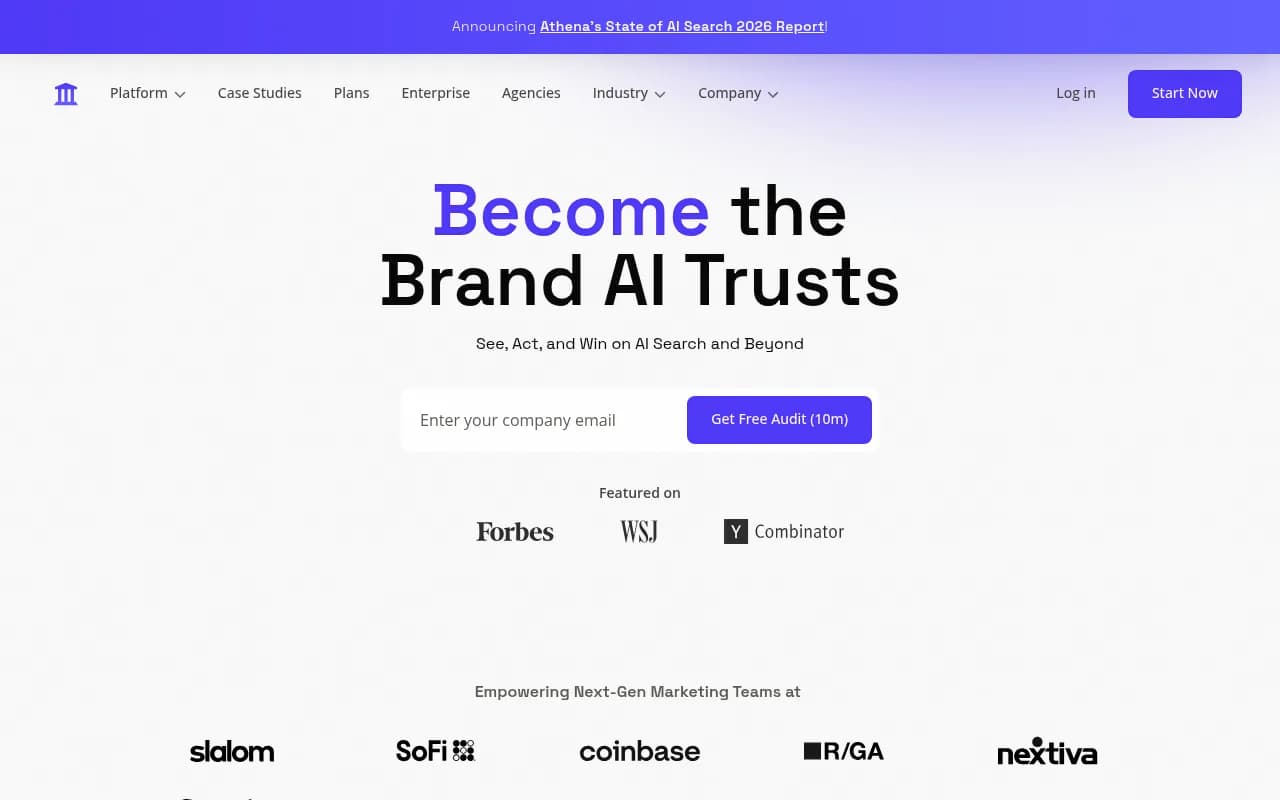
AthenaHQ
AthenaHQ is monitoring-focused with a clean interface and decent engine coverage. It's appeared on several B2B shortlists in 2026. The gap is on the optimization side -- it shows you where you stand but doesn't help you fix it. Worth evaluating if monitoring is all you need and you want a dedicated tool rather than an SEO platform add-on.
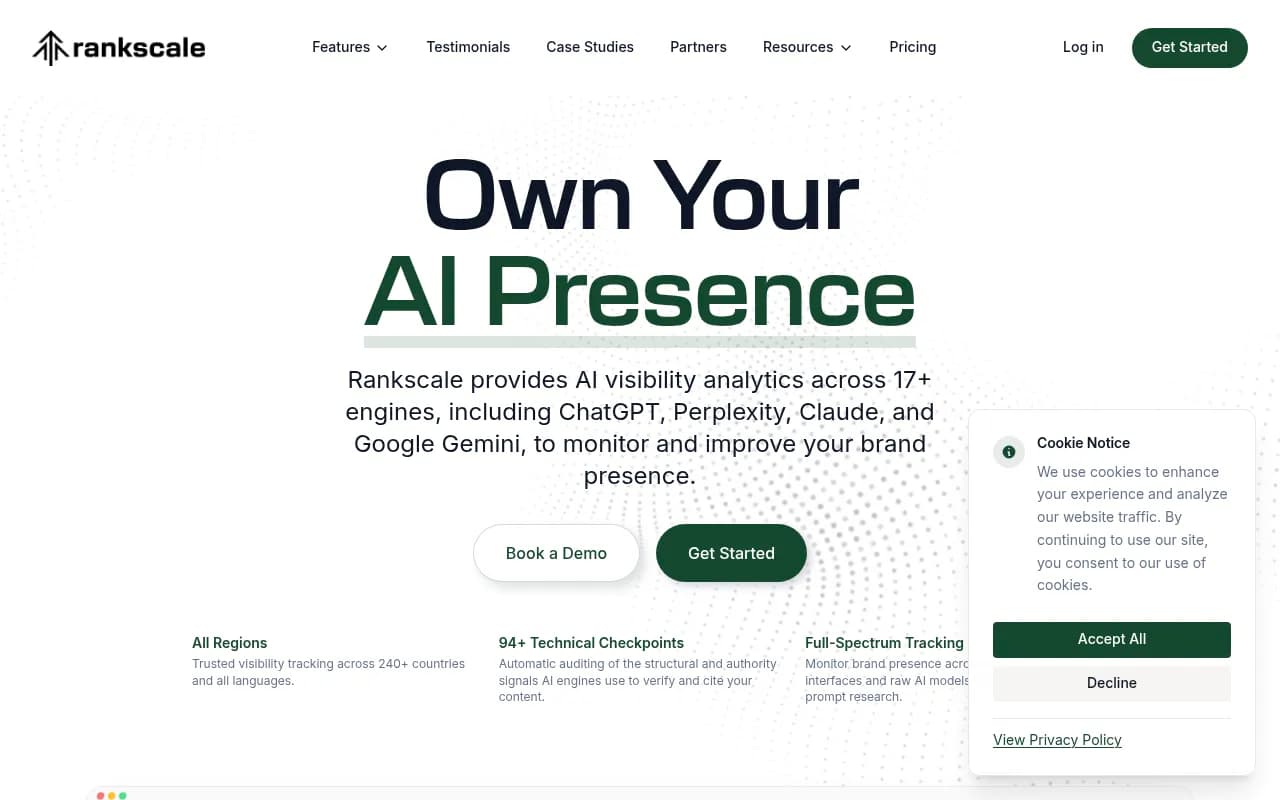
Rankscale
Rankscale focuses on AI search rank tracking and monitoring. It's a newer entrant in the space with a straightforward approach to measuring brand presence across AI engines. Good for teams that want clean, focused rank data without a lot of extra features.
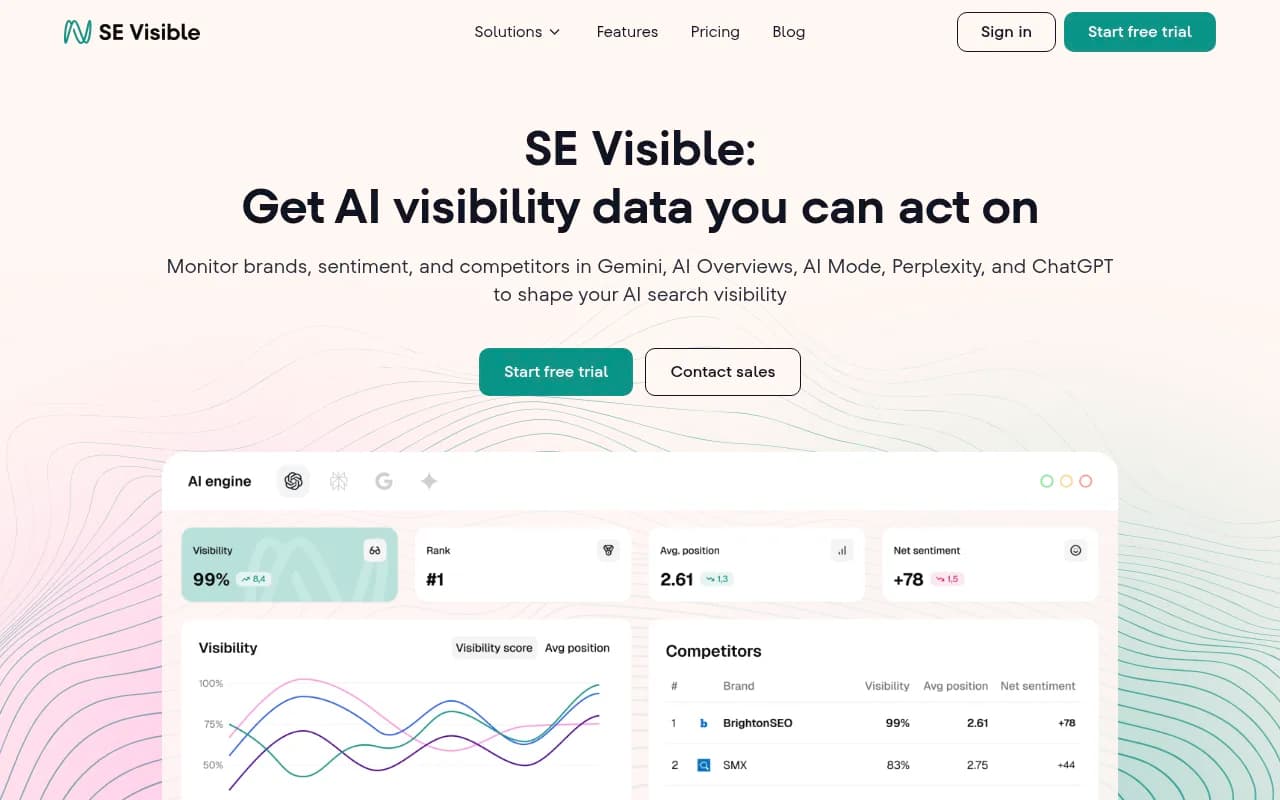
SE Ranking Visible
SE Ranking's AI visibility product covers the core engines and integrates with SE Ranking's broader SEO data. A reasonable option for teams already using SE Ranking who want to add AI visibility tracking without switching platforms.
Platform comparison at a glance
| Platform | AI engines tracked | Starting price | Content generation | Crawler logs | Best for |
|---|---|---|---|---|---|
| Promptwatch | 10+ (incl. Grok, DeepSeek, Mistral) | $99/mo | Yes | Yes | Teams that want monitoring + optimization in one place |
| Profound | 10+ | Custom (enterprise) | Limited | No | Large enterprise SaaS with big budgets |
| Peec AI | 6 | ~$100/mo | No | No | Teams needing accurate UI-scraped data |
| Otterly.AI | 4 core + add-ons | $29/mo | No | No | Budget-conscious early-stage teams |
| Scrunch AI | Multiple | Custom | No | No | Agencies and mid-market brands |
| Semrush AI Toolkit | 3-4 | $99/mo add-on | No | No | Existing Semrush users |
| Ahrefs Brand Radar | Multiple | Included in Ahrefs | No | No | Existing Ahrefs users |
| AthenaHQ | Multiple | Custom | No | No | Monitoring-only needs |
| Rankscale | Multiple | Custom | No | No | Clean rank tracking |
| SE Ranking Visible | Multiple | Included in SE Ranking | No | No | Existing SE Ranking users |
How to actually choose
The decision comes down to three questions.
Do you need to act on the data, or just see it? If your content team needs a pipeline of AI-optimized content and you want to track the results of that content in the same platform, you need an optimization platform like Promptwatch. If you have a separate content workflow and just need the visibility data, a monitoring tool is fine.
What's your budget reality? Enterprise platforms like Profound are powerful but priced accordingly. For most B2B SaaS teams, the $99-$249/month range from platforms like Promptwatch or Peec AI covers the core use case without requiring a procurement process.
How many engines do you actually need? For most B2B software buyers, ChatGPT, Perplexity, Google AI Overviews, Claude, and Gemini cover the vast majority of research behavior. If you're selling globally or into markets where Grok, DeepSeek, or Copilot have meaningful usage, broader coverage matters more.
One thing worth noting: the market is moving fast. Several platforms that were monitoring-only six months ago are adding optimization features. But there's a meaningful difference between a platform built around the optimization workflow from the start and one that bolted on a content brief generator. The former tends to have better prompt data, better citation analysis, and a more coherent workflow.
The prompt coverage question
This is underappreciated. Most B2B software vendors have a handful of high-value prompts they care about -- the queries their ideal buyers are actually typing. "Best CRM for mid-market SaaS," "how to automate sales forecasting," "contract analytics platforms for legal teams."
A platform that lets you define, track, and prioritize those specific prompts -- with volume estimates and difficulty scores -- is more valuable than one that tracks a large generic set. Query fan-outs matter too: one prompt often branches into several sub-queries, and understanding that branching helps you prioritize content investment.
When evaluating platforms, ask specifically: can I define my own prompts? How many can I track? Do I get volume or difficulty data? Can I track by persona (CFO vs. VP of IT vs. procurement)?
What good looks like in practice
A B2B software marketing team using AI visibility well typically runs something like this:
- They track 50-150 prompts across their key buyer personas and problem spaces.
- They run competitor analysis monthly to see which prompts competitors are winning that they're not.
- They use content gap data to brief and publish 4-8 new articles per month targeting specific prompt gaps.
- They track which pages AI crawlers are reading and fix indexing issues that prevent citation.
- They connect visibility data to traffic and pipeline to show the revenue impact of GEO work.
That full workflow requires a platform that does more than monitor. Most platforms in this space handle step one reasonably well. Fewer handle steps two through five.
Bottom line
AI search visibility is no longer optional for B2B software vendors. The buyers are there, the shortlists are forming, and the data is clear: if you're not appearing in AI answers for your category's key prompts, you're losing pipeline you can't even see in your CRM.
The right platform depends on where you are. If you're just starting out and want to understand your current visibility, Otterly.AI or Peec AI are low-cost ways to get the data. If you want to actually move the needle -- find gaps, create content, track results -- Promptwatch is the most complete platform in the market for that workflow. And if you're a large enterprise with a dedicated analytics team and a six-figure budget, Profound is worth evaluating.
The one thing I'd avoid: treating AI visibility as a "set it and forget it" monitoring task. The platforms that help you act on the data are the ones that will actually move your pipeline numbers.