Key takeaways
- Goodie AI offered a solid entry point into answer engine optimization (AEO) with content writing and visibility tracking bundled together
- Its biggest gaps were real prompt-volume data, AI crawler analytics, and the kind of compliance controls enterprise teams need
- Most teams that switched did so because they needed to go beyond monitoring -- they needed to act on the data
- Several platforms now cover what Goodie AI missed, from lightweight monitoring tools to full optimization platforms
- If your goal is to actually improve AI visibility (not just observe it), you need a platform built around the full loop: find gaps, create content, track results
2025 was the year that AI search stopped being a side conversation. ChatGPT, Perplexity, Google AI Overviews, and a growing list of LLMs became real traffic sources -- and real threats to brands that weren't showing up in them. Naturally, a wave of tools emerged to help marketers track and improve their presence in these systems.
Goodie AI was one of them. It came with a clear pitch: pair content creation with AI visibility tracking, so you're not just watching where you rank but also doing something about it. For a lot of teams, that sounded exactly right.
But a year in, the picture is more complicated. Some teams found Goodie AI genuinely useful. Others hit walls they didn't expect. And a meaningful number switched to something else entirely.
This guide breaks down what Goodie AI actually got right in 2025, where it fell short, and what the alternatives look like for teams reassessing their stack.
What Goodie AI got right
The core idea was sound
Goodie AI understood something that many early AEO tools missed: monitoring alone isn't enough. Knowing that your brand doesn't appear in a Perplexity response is useful information, but it doesn't tell you what to do next. Goodie AI tried to close that loop by combining visibility tracking with content generation -- you'd see a gap, then use the tool to fill it.
That instinct was correct. The teams that got the most value from Goodie AI were the ones who used both sides of the platform together, not just the dashboard.
Accessible entry point for smaller teams
For teams without a dedicated SEO engineer or a large budget, Goodie AI was approachable. The interface didn't require deep technical knowledge to get started, and the content tools were usable without a lot of setup. That lowered the barrier to at least experimenting with AEO -- which, in 2025, was more than a lot of competitors could say.
Visibility into commercial citation patterns
One observation Goodie AI surfaced publicly was genuinely interesting: AI models are increasingly prioritizing commercial sources over news outlets when answering decision-making queries. The top cited domains in AI responses shifted toward sources built to help users choose -- product pages, comparison sites, review platforms. That insight shaped how some teams thought about their content strategy, and it was a real contribution to the conversation around AI search.
Where Goodie AI fell short
No real prompt-volume data
This is probably the most significant gap. To prioritize your AEO efforts, you need to know which prompts are actually being asked -- how often, by whom, and with what intent. Goodie AI didn't offer meaningful prompt-volume estimates or difficulty scoring. That meant teams were essentially guessing which gaps to fill first. You might spend three weeks creating content for a prompt that almost nobody asks, while ignoring a high-volume query where you're invisible.
Without prompt intelligence, content prioritization becomes intuition-driven rather than data-driven. That's a problem at any scale, but especially for enterprise teams managing hundreds of topics.
Crawler analytics were missing
AI crawler logs -- real-time data on when ChatGPT, Claude, Perplexity, and other agents crawl your site, which pages they read, and whether those pages eventually get cited -- were not part of Goodie AI's offering. This matters more than it sounds.
If an AI model is crawling your site but not citing it, you have a problem. Maybe the page structure is wrong. Maybe the content doesn't answer the prompt clearly enough. Maybe there's a technical error. Without crawler logs, you can't diagnose any of this. You just see that you're not being cited, with no path to understanding why.
Enterprise compliance and controls
Larger organizations have requirements around brand voice consistency, content approval workflows, and data handling. Goodie AI's content generation tools weren't built with those guardrails in mind. For a 10-person marketing team, that's fine. For a 200-person organization with legal review requirements and brand governance policies, it's a blocker.
Several enterprise teams that trialed Goodie AI in 2025 cited this as the reason they didn't expand beyond a pilot.
Limited multi-model and multi-region coverage
AI search isn't just ChatGPT. By mid-2025, teams were tracking visibility across Perplexity, Google AI Overviews, Claude, Gemini, Grok, DeepSeek, and more -- often across multiple languages and regions. Goodie AI's coverage here was narrower than what the market eventually demanded. Teams with international audiences or multi-brand portfolios found themselves needing to supplement with other tools, which defeated the purpose of having a unified platform.
Why teams switched
The pattern that emerged across teams that moved away from Goodie AI was consistent: they outgrew monitoring.
Early in 2025, just knowing that AI models weren't citing your brand was enough to justify action. But by mid-year, the question shifted from "are we visible?" to "what do we do about it?" That's a harder question, and it requires a different kind of tool.
The teams that switched were typically looking for:
- Prompt intelligence to prioritize content efforts
- AI crawler logs to diagnose technical visibility issues
- Content generation grounded in real citation and prompt data (not generic AI writing)
- Page-level tracking that connects specific content to specific citation events
- Traffic attribution that ties AI visibility to actual revenue
When Goodie AI couldn't deliver on those requirements, teams started looking elsewhere.
What teams moved to instead
The alternatives landscape in 2025 split into a few distinct categories. Here's how the main options compare.
Full-loop optimization platforms
These tools go beyond monitoring to help you find gaps, create content, and track results.
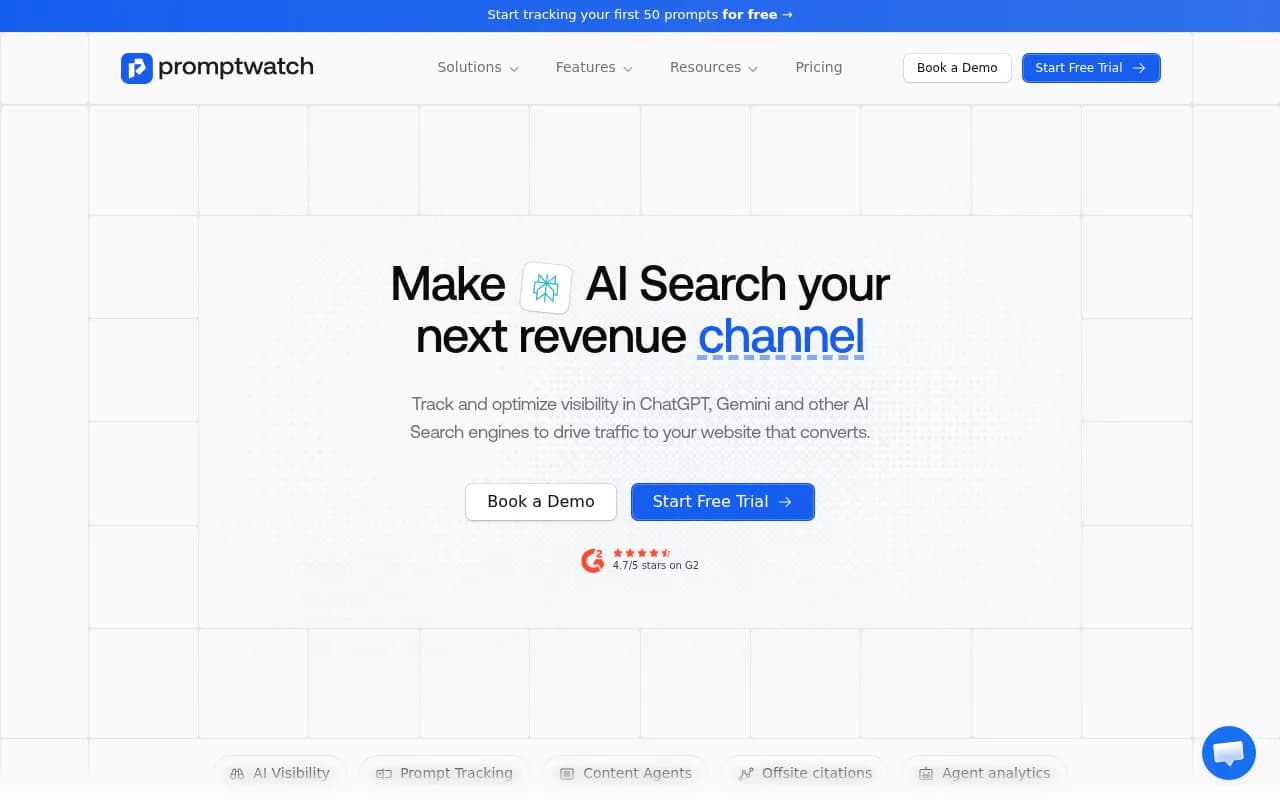
Promptwatch is the most complete option in this category. It tracks visibility across 10 AI models, gives you real prompt-volume data and difficulty scoring, generates content grounded in actual citation and prompt data, and logs AI crawler activity in real time. The page-level tracking shows exactly which pages are being cited, by which models, and when -- and the traffic attribution connects that visibility to revenue. For teams that need the full loop, it's the most capable platform available.
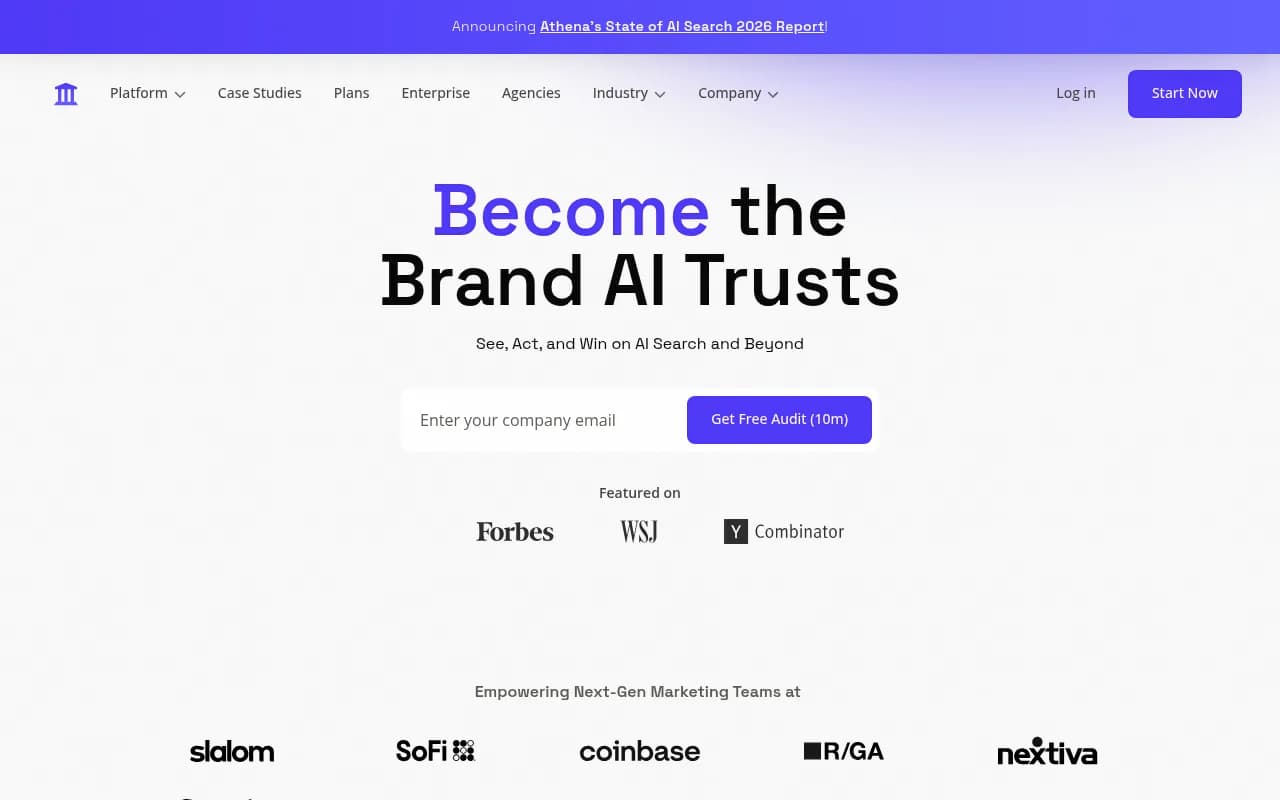
AthenaHQ is another option in this space, though it leans more toward monitoring than optimization. It's strong on tracking but lighter on content generation capabilities.
Monitoring-focused tools
If you genuinely just need visibility data and you're handling content creation separately, there are solid options here.
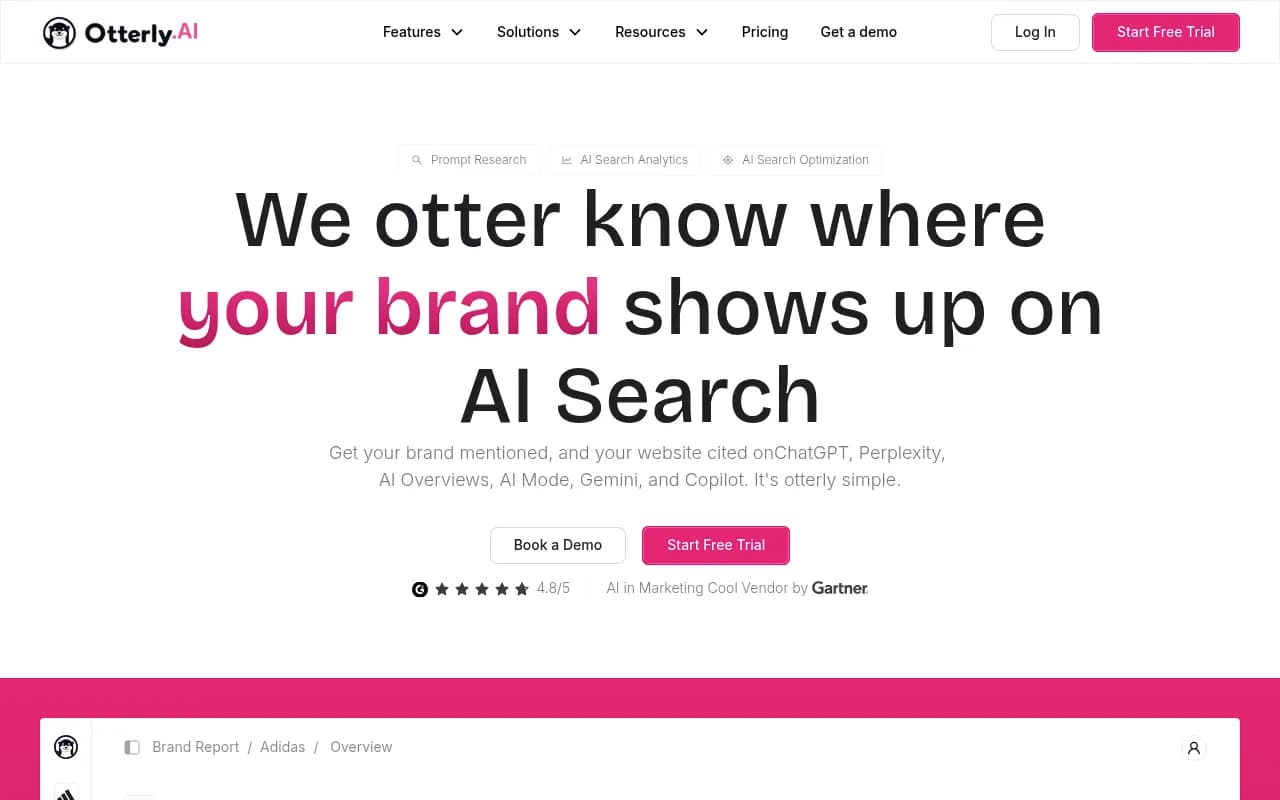
Otterly.AI is one of the more affordable monitoring tools. It covers the major AI models and gives you brand mention tracking without a lot of complexity. Good for smaller teams that want to stay informed without a large budget.
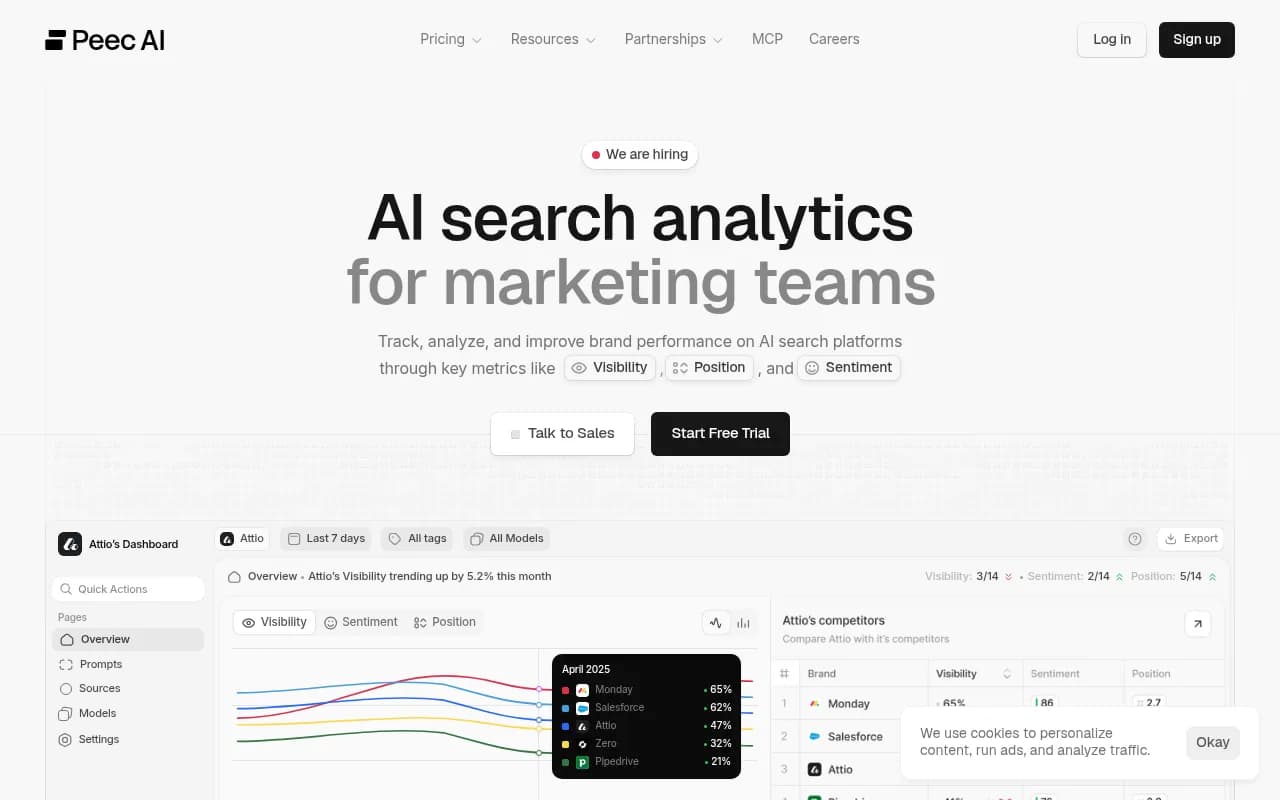
Peec AI offers AI visibility tracking with some smart suggestions layered on top. It's more capable than a pure dashboard but stops short of full content generation.
Scrunch AI is worth a look for agencies managing multiple brands. It's built for the multi-client use case and handles reporting well.
Enterprise-grade platforms
For larger organizations that need compliance controls, multi-region coverage, and deep analytics:
Profound has strong enterprise credentials and solid analytics depth. It's on the pricier end but built for the requirements that enterprise teams actually have.
BrightEdge is the traditional enterprise SEO player that has extended into AI search monitoring. If you're already in the BrightEdge ecosystem, the AI features are worth evaluating.
Content-first tools
Some teams don't need a monitoring platform -- they need better content. These tools focus on the creation side.
Search Atlas combines traditional SEO with AI content tools and has been expanding its AI visibility features.
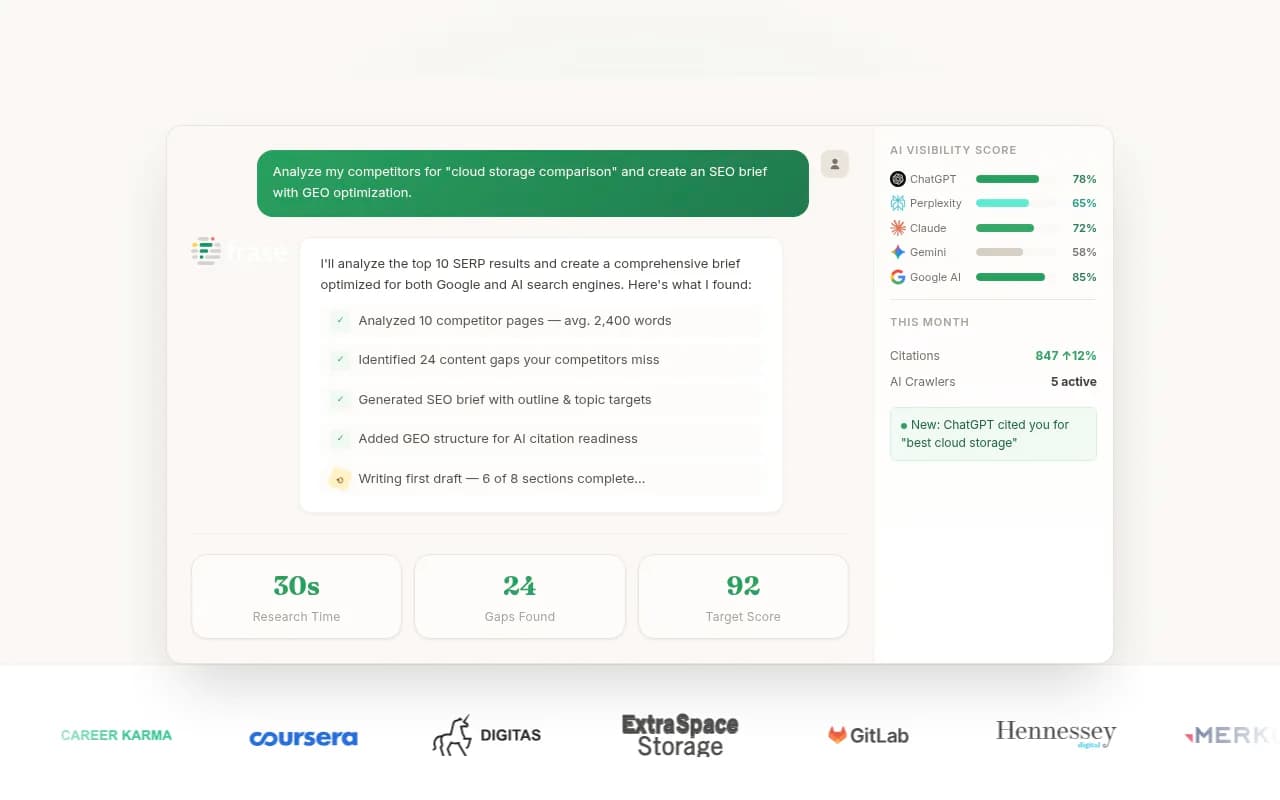
Frase is strong on content optimization grounded in search data, though it's not primarily an AI visibility tool.
How the platforms compare
| Platform | Prompt volume data | AI crawler logs | Content generation | Multi-model coverage | Enterprise controls |
|---|---|---|---|---|---|
| Promptwatch | Yes | Yes | Yes (citation-grounded) | 10 models | Yes |
| Goodie AI | No | No | Yes (basic) | Limited | Limited |
| AthenaHQ | Partial | No | No | Yes | Partial |
| Otterly.AI | No | No | No | Yes | No |
| Peec AI | Partial | No | No | Yes | No |
| Profound | Yes | No | No | Yes | Yes |
| BrightEdge | Partial | No | No | Partial | Yes |
| Scrunch AI | No | No | No | Yes | Partial |
The broader lesson from 2025
Goodie AI's trajectory reflects something that played out across the AI tools market in 2025. A lot of platforms launched with a monitoring-first approach because that was the obvious first step -- brands needed to know where they stood. But the market moved faster than expected, and teams quickly realized that knowing where you stand is only useful if you know what to do next.
The tools that thrived were the ones built around action, not just observation. That meant connecting visibility data to content strategy, connecting content strategy to specific prompt gaps, and connecting published content to measurable citation outcomes.
The AI year in review from 2025 made this clear: teams recognized that AI reduced production time but still required strong instructional design principles and quality assurance review. The implication for AEO tools is the same -- automation is useful, but it needs to be grounded in real data and connected to real outcomes.
Goodie AI got the direction right. It just didn't go far enough.
What to do if you're reassessing your stack
If you're currently using Goodie AI and wondering whether to stay or switch, the honest answer depends on what you actually need.
If you're a small team that wants basic visibility monitoring and some content help, Goodie AI may still be adequate. The tool works for what it was designed to do at a basic level.
If you need to prioritize content efforts based on real prompt data, diagnose why AI models aren't citing your pages, or connect AI visibility to revenue -- you need something more capable. Promptwatch is the most complete option for that use case. Profound is worth evaluating if enterprise compliance is the primary concern. Otterly.AI or Peec AI work if you genuinely just need monitoring and handle content separately.
The key question to ask any platform: does it help you find gaps, create content to fill them, and track whether that content actually gets cited? If the answer is no to any of those three, you're paying for a dashboard, not an optimization tool.
That distinction matters more now than it did a year ago -- and it'll matter even more in 2026.