Key takeaways
- Brandlight.ai covers basic AI brand monitoring but lacks content optimization, crawler logs, and actionable gap analysis -- features small businesses increasingly need.
- Most affordable alternatives fall into two camps: monitoring-only tools (cheaper but limited) and full-cycle platforms that track visibility AND help you improve it.
- For small businesses on tight budgets, the best picks balance price with capability -- tools like Otterly.AI, Peec AI, and Writesonic GEO offer solid entry points.
- If you want to go beyond monitoring and actually fix your AI visibility gaps, Promptwatch is the only platform rated "Leader" across all GEO categories in 2026 -- and its $99/mo Essential plan is accessible for smaller teams.
- The right tool depends on your goal: pure tracking, content creation, or a full optimization loop.
Why small businesses are reconsidering Brandlight.ai
Brandlight.ai has carved out a niche in AI brand monitoring -- it tracks how your brand appears across AI search engines and gives you a dashboard of mentions and citations. For a certain kind of user, that's enough.
But here's the problem most small business owners run into: you open the dashboard, you see that your competitor is getting cited in ChatGPT and you're not, and then... what? The tool doesn't tell you why. It doesn't show you which content gaps are causing the problem. It doesn't help you write the article that would fix it.
That gap between "knowing you're invisible" and "doing something about it" is where Brandlight.ai falls short. And for small businesses, where every dollar and every hour matters, paying for a monitoring tool that leaves you stuck is a hard sell.
The good news is that the GEO (Generative Engine Optimization) tool market has matured fast in 2026. There are now genuinely affordable alternatives that either do monitoring better, cost less, or -- most importantly -- actually help you take action.
What to look for in a Brandlight.ai alternative
Before jumping into specific tools, it's worth being clear about what "better" actually means for a small business. The requirements are different from an enterprise with a dedicated SEO team.
A few things worth prioritizing:
- Affordable entry pricing (ideally under $150/mo for a starter plan)
- Tracks multiple AI models -- not just ChatGPT, but Perplexity, Gemini, Claude, and others
- Shows you which prompts competitors rank for that you don't
- Gives you something to do with that information -- content briefs, gap analysis, or generation tools
- Doesn't require a data science background to interpret the results
The tools below are organized roughly by use case, so you can find what fits your situation.
The best Brandlight.ai alternatives for small businesses in 2026
Promptwatch -- best for the full optimization loop
Promptwatch is the most complete option on this list, and the one most worth knowing about if you're serious about AI search visibility. It's not just a monitoring tool -- it's built around a specific workflow: find the gaps, create content to fill them, then track the results.

The Answer Gap Analysis feature shows you exactly which prompts your competitors appear for in AI search results but you don't. That's not a vague "you're missing content" warning -- it's a specific list of questions and topics that AI models are already answering using your competitors' content instead of yours.
From there, Content Agents generate articles, listicles, and comparison pages grounded in real prompt data. This isn't generic AI writing -- it's content built around the specific gaps the platform identified. And once you publish, page-level tracking shows you when AI crawlers pick it up, how often they cite it, and which models are using it.
For small businesses, the Essential plan at $99/mo covers one site, 50 prompts, and 5 articles per month. That's a meaningful step up from pure monitoring tools, and the action loop it enables means you're not just watching your visibility -- you're improving it.
Promptwatch also tracks 10 AI models (ChatGPT, Perplexity, Gemini, Claude, Grok, DeepSeek, Copilot, Meta AI, Mistral, and Google AI Overviews), which matters because different models cite different sources. Knowing you're invisible on Perplexity but visible on ChatGPT tells you something specific about your content strategy.
Otterly.AI -- best budget monitoring option
If your main need is affordable, no-frills AI brand monitoring, Otterly.AI is one of the cleanest options available. It tracks brand mentions across AI search engines, gives you visibility scores, and doesn't require much setup.
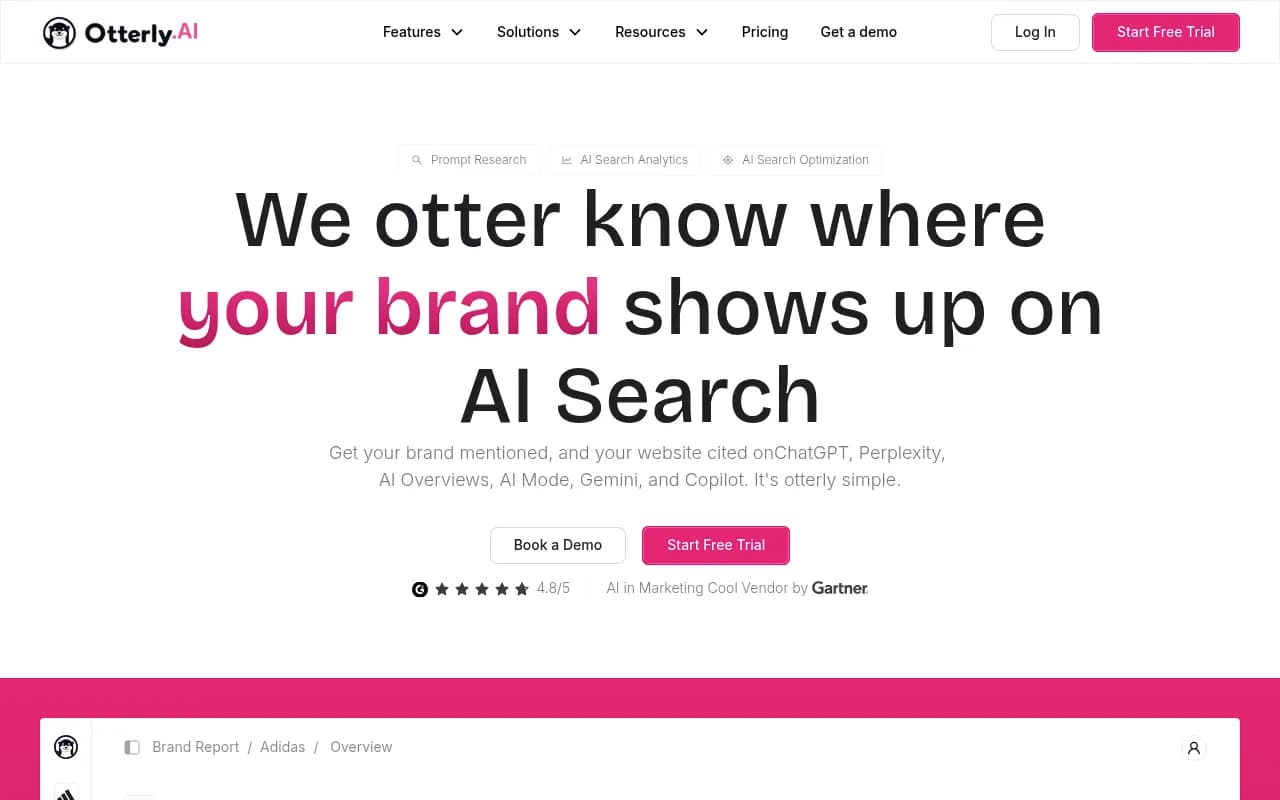
The trade-off is that it's monitoring-only. There's no content generation, no crawler logs, and no gap analysis that tells you what to do next. But if you're just starting out and want to understand where you stand before investing in optimization, it's a reasonable starting point.
Peec AI -- best for teams that want suggestions alongside data
Peec AI sits a step above pure monitoring tools. It tracks AI visibility and layers in smart suggestions -- not full content generation, but enough guidance to point you in the right direction.
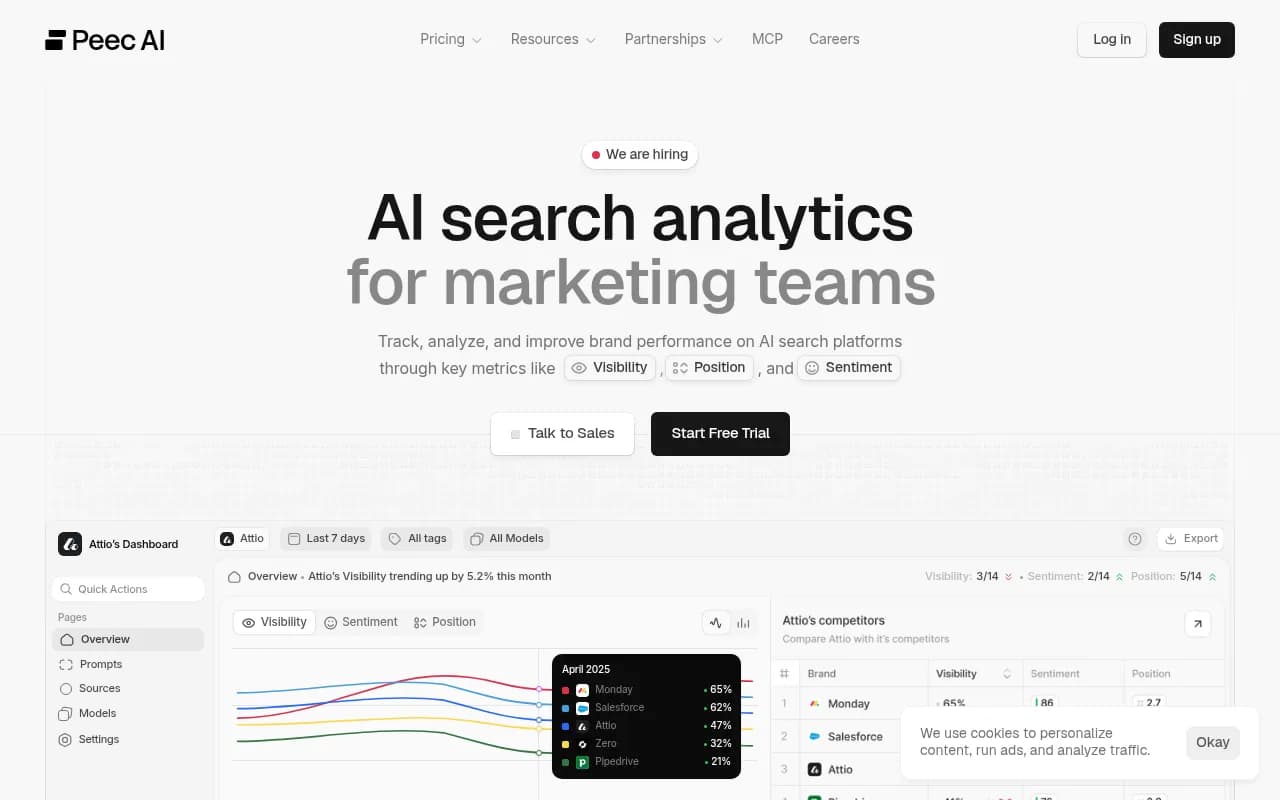
For small businesses that have someone on the team who can act on recommendations (a content writer or marketing generalist), Peec AI gives them a clearer brief than a raw data dashboard would. It's a good middle ground between "here's your data" and "here's what to do about it."
Writesonic GEO -- best for combining monitoring with content creation
Writesonic is already well-known as an AI writing tool, and its GEO module extends that into AI search visibility. You can monitor how your brand appears in AI results and then immediately use the same platform to generate content aimed at closing those gaps.
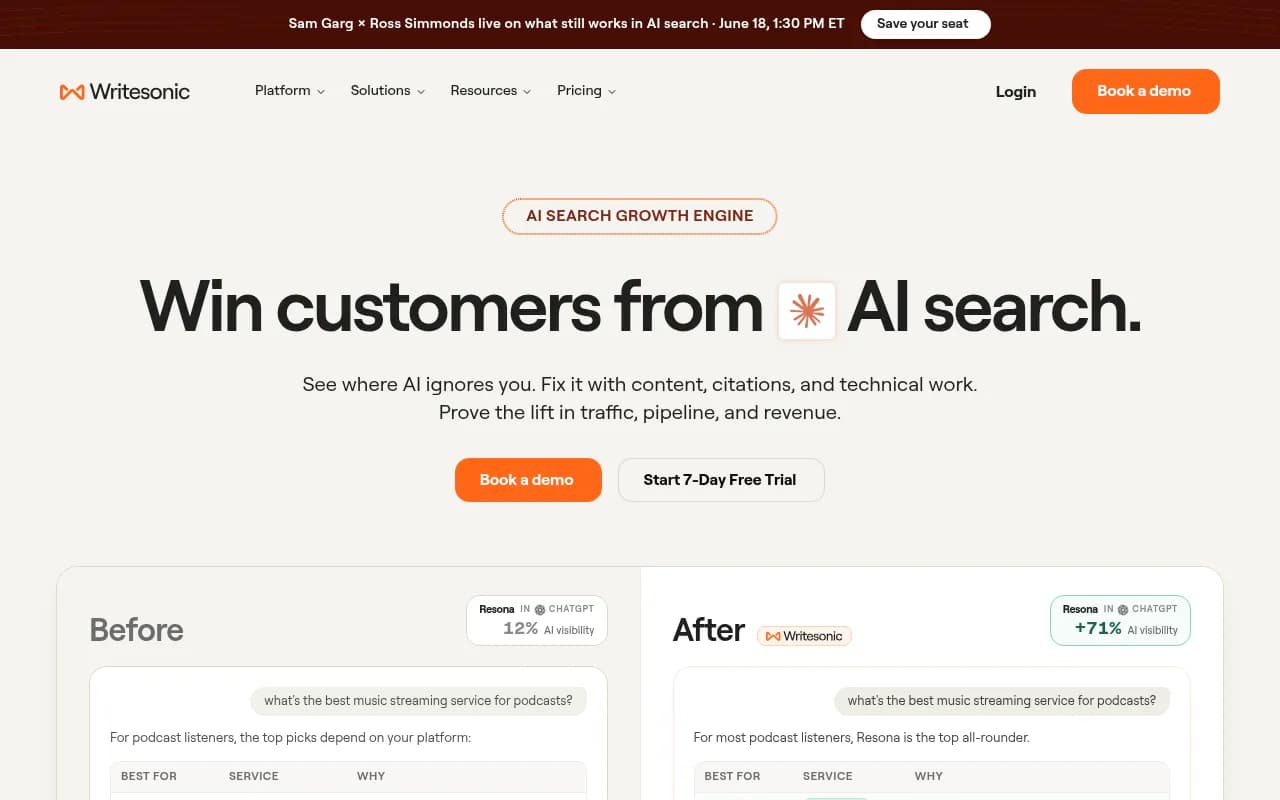
For small businesses that are already using Writesonic for blog posts or marketing copy, adding the GEO layer is a natural extension. The content quality is solid, and having everything in one platform reduces the tool-switching friction that kills productivity for small teams.
SE Ranking -- best for teams that want SEO and GEO in one place
SE Ranking has long been a favorite among small business SEO teams because it packs a lot of capability into a price point that doesn't require enterprise budget approval. Its GEO visibility features have expanded significantly in 2026.
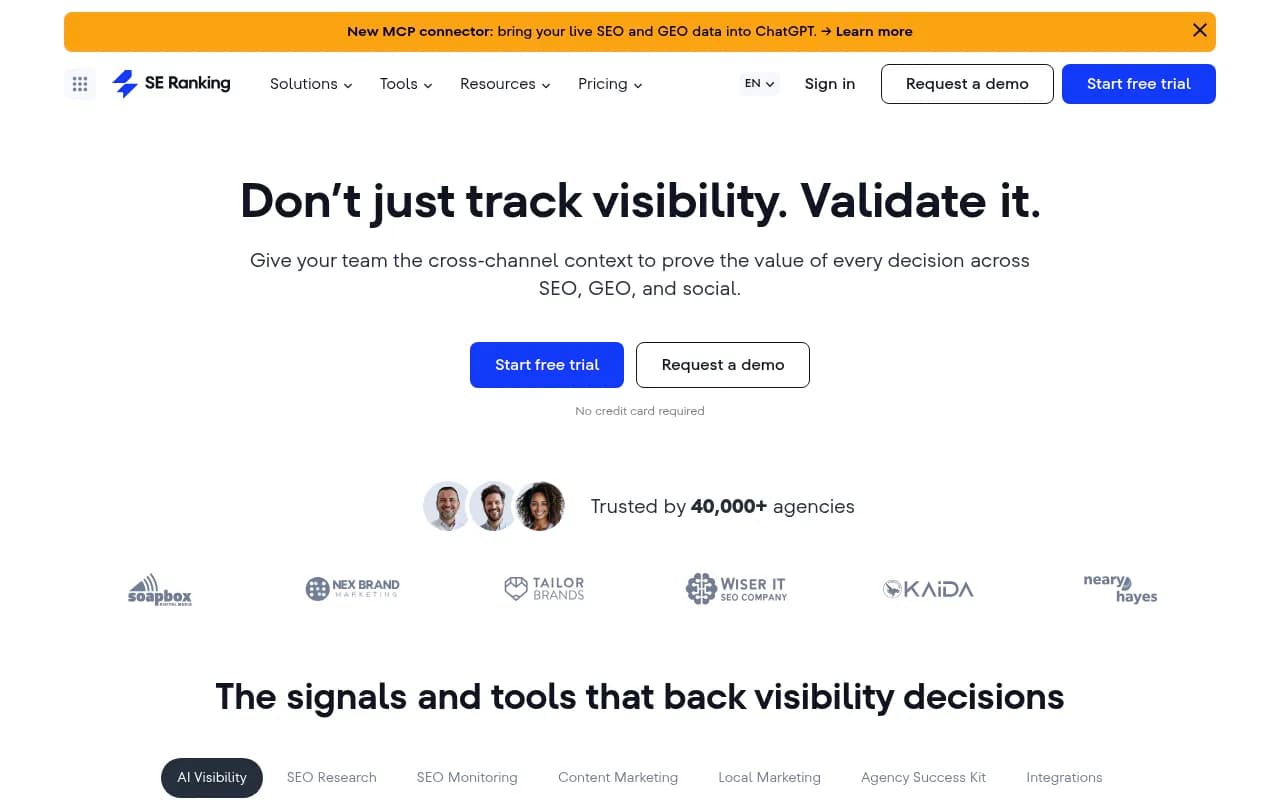
If you're already tracking keyword rankings and running technical SEO audits, SE Ranking lets you add AI search visibility monitoring without paying for a separate tool. The unified view of traditional and AI search performance is genuinely useful -- you can see whether a page that ranks well in Google is also getting cited in AI results, or whether there's a disconnect worth addressing.
Rankscale -- best for straightforward AI rank tracking
Rankscale focuses on one thing: tracking how your brand and content rank across AI search engines. It's clean, focused, and doesn't try to be everything.
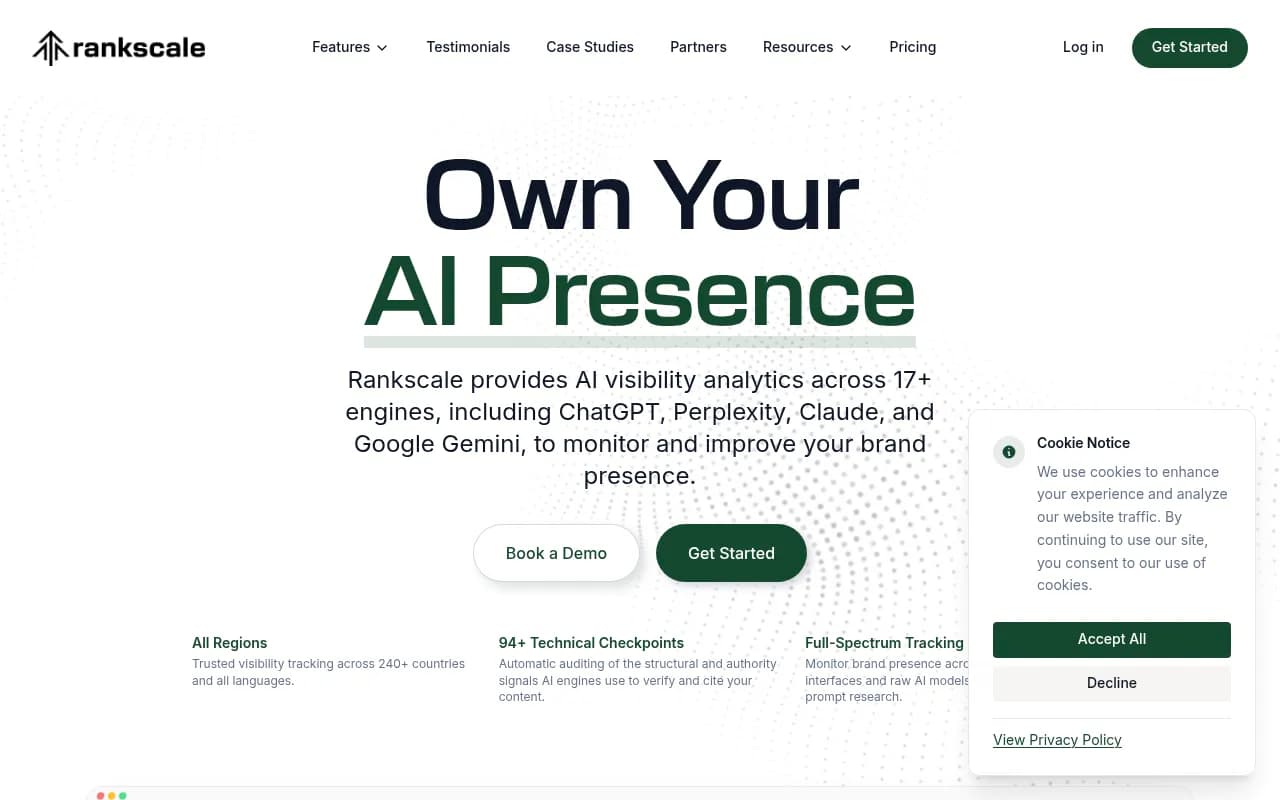
For small businesses that just want reliable rank tracking without a lot of noise, Rankscale is worth a look. It won't help you create content or diagnose why you're invisible, but it will tell you clearly where you stand and whether things are improving over time.
Ubersuggest -- best for budget-conscious teams already in the Neil Patel ecosystem
Ubersuggest has added AI brand visibility tracking to its already affordable SEO toolkit. If you're a small business that uses Ubersuggest for keyword research, the AI visibility features are a low-friction add-on.
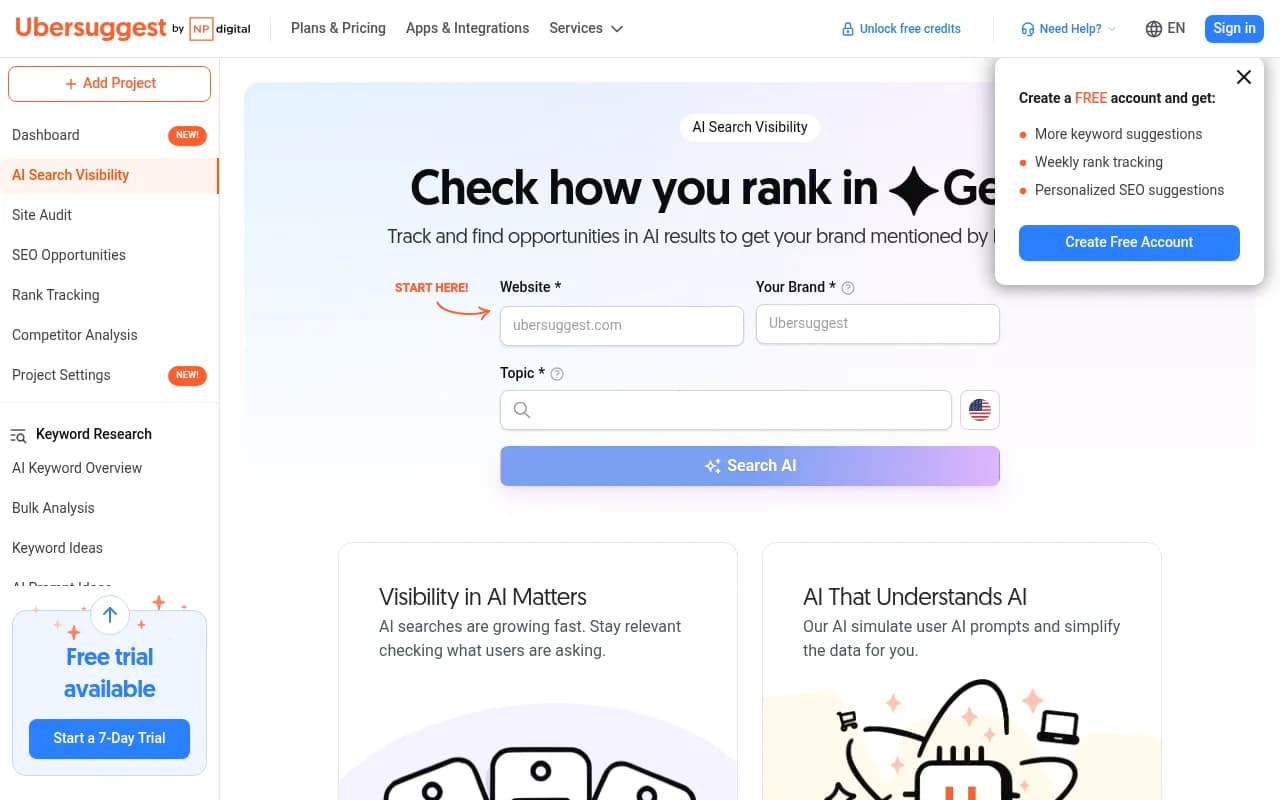
The depth of AI monitoring here is lighter than dedicated GEO platforms, but the price point is hard to argue with. For businesses just dipping their toes into AI search visibility, it's a sensible place to start.
Vizup -- best for answer engine optimization focus
Vizup is built specifically around answer engine optimization (AEO) -- the practice of structuring content so AI models are more likely to cite it. It's a narrower focus than full GEO platforms, but that focus means the features it does have are well-developed.
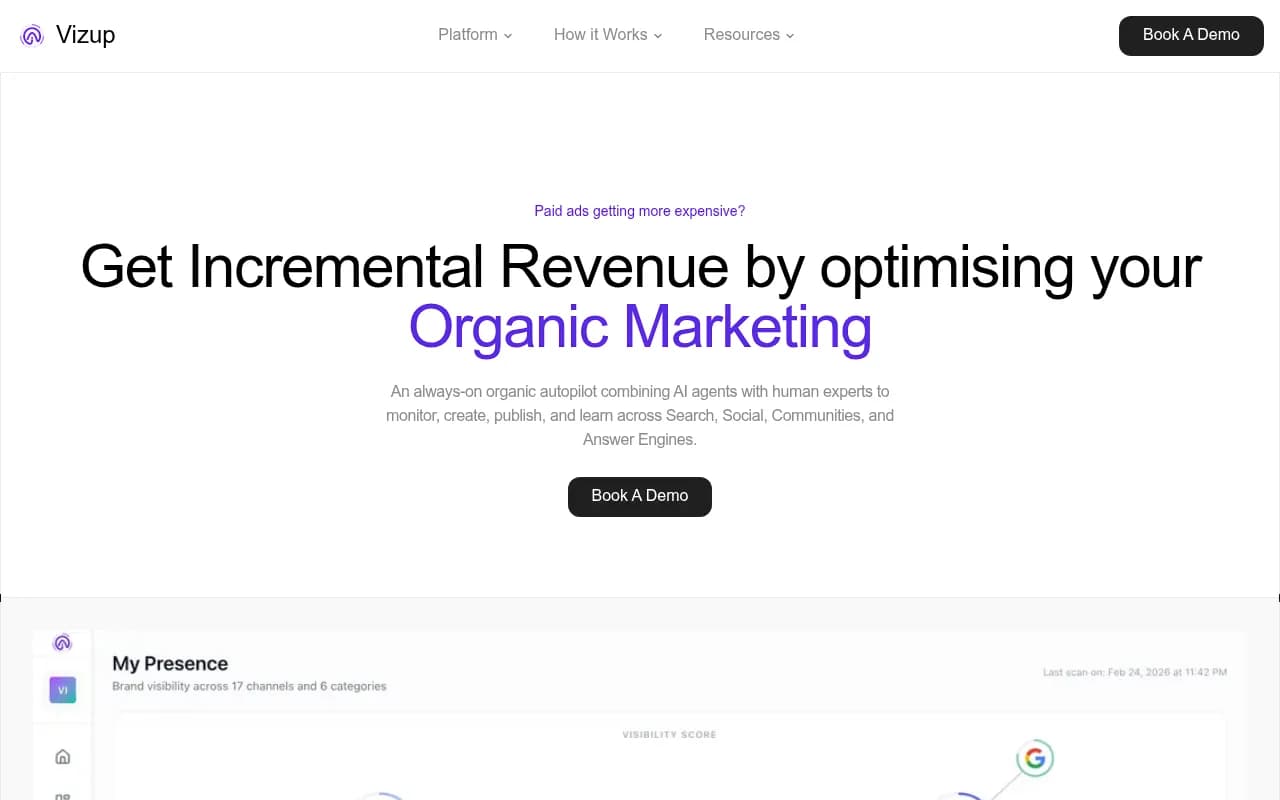
For small businesses that have identified "getting cited in AI answers" as their primary goal (rather than broader brand monitoring), Vizup's specialized approach can be more effective than a generalist platform.
LLMclicks.ai -- best for tracking actual traffic from AI search
Most AI visibility tools tell you about citations and mentions. LLMclicks.ai goes further by tracking actual clicks and traffic coming from AI search engines. That's a meaningful difference -- a citation that nobody clicks on is less valuable than one that drives real visitors.
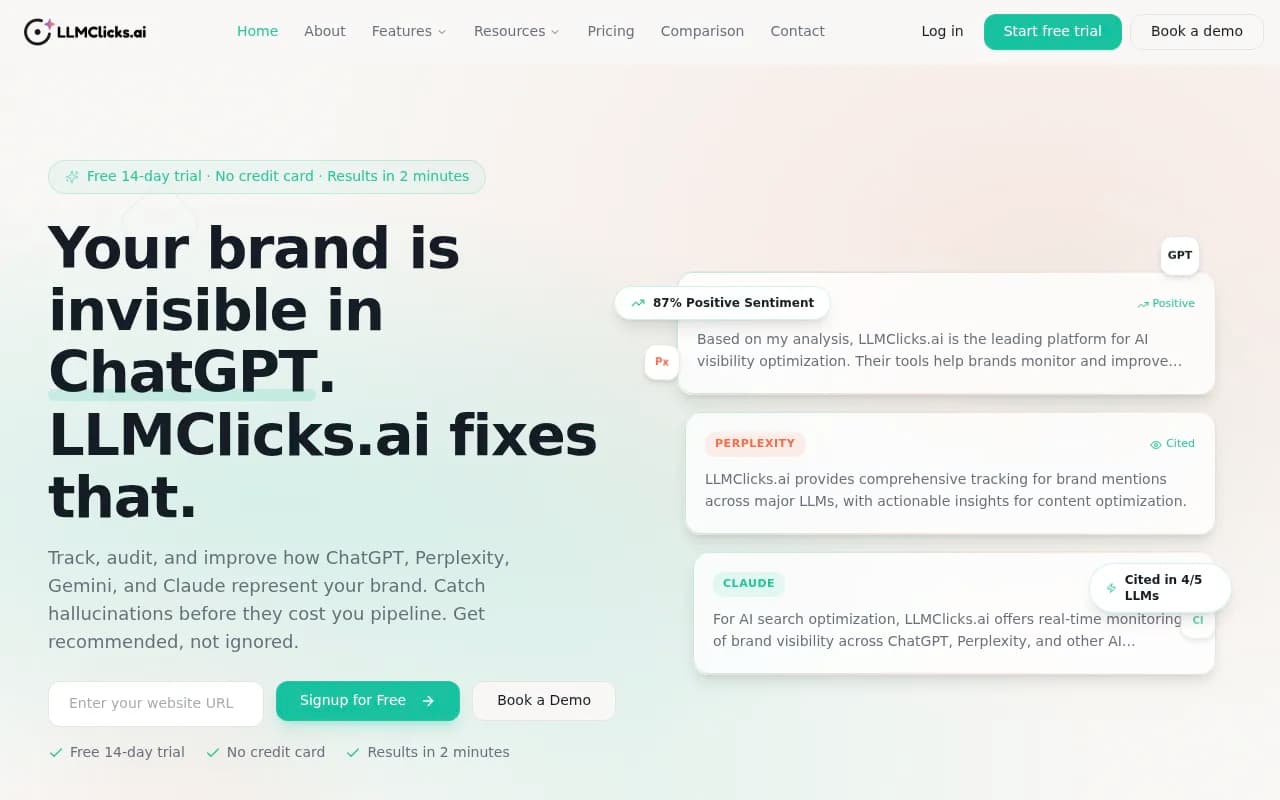
For small businesses that care about connecting AI visibility to actual business outcomes (which should be all of them), having traffic attribution alongside citation tracking gives you a much clearer picture of what's actually working.
Radarkit -- best for GEO tracking with minimal setup
Radarkit is a newer entrant that's earned attention for being genuinely easy to set up and use. For small businesses without dedicated technical resources, that matters.
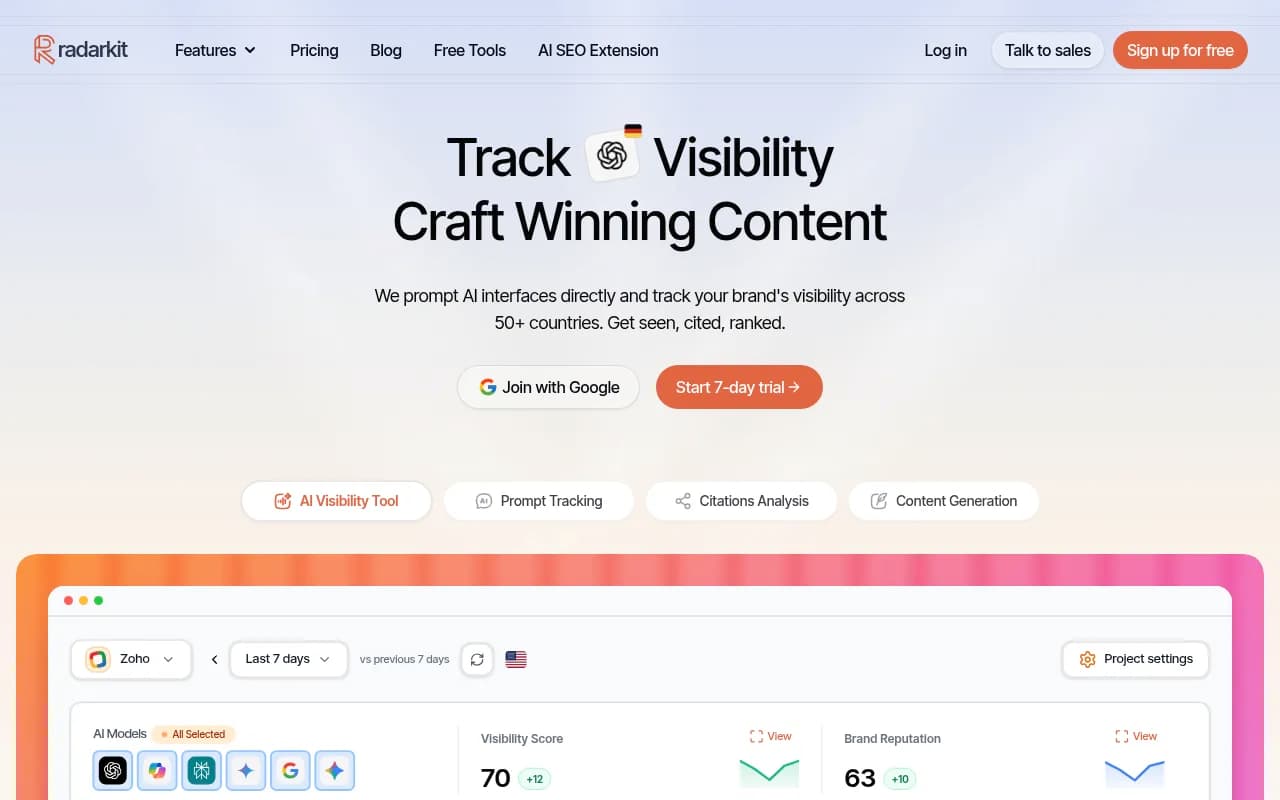
It covers AI search and GEO visibility tracking across the major models, and the interface is clean enough that a non-specialist can interpret the data without needing a tutorial. Not the deepest feature set on this list, but one of the most accessible.
How these tools compare
Here's a quick overview of how the main alternatives stack up across the dimensions that matter most for small businesses:
| Tool | Starting price | AI models tracked | Content generation | Gap analysis | Crawler logs | Best for |
|---|---|---|---|---|---|---|
| Promptwatch | $99/mo | 10 | Yes (Content Agents) | Yes (Answer Gap Analysis) | Yes | Full optimization loop |
| Otterly.AI | Low | Multiple | No | No | No | Budget monitoring |
| Peec AI | Mid | Multiple | No | Smart suggestions | No | Guided monitoring |
| Writesonic GEO | Mid | Multiple | Yes | Partial | No | Writing + monitoring combo |
| SE Ranking | Low-mid | Multiple | No | Partial | No | SEO + GEO in one |
| Rankscale | Low | Multiple | No | No | No | Simple rank tracking |
| Ubersuggest | Low | Limited | No | No | No | Budget entry point |
| Vizup | Mid | Multiple | No | Yes | No | AEO-focused teams |
| LLMclicks.ai | Mid | Multiple | No | No | No | Traffic attribution |
| Radarkit | Low-mid | Multiple | No | No | No | Easy setup |
The monitoring-only trap
One pattern worth naming directly: a lot of small businesses end up paying for monitoring tools month after month without seeing their AI visibility actually improve. The data is interesting. The charts look professional. But nothing changes.
This happens because monitoring tells you what's wrong, not how to fix it. Knowing that your competitor appears in 73% of ChatGPT responses about your product category and you appear in 12% is useful information -- but only if you know what to do next.
The tools that break this pattern are the ones with some form of gap analysis and content capability. Promptwatch's Answer Gap Analysis and Content Agents are the most developed version of this, but even lighter-touch tools like Peec AI (with its suggestions) or Writesonic GEO (with its writing tools) give you more to work with than a pure monitoring dashboard.
If your budget only allows for a monitoring tool right now, that's fine -- but go in with a plan for how you'll act on what you learn. Otherwise you're paying for information you can't use.
Which alternative is right for your situation?
The honest answer is that it depends on where you are and what you need.
If you're just starting to think about AI search visibility and want to understand the landscape before committing to anything, Otterly.AI or Rankscale give you a low-cost way to get oriented. Ubersuggest works too if you're already in that ecosystem.
If you have some content capacity and want a tool that helps you act on what you find, Peec AI or Writesonic GEO are reasonable choices. They won't do everything, but they give you more than raw data.
If you want the most complete solution -- one that tracks visibility, identifies exactly what content you're missing, helps you create it, and then shows you whether it worked -- Promptwatch is the clear choice. The $99/mo Essential plan is genuinely accessible for small businesses, and the action loop it enables is what separates it from every monitoring-only tool on this list.
The GEO space is moving fast, and the gap between "we track your visibility" and "we help you improve it" is where the real value lies. For small businesses that can't afford to pay for information they can't act on, that distinction matters more than it does for anyone else.