Key takeaways
- Google does not penalize templates. It filters empty ones. Every city page needs local proof that a swapped city name cannot fake.
- ChatGPT leans on pages that describe what a business sells. In Promptwatch's data, product and landing pages made up 39% of classified citations (Sep 28 to Oct 4, 2026).
- Landing pages hold their citations for a long time, so a well-built local page is an asset, provided prices and facts stay accurate.
- A good template has fixed sections (answer-first intro, NAP, services, proof, FAQs, schema) and variable local content (jobs, reviews, neighborhoods, licensing).
- Measure two things: rankings and map visibility on one side, AI mentions and citations on the other.
Why one template has to serve two audiences
A local page used to have one job: rank for "plumber in Phoenix" and get a click. That job still exists. But people now bounce between Maps, AI answers, review sites, and social platforms, and plenty of those sessions never reach a website. PinMeTo's 2026 write-up on local ranking makes the point well: ranking is no longer just a map pack position, it is being reliably understood and confidently recommended on every surface where your locations show up.
The good news is that the two audiences want mostly the same thing from a page: clear, specific, verifiable facts about what you do, where you do it, and who vouches for you. Google's local results are driven by relevance, distance, and prominence. AI assistants need the same inputs in a form they can quote. A template that is honest and specific serves both.
The bad news: the lazy version of local SEO, the same page copied 40 times with a different city name, fails in both places. It looks like a doorway page to Google and gives an AI model nothing distinctive to cite.
What the data says about pages AI cites
Promptwatch has no report specific to local queries, and I want to be upfront about that. But its general citation data is useful for deciding what a local page should look like.
According to Promptwatch Data on ChatGPT citation share by content type (Sep 28 to Oct 4, 2026):
| Content type | Share of ChatGPT citations |
|---|---|
| Product pages | 22.4% |
| Landing pages | 16.8% |
| Listicles | 13.6% |
| How-to guides | 8.7% |
| Documentation | 7.5% |
| General articles | 6.1% |
| Comparisons | 5.9% |
| News | 5.7% |
| FAQ pages | 3.3% |
| Reviews | 1.7% |
For commercial prompts, landing pages climb to 20.6%. For branded prompts (someone asking about your company by name), landing pages hit 22.8% and reviews jump to 5.6%, more than three times their overall share. So when a person asks an AI about your business specifically, your landing page and your reviews do much of the talking.
Two more findings shape the template:
- Longevity. In Promptwatch's content half-life study, ChatGPT still cited 78% of landing pages 30 days after they were first cited, and 69% after 60 days. News lost half its pages within 36 days. Local service pages behave like landing pages, so they are worth building properly.
- Your own domain as a search surface. On August 8, 2026, ChatGPT started using the site: operator at scale, jumping from 0.37% to 16.8% of fanout queries. If ChatGPT is searching inside your domain, thin or unindexed city pages cost you answers.
The doorway page problem, stated plainly
Google's concern is pages that exist to funnel people to the same destination, differing only in a keyword or place name. If you publish 30 pages that say the same thing with "Melbourne" swapped for "Fort Pierce," you have built a hallway of doors into one room. Those pages get ignored, filtered, or clustered so that only one shows.
I have not verified Google's current spam policy wording for this piece, so check the doorway abuse section of Google's spam policies before you scale anything. The practical test I use is simple: if you deleted the city name, would the page still be different from its siblings? If not, it is not ready.
Uniqueness signals that actually count
These are the ingredients that make a city page defensible:
| Signal | What to put on the page |
|---|---|
| Local jobs and photos | Real job photos from that city, crew shots, before-and-after images with specific alt text |
| City reviews | Reviews that mention neighborhoods, streets, or nearby towns |
| Licensing and insurance | License number, proof of insurance, and which state it applies to |
| Service area | A real neighborhood list, drive-time notes, same-day boundaries you honor |
| Case studies | Short problem, fix, result write-ups from nearby customers |
| Local FAQs | Permits, water quality, weather, HOA rules, condo access, after-hours policy |
If you cannot fill at least four of these for a city, do not create the page. Cover that city from a broader service-area page instead. Whitespark's guide to service area landing pages is a solid checklist if you want a second opinion.
The template, section by section
Here is the blueprint. Fixed means every page gets it. Variable means it must be written from scratch for that location.
1. URL, title tag, and H1 (fixed pattern)
Keep URLs short and readable: example.com/phoenix-plumber/ beats example.com/plumber-plumbing-company-in-phoenix-arizona/. The title tag should carry the service, the city, and your brand. The H1 should say the same thing in plain language. Nothing clever here.
2. Answer-first intro (variable)
The first 100 words should state who you are, what you do, where, and one concrete differentiator. Write it so it could be lifted out and read aloud as an answer.
Example: "Harbor Plumbing has served Phoenix homeowners since 2011 from our shop on 7th Street. We handle emergency leaks, water heater replacement, and repiping across Arcadia, Ahwatukee, and Midtown, with a licensed plumber on site within 90 minutes for most calls."
That paragraph is quotable. "We are your trusted Phoenix plumbing experts" is not.
3. NAP, hours, and map (fixed, must match GBP)
Name, address, phone, and hours must match your Google Business Profile character for character. Embed the map for that location. Distance gets misread when addresses and pins are inconsistent, and duplicate or merged listings cause real damage.
Service-area businesses without a storefront should list the area served instead of a fake address.
4. Services block (semi-fixed)
List the specific services offered at that location with a one or two sentence description and a starting price or price range where you can. Promptwatch's advice from the content type report is to keep specs, prices, and positioning complete and factual, because ChatGPT quotes them directly. Vague service pages lose to specific ones.
5. Local proof (variable, the section that matters most)
This is where your uniqueness signals live: job photos, a short case study, reviews that name neighborhoods, licensing details. Give each item a caption with the place and the date.
6. Service area and neighborhoods (variable)
Name the neighborhoods you actually serve. Add drive-time notes. Link to pages for adjacent areas only where you have real pages.
7. Local FAQs (variable)
Five to eight questions that real customers in that city ask. Pull them from call logs, review text, and Google Business Profile Q&A. FAQ pages are only 3.3% of ChatGPT citations on their own, but FAQ sections inside a landing page give models clean question-and-answer pairs, and Promptwatch recommends adding them.
8. Reviews (variable)
Show recent reviews with names or initials and dates. Branded prompts cite reviews at 5.6%, so the places you collect reviews matter. Collect them on the platforms trusted in your category, not only on your own site.
9. Clear call to action (fixed)
One primary action: call, book, or request a quote. Put the phone number as tappable text on mobile.
10. Schema markup (fixed structure, variable values)
Use LocalBusiness schema (or a more specific subtype) with name, address, geo coordinates, phone, hours, service area, and links to your social profiles. I did not verify current schema documentation for this guide, so test your markup in Google's Rich Results Test before shipping.
{
  "@context": "https://schema.org",
  "@type": "Plumber",
  "name": "Harbor Plumbing",
  "url": "https://example.com/phoenix-plumber/",
  "telephone": "+1-602-555-0142",
  "address": {
    "@type": "PostalAddress",
    "streetAddress": "123 7th Street",
    "addressLocality": "Phoenix",
    "addressRegion": "AZ",
    "postalCode": "85004"
  },
  "areaServed": ["Arcadia", "Ahwatukee", "Midtown"],
  "openingHours": "Mo-Su 00:00-23:59"
}
On-page checklist you can paste into a brief
Dalton Luka's local landing page guide has a thorough on-page checklist covering URL, title, meta description, headings, intro, images, NAP, map embed, reviews, social profiles, schema, mobile, and indexation. It is a good companion to the template above.
A short version for your content team:
- Unique title tag and meta description per page
- One H1 containing service and place
- 100-word answer-first intro
- NAP identical to Google Business Profile
- At least four local proof elements
- 5 to 8 local FAQs
- LocalBusiness schema validated
- Page indexed, in the sitemap, and linked from a location hub
- Mobile layout checked on a real phone
Making pages retrievable by AI
Good content does not help if crawlers cannot reach it. A few checks I would run on any local site:
- Confirm the page is indexed and crawlable. With ChatGPT searching inside domains using site: queries, an unindexed city page is invisible.
- Build a location hub page that links to every city page. Thin hubs and broken internal search hurt.
- Do not block AI crawlers in robots.txt unless you mean to. The AI crawler traffic data shows how much verified traffic comes from OpenAI, Anthropic, Google, Perplexity, and Mistral.
- Keep Google Business Profile as clean as the page. It is structured, actively crawled, and feeds both Maps and AI features.
- Cover more than one angle per service: pricing, comparisons, and "vs" questions get fanned out in AI searches, and a single page rarely answers all of them.
One more point on authority. Promptwatch's domain rank data shows sites with domain rank 46 to 75 earned almost half of ChatGPT citations in August 2026, while the very highest-authority sites fell to about 3%. A small local business does not need a giant domain to get cited. It needs a specific, accurate page.
Tools for building and measuring
You do not need all of these. Pick by job.
| Job | Tools worth a look |
|---|---|
| Local listings, reviews, rankings | BrightLocal, Synup, Chatmeter, Birdeye Search AI |
| Multi-location at scale | SOCi, Yext, Reputation.com |
| Content scoring for each page | Surfer SEO, Clearscope |
| Schema and entity work | InLinks, WordLift |
| AI visibility tracking | Promptwatch, Peec AI, Otterly.AI |
Local listings and reviews
BrightLocal covers local rankings, listings, and reviews, and now adds AI visibility.
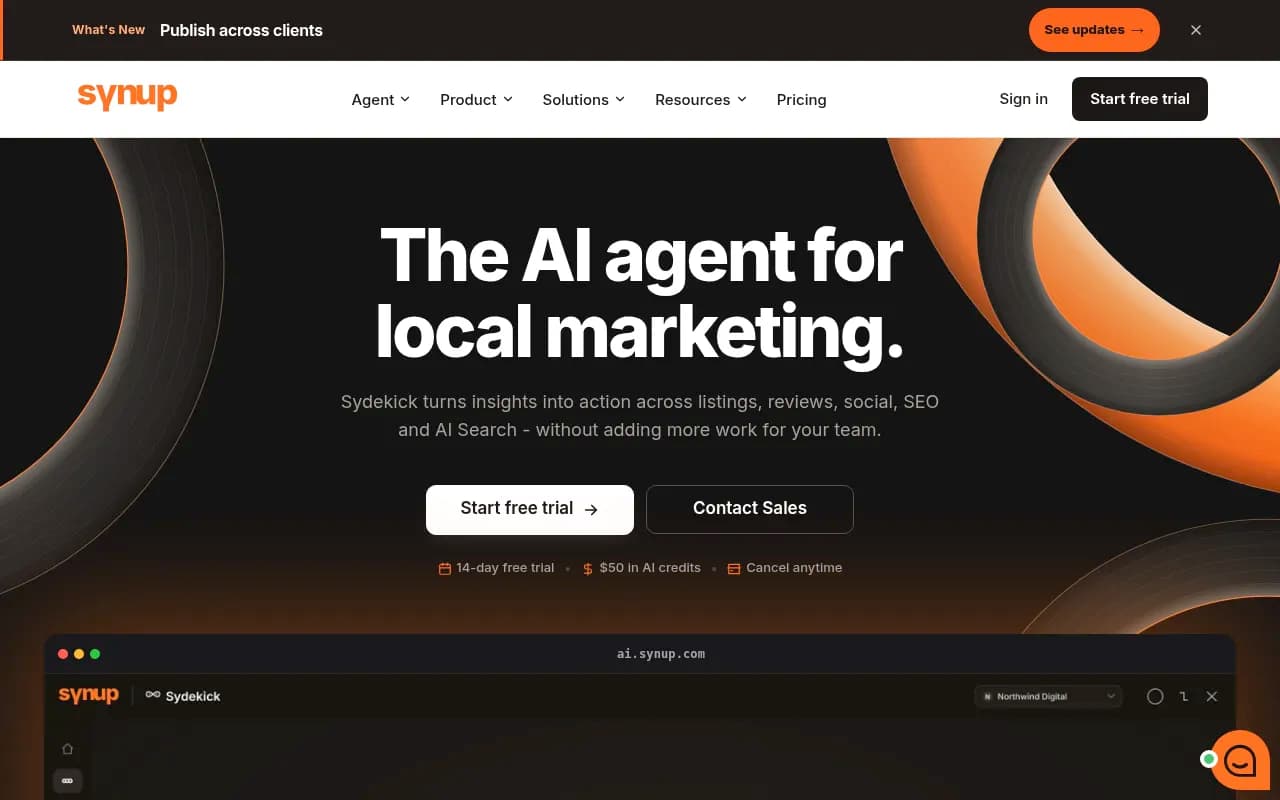
Synup positions itself as a local marketing agent that fixes listings and replies to reviews.
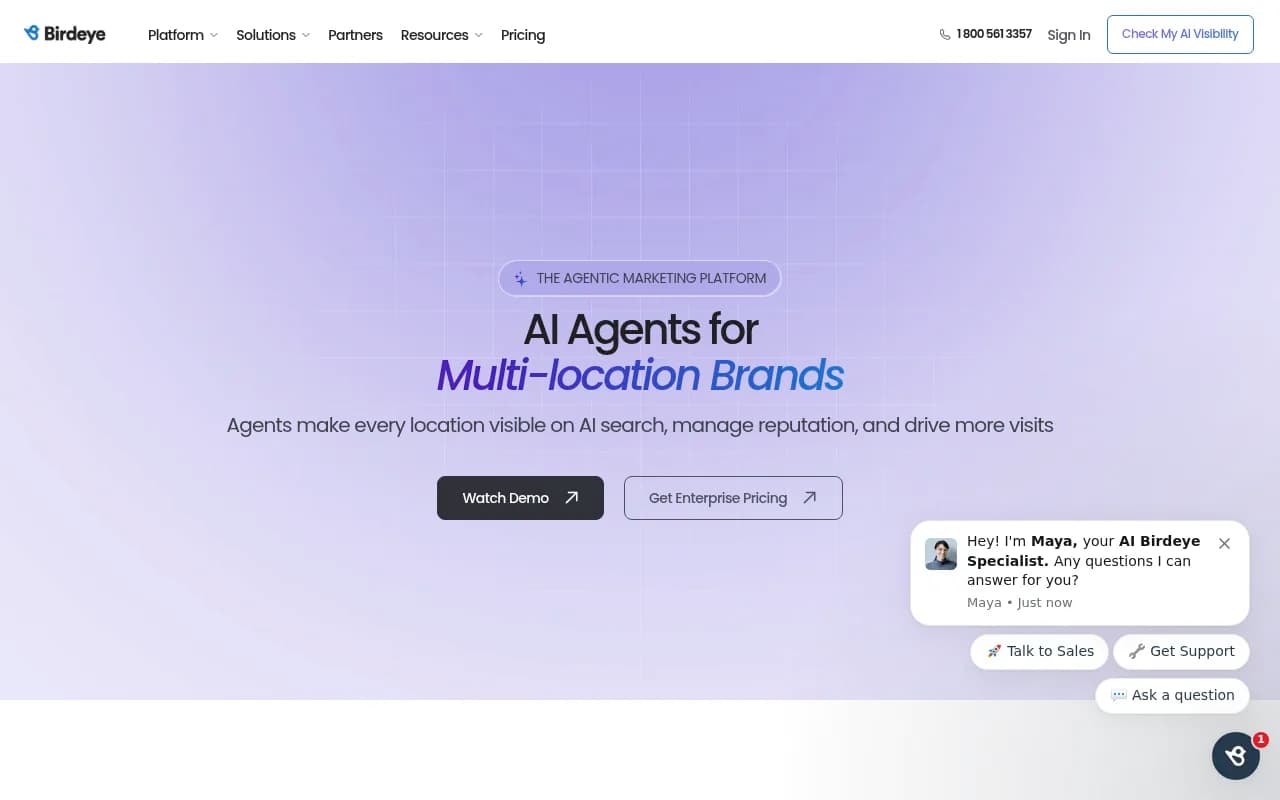
For franchises and multi-location brands, Birdeye Search AI tracks AI visibility at the location level.
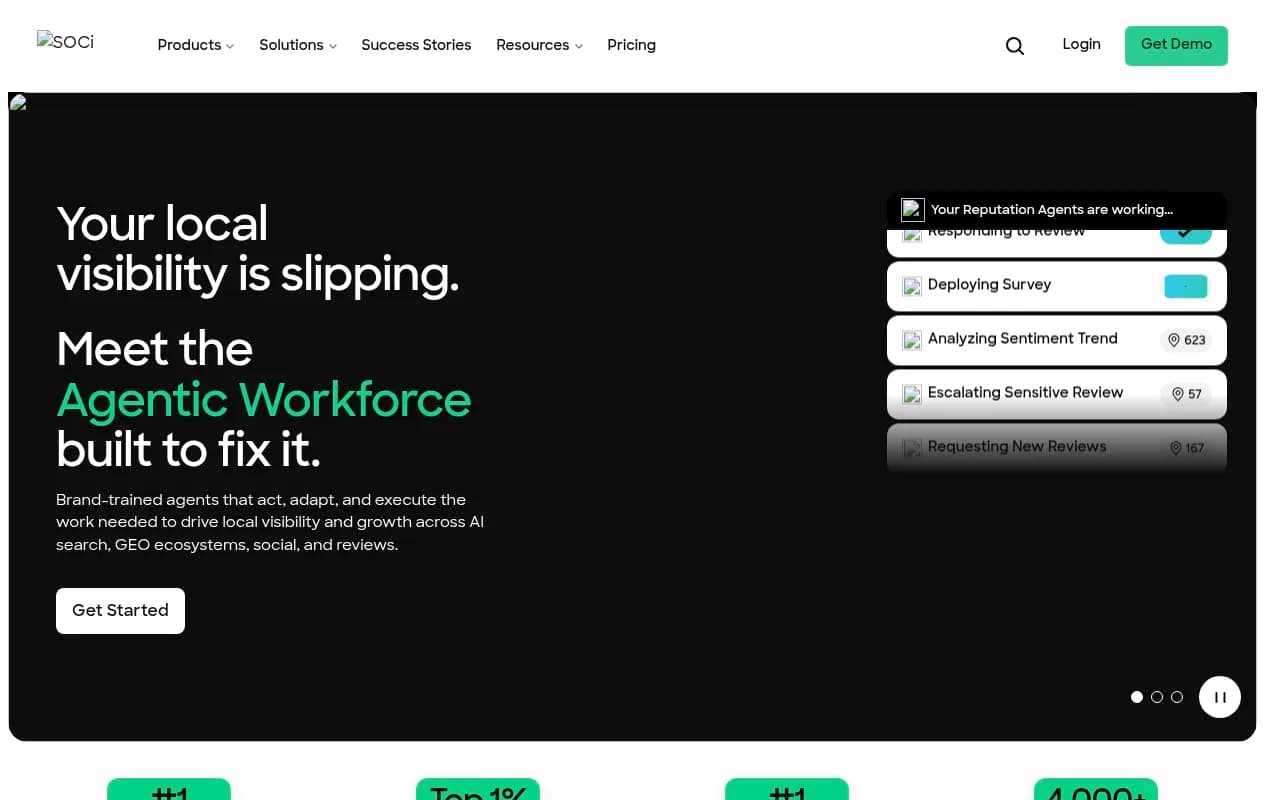
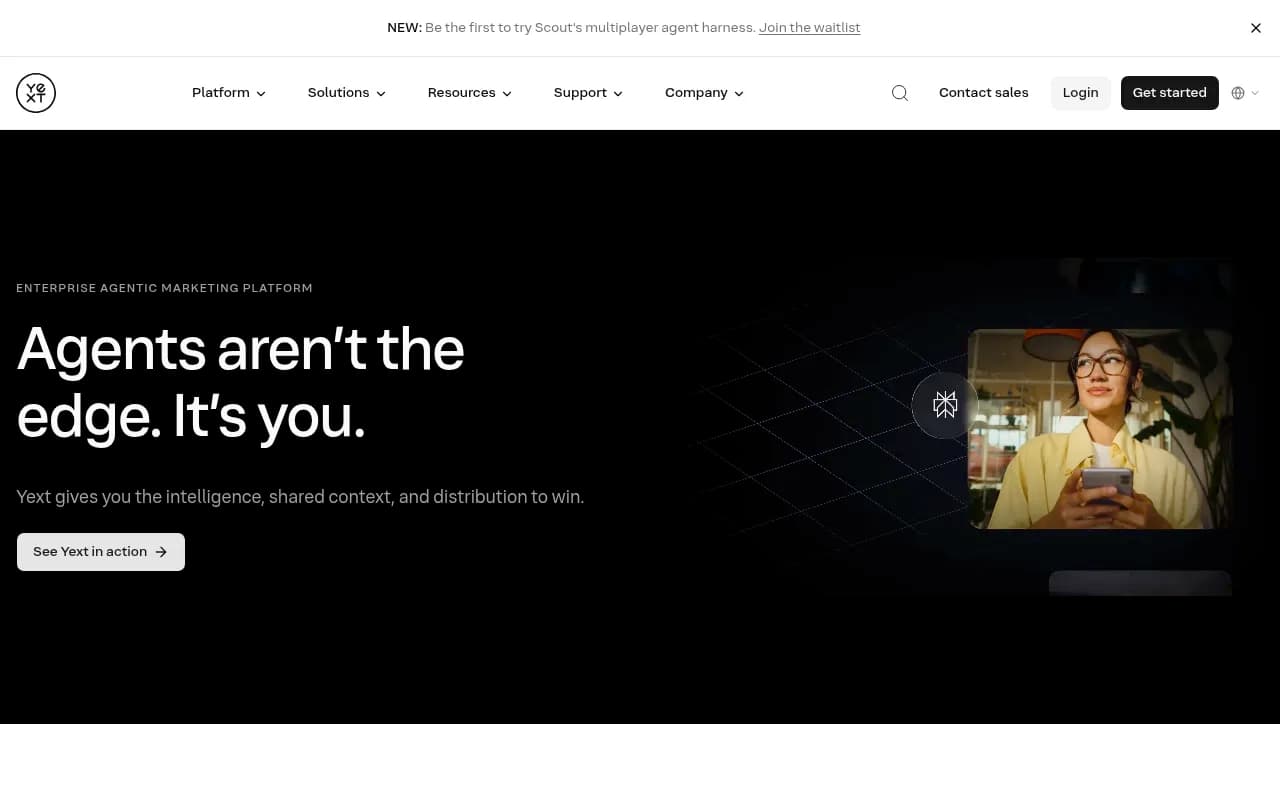
SOCi and Yext are the heavier options for enterprises managing hundreds of locations.
Content and schema
Surfer SEO scores a draft against what ranks, which is handy for the first-pass copy on each page. Daltonluka's checklist even lists a Surfer score as one of its steps.
InLinks automates entity-based internal linking and schema, which helps with the hub-and-spoke structure above.
Tracking AI recommendations
Rankings tell you about Google. They do not tell you whether ChatGPT names you when someone asks for the best electrician near them. A tracker such as Promptwatch can monitor those prompts across models and countries, and its local GEO targeting lets you pin a monitor to exact coordinates so ChatGPT and Google's AI surfaces answer as if asked from that spot (Business plan and above). Its crawler logs also show whether AI bots are reading your city pages at all.

Lighter options include Peec AI and Otterly.AI if you only need basic prompt monitoring.


If you want to compare more options, the GEO software directory at bestgeosoftware.com lists a lot of them. Confirm current pricing on each vendor's site before you commit.
Rollout plan
- Start with three pages, not thirty. Choose your highest-revenue service and your three best cities.
- Gather proof first: photos, reviews, a case study, license details for each city.
- Write the pages from the template, with the intro and FAQs written by someone who knows the area.
- Validate schema, submit the pages in Search Console, and link them from a hub.
- Track for 60 to 90 days: map pack position, organic clicks, calls, and AI mentions for your core prompts.
- Refresh quarterly. Prices, hours, and staff change, and wrong facts get quoted back at your customers.
- Scale only the pages that earn their spot. Merge or remove the ones that stay thin.
Common mistakes
- Publishing pages for cities you do not serve. It fails the real-world test and invites bad reviews.
- Stock photos on every page. Use real ones, even if they are imperfect.
- Hiding prices entirely. Models quote specifics, and a range beats nothing.
- Letting the GBP and the page drift apart on hours or phone numbers.
- Treating the template as finished. The fixed parts are scaffolding. The variable parts are the page.
What to do this week
Pick one city page you already have. Run it through the checklist, count how many of the six uniqueness signals it contains, and add whichever ones are missing. If it has fewer than four, rewrite it before you build any new ones. Then check whether it is indexed, and whether an AI assistant can find and describe your business when asked about that city.