Key takeaways
- Profound no longer lists self-serve brand plans. Per Arobis (updated Oct 30, 2026), it offers a free 7-day trial and custom Enterprise pricing, so the old $399 Growth figure in many roundups is stale.
- $500 a month is enough for one serious tracker plus a content workflow. It is not enough for an enterprise suite, and you should not want one yet.
- Cheap monitors ($17 to $95) tell you where you are invisible. They do not fix it. Budget part of your $500 for the work that changes the answer.
- Check engine coverage, annual-only billing, and per-engine add-ons before you buy. Those are where the real costs hide.
- Most prices below come from competitor-written roundups. Confirm everything on the vendor's pricing page.
Why seed-stage teams are shopping for Profound alternatives
Profound is a good product. It is also built for teams with an analyst who opens the dashboard every week. According to Alhena's July 2026 comparison, it raised a $180M Series D at a $1.8B valuation and says it serves more than 1,000 enterprise brands. That is not a signal that it is chasing a three-person startup.

The practical consequence: the $99 and $399 self-serve plans are gone. During the free trial, 50 prompts are tracked daily across ChatGPT, Gemini and Google AI Overviews, and Copilot is Enterprise only. After that, you talk to sales. So "cheaper Profound alternative" now mostly means "a tool with a price on its website."
I would flag one more thing. Several popular roundups, including the Omnia and Ryze pieces, still compare against the $399 plan. If you read one of those, mentally discard the comparison.

What a seed-stage team actually needs
Before looking at prices, decide which problem you have. There are really two.
The first is measurement: does ChatGPT mention us, for which prompts, and who is ahead of us? The second is execution: which pages, sources and entity work will change the answer? Arobis makes the point well. Many teams already know they are invisible. Measurement is not their bottleneck.
At seed stage you probably have one marketer, maybe a founder doing content on the side. A tool nobody opens weekly is wasted money, no matter how good the charts are. If that sounds like you, a cheap monitor is the correct purchase, not a compromise.
Two numbers worth knowing before you pick a tracker
Promptwatch's average sources per response data shows ChatGPT cites about 5 sources per web-search answer, while Google AI Overviews and Perplexity cite about 10. Fewer slots means each ChatGPT citation is more contested. Perplexity's steady count makes it a decent test bench when you change a page.
And ChatGPT query fanout data shows a single prompt can trigger several separate web searches, though the average dipped to roughly 1.84 per response by early March 2026. The takeaway for tool buyers: a tracker that only logs the prompts you type in misses the searches the model actually runs. Prefer tools that capture fanouts.
What each budget tier buys
Prices below are Arobis's figures read off vendor pages in October 2026, plus a few vendor-claimed numbers. I did not check the vendor pages myself, so verify before you pay.
| Tool | Entry price | Coverage | Notes |
|---|---|---|---|
| Rankscale | $17/mo, annual billing only | Monitoring | Credit limits on lower tiers |
| Otterly.AI | $29/mo (Lite) | 4 engines: ChatGPT, AI Overviews, Perplexity, Copilot | Monitoring-focused, lowest monthly-billed plan |
| Semrush AI Visibility | From $99/mo | Inside Semrush | Good if you already use Semrush |
| Writesonic GEO | $79/mo (annual) | ChatGPT, Gemini, AI Overviews | 50 prompts, includes AI articles and audits |
| LLMrefs | $79/mo | 7+ platforms | Monitoring only |
| Peec AI | $95/mo (Starter) | 3 of 6 models, 50 prompts | Extra models cost $30 to $140/mo |
| SE Ranking | $129/mo (Core) | 25 daily AI prompts | Lighter AI tracking, Copilot is an add-on |
| Alhena AI | Free, then $199/mo annual | Ecommerce products | Ties AI traffic to orders |
| Ahrefs Brand Radar | From $199/mo | Multi-engine | Sources disagree on whether a base plan is needed |
| Scrunch AI | $250/mo (Core) | Monitoring | Agent platform is Enterprise only |
| AthenaHQ | $295/mo (Starter) | 9 models, 3,600 credits | Closest like-for-like on depth |
| Goodie AI | $399/mo (Core) | 120 prompts, 5 engines | No Gemini or Claude on Core |
The cheap monitors
Rankscale at $17 a month is the lowest sticker price, but it is annual-only and credit-limited.
Otterly.AI at $29 is the better value for most tiny teams because it is monthly and covers four engines on every paid tier.

Both are monitoring tools. They will tell you the problem exists. They will not write the page that fixes it.
The mid-priced self-serve trackers
Peec AI at $95 is the most-cited serious self-serve replacement. Watch the model count: Starter covers 3 of 6 models, and adding more is where the bill grows.

AthenaHQ at $295 gives you nine models and a content optimization agent, and it is the closest thing to Profound-style depth at a published price.

Scrunch at $250 is solid for monitoring, but its agent features sit in Enterprise.

Goodie at $399 fits under $500 only if you buy nothing else, and its Core plan skips Gemini and Claude.

Suite add-ons
If you already pay for an SEO suite, the add-on is usually the cheapest entry. Semrush's toolkit starts at $99 a month, and Ahrefs Brand Radar from $199.

The trade-off is shallower AI-specific data. Fine for a first look, thin if AI search becomes a real channel for you.
An option that covers both measurement and execution
If your bottleneck is execution, Promptwatch is worth pricing out. Its Essential plan is $95 a month ($245 for Professional and $579 for Business, with a 7-day trial on monthly plans, so confirm at promptwatch.com/pricing). Essential includes all AI models, 50 prompts, site audit, content gap analysis and 500 Agent Credits. Professional adds a Knowledge Base and 5 AEO articles. The automated Content Agent that plans, writes and publishes to Webflow, Framer or WordPress starts at the Business tier, which on its own is over a $500 budget.

Two features matter more to a lean team than they sound. IP-verified AI crawler logs show whether ChatGPT and Perplexity bots can even read your site, a surprisingly common reason startups are invisible. And the content gap analysis shows which prompts AI answers where you have no page. Most monitoring-only tools skip both.
Three sample $500 budgets
These are illustrations, not endorsements of a single stack. Prices drift, so recheck.
Budget A: bare-minimum monitoring, most money on content
Otterly.AI Lite ($29) to see where you stand across four engines. That leaves about $470 for writing, freelance help or a content tool. Best when you already have a clear content plan and just need a scoreboard.
Budget B: one real platform, light content spend
Promptwatch Professional ($245) for tracking, crawler logs, gap analysis and a handful of AEO articles, plus roughly $250 left over for a freelancer, a content tool like Surfer SEO, or Reddit and PR efforts. Best when you do not have time to figure out what to write.
Budget C: depth-first
AthenaHQ Starter ($295) plus about $200 for content production. Best when you want nine-model coverage and an optimization agent, and someone on the team will actually act on the reports.
| Budget | Tracker | Tracker cost | Left for execution | Best for |
|---|---|---|---|---|
| A | Otterly.AI Lite | $29 | ~$470 | Teams with a content plan |
| B | Promptwatch Professional | $245 | ~$255 | Teams short on time and direction |
| C | AthenaHQ Starter | $295 | ~$205 | Teams wanting model depth |
Hidden costs to check before you pay
- Extra engines. Peec's Starter covers only 3 of 6 models, so the real price depends on which ones you add.
- Annual-only billing. Rankscale's $17 is a yearly commitment. At seed stage, cash is the constraint.
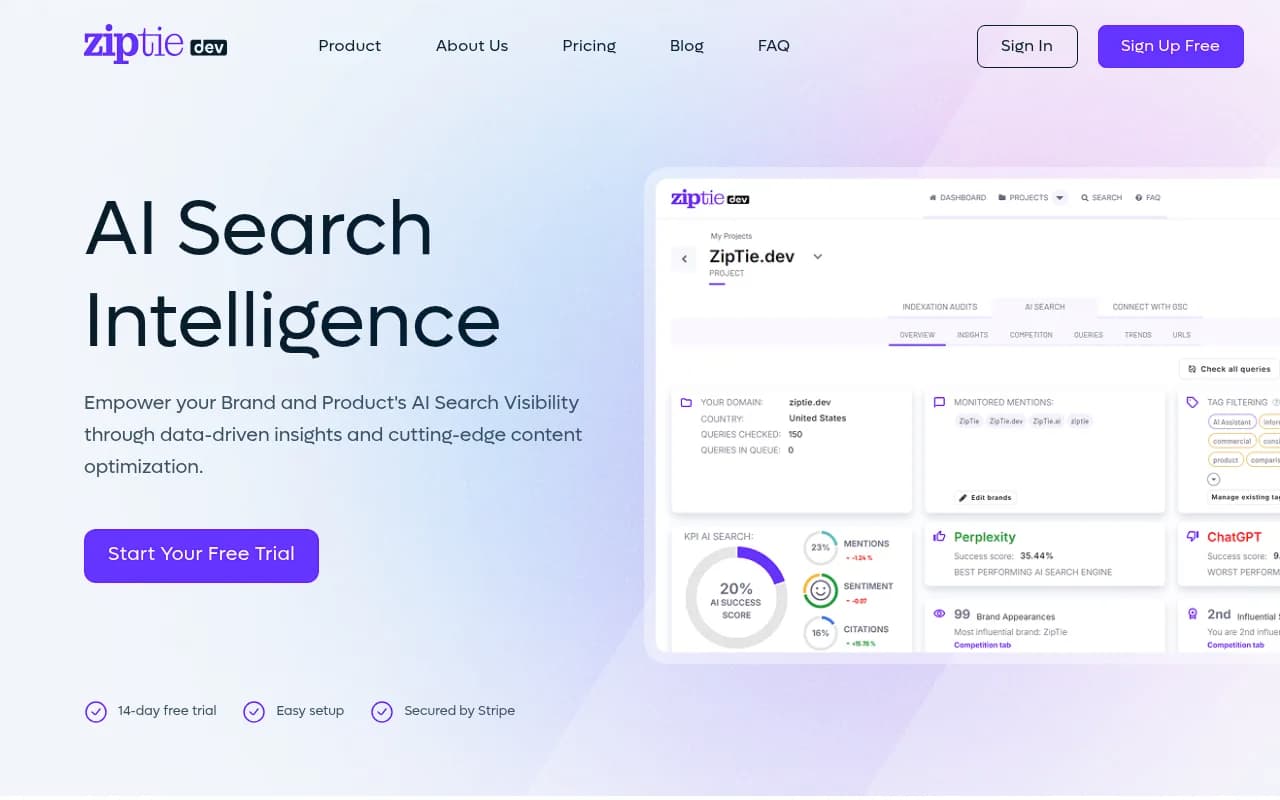
- Usage billing. ZipTie charges per prompt and per engine, with unlimited seats. There is no flat entry tier, so forecasting is harder.
- Missing engines. Some tools skip Gemini, Claude or Copilot. Make sure your buyers' assistants are covered.
- Credits. Several tools meter by credits rather than prompts. Estimate your monthly usage first.
Ecommerce and other special cases
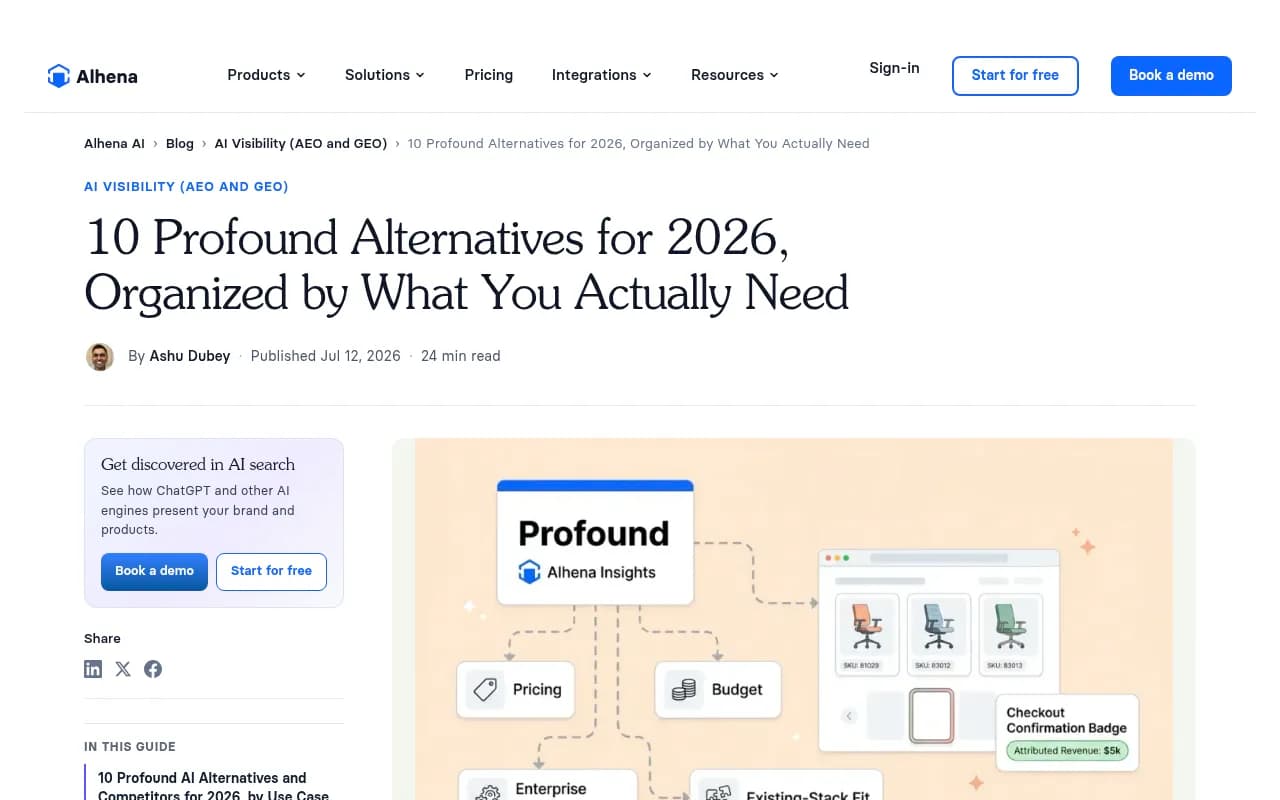
If you sell products, a general tracker is the wrong shape. Alhena, at free then $199 a month billed annually, tracks which SKUs AI recommends and ties traffic to orders.
For agencies or founders running client work, Peec's unlimited seats on every plan (about EUR 85 a month per Alhena) is the main draw.
How to run your first 30 days
- Pick 20 to 30 prompts your buyers actually type. Include a few competitor comparisons.
- Run them in a free trial first. Most paid tools here offer one, and Profound's own 7-day trial is a fair way to see enterprise-grade output once.
- Check your crawler access before writing anything new. If AI bots cannot read your pages, new content will not help.
- Fix or publish for the three biggest gaps, not thirty.
- Re-check after two to four weeks. Citations move slowly, and Perplexity is the quickest place to see a change.
For more options by category, the GEO software directory lists far more tools than fit in a budget guide.
What I would do
With $500 and one marketer, I would skip the $295 and $399 tiers. Spend about $95 to $245 on a tracker that also tells you what to write or fix, keep the rest for content, and revisit when AI traffic shows up in your analytics. A dashboard is not a growth channel. The pages are.
One caveat: almost all the pricing here comes from competitor-written roundups with their own interests, and vendors change plans often. Treat every number as a starting point and confirm it before you buy.