Key takeaways
- Profound, AirOps, and Promptwatch solve different problems -- they're not really competing for the same buyer
- Profound is the strongest pure monitoring platform, with real-user prompt data and Amazon Rufus tracking, but its pricing jumps sharply as you add AI models
- AirOps is built for content teams that need to produce AI-optimized content at scale, not for tracking where your brand appears
- Promptwatch is the only one of the three that covers the full loop: find gaps, generate content, track results -- all in one platform
- If you're just starting out and want to understand your AI visibility before committing to a workflow, start with Promptwatch's free tier
The AI search visibility market has gotten crowded fast. Dozens of tools now claim to help you "rank in AI" -- but they mean very different things by that. Some track mentions. Some generate content. Some do a bit of both. Very few actually connect the two.
Profound, AirOps, and Promptwatch are three of the most-discussed platforms in this space right now, and they represent genuinely different philosophies about what the job even is. Choosing between them isn't just a feature comparison exercise -- it's a question of what problem you're actually trying to solve.
Let's break down what each one actually does, where it falls short, and which type of team it's right for.
What each platform is actually trying to do
Before getting into features, it helps to understand the underlying logic of each tool.
Profound's bet is that data quality is the differentiator. Most AI visibility tools fabricate prompts -- they guess what users might ask, run those queries, and report back. Profound argues (correctly) that this produces visibility scores that may not reflect real behavior. Its dataset of real user prompts gives its monitoring a more grounded foundation.
AirOps' bet is that the bottleneck isn't insight -- it's execution. Most marketing teams already know they need more AI-optimized content. The problem is producing it fast enough, at the right quality, without burning out writers. AirOps is built around that workflow problem.
Promptwatch's bet is that monitoring without action is a dead end. Knowing you're invisible in ChatGPT is useful for about five minutes. What you actually need is to know why, what to do about it, and whether it worked. Promptwatch is built around that loop.
These aren't subtle differences. They lead to completely different products.
Profound: the data-first monitoring platform
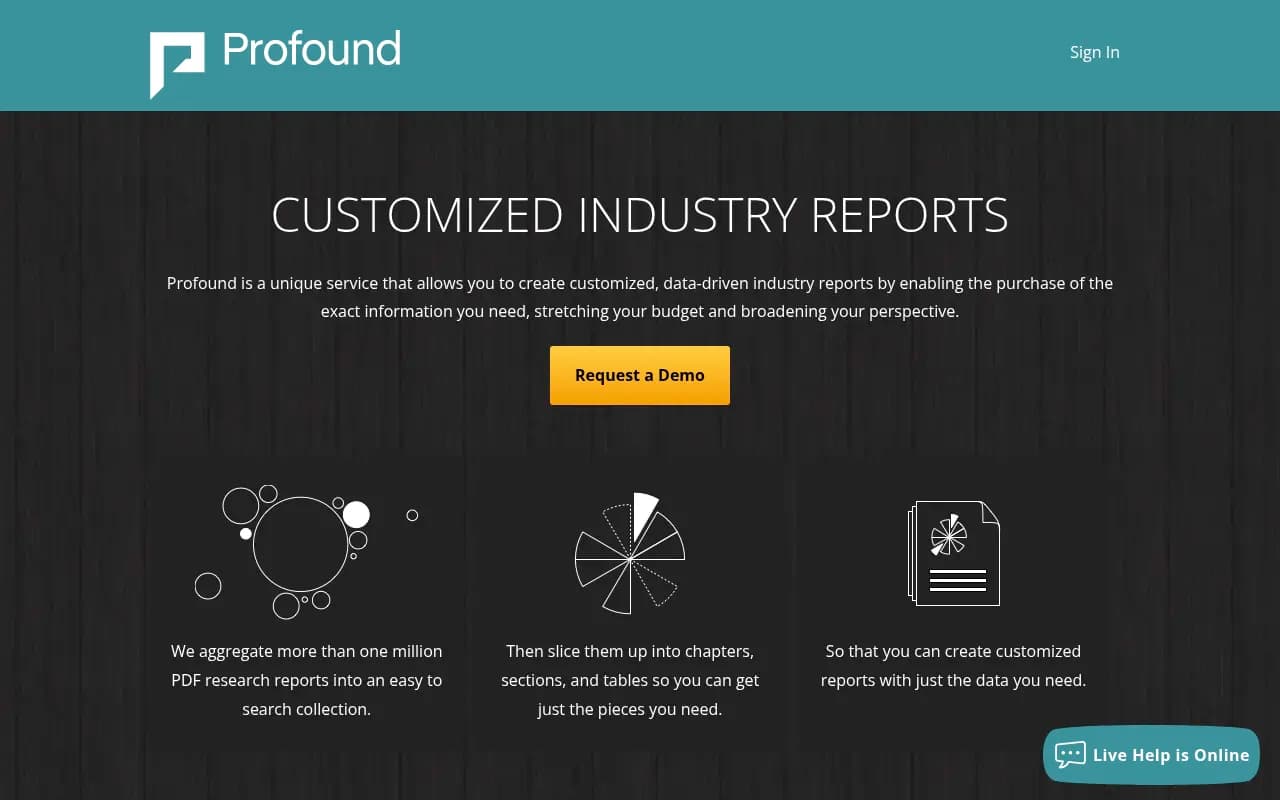
Profound has been one of the more serious players in AI visibility tracking since the category emerged. Its core strength is the quality of its prompt data -- rather than fabricating queries, it draws on real user behavior, which means the prompts it tracks correspond to things people actually asked.
It also covers some ground that competitors haven't caught up to yet. Amazon Rufus tracking (for brands in the e-commerce space) is genuinely rare. Sentiment analysis on AI responses -- not just whether you appeared, but whether the mention was positive or negative -- is something most tools skip entirely. And its front-end response capture (tracking how AI answers look in actual user interfaces, not just API outputs) matters more than it sounds, because the two can differ.
In 2026, Profound also shipped autonomous Agents and MCP (Model Context Protocol) support, which lets it connect to external data sources and run more complex monitoring workflows. That's a meaningful technical step forward.
Where Profound gets complicated is pricing. The Starter plan at $99/month covers ChatGPT only. To add Perplexity and Google AI Overviews, you're at $399/month. Claude, Gemini, Grok, and the rest require enterprise pricing that isn't published. At the Growth tier, you're capped at 100 tracked prompts and 3 user seats. For a team that needs broad model coverage and a decent prompt volume, the costs add up quickly.
The other limitation is that Profound is primarily a monitoring tool. It shows you where you stand. It doesn't generate content, doesn't help you close the gaps it identifies, and doesn't connect visibility data to traffic or revenue. You get excellent data, then you're on your own to act on it.
Who Profound is right for
Teams that need the most rigorous monitoring data available and have separate content and SEO workflows to act on it. Enterprise brands with dedicated analytics resources who want to feed Profound's data into their own systems. E-commerce companies who want Amazon Rufus visibility alongside traditional AI search tracking.
AirOps: the content workflow platform
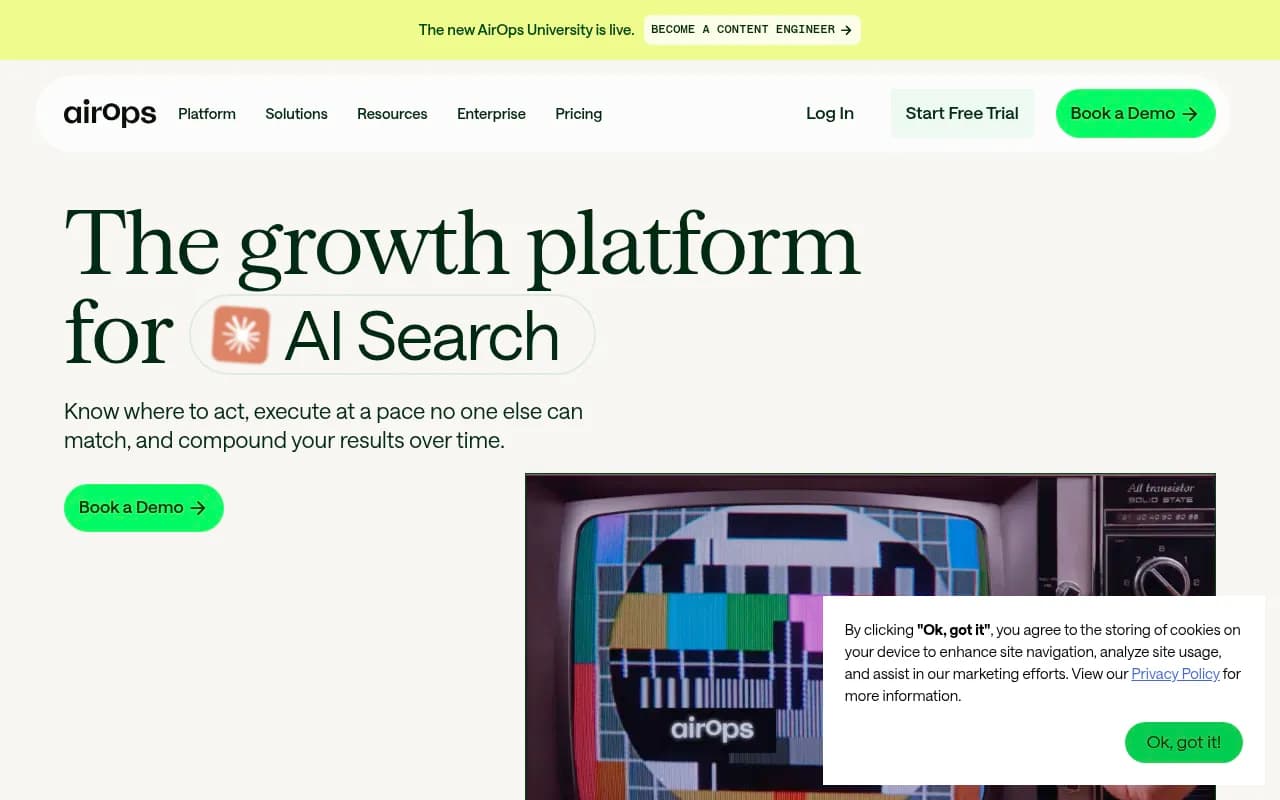
AirOps comes at this from a completely different angle. It's not primarily a monitoring tool -- it's a content production platform built for teams that need to generate AI-optimized content at scale.
The core product is a workflow builder that lets content teams create repeatable pipelines: pull in data, run it through AI models, apply brand guidelines, publish. In May 2026, AirOps launched Quill, an AI agent specifically designed to handle the content creation side of GEO -- generating articles, briefs, and optimized pages based on inputs from your content strategy.
AirOps is genuinely good at what it does. If you have a large content library that needs to be updated and optimized for AI search, or if you're producing content at a volume where manual workflows break down, it's a serious option. The pipeline approach means you can standardize quality across a team without every piece going through the same bottleneck.
The gap is on the monitoring and measurement side. AirOps doesn't tell you which prompts your competitors are winning that you're not. It doesn't show you your citation rate across AI models. It doesn't connect the content it helps you publish to actual visibility outcomes. You're essentially flying blind on whether the content is working -- at least within the platform itself.
That's not a knock on AirOps so much as a description of what it is. It's a content production tool, not an AI visibility platform. The two categories are related but distinct.
Who AirOps is right for
Content teams and agencies that have already done their visibility analysis elsewhere and need to execute at scale. Organizations with large existing content libraries that need systematic AI optimization. Teams where the bottleneck is production speed, not strategic direction.
Promptwatch: the full-loop platform
Promptwatch is built around a different premise: that monitoring and content creation need to be in the same platform, connected by data, or the whole thing breaks down.
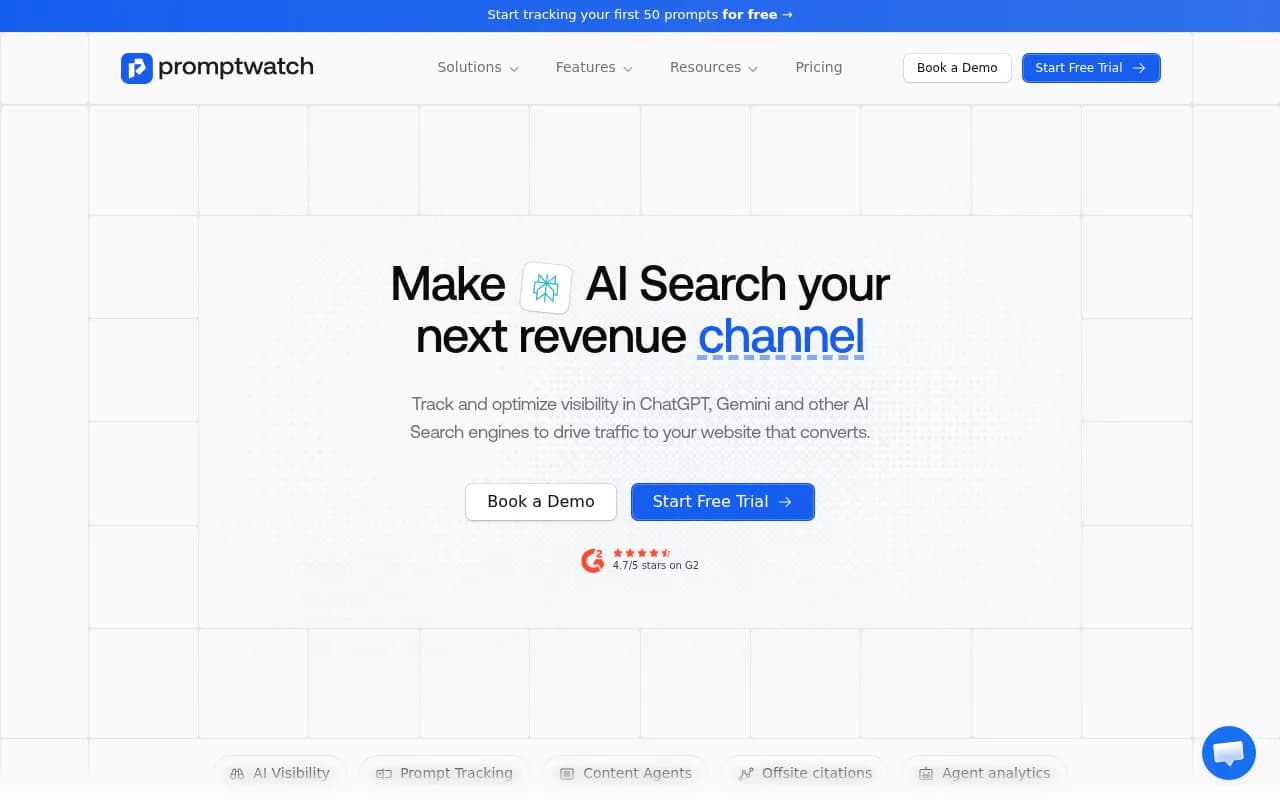
The core workflow looks like this. Answer Gap Analysis shows you exactly which prompts your competitors are appearing for that you're not -- not as a vague "you're missing coverage here" observation, but as specific questions with prompt volume data and difficulty scores. You see the gap, you understand its size, and you can prioritize which ones are worth going after.
From there, Content Agents generate articles, listicles, comparisons, and briefs grounded in that gap data. The content isn't generic -- it's built around the specific prompts AI models are already exposing as gaps, with brand guidance, competitor analysis, and real citation data baked in. Then page-level tracking shows you when AI crawlers pick up the new content, when it starts getting cited, and which models are citing it. Agent Analytics logs show the timeline from publish to crawl to citation.
That loop -- find gaps, create content, track results -- is what separates Promptwatch from both Profound and AirOps. Profound gives you excellent data but stops there. AirOps helps you create content but doesn't tell you whether it's working. Promptwatch connects the two.
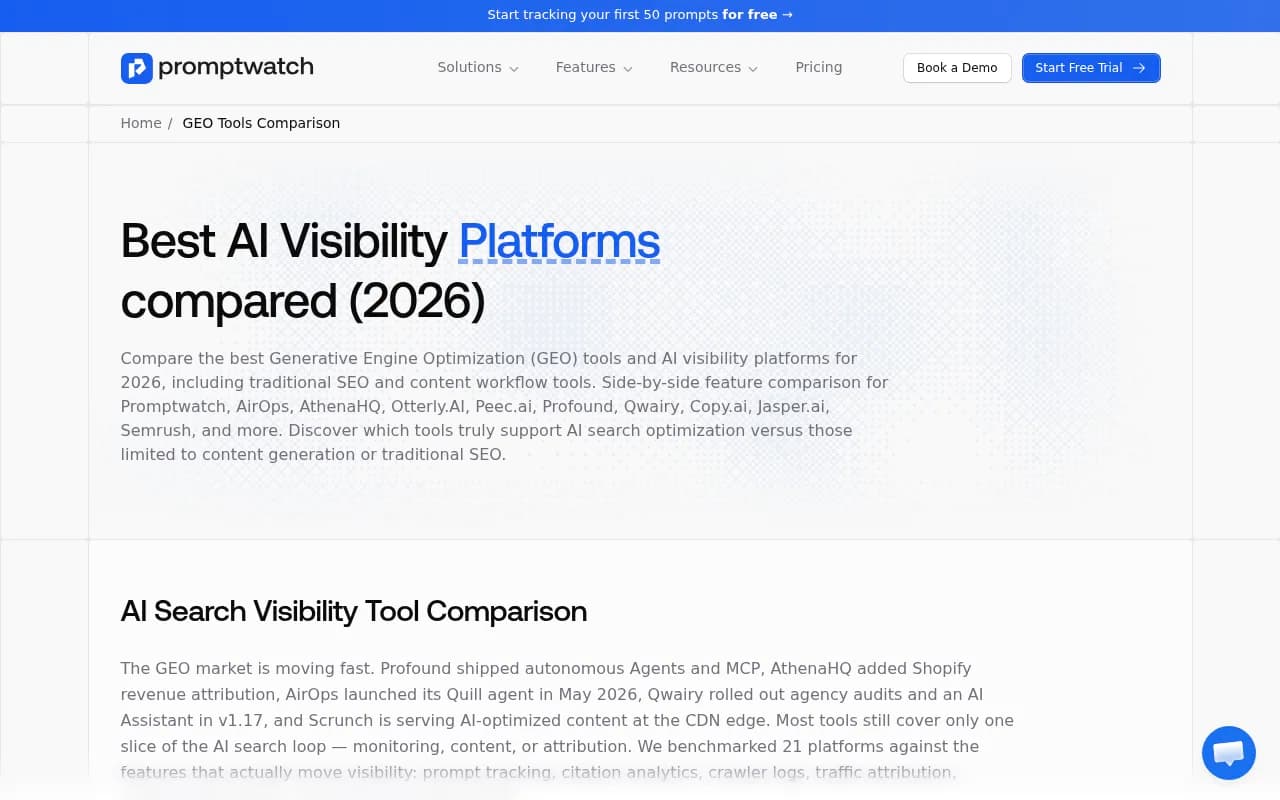
A few other things worth noting. Promptwatch tracks AI crawler activity in real time -- which pages ChatGPT, Claude, Perplexity, and others are reading, how often they return, and what errors they're hitting. Most competitors don't have this at all. It also tracks Reddit discussions and YouTube content that influence AI recommendations, ChatGPT Shopping appearances, and offsite citations (third-party pages, listicles, Reddit threads that are driving your AI visibility from outside your own site).
Model coverage spans 10 AI engines: ChatGPT, Perplexity, Google AI Overviews, Google AI Mode, Claude, Gemini, Meta/Llama, DeepSeek, Grok, Mistral, and Copilot. Multi-language and multi-region monitoring is included, with customizable personas that match how your actual customers prompt.
Pricing is more transparent than Profound's. Essential is $99/month (1 site, 50 prompts, 5 articles), Professional is $249/month (2 sites, 150 prompts, 15 articles, crawler logs, city-level tracking), Business is $579/month (5 sites, 350 prompts, 30 articles). A free trial is available.
Who Promptwatch is right for
Marketing and SEO teams that want to move from visibility data to ranked pages without switching tools. Agencies managing multiple clients who need a single platform that covers monitoring, content, and attribution. Any brand that's tired of knowing they're invisible in AI search but not knowing what to do about it.
Feature comparison
Here's how the three platforms stack up across the capabilities that actually matter for AI search visibility:
| Feature | Profound | AirOps | Promptwatch |
|---|---|---|---|
| AI model coverage | ChatGPT (Starter), multi-model (Enterprise) | N/A (content tool) | 10 models incl. ChatGPT, Claude, Gemini, Perplexity, Grok, DeepSeek |
| Real prompt data | Yes (1.5B+ real prompts) | No | Yes (4.5B+ citations and prompts processed) |
| Answer gap analysis | Limited | No | Yes, with prompt volume + difficulty scores |
| AI content generation | No | Yes (Quill agent, workflow builder) | Yes (Content Agents, briefs, listicles, comparisons) |
| AI crawler logs | No | No | Yes (real-time, page-level) |
| Page-level citation tracking | No | No | Yes |
| Traffic/revenue attribution | No | No | Yes |
| Reddit/YouTube insights | No | No | Yes |
| ChatGPT Shopping tracking | No | No | Yes |
| Amazon Rufus tracking | Yes | No | No |
| Sentiment analysis | Yes | No | No |
| Offsite citation analysis | No | No | Yes |
| Multi-language/region | Yes | No | Yes |
| Transparent pricing | Partial ($99-$399, Enterprise hidden) | Not published | Yes ($99-$579, free trial) |
The honest assessment
Profound is the best pure monitoring tool of the three. If data quality is your primary concern and you have the budget for multi-model coverage, it's hard to argue with its approach. The real-prompt dataset is a genuine differentiator, and the Amazon Rufus module is unique. The problem is that monitoring without action only gets you so far, and the pricing structure makes broad coverage expensive.
AirOps is the best content production tool of the three -- but it's not really an AI visibility platform. If your team has already figured out what content to create and needs to produce it faster and more consistently, AirOps is worth a serious look. But don't expect it to tell you whether that content is actually improving your AI visibility.
Promptwatch is the most complete platform of the three. It's not the deepest on any single dimension -- Profound's monitoring data is more granular, AirOps' content workflows are more flexible -- but it's the only one that connects monitoring to content creation to outcome tracking in a single product. For most marketing teams, that coherence is worth more than depth in any one area.
The question to ask yourself: what's your actual bottleneck right now?
If you're still figuring out where you stand in AI search, start with monitoring. Profound or Promptwatch both work here, with Promptwatch being more accessible on pricing.
If you know the gaps and need to produce content to close them, AirOps is a serious option -- but you'll still need something else to measure whether it's working.
If you want one platform that handles the whole thing, Promptwatch is the only one of these three that does.
A note on the broader landscape
These three aren't the only options. The AI visibility market now has 40+ tools, ranging from monitoring-only dashboards to content optimization suites to traditional SEO platforms adding AI tracking as a feature.
A few worth knowing about:

AthenaHQ added Shopify revenue attribution in 2026, which makes it interesting for e-commerce brands. It's still primarily monitoring-focused, but the attribution layer is a step toward closing the loop.
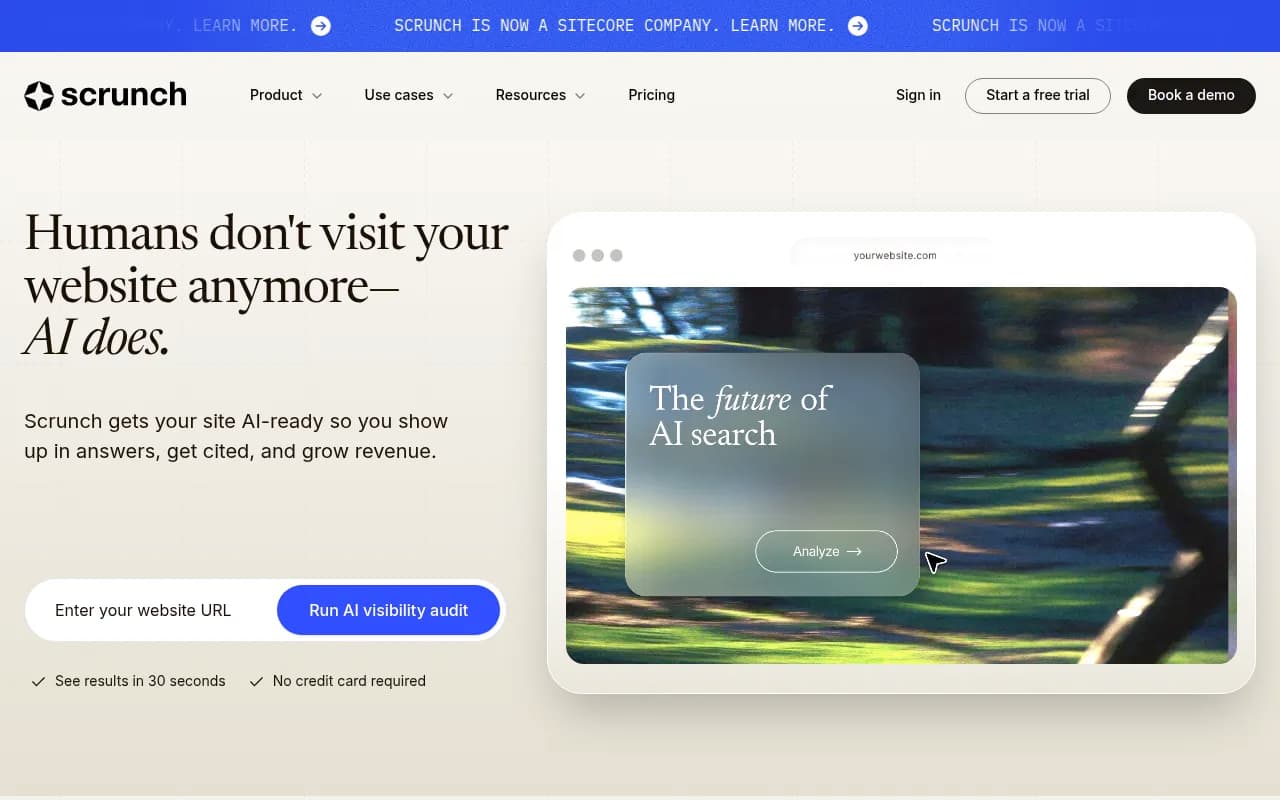
Scrunch AI is doing something technically interesting: serving AI-optimized content at the CDN edge, which means changes can be deployed without touching your CMS. Worth watching if you're in a large-scale publishing environment.
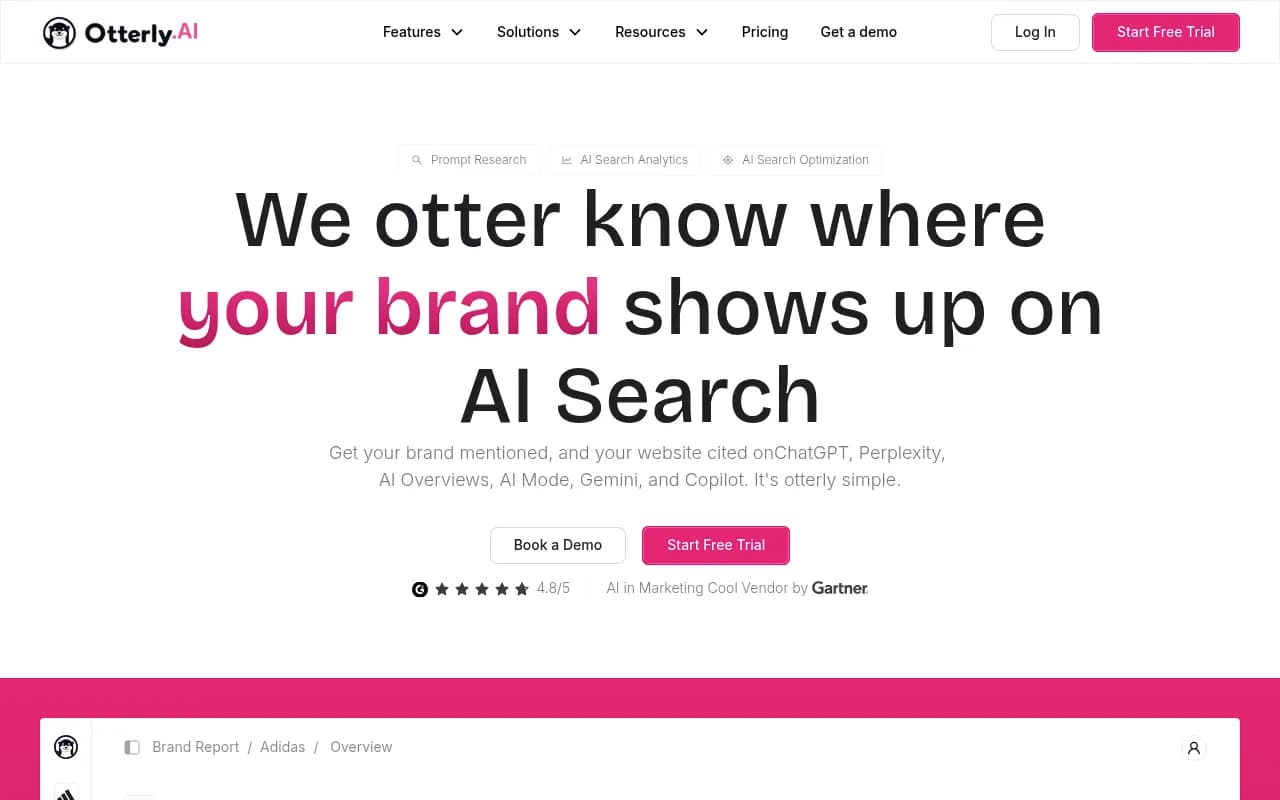
Otterly.AI is a solid entry point if budget is the primary constraint. It's monitoring-only, but it's affordable and covers the basics for teams just getting started with AI visibility tracking.
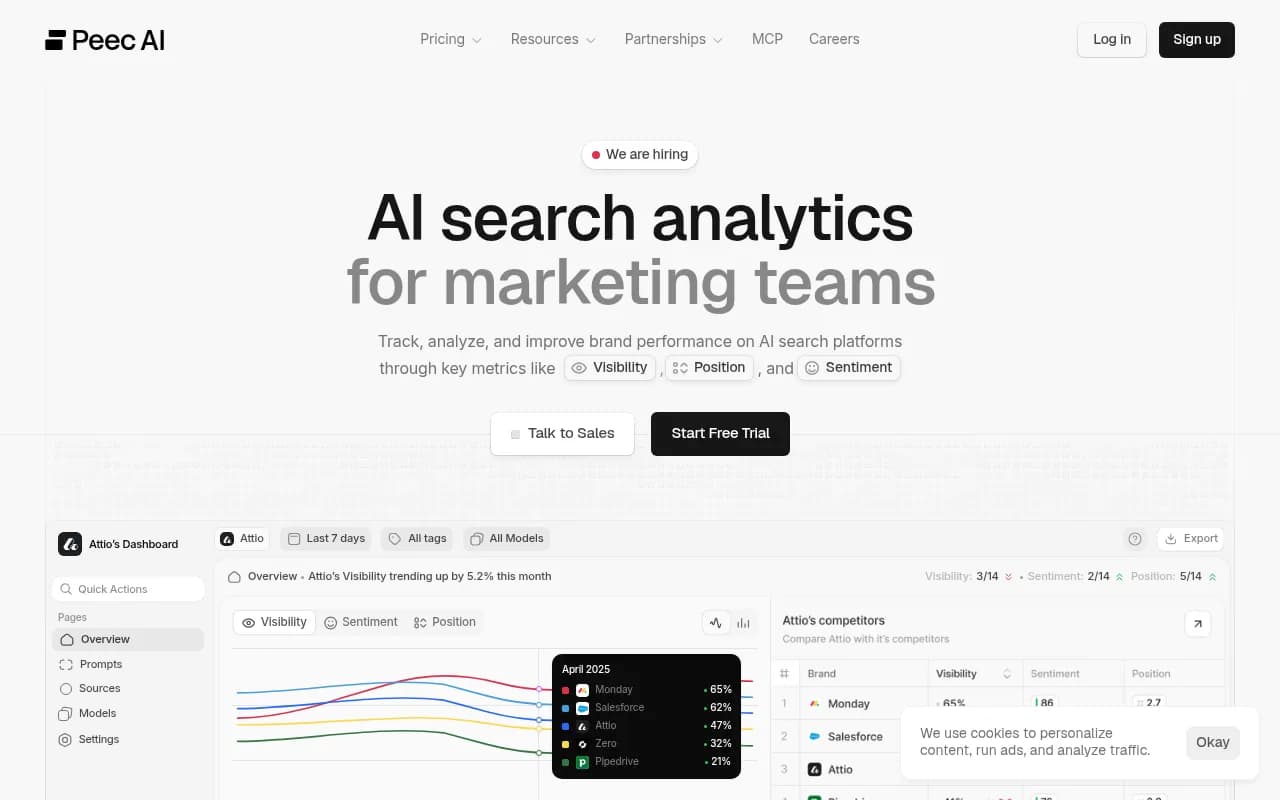
Peec AI sits in a similar tier -- lightweight monitoring with some optimization suggestions. Good for smaller teams that don't need the full stack yet.
The right tool depends on where you are in the AI visibility journey. If you're just starting to understand the category, a lighter tool is fine. If you're serious about turning AI visibility into a growth channel, you'll eventually need something that goes beyond tracking.
Bottom line
Profound, AirOps, and Promptwatch are solving different problems. Picking the wrong one doesn't mean you'll get bad data or bad content -- it means you'll get the right output for the wrong stage of the problem.
If you want to understand your AI visibility with the best possible data quality, Profound is worth the investment. If you need to produce AI-optimized content at scale and have the strategy already figured out, AirOps is a strong choice. If you want a single platform that takes you from "I don't know where I stand" to "I'm being cited in ChatGPT" without switching tools three times, Promptwatch is the one to start with.
The free trial makes it easy to test without committing.