Key takeaways
- AI search engines like ChatGPT, Perplexity, and Google AI Overviews are now active shopping channels -- if your products aren't cited, you're losing revenue, not just rankings
- Most platforms stop at monitoring; the ones worth paying for help you find gaps, create content, and track whether it worked
- Promptwatch is the only platform rated "Leader" across all categories in a 2026 comparison of 12 GEO platforms, and the only one that closes the full loop from gap detection to content generation to citation tracking
- Profound is the strongest pure-monitoring choice for enterprise teams with large budgets and complex reporting needs
- Peec AI is a lightweight entry point but lacks the content layer needed to actually fix visibility gaps
- Product-level tracking, AI crawler logs, and prompt volume data are the three features that separate useful platforms from expensive dashboards
Why e-commerce brands need a different kind of AI visibility tool
When someone asks ChatGPT "what's the best running shoe under $150," they're not clicking through to a results page. They're getting a recommendation. If your brand isn't in that recommendation, you don't exist for that buyer.
That's the commercial reality of AI search in 2026. Gartner estimated traditional search volume would drop around 25% by 2026, and that shift is showing up in e-commerce analytics right now. SparkToro's analysis of Similarweb data from early 2026 found that roughly 68% of Google searches ended without a click. ChatGPT hit around 900 million weekly active users in February 2026. Google AI Overviews reach an estimated 2 billion people monthly.
The brands winning in this environment aren't just tracking their AI visibility. They're actively managing it -- finding the product queries where competitors get cited and they don't, then doing something about it.
That's what makes the tool selection so important. A lot of platforms in this space will show you a dashboard of citation counts and call it a day. That's fine for reporting. It's useless for growth.
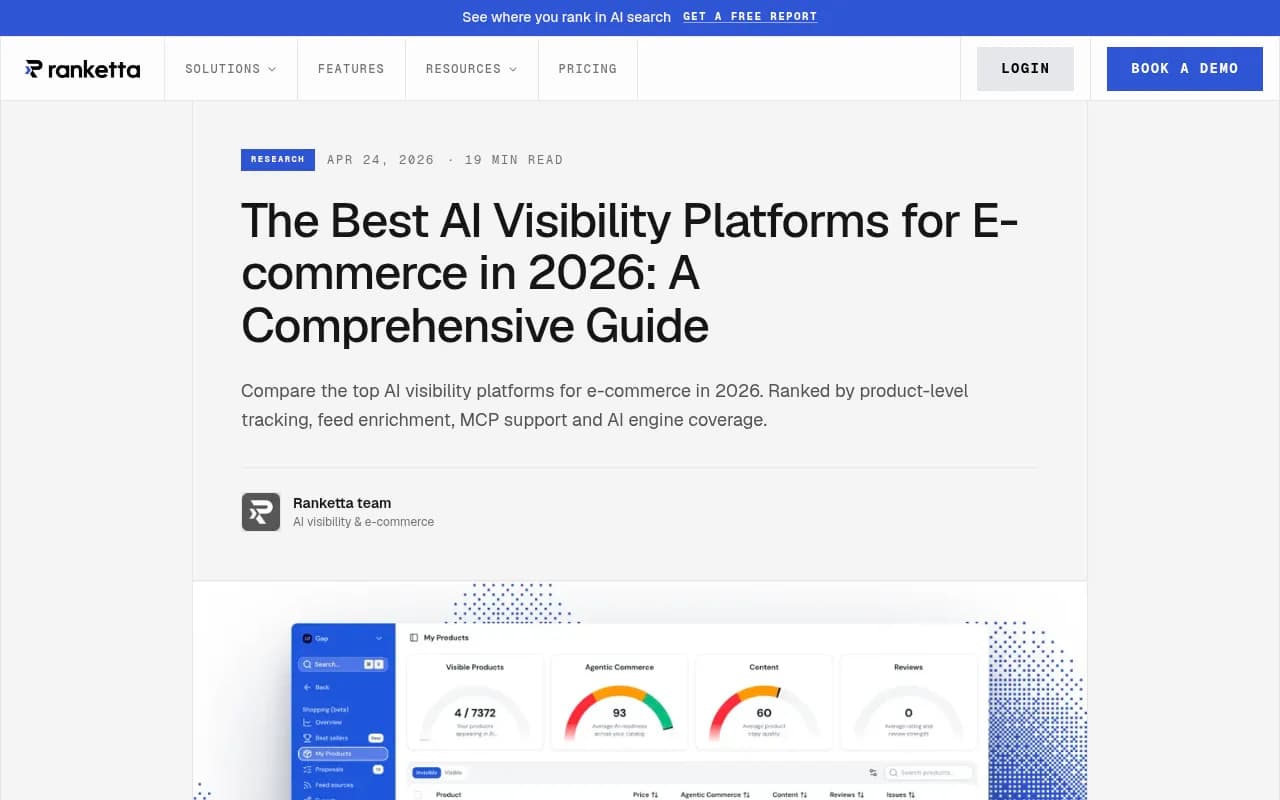
This guide focuses specifically on what e-commerce teams need: product query tracking, the ability to identify content gaps, and some path to actually fixing them. Here's how the main platforms stack up.
The platforms compared
Before getting into each tool, here's a quick orientation on where they sit:
| Platform | Product query tracking | Content gap analysis | Content generation | AI crawler logs | Best for |
|---|---|---|---|---|---|
| Promptwatch | Yes | Yes (Answer Gap Analysis) | Yes (Content Agents) | Yes | Marketing teams wanting full-loop optimization |
| Profound | Yes | Partial | No | No | Enterprise reporting and brand monitoring |
| Peec AI | Basic | No | No | No | Budget-conscious teams needing basic monitoring |
| AthenaHQ | Yes | Partial | No | No | Mid-market monitoring |
| Semrush AI Toolkit | Partial | No | No | No | Teams already on Semrush |
| Otterly.AI | Basic | No | No | No | Freelancers and small teams |
Promptwatch: the only platform built around fixing the gap
Promptwatch is the tool that makes the most sense for e-commerce brands that want to actually move their AI visibility numbers, not just watch them.
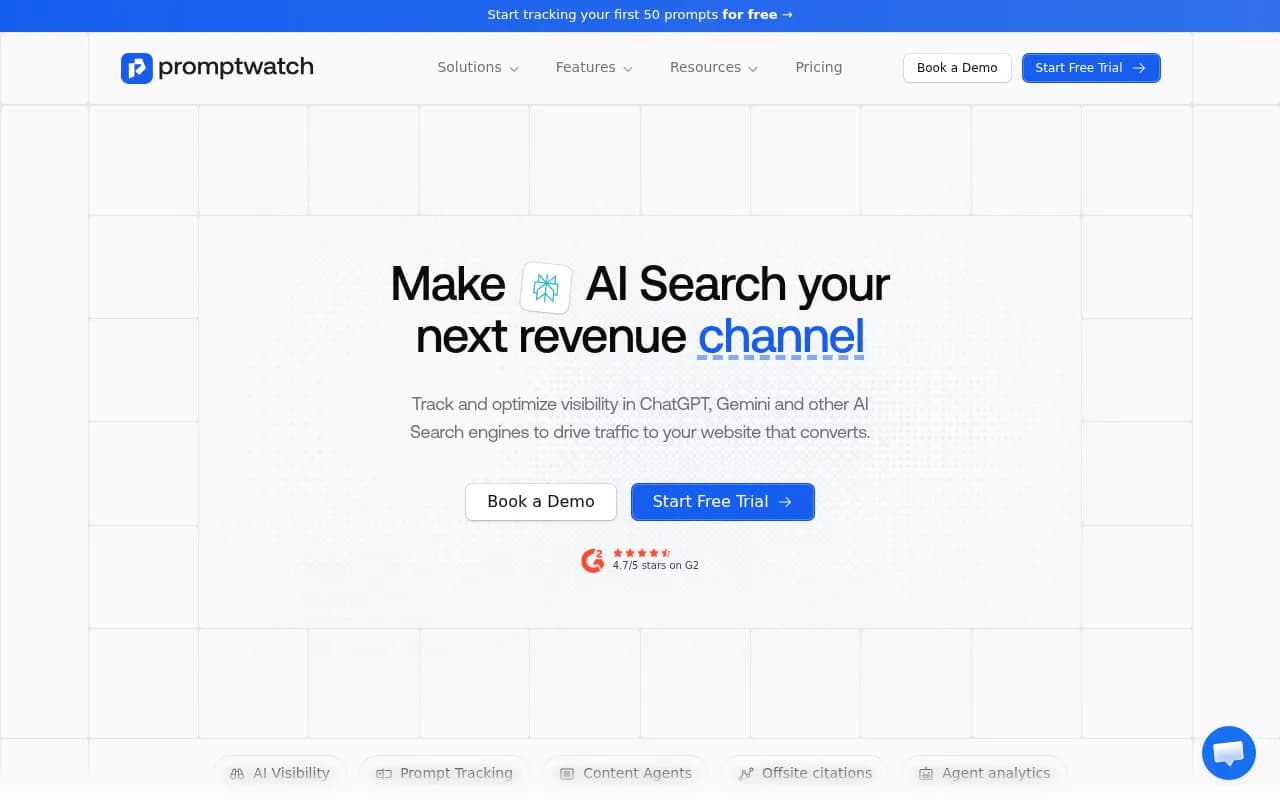
The core difference from every other platform on this list is what Promptwatch calls the action loop. Most tools show you where you're invisible. Promptwatch shows you where you're invisible, tells you exactly what content is missing, generates that content using real prompt and citation data, and then tracks whether the new content gets cited. That's a complete workflow. Most competitors handle one or two steps of it.
For e-commerce specifically, a few capabilities stand out.
The Answer Gap Analysis is genuinely useful for product query work. It surfaces the specific prompts where competitors are being cited but you're not -- not in the abstract, but at the query level. If a competitor is getting recommended for "best waterproof hiking boots for wide feet" and you're not, you see that prompt, you see who's winning it, and you can act on it. That's the kind of granularity that actually helps a category manager or SEO lead prioritize.
The Content Agents go further than most AI writing tools because they're grounded in real data: prompt volumes, citation patterns, competitor analysis, and brand guidelines. The output isn't generic blog content -- it's designed to answer the specific gaps AI models are already exposing in your catalogue.
The AI Crawler Logs (available on Professional and Business plans) show which pages ChatGPT, Claude, Perplexity, and other AI crawlers are actually reading, how often they return, and whether a page has moved from crawled to cited. For e-commerce teams with large catalogues, this is how you find out which product pages are being ignored entirely and why.
Promptwatch also tracks 10 AI models -- ChatGPT, Perplexity, Google AI Overviews, Google AI Mode, Claude, Gemini, Meta/Llama, DeepSeek, Grok, and Copilot -- which matters because different models dominate different buyer demographics and query types. ChatGPT Shopping tracking is a specific feature worth calling out: it monitors when your brand appears in ChatGPT's product recommendations and shopping carousels, which is a direct commercial signal.
Pricing runs from $99/month (Essential: 1 site, 50 prompts, 5 articles) to $579/month (Business: 5 sites, 350 prompts, 30 articles). There's a free trial. For e-commerce teams running multiple brands or storefronts, the agency and enterprise tiers are worth a conversation.
The one honest limitation: the prompt caps on lower tiers can feel tight if you're tracking a large product catalogue across many query variations. Scaling up means scaling the price. That's worth factoring into your budget math before you commit.
Profound: enterprise-grade monitoring, limited action layer
Profound is the platform you'd choose if your primary job is reporting AI visibility to a board or a large enterprise stakeholder group, not if you're trying to fix gaps yourself.
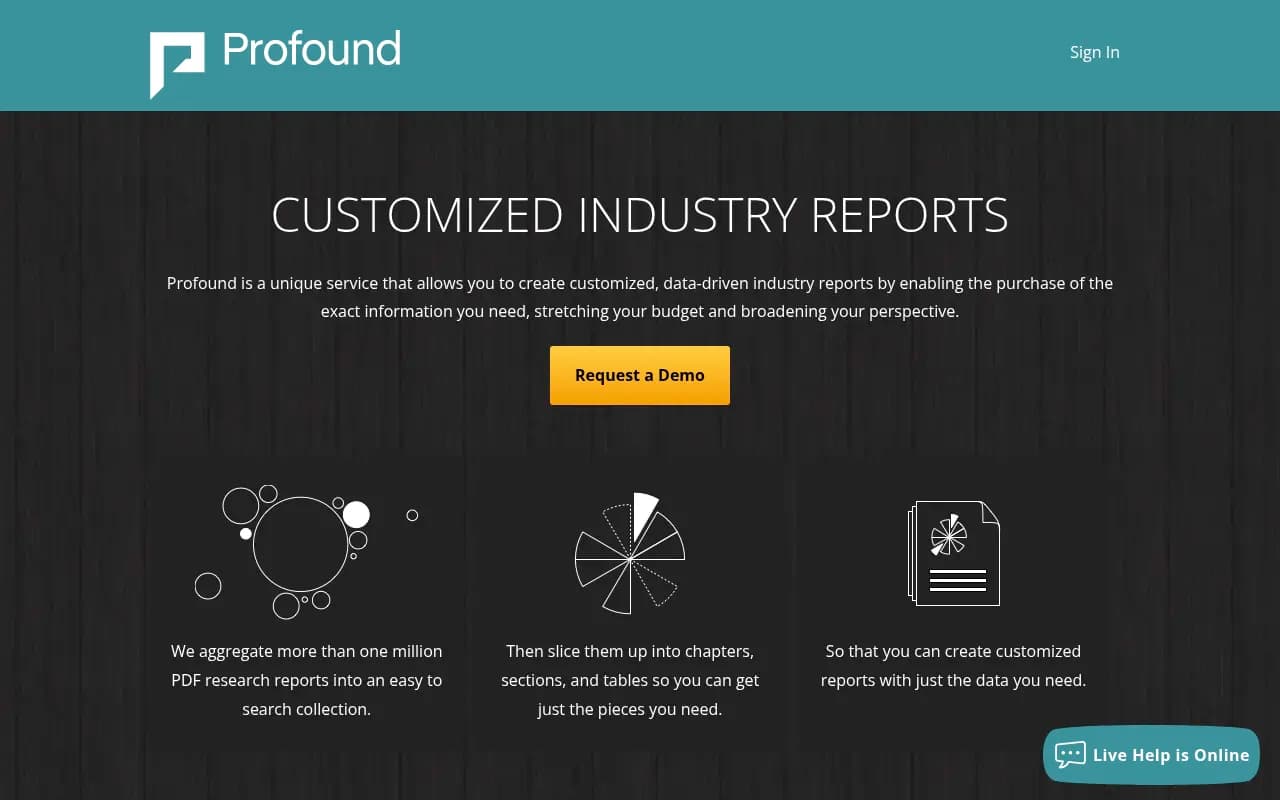
It processes a significant volume of citations daily across multiple AI engines, and its reporting depth is genuinely impressive. The platform is built for Fortune 500-scale operations where the question is "how are we performing across every AI model in every market" rather than "what content should we create next week."
For e-commerce teams, the gap is on the action side. Profound doesn't generate content. It doesn't have a built-in content brief workflow. It will tell you that you're losing visibility for a category of product queries, but it won't tell you what to write or help you write it. You'll need a separate content workflow to act on what you find.
Pricing is enterprise-tier -- expect to negotiate a contract rather than self-serve. That's fine if you have the budget and the team to support it. It's a real barrier for mid-market e-commerce brands.
Where Profound genuinely earns its place: multi-market monitoring, complex stakeholder reporting, and situations where the data quality and depth of tracking matters more than the ability to act on it in-platform.
Peec AI: lightweight monitoring, limited depth
Peec AI is the most accessible entry point in this comparison. It tracks AI citations across major models, surfaces some basic visibility data, and is priced for teams that are just starting to take AI search seriously.
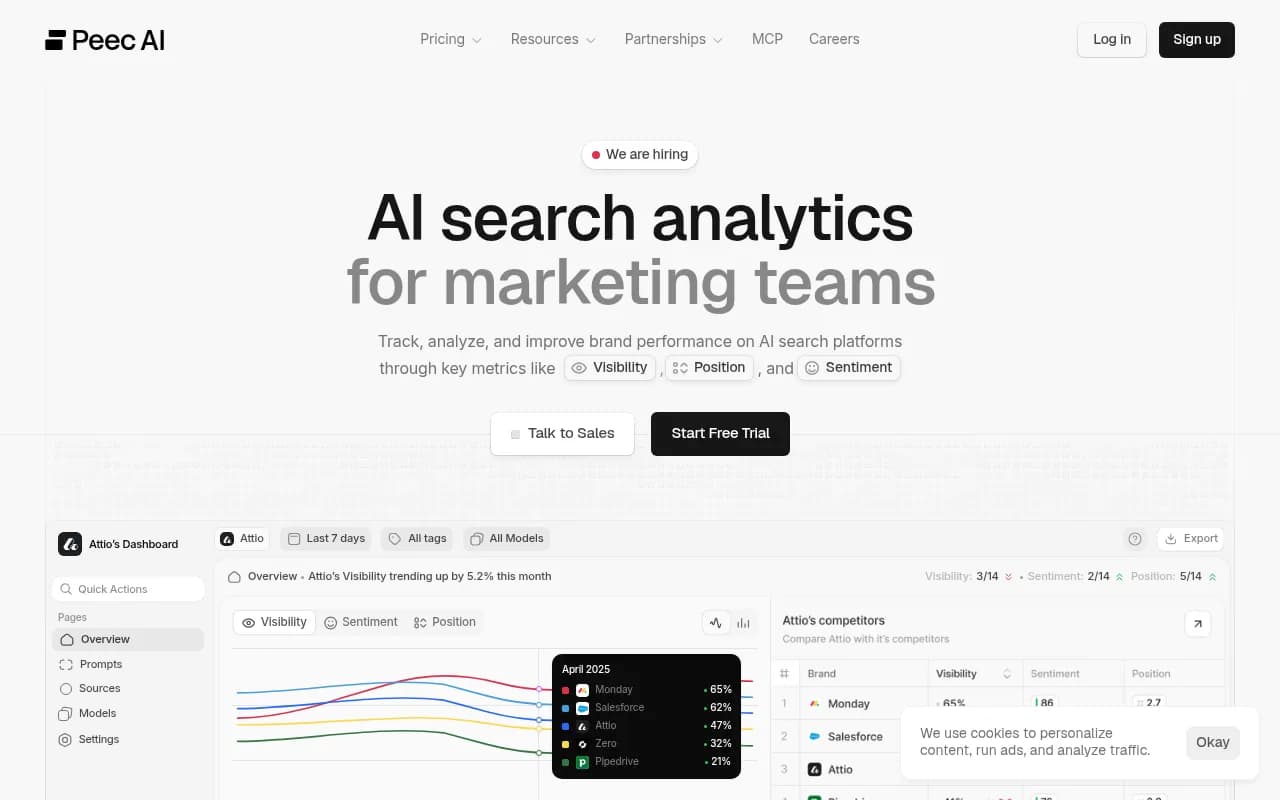
For e-commerce, the honest assessment is that Peec AI is a monitoring tool and not much more. There's no content gap analysis, no content generation, no crawler logs. You'll see citation counts and some trend data, but you won't get the prompt-level granularity that makes the data actionable for a product catalogue.
That said, if your team is at the "we need to understand what AI visibility even looks like for our brand" stage, Peec AI is a reasonable place to start. It's low-cost, low-friction, and gives you a baseline. The problem is that baseline doesn't tell you what to do next.
For brands that have moved past the "awareness" phase and need to actually improve their AI presence, Peec AI will feel like a reporting tool when you need an optimization tool.
AthenaHQ: solid monitoring, no content layer
AthenaHQ sits between Peec AI and Profound in terms of depth. It tracks AI visibility across models with reasonable granularity and has some competitive benchmarking features that are useful for understanding where you stand relative to category competitors.
The limitation is the same as most monitoring-focused platforms: AthenaHQ will tell you what's happening but not help you change it. There's no content generation, no content brief workflow, and no crawler log data. For e-commerce teams managing large SKU catalogues, that means you're still doing the heavy lifting of figuring out what to create and where to publish it.
AthenaHQ is a reasonable choice for teams that want more depth than Peec AI but aren't ready for Profound's price point, and who have a separate content team that can act on the monitoring data.
Semrush AI Visibility Toolkit: best for teams already on Semrush
If your team is already standardized on Semrush for traditional SEO, the AI Visibility Toolkit is the path of least resistance into AI search monitoring.
The integration with existing Semrush workflows is the main selling point. You're not adding a new platform or a new login -- you're extending a tool you already know. For e-commerce teams that use Semrush for keyword research, rank tracking, and competitive analysis, having AI visibility data in the same interface has real workflow value.
The limitations are real, though. Semrush uses fixed prompt sets rather than letting you define your own product-specific queries. There's no AI traffic attribution connecting visibility to revenue. And the depth of AI-specific features doesn't match dedicated platforms like Promptwatch or Profound.
For brands where "good enough" AI monitoring alongside existing SEO workflows is the goal, Semrush works. For brands where AI search is becoming a primary acquisition channel, you'll likely outgrow it.
Otterly.AI: the budget option
Otterly.AI is the most affordable dedicated AI visibility tool in this comparison. It monitors brand citations across AI models and gives you basic trend data.
For freelancers, consultants, or very small e-commerce teams that want a low-cost way to check whether their brand is being mentioned in AI responses, Otterly.AI does the job. It's not going to give you product-level query tracking, content gap analysis, or any of the deeper features that make a real difference for a growing e-commerce brand.
Think of it as a sanity check tool rather than an optimization platform.
Other tools worth knowing about
A few other platforms come up regularly in this space and are worth a brief mention.
SE Ranking has added AI visibility features to its existing SEO platform. Like Semrush, it's most useful for teams already in the SE Ranking ecosystem.
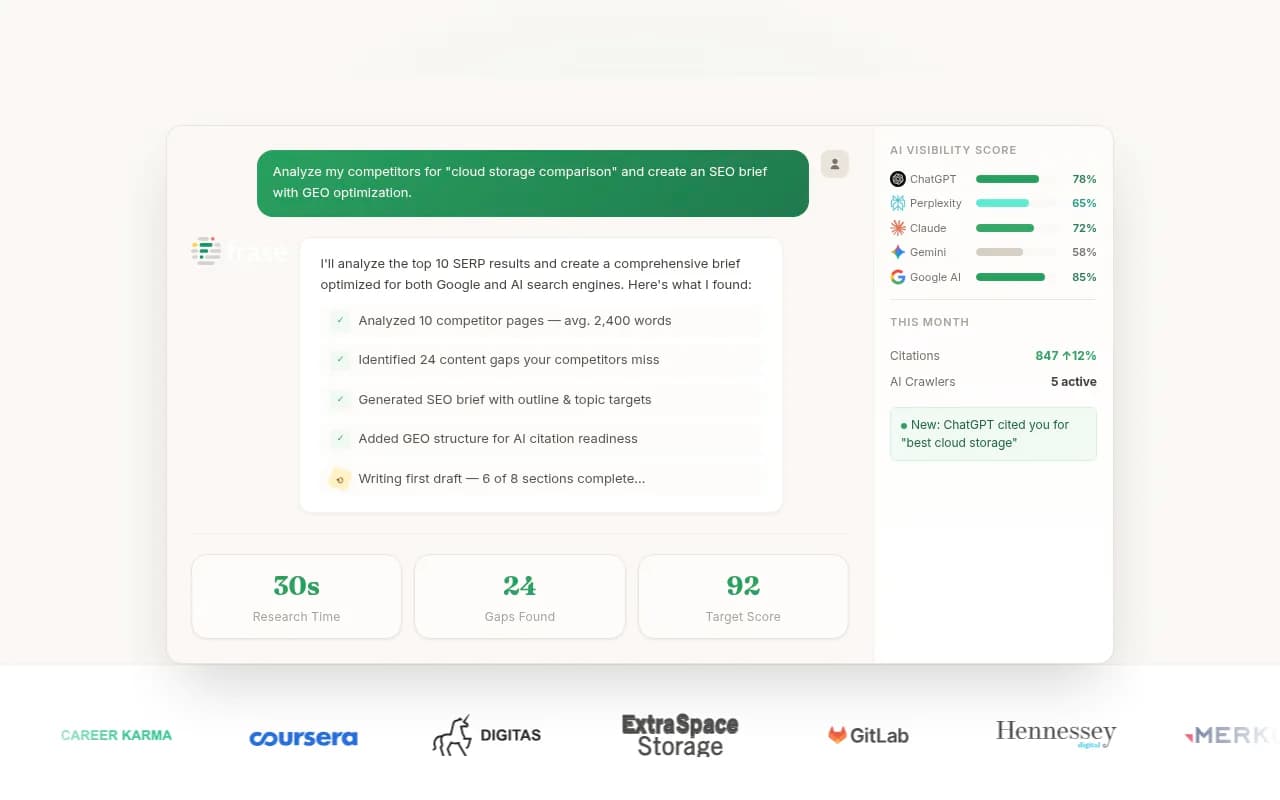
Frase pairs AI visibility monitoring with content creation tools, making it a reasonable alternative for content-heavy teams. It doesn't have the same depth of AI-specific tracking as Promptwatch but has a stronger content workflow than most pure monitoring tools.
Scrunch AI focuses on brand monitoring across AI models and is worth looking at for teams with specific brand safety or reputation management needs.
What to actually look for when evaluating these platforms
The marketing language around AI visibility tools is pretty uniform -- everyone claims to track "all major AI models" and give you "actionable insights." Here's what to actually test before committing.
Prompt specificity. Can you track the exact product queries your customers are asking? "Best running shoes" is not the same as "best running shoes for plantar fasciitis under $120." The platforms that let you define your own prompts at that level of specificity are the ones that give you useful data for a product catalogue.
What happens after the alert. When the platform tells you you're losing visibility for a query, what does it do next? Does it show you what content is missing? Does it help you create it? Does it track whether the new content gets cited? Platforms that stop at the alert are monitoring tools. Platforms that close the loop are optimization tools.
Crawler log access. For e-commerce teams with large catalogues, knowing which product pages AI crawlers are actually reading is essential. Without this, you're guessing about why certain pages aren't being cited.
Traffic attribution. Can the platform connect AI citations to actual traffic and revenue? This is how you justify the investment internally and prioritize which gaps to fix first.
Multi-model coverage. Different AI models dominate different contexts. ChatGPT Shopping is a direct commercial channel. Google AI Overviews reach a massive audience. Perplexity skews toward research-oriented buyers. A platform that only tracks one or two models is giving you a partial picture.
How to choose based on where your team is right now
The right platform depends less on which one has the most features and more on what your team is actually ready to do with the data.
If you're just starting out and need to understand your baseline AI visibility, Peec AI or Otterly.AI will get you there without a large budget commitment. Don't over-invest in a platform you're not ready to use fully.
If you're at the stage where you understand your baseline and want to start improving it, Promptwatch is the clearest choice. The Answer Gap Analysis, Content Agents, and crawler logs give you everything you need to run a real optimization program -- not just a monitoring program.
If you're at enterprise scale with complex reporting requirements and a separate content team that can act on monitoring data, Profound is worth the investment. Just go in knowing that the action layer is on you.
If you're already deep in the Semrush ecosystem and AI visibility is one of several channels you're managing, the Semrush AI Toolkit is the path of least resistance.
The category is moving fast. Platforms that were monitoring-only a year ago are adding content features. Platforms that started with content are adding deeper tracking. The gap between the leaders and the laggards is closing, but right now, the difference between a tool that shows you a problem and a tool that helps you fix it is still significant -- and for e-commerce brands where AI citations translate directly to product recommendations and revenue, that difference matters.
The brands that treat AI search as an optimization channel rather than a reporting category are the ones pulling ahead. The tool you pick should reflect which of those you're trying to be.